
Last reviewed: October 14, 2026.
Direct answer: A multi-SKU tube filler for contract manufacturing should be selected around the actual product and tube matrix, not a single rated speed. Review every tube diameter, length, material, closure method, fill range, cleaning rule and changeover frequency. Then test representative products and packaging during FAT, record which tooling is common or format-specific, and define how recipes, line clearance and first-article approval will be controlled.
Contract manufacturers often run more products through one line than a single-brand plant. A customer may supply a plastic tube for a face cream, a laminate tube for toothpaste and an aluminum tube for an ointment. The products can have different viscosities, temperatures, pigments and cleaning restrictions. A machine that handles one SKU well may still create long changeovers or quality risk when the full portfolio is considered.
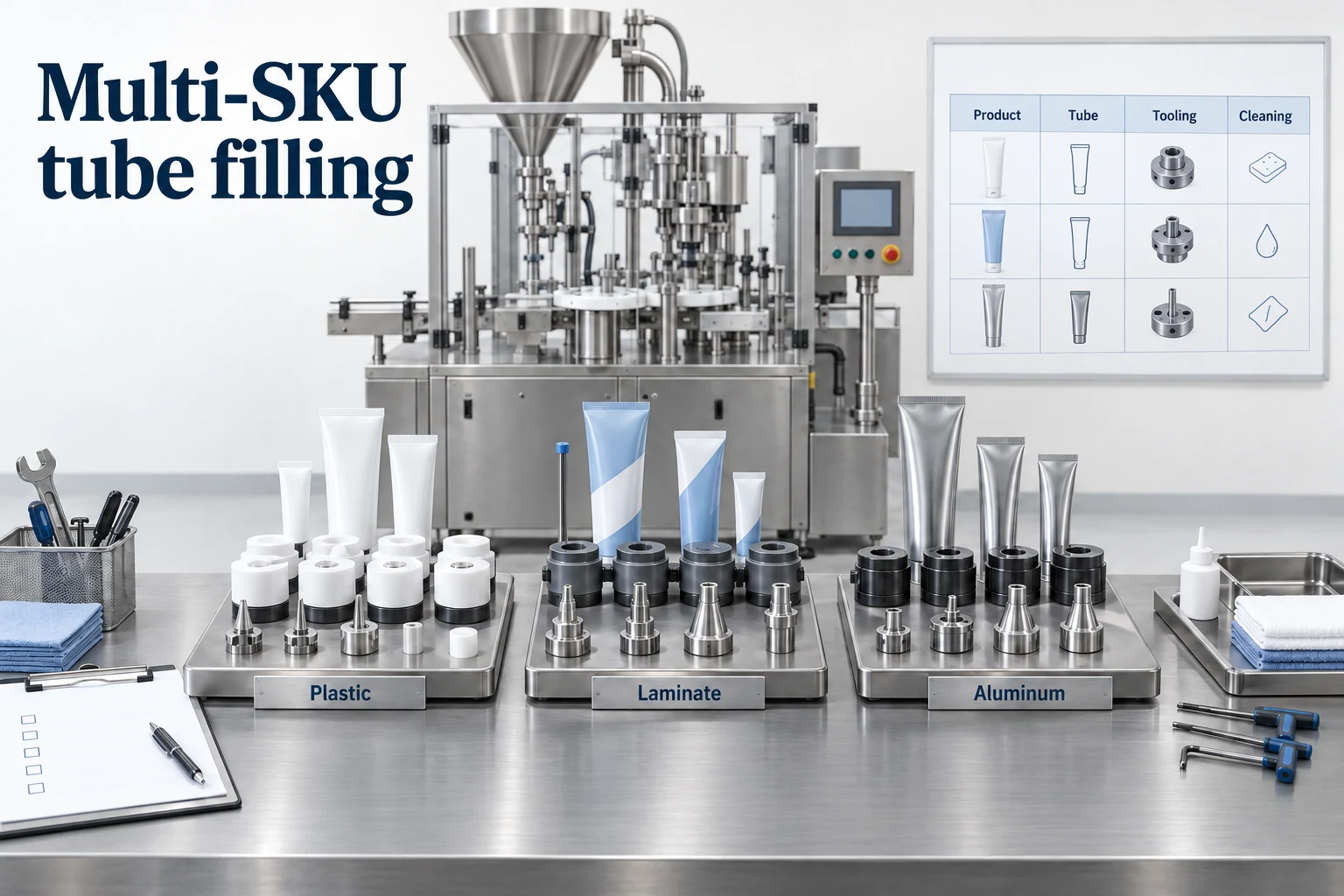
Build the product and tube matrix
Start with a matrix that lists every current and planned SKU. Record product name, rheology, temperature, target fill, tube material, diameter, length, shoulder, tail width, cap, sealing method and artwork orientation. Add the expected batch pattern, cleaning class, changeover sequence and quality checks. The matrix becomes the common reference for procurement, engineering, production and customer service.
| Matrix field | Why it matters | Evidence |
|---|---|---|
| Tube material | Determines sealing and tooling approach | Drawing and production samples |
| Product rheology | Affects pump, nozzle, cut-off and cleaning | Representative formula and handling notes |
| Format range | Defines nests, guides and recipes | Approved dimensional matrix |
| Changeover frequency | Influences tooling and line-clearance design | Production schedule assumption |
Do not classify a product only by its marketing name. A “cream” may be free-flowing, structured, shear-sensitive or highly viscous. A “gel” may contain particles or recover structure after shear. The machine supplier should receive enough information to propose a conditional engineering solution and a sample-test plan.
Decide what “multi-SKU” means for the line
Multi-SKU capability can mean several tube sizes on one filler, several products using the same tube, several sealing methods, or a complete contract line with frequent recipe changes. State which meaning applies. A line designed for four similar plastic tubes is a different project from a line expected to alternate between plastic, laminate and aluminum tubes.
List the boundaries of the base configuration. Identify the formats covered by common parts, the formats requiring change parts, and the formats that need a different sealing module. This prevents a general statement such as “suitable for multiple sizes” from being mistaken for a complete tooling commitment.
Plan changeover as a controlled process
Changeover includes product isolation, tube and cap removal, part replacement, cleaning, inspection, recipe selection, line clearance and first-article approval. The time depends on the equipment design, operator method and product. Measure or estimate each step rather than using a generic changeover promise.
Change-part design
Request a list of nests, guides, nozzles, folding tools, hot-air components, ultrasonic tooling, sensors and coding fixtures. Each set should be labeled with the tube format and stored in a controlled location. If parts look similar, use identification marks to reduce the chance of installing the wrong set.
Recipe control
A recipe should identify product, tube format, dose, fill profile, nozzle position, sealing settings and inspection parameters that are appropriate for the approved process. Access rights and change records should be agreed with the customer’s quality system. The recipe is a process record, not a substitute for a sample test.
Select the filling and sealing configuration
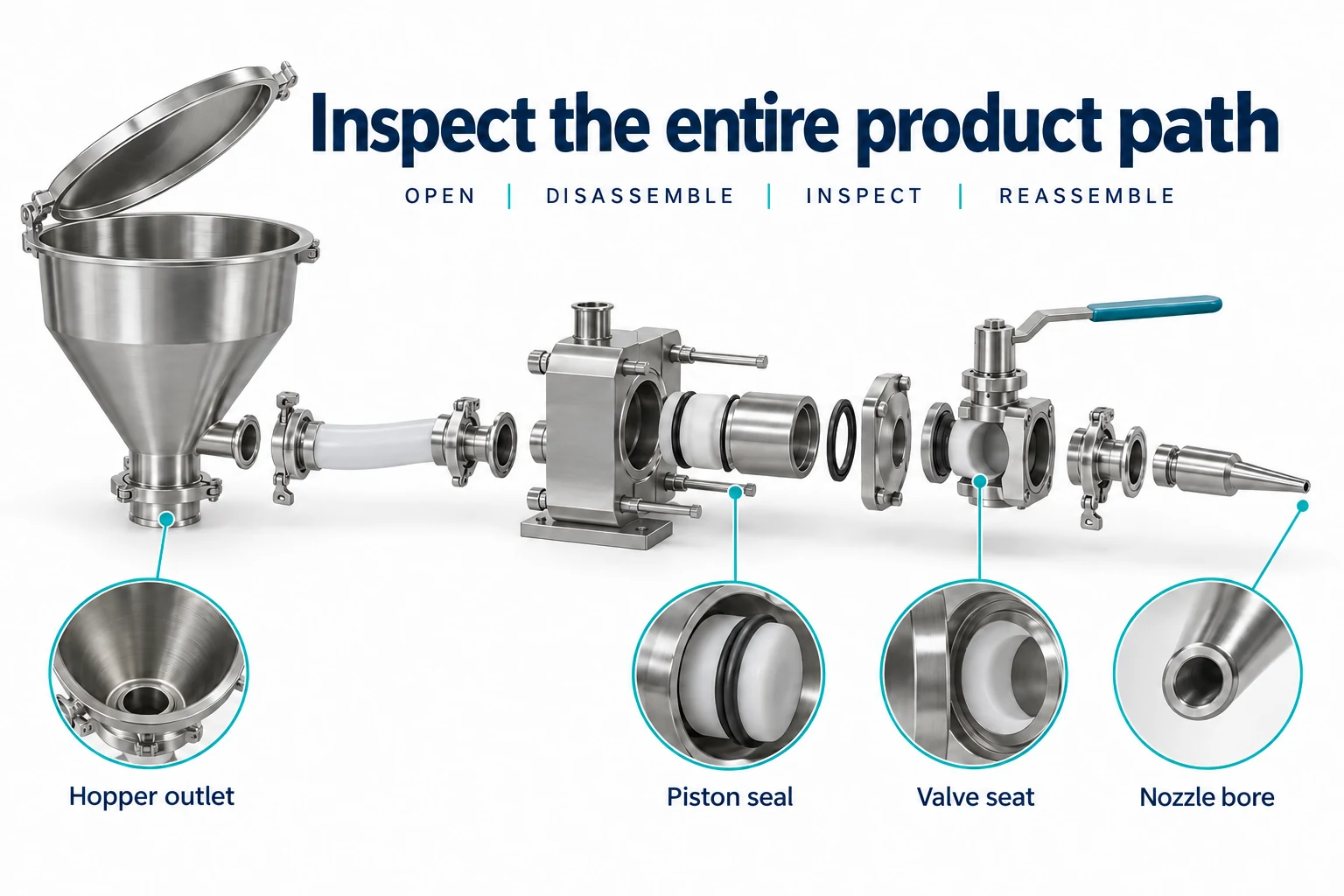
Product contact materials, pump type, nozzle geometry and cut-off must match the formula. For high-viscosity creams, the team may evaluate bottom-up filling, controlled withdrawal or other measures to reduce air and residue. These are engineering options to verify with samples.
The sealing method must match the tube. Plastic and laminate tubes may use hot-air or ultrasonic sealing, while aluminum tubes may use folding. If a contract manufacturer runs more than one construction, specify whether the machine uses separate modules, exchangeable tooling or a dedicated second station. Do not assume that a sealing method transfers unchanged between materials.
Cleaning and customer changeovers
Customer service commitments often create the most cleaning pressure. A contract packager may need to change from a light cosmetic color to a dark pigment, or from a fragrance product to an ointment. Map the product-contact path and identify parts that can retain residue. Define the approved cleaning agent, access method, inspection points and line-clearance record.
Cleaning time should be assessed with the real formula where possible. A substitute can demonstrate access and sequence but cannot prove residue or carryover performance. Separate confirmed observation from engineering guidance and record any manual workaround used during the test.
FAT for a multi-SKU tube filler
FAT should cover representative products and tube formats, not only the easiest SKU. Select samples that represent the highest viscosity, the most demanding seal, the smallest and largest tube, and the most difficult changeover. Record fill result, tail condition, coding, reject handling, cleaning access and first-article approval.
When a final customer formula is unavailable, use a documented substitute and list the limitation. The FAT record should include settings, tooling identification, sample quantity, operator interventions and open actions. Shipment inspection should compare the machine, accessories, documents and spare parts with the approved configuration.
Layout, utilities and operator training
Prepare floor space, access, electrical supply, compressed air, cleaning provisions, material flow and downstream cartoning interfaces. A multi-SKU line needs a clear location for change parts and a method to prevent mixed components. Training should cover setup, recipe selection, line clearance, cleaning, sealing checks and reject handling.
Supplier RFQ checklist
- Which products, tubes and closure methods were reviewed?
- Which formats use common tooling and which require dedicated parts?
- What does the proposed FAT cover?
- How are recipes approved and changed?
- What cleaning access and documents are included?
- Which utilities, installation and training tasks belong to the buyer?
King Pack can review the product and tube matrix, propose a configuration, support FAT, provide documentation and training, and integrate filling and packaging equipment within the agreed scope.
Manage customer-specific acceptance criteria
Contract manufacturers often receive different inspection requirements from different brand owners. One customer may focus on fill weight, another on tail appearance, and another on coding or traceability. Consolidate these requirements before the machine is finalized. The line can then use a common process with customer-specific sampling instructions where appropriate.
Keep the acceptance examples with the production documentation. When a new customer introduces a different tube or closure, update the matrix, test the format and record the decision. This creates a controlled route for adding business without relying on an informal promise that the existing filler will handle every future product.
Protect product identity during changeover
Mixed tubes, caps or labels are a serious contract-manufacturing risk. Use labeled change-part storage, line-clearance checks and a first-article release before routine production. If artwork orientation is important, include a mark or seam check in the process. The exact sensor and reject method should be tested with the actual printed tube.
Document who confirms the line is clear, who approves the first filled tube and who releases the batch. This responsibility matrix is as important as the mechanical changeover steps because it prevents production from restarting on an assumption.
Compare the proposed station and tooling scope with the tube filling and sealing equipment overview; suitability still depends on the actual product and tube samples.
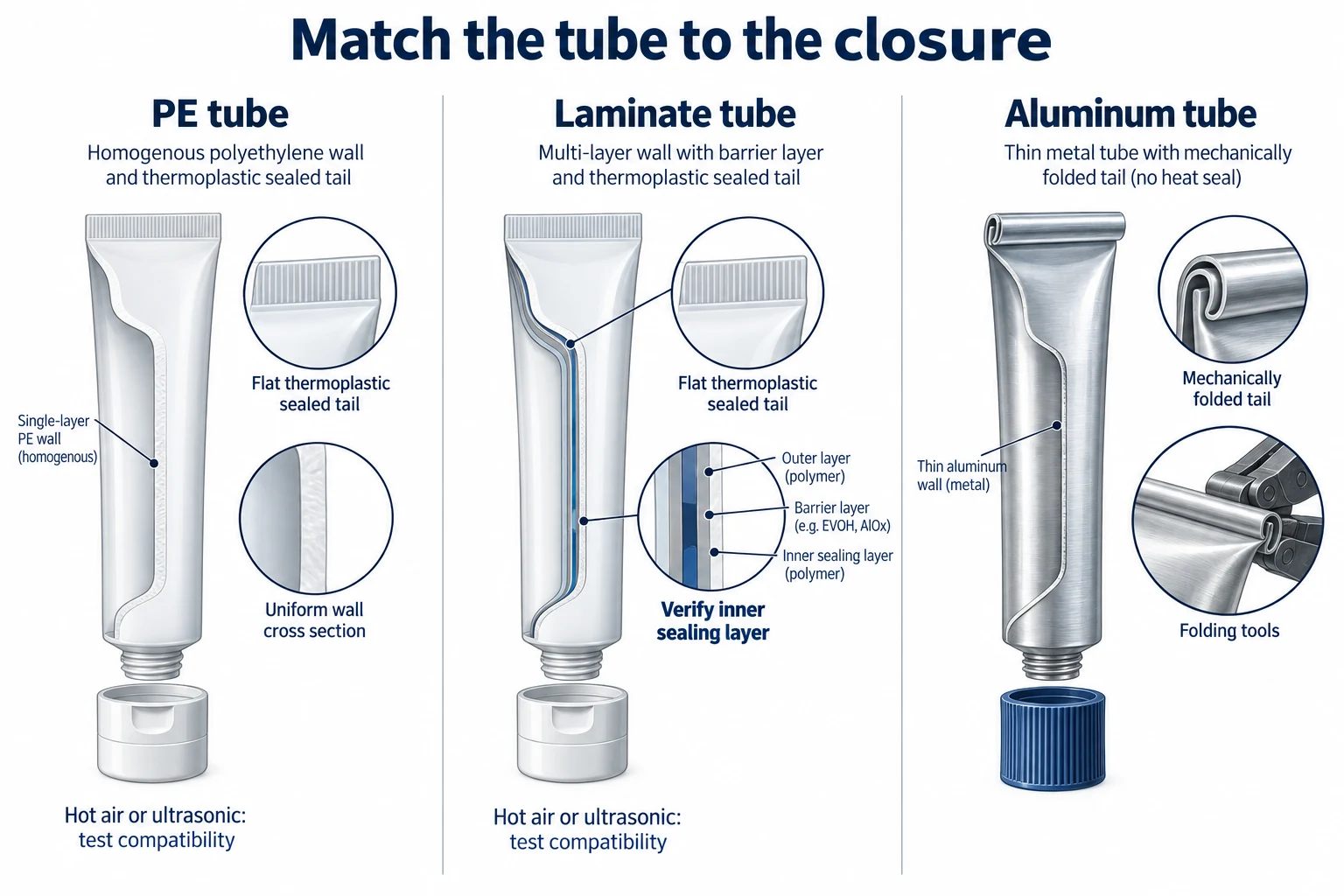
Commercial comparison
Compare quotations by total scope: base filler, feeding, sealing, coding, inspection, change parts, cleaning access, FAT, documents, training, utilities and installation. A cheaper offer may omit a second sealing module or include only one format set. A more automated offer may add controls and interfaces that require additional commissioning. The correct selection depends on the customer portfolio and the plant’s operating model.
Discuss your requirements: Send your product and tube matrix to King Pack for a documented configuration review before issuing a purchase order.
Select a line architecture for the SKU portfolio
There are several ways to support multiple customer formats. A single flexible filler may use exchangeable nests and sealing tools. A line may use a common filling station with dedicated closure modules. A contract plant may also choose two specialized machines when products are technically different or when changeover would interrupt a high-priority schedule. The choice depends on product similarity, batch pattern, floor space, staffing and quality risk.
Compare the architecture against the actual schedule. If the plant changes product every few hours, a fast mechanical changeover and accessible cleaning path may matter more than a high rated speed. If batches are long and formats are stable, a dedicated configuration may simplify operation. These are planning decisions that should be supported by the customer’s production data.
Separate common and dedicated functions
List which functions are common to all SKUs: controls, conveyor, guarding, basic loading or discharge. Then list which functions are dedicated: nozzles, product-contact parts, tube nests, folding tools, ultrasonic horns, hot-air tooling, coding fixtures and inspection recipes. This list clarifies the investment required when a new customer adds a format.
Verify the product path for difficult formulas
Some contract products are difficult because they contain pigments, waxes, abrasives, powders or reactive ingredients. The product path should be short enough to clean and stable enough to avoid separation. Review hopper agitation, valve dead volume, nozzle recovery and hose routing with the formula owner. If a product changes during residence, define a maximum hold condition for the trial rather than relying on a general setting.
Use representative samples for boundary tests. A high-viscosity cream can reveal nozzle and pump limitations; a low-viscosity lotion can reveal dripping or cut-off problems. A dark pigment can reveal residue that a white sample would hide. These tests provide practical evidence for a contract manufacturer before customer promises are made.
Manage quality records across customers
Each customer may require a different batch record, sample size or release signature. The machine should provide clear access to counters, reject handling and recipe identification, while the plant’s quality system controls the final record. Agree which values are captured automatically and which are recorded by operators. A simple record should identify product, tube format, recipe, date, operator, first article and any deviation.
If the line uses electronic recipe control, define user roles and change approval. If settings are adjusted manually, provide a clear setup sheet and a lock or mark for critical positions. The purpose is to make the approved process visible and repeatable, not to create a claim about a specific software feature.
Plan spare parts and maintenance
Multi-SKU operation increases the number of parts that may be used or stored. Keep a controlled list of seals, gaskets, nozzles, guides, sensors, folding parts, ultrasonic tooling and hot-air components. Mark which parts contact product, which parts wear during changeover and which parts are format-specific. Maintenance staff should know how to identify a part before replacing it.
Include lubrication, inspection and cleaning points in the handover documents. The supplier can recommend initial spares based on the configuration; actual consumption depends on material, product and operating practice. This distinction keeps the maintenance budget realistic.
Final RFQ decision checklist
Before selecting a multi-SKU tube filler, verify that the supplier has reviewed the product and tube matrix, separated base and optional scope, listed all change parts, described cleaning access, proposed a representative FAT, identified installation interfaces and stated what remains conditional. Confirm that the plant can store change parts, train operators and approve first articles for every customer program.
Discuss your requirements: Send the complete SKU matrix and representative tubes to King Pack for a configuration and FAT review. A written scope is the best starting point for comparing technical and commercial offers.
Review customer onboarding
When a new customer is onboarded, collect the formula profile, tube drawings, cap samples, artwork rules, target fill, batch pattern, cleaning class and release checks. Run a controlled first article before routine production. The onboarding record should identify the approved configuration and any limits that apply to the customer’s product.
Customer onboarding is also a useful point to review downstream packing. Confirm tube orientation, coding space, carton dimensions and buffer needs. A filler that is technically suitable can still create an operational issue if the next machine receives a different presentation.
Use a short review meeting with sales, project engineering, production, quality and maintenance. Record decisions and open questions. This prevents a commercial promise from moving into production without a technical owner.
Confirm the production release path
After the first article is approved, define how a production order is released. Confirm the customer, formula, tube format, recipe, change parts, cleaning status, first-article sample and quality sign-off. This short release path prevents a correct machine from being used with an incorrect format or unapproved setting.
The final review should also confirm that the approved SKU matrix is the same version used for quotation, FAT and installation. If a customer adds a tube or changes a closure after approval, record the change and decide whether another sample test is needed. This simple control keeps the technical file aligned with production and protects the contract manufacturer from making an unsupported compatibility promise.
Include training, spares and commissioning requirements in the equipment service and handover scope so the plant can prepare its own personnel and utilities.
Use a campaign schedule to test the investment decision
Build a hypothetical production week using the plant’s own order assumptions. Put a small repeat order between two difficult cleaning changes, then compare that schedule with a campaign grouped by product family. Record the effect on available hours, work in progress and customer delivery dates. This exercise exposes the cost of flexibility without inventing a machine price or a universal changeover time.
Identify the commercial boundary
State which future SKUs fit the tested range and which need engineering review. If the base order includes one hot-air configuration, a later aluminum folding format may require additional tooling or a different module. Sales staff should use the approved format list when accepting customer work. Product similarity alone does not establish closure compatibility.
Before signing off, ask production and quality to operate the proposed changeover method themselves during the trial. A demonstration performed only by a supplier specialist may hide handling steps that the customer’s shift team finds difficult. Record those steps and include them in training and handover.
Send your specifications: Use the King Pack technical enquiry form to share the product profile, tube drawings and the conditions you need verified.
FAQ
Can one filler handle plastic, laminate and aluminum tubes?
It may be possible with the correct tooling and sealing configuration. Confirm the materials, dimensions and closure process through sample testing.
How many SKUs should be tested at FAT?
Test representative boundary conditions: product viscosity, tube size, material, sealing method and the most demanding changeover. The exact sample plan belongs in the approved FAT protocol.
What is the main risk for contract manufacturers?
The main risk is treating a broad format claim as proof that all customer products share the same process. Use a matrix and test evidence.
Conclusion
A multi-SKU tube filler should be designed around the complete customer portfolio, with clear boundaries for tooling, sealing, cleaning and acceptance. A product and tube matrix, representative FAT and controlled changeover record give contract manufacturers a practical basis for investment and customer commitments. Request a Technical Proposal: Send your SKU matrix, samples and changeover assumptions to King Pack for review.
Related King Pack resources
For multi-SKU projects, compare our tube filling machine solutions, filling and capping line solutions, and complete packaging equipment solutions. Product-specific options include syringe filling machines, veterinary medicine filling equipment, and cosmetic filling solutions. For factory planning, review our guides on component-lot qualification, tooling contact zones, and site-acceptance preparation. You can also review ultrasonic tube filling, aluminum tube filling, and the Contact Us page before sending a technical quote request.