 Skip to content

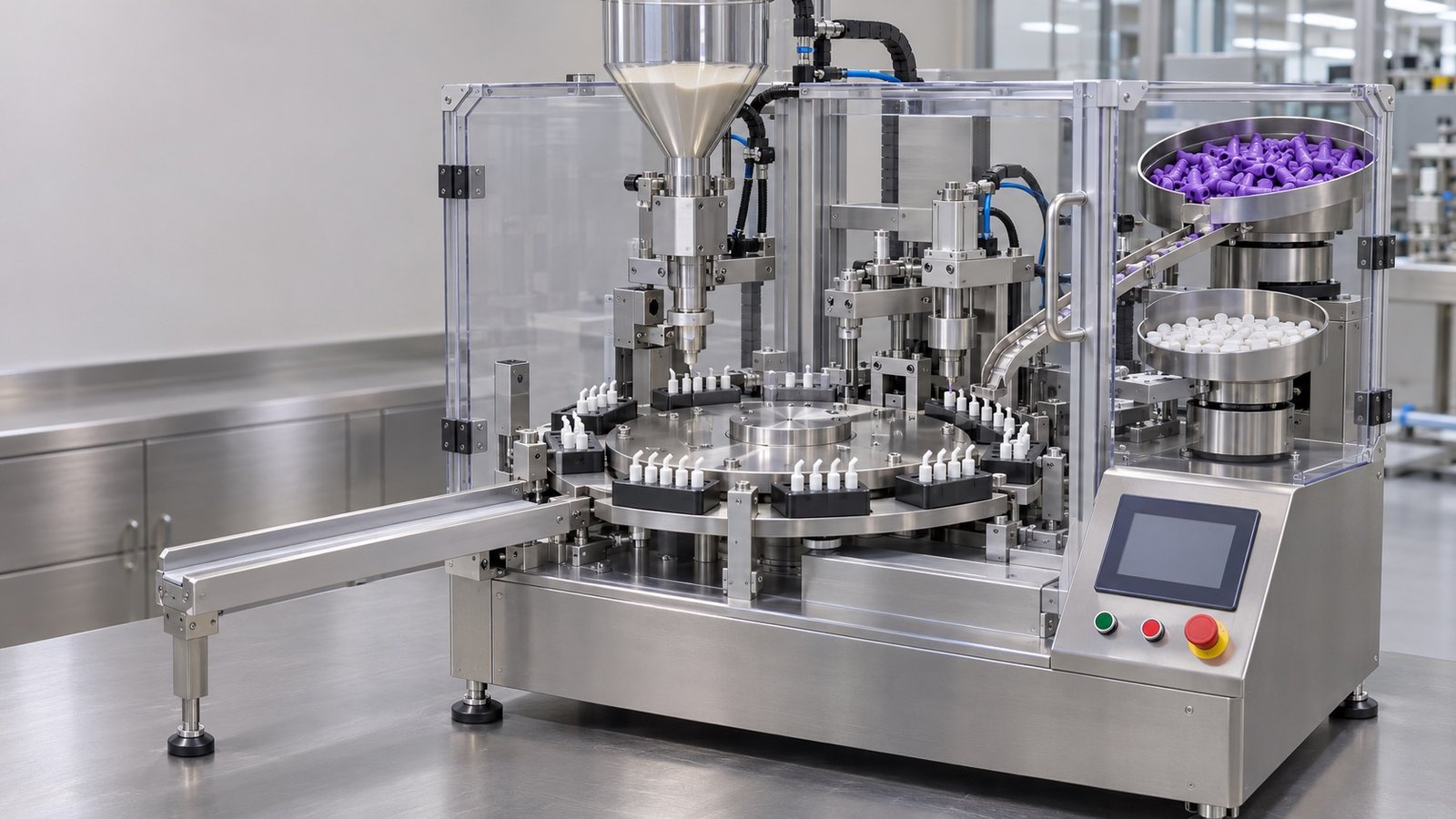
A dental compule filling machine should be specified from the exact unit-dose container, restorative material and closing method—not from the target fill weight alone. Compules-style tips are small dispensing packages used with a dedicated applicator gun, so the project must control orientation, low-volume dosing, product protection, cap or piston placement and finished-unit function. The safest procurement route is to freeze the complete component set, send representative material and run a documented filling-and-closing trial before selecting a production configuration.
This guide concerns needle-free dental unit-dose applicators. It does not describe anesthetic cartridges, sterile injectable syringes or ordinary multi-dose dental syringes. “Compules” is used here only to describe the buyer’s searched package category; suppliers should use the package owner’s approved name and drawings in commercial documents.
Define the compule package before discussing the machine
Dentsply Sirona’s official restorative instructions show that a Compules Tip is loaded into a dedicated gun, its cap is removed, the tip can be rotated for application and the material is dispensed with slow, steady pressure. The same instructions distinguish this unit-dose tip from a conventional syringe presentation. The company’s Compules Tips Gun instructions also warn against excessive force. These use conditions make the finished package—not just the empty cup—the correct starting point for machine design.
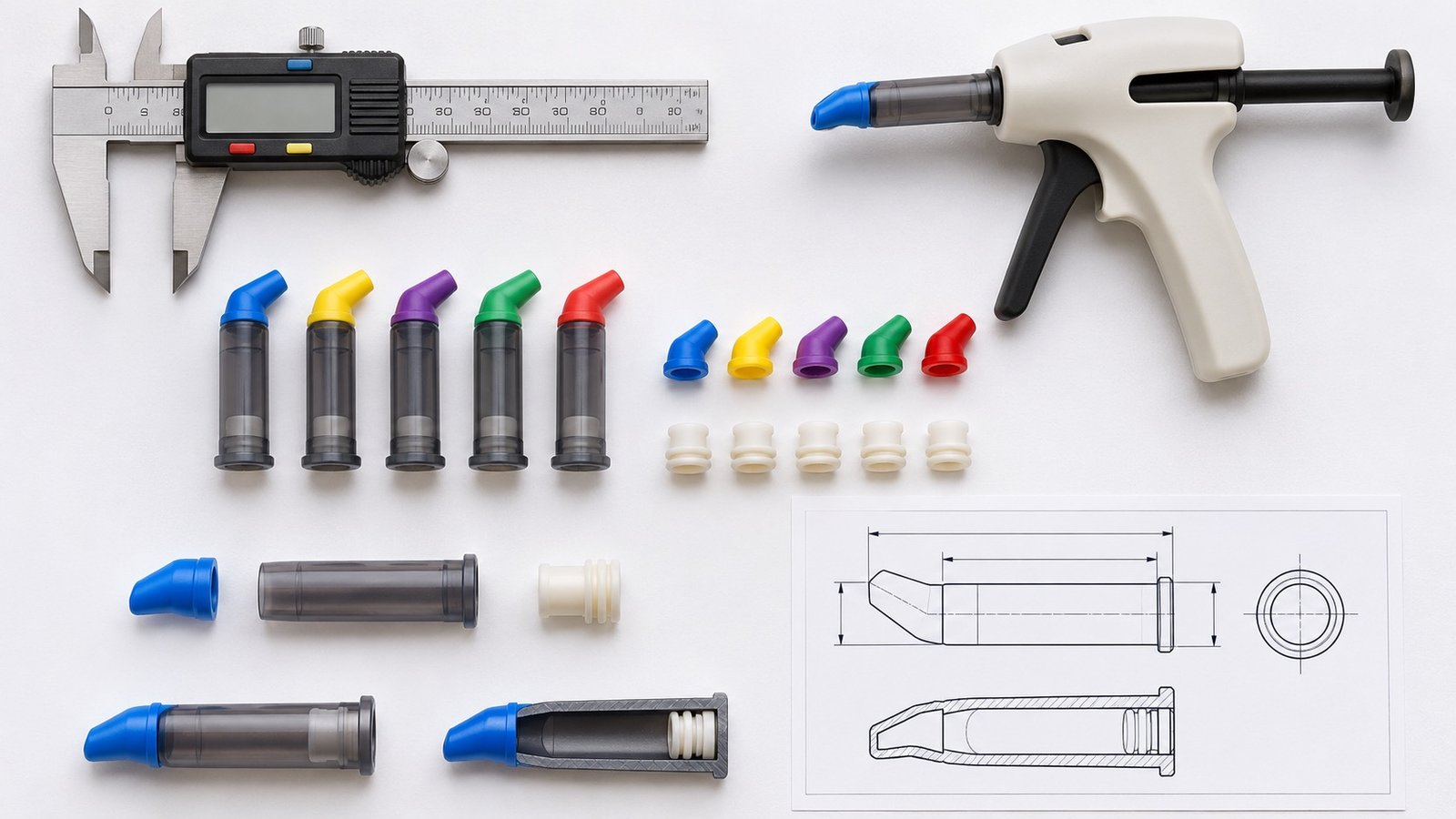
For equipment review, supply the complete package set:
- body or barrel, including flange, collar, outlet and internal taper;
- piston, plug or rear closure;
- front cap or protective tip closure;
- any insert, label or light-barrier component;
- the applicator gun used for functional testing;
- dimensioned drawings with tolerances and material specifications;
- samples from more than one component lot.
The broader dental material syringe filling guide explains why composite, gel and liquid dental products cannot be treated as one filling category. A compule project is narrower: the unit-dose package, closing sequence and dispensing force become primary acceptance inputs.
Separate compules, cartridges and syringes in the RFQ
Buyers sometimes use “compule,” “capsule,” “cartridge” and “syringe” interchangeably. The equipment consequences can be substantial.
| Package category | Typical use condition | Main machine question | Evidence needed before quotation |
|---|---|---|---|
| Unit-dose compule or capsule | Loaded into a dispensing gun | How will a very small body be oriented, supported, filled and closed? | Full component set, gun and functional acceptance method |
| Multi-dose dental syringe | Product is advanced from a larger barrel | How will the barrel be filled, piston inserted and cap assembled? | Barrel drawing, product data and closure sequence |
| Dental cartridge | Used in a compatible delivery device | Is the end closure a piston, cap, septum or another design? | Cartridge drawing, closure parts and regulatory package requirements |
| Sterile injectable syringe | Parenteral delivery | What aseptic, sterilization and validated process controls apply? | Drug, container-closure and regulatory strategy |
Do not let a supplier quote from a photograph or fill-weight range. The RFQ should name the package category, define whether it is filled through the rear or outlet end and state every closing operation. If two package types are planned, list them as separate formats and identify which parts, nests and recipes may be shared.
Match the product path to the restorative material
Many compule-style products are filled restorative materials, but “dental composite” still does not define one rheology. Dentsply Sirona’s product instructions describe light-activated materials and advise protecting restorative material from light. That is a product-specific handling requirement, not proof that every material needs the same enclosure or exposure limit.
Ask the formulation owner to provide:
- material type and solids or filler description;
- rheology or viscosity data at the intended processing temperature;
- normal storage and conditioning method;
- light, heat and moisture sensitivity;
- permissible product-contact materials;
- maximum hold time after conditioning;
- cleaning restrictions and safety documentation;
- representative production material for trials.
For dense material, review the whole path from bulk container to compule. A positive-displacement metering concept may be considered, but pump type cannot be selected from viscosity alone. The feed method must keep the metering chamber supplied, and the valve and nozzle must handle the product without excessive pressure, separation or uncontrolled stringing.
The dental composite filling equipment guide provides a deeper checklist for particle-filled, high-viscosity material. The high-viscosity syringe filling system guide adds supply-path and cleaning questions that also apply to dense unit-dose products.
Design orientation and support around a very small container
The filling machine must present each compule consistently to the dosing and closing stations. Small parts can rotate, nest incorrectly or move under nozzle and closure forces. A dimensional tolerance that looks minor on a drawing may become significant when the whole package is only a few centimeters long.
Review these fixture points with actual components:
- datum surface used to locate the body;
- allowable contact areas that will not mark or deform the package;
- orientation feature for the outlet, collar or flange;
- nest clearance across component tolerance limits;
- support during nozzle insertion and withdrawal;
- support during piston, plug or cap placement;
- release method that does not pull the closure back out;
- sensor access for body, fill and closure presence checks.
If several shades or formulations run on one machine, also define line-clearance rules. Color or material carryover may matter even when the mechanical format is unchanged.
Specify metering and nozzle motion as one process
Low fill volume does not automatically mean an easy dosing process. Dense restorative material may require a larger practical flow passage than a low-viscosity liquid, while the compule opening limits nozzle size. The nozzle must enter far enough to control placement but not strike the body, trap a pocket or contaminate the sealing area.
Trial variables should include:
- nozzle bore and outlet geometry;
- insertion depth and alignment;
- fill-from-bottom versus fixed-position dispensing;
- dispense speed and pressure trend;
- nozzle withdrawal timing;
- suck-back or shutoff behavior;
- cutoff residue at the outlet;
- product temperature and time in the feed path.
The viscous-product nozzle selection guide can be used to prepare these variables. The chosen nozzle is acceptable only when the trial also proves dose, visible-air condition, clean cutoff and closure readiness.
Treat closing as an independent validated station
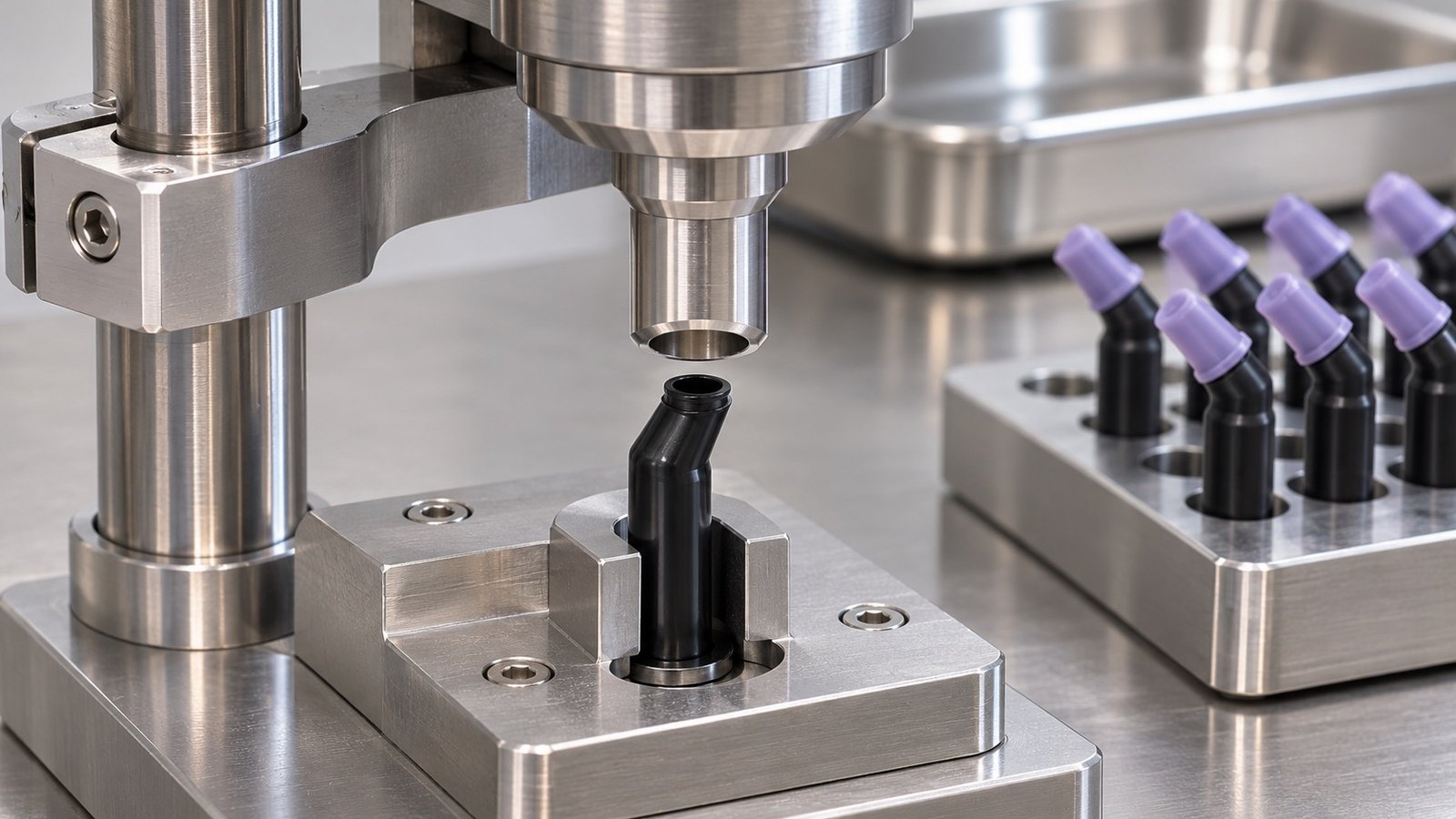
“Closing” may mean inserting a rear piston, pressing a plug, fitting a cap or completing more than one step. Define the order before the supplier designs the machine. A closure station should control component orientation, placement depth and applied force while preventing product from contaminating the seating surface.
For every closure, state:
- feed and orientation method;
- part-presence check;
- acceptable position or seating window;
- force, displacement or other process signal to record;
- detection of a skewed, damaged or missing part;
- reject or hold action;
- cleaning access after product contact.
Do not accept a visual “looks closed” test as the only criterion. Include a finished-package functional test with the intended applicator gun. The Dentsply Sirona instructions note slow, steady application and warn against excessive force; a buyer can therefore define an appropriate internal dispensing-force or functional-use test without copying another manufacturer’s proprietary limit.
Build a representative trial around process states
A water demonstration cannot qualify a dense restorative material. Test production-intent material and package parts under controlled conditions. Separate samples by process state so problems are traceable.
| Trial group | Why it matters | What to record |
|---|---|---|
| Startup after priming | Reveals unstable initial feed and trapped air | First acceptable unit, rejects, pressure and dose |
| Steady operation | Shows the normal process window | Net content, visible air, residue and closure position |
| Short stop and restart | Reveals nozzle drying, settling or pressure recovery | Stop time, restart units and setting changes |
| Replenishment | Tests container or feed change | Product level, interruption and recovery |
| End of batch | Tests the lowest intended feed condition | Remaining material, dose trend and scrap |
| Format or shade change | Tests cleaning and line clearance | Change parts, retained product and inspection result |
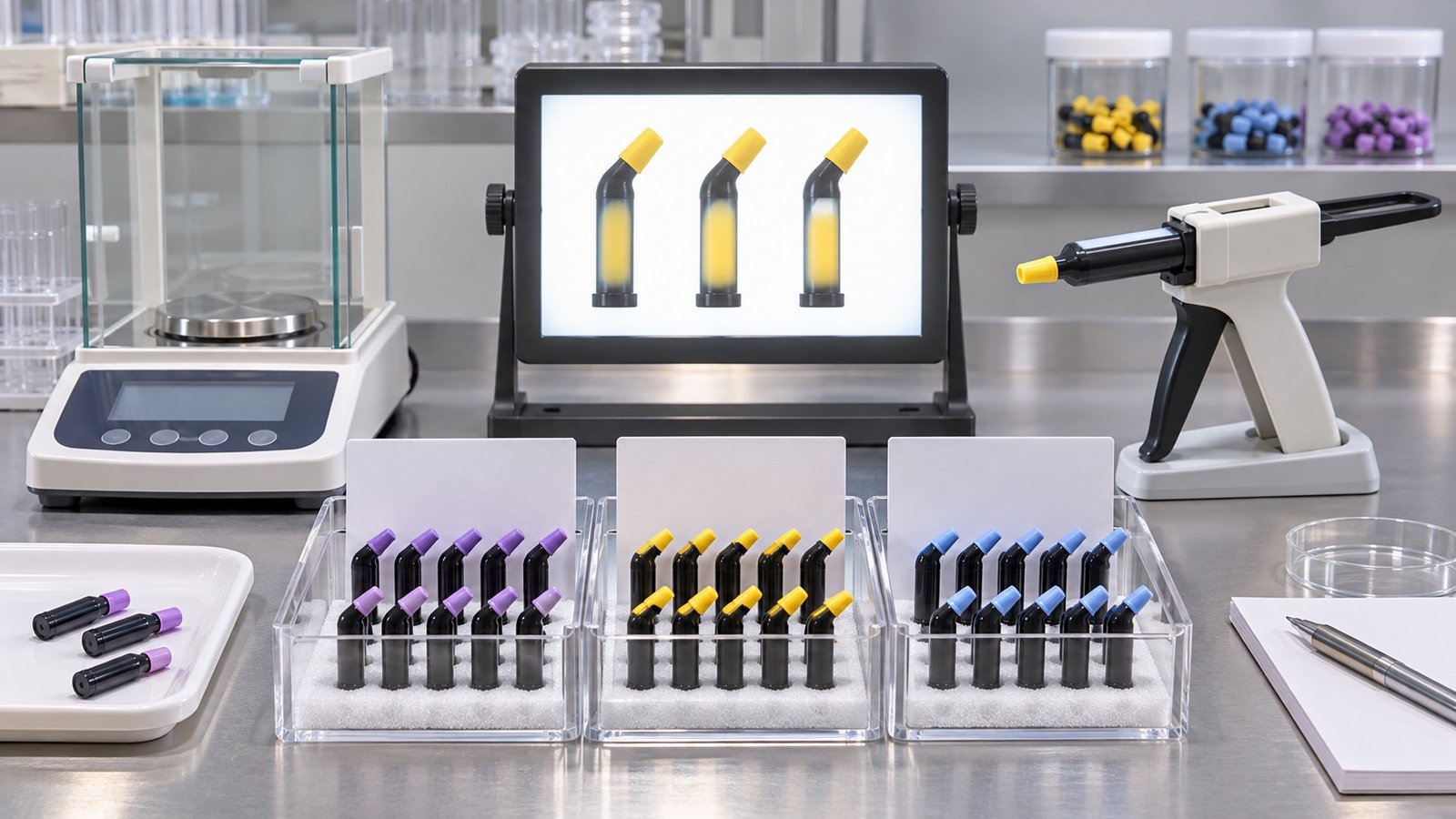
Measure net content using an agreed method and calibrated equipment. Inspect visible air under a defined light and orientation. Check outlet cleanliness, closure position, package damage and applicator function. If the specification includes “no bubbles,” replace that phrase with an inspection method, sample size and acceptance limit.
Put measurable requirements into the RFQ and FAT
The request for quotation should include:
- exact package drawings, tolerances and production-intent samples;
- material data, conditioning and safety requirements;
- target net content and dose range;
- closure sequence and component feeding scope;
- batch size, planned output and changeover frequency;
- cleaning method and line-clearance expectations;
- inspection methods for dose, visible air, residue, closure and damage;
- applicator-gun functional test;
- reject logic, guarding and data requirements;
- FAT material quantity and responsibilities.
The syringe format changeover guide helps identify when a new body, cap or piston needs dedicated change parts. Avoid promising one universal fixture until the full tolerance stack has been tested.
How to evaluate King Pack for a compule project
King Pack supports custom configuration, FAT, documentation, training and line integration for filling projects. Those general capabilities do not prove that a standard machine is already qualified for a specific compule, material or closing method.
Treat a dental compule request as an engineering feasibility project. Use the syringe filling equipment overview to understand the available platform categories, then send the product data, package drawings, component samples and intended FAT method for review. The quotation should remain conditional until the feed path, fixture, dosing, closing and finished-package function have been demonstrated with representative inputs.
Frequently asked questions
Is a compule the same as a dental cartridge?
Not necessarily. A compule-style tip is a small unit-dose applicator used with a dedicated gun, while “cartridge” can refer to other dental containers and closures. Use drawings and the complete component set rather than relying on the name.
Can one machine fill both compules and ordinary dental syringes?
A shared platform may be possible, but the fixtures, feeding, nozzle, closing stations and inspection method can differ. Test each package as a separate format before claiming compatibility.
Which pump is best for dental compule filling?
There is no universal answer. Select the feed and metering concept from the actual material, dose, particle content, allowable pressure, cleaning method and trial results.
Should a compule be filled from the rear or the outlet end?
That depends on the package design and closure sequence. The component owner should define the intended route, and the machine trial should verify fill placement, air condition and closure readiness.
What is the most important closing test?
Use a combination of closure position, package integrity and functional dispensing with the intended gun. A visible seating check alone may miss an internal obstruction or excessive dispensing force.
What should a buyer send before requesting a quotation?
Send the complete component set, drawings and tolerances, applicator gun, representative material, target dose, output requirement, cleaning plan and measurable FAT acceptance criteria.
