

Vial filling machines differ by container format, product type, dosing method, output and the number of operations combined on one line. This guide compares the main configurations and shows which project information is needed before selecting equipment.
If you need the basic definition and operating sequence first, read what a vial filling machine is. To view available equipment and complete processing lines, visit the KING PACK vial filling machine range.
Main Types of Vial Filling Machines
Benchtop and Semi-Automatic Vial Fillers
Compact machines are useful for laboratory work, pilot batches and production with frequent product changes. Operators may load and unload containers manually while the machine controls the dose. They require less space but depend more heavily on operator handling.
Linear Automatic Vial Filling Machines
Vials move through filling, stoppering and optional capping stations in a straight-line layout. Linear systems are flexible when a project needs accessible change parts, modular stations or connection to existing upstream and downstream equipment.
Rotary Filling and Capping Machines
Rotary machines carry containers around a central platform. They can combine several operations in a compact production flow and are usually considered when output and continuous container handling are important. Format range and changeover requirements should be confirmed early.
Integrated Washing, Drying, Filling and Capping Lines
A complete line coordinates vial preparation, filling, closure handling and downstream transfer. It is suitable when individual machines must operate as one controlled process rather than as separate production steps.
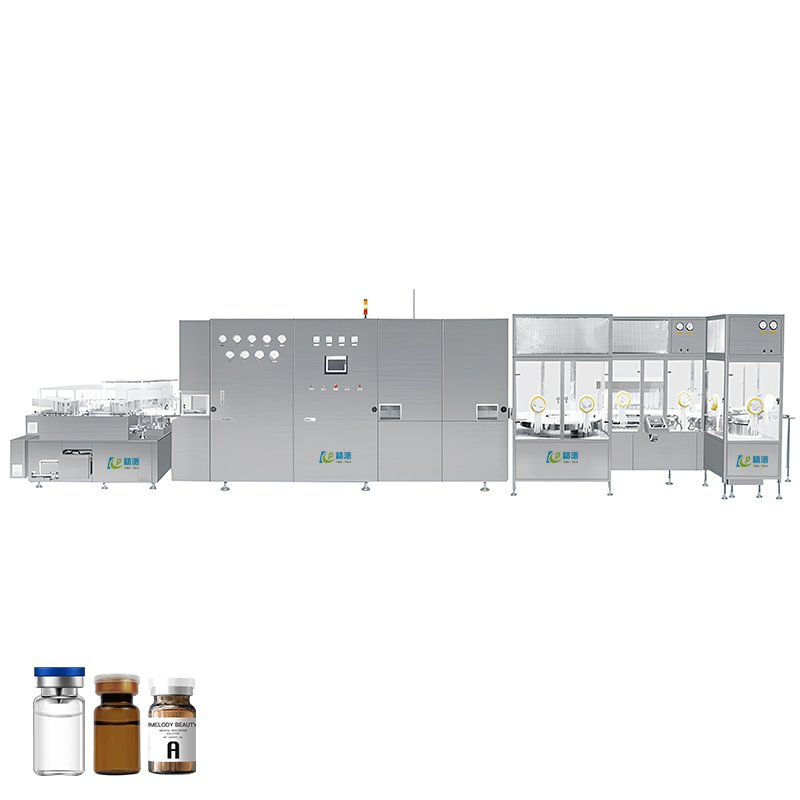
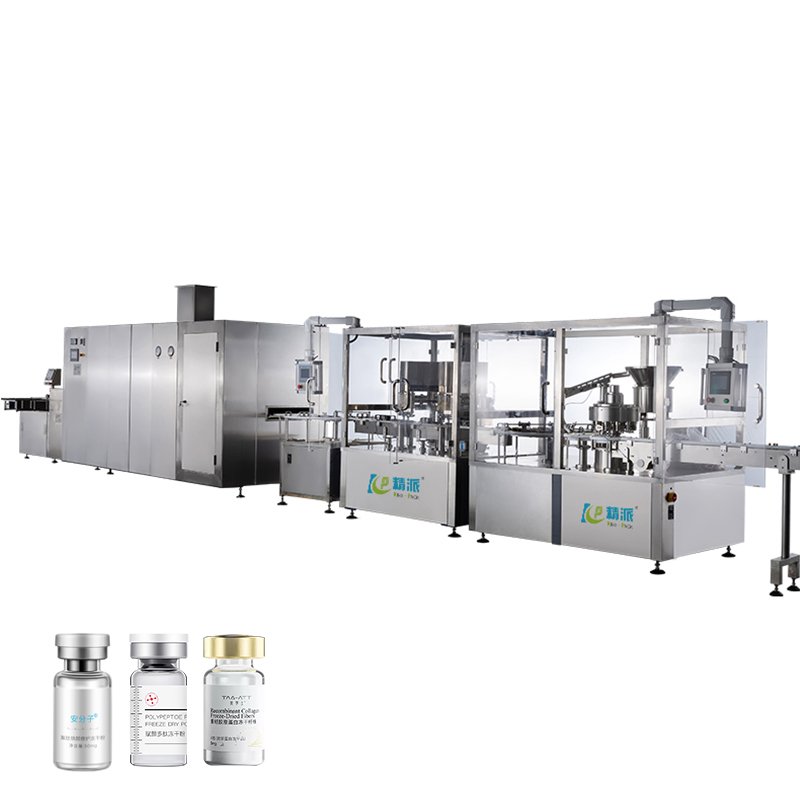
Powder Vial Filling Lines
Powder dosing requires equipment selected for the powder’s flow, dose range and containment needs. A powder line may include washing, drying, dosing, stoppering and capping, but its product path is different from a liquid filling system.
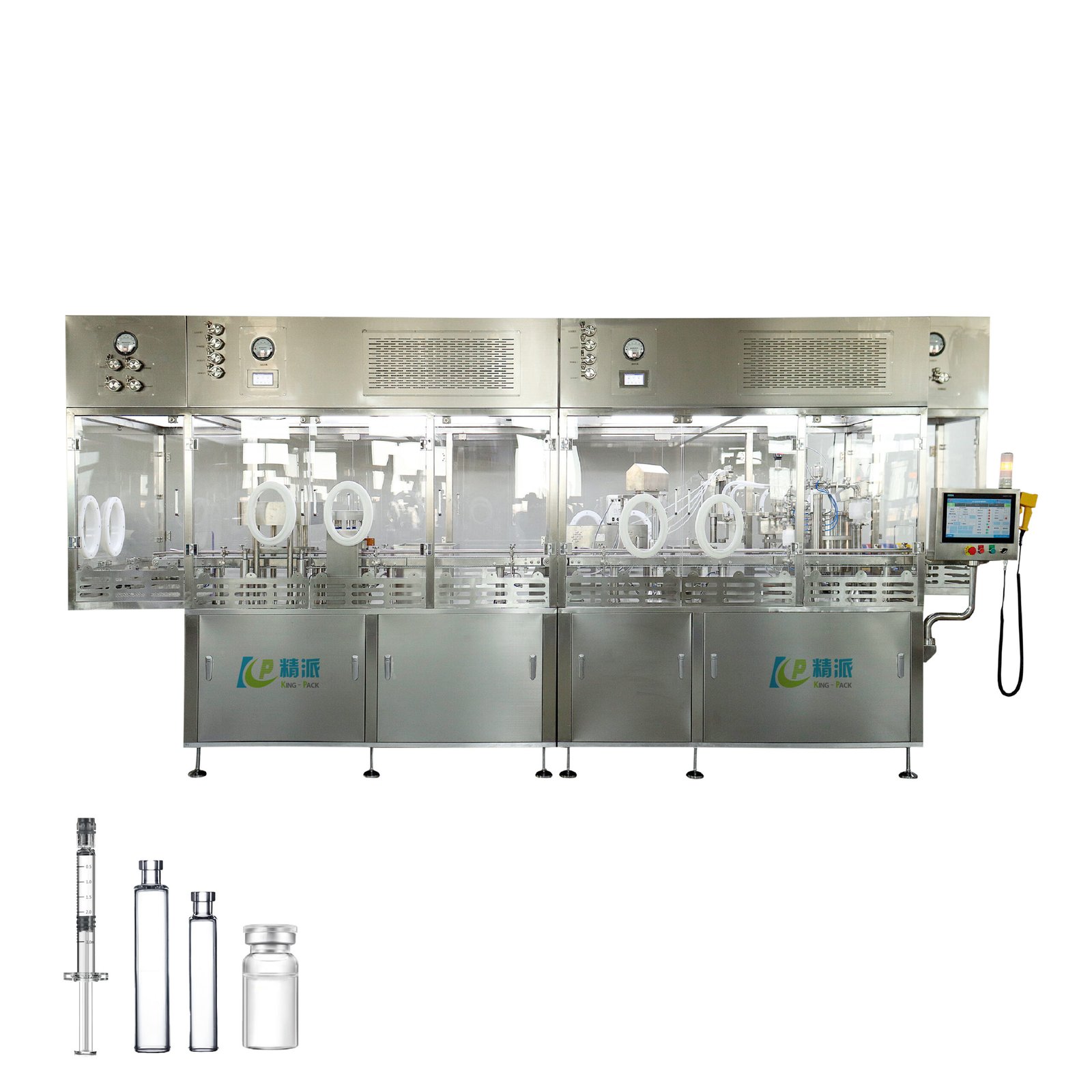
Nested-Container Filling Platforms
A flexible platform may process nested vials, cartridges or prefilled syringes with format-specific handling components. This type is useful when a project needs more than one nested container format on a shared platform.
Vial Filling Machine Type Comparison
| Machine type | Best suited to | Main consideration |
|---|---|---|
| Benchtop/semi-automatic | Lab, pilot and small-batch work | More manual container handling |
| Linear automatic | Flexible automated production | Line length and station coordination |
| Rotary automatic | Continuous higher-output production | Format range and changeover design |
| Integrated processing line | Washing-to-capping projects | Interfaces, buffers and full-line controls |
| Powder filling line | Powder vial products | Powder behavior, dosing and containment |
| Nested-container platform | Vials, cartridges or PFS in nests | Nest format and change parts |
How Dosing Method Affects Machine Selection
The filling mechanism must match the product and target volume. Peristaltic pumps can simplify product-path changeover; piston or ceramic pumps provide defined displacement; time-pressure systems depend on controlled pressure and valve timing. Powder applications require a dedicated powder dosing method.
No dosing method is automatically best for every application. Product viscosity, sensitivity, dose range, cleaning requirements, acceptable loss and container opening all influence the decision.
Seven Questions to Select the Right Vial Filler
- What product will be filled? Liquid, powder and lyophilized-product workflows require different configurations.
- Which vial and closure formats are required? Provide drawings or samples for every planned size.
- What is the fill-volume range? The dosing system and pump size must cover the actual range.
- What output is needed? Consider normal production, peak demand and future expansion.
- Which operations belong in the scope? Filling may be supplied alone or with washing, drying, stoppering, capping, inspection and labelling.
- What production environment is required? Define cleanroom, containment, isolation and cleaning expectations.
- Which machines must connect? Confirm upstream product supply, freeze-dryer transfer and downstream packaging interfaces.
Common Selection Mistakes
- Selecting equipment from output alone without checking container handling and changeovers
- Using a generic accuracy figure without testing the actual product and dose range
- Buying separate machines before confirming line interfaces and buffer requirements
- Assuming liquid and powder products can use the same dosing path
- Ignoring cleaning access, consumables and routine maintenance during layout planning
How to Prepare for a Supplier Review
Send product information, vial and closure drawings, samples, the required process flow, output target, layout and utilities. A supplier review should confirm the dosing test, format range, change parts, product-contact materials, control scope and interfaces before the final configuration is accepted.
Frequently Asked Questions
Is a rotary vial filler always faster than a linear machine?
Not necessarily. Actual output depends on dosing time, container handling, closure operations and the complete line. The layout should be compared using the real product and format requirements.
Can one line fill both liquid and powder?
It may be possible with dedicated modules, but liquid and powder normally require different dosing paths and cleaning or containment strategies. The project must be evaluated before a shared platform is selected.
Should I choose an individual machine or a turnkey line?
Choose an individual machine when compatible upstream and downstream equipment already exists. Choose a coordinated line when several operations must exchange containers and operate under one production plan.
Compare KING PACK Vial Filling Options
See the vial filling machines and complete processing lines, including the liquid vial linkage line, powder vial line and KPGZA500 nested-container platform.
Contact the KING PACK project team with your product, vial samples, filling range and required output for a configuration review.