
Pharmaceutical packaging can help protect product quality, communicate required information, provide tamper evidence, and support correct use. The suitable format depends on the formulation, stability data, dose, route, market, and validated package design.
This guide explores the diverse types of pharmaceutical packaging, examining different levels of protection, materials, dosage-specific solutions, and emerging innovations that shape modern drug delivery.
Understanding Packaging Levels in Pharmaceuticals
Primary Packaging (Immediate Contact with Drug)
Primary packaging contacts the drug and must be compatible with the formulation and intended shelf life. Barrier performance, extractables/leachables, closure integrity, and stability must be assessed for the specific product.

Blisters, vials, bottles, tubes, and other formats may be used for different dosage forms. The material choice is one input to stability and package-validation work.
Filling and packaging equipment may be configured for selected injectable or medical-device applications. Sterile filling and product integrity depend on the complete facility, process, and qualification plan.
Secondary Packaging (Branding, Handling & Protection)
Secondary packaging surrounds the primary container, offering extra protection during distribution and serving as the main surface for branding, regulatory information, and patient instructions. Cartons, boxes, and labels are included here.

Cartoners, coding, inspection, and serialization systems may add required information and traceability. The exact regulatory fields and verification controls vary by market and product.
Barcodes and serialization can support product tracking where required. Confirm the applicable regulation, data system, and verification responsibility.
Tertiary Packaging (Bulk Transport & Logistics)
Tertiary packaging consolidates multiple units for bulk shipping and warehouse storage. Corrugated boxes, shrink-wrapped pallets, and shipping containers protect products during transport and rough handling.

Tertiary packaging can reduce transport damage when designed for the product, route, temperature, and handling conditions. It does not replace primary or secondary package validation.
Palletization, stackability, temperature control, and distribution testing should be assessed for the actual product and logistics route.
King Pack can discuss selected packaging-line modules. Integration across primary, secondary, and tertiary stages depends on the project scope and interfaces.
Recommended Reading: A Beginner’s Guide to Tube Filling Machines – King Pack Machinery
Packaging for Different Dosage Forms
Solid Dosage Forms – Tablets & Capsules
Tablets and capsules require protection from moisture, light, oxygen, and mechanical damage according to the formulation and stability data. Avoid relying on a universal percentage of all medications.
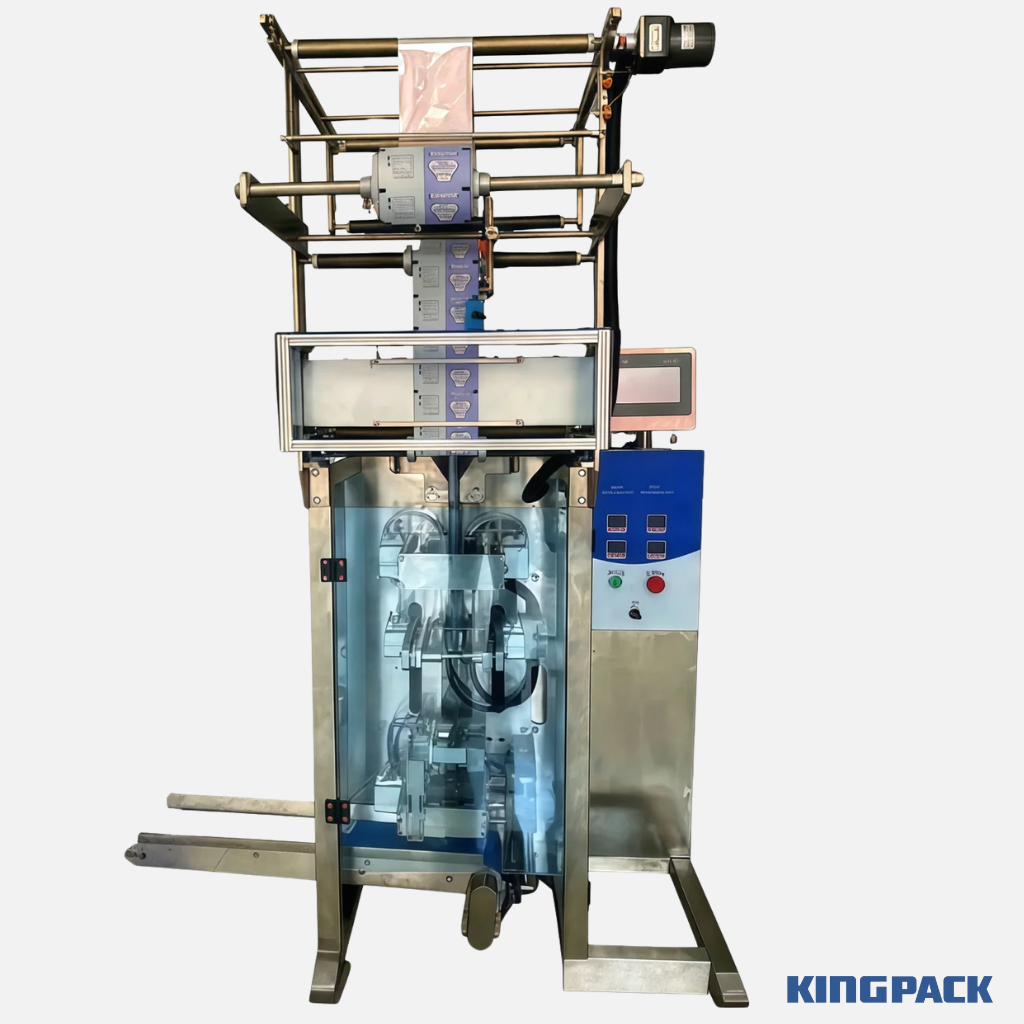
KP-50 Capsule and Tablet Packaging Machine – King Pack Machinery
Packaging Options for Solids:
- Blister cavities can separate individual doses. The film, lidding, seal, and barrier should be selected and validated for the product.
- HDPE or other bottles may suit bulk dispensing when the bottle, closure, desiccant, and stability data support the intended use.
- Strip packs may provide individual-unit packaging with different material and process tradeoffs. Confirm the required barrier, seal, and production format.
Blisters, bottles, and strips are selected according to the product, dose, stability, patient use, and production requirements.
Liquid Dosage Forms – Vials, Ampoules, Bottles
Liquid dosage forms require container and closure systems that control leakage, compatibility, contamination, light, oxygen, and storage risks. Sterility is product- and process-specific.
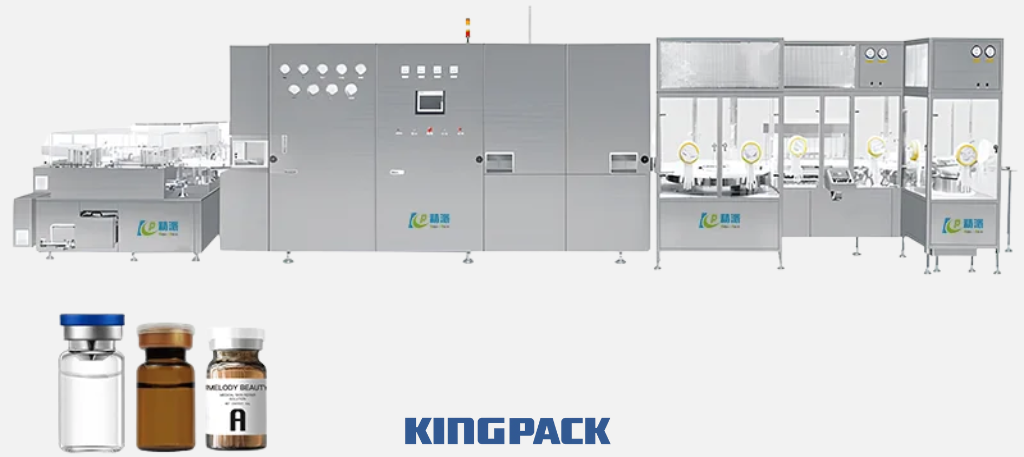
Vial bottle filling linkage line – King Pack Machinery
Packaging Options for Liquids:
- Glass vials may suit selected injectable or multi-dose products when the glass, stopper, seal, and validated process are compatible.
- Ampoules can provide single-use glass packaging, but sealing, breakage, extractables, and opening safety must be considered.
- HDPE, PET, or other plastic bottles may suit oral liquids when the material and closure meet compatibility, barrier, and child-resistance requirements.
Package selection for oxygen-sensitive injectables should follow formulation stability data and container-closure studies. Equipment can support filling and sealing, but it does not by itself establish sterility.
Semi-Solid Dosage Forms – Creams, Ointments, Gels
Semi-solid drugs need packaging that allows controlled dispensing while protecting the product from contamination and oxidation. Packaging choice depends on formulation stability and user convenience.
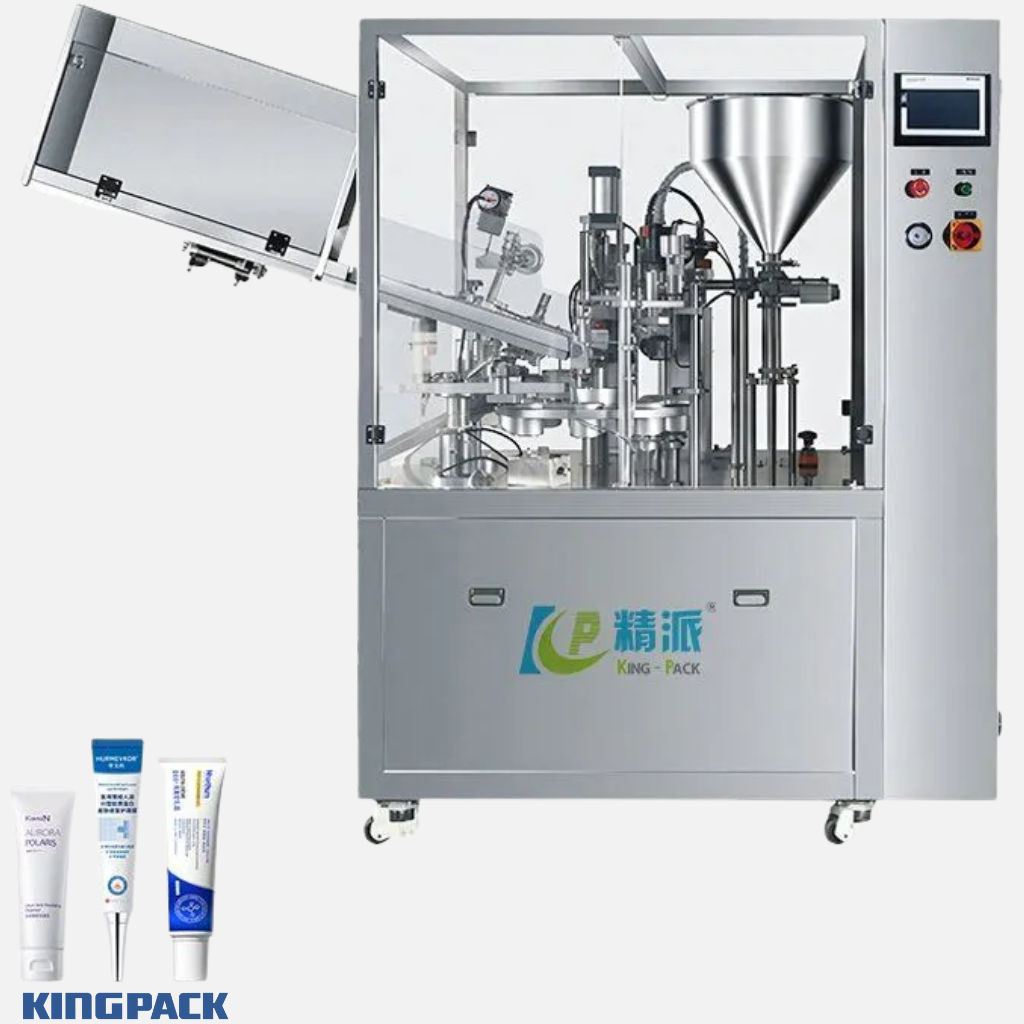
KPGFW-350BN creams & Gels filling and sealing machine – King Pack Machinery
Packaging Options for Semi-Solids:
- Aluminum, plastic, or laminate tubes may be selected based on compatibility, barrier, dispensing, and sustainability requirements.
- Jars: Suitable for thick creams and ointments; wide-mouth jars allow access but can expose product to air.
- Airless or other dispenser systems may reduce air exposure for selected formulations, but shelf-life benefits must be demonstrated by stability testing.
Tube format and size range depend on the selected equipment. Confirm the available 5–250 ml or other range for the actual machine and package.
Inhalation & Aerosol Formats – Inhalers, DPIs, Aerosol Cans
Inhalation products use specialized devices and containers. Packaging selection must follow dose-delivery, moisture, compatibility, and regulatory requirements.
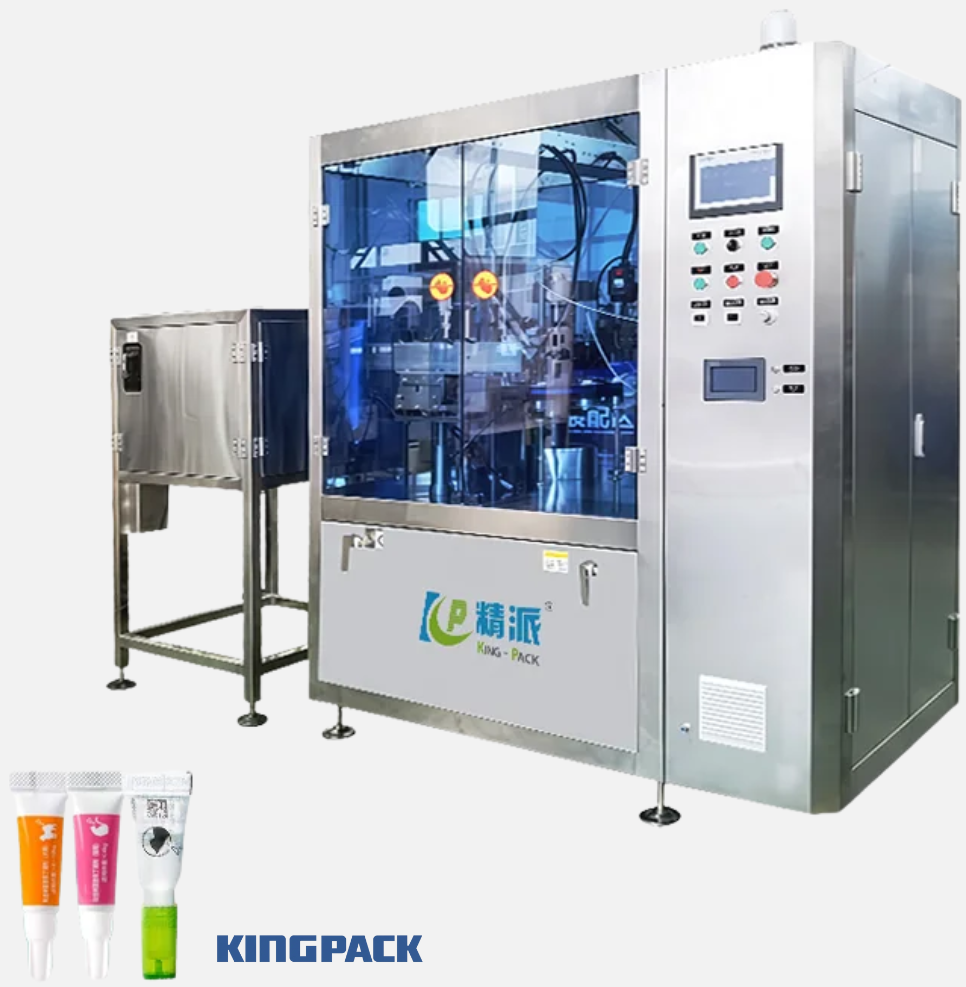
KPGFW-60D drop filling and sealing machine – King Pack Machinery
Packaging Options for Inhalation:
- Metered-Dose Inhalers (MDIs): Pressurized canisters with metering valves for precise dosing; integrated with delivery device.
- Dry Powder Inhalers (DPIs): Blister strips or capsules inserted into inhaler devices; must protect powders from moisture.
- Nebulizer Solutions: Single-dose vials or multi-dose bottles; reduce contamination risk and improve dosing accuracy.
Equipment for vials or liquid filling may be relevant to some nebulizer formats, but product-specific validation and regulatory requirements still apply.
Recommended Reading: Hand Sanitizer Filling Machine Guide: Working, Types, and Buying Tips – King Pack Machinery
Key Packaging Materials & Their Properties
Packaging materials are selected according to formulation compatibility, barrier, strength, patient use, production, and regulatory requirements.
King Pack systems can be configured for selected glass, plastic, aluminum, laminate, or paperboard packages. Confirm material handling and documentation for the project.
| Material | Applications | Key Features | Notes |
| Glass | Injectable vials, oral liquids | Glass can provide chemical and barrier benefits in selected applications; type, finish, closure, and stability data must be confirmed. | Borosilicate glass may be selected for sensitive products, but the grade and package system must be justified by compatibility and stability work. |
| HDPE | Tablets & capsules bottles | HDPE can provide a useful balance of moisture resistance and impact resistance for selected products; confirm barrier and closure performance. | Desiccant closures may be used for moisture-sensitive products where supported by stability data. |
| PET | Liquid bottles | Clear, lightweight, visual inspection | PET is lightweight and transparent but its barrier performance varies by grade, design, and closure. Confirm suitability for the formulation. |
| PP | Autoclaved containers, hot-fill liquids | Heat-resistant, chemically stable | PP can tolerate some heat and chemical exposure, but sterilization and hot-fill suitability must be confirmed for the specific grade and design. |
| Aluminum/Foils & Laminates | Blisters, protective wraps | Aluminum and laminate structures can provide strong barrier performance, but the layer construction, seal, and compatibility must be validated. | Cold-form aluminum and laminates may be selected for light- or moisture-sensitive products when package testing supports the choice. |
| Paperboard/Cartons | Secondary packaging | Protective, printable, recyclable | Supports branding, regulatory info; sustainability-focused options available |
Material selection should be based on drug sensitivity, shelf life, route, patient use, supply chain, and validation data rather than a generic hierarchy.
Packaging lines should be specified for the actual materials, formats, controls, and compliance responsibilities.
Why Packaging Matters Beyond Containment
Drug Stability & Shelf Life Protection
Hydrolysis, oxidation, photodegradation, and temperature effects can influence product stability. Packaging requirements come from formulation and stability studies.
Different formulations have different sensitivity profiles. Package selection should address the documented vulnerabilities of the specific product.
Accelerated stability studies may inform packaging and shelf-life decisions, but the study design and acceptance criteria are product- and regulation-specific.
Patient Safety – Tamper Evidence, Child Resistant Design
Pharmaceutical packaging incorporates multiple safety features protecting patients from tampering and accidental poisoning.
Tamper-evident features can reveal package access where required. The design and regulatory requirement vary by dosage form and market.
Child-resistant closures and blister designs can reduce access by young children when tested to the applicable standard. Accessibility for intended users must also be considered.
Senior-friendly designs balance child resistance with accessibility for elderly patients. Some medications now offer dual-closure options, allowing patients to choose between standard and easy-open caps based on household composition.
Recommended Reading: Top 10 Syringe Filling Machine Manufacturers in 2025 – King Pack Machinery
Regulatory Compliance – GMP, Serialization, Traceability
Pharmaceutical packaging must comply with extensive regulations covering materials, manufacturing processes, labeling, and tracking systems.
GMP requirements cover materials, manufacturing, documentation, contamination control, and quality systems. Demonstrate suitability through the applicable compatibility and stability work.
Serialization obligations depend on market and product. Confirm the applicable DSCSA, EU FMD, or other requirements with the responsible regulatory team.
Barcodes, 2D codes, and RFID may support traceability where implemented. Confirm the data system and verification process.
Emerging Trends & Innovations in Pharma Packaging
Smart Packaging – RFID, Sensors, Connectivity
Smart packaging technologies add functionality beyond passive protection by monitoring conditions, communicating information, and improving patient engagement.
Temperature indicators or sensors may help monitor selected cold-chain conditions. Their accuracy, placement, and acceptance criteria must be validated.
RFID can support inventory or supply-chain tracking where the infrastructure is available; performance depends on label, reader, packaging, and data system.
QR, NFC, or other connected features may link to approved information or authentication services. Privacy, cybersecurity, and data ownership should be considered.
Sustainable Materials & Eco-Design
Environmental concerns are reshaping pharmaceutical packaging with focus on reducing plastic waste, increasing recyclability, and using renewable materials.
Mono-material or other recyclable designs may reduce waste in selected applications, but barrier and regulatory performance must be confirmed.
Bio-based materials such as PLA or bio-PET may be considered for selected packages. Regulatory acceptance, barrier, and end-of-life claims require market-specific evidence.
Lightweighting can reduce material use when the package retains required protection and performance. Confirm through testing.
Patient-Centric Packaging – Ease of Use, Single Dose Formats
Modern pharmaceutical packaging increasingly focuses on patient experience and medication adherence.
Easy-open designs help patients with arthritis, reduced hand strength, or visual impairments access their medications. Larger text, high-contrast colors, tactile indicators, and simplified opening mechanisms all improve usability.
Adherence packaging like calendar packs and reminder systems help patients take medications correctly. Blister cards marked with days of the week, dose-specific packaging, and integrated electronic reminders address the significant problem of medication non-adherence.
Single-dose formats improve dosing accuracy while reducing contamination risk for multi-use products. Pre-filled syringes, unit-dose vials, and single-serve sachets eliminate measurement errors and prevent preservative-related issues in multi-dose containers.
King Pack can discuss single-dose filling and packaging configurations for selected products. Patient-outcome claims require clinical and adherence evidence.
How to Choose the Right Packaging Solution
Packaging selection should match the drug, dosage form, material, equipment, process, and quality requirements.
Balance protection, cost, patient use, validation, and line integration. Format changeover and multi-SKU capability depend on the supplied system.
Supplier evaluation should include technical capability, documentation, service, and the project’s applicable GMP/CE or other requirements.
Conclusion
A suitable pharmaceutical packaging solution is project-specific. Define the drug format, production volume, materials, stability, validation, and regulatory needs before final equipment selection.