
Choosing a syringe filling machine manufacturer is a process decision, not a brand-name contest. The right shortlist depends on whether you run ready-to-use (RTU) nested syringes or bulk components, the required batch size, barrier strategy, filling technology, in-process control and the supplier’s ability to support qualification.
This 2026 comparison covers ten manufacturers with documented syringe or multi-container fill-finish capabilities. The companies are numbered for navigation, not ranked by sales, quality or market share. Specifications should be confirmed directly with each supplier for the current model and project configuration.
Disclosure: KING PACK publishes this guide and is included as one of the suppliers. To keep the comparison useful, the same selection questions are applied to every company and links point to official manufacturer sources. Buyers should run an independent URS, technical review and FAT before placing an order.
Syringe Filling Machine Manufacturers at a Glance
| Manufacturer | Headquarters | Useful shortlist position |
|---|---|---|
| KING PACK | China | Configurable filling, stoppering and downstream integration for cost-conscious projects |
| Syntegon | Germany | Broad RTU syringe processing and high-output aseptic line concepts |
| groninger | Germany | RTU syringe, vial and cartridge platforms from laboratory to high output |
| Bausch+Ströbel | Germany | Extensive sterile fill-finish portfolio and wide production range |
| OPTIMA pharma | Germany | Customized turnkey sterile liquid filling and integrated project engineering |
| IMA Life | Italy | Robotic RTU fill-finish and downstream injectable packaging integration |
| Dara Pharma | Spain | Compact, scalable and complete RTU syringe lines |
| Steriline | Italy | Robotic nest filling under RABS or isolator configurations |
| Cytiva | United States | Standardized gloveless aseptic filling workcell for vials, syringes and cartridges |
| Cozzoli Machine Company | United States | Moderate-output batch syringe filling and vacuum stoppering equipment |
A manufacturer appearing here is not automatically suitable for every drug, syringe format or regulatory market. Use the table to build a shortlist, then compare the exact proposed configuration.
How We Selected These Manufacturers
- An official source currently describes syringe filling, RTU container processing or a multi-container aseptic filling platform that includes syringes.
- The supplier can be evaluated on more than a generic “liquid filling” claim.
- The portfolio adds a distinct option to the shortlist, such as clinical batches, high-speed production, robotic isolation or flexible turnkey integration.
- No paid placement or third-party market ranking is used.
10 Syringe Filling Machine Manufacturers to Compare
1. KING PACK — China
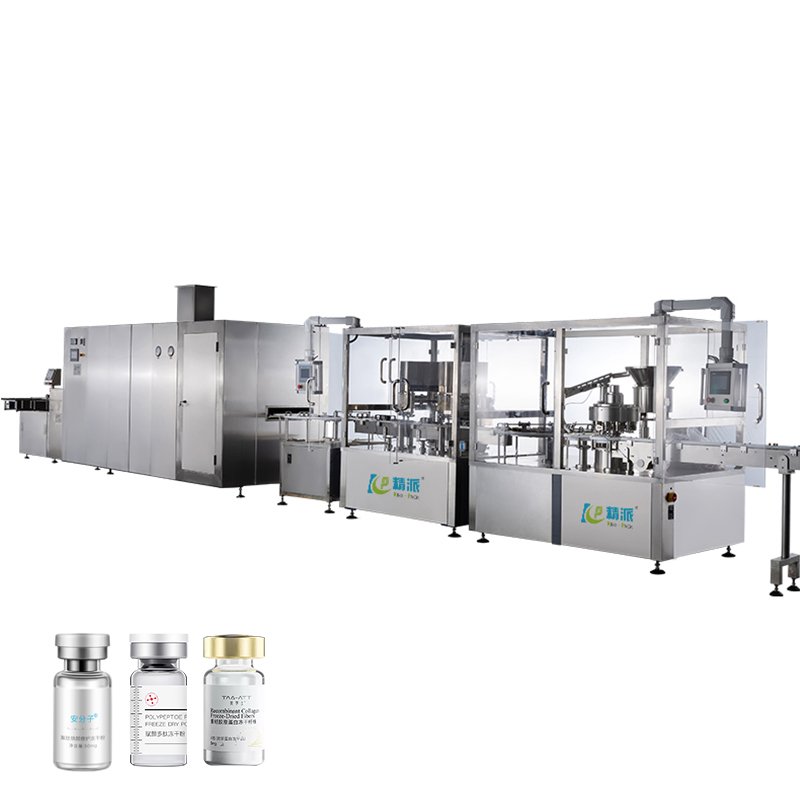
KING PACK’s syringe filling machine range is relevant to buyers seeking a configurable solution with filling, vacuum stoppering and line integration from one project team. The commercial advantage is a flexible specification and direct factory coordination; the buyer should still confirm the exact RTU handling method, barrier scope, dosing system, IPC strategy and validation documentation for the proposed model.
Shortlist when: you want a cost-conscious, customized line and can define the user requirements clearly. Verify: reference format, product-contact path, acceptable interventions, FAT liquid, local service plan and documentation deliverables.
2. Syntegon — Germany
Syntegon’s official syringe portfolio covers upstream RTU handling, filling and closing, denesting, rod insertion, labeling and inspection. Its current solutions include nested pre-sterilized syringe processing with peristaltic and other dosing options, IPC and barrier integration. The MLD Advanced is positioned for high-output RTU syringe applications.
Shortlist when: the project needs a broad, integrated high-end portfolio. Verify: the proposed transfer concept, percentage of IPC, product-loss strategy, stopper placement control and responsibility for upstream/downstream interfaces.
3. groninger — Germany
groninger lists RTU filling platforms for syringes, vials and cartridges, including labworx for semi-automatic work, flexfill for standardized flexible production and UFVN for high-speed processing. This breadth makes it useful when a manufacturer wants a common equipment philosophy across clinical, medium and commercial scales.
Shortlist when: scale-up and multi-format RTU processing are central. Verify: nest/tub suppliers, tool-less changeover boundaries, IPC configuration, barrier partner and the site acceptance/qualification schedule.
4. Bausch+Ströbel — Germany
Bausch+Ströbel’s syringe filling portfolio spans compact clinical-batch equipment through automated high-performance systems. Its RTU nest platforms can combine different dosing methods, vacuum-assisted filling or closing, IPC and camera checks. The company also covers related container preparation, inspection and assembly technologies.
Shortlist when: the project requires a mature sterile fill-finish platform and broad lifecycle support. Verify: which performance claims apply to the chosen syringe, dose, product and inspection level—not only the maximum platform rating.
5. OPTIMA pharma — Germany
OPTIMA develops customized filling, packaging and handling systems, with its pharma business focused on sterile liquid applications and integrated project execution. It is a relevant shortlist candidate for complex lines where barrier systems, process equipment, lyophilization or other project interfaces must be engineered together.
Shortlist when: the line is a highly customized facility project rather than a stand-alone filler purchase. Verify: current syringe-specific references, RTU handling route, subsystem ownership, integrated FAT scope and long-term service response.
6. IMA Life — Italy
IMA Life’s INJECTA platform uses robotic technologies for RTU containers, including pre-sterilized syringes, vials and pre-capped cartridges. IMA can also connect primary fill-finish with inspection, assembly, labeling and secondary packaging capabilities across its wider group.
Shortlist when: robotic RTU processing and downstream injectable packaging are both in scope. Verify: the exact INJECTA configuration, decontamination route, IPC method, format range and who owns each interface through qualification.
7. Dara Pharma — Spain
Dara Pharma offers complete lines for nested syringes covering debagging, delidding, filling and closing. Its portfolio also includes compact and tabletop equipment, making the company worth comparing for projects that need a path from small batches to more automated RTU production.
Shortlist when: footprint, modularity and scalable batch production matter. Verify: the supported tub and syringe dimensions, stopper insertion method, barrier option, data package and achievable output with the actual dose and product.
8. Steriline — Italy
Steriline’s RNFM robotic nest filling machine is designed for RTU nested syringes, vials and cartridges under oRABS, cRABS or isolator configurations. Published options include volumetric or peristaltic dosing, checkweighing, nitrogen gassing, vacuum stoppering and particle monitoring.
Shortlist when: a robotic multi-container platform with flexible barrier integration is required. Verify: de-bagging automation, vaporized-hydrogen-peroxide compatibility, single-use path option, monitoring scope and cycle-time assumptions.
9. Cytiva — United States
Cytiva’s SA25 aseptic filling workcell is a standardized, gloveless robotic isolator for nested vials, syringes and cartridges. Its positioning is different from a conventional custom line: buyers evaluate a repeatable workcell concept, multi-format capability and the option to add capacity with additional workcells.
Shortlist when: rapid deployment, flexible clinical/commercial production and standardized automation are priorities. Verify: supported nests, fill path, batch transfer, throughput for each format, electronic records and site integration requirements.
10. Cozzoli Machine Company — United States
Cozzoli’s syringe equipment includes the F329HE for moderate-output batch filling and an MVP vacuum stoppering system. This makes it distinct from the very-high-speed platforms above and potentially suitable for organizations that value a simpler batch workflow.
Shortlist when: moderate production, batch handling and a relatively compact approach fit the process. Verify: operator interventions, barrier compatibility, tub cycle under the actual liquid, cleaning/sterilization method and qualification support.
How to Compare Syringe Filling Equipment Correctly
| Decision area | Information to give suppliers | Evidence to request |
|---|---|---|
| Primary container | Glass/polymer syringe, size, nest and tub supplier, drawings and samples | Proven format range, handling test and stopper-height control |
| Drug product | Dose range, viscosity, foaming, oxygen sensitivity, toxicity and product value | Dosing trial, hold-up volume, recovery plan and compatibility review |
| Aseptic strategy | Cleanroom concept, RABS/isolator, transfer route and contamination-control strategy | Intervention list, airflow study approach and bio-decontamination boundaries |
| Quality control | Required IPC frequency, checkweighing, vision and reject rules | Measurement capability, challenge tests and reject reconciliation |
| Output | Batch size, annual demand, shifts and changeover frequency | Guaranteed rate for the actual format and dose, including planned stops |
| Validation and data | URS, 21 CFR Part 11/data-integrity expectations and qualification plan | FDS/SDS, software documentation, FAT/SAT, IQ/OQ and traceability package |
| Lifecycle support | Site location, response-time need, training and spare-parts strategy | Named service organization, escalation path and critical-spares list |
RTU Syringes, Bulk Syringes and Barrier Choice
Most modern prefilled syringe projects use sterilized, nested RTU components. The line may need bag opening, tub transfer, lid and liner removal, filling, vacuum stoppering and re-nesting without damaging the syringe flange or allowing glass-to-glass contact. Bulk-component projects require a different preparation and handling route, so “syringe compatible” does not prove that a machine fits both.
The machine is only one part of an aseptic process. The U.S. FDA’s aseptic-processing guidance addresses control of sterile drug manufacturing, while the European Commission lists EU GMP Annex 1 as fully applicable. A supplier can support compliance, but buying a machine does not by itself make a process compliant.
Questions to Put in the RFQ
- Which exact syringe, nest, tub and stopper combinations have been run on this platform?
- What is the guaranteed output for our fill volume and liquid—not the platform maximum?
- Which dosing systems are available, and how will accuracy, bubbles and product loss be tested?
- Is IPC statistical or 100%, and can the system automatically correct and reconcile rejects?
- Which operations remain manual, and how are those interventions represented in risk assessment and media-fill planning?
- Where are the RABS or isolator boundaries, and who owns decontamination, environmental monitoring and glove-port integration?
- What FAT material will represent the actual drug’s viscosity, surface tension, foaming and oxygen sensitivity?
- Which documents, source-code arrangements, training, spares and service response are included?
Common Red Flags
- A speed claim without syringe format, dose, pump type, IPC level and operating assumptions.
- “GMP compliant” used as a substitute for a project-specific contamination-control and qualification plan.
- No clear owner for tub transfer, barrier integration, inspection or downstream interfaces.
- Accuracy quoted without a test liquid, sample method or acceptance criteria.
- No plan for product hold-up, recovery, batch reconciliation or single-use assemblies.
- A low purchase price that excludes validation documents, change parts, service travel or critical spares.
Frequently Asked Questions
Who is the best syringe filling machine manufacturer?
There is no single best supplier for every project. A clinical-batch workcell, a 400-units-per-minute commercial line and a semi-automatic batch filler solve different problems. The best choice is the manufacturer that demonstrates compliance with your URS using representative product and packaging.
What is the difference between a syringe filler and a complete fill-finish line?
A filler meters the drug product. A complete line may also perform bag and tub opening, de-lidding, nest handling, stoppering, IPC, rejection, re-nesting, inspection, plunger-rod insertion, labeling and secondary packaging.
Which pump is best for prefilled syringes?
Peristaltic, rotary piston and time-pressure systems are all used. Selection depends on the formulation, dose, viscosity, accuracy, shear sensitivity, product loss, cleaning strategy and whether a disposable product path is required.
Should buyers request an FAT with their actual product?
Use the actual product when it is safe and practical. Otherwise agree on a representative surrogate and document which physical properties it must reproduce. The FAT should challenge start-up, steady production, interventions, rejects and changeovers—not only a short ideal run.
Build Your Syringe Filling Supplier Shortlist
Begin with a concise URS and send the same data package to each shortlisted supplier. Compare the proposed process, responsibilities, test evidence and lifecycle support before comparing price. To evaluate KING PACK, review our prefilled syringe filling machine options, see our broader filling and processing solutions, or send the project team your syringe, drug and batch requirements.