
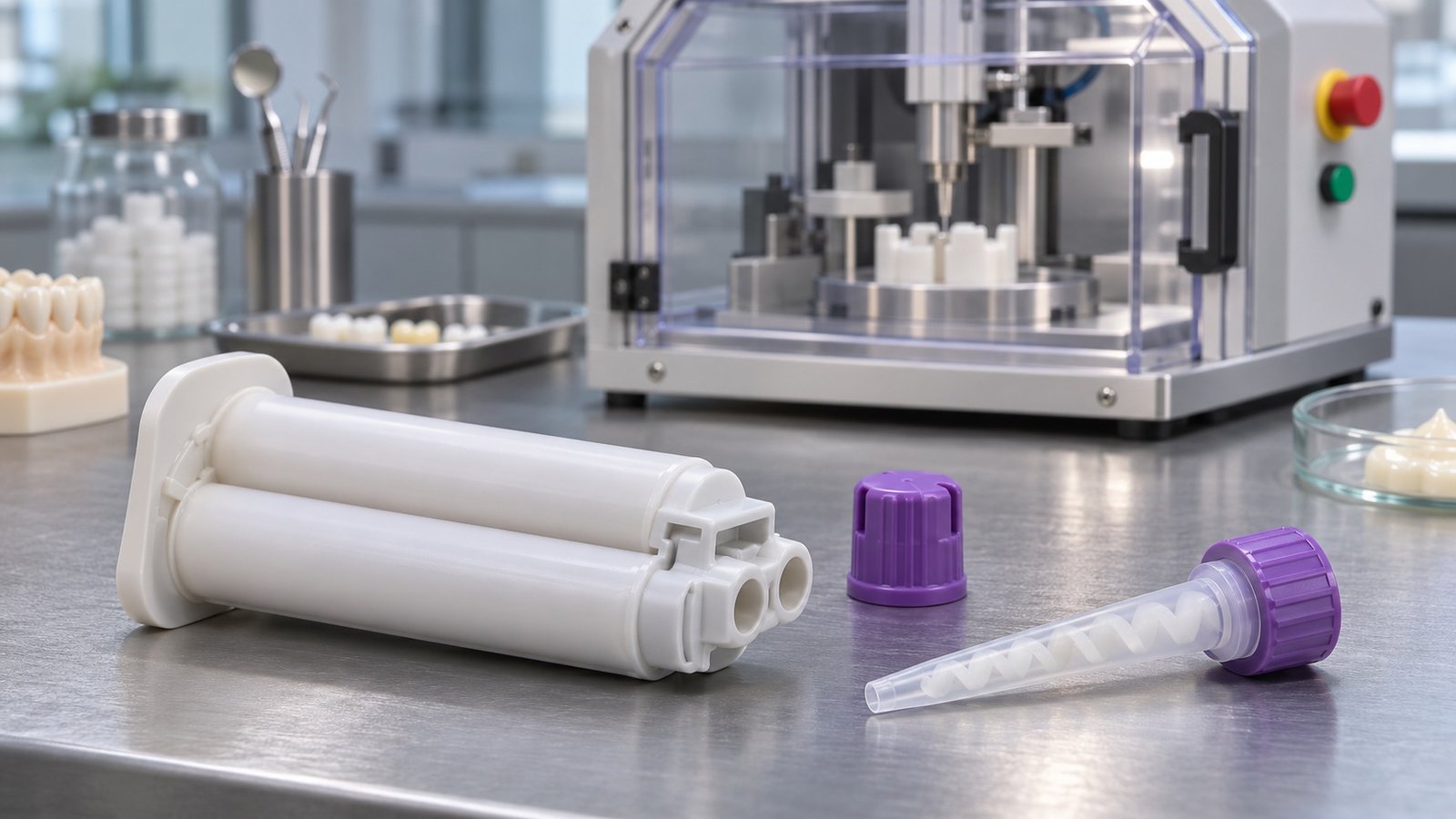
Test a dental cartridge filling machine with your production-intent cartridge body, closures, dispenser and representative material before committing to tooling. Ask the supplier to show whether the machine can locate the cartridge consistently, dose each chamber within your limits, seat the pistons and outlet closure, and deliver a finished unit that fits and dispenses through the intended hardware. Record the conditions and sample results so each finding can be reflected in the quotation or acceptance protocol.
Identify the dental cartridge by its interfaces
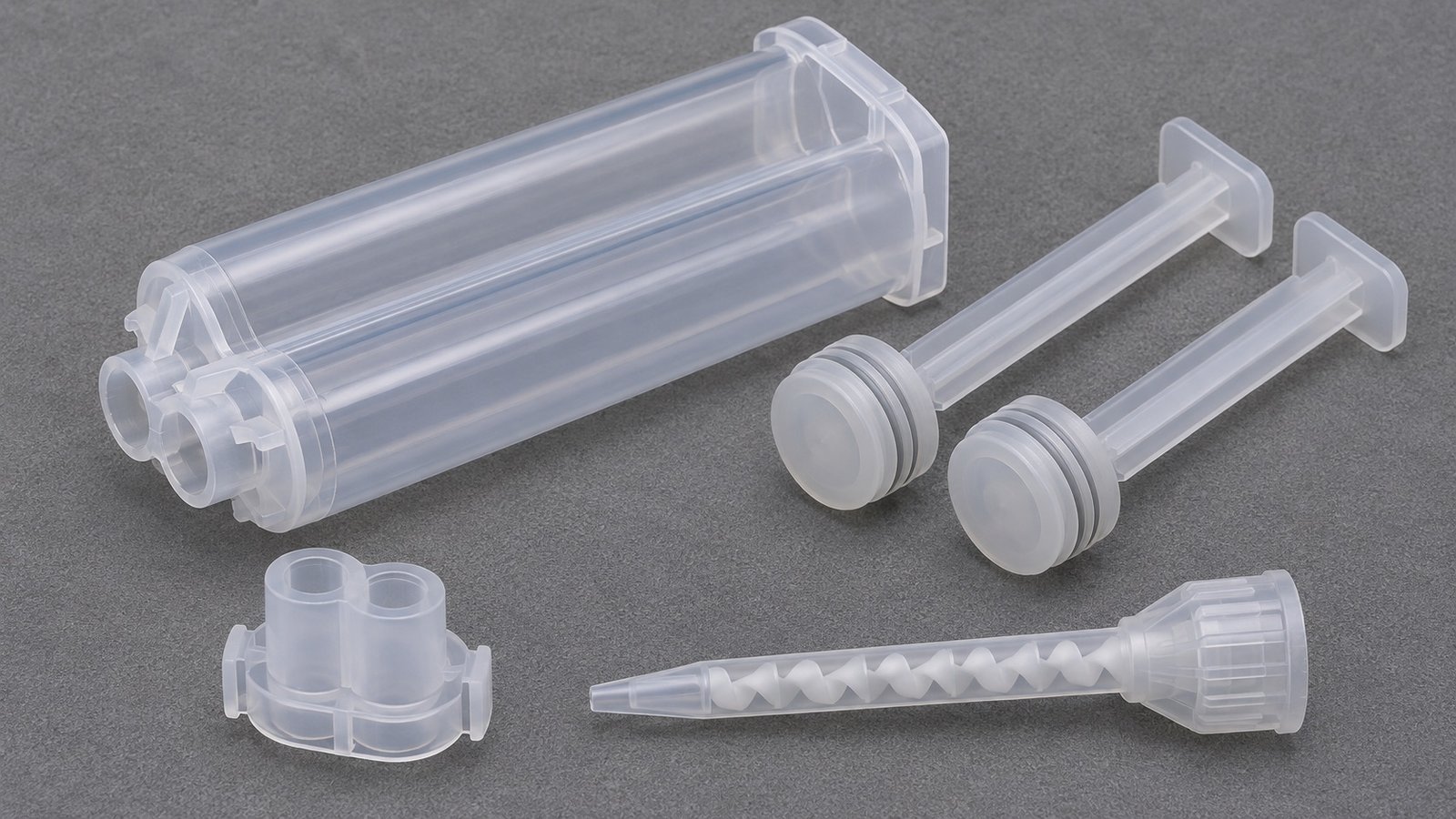
Send the supplier a dated drawing and the complete set of parts that will be used together. Include the barrel body, cap, rear piston or pistons, intended dispenser and mixing tip if applicable. Identify the locating surfaces, orientation features, outlet geometry and permissible contact zones. The filling team needs to know which parts will arrive preassembled and which the machine is expected to assemble.
An automix cartridge may have two chambers that supply separate components to a mixing tip. Dentsply Sirona's 50 mL dispenser instructions, for example, identify compatible cartridge configurations and describe material mixing through the attached tip. Use the instructions for your specific package to determine the trial interfaces. For small unit-dose cups and a dedicated applicator gun, see the dental compule filling guide. Dentsply Sirona cartridge dispenser instructions.
Agree on the trial conditions before sending material
Ask the supplier to identify the proposed fixture, dosing arrangement, closure method and measurement approach before the trial. Include package revisions, representative lots, production orientation, each material's handling limits and the intended fill target for each chamber. Specify whether the project uses a single-component cartridge or a paired package. Agree on the test material and how it will be handled and returned or disposed of.
Organize the trial in stages so the purchase decision can follow the available evidence. A dry fixture review can demonstrate presentation, location, nozzle clearance and unloading with the right body. A representative fill trial can inform decisions about dosing, closure and dispensing. A factory acceptance test (FAT) can then verify the agreed configuration and performance under the documented test conditions. Record any manual action or temporary tooling used in early trials so the next test can address the intended production arrangement.
Use a trial matrix that shows why a unit passed
Set the test method and criteria with engineering and quality before collecting samples. The following table gives buyer-defined test outcomes to put in an equipment request for quotation. Use drawing or product specification limits where they exist and agree on who can approve any change to the method.
| Trial area | Evidence to request | Purchase decision it supports |
|---|---|---|
| Presentation and support | Correct orientation, evidence of repeatable seating, inspection for marks or deformation and consistent unloading | Confirm the locating features and need for dedicated nests |
| Individual chamber fill | Tare method, raw mass records for the required chambers, targets and traceability by head or station | Evaluate the dosing arrangement and the inspection method |
| Closure assembly | Position and condition of pistons and cap, leakage screen and observations of material around the sealing surfaces | Confirm closure sequence and tooling scope |
| Finished-package use | Dispenser engagement, mixing-tip fit and agreed observations during first dispense | Check whether the as-filled package works with the intended hardware |
| Stops and replenishment | Sample groups covering startup, steady run and the agreed disturbances | Compare discard rules, restart checks and evidence needed at FAT |
| Unit inspection | Defined defects, how test defects will be represented and how rejected units will be accounted for | Determine which inspection and reject functions the quotation must include |
Count manual orientation, closures placed by hand and inspection outside the equipment as separate trial activities. An acceptable sample from a hand-assembled demonstration can help confirm feasibility. The engineering team still needs a production-stage test for any station or operation that will be automated.
Measure each chamber where the package has a paired fill
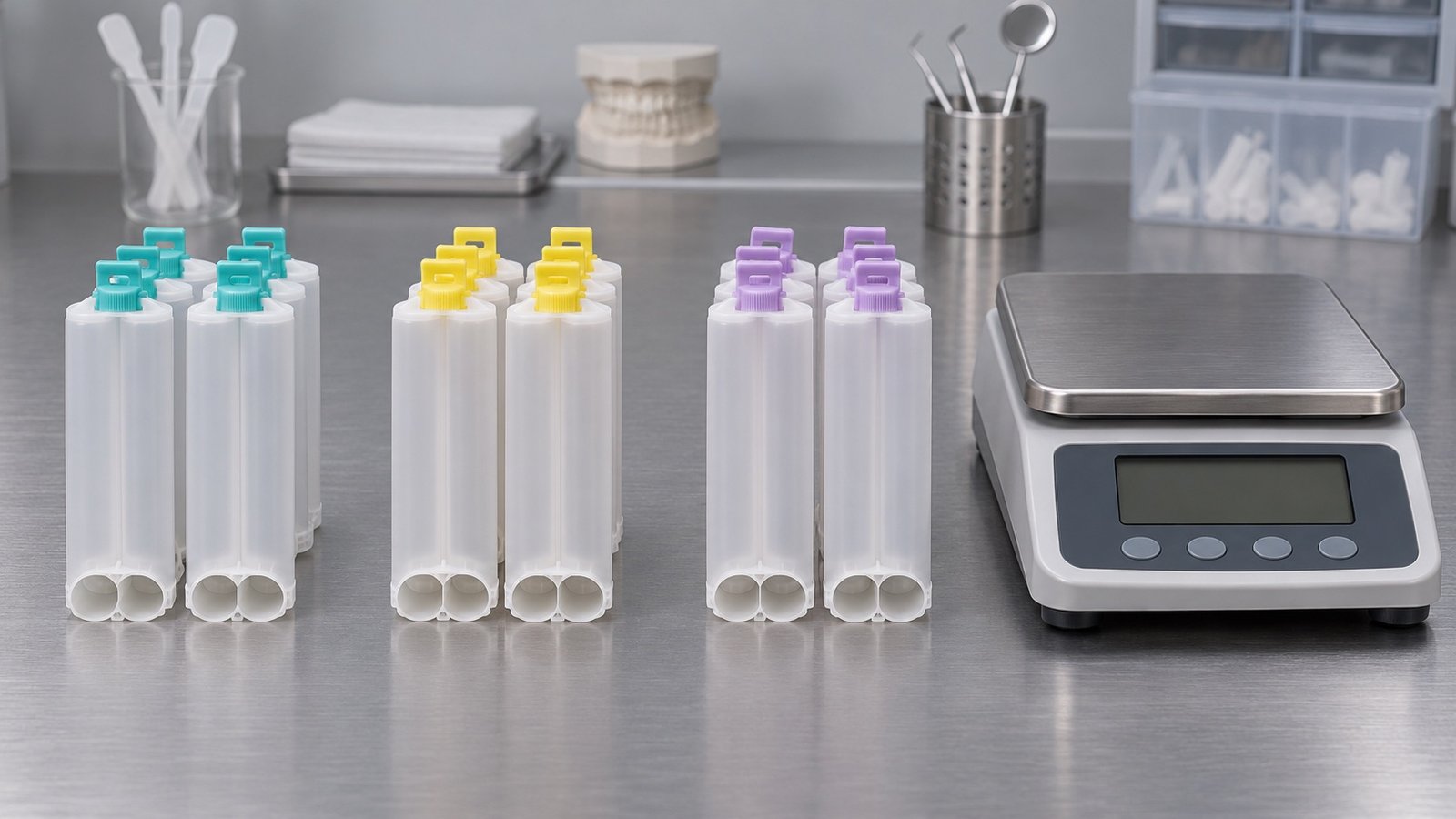
Use an agreed method to determine the net fill for each chamber. A finished cartridge's total mass can meet the target while one chamber is underfilled and another is overfilled. Record the tare, intended result and individual measurement for each chamber before evaluating the complete assembly. If a ratio is specified by volume, agree on a suitable volume method or on how material density and measurement conditions will be used to interpret mass data. Use the product team's approved basis for any conversion.
Have the supplier identify which head, machine state and component lot produced each sample. Include agreed startup, steady-state and planned restart conditions. If the supplier proposes a substitute material, document which measurements it can support and what will be repeated with the actual product. For the equipment side of paired dosing and closing, see the dual-barrel syringe filling guide.
Check the closure and dispensing function together
Inspect the cap engagement and piston positions with the agreed gauges or methods. Record the area of any leakage, product residue or damaged parts. Define an agreed short-term handling or leakage screen for the equipment trial and assign any longer-term stability or package qualification tests to the product team.
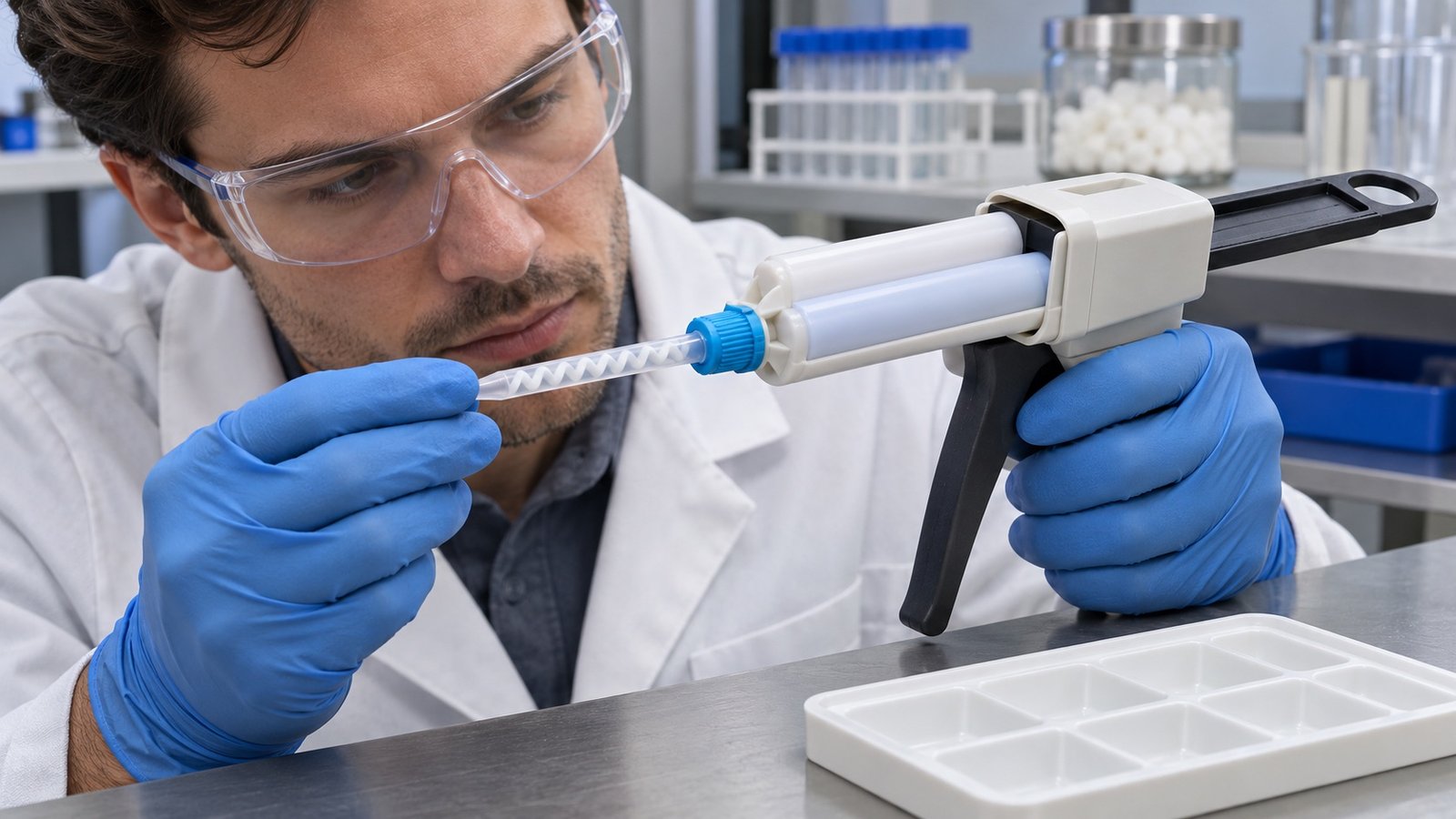
Next, check how the filled unit sits in the actual dispenser and how the tip connects to the outlet. For automix formats, define with the product team how to observe the two outlets and the first usable dispense. Check the intended first-use preparation against the package instructions. A trial can record visible irregularities and how the unit behaves in the supplied dispenser. If the specification includes functional output or a dispensing-force range, use the defined test equipment and criteria. The checks help determine whether a failure is associated with fill, assembly, component fit or the dispensing interface.
Tie the quotation to the test record
Ask for a revision-controlled report that identifies the trial machine or fixture, materials and part lots, operating conditions, raw data, images of abnormalities and any engineering adjustments. Have it record exceptions alongside the acceptance criteria. For each open issue, state whether the supplier needs more package samples, a change to format tooling, a revised closure approach or separate follow-up testing. Assign the next action and agree on which evidence is required before tooling release and shipment.
If two suppliers ran different materials or test formats, send both an equivalent protocol before comparing the results. For example, compare both suppliers using the same lots, the same sample groups and the same test for closure. Review the equipment scope along with the raw measurements. A test with acceptable fill mass may leave some procurement items open if the fixture was temporary or the closure was assembled outside the machine.
Decide which findings can release tooling
Ask the buyer's team to define the decision points before the visit. A fixture drawing may be ready for release once the seating and unloading checks pass with approved bodies. Dosing hardware may need further review if one formulation builds up at the outlet or if the weighing method cannot distinguish individual chambers. Closing tooling may need a separate iteration if cap engagement varies with component lot. A change to one station can affect a later operation, so record which earlier checks need repeating after a revision.
For example, consider a hypothetical feasibility trial in which the body seats consistently and both chamber fills meet the agreed mass targets. During dispenser checks, some rear pistons sit at positions that require extra travel before material emerges. Request the piston position measurements, closure tooling revision, sample identifiers and the first-dispense test method. Ask the product team whether the observed travel is within its specification. Confirm the cause and repeat the affected checks before freezing the closure design.
When interpreting results, identify the trial's actual boundary. If the sample run used one carton of components, it provides evidence about the tested lot. If the purchase must accommodate wider dimensional tolerances, agree how to cover that range with representative lots, measured components or a subsequent tooling review. Name the exact checks and who will supply the additional evidence.
Request a cartridge feasibility review
King Pack lists custom filling, capping and syringe-filling equipment in its scope. Use the dental material filling guide to identify the information needed about the material and package. Then send King Pack the cartridge drawings, component samples and proposed trial protocol. Ask the team to confirm whether it can test your exact configuration and which items will require project-specific tooling or a separate trial.
Frequently asked questions
Can I use water or a surrogate for the first test?
An agreed surrogate can be useful for an early mechanical or dosing-method check. Document its purpose and confirm which material-dependent results require a representative product trial, including flow, cutoff, chamber fill and closure behavior.
How many cartridges should I send?
Agree on counts for setup, trial runs, restart samples, metrology and any destructive inspection. Itemize the number of complete component sets needed for each format and identify any tolerance or lot variation the trial should cover.
Is weighing the whole cartridge enough for an automix format?
Use total mass as one check. Specify evidence for each chamber and the product team's ratio basis when the two components have independent targets.
Should I send the end-user dispenser and mixing tip?
Yes, if the finished package uses them. Include the specified dispenser, tip and any other hardware needed to assess engagement and the intended dispense. Reference the package instructions for compatibility.
What belongs in the FAT after a feasibility trial?
Confirm the as-built configuration, agreed samples and documented acceptance methods. Repeat open checks on production-intent tooling and include any automated handling, closing or inspection that was outside the feasibility setup.