
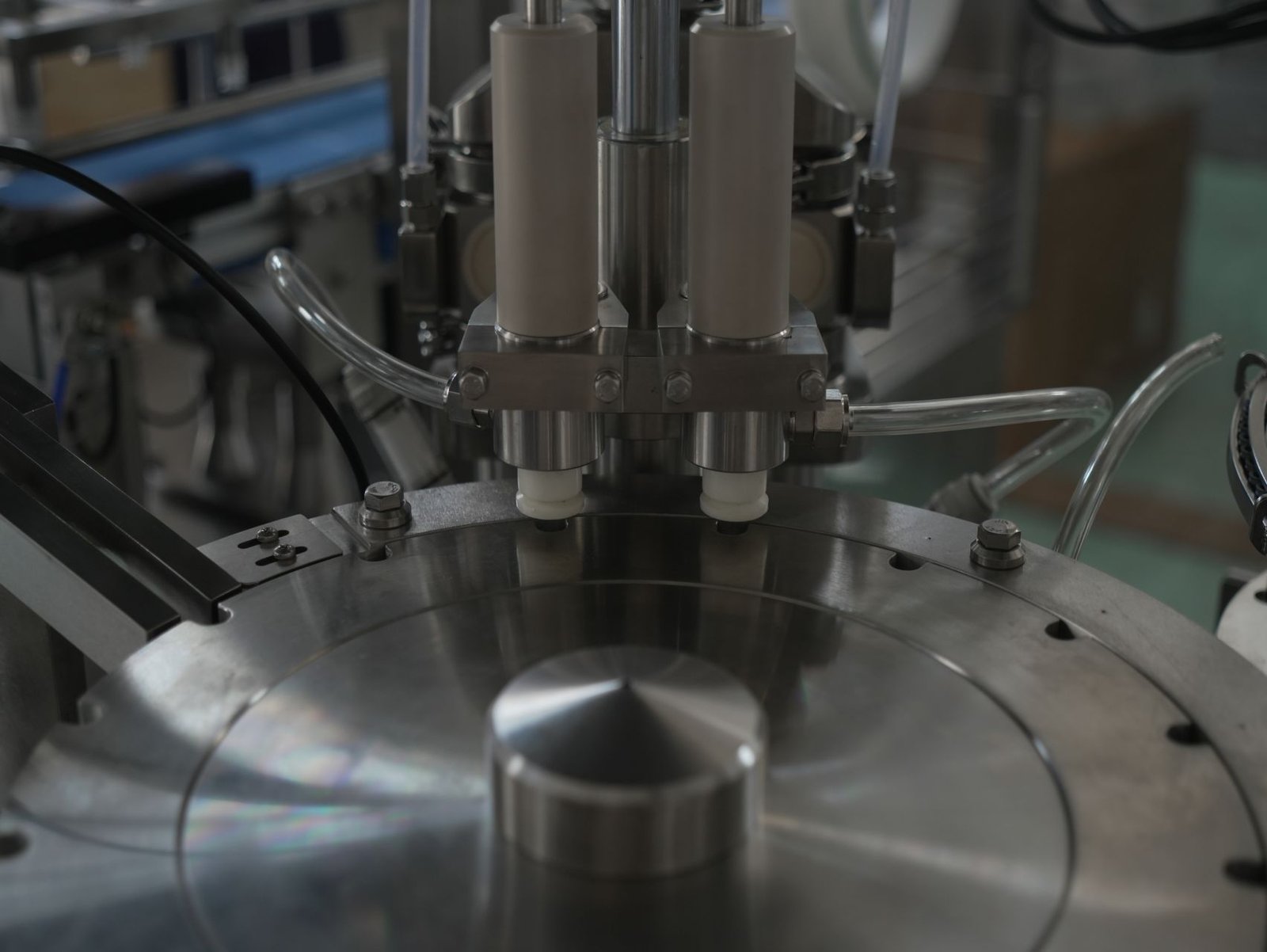
The vial filling process moves prepared containers through filling, stoppering, capping and final inspection. When a complete line is used, vial washing and drying or depyrogenation may be included upstream, while labelling and secondary packaging follow downstream.
The exact sequence depends on whether the product is liquid, powder or intended for lyophilization. This article explains the process stages and the critical handoffs between them. For equipment options, see the KING PACK vial filling machines and processing lines.
Vial Filling Process Flow
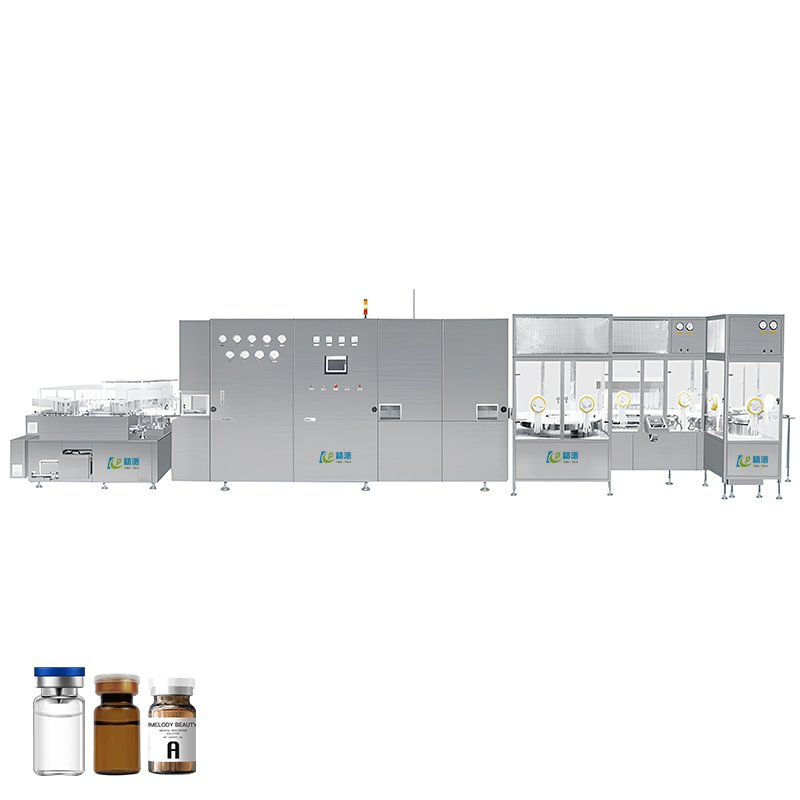
A typical integrated liquid-vial process follows this sequence:
- Vial infeed and inspection
- Washing
- Drying or depyrogenation when required
- Filling
- Stoppering
- Capping or crimping
- Inspection, rejection and labelling
1. Vial Infeed and Initial Inspection
Empty vials enter from trays, a turntable or upstream equipment. The handling system separates and positions the containers for the next operation. Damaged, incorrectly oriented or unsuitable vials should be identified before filling.
2. Vial Washing
When washing is part of the line, a dedicated vial washer cleans the containers according to the defined process. Washing is not performed by every filling machine, so the boundary between the washer and filler must be clear in the equipment scope.
3. Drying or Depyrogenation
After washing, vials may pass through a drying or depyrogenation stage when the product process requires it. The equipment, treatment conditions and transfer method depend on the container and the site’s validated production process.
4. Vial Filling
The line positions each vial at the filling station and dispenses the required dose. Peristaltic, piston, ceramic-pump, time-pressure or powder dosing systems may be used according to the product and filling range. Product supply conditions, vial centering and nozzle timing affect the result.
5. Stoppering
Stoppers are oriented, fed and inserted after filling. Liquid or powder products may use full stoppering. Products intended for lyophilization commonly require partial stoppering before transfer to the freeze dryer.
6. Capping or Crimping
The cap is applied after the stopper is correctly positioned. Closure feeding, vial position and application settings must be coordinated to produce a consistent closure without damaging the vial or stopper.
7. Inspection, Rejection and Labelling
The downstream scope may check container presence, fill result, stopper or cap position and other agreed attributes. Nonconforming vials are rejected using the defined logic. Accepted containers can continue to coding, labelling and secondary packaging.
How the Process Changes for Lyophilized Products
- The liquid product is filled into the vial.
- The stopper is inserted only to the required partial position.
- Vials are transferred to the freeze dryer using the project’s defined handling method.
- After lyophilization, the stopper is fully seated.
- The vial returns to capping, inspection and packaging.
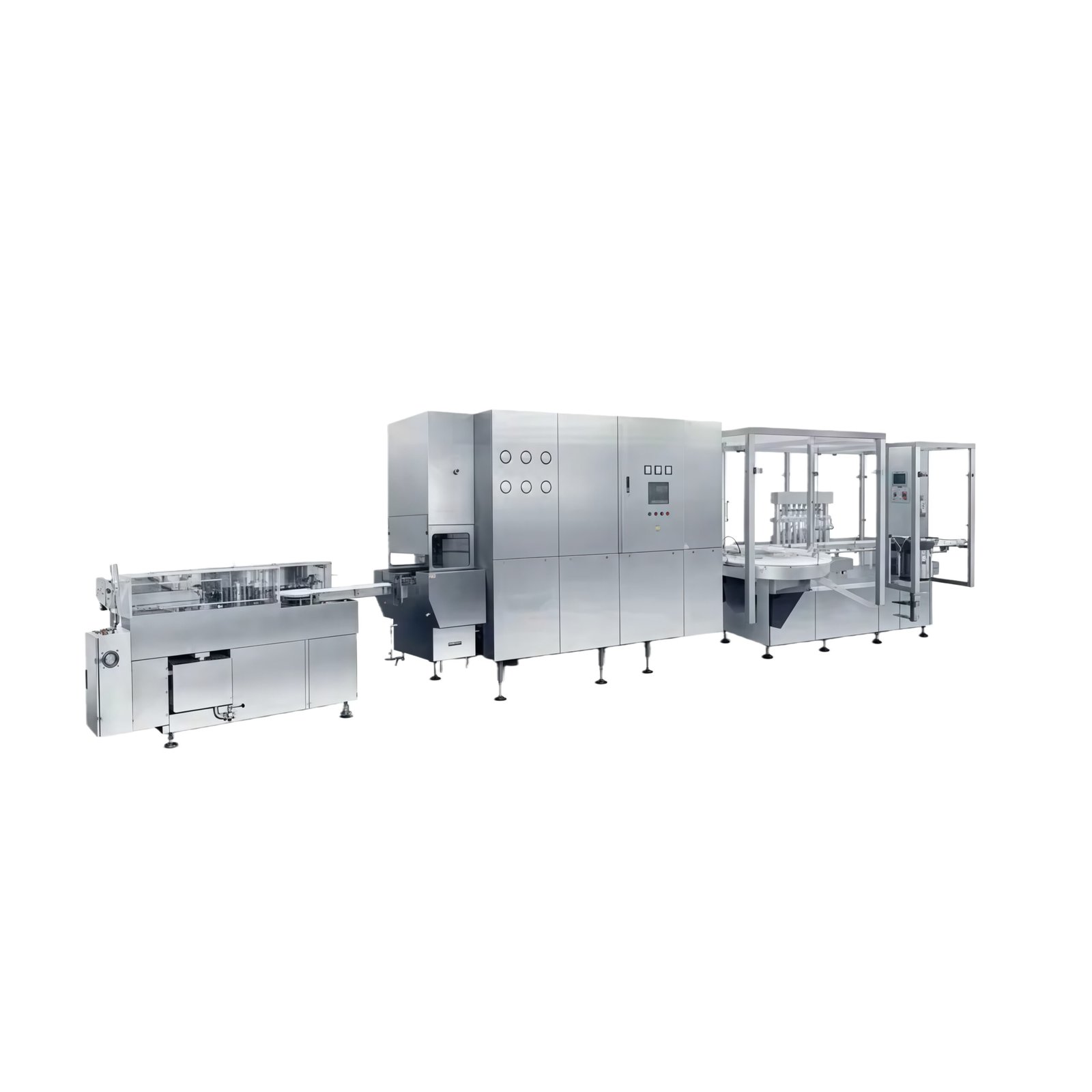
Critical Handoffs Between Process Stages
| Handoff | What to confirm |
|---|---|
| Washer to drying stage | Container transfer, orientation and accumulation |
| Drying stage to filler | Vial condition, infeed rate and protected transfer |
| Product supply to filler | Connection, pressure, temperature and available product level |
| Filler to stoppering/capping | Container spacing, reject logic and closure supply |
| Filler to freeze dryer | Partial stopper position, loading method and buffer strategy |
| Capping to inspection/labelling | Accepted-vial signal, reject tracking and line speed |
Information Needed to Define the Process
- Liquid, powder or lyophilized product workflow
- Vial, stopper and cap drawings or samples
- Filling range and required production output
- Upstream product preparation and container-treatment scope
- Freeze-dryer, inspection, labelling and packaging interfaces
- Cleaning, production-environment and documentation requirements
Plan a Complete Vial Filling Process
Read what a vial filling machine does for the equipment basics, or use the URS, FAT and cost guide when preparing a new project.
Contact the KING PACK project team with your process flow, vial samples and output target to discuss an individual machine or integrated line.