

Syringe filling machine operator training should cover the work a production crew must perform on the delivered machine. Include shift-start checks, loading and running the correct recipe, first-off inspection, planned stops and restarts, format changeover, site-approved cleaning, alarm escalation and shift handover. Specify which roles perform each task and what they must demonstrate before working independently. Ask the supplier to price the sessions, documentation and practical assessment in the machine quotation.
Define the jobs each attendee will perform
Build the training plan around the machine configuration and the work assigned at your plant. On a semi-automatic filler, operators may load every barrel, align it in a fixture and remove each filled unit. On an automatic machine, the same team may replenish feeders, use the human-machine interface (HMI) and monitor an inspection or reject station. Their training needs to address the actual loading and inspection points. For configuration differences that change the work, see automatic vs. semi-automatic syringe filling.
Ask the vendor to assign modules to operators, setup technicians, maintenance staff and shift leads. Include quality personnel where they own first-off acceptance or disposition of held units. The plant assigns these duties and controls access to restricted tasks. For example, a setup technician may select an approved recipe while an engineer controls changes to recipe limits. A line operator may identify an alarm and gather information while maintenance evaluates the cause.
Put the operator training scope in the quotation
Ask each bidder to respond to a list of tasks and deliverables. The following matrix can be copied into a request for quotation. Replace suggested evidence with your plant's approved checks for the actual machine, package and filler configuration.
| Training module | What the trainee demonstrates | Evidence to retain |
|---|---|---|
| Shift start | Recognizes the station status and verifies material, package parts and the approved recipe | Completed start-up record and correct recipe revision |
| Production and inspection | Runs the agreed format and completes the first-off and in-process checks for that station | Sample identifiers, measurement results and release decision |
| Planned stop and restart | Uses the approved sequence and identifies which units require inspection or holding | Observed restart exercise and disposition note |
| Format change | Matches parts to the format list and presents the first unit for approval | Change-parts record and first-off result |
| Cleaning and line clearance | Follows the assigned site procedure, identifies contact parts and completes the required checks | Training record and line-clearance checklist |
| Alarm and reject response | Recognizes the fault, stops or escalates as instructed and records affected material | Scenario results and event record |
| Shift handover | Explains current batch, holds, adjustments and activities due on the next shift | Handover exercise reviewed by the shift lead |
List the languages required for instruction, the manual and on-screen prompts. Name the shifts and roles to be covered, the formats to be included and the site resources needed to conduct an exercise. For overseas commissioning, specify which training visits are included in the quotation and how additional sessions can be arranged. Request the agenda early enough to reserve production, maintenance and quality personnel.
Rehearse shift start, production and restart
Train a crew to connect the machine state with the batch record. Before a run, the operator should recognize the approved format and recipe, check the availability of released material and components, and verify that the prior batch is cleared using the site's procedure. If the bench balance, closure gauge or inspection method is part of the job, include it in the exercise. Have the trainee explain how the first-off units are identified and who authorizes the rest of the run.

Add a planned-stop scenario. Have operators identify where units may remain between stations and what the site rule says about product waiting in the feed path. Ask them to explain the restart checks and how they will identify the first units made after the stop. For example, a cap supply interruption may leave filled but unclosed units near an assembly station. The exercise should show that the crew can recognize and account for those units and record when normal production resumes.
Practice one complete changeover and cleaning handover
Choose a pair of real production formats for the assessment. Ask the operator and setup technician to locate the right parts by ID, verify the associated recipe and identify the tests needed before releasing first-off units. Include retained product, unused components and partly processed units in the clearance check. In lines running a range of barrel sizes, fit can depend on the corresponding guides, nests and sensors. Use the format changeover guide to build the exercise around parts the plant will actually receive.
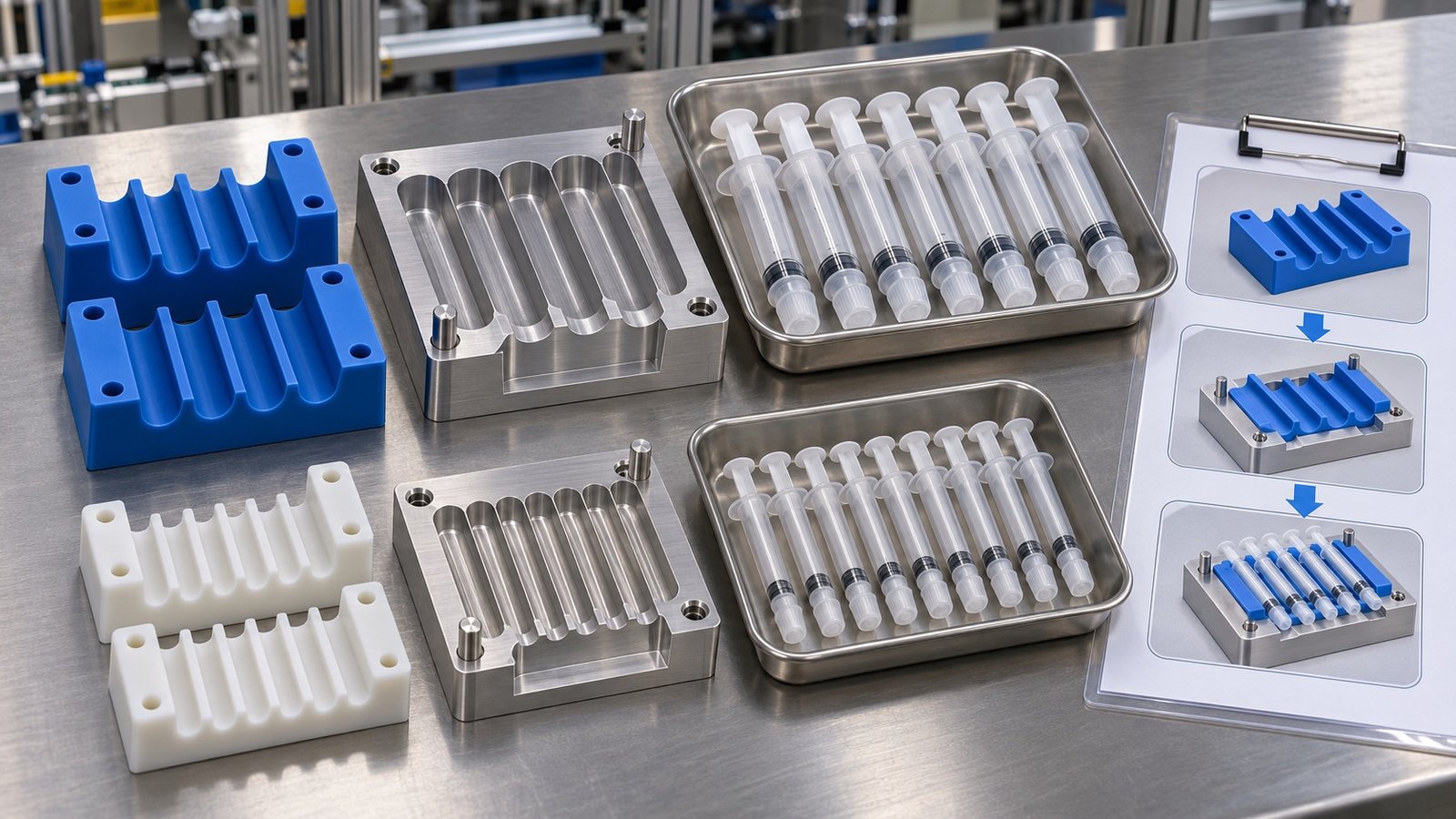
Give operators a current list of removable product-contact parts and show how to recognize the correct assembly from the approved instructions. The equipment supplier can explain access and component handling for the delivered machine. The plant sets the approved cleaning procedure, materials, checks and release criteria for its product. Where cleaning or a format change calls for maintenance access, use the site's approved safety procedure and assign the work to people authorized for that task.
Teach operators to recognize alarms and escalate
Prepare supervised scenarios that resemble the actual line, such as a low component supply alarm, a rejected unit that needs recording, a format mismatch or a recurring inspection fault. Give the trainee enough information to decide which action is within the assigned role. Ask them to capture the alarm text, time, affected station and current recipe, then explain how affected product will be held and who receives the report.
Agree with the supplier on the permitted way to stage each drill. Use an approved simulation or training state when introducing a real fault would create a hazard or affect production. A routine stop or emergency stop and hazardous-energy isolation are distinct machine states. The plant's approved procedures and authorization rules govern work that requires isolation. In US workplaces where it applies, OSHA's hazardous-energy standard distinguishes the training required for authorized and affected employees. In Great Britain, HSE's work-equipment guidance addresses adequate training for safe use under PUWER. OSHA 29 CFR 1910.147 · HSE training and competence guidance.
Spread training across FAT, site commissioning and shift handover
At factory acceptance testing (FAT), review the supplier's operating documents and use representative materials and packaging where agreed. Have a buyer representative walk through the intended HMI sequence and observe the format demonstration. Record changes that require the manual, parts list or training agenda to be revised before shipment.
At site acceptance testing (SAT) or the agreed commissioning stage, have the designated staff demonstrate work with the installed machine, local procedures and actual upstream and downstream interfaces. Include a restart or changeover with acceptance samples. If only a subset of operators can attend at FAT, identify who will train the remaining shifts and who will verify their performance at the site.
Define what happens when an exercise is incomplete
Put the sign-off criteria in the agreed training scope. A supplier demonstration can satisfy a delivery requirement for instruction, while the buyer's own observation can qualify individual operators for the work assigned to them. Keep both records. If a trainee needs a prompt during an exercise, record the task and repeat it after coaching. If a production format cannot be assessed because a component lot or document is unavailable, put the pending assessment on the commissioning list with an owner and date.
Consider how the evidence would transfer across shifts. A useful assessment for a second shift could begin with a staged handover where the current batch is on hold and the incoming operator must name the hold reason, verify the recipe and identify who can release the batch. The assessor can check these decisions against the plant procedure without recreating an unsafe fault. For multi-format lines, ask how a trainer will identify differences in loading, first-off inspection and change parts for each approved format.

For each role, use a sign-off record with the trainee's name, task, machine or format, document revision, assessor, date, result and follow-up action. A trainee who can run one format but still needs help changing parts can receive a narrower sign-off while another exercise is arranged. Assign an owner for refresher training following changes to the format, equipment, procedure or job assignment. Record the agreed recheck in the handover list.
Ask King Pack for a project-specific training scope
King Pack lists training and equipment services among its capabilities. Ask for a scope tied to the package and automation level you are buying. Send the intended formats, shift coverage, document languages, the plant's role assignments and the list of practical demonstrations you expect. Ask which exercises can be completed at FAT and which require the installed line. Review King Pack's filling and packaging machine services or send your training requirements with the equipment RFQ.
Frequently asked questions
How long should syringe filler operator training take?
Quote the time against the work to be demonstrated. Set aside enough machine access for trainees to run the agreed format, respond to a scenario and complete the relevant records. Allow additional sessions for more formats, shifts or responsibilities.
Is remote operator training sufficient?
Use remote training for document review, HMI familiarization and follow-up where it suits the site. Arrange supervised hands-on assessment for tasks that require physical practice, such as format handling and cleaning access.
Should the supplier train operators at FAT or SAT?
Use FAT to review the supplier's procedure and rehearse the machine sequence. Use SAT or commissioning to assess operators with the installed equipment, site procedures and actual line interfaces.
What documents should come with the training?
Request the machine manual, a revision-controlled recipe and format reference, the change-parts list, alarm guidance and the agreed assessment record. Have the plant issue or approve its own operating and cleaning procedures.
The plant assigns responsibility for authorization. Use the supplier's training records and the plant's practical assessment to decide which tasks and formats each person is cleared to handle.
Safety guidance reviewed November 25, 2026. The referenced requirements apply within their respective US and Great Britain jurisdictions.