

Introduction – Challenges in Traditional Packaging & Why Upgrades Are Needed
Packaging, no doubt, plays a vital role in the product journey, from the factory to the hands of the consumer. Traditional packaging methods, while tried and tested, often struggle to keep up with the rapidly evolving demands of modern markets. Companies face more pressure to meet market demands. They need fast upgrades like pouch packaging machines. These machines keep the company competitive with flexible packaging. They also meet consumer needs.
Increasing Market Demands for Speed, Hygiene, and Quality
Market competition has pushed packaging from a back‑end function to a core value driver. Retailers and brand owners now require:
- Shorter lead times and faster order turnaround.
- Strict hygiene, especially for food, cosmetics, pet food, chemicals, and pharma.
- Consistent, attractive, and defect‑free pouches on every pallet.
Consumers notice when pouches leak, are under-filled or poorly sealed. Even small visual defects can lead to complaints, returns and avoidable product loss. Hygiene, traceability and inspection requirements should be defined according to the packaged product, production environment and destination market. Manual operations should then be evaluated against those documented requirements.
Problems of Manual or Low-End Packaging
Manual processes and low-end packaging present several drawbacks:
- Slow speed: Manual or low‑end lines move at the pace of human hands, so they quickly become a bottleneck as order volumes increase.
- High labor cost: Hand‑intensive packaging needs many operators plus training and supervision, which drives up unit cost and hurts margins.
- Inconsistent filling accuracy: Human filling is hard to repeat exactly, causing frequent over‑ or under‑fills, waste, and customer complaints.
- Secondary contamination risks: human contact with open pouches and product raises the risk of contamination, spoilage, and non‑compliance.
- Production instability: Output from manual lines changes with fatigue and absenteeism, making planning difficult and threatening on‑time delivery.
Why Automation Is Now a Strategic Investment
The case for upgrading should be based on measured production data rather than broad market forecasts. Compare required saleable output, changeover time, labor, product loss, seal defects, cleaning time and planned pouch formats. A premade pouch filling machine is justified when the validated line capacity and quality controls improve the total production result.
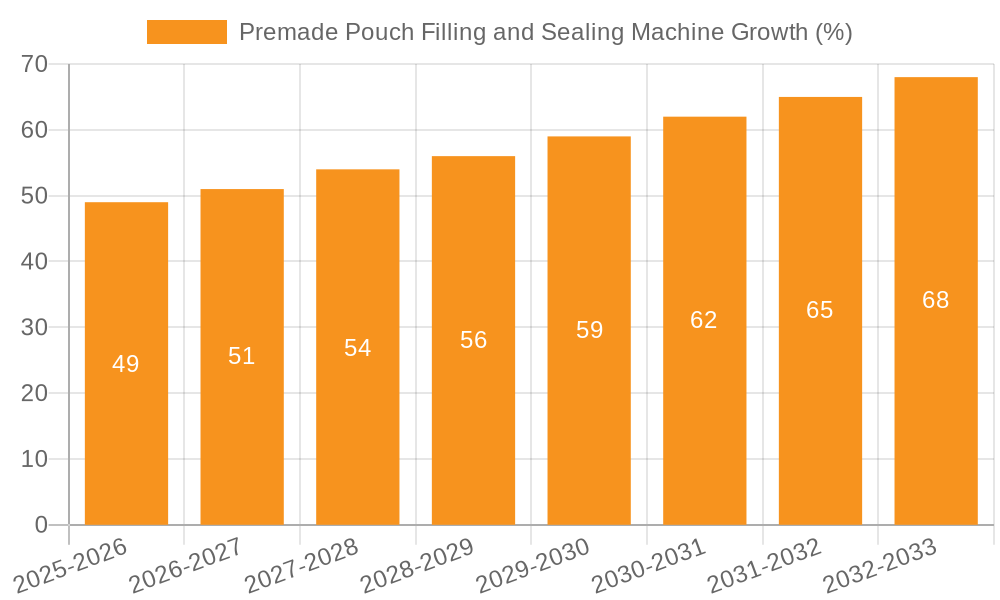
Automated packaging equipment coordinates pouch feeding, opening, filling, sealing and inspection through programmable steps. Depending on the machine configuration, servo drives, sensors and feedback controls can reduce variation and provide clearer operating records.
For product brands, they offer a superior canvas for marketing, extend shelf life, and optimize logistics. This shift has made automated premade pouch packaging machines a cornerstone of modern production facilities.
Core Advantages of a Premade Pouch Filling Machine
Efficiency Revolution – Massive Capacity Increase
Premade pouch filling machines can increase throughput by coordinating pouch handling, dosing and sealing. Actual speed depends on pouch size, product behavior, fill volume, sealing time, inspection requirements and downstream equipment. Suppliers should demonstrate sustained saleable output with representative pouches and product during FAT rather than quote an unsupported percentage improvement.
- You can process larger orders without adding extra shifts.
- You can absorb seasonal demand peaks more easily.
- You can consolidate multiple small manual lines into a single, efficient automated line.
The machine is also built for 24/7 operation, with stable performance across long runs. Continuous operation reduces the impact of shift changes and human fatigue. Downtime is lower because most functions are controlled, monitored, and adjusted through a central system rather than improvised on the line.
Precision and Quality Assurance – Perfect Filling Every Time
Premade pouch systems may use servo-driven augers, pumps, flow meters, multi-head weighers or volumetric fillers according to the product. Achievable fill accuracy depends on the dosing principle, product consistency, target weight or volume, environmental conditions and sampling method. Acceptance limits should be documented and verified with representative production trials.
- Fewer under‑filled pouches could lead to complaints or legal issues.
- Easier compliance with labeled net weight or volume.,
- Reduction in waste improves margins and supports sustainability objectives.
At the same time, PLC-controlled sealing temperature, pressure, and dwell time generate uniform, reliable heat seals. When combined with options like nitrogen flushing or vacuum sealing, this minimizes leaks, protects sensitive products from oxygen and moisture, and helps extend shelf life.
Hygiene and Safety – Fully Compliant with GMP/HACCP Standards
Grippers, hoppers, pipelines and nozzles can reduce direct handling of open product and pouches. Product-contact materials, surface finish, cleanability, drainage and disassembly requirements should be specified for the formulation and applicable hygiene plan. Cleaning and changeover procedures must then be verified on the selected machine configuration.
Technical Features and Machine Functions
Compatible with Multiple Premade Pouch Types
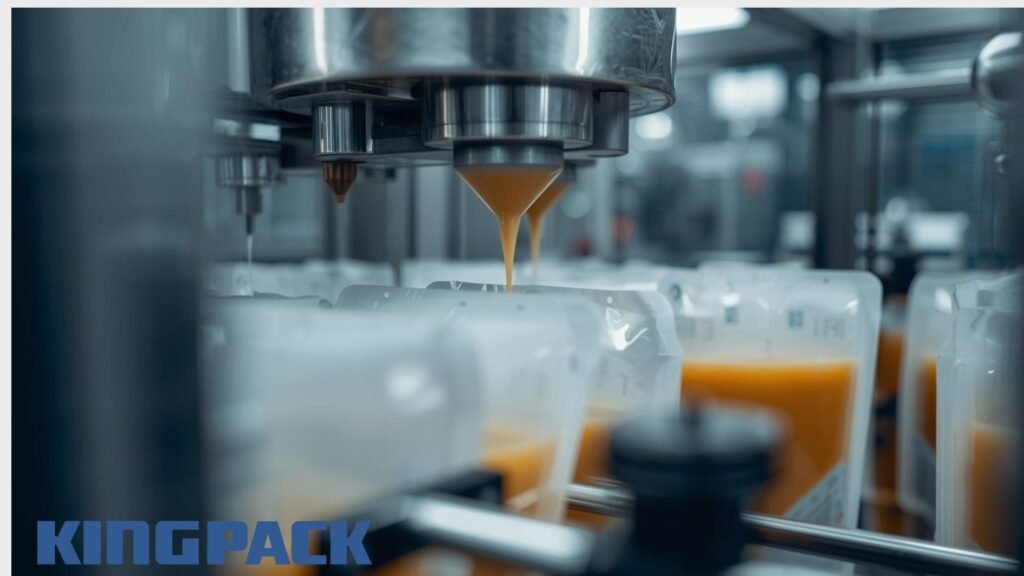
Premade pouch fillers can handle many flexible formats. They do this without major mechanical changes. Typical supported pouch types include:
- Stand-Up Pouches (Doypack / SUP)
- Zipper pouches and re‑closable formats
- Three-sided seal or flat pouches
- Gusseted and shaped pouches, depending on the gripper and magazine design
Bag width and length are generally adjustable within defined ranges via the HMI and simple mechanical settings, enabling multiple SKUs to run on the same platform. This flexibility is very useful for contract packers and brand owners. They often have frequent changeovers.
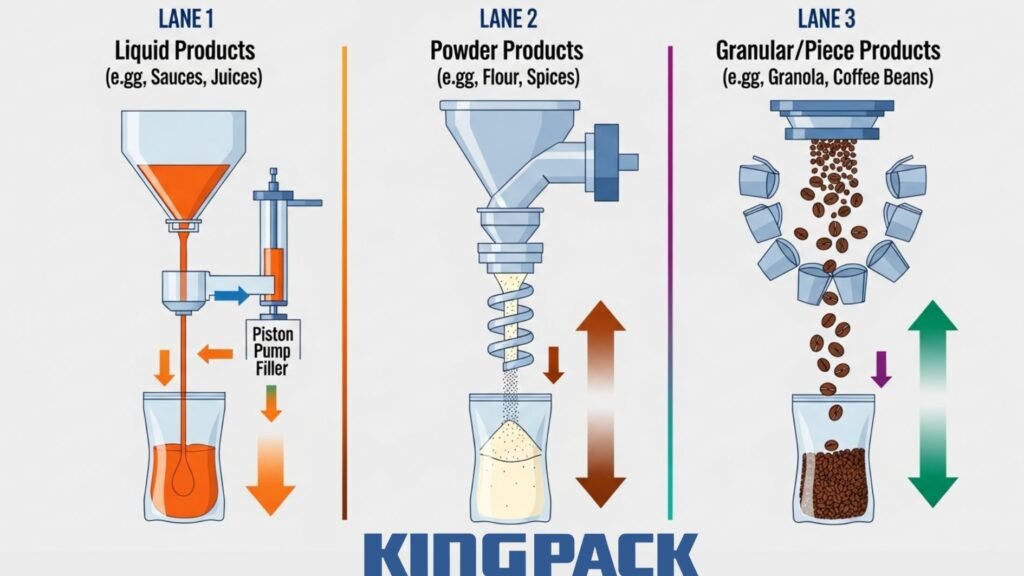
Premade pouch machines can be configured for liquid products, powder, granule, or viscous products by pairing the main frame with the appropriate dosing technologies. This modular approach allows plants to upgrade or reconfigure the filler module as product portfolios evolve.
Smart Controls & User-Friendly Interaction
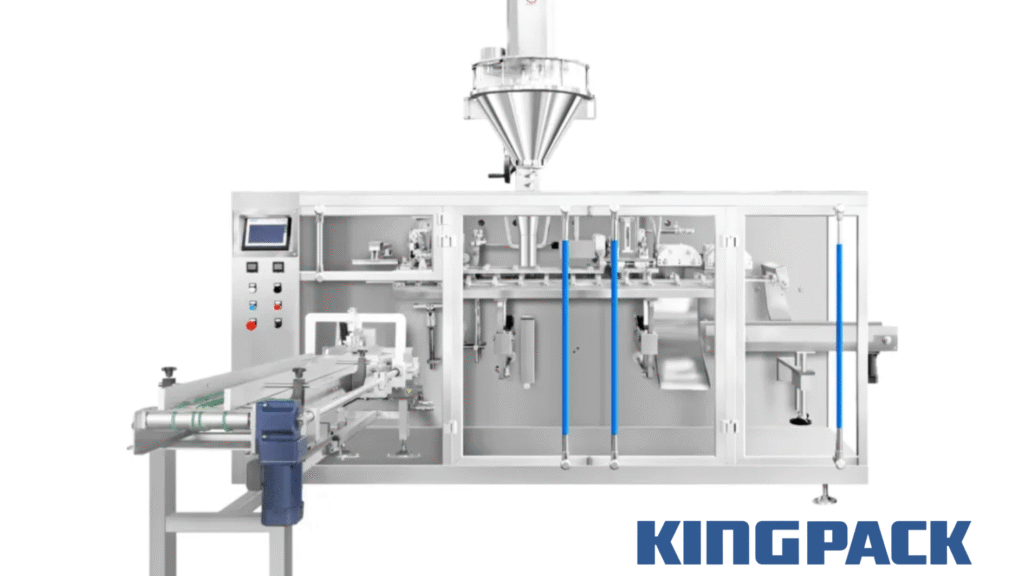
- PLC central control:
- A PLC coordinates all station actions—bag pick‑up, opening, filling, sealing, and discharge—according to defined timing diagrams. Integrated motion control for servo or stepper drives ensures precise positioning and synchronization of grippers, indexes, and seal jaws.
- Large touch‑screen interface: An industrial HMI provides operators with recipe selection, parameter input, alarm lists, and real‑time status of each station. Graphical interfaces and multi‑language support make it easier for operators to understand machine states and make adjustments with minimal training.
- Real‑time monitoring: Sensors monitor bag presence, bag opening, fill level (via checkweigher or feedback signals), jaw temperature, and safety door status. Continuous monitoring enables early detection of misfeeds, film issues, or sealing anomalies, reducing scrap and unplanned stops.
- Self‑diagnosis & alarm functions: Faults are logged with time stamps and descriptive messages on the HMI, guiding operators to the likely root cause. Some systems support remote diagnostics and software updates over secure connections, enabling OEMs to assist with troubleshooting and performance optimization.
Integration Flexibility with Upstream & Downstream Equipment
Premade pouch fillers are usually open platforms. They easily connect with other packaging systems.
Upstream options include:
- Multi‑head weighers for snacks, frozen food products, nuts, and confectionery
- Auger fillers for powders such as flour, spices, coffee, and nutraceuticals
- Piston or gear pumps for liquid and pasty products such as sauces and semi‑viscous products.
Downstream options include:
- Coding machines or printers for best‑before dates, batch codes, or barcodes.
- Metal detectors and checkweighers for foreign‑body control and weight verification.
- Conveyors, case packers, and palletizers to create fully automated end‑of‑line solutions.
Most modern systems are made to grow. You can add more fillers, inspection devices, handling & sterilizing equipment, or packaging modules. This helps when you need more production or different products.
Why This Machine Is a Strategic Upgrade
Transition from Manual to Intelligent Packaging
Migrating from manual or semi‑automatic operations to a premade pouch-filling machine transforms the line into a data‑driven, recipe‑controlled process. Machine parameters, production counts, and alarm histories can be logged and analyzed, feeding continuous improvement initiatives and supporting traceability requirements.
Better Cost Control Through Higher Efficiency
Higher throughput, reduced labor dependency, and lower scrap rates significantly lower unit packaging costs over the machine’s service life. By stabilizing OEE and reducing unexpected stoppages, plants can plan production more accurately and allocate resources more efficiently.
Stronger Brand Image Through Consistent Output Quality
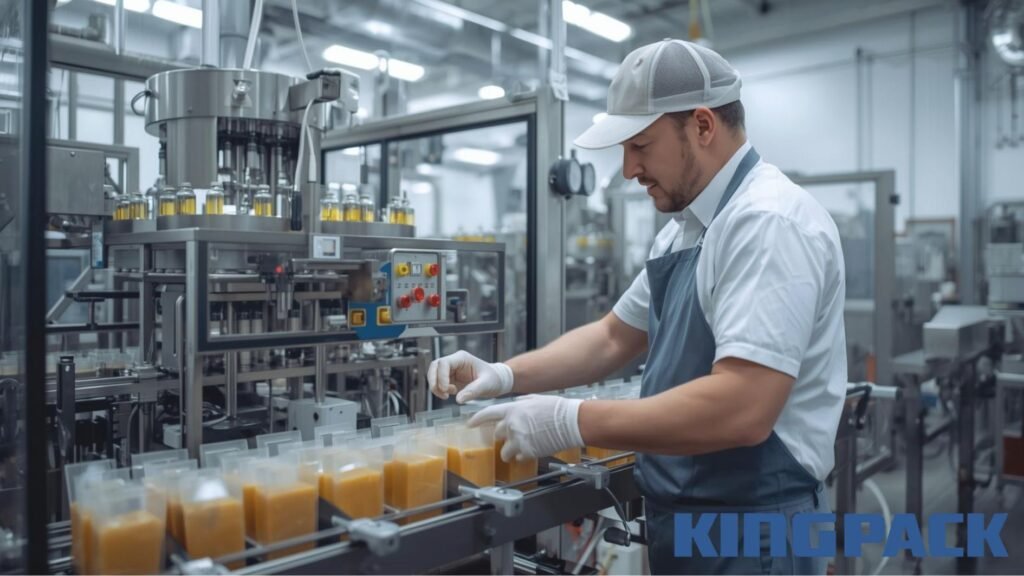
Uniform pouch appearance, accurate fills, and reliable seals directly influence shelf appeal and consumer confidence. Consistent quality across batches helps brands qualify for larger retail listings, export markets, and private-label contracts. These require strict packaging standards.
Conclusion – Upgrade Your Packaging Line Now
Automation as the Key to Competing in Today’s Market
In modern supply chains, speed, hygiene, and repeatable quality are baseline expectations rather than differentiators. Premade pouch filling machines deliver these capabilities in a compact, flexible platform that aligns with GMP/HACCP frameworks and integrates seamlessly into automated filling and inspection lines.
Benefits You Will Gain
- Lower operating costs through reduced labor, waste, and downtime.
- Higher consistency in dosing, sealing, and pouch presentation.
- Better compliance with food safety and quality regulations, supported by hygienic design and documentation.
- Stronger competitiveness in both domestic and export markets through scalable, high‑performance packaging capacity.
Ready to upgrade your packaging line?
Partner with King Pack to turn your packaging line into a high‑performance, fully automated system tailored to your products and budget. With over a decade of specialization in filling, capping, labeling, and complete packaging lines, King Pack delivers CE‑compliant, GMP‑oriented equipment, built with branded electrical components and engineered for 24/7 reliability.
For a complete line, review the KING PACK packaging machine solutions and available premade pouch filling systems. Send your product properties, pouch drawing, fill range and target output through the contact page so the project team can prepare a model-specific proposal and FAT plan.
Related resources: Encyclopedia resources.