
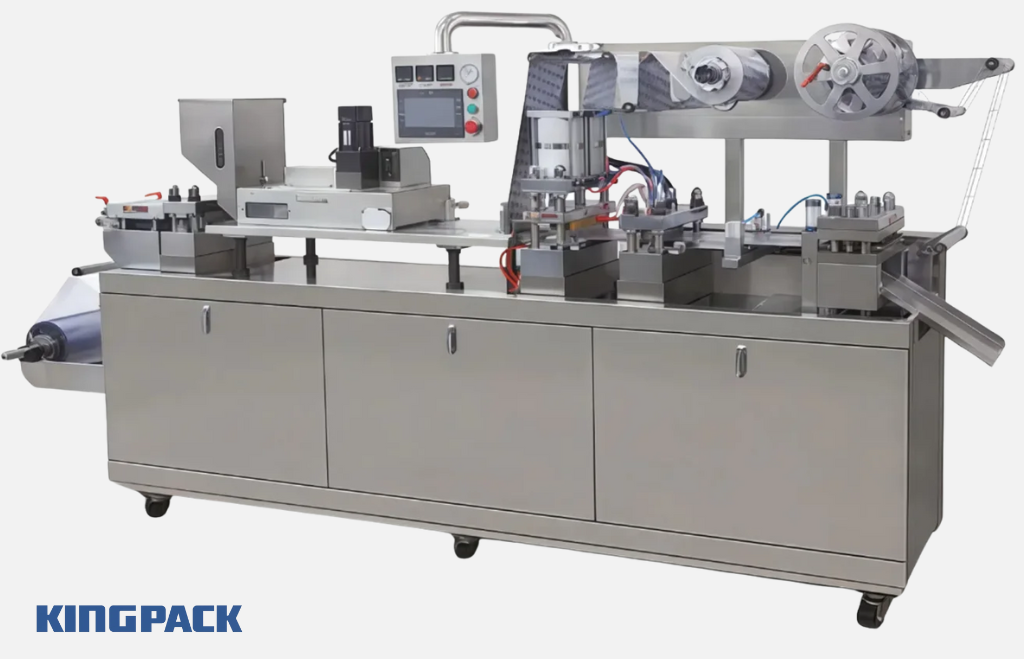
King Pack presents a portfolio of packaging equipment for powders, liquids, sauces, granules, premade pouches, blisters, and cartoning. The suitable machine, throughput, dose tolerance, hygiene controls, and documentation depend on the product, package, facility, and applicable quality system.
Overview of Packaging Machine Capabilities
King Pack’s equipment portfolio spans primary and secondary packing. Let’s understand their expertise and packaging equipment capabilities.
King Pack’s Expertise and Engineering Strength
King Pack describes packaging lines for selected pharmaceutical, nutraceutical, personal-care, and food applications. Servo motion, dosing hardware, modular structures, and multi-shift operation are model- and duty-cycle-specific; confirm the current specification, materials, utilities, and service scope.
Applications Across Food, Pharmaceutical, Cosmetics, and Chemicals
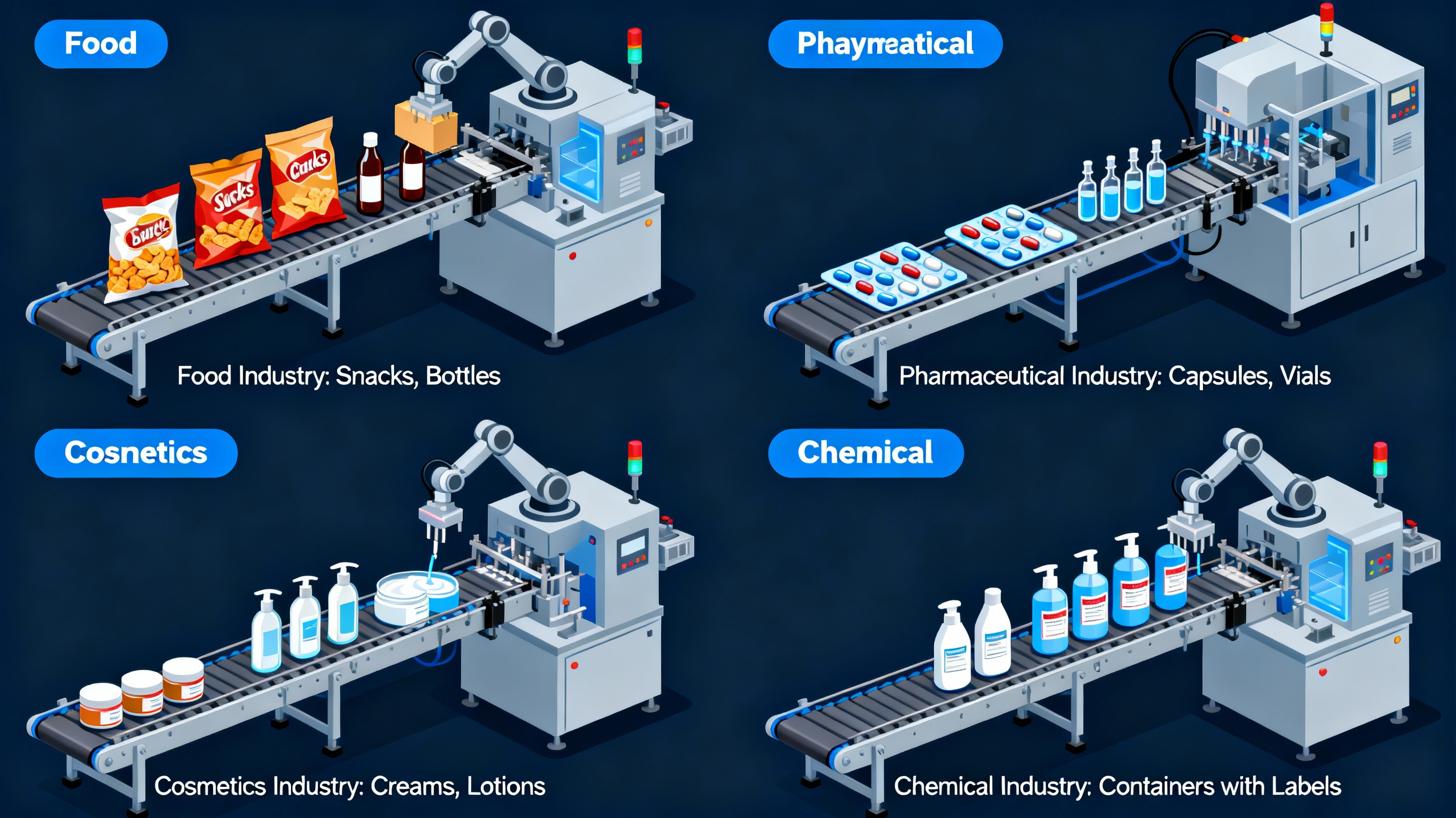
- Food applications may use powder, granule, liquid, or sauce systems. Product shelf life depends on the formulation, package barrier, seal, storage, and validated process—not on the machine alone.
- Pharmaceutical and nutraceutical packaging may include blister and cartoning equipment for tablets, capsules, syringes, and medical consumables. Unit-dose integrity and tamper evidence require suitable materials, controls, inspection, and validation.
- Cosmetics and household chemical manufacturers rely on liquid and paste fillers for shampoos, lotions, detergents, gels, and creams, where viscosity variation and foaming behaviour demand carefully selected pumps and piston systems.
Automation, Hygiene, and Data Tracking Features
PLC controls, HMIs, recipes, alarms, and data recording are model- and integration-specific. Stainless contact parts and cleanable paths can support hygiene, but contamination control and traceability depend on the complete validated process.
Types of Packaging Machines Offered
Powder Packing Machines
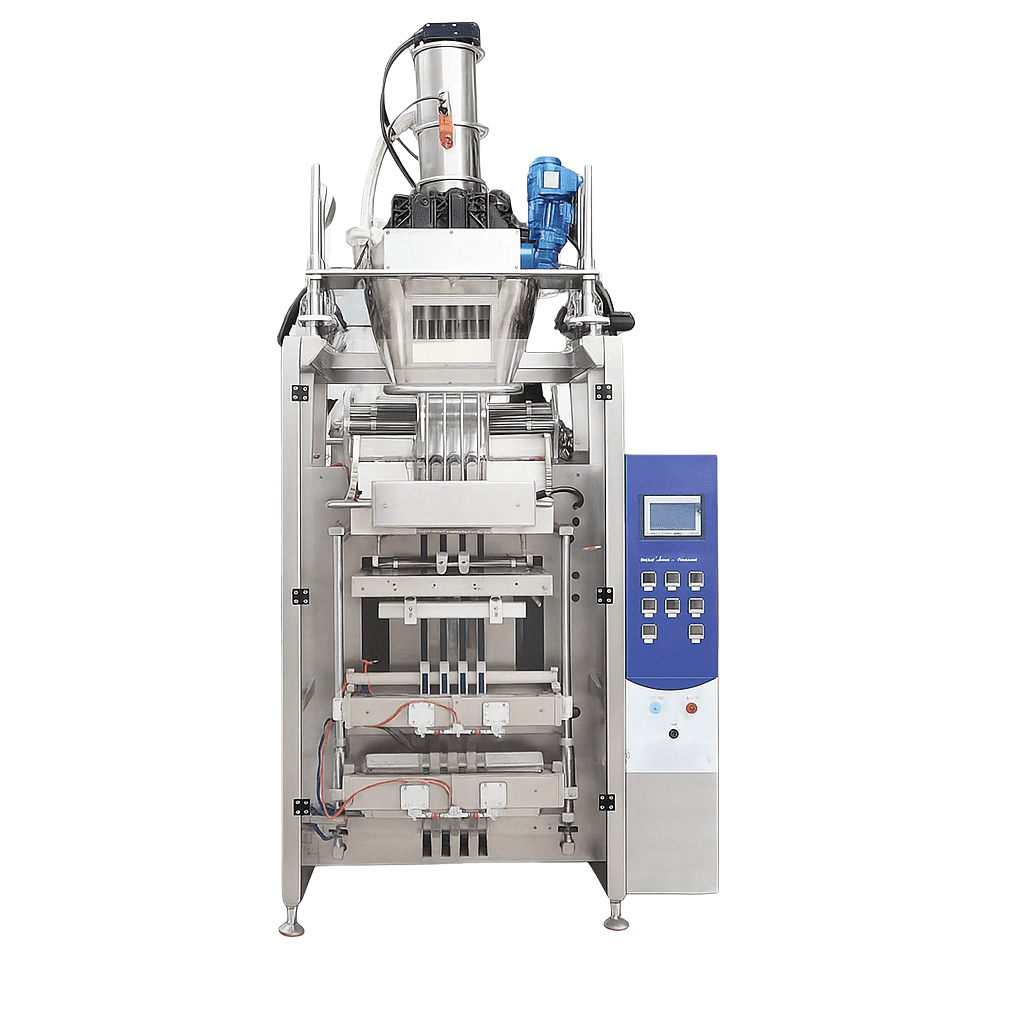
Illustrative powder-packing range only. Dose, speed, accuracy, product dust behavior, auger, film, and seal performance must be confirmed with representative trials and the current model specification.
Liquid Packing Machines
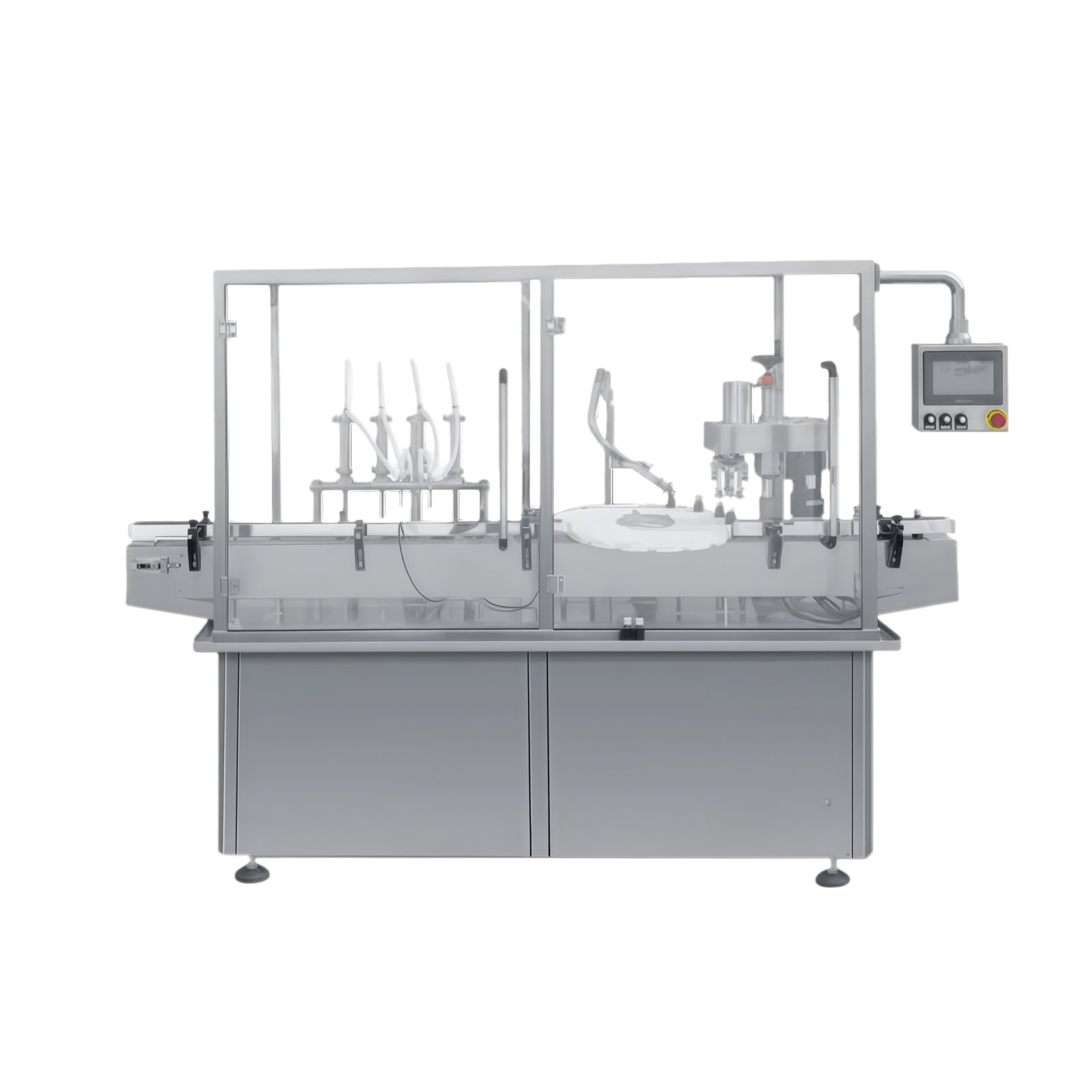
Liquid-packing equipment may use gravity, volumetric, piston, or gear-pump systems selected for viscosity, temperature, particles, and package. Lane count and output are configuration-specific; verify the tested range.
Sauce Packaging Machines
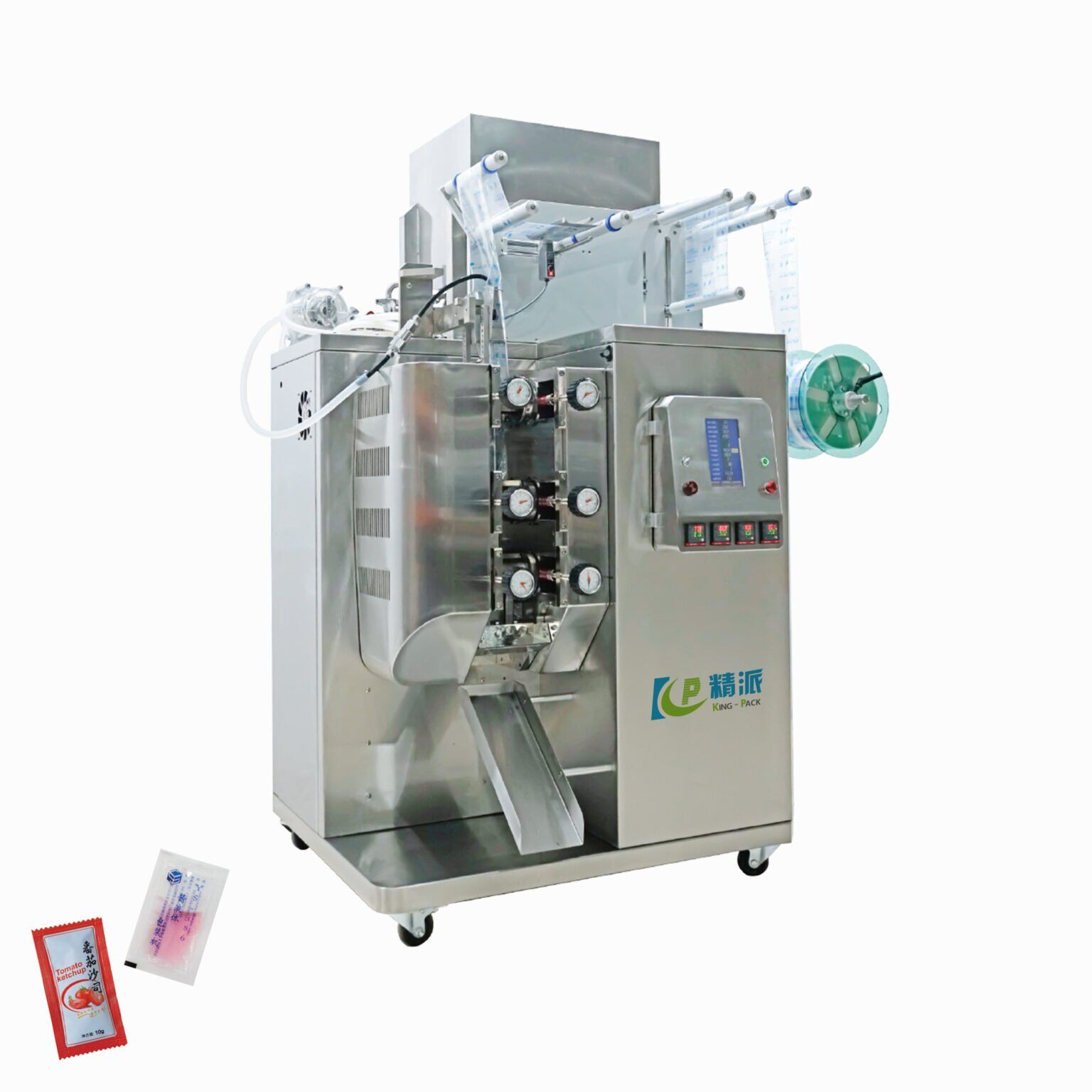
High speed continuous packing machine for sauce – King Pack Machinery
Piston, lobe, or auger systems may be selected for sauces and particulates. Dosing and seal quality depend on product behavior, nozzle, film, pressure, dwell time, contamination control, and validation; no machine can guarantee a hermetic seal in every condition.
Granule Packaging Machines
Granule packaging machines rely on combination (multi‑head) weighers or volumetric cup systems integrated above VFFS or premade pouch lines. Multihead weighers rapidly combine discrete weight values from several heads to achieve the target weight with minimal giveaway, ideal for nuts, snacks, candies, seeds, and pet foods. For uniform materials like rice, fertilizer prills, or plastic pellets, cup fillers provide high-speed volumetric dosing. They have simple mechanical adjustments. This balances cost and accuracy for industrial uses.
Premade Pouch Filling Machines
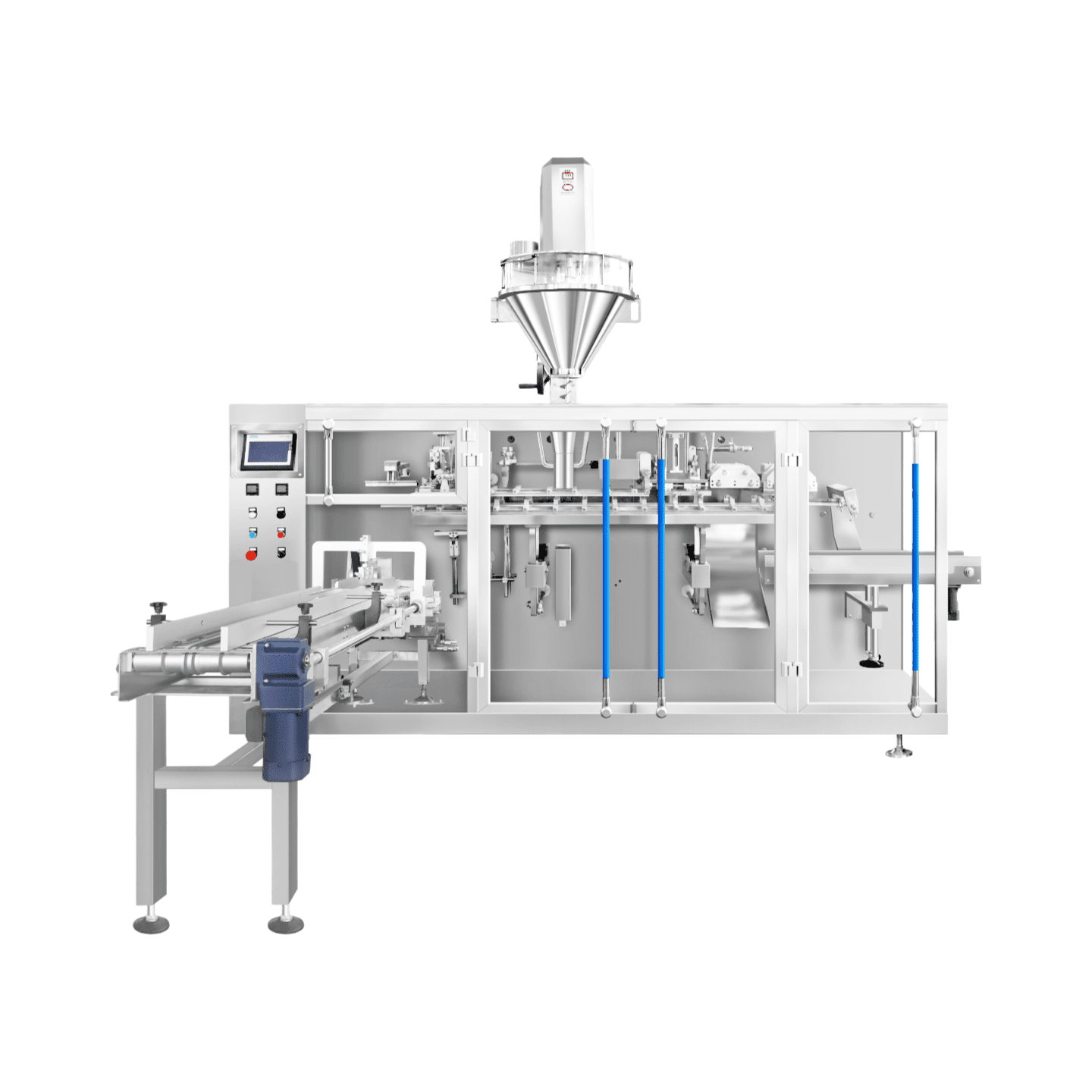
Premade-pouch systems can index, open, fill, and seal compatible pouch formats using the selected dosing module. Presence detection, gas flushing, and reject stations are optional or model-specific and require application testing.
Food Packaging Machines For Containers
Container lines may integrate filling, capping, labeling, and other stations for compatible bottles, jars, and rigid packs. Suitable products, shelf-life, and reclosability depend on the package, product, and validation.
Blister Packaging Machines
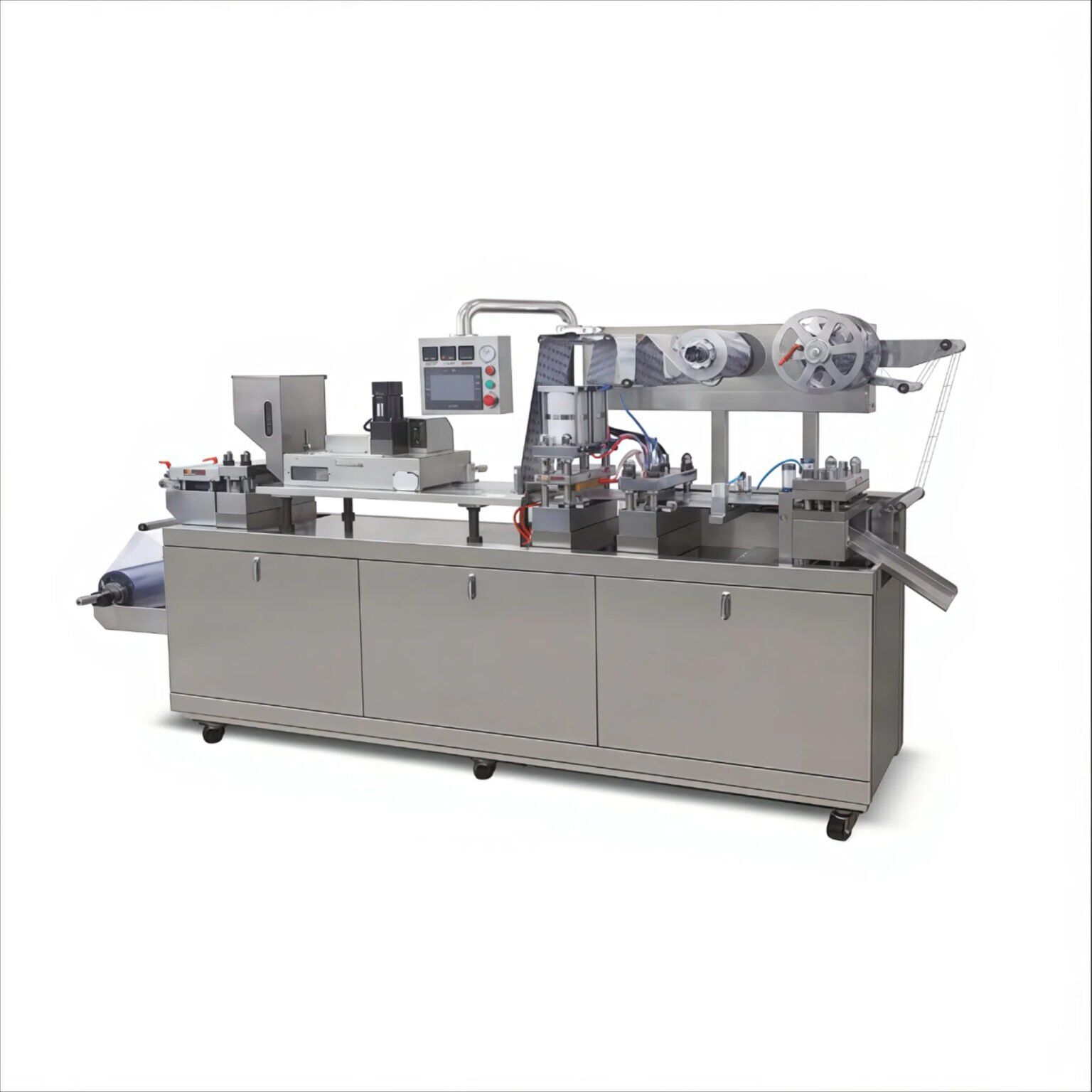
Blister machines form and seal cavities with selected materials. Moisture, oxygen, mechanical protection, tamper evidence, and medical-device suitability depend on the material, tooling, product, and documented tests.
Automated Horizontal and Vertical Cartoning Machines
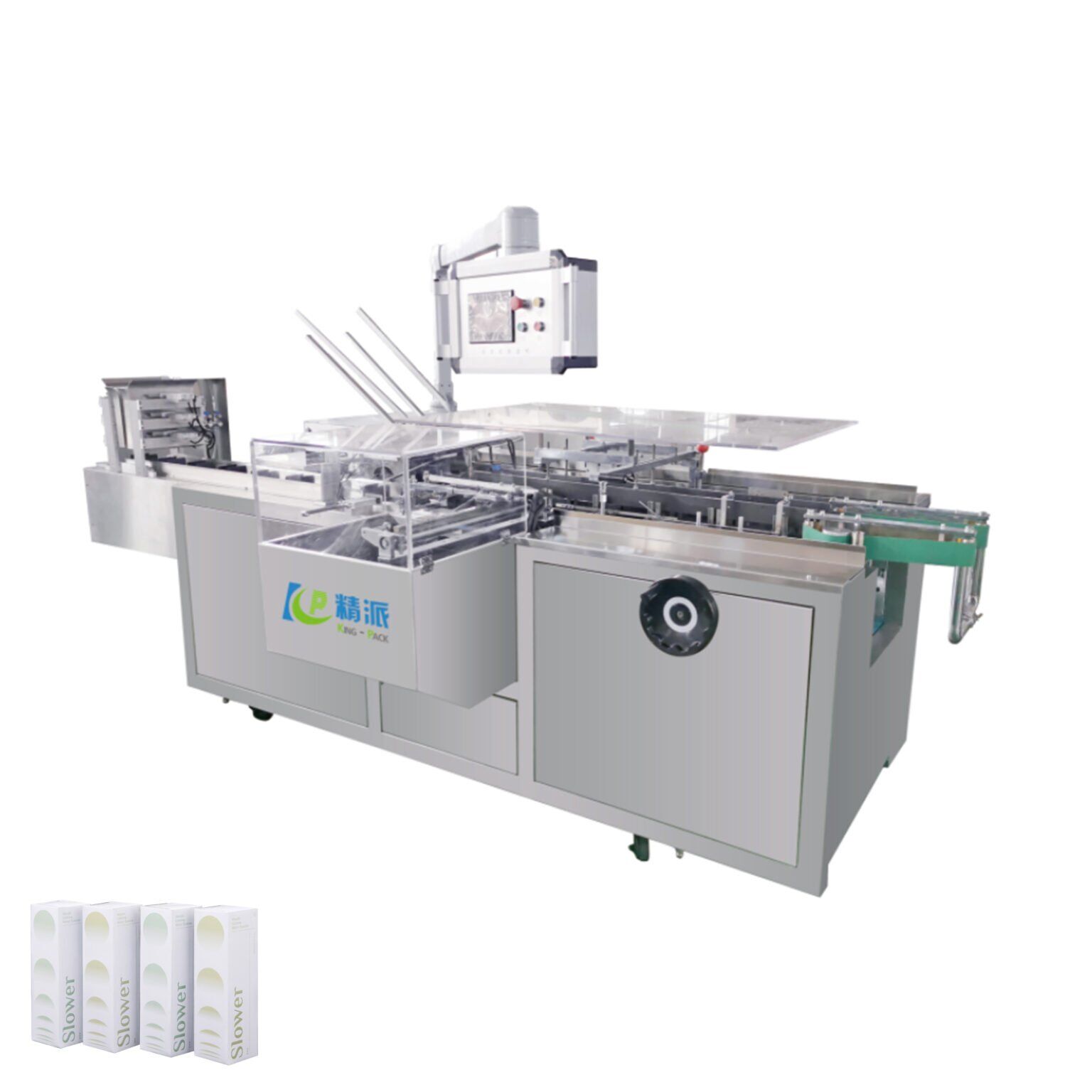
Cartoners can form, load, close, code, inspect, and reject packages when configured for the product and carton. Serialization and traceability functions are market- and model-specific and require current documentation.
Technical Advantages & Machine Features
Full process automation
Automation can connect feeding, dosing, forming, sealing, coding, counting, and discharge. The amount of manual handling, integration, and reject control depends on line design and site procedures.
Flexible Modular Structure & Fast Changeover
Modular dosing, forming, sealing, and infeed options may support product or format changes. Changeover time depends on tooling, cleaning, recipe, training, and the agreed procedure; it should be measured during trials.
Hygienic Stainless Steel Construction
Product-contact materials, welds, crevices, and cleanability should be confirmed for the intended product and sanitation method. Stainless grades alone do not establish food, cosmetic, or pharmaceutical compliance.
Smart PLC Control, Touch Screen Interface, Data Recording
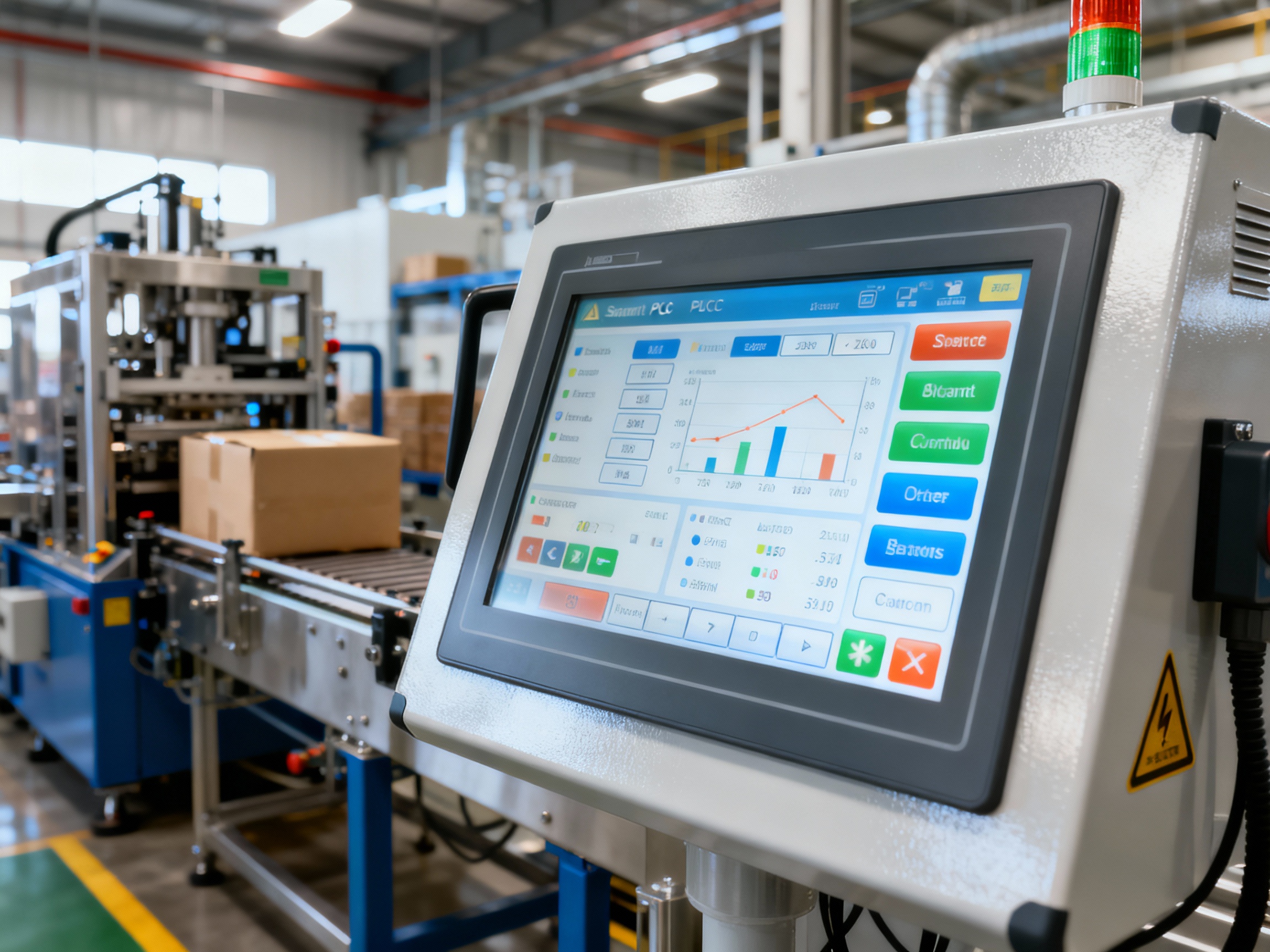
Machines are driven by industrial PLCs linked to color touch‑screen interfaces that provide real‑time status, alarm diagnostics, and guided set‑up steps for operators. Parameter sets can be stored as recipes, and basic production data such as bag counts, shift totals, and reject statistics can be viewed or exported to supervisory systems. When integrated with upstream scales or downstream inspection and cartoning equipment, the control system coordinates machine start/stop, jam handling, and product tracking to stabilize the entire line.
Energy Efficient, High Throughput, Low Downtime
Servo axes, heating controls, lane count, and preventive maintenance may affect energy and throughput. Actual downtime, OEE, and energy use should be measured or calculated for the proposed configuration.
Packaging Machine Benefits for Businesses
Productivity Boost & Labor Reduction
Automation may reduce repetitive handling and allow an operator to supervise selected stations, but staffing remains necessary for replenishment, changeover, cleaning, inspection, and maintenance.
Consistency & Accuracy in Packaging Output
Dosing and forming systems are designed for repeatability within a specified tolerance. Confirm fill/weight tolerance, seal quality, cutting, rework, and scrap using representative product and documented acceptance criteria.
Traceability & Real-Time Monitoring
Printers, sensors, vision, reject systems, and data logging can support traceability and quality control. Detection limits, data integrity, and regulatory suitability depend on the complete system and validation.
Compliance with GMP, Food-Grade, and Pharma Standards
Materials, cleanability, product paths, inspection, and documentation can support a quality system, but GMP, food-contact, FDA, or pharmaceutical compliance applies to the complete equipment, facility, procedures, and market—not to the machine alone.
How to Choose the Right Packaging Machine
Match Machine Type with Product Forms & Characteristics
Selecting the correct machine begins with defining product state (powder, liquid, granule, paste), flow behavior, particle size, and required dose accuracy.
- Free‑flowing powders and granules pair well with augers or volumetric cups,
- Sticky powders and cohesive products may require specific auger geometries and agitation to prevent bridging.
- High‑viscosity liquids and sauces typically need piston or lobe‑pump systems
- Water-like liquids can be handled by gravity or gear pumps at higher speeds.
Evaluate Speed, Packaging Format, and Automation Needs
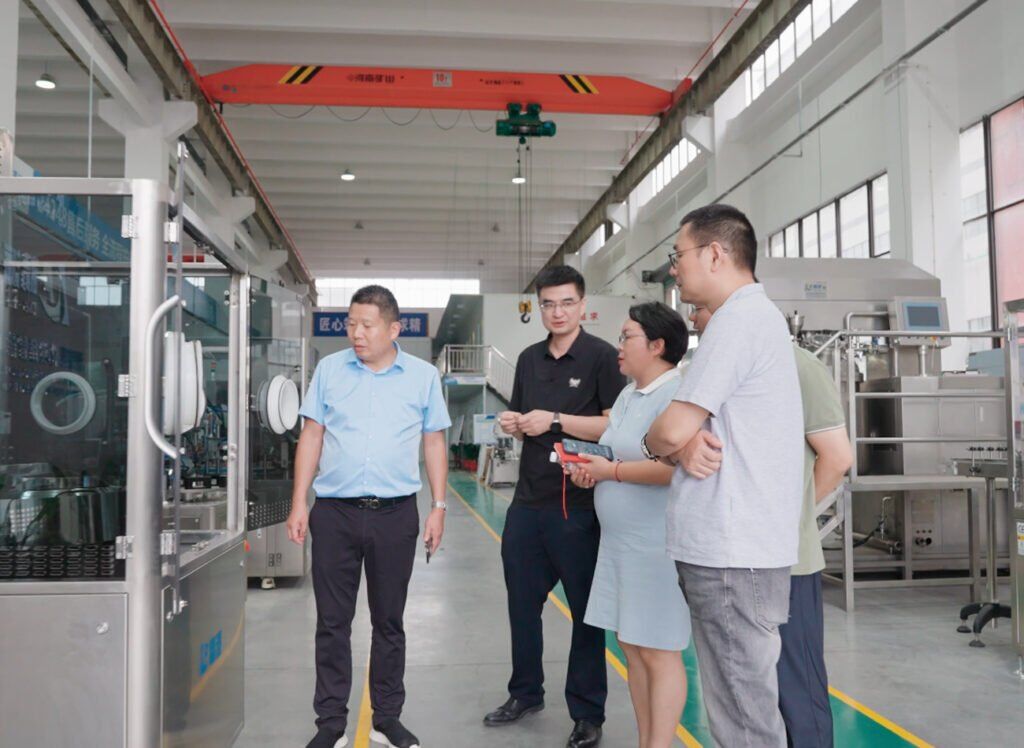
Target output per hour, packaging style (sachet, stick‑pack, premade pouch, bottle, blister, carton), and desired level of human intervention define whether a single‑lane, multi‑lane, or rotary system is appropriate.
- Higher-volume products may use multi-lane or multi-head configurations, but output, footprint, giveaway, changeover, and quality depend on the product and tested machine setup.
- Lower-volume, premium products may favour flexible premade pouch or cartoning solutions.
- Required integration with upstream mixing, feeding, or downstream case‑packing and palletizing also influences whether a standalone machine or fully integrated line is optimal.
Decide Between Standalone Units or Turn-Key Solutions
There are two types of systems; you may need to decide which one will be best for your business:
- Standalone machines are suitable when existing manual or semi‑automatic operations only need to automate one step, such as filling or primary sealing, without full line redesign.
- Turnkey projects can coordinate multiple stages and reduce interface work, but they still require site utilities, validation, training, commissioning, service terms, and customer acceptance.
Assess After-Sales Service, Maintenance, and Training
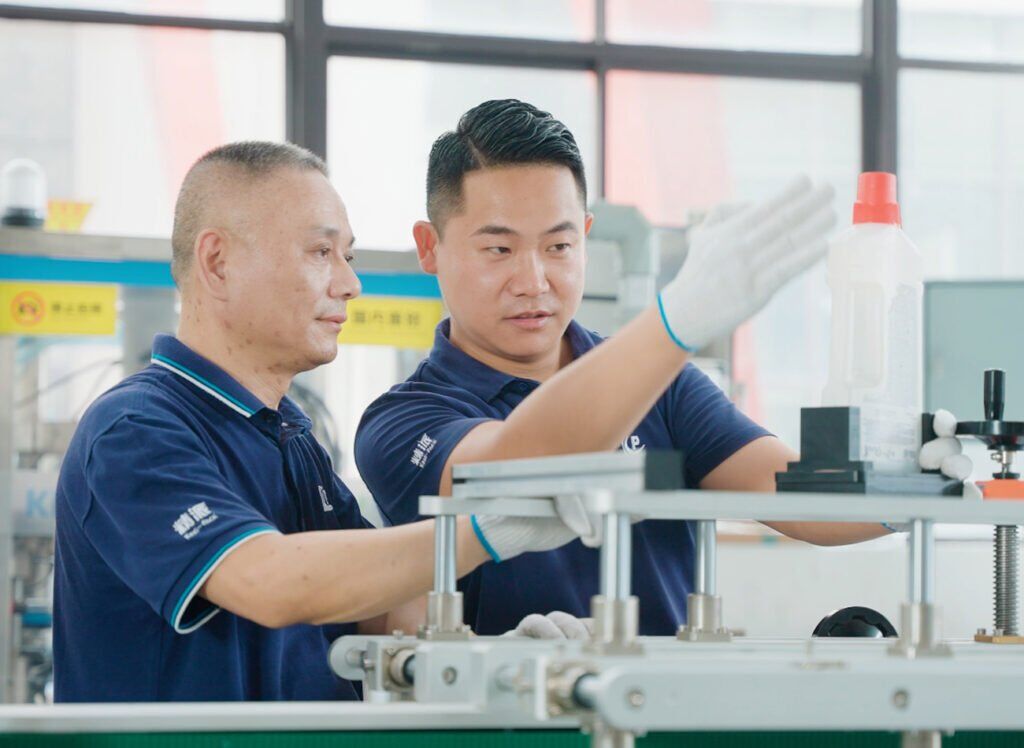
Compare spare parts, technical response, maintenance documentation, training, wear-part availability, diagnostics, and service coverage. Design speed should be confirmed after commissioning rather than assumed.
Conclusion
King Pack presents modular equipment options for food, pharmaceutical, cosmetic, and chemical applications. Select a machine using product trials, package compatibility, documented performance, quality requirements, and lifecycle cost rather than a generic efficiency or compliance claim.
Contact King Pack today to get your customized packaging machine solution and quotation.