 Skip to content
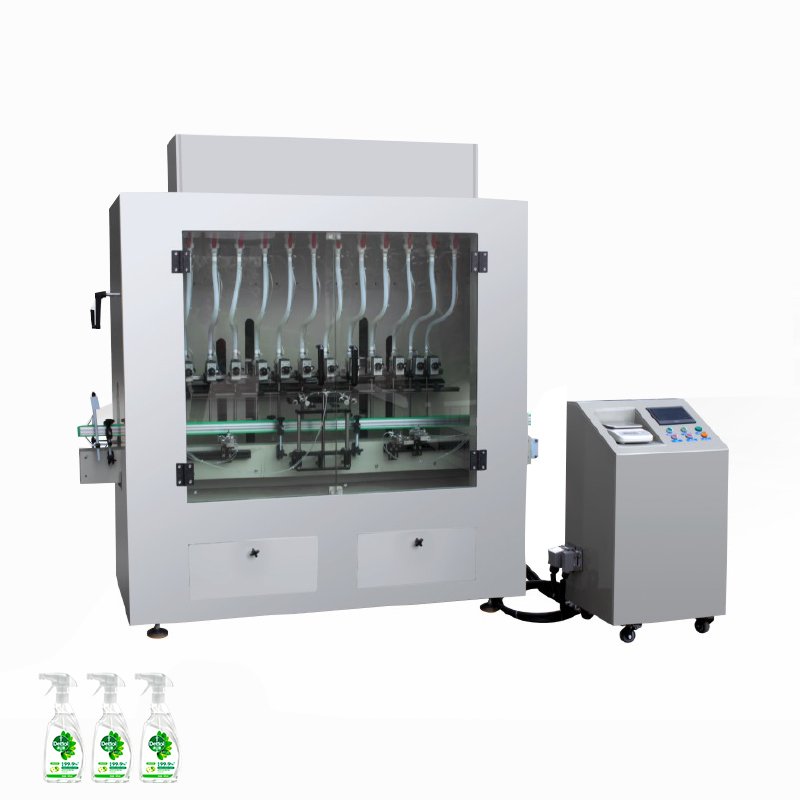
An engine oil filling machine must do more than dispense a target volume. A dependable line has to handle viscosity changes, prevent nozzle drips, match several container and cap formats, and maintain repeatable fills from start-up to the end of a batch. This guide explains how to configure a motor oil or lubricant oil filling line around the real product, package and output requirements—not around a generic machine specification.
If you are planning a new line or replacing manual filling, start with KING PACK’s automatic filling and capping line capabilities, then use the selection points below to prepare a useful RFQ.
Engine Oil Filling Machine Selection at a Glance
| Application | Common filling approach | Points to verify |
|---|---|---|
| 0.5–5 L bottles and jugs | Servo piston, gear/lobe pump or flowmeter filling | Viscosity range, target accuracy, nozzle shut-off and cap handling |
| 10–30 L pails or jerrycans | Net-weight filling or robust positive-displacement dosing | Container support, gross/tare control, top-load limits and operator access |
| Drums and IBCs | Gravimetric or net-weight bulk filling | Scale resolution, filling gun design, grounding, spill control and pallet handling |
| Several oil grades on one line | Recipe-controlled system with planned product changeover | Temperature/viscosity window, drainability, flush method and cross-mix limits |
| Products prone to stringing or dripping | Positive shut-off or suck-back nozzles | Nozzle response, catch trays, container-centering and drip detection |
There is no universally best dosing principle. The correct choice depends on the oil’s properties, the container range, legal or contractual fill tolerances, required output and the plant’s cleaning method. A supplier should test representative products and containers before finalizing the design.
What Is an Engine Oil Filling Machine?
An engine oil filling machine meters lubricating oil into bottles, jugs, pails or drums. It may be a stand-alone semi-automatic filler, but most industrial projects integrate it into a line with container feeding, capping, optional induction sealing, labeling, coding, checkweighing and case packing.
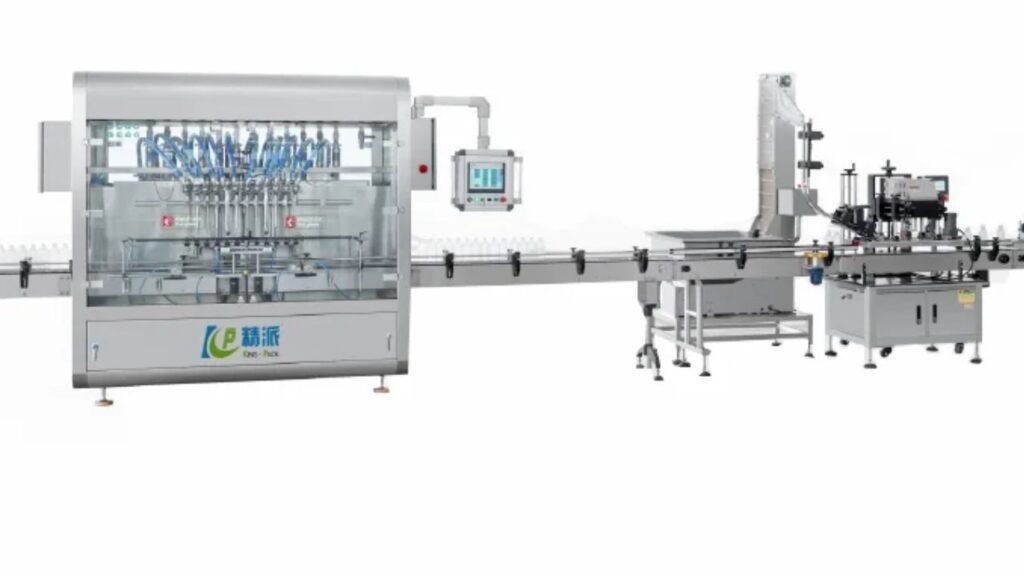
How a Lubricant Oil Filling Line Works
- Container infeed: empty bottles or jugs are unscrambled, manually loaded or transferred onto a conveyor.
- Positioning and verification: sensors confirm that the correct container is present before filling. Guides and stops stabilize each format.
- Metered filling: the selected piston, pump, flowmeter or weighing system doses the recipe quantity. A no-container-no-fill interlock prevents an open discharge.
- Cap application and tightening: caps, inner plugs or press-fit closures are fed and applied. Torque or closure presence can be checked where required.
- Sealing, labeling and coding: an induction seal may be added before labels, batch codes and traceability data are applied.
- Inspection and packing: checkweighing, vision inspection or rejection can be integrated before case packing and palletizing.
Product Properties That Control Machine Design
Motor oil is often described simply as “viscous,” but machine selection needs more precise data. Viscosity can change significantly with temperature, and different grades or additive packages may behave differently in the same pump and nozzle. The RFQ should state the minimum and maximum viscosity, density and product temperature expected during production.
- Viscosity and temperature: both affect flow rate, pressure loss and cut-off behavior. Temperature should be controlled or compensated where it materially changes the fill.
- Air entrainment and foaming: excessive agitation or an unsuitable return path can trap air and destabilize volumetric or weight readings.
- Additives and product compatibility: hoses, seals, pumps and wetted parts must be compatible with every oil grade and cleaning fluid.
- Cross-mix limits: plants running several grades should define how much residual product is acceptable after draining or flushing.
- Density variation: net-weight systems measure mass directly, while volumetric systems may need density/temperature controls when a mass-based declaration is required.
Which Filling Technology Fits Motor Oil?
| Technology | Best fit | Engineering considerations |
|---|---|---|
| Servo piston filler | Repeatable bottle and jug formats, including medium- to high-viscosity oils | Defined stroke volume, seal compatibility, cleaning access and change parts |
| Gear or lobe pump filler | Recipe-driven lines covering several volumes and viscosities | Pump slip, shear, pressure, product temperature and cleanout method |
| Flowmeter filler | Flexible inline filling where the selected meter suits the oil | Meter type, calibration, conductivity if applicable, bubbles and flow profile |
| Net-weight filler | Pails, drums, bulk containers and applications specified by mass | Tare variation, scale resolution, vibration isolation and slow/fast fill control |
| Gravity or timed-pressure filler | Free-flowing products under stable conditions | Usually less suitable when viscosity or head pressure changes significantly |
Accuracy claims should always include the tested product, fill volume, container and operating condition. A percentage without those conditions is not enough to compare two machines.
Types of Oil Filling Nozzles and Filling Guns
The “filling gun” is the final product-control point, so its geometry and shut-off action directly affect drips, splashing and container cleanliness.
- Positive shut-off nozzle: closes close to the outlet and is a common choice for minimizing stringing.
- Suck-back or anti-drip nozzle: pulls a small amount of product away from the tip after cut-off. The setting must be validated so it does not draw air into the next dose.
- Diving or bottom-up nozzle: enters the container and rises during filling to reduce splashing, improve control and keep the bottle exterior cleaner.
- Long-reach nozzle: helps reach narrow-neck or deeper containers while preserving the required clearance.
- Bulk filling gun: used for pails, drums or IBCs and often paired with a scale. Its weight, hose support, grounding and operator ergonomics should be reviewed.
Container, Closure and Line Integration
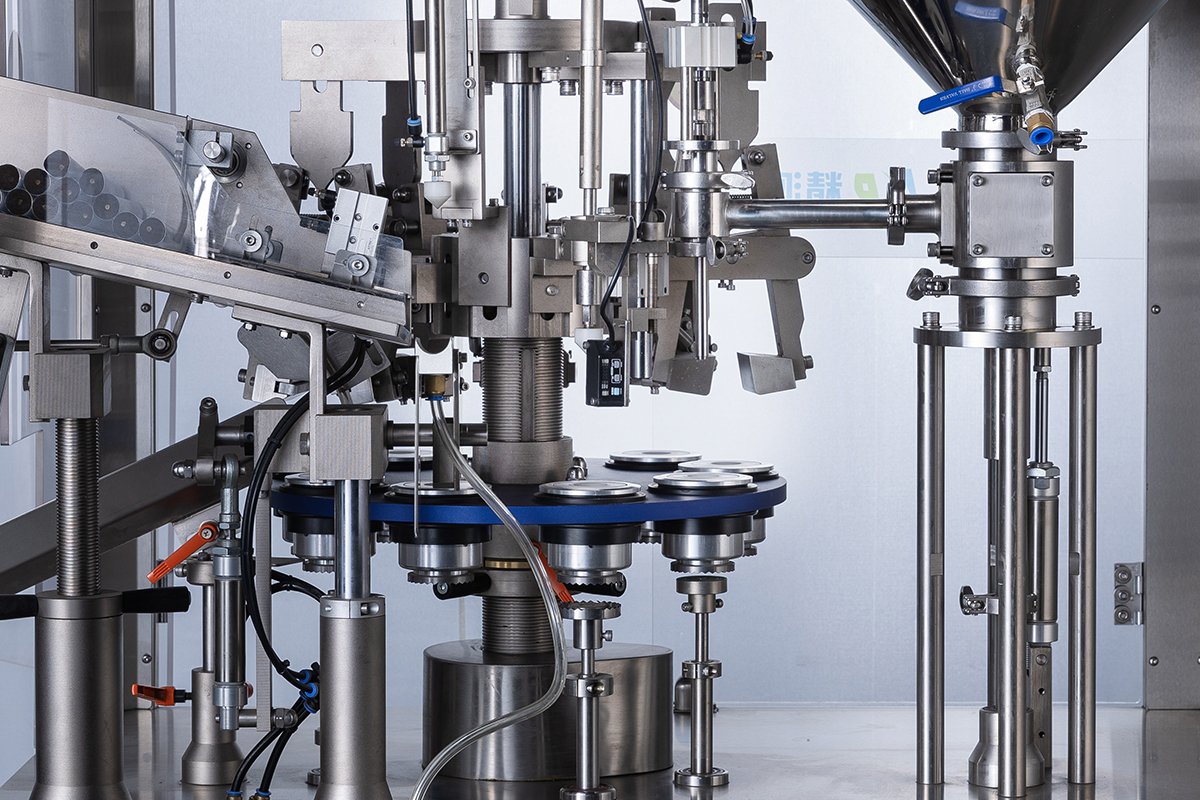
A filler should be specified around the complete packaging set—not only the liquid. Send drawings or samples for every bottle, jug, pail, handle, cap, inner plug and seal. Confirm neck finish, container rigidity, center of gravity and the allowable top load under the capping head.
Common closures include screw caps, press-on caps, tamper-evident caps, inner plugs and induction-sealed foil liners. A multi-format line may need adjustable guides, recipe positions and change parts. The goal is a controlled transition from filling to closure application without spills, cross-threaded caps or label contamination.
How to Control Fill Accuracy and Rejects
- Calibrate each filling channel using the actual product or a validated representative fluid.
- Record product temperature and density when they influence the declared quantity.
- Use recipe permissions and change logs to prevent unauthorized parameter changes.
- Check start-up, steady-state and end-of-batch containers instead of reporting only a best-case sample.
- Integrate checkweighing and automatic rejection when the production risk and quality plan justify it.
- Define how underfills, overfills, missing caps and fallen containers are detected and handled.
Changeover, Cleaning and Product Recovery
Lubricant lines are not normally designed like hygienic pharmaceutical systems, but they still need a documented method for removing the previous grade and controlling contamination. Favor drainable routing, accessible filters, clearly identified hoses and minimal dead legs. For frequent grade changes, evaluate dedicated circuits, flushing, air purging or product-recovery options such as pigging where line length and product value justify them.
During trials, measure the time and product used from the last acceptable pack of one grade to the first acceptable pack of the next. That reveals the real changeover cost more clearly than a nominal mechanical adjustment time.
Safety Requirements Are Product- and Site-Specific
Do not assume every lubricant filling machine requires explosion-protected construction, and do not assume ordinary construction is always acceptable. Review the current Safety Data Sheet, flash point, additives, cleaning chemicals, ventilation, spill-control plan and local electrical classification with the responsible safety professional. For U.S. projects, OSHA’s official Hazard Communication standards explain the role of hazard classification, labels and Safety Data Sheets. Requirements in other markets may differ.
What to Include in Your RFQ and FAT
A useful request for quotation should include:
- oil grades, viscosity and density ranges, plus minimum/maximum filling temperature;
- container drawings or samples, target volumes and allowable fill tolerances;
- cap, plug, liner, label and coding requirements;
- required containers per minute by format—not one headline speed;
- available utilities, room conditions, layout, conveyor height and line interfaces;
- changeover frequency, cleaning method and acceptable residual product;
- inspection, rejection, data recording, documentation and spare-parts expectations.
The Factory Acceptance Test should use the actual oil and packaging whenever practical, or a documented surrogate that reproduces the relevant behavior. Test filling accuracy, drips, cap placement and torque, label position, rejects, alarms, restart conditions and each planned changeover. KING PACK has also documented a completed lubricant oil filling and capping line FAT and shipment as a practical project example.
Frequently Asked Questions
Is a piston filler always best for engine oil?
No. Piston filling is a strong option for many bottle and jug applications, but gear/lobe pumps, flowmeters or net-weight systems may fit better depending on viscosity range, package size, accuracy definition and changeover needs.
Can one machine fill motor oil, gear oil and hydraulic oil?
Often yes, provided the product-contact materials, pump, metering range and nozzles cover every grade. The more important question is whether the line can change products with an acceptable amount of time, flush material and cross-mix.
Should engine oil be filled by volume or by weight?
Both methods are used. Volumetric systems are common for bottles and jugs; net-weight filling is especially useful for larger containers or mass-based specifications. The commercial declaration and density variation should guide the decision.
How can nozzle dripping be reduced?
Combine a suitable positive shut-off or suck-back nozzle with stable product temperature, correct hose sizing, controlled pressure and accurate container positioning. Validate the result over a complete production run, not only a few cycles.
Plan Your Engine Oil Filling Line
KING PACK configures filling, capping, labeling and inspection modules around the actual oil and package. Explore our chemical filling and packaging solutions, review the broader solution structure, or send your product and container details for a line recommendation and test plan.
