 Skip to content
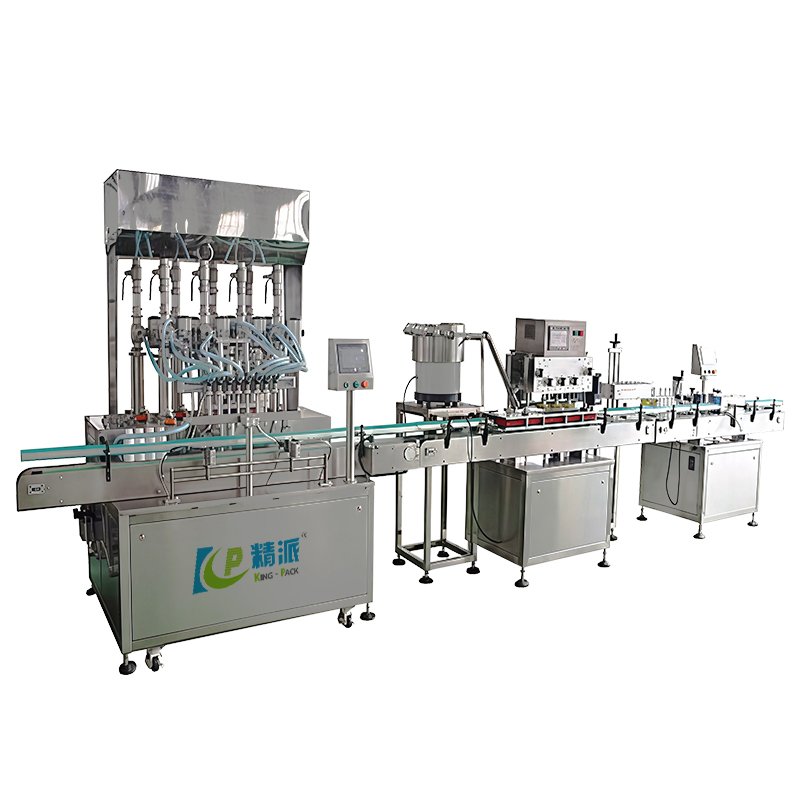
A pesticide filling machine must be selected for the actual agrochemical formulation, container and production environment. Product viscosity, foaming, suspended particles, solvent content, fill temperature and chemical compatibility determine the dosing method and product-contact materials. For U.S. workplaces, OSHA’s Hazard Communication guidance explains labels and Safety Data Sheet requirements; always confirm the rules that apply at the installation site before the line is specified.
Pesticide Filling Machine Selection at a Glance
| Product or requirement | Typical filling approach | What to verify |
|---|---|---|
| Thin, water-like liquids | Flowmeter, gravity or compatible pump filling | Foaming, conductivity, density and container size |
| Emulsifiable concentrates or suspensions | Servo piston or positive-displacement pump filling | Viscosity, particles, settling and agitation |
| Foaming formulations | Bottom-up filling with controlled nozzle movement | Dive profile, fill speed and anti-drip performance |
| Corrosive or solvent-containing products | Isolated, chemically compatible product path | SDS, seals, hoses, ventilation and electrical-area requirements |
| Fill quantity verified by mass | Net-weight filling | Density variation, scale resolution and calibration plan |
Information Needed for a Line Proposal
- Product SDS, viscosity, density, foaming behavior and maximum particle size
- Fill-volume range, target output and acceptable tolerance
- Bottle, cap, liner and label drawings or physical samples
- Required product-contact materials, seal materials and hose specifications
- Cleaning method, recipe-change frequency and containment requirements
- Optional bottle feeding, capping, induction sealing, labeling, coding, checkweighing and case packing
Send these details to KING PACK for a compatible pesticide filling-line proposal, or review our filling and packaging solutions.
What Is a Pesticide Filling Machine?
A pesticide filling machine doses liquid agrochemical products into bottles, jerrycans or other approved containers. Depending on the formulation, the same equipment category may also be used for liquid fertilizers, herbicides, insecticides, fungicides and related agricultural chemicals.
The filler is only one part of the packaging line. A complete filling and capping line may include empty-container feeding, filling, cap placement, torque control, induction sealing, labeling, coding, weight inspection, leak inspection and case packing. Line design should minimize spills and operator contact while allowing safe cleaning and maintenance.
Choose the Filling Technology by Product Behavior
Flowmeter, Gravity and Pump Filling
Thin, filtered products may be handled by flowmeter, gravity or pump-based filling. The choice depends on conductivity, density stability, foaming, container geometry and the required method of quantity verification. A product trial should confirm nozzle behavior and fill consistency.
Servo Piston Filling
Servo piston filling is often suitable for viscous products, emulsions and suspensions. Piston size, product path, valve design and nozzle opening must accommodate the maximum viscosity and particle size without excessive shear, bridging or dripping.
Net-Weight Filling
Net-weight filling measures the product by mass and can be useful for larger containers or applications where weight verification is central to the process. Scale capacity, resolution, vibration isolation and product-density variation should be included in validation.
Chemical Compatibility and Safety Requirements
“Stainless steel” alone is not a complete material specification. The formulation may contact tanks, pumps, valves, hoses, gaskets, seals and nozzles, so each wetted component must be reviewed against the SDS and compatibility data. Some products require alternative materials or an isolated product path.
- Solvent or flammable components: Determine ventilation, grounding, bonding and electrical-area requirements through the responsible local safety professionals.
- Corrosive formulations: Verify every wetted material, including seals and hoses, rather than specifying only the filling tank.
- Operator protection: Consider closed transfer, drip containment, guarded access and procedures that reduce direct handling.
- Cleaning and waste: Define how rinse liquid, residues and rejected containers will be collected and handled.
Equipment selection does not replace the manufacturer’s environmental, health and safety review or the legal requirements that apply at the installation site. KING PACK’s chemical filling and packaging solutions can be configured only after the product and site requirements are defined.
Step-by-Step Agrochemical Filling Line Process
- Container feeding and inspection: Bottles or jerrycans enter the conveyor and are checked for correct position and format.
- Controlled filling: The selected dosing system fills each container. Bottom-up filling and anti-drip nozzles may be used for foaming or difficult products.
- Cap placement and tightening: The capper applies the specified closure and controls torque or pressing force.
- Optional sealing and inspection: Induction sealing, cap inspection, checkweighing or leak detection can be added when required by the package.
- Labeling and coding: The line applies the label and variable production information in the required location.
- Secondary packaging: Accepted containers are accumulated, case packed and prepared for controlled storage and shipment.
Semi-Automatic vs Fully Automatic Lines
| Configuration | Suitable situation | Points to confirm |
|---|---|---|
| Semi-automatic filler | Smaller batches, frequent changes or staged investment | Operator loading, exposure controls and repeatability |
| Automatic linear line | Multiple bottle formats and scalable production | Change parts, conveyor handling and line balance |
| Higher-output integrated line | Stable products and long production runs | Upstream supply, cap handling, inspection and downtime plan |
Required output should be calculated from daily demand, available production time, changeovers, cleaning, expected downtime and future growth. The filler, capper, labeler and inspection stations should be balanced as one line.
Containers, Caps and Sealing Options
Agrochemicals are commonly packed in approved plastic or glass containers, but the correct package depends on the formulation and applicable rules. Confirm chemical compatibility, permeability, light barrier, fill temperature, panel strength and transport conditions through the packaging supplier and product validation.
For U.S. projects, the EPA Pesticide Container and Containment Rule is an authoritative starting point for container and containment obligations. Requirements differ by country and product registration.
- Container handling: Provide the smallest and largest bottle drawings, including neck finish and center of gravity.
- Closure system: Specify screw caps, press-on closures, measuring caps, liners and required torque.
- Tamper evidence: Induction sealing or another approved system may be integrated when required.
- Labels and coding: Reserve sufficient areas for product identification, safety information and batch data.
Cleaning, Changeover and Cross-Contamination Control
Cleaning design should follow the formulation range and site procedure. Drainable product paths, accessible connections, controlled flushing and recipe-specific changeover instructions help reduce retained product. Where different active ingredients share a line, define segregation, cleaning verification and waste handling before equipment approval.
Ask the supplier to identify residual-product areas, disassembly points, recommended inspection intervals and the parts that must be replaced when changing to a chemically incompatible formulation.
Fill Accuracy and In-Process Verification
Do not specify accuracy as a single percentage without test conditions. Fill performance depends on the product, fill volume, temperature, pressure, nozzle timing, container stability and calibration method. A useful acceptance plan defines the sample size, measurement method, target quantity, individual limits and actions for rejected containers.
- Verify the smallest and largest fill volumes.
- Test normal start-up, steady production and restart conditions.
- Include low and high viscosity or temperature conditions when they occur in production.
- Record calibration, recipe settings and checkweigher results where applicable.
What to Include in FAT and Supplier Evaluation
A factory acceptance test should use representative product or an agreed substitute, actual containers and closures. The test plan should cover filling, dripping, foaming, cap handling, changeover, alarms, rejection and cleaning access.
- Approved product-contact and seal materials
- Documented output and fill-test conditions
- Container and closure changeover procedure
- Electrical and control documentation
- Recommended spare parts and maintenance schedule
- Installation, operator training and after-sales responsibilities
Pesticide Filling Machine FAQ
Which filler is suitable for viscous pesticide products?
A servo piston or compatible positive-displacement pump is often considered for viscous formulations. The decision must also account for particles, settling, chemical compatibility, shear and cleaning.
Can one machine fill different pesticide formulations?
It may be possible when the dosing range and wetted materials are compatible with every product. Changeover, cleaning verification and cross-contamination controls should be defined before combining formulations on one line.
Is stainless steel always suitable?
No. Suitability depends on the complete formulation and every wetted component. Review the SDS and compatibility data for metals, seals, hoses, valves and nozzles.
What samples are required before machine design?
Provide representative product, SDS, bottles, caps, liners and labels, together with the fill-volume range and target output. Samples allow the supplier to test flow behavior, dripping, foaming and container handling.
Plan Your Pesticide Filling Line
The right pesticide filling machine combines a compatible product path, suitable dosing technology, controlled container handling and the required capping, sealing, labeling and inspection stations. The safest and most reliable specification begins with the formulation and SDS.
Send KING PACK your product data, container samples, fill range and target output. Contact KING PACK for a tailored pesticide and agrochemical filling-line proposal.
