 Skip to content
A jam filling machine must match product viscosity, fruit-piece size, fill temperature, jar geometry and closure type. Smooth jam, preserves with fruit pieces and hot-fill products behave differently at the nozzle, so the filling method should be selected from product and container tests rather than nominal capacity alone.
Jam Filling Machine Selection at a Glance
| Product or package | Typical equipment choice | What to verify |
|---|---|---|
| Smooth, pumpable jam | Servo piston or positive-displacement pump filler | Viscosity range, temperature and nozzle cut-off |
| Jam with fruit pieces | Large-bore piston or pump product path | Maximum particle size, bridging and product damage |
| Hot-fill jam | Heated hopper and temperature-compatible filling line | Validated fill temperature, jar, closure and cooling process |
| Wide-mouth glass jars | Jar handling, piston filling and controlled capping | Jar stability, headspace, lid feed and torque |
| Pouches or sachets | Packaging machine with a suitable dosing system | Film, seal area, temperature and product contamination of the seal |
Specify These Items Before Requesting a Quote
- Jam type, viscosity range, fill temperature and maximum fruit-piece size
- Smallest and largest fill volumes with acceptable tolerance
- Jar or bottle drawings, samples, lids and labels
- Target daily output, shifts, changeovers and available line space
- Cleaning method, allergen plan and recipe-change frequency
- Required capping, sealing, labeling, coding, inspection and case packing
Send your jam and container details to KING PACK for a tailored proposal, or explore our filling and packaging solutions.
What Is a Jam Filling Machine?
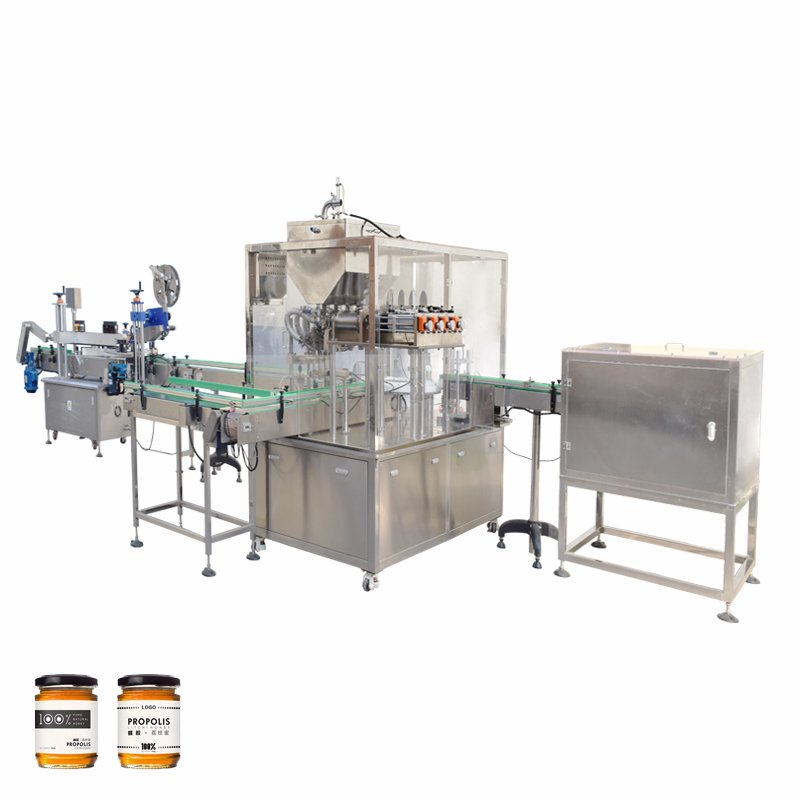
A jam filling machine portions jam, preserves, jelly, marmalade or another pumpable fruit spread into jars, bottles, cups, pouches or sachets. The filler may operate as a stand-alone machine, but commercial projects often use a complete filling and capping line that coordinates container feeding, filling, lid placement, capping, labeling, coding and inspection.
The main engineering challenge is to move and dose a viscous product without creating excessive shear, air pockets, dripping or damage to fruit pieces. Product temperature can change viscosity significantly, so the feed system, hopper and nozzle should be evaluated across the actual operating range.
Choose the Filling Technology by Jam Type
Servo Piston Filling
Servo piston fillers are commonly considered for smooth and viscous products. The piston volume, cylinder size, valve, product path and nozzle opening must be sized for the fill range and product behavior. Recipe control can help repeat validated settings during changeover.
Positive-Displacement Pump Filling
Lobe, gear or other positive-displacement pumps may be suitable when the product can be transferred continuously from a preparation or holding tank. Pump selection should account for viscosity, fruit pieces, shear sensitivity, pressure, hose length and cleaning access.
Large-Particle Jam Filling
Jam containing fruit pieces needs a sufficiently large and smooth product path. The supplier should test the largest expected particle, not only an average sample. Valve restrictions, elbows and nozzle cut-off can cause bridging, separation or crushed inclusions.
Step-by-Step Jam Filling Line Process
- Product supply: Jam transfers from the process or holding tank to a heated or insulated hopper when temperature control is required.
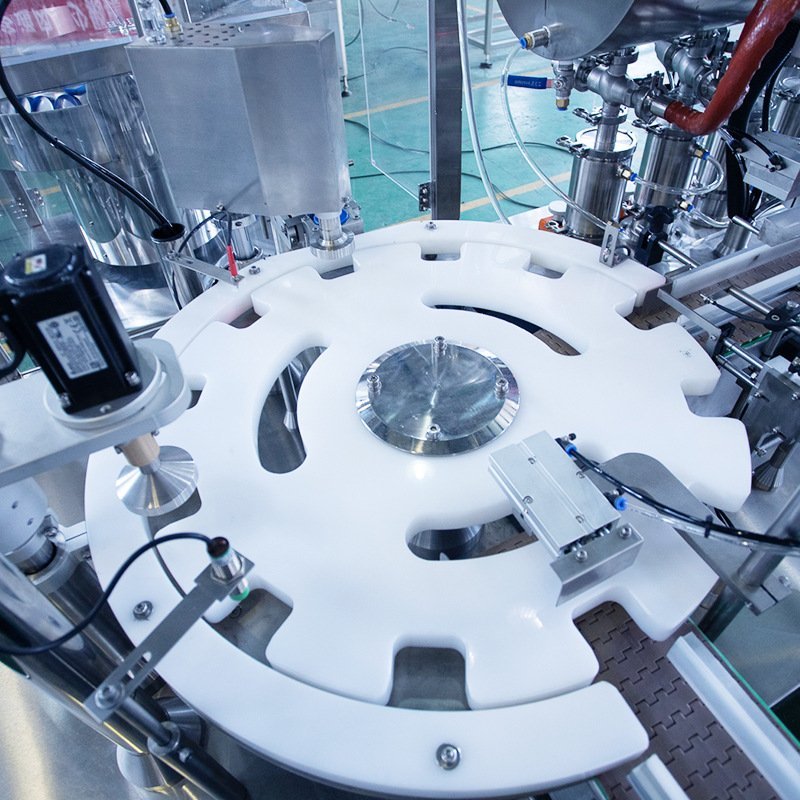
- Container feeding: Clean jars or bottles enter the conveyor and are stabilized under the filling nozzles.
- Controlled filling: The dosing system fills the selected quantity while nozzle movement and cut-off settings control stringing and dripping.
- Lid placement and capping: Closures are fed, positioned and tightened or pressed according to the package design.
- Inspection and coding: Optional checks verify fill quantity, closure presence and code readability.
- Secondary packaging: Finished containers are accumulated and may be connected to automatic case packing.
Hot-Fill Temperature and Container Compatibility
Not every jam line uses the same fill temperature. The manufacturer’s validated food-safety process should define product temperature, holding conditions, headspace, closure application and cooling. The filling machine then needs to maintain those parameters without overheating the product or allowing uncontrolled cooling in the hopper and pipes.
- Glass jars: Confirm thermal-shock resistance, finish dimensions, lid compatibility and jar stability.
- Plastic containers: Confirm the resin and container design are compatible with the intended fill temperature and shelf-life requirements.
- Closures: Verify cap or lid feeding, torque, vacuum or seal formation using actual samples.
- Cooling: Coordinate downstream handling so containers remain stable and labels are applied under suitable conditions.
Jars, Bottles, Pouches and Sachets
Rigid containers and flexible packages require different handling. Wide-mouth jars need stable conveyor guides and reliable lid placement. Squeeze bottles may need bottom-up filling or anti-drip nozzles. Pouches and sachets use a separate sealing platform where the seal area must remain free of product.
For another viscous sauce application, see the hot sauce bottling equipment guide. For a broader comparison of packaging formats, review KING PACK packaging machine solutions.
Food-Contact Design, Cleaning and Changeover
Product-contact surfaces should be compatible with the recipe and designed for the required cleaning method. Drainable paths, accessible connections, removable nozzles and controlled flushing can reduce retained jam. Cleaning must address fruit particles, sugar residues, allergens and areas around valves or seals.
For U.S. facilities, the FDA’s food CGMP information is an authoritative regulatory starting point. Equipment specifications must also follow the food-safety plan and requirements that apply at the installation site.
Fill Accuracy, Product Giveaway and Verification
Do not evaluate accuracy from a headline percentage alone. Performance depends on fill volume, temperature, viscosity, fruit-piece distribution, product level in the hopper, nozzle timing and container stability. Acceptance criteria should define the test product, sample size, measurement method and allowable individual and average results.
- Test the smallest and largest fill volumes.
- Verify start-up, steady production and restart conditions.
- Include the lowest and highest validated product temperatures.
- Check fruit-piece distribution when the recipe contains inclusions.
- Record recipe settings and checkweigher data where applicable.
Semi-Automatic vs Automatic Jam Filling Lines
| Configuration | Suitable situation | Main considerations |
|---|---|---|
| Semi-automatic filler | Small batches, product trials or frequent format changes | Operator loading, hot-product handling and consistency |
| Automatic linear line | Multiple jar sizes and scalable production | Change parts, line balance and cleaning access |
| Integrated higher-output line | Stable products and longer production runs | Product supply, lid handling, inspection and downtime planning |
Calculate required output from daily demand, available production time, recipe changeovers, cleaning, expected downtime and future growth. Balance the filler, capper, labeler and inspection stations as one line rather than sizing each machine separately.
Factory Acceptance Test Checklist
The factory acceptance test should use representative jam and actual containers, lids and labels whenever practical. Agree on the test plan before manufacturing is completed.
- Validated product temperature and hopper conditions
- Largest fruit pieces and highest expected viscosity
- Smallest and largest fill volumes
- Nozzle dripping, stringing and container cleanliness
- Lid placement, capping and reject functions
- Format changeover, cleaning access and recipe recovery

Standards and Product Definition
Product names and composition rules vary by market. In the United States, 21 CFR 150.160 provides the federal standard of identity for specified fruit preserves and jams. This reference does not replace product-specific regulatory review, process validation or local requirements.
Jam Filling Machine FAQ
Which filler is suitable for jam with fruit pieces?
A large-bore servo piston or compatible positive-displacement pump is often considered. The final design depends on maximum particle size, viscosity, fill volume, shear sensitivity and nozzle cut-off.
Does every jam filling machine need a heated hopper?
No. Heating or insulation is used when the validated process requires temperature control to maintain product flow or hot-fill conditions. The required temperature range should come from the manufacturer’s process.
Can one line fill different jar sizes?
It can when the fill range, conveyor, guides, lid handling and change parts are designed for the complete format range. Supply drawings and samples for every container and closure.
How should a jam filling line be sized?
Use daily output, production hours, cleaning time, changeovers, expected downtime and future demand. Confirm that product preparation and cooling can support the planned packaging rate.
Plan Your Jam Filling and Packaging Line
The right jam filling machine combines a product-matched dosing system, temperature control, clean nozzle cut-off, stable jar handling and the required capping, labeling and inspection stations. Product and container trials help confirm the design before production.
Send KING PACK your jam samples, jar and lid drawings, fill range and target output. Contact KING PACK for a tailored jam filling and packaging-line proposal.
