 Skip to content

Setting up a fully automatic toothpaste production line is a major step for oral care brands, cosmetic manufacturers, pharmaceutical-related factories, and contract packaging companies. Toothpaste is not a simple liquid product. It is a high-viscosity paste that requires stable mixing, accurate filling, strong sealing, hygienic processing, and professional retail packaging. Because of this, a successful toothpaste manufacturing line is not only about buying a single toothpaste filling machine. It requires a complete system that connects paste preparation, tube filling, sealing, coding, cartoning, inspection, and final packing.
For manufacturers planning to build a new toothpaste factory or upgrade an existing workshop, choosing the right automatic toothpaste production line can improve productivity, reduce labor costs, improve product consistency, and support long-term business growth. In this guide, King Pack explains how a fully automatic toothpaste production line works, what equipment is required, and how to choose the right solution for your production needs.
Why Toothpaste Production Requires a Fully Integrated Line
Toothpaste production is different from ordinary liquid filling because toothpaste has a thick, sticky, and semi-solid texture. A typical toothpaste formula may include abrasives, humectants, thickeners, surfactants, flavors, sweeteners, active ingredients, and purified water. These materials must be mixed evenly to create a smooth, stable, and attractive paste.
If the production process is not controlled properly, common problems may appear, such as air bubbles, uneven texture, unstable viscosity, inaccurate filling weight, poor tube sealing, leakage, or unattractive packaging appearance. These issues can directly affect product quality, customer satisfaction, and brand reputation.
A fully automatic toothpaste production line solves these problems by connecting each production step into one continuous workflow. From raw material mixing to final carton packing, the process becomes more stable, cleaner, and easier to control. Automation also reduces manual operation, which helps improve hygiene and production efficiency.
For oral care products, packaging quality is especially important. Consumers judge toothpaste not only by the formula, but also by the appearance of the tube, the strength of the seal, the cleanliness of the carton, and the overall presentation of the product. A professional toothpaste packaging line helps manufacturers deliver consistent, retail-ready products.
Main Equipment Needed for a Fully Automatic Toothpaste Production Line
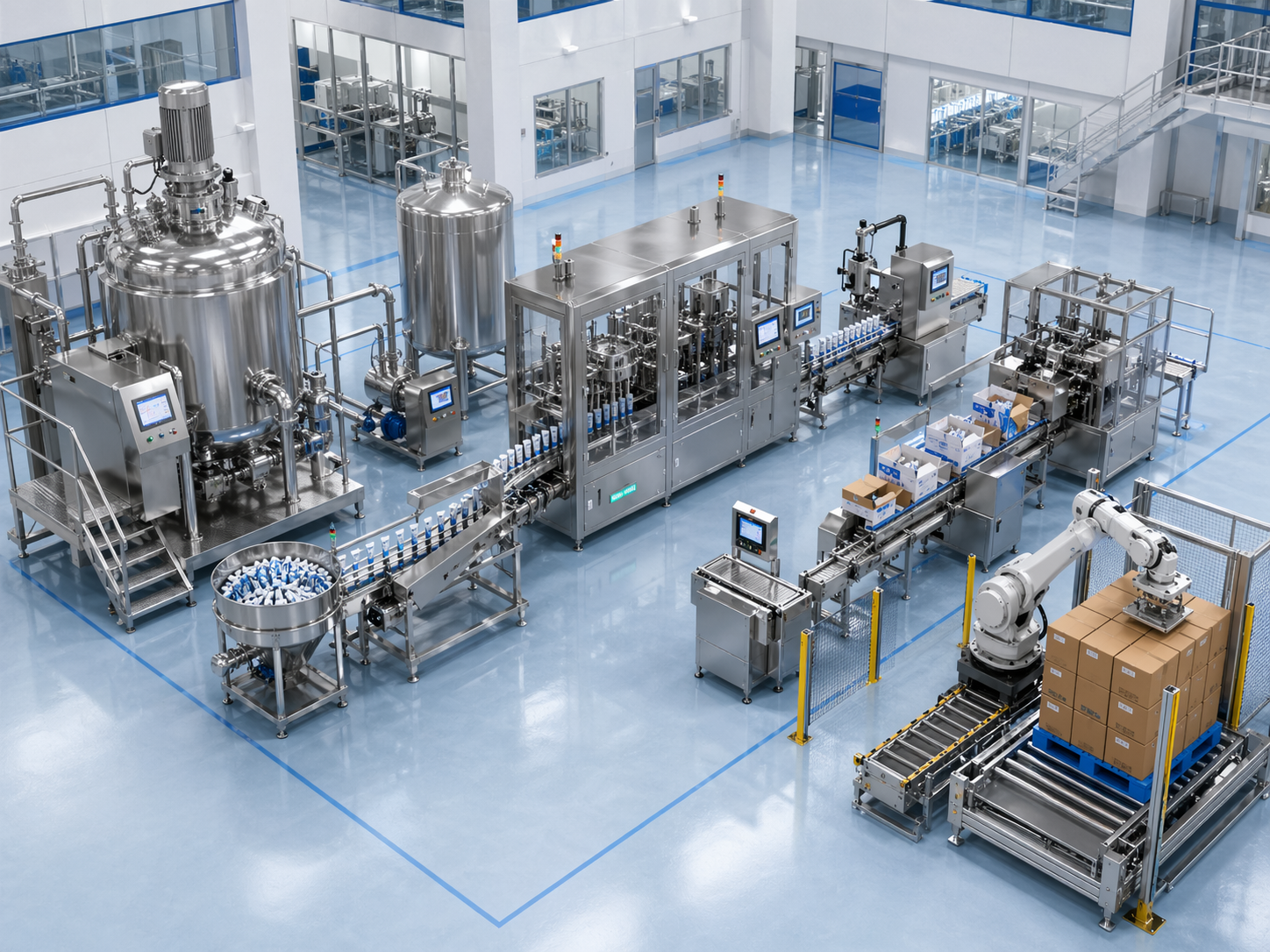
A complete toothpaste production line usually includes several important systems. Each machine plays a different role, and the performance of the whole line depends on how well these machines are matched.
Vacuum Emulsifying Mixer
The vacuum emulsifying mixer is used for toothpaste paste preparation. It mixes raw materials under vacuum conditions to reduce air bubbles and improve product smoothness. For toothpaste, vacuum mixing is very important because air trapped inside the paste can affect filling accuracy and product appearance.
A good toothpaste mixer should provide strong mixing force, stable vacuum performance, temperature control if required, and easy cleaning. It should be suitable for high-viscosity products and able to produce a uniform paste.
Storage Tank and Transfer Pump System
After the toothpaste paste is prepared, it is transferred to a storage tank. The storage tank keeps the product ready for continuous filling. A transfer pump moves the toothpaste from the storage tank to the tube filling machine.
Because toothpaste is thick, the transfer system must be powerful enough to move the paste smoothly without damaging its texture. The storage and transfer system should also be designed for hygienic operation.
Automatic Tube Feeding System
The automatic tube feeding system loads empty tubes into the filling machine. It can reduce manual labor and improve production speed. The system positions the tubes correctly before filling and sealing.
For laminated tubes or plastic tubes with printed designs, tube orientation is important. The machine must align the tube correctly so that the front design, seal position, and coding area appear professional.
Toothpaste Tube Filling and Sealing Machine
The tube filling and sealing machine is the core equipment in the toothpaste packaging line. It automatically fills toothpaste into tubes, seals the tube ends, prints batch numbers or production dates, cools the seal, trims the tube end, and discharges the finished tubes.
Different tube materials require different sealing methods. Plastic and laminated tubes are usually sealed by hot air or ultrasonic sealing, while aluminum tubes are sealed by folding and crimping. Choosing the right sealing method is essential for preventing leakage and ensuring a clean package appearance.
Automatic Cartoning Machine
After the toothpaste tubes are filled and sealed, they often need to be packed into cartons for retail sales. An automatic cartoning machine folds paper cartons, inserts the toothpaste tubes, and closes the cartons automatically.
For high-speed production, the cartoning machine should match the speed of the tube filling machine. If the cartoner is too slow, it will become a bottleneck and reduce the efficiency of the entire line.
Inspection and Final Packing Systems
A modern toothpaste production line can also include checkweighers, barcode inspection systems, labeling machines, case packers, and palletizing systems. These machines help improve quality control and reduce packaging errors.
For example, a checkweigher can detect whether each tube or carton has the correct weight. A vision inspection system can check coding, labels, or carton appearance. These systems are especially useful for manufacturers that need stable quality and export-ready packaging.
Step-by-Step: How a Fully Automatic Toothpaste Production Line Works
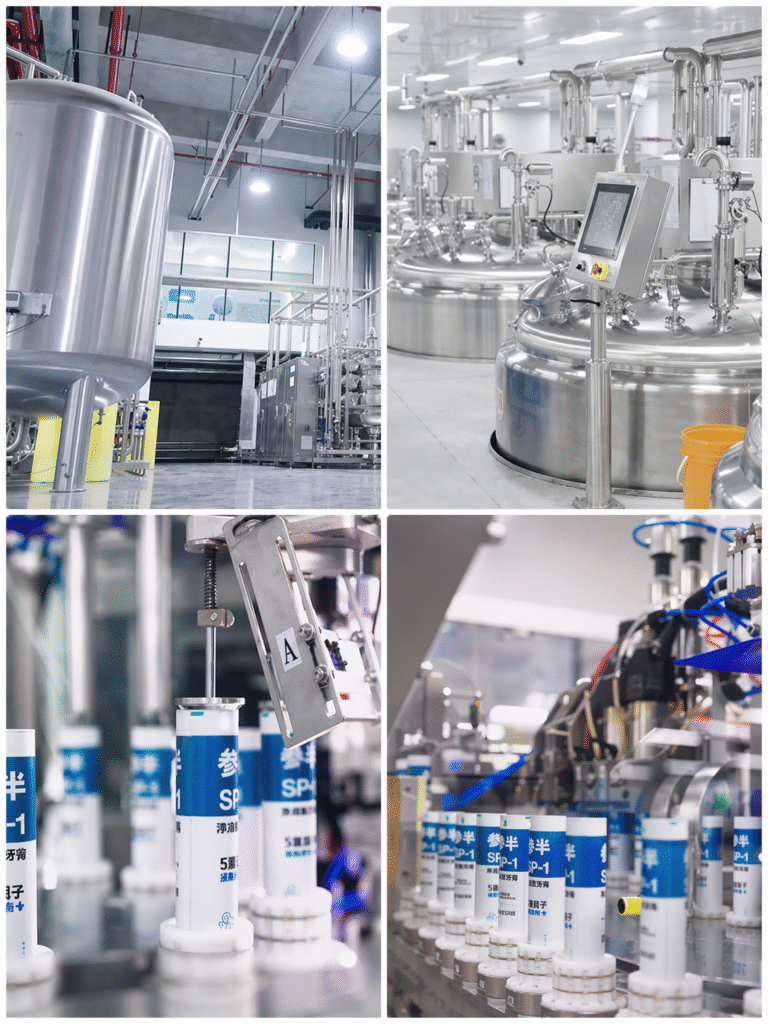
A fully automatic toothpaste production line usually follows a clear production process.
First, raw materials are prepared according to the toothpaste formula. Ingredients are added into the vacuum emulsifying mixer in the correct order. The mixer blends the materials evenly and removes air from the paste under vacuum conditions. This step creates a smooth and stable toothpaste base.
Second, the finished paste is transferred to a storage tank. The storage tank supplies toothpaste continuously to the tube filling machine. This ensures that the filling process can run smoothly without frequent interruption.
Third, empty tubes are loaded into the automatic tube feeding system. The machine feeds the tubes into holders and positions them correctly. If the tubes have printed marks, the machine can orient them so that the sealing and printing positions are accurate.
Fourth, the filling system injects toothpaste into each tube. For high-viscosity toothpaste, the filling system must be stable, accurate, and clean. It should reduce dripping, prevent air bubbles, and keep the filling volume consistent.
Fifth, the machine seals the tube end. Plastic and laminated tubes can be sealed by hot air or ultrasonic sealing. Aluminum tubes are sealed by mechanical folding. After sealing, the tube end is cooled and trimmed to create a neat appearance.
Sixth, the machine prints the production date, batch number, or other traceability information on the tube. This is important for quality management and market compliance.
Finally, the finished tubes are discharged and transferred to the automatic cartoning machine. The cartoner packs each tube into a retail carton. The cartons can then pass through inspection, labeling, case packing, and palletizing before shipment.
Key Features of a Modern Toothpaste Production Line
A modern toothpaste production line should be designed for accuracy, stability, hygiene, and flexibility.
High filling accuracy is one of the most important requirements. Toothpaste products are usually sold by weight or volume, so every tube must contain the correct amount of product. Accurate filling helps reduce product waste and ensures customer satisfaction.
Stable sealing performance is also essential. A weak or uneven seal can cause leakage during transportation or storage. Good sealing quality protects the product and improves the brand image.
Another important feature is easy changeover. Many manufacturers produce different toothpaste sizes, such as travel-size tubes, standard family-size tubes, or promotional packages. A flexible toothpaste filling machine should support different tube diameters, tube lengths, and filling volumes.
The machine should also include no-tube-no-fill protection, automatic tube orientation, anti-dripping filling nozzles, easy cleaning design, PLC touchscreen control, and servo-driven operation. These features make the line easier to operate and help maintain stable production quality.
For factories with strict hygiene requirements, stainless steel construction, clean machine surfaces, and convenient cleaning access are also important. A hygienic design helps reduce contamination risks and supports safer oral care production.
How to Choose the Right Toothpaste Production Line Capacity
Choosing the right capacity depends on your business stage, product plan, and market demand.
For startup oral care brands or small factories, a medium-speed automatic toothpaste tube filling machine may be enough. This type of machine can help manufacturers move from manual filling to stable automatic production without investing in a very large line at the beginning.
For growing manufacturers, a fully automatic tube filling and cartoning line is usually more suitable. It can improve output, reduce labor, and create more consistent packaging quality.
For large-scale toothpaste factories, a high-speed automatic production line with tube feeding, filling, sealing, cartoning, inspection, case packing, and palletizing may be required. This type of line is suitable for continuous production and large order volumes.
When choosing capacity, manufacturers should consider not only current production needs, but also future growth. Buying a machine that only meets today’s demand may lead to limitations later. A scalable toothpaste packaging line can help reduce future upgrade costs.
Toothpaste Packaging Options for Different Market Needs
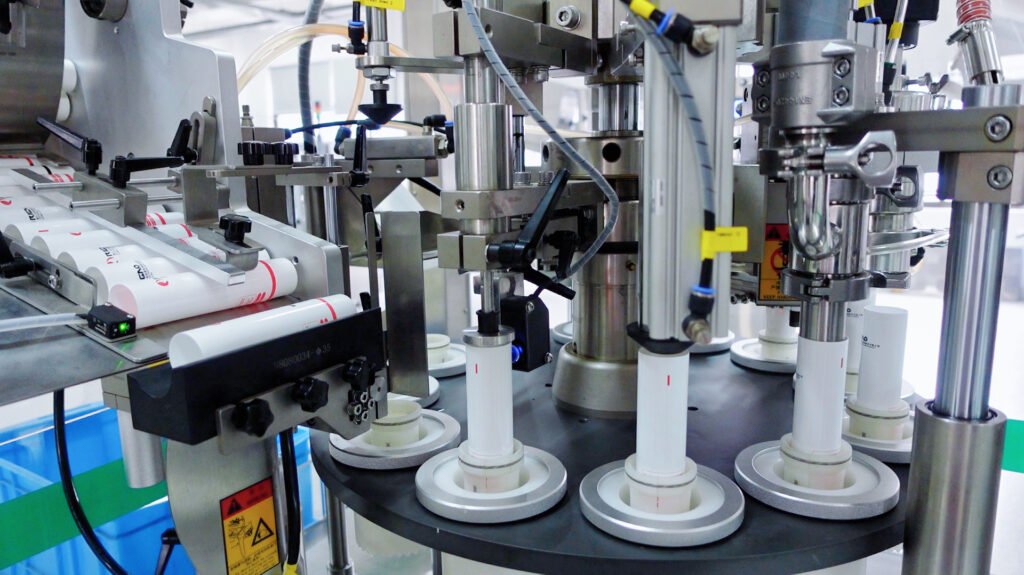
Toothpaste products are commonly packed in plastic tubes, laminated tubes, or aluminum tubes. Each packaging material has different advantages.
Plastic tubes are widely used because they are flexible, attractive, and suitable for modern retail packaging. Laminated tubes provide good barrier performance and are often used for premium toothpaste products. Aluminum tubes are still used in some markets or for specific formulas that require strong protection.
Retail toothpaste is usually packed in paper cartons after tube filling and sealing. The carton provides product information, improves shelf appearance, and protects the tube during transportation. Some brands may also require multi-pack packaging, promotional packaging, or export case packing.
A good toothpaste production line should be able to support the selected tube material, carton style, and final packing method. Before purchasing equipment, manufacturers should confirm the tube size, cap type, carton dimensions, labeling requirements, and packing format.
Quality Control Points in Toothpaste Manufacturing
Quality control is critical in toothpaste manufacturing. The first control point is paste quality. The paste should be smooth, uniform, and free from air bubbles. Viscosity should remain stable so that filling can be accurate.
The second control point is filling weight. Each tube should contain the correct amount of toothpaste. Overfilling increases material cost, while underfilling can cause customer complaints or compliance problems.
The third control point is sealing quality. The seal should be strong, clean, and attractive. Leakage testing is often required to confirm that the tube can withstand storage and transportation.
The fourth control point is packaging accuracy. Cartons should be folded correctly, tubes should be inserted properly, and batch coding should be clear. Barcode inspection and checkweighing systems can help detect errors before products leave the factory.
Benefits of Choosing King Pack Toothpaste Production Line Solutions
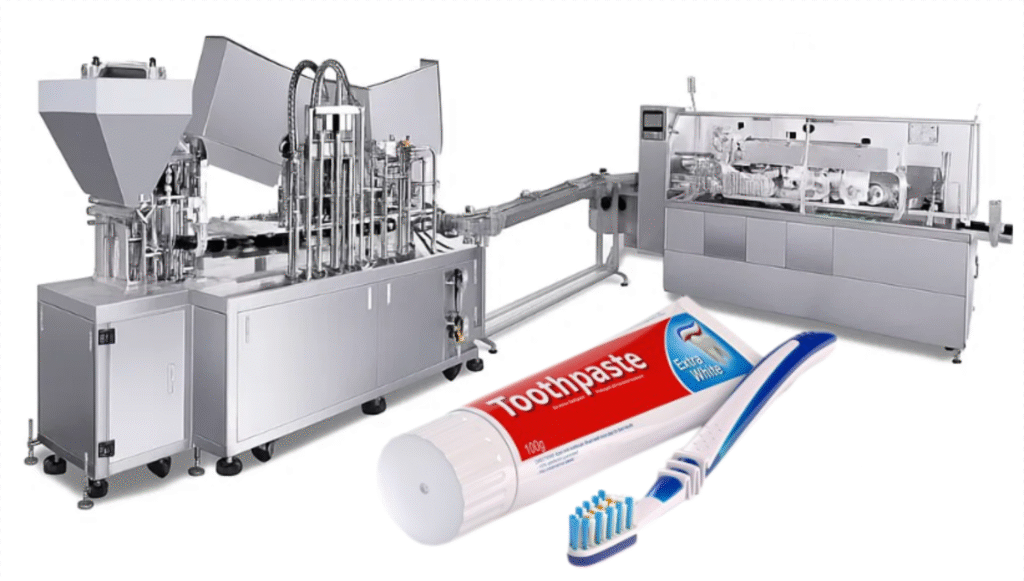
King Pack provides complete toothpaste manufacturing and packaging solutions for oral care brands, cosmetic companies, contract manufacturers, and large-scale factories. Our equipment is suitable for toothpaste, oral gel, whitening paste, herbal toothpaste, medicated paste, and other high-viscosity tube products.
King Pack can provide turnkey solutions from paste preparation to final packing. This includes vacuum emulsifying mixers, storage tanks, transfer systems, automatic tube filling and sealing machines, cartoning machines, labeling systems, checkweighers, case packing machines, and customized production line design.
Our toothpaste production line solutions help manufacturers reduce labor costs, improve filling accuracy, increase production speed, and maintain consistent packaging quality. With flexible machine configuration, King Pack can support different tube materials, filling volumes, carton styles, and production capacities.
We also provide installation guidance, operator training, remote technical support, spare parts service, and customized after-sales support for global customers. Whether you are building a new toothpaste factory or upgrading an existing line, King Pack can help you design a practical and efficient solution.
Common Mistakes to Avoid When Building a Toothpaste Production Line
One common mistake is choosing equipment based only on price. A low-cost machine may seem attractive at first, but it can create problems such as unstable filling, poor sealing, high downtime, and limited after-sales support.
Another mistake is ignoring toothpaste viscosity. Not every filling machine can handle thick toothpaste. The filling system must be selected according to the product’s texture and formula.
Some manufacturers also fail to match the speed of different machines. For example, if the tube filling machine is fast but the cartoning machine is slow, the whole production line will be limited by the cartoner.
Finally, manufacturers should not ignore future production growth. Choosing scalable equipment can make future upgrades easier and more cost-effective.
Conclusion
Setting up a fully automatic toothpaste production line requires careful planning and the right equipment selection. From vacuum mixing and paste transfer to tube filling, sealing, coding, cartoning, inspection, and final packing, every step affects production efficiency and product quality.
A reliable toothpaste production line can help manufacturers improve output, reduce labor dependency, maintain stable filling accuracy, and deliver professional retail-ready products. For oral care brands that want to compete in modern markets, automation is no longer only an option. It is an important part of building a more efficient and reliable production system.
King Pack offers customized toothpaste manufacturing and packaging solutions for different production scales. Whether you need a single automatic tube filling machine or a complete turnkey toothpaste production line, our team can help you design the right system for your products, capacity, and budget.
Get Your Free Toothpaste Production Line Quote Today
Ready to build or upgrade your toothpaste production line?
Contact King Pack now for a customized line design, equipment recommendation, and detailed quotation.
Related resources: Encyclopedia resources, How to Set Up a Fully Automatic Toothpaste Production Line, and What Is the Manufacturing Process of Toothpaste?.
