
Food-grade tube sealing is one factor in the shelf life and package integrity of mayonnaise. Tube material, closure design, oxygen and moisture barriers, filling hygiene, storage conditions, and validated process controls all affect product safety and quality.
This article explains how tube sealing can support mayonnaise packaging and which product, material, process, and compliance factors should be evaluated before selecting equipment.
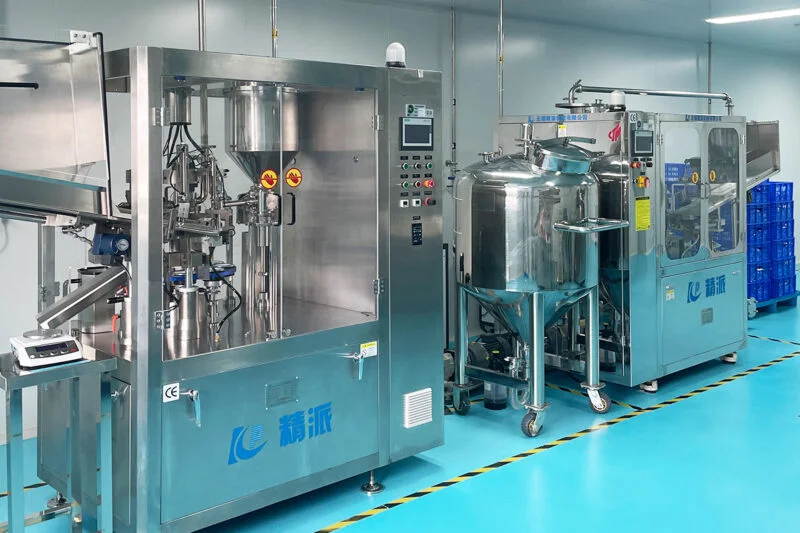
Recommended Reading: What Factors Affect the Shelf Life of Mayonnaise? – King Pack Machinery
Challenges in Shelf Life Preservation for Mayonnaise
Oxidation and Rancidity Risks in Oil-Based Foods
Mayonnaise is an emulsion of oil, water, and egg components, so oxygen exposure can contribute to oxidation and sensory changes. The actual risk depends on the formulation, barrier material, headspace, storage conditions, and time. Use product-specific shelf-life testing rather than a generic percentage claim.
| Factor | Effect | Control Method |
| Oxygen Exposure | Causes rancid flavor and odor | Use airtight, low-permeability packaging |
| Headspace Oxygen | Headspace oxygen can shorten shelf life when the package, storage conditions, and formulation are sensitive to oxidation. Vacuum or nitrogen assistance may be considered where supported by the product and validated process. | Vacuum or nitrogen flush before sealing |
| Light & Heat | Speeds up oxidation and color change | Store in cool, dark conditions |
| Seal Integrity | Allows oxygen leaks over time | Apply food-grade sealing and inspection |
A suitable tube seal can reduce exchange with the surrounding environment, but shelf-life performance depends on the complete package, filling process, storage conditions, and product formulation.
Microbial Contamination During Storage and Handling
Mayonnaise may support microbial growth if formulation, hygiene, sealing, or storage controls are inadequate. Food safety must be managed through the complete documented process, not through the tube seal alone.
| Source | Impact on Product | Prevention Method |
| Airborne spores or bacteria | Spoilage, odor, or texture change | Use airtight food-grade seals |
| Unhygienic filling or handling | Rapid microbial growth in warm storage | Maintain clean filling environment |
| Weak or incomplete seal | Allows micro-channel entry | Verify seal integrity with inspection systems |
A weak or incomplete seal may allow air or contaminants to enter. Seal integrity should therefore be specified, tested, and monitored for the selected tube, product, and process; no machine can guarantee microbial stability by itself.
Leakage and Consumer Safety Concerns in Food Packaging
Physical leakage not only results in product loss but also triggers hygiene and brand trust issues. Even minor seal weaknesses can cause oil separation or liquid weeping under pressure or heat. When this happens, oxygen and moisture penetrate the tube, accelerating spoilage and oxidation.
| Cause | Result | Preventive Action |
| Seal weakness or uneven melting | Product leakage and oil separation | Apply uniform pressure and heat control |
| Temperature or pressure stress | Moisture entry and spoilage | Use flexible, durable laminate materials |
| Mechanical damage in transport | Loss of product and hygiene issues | Strength-test seals and packaging design |
Leakage risk depends on seal geometry, material compatibility, process settings, transport conditions, and inspection. Use representative package testing instead of relying on an unverified complaint percentage.
Recommended Reading: How Long Do Sealed Sauce Packets Really Last? Shelf Life, Storage & Safety Tips – King Pack Machinery
Functional Role of Food-Grade Tube Sealing
Creating an Oxygen and Moisture Barrier
Food-grade tube sealing can help form a barrier against air and humidity when the tube material and sealing parameters are compatible. The package should be validated for the intended product and storage conditions.
A compatible seal can reduce gas and vapor exchange, but microbial control and shelf life still depend on formulation, filling hygiene, storage, and documented quality controls.
Modern laminate tubes used in food packaging are designed with multiple functional layers. Many include EVOH (ethylene-vinyl alcohol) or aluminum as barrier materials, which block both oxygen and moisture transmission.
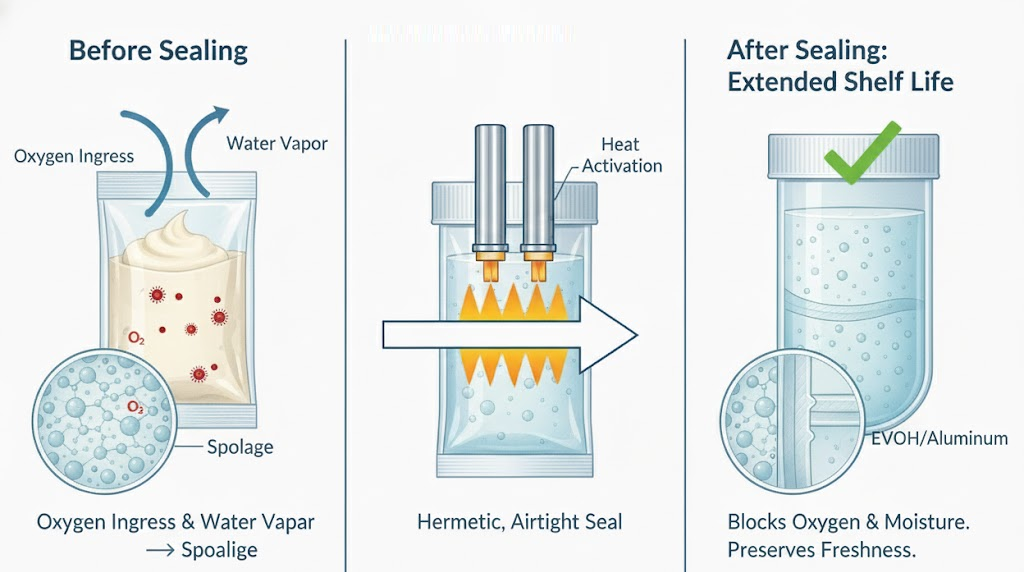
The sealing process must apply uniform heat and pressure to melt these inner layers evenly. Uneven fusion can create weak points that allow microscopic gas exchange, slowly reducing product quality over time.
Burst testing, leak detection, or other suitable checks can provide evidence of seal integrity. Oxygen-transmission performance is a package-level property and should be confirmed for the selected material and design.
Barrier performance varies by laminate structure, seal design, product, and storage conditions. Any shelf-life improvement should be demonstrated by product and package testing rather than a generic OTR or number-of-weeks claim.
Maintaining consistent performance across production requires appropriate machine settings, temperature control, operator training, and periodic seal verification.
Recommended Reading: Types of Food Packaging Machines: Applications, Benefits, and Industry Uses – King Pack Machinery
Maintaining Emulsion Stability and Product Integrity
Mayonnaise emulsion stability can be affected by oxygen, temperature, moisture, and time. A correctly designed package helps manage the environment, but it does not replace formulation and shelf-life validation.
Food-grade sealing can support a controlled package environment when the material and process are suitable. Monitor phase separation, texture, oxidation, and microbiological indicators during product testing.
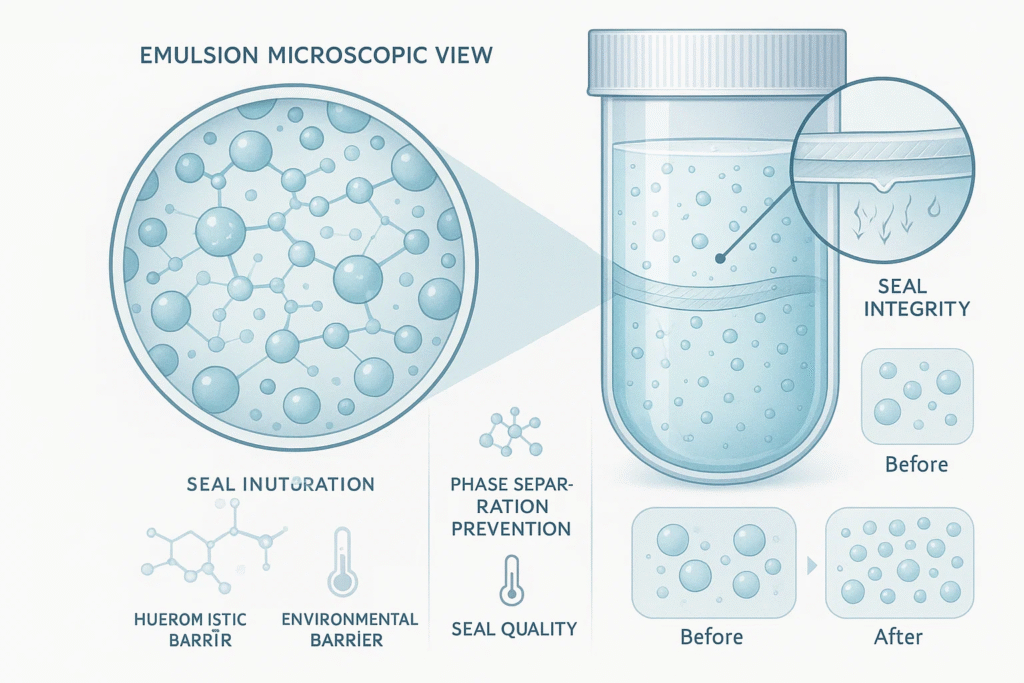
Shelf-life and viscosity outcomes vary by formulation, package, storage condition, and test method. Use documented stability studies instead of an unverified percentage comparison.
That difference directly translates into a more stable and appealing product for consumers. For manufacturers distributing to multiple regions or export markets, emulsion stability has financial and logistical importance. A small percentage of tubes affected by separation or spoilage can lead to significant losses when scaled across production runs.
Hot-air or ultrasonic sealing may support repeatable production when the tube material and process window are validated. Confirm performance with representative samples.
Recommended Reading: What Are The Health Benefits Of Mayonnaise, And Why Mayonnaise Making Machines Are Important – King Pack Machinery
Preventing Post-Filling Contamination and Cross-Exposure
After filling, products pass through transfer, capping, labeling, and packaging steps. Each transition should be covered by hygiene and quality controls; a faulty nozzle, valve, or seal can increase contamination risk.
Automated lines may use stainless product-contact parts, servo or piston dosing, and configured pressure or heat controls. Their suitability depends on the product, container, sanitation program, and validation evidence.
Vision or other inspection systems can monitor selected fill and seal characteristics. Detection limits and reject performance should be demonstrated during commissioning; no system should be described as detecting every defect.
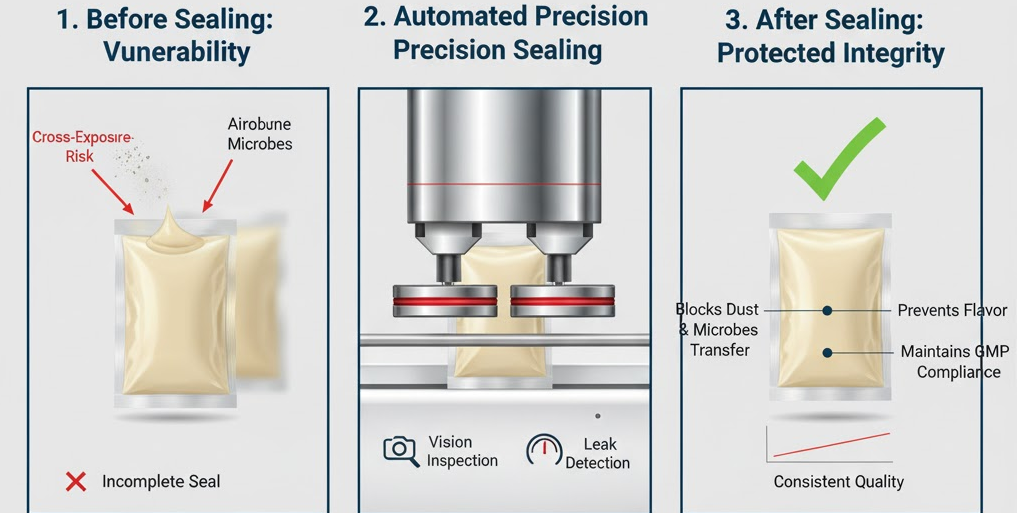
Shared lines require documented cleaning and changeover controls to reduce cross-contact between products. Sealing alone does not prevent flavor or aroma transfer if residues remain in the line.
When combined with a documented hygiene program and suitable process controls, automated filling and sealing can support repeatable food packaging. Safety and contamination control remain responsibilities of the complete production system.
Sealing Technologies Used for Mayonnaise Packaging
Hot Air Sealing for Plastic and Laminate Tubes
Hot-air sealing can soften compatible plastic or laminate layers before compression. Seal strength, leak resistance, and food-contact suitability depend on material, temperature, dwell time, pressure, and validation.
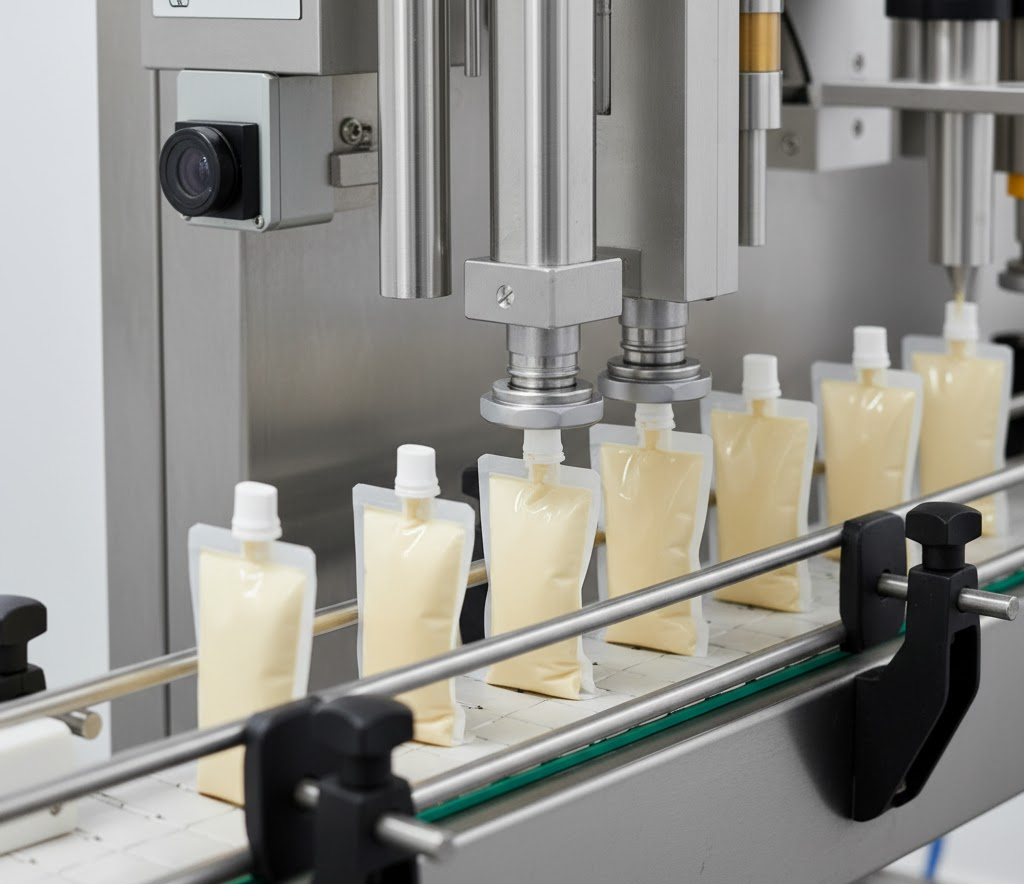
Stainless-steel construction, conveyors, alignment devices, and cleaning features are model-specific. Confirm the actual food-contact materials, cleanability, changeover range, and compliance documentation for the intended line.
Recommended Reading: How Are Ketchup Packets Made – King Pack Machinery
Ultrasonic Sealing for Hygienic Applications
Ultrasonic sealing uses high-frequency vibration to join compatible tube materials. Suitability and seal quality depend on tube construction, tooling, process settings, and product trials.
Ultrasonic sealing may be useful for selected products, but temperature sensitivity and product stability should be confirmed by application testing.
Certifications and standards apply to the relevant machine, materials, facility, and procedures. Do not infer CE, GMP, ISO 9001, or food-safety compliance from a sealing method alone; request current documentation.
When integrated into a packaging line, these technologies can support repeatable closure and handling. Shelf-life and safety outcomes require package testing and documented process controls.
Vacuum or Nitrogen-Assisted Sealing for Shelf-Life Extension
Oxygen trapped inside the tube shortens mayonnaise shelf life even when external barriers are intact. Vacuum or nitrogen-flushing systems address this problem by removing or displacing internal air before the tube is sealed.
Reducing headspace oxygen may help some oxidation-sensitive products. The target concentration, equipment choice, and benefit should be established through product-specific trials and shelf-life testing.
Nitrogen assistance and barrier laminates may be considered for selected applications, but no generic configuration guarantees a particular shelf-life performance.
Compliance and Food-Safety Considerations
FDA and EFSA Requirements for Food-Contact Packaging
Food packaging must comply with strict safety regulations governing materials, processing, and closure integrity. In the United States, the FDA’s 21 CFR § 177 outlines requirements for polymers in food-contact surfaces. Similarly, the European Food Safety Authority (EFSA) enforces standards on migration limits and hygiene in packaging operations.
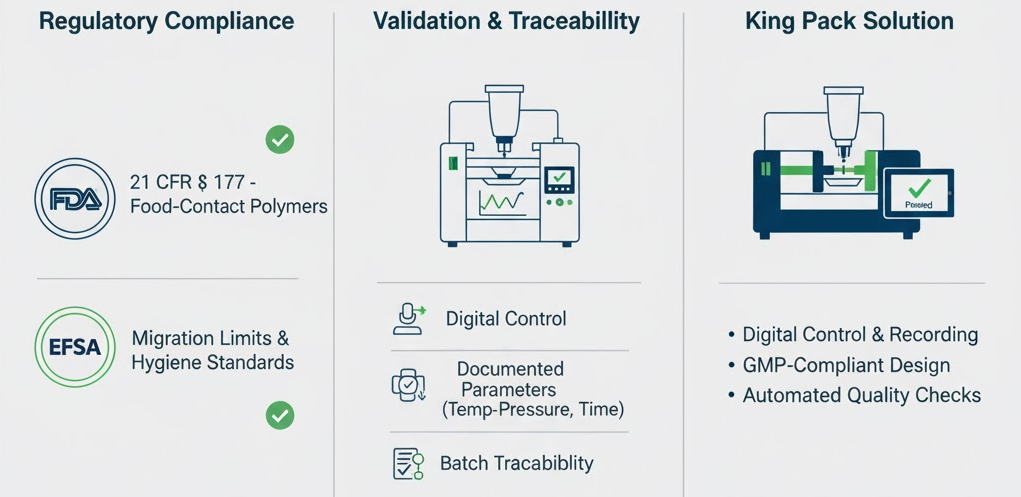
Manufacturers should validate that materials and sealing processes are suitable for food contact and do not compromise package integrity. Record relevant parameters such as temperature, pressure, dwell time, and inspection results according to the applicable quality system.
HACCP and GMP Practices in Sealing Operations
GMP and HACCP programs identify hazards and controls for the complete food process. Seal integrity may be one control point, but the correct classification depends on the product, facility, and documented hazard analysis.
Use a documented inspection and sanitation plan appropriate to the product. Tests such as visual checks, leak testing, burst testing, and seal-strength testing should be selected and validated for the package.
Recommended Reading: Emulsifying Mixer Machine for Cosmetics Production – King Pack Machinery
Traceability and Inline Quality Inspection
Traceability builds accountability throughout production. Modern sealing machines integrate barcode or batch-code printing directly after the sealing step, linking each tube to its production data. Inline camera systems verify code legibility and seal integrity in real time.
Such integrated control allows immediate rejection of defective tubes, improving overall yield and reducing recall risk. It also supports audits and customer confidence, especially in international export markets that demand documented proof of packaging integrity.
Commercial Benefits Beyond Shelf Life
Reduced Product Waste and Return Rates
Defective seals can increase leakage, waste, and handling costs. A well-controlled process may reduce these risks, but the result depends on material, equipment, settings, inspection, and operator practice.
Any claimed return-rate or tonnage improvement should be supported by a traceable case study and comparable baseline. Use site-specific production data when estimating savings.
Improved Transport Durability and Brand Perception
Suitable seals can improve package durability during distribution when the tube, closure, and process are correctly matched. Test compression, vibration, temperature, and transport conditions for the intended route.
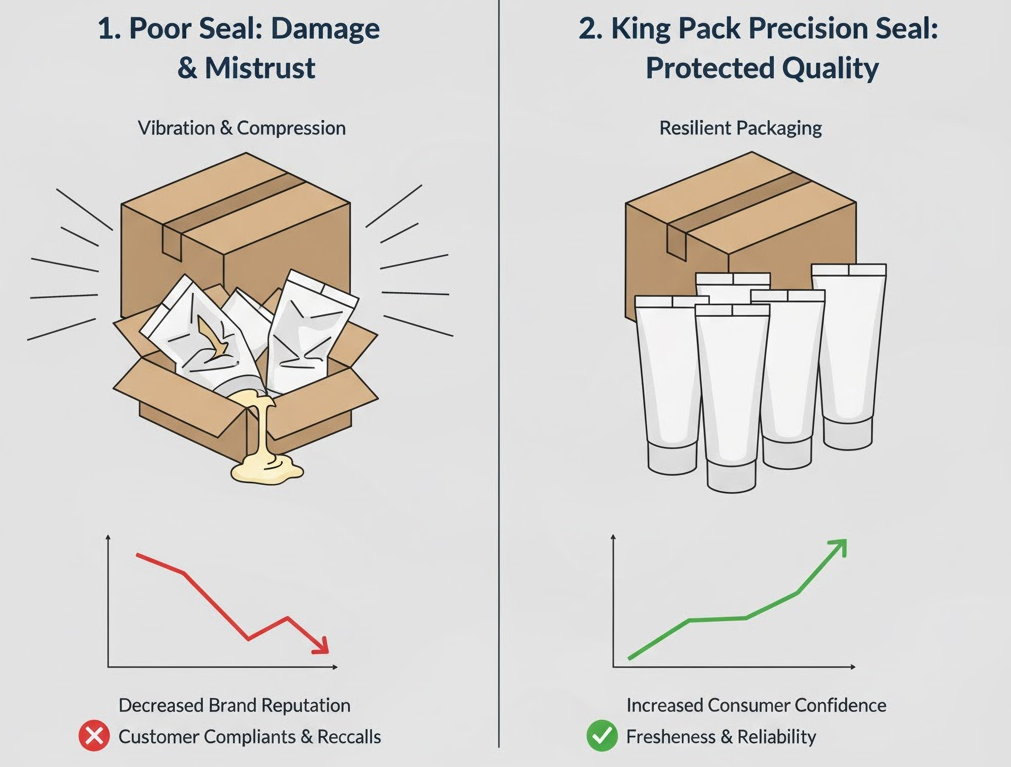
Clean, intact packaging can support consumer confidence, but appearance and hygiene outcomes depend on the full package and quality program.
Consistency for Mass Production Lines
High-volume lines can be configured for higher throughput, but the achievable rate depends on machine layout, tube format, product behavior, changeovers, and inspection requirements. Confirm a tested range for the intended application.
Digital controls may store recipes and operating settings, but repeatability still requires calibration, training, maintenance, and documented validation.
Recommended Reading: What is a pouch packaging – King Pack Machinery
Conclusion
Food-grade tube sealing defines how effectively mayonnaise resists oxidation, microbial contamination, and leakage during its journey from plant to consumer. The right sealing technology extends shelf life, enhances safety, and maintains the product’s sensory quality while helping producers meet regulatory and operational goals.
Manufacturers looking to upgrade their packaging lines should evaluate sealing performance with the same rigor as product formulation. Investing in validated sealing solutions improves not only food safety but also brand reliability and operational efficiency.
Contact King Pack to explore high-performance tube filling and sealing systems for mayonnaise and other food products. Our solutions combine hygienic design, traceability, and integrated quality control to help you achieve consistent results and extended shelf life across your entire packaging operation.