 Skip to content

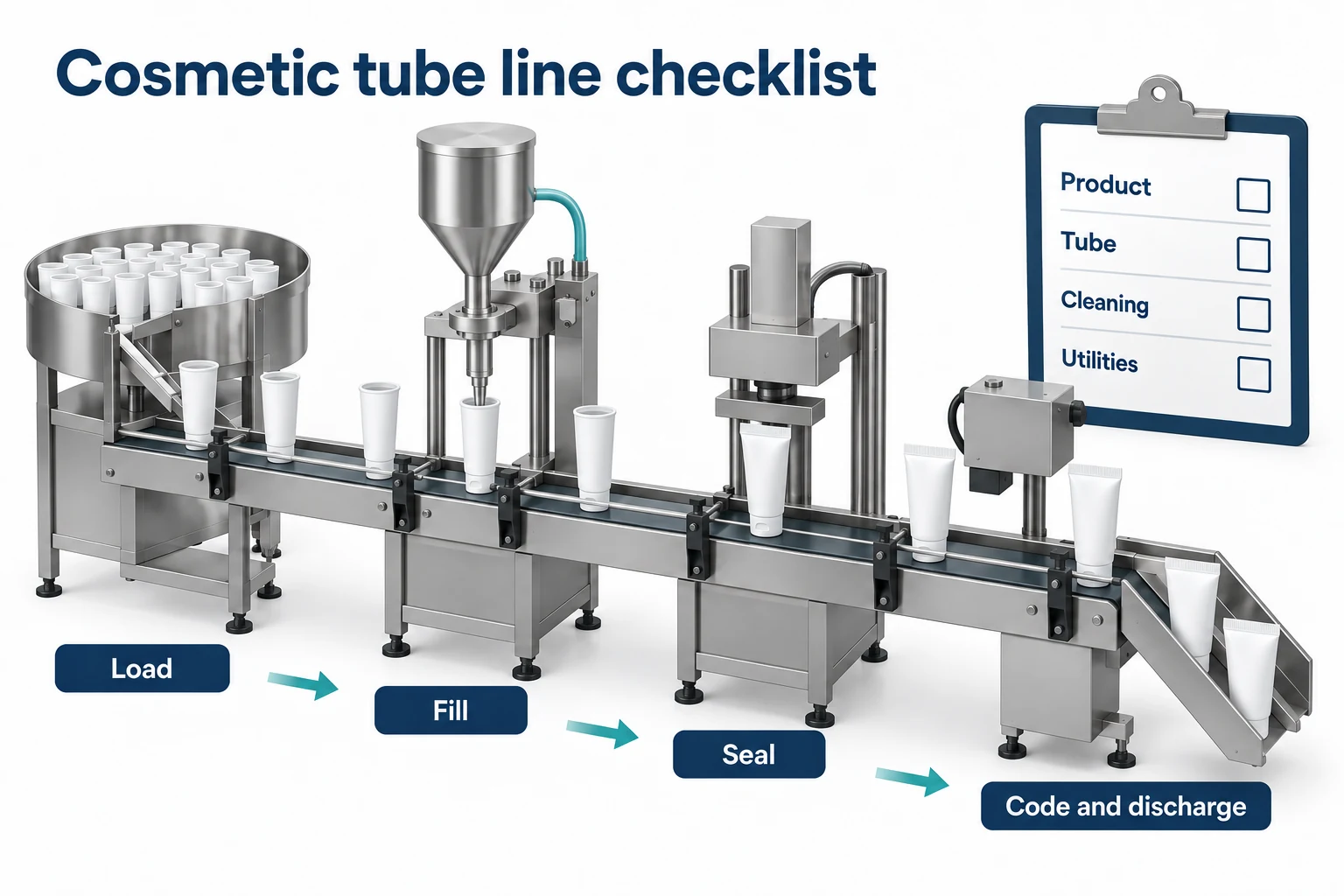
A cosmetic cream tube filling line must connect product behavior, tube handling, filling accuracy, tail sealing, coding, cleaning and operator workflow. Creams may contain oils, waxes, powders, pigments or fragrances, and each formula can respond differently to temperature, shear and residence time. This checklist helps buyers define a practical configuration before requesting a quotation.
Confirm the product profile
Record viscosity, density, product temperature, particle content, fragrance, color and sensitivity to shear. State whether the product arrives from a vacuum mixer, holding tank or drums. Explain whether gentle agitation or controlled warming is allowed. These details influence the hopper, pump, nozzle and cleaning method.
Air and refill behavior
Ask how the line prevents air from entering during hopper refill and how it recovers after a low-level alarm. A low-level sensor and controlled refill procedure can protect dose consistency. If the cream traps air, review deaeration or a slower transfer method before increasing filling speed.
Define tube and closure requirements
Provide tube diameter, body length, shoulder, tail width, laminate structure, decoration and cap type. The open tail faces upward in the holder and receives product through the unsealed end. After filling, the tube moves to hot-air, ultrasonic or another compatible sealing station. The process should not show filling through a sealed cap or shoulder.
Tube pocket and guide design
Flexible plastic tubes need support without print marks. The pocket should keep the centerline stable and detect missing or tilted tubes. If several tube suppliers are planned, include samples from each source in the design review.
Select the dosing system
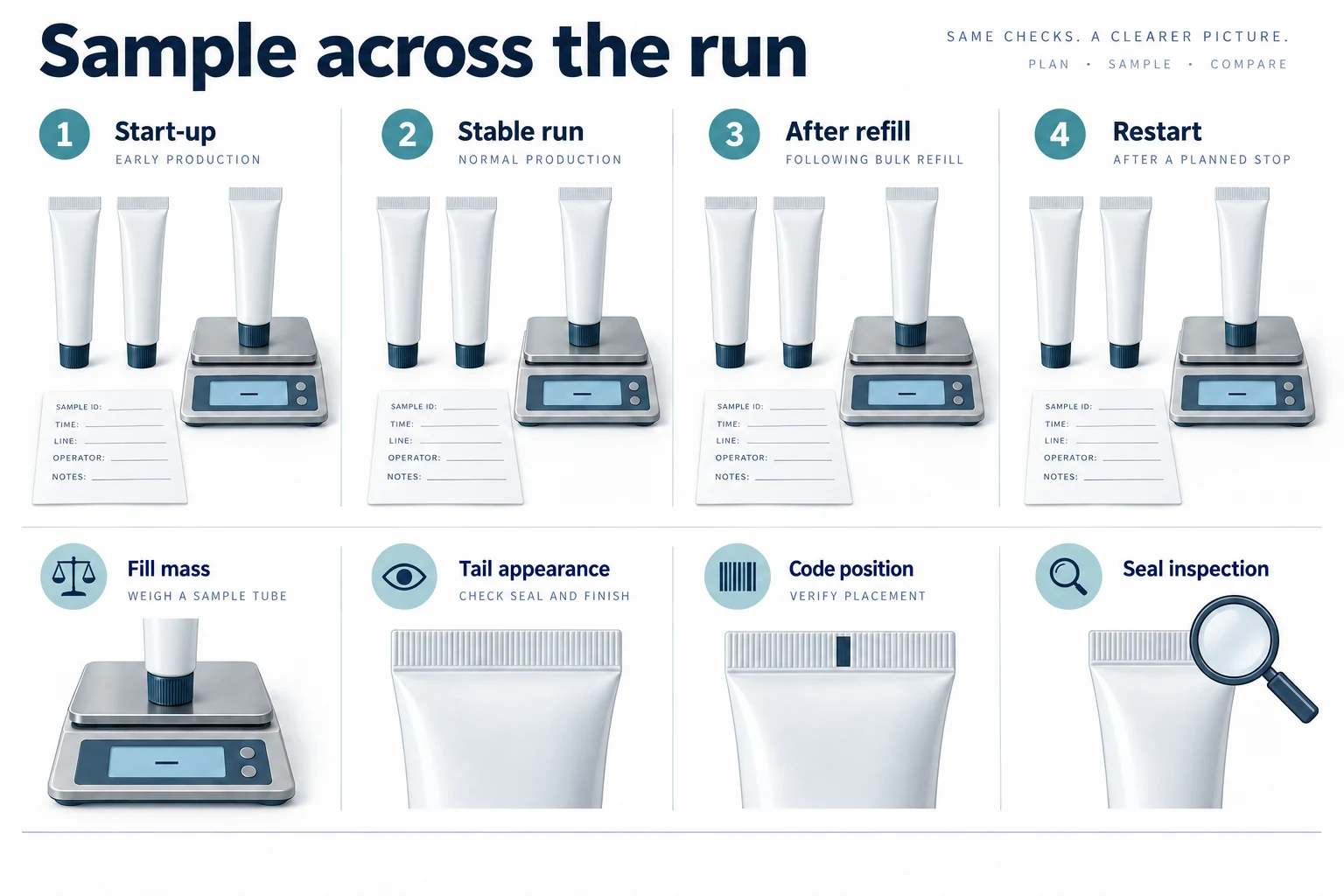
Piston or servo-driven dosing is common for cosmetic creams. Define target fill weight, tolerance, nozzle diameter, cut-off motion and sample plan. Test start-up, stable running and recovery after a short stop. If the line has two heads, check both positions independently.
Clean cut-off
A stringing cream can contaminate the tail and weaken the seal. Review nozzle lift, retract and shut-off timing. The best setting depends on the formula and nozzle, so confirm it with representative product rather than a generic demonstration.
Choose tail sealing
Hot-air sealing heats the open tail before jaws form the closure. Ultrasonic sealing may suit compatible thermoplastic laminates. The supplier should confirm material compatibility, seal profile, tooling and inspection method. Include embossing, trimming and coding if they are part of the final pack.
Plan cleaning and changeover
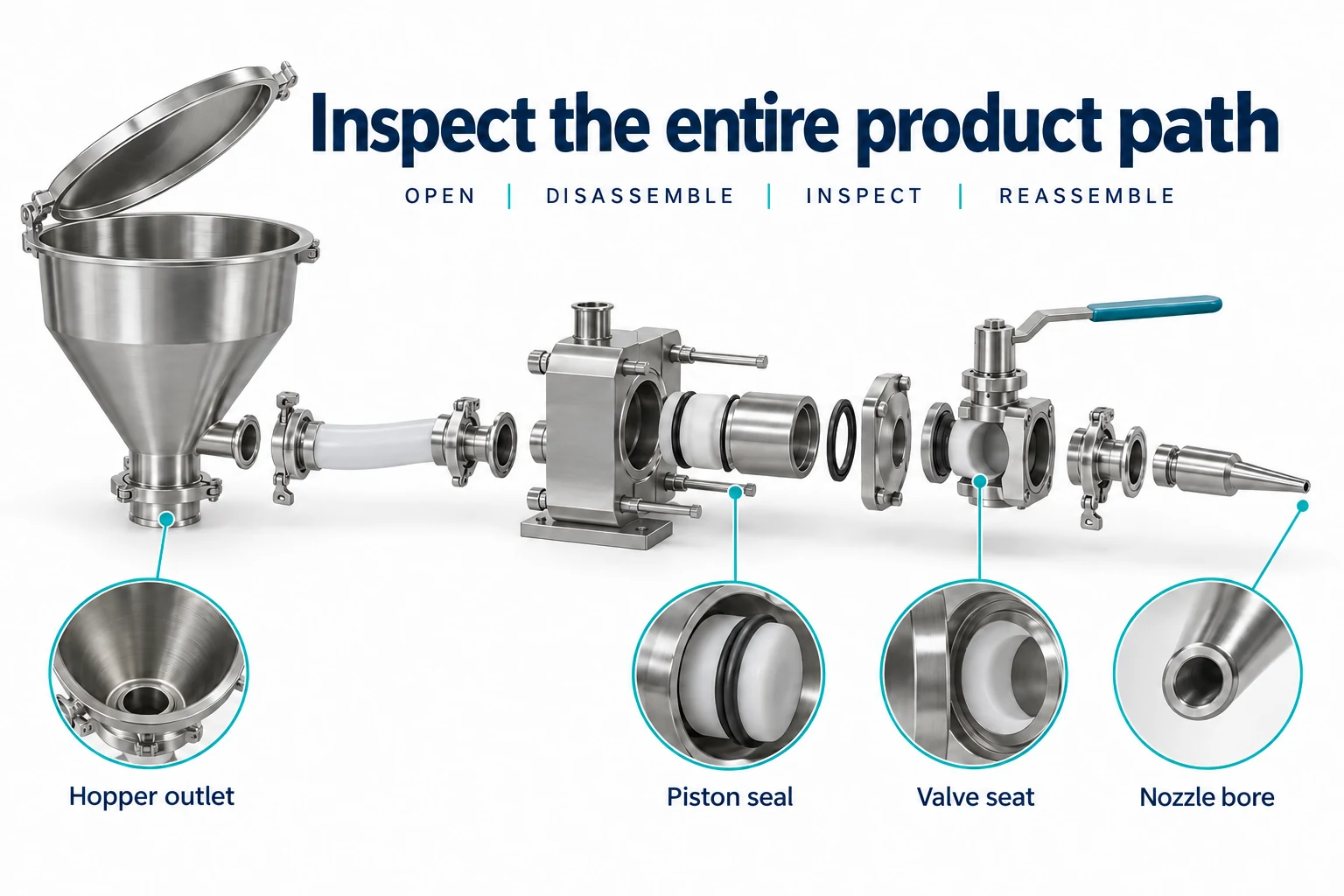
Cosmetic creams can leave oily or pigmented residues. Review hopper drainability, hose routing, piston seals, nozzle access and tail tooling. Define the line-clearance check when changing from a dark cream to a light one. List all change parts and label left/right components.
Maintenance
Request part numbers and inspection intervals for seals, valves, nozzles, sensors, heaters and coding parts. The operator should know which signs indicate wear, such as dose drift, dripping or seal contamination.
Factory acceptance test
Define FAT with representative tubes and the actual cream where possible. Verify tube loading, open-tail filling, dose weight, sealing, coding, reject handling, changeover and cleaning access. If a substitute is used, record its limitations and list the checks to repeat at site.
Shipment inspection and installation preparation
Inspect frame, guards, electrical cabinet, tooling, spare parts, manuals and packing list before dispatch. Confirm power, air, floor access, product storage, drainage, operator space and safe maintenance access at the destination. A layout drawing should show product flow and service points.
Configuration checklist
- Product viscosity, temperature and particle information
- Tube drawings, samples and decoration limits
- Target fill weight and acceptance tolerance
- Hopper, pump, nozzle and cut-off selection
- Hot-air or ultrasonic seal compatibility
- Cleaning, changeover and spare-part plan
- FAT, shipment inspection and installation criteria
Discuss your requirements: Send your cream formula profile, tube drawings and target output to King Pack for a configuration review and trial plan.
Application and process review
Review how the line will be used during a normal production day. Define batch size, refill method, planned stops and the order of products. A stable process is easier to maintain when operators know the approved start-up sequence and the conditions that require a new first-piece approval.
Temperature control
If the cream needs warming, specify the allowed range at the hopper, transfer route and nozzle. Check whether heating can change fragrance, emulsion stability or viscosity. Keep the measurement point consistent during FAT and commissioning.
Color and fragrance changeovers
For colored cosmetics, add a visual clearance step and identify hidden product-contact points. For strongly fragranced products, confirm whether the cleaning procedure removes residual odor before the next batch. The procedure should include hopper outlet, pump head, nozzle, hose, holder and tail tools.
Line balance and controls
Check that the filler, sealer, coder and discharge conveyor can run at the same rhythm. The control system should detect missing tubes, low hopper level, heater fault, open guards and coding errors. Ask how rejected tubes are separated and how the operator confirms that a questionable tube cannot return to the good-product flow.
Recipe management
Store dose, pump speed, nozzle height, cut-off, seal settings, code position and format parts in a documented recipe. Use a naming convention that makes the product and tube size clear. Save the approved recipe separately from temporary trial settings.
Supplier proposal review
Compare the scope of supply, tooling, training, spare parts, installation support and test evidence. Confirm which tubes and product are included in the trial and which items the customer must supply. A useful proposal lists assumptions and open questions rather than promising universal compatibility.
Recommended approval sequence
- Share product and tube information.
- Review hopper, pump, nozzle and closure options.
- Run a representative trial.
- Approve samples and FAT criteria.
- Complete shipment inspection.
- Prepare utilities, floor access and operator training.
- Repeat first-piece checks at commissioning.
Keep approved samples from the factory and site. Label tube lot, product lot, recipe, settings and date. They provide a practical reference when later production changes.
Build the line from a defined bill of functions
A cosmetic tube line can include bulk-product transfer, tube feeding, orientation, dosing, closure, coding, inspection, discharge and cartoning. State which functions belong to the purchase and which are provided by the customer. A photograph of a complete line does not establish that every pictured module is included in a quotation.
| Function | Input to confirm | Acceptance focus |
|---|---|---|
| Bulk transfer | Vessel outlet and cream condition | Stable supply without unwanted air |
| Tube feeding | Dimensions, stiffness and artwork | Correct presentation without damage |
| Dosing | Fill range and rheology | Mass, appearance and clean cut-off |
| Closure | Tube construction and tail profile | Appearance and package integrity |
| Coding and discharge | Code area and downstream orientation | Readable identification and controlled handling |
Bulk preparation is an upstream interface
If a project includes vacuum emulsifying equipment, define the handover between preparation and packaging. State when the cream is ready to transfer, its permitted temperature and its maximum approved waiting condition. Do not assume the filling hopper will complete mixing or restore an emulsion that has already separated.
When a customer’s existing vessel feeds the line, review outlet size, transfer distance, product head and cleaning connections. A short trial using the filler hopper alone may not represent those conditions. Keep the site confirmation task visible in the acceptance plan.
Map controls to specific defects
Choose detection features according to the risks that matter for the product and pack. Tube presence, artwork orientation, cap condition, code verification and rejection are separate functions. Specify whether each is monitored automatically, checked manually or outside the agreed scope. This prevents a general phrase such as “automatic inspection” from concealing missing checks.
Artwork orientation and mark sensing
Ask for printed samples with the intended mark, finish and color. A sensor demonstrated on a high-contrast plain sample may not represent a metallic or low-contrast design. Inspect the final seal orientation against the artwork, not only the sensor signal. Define the machine response to an unreadable mark and how the operator clears the fault.
Rejected units and line clearance
A rejected tube must remain separate from acceptable stock after a stop or changeover. Define the reject route, container and reconciliation procedure. When recipes change, clear remaining tubes, caps and packaging materials from the line before restarting. Correct machinery cannot prevent a mix-up if components are supplied under the wrong identity.
Balance the filler with downstream packaging
Compare the complete operating rhythm of loading, dosing, sealing, coding and cartoning. A buffer can help accommodate short interruptions, but it does not remove an ongoing capacity mismatch. Use the customer’s batch pattern to estimate required good packs per shift, with changeover and cleaning time stated separately.
Discharge orientation and transfer
Confirm whether the tube leaves cap-first, tail-first or in a controlled side orientation. Check transfer height and guides against the cartoner or collection method. Inspect samples after they have completed the route. A warm tail may be disturbed by handling, and a printed body can be marked by a guide that looked harmless in an empty-machine demonstration.
For a manually packed line, review operator reach and how accumulation is managed. For an automated cartoner, agree the signal interface, stop response and restart ownership. These interfaces should have named owners in the project scope.
Choose automation from the production pattern
A dedicated high-volume cosmetic SKU and a short-run private-label operation can need different line architectures. Automation adds value when it addresses a real loading, handling or control constraint. It also adds change parts, maintenance and training requirements that should be included in the comparison.
Compare good output rather than a catalogue number
Use a planning calculation based on required packs, available production time and justified allowances for stops, cleaning and rejects. Keep every assumed value labelled. Request a trial showing the intended fill, tube and closure method together. A short empty-cycle demonstration is not the same evidence as a full product run.
The tube filling and sealing machine range is a starting point for this discussion. Ask King Pack to identify the tested scope, optional modules and conditions that still need samples.
Write a first-production release checklist
Before normal production, confirm product identity, tube lot, cleaning status, format tools, recipe, coding and the first approved sample. Record which person authorizes the start and which conditions require a new approval. The purpose is to keep the installed line in the same approved configuration used for the acceptance decision.
Keep maintenance relevant to product quality
Include the pump seals, nozzle shut-off, tube holders, guides, heating parts or ultrasonic tools and coding equipment in the maintenance plan. Inspect components that influence cut-off and tail cleanliness before drift becomes a recurring seal defect. Identify parts by drawing or number so replacements preserve the approved configuration.
Store electronic and manual setup information together with tool identification. A saved recipe cannot compensate for an incorrectly installed holder or a different nozzle. Train the shift team to verify physical parts and settings as one setup.
Review the complete handover file
Expect a layout, utility list, drawings, operating instructions, cleaning-access information, change-part list, spare-parts recommendation and executed acceptance records as agreed in the purchase scope. Identify the final document revision and open items. Include the people responsible for preparation, filling, quality and maintenance in the handover review.
After commissioning, retain reference samples and record any site adjustments that change the factory setup. If a formula, tube laminate or code area changes later, review whether the earlier evidence still applies. This preserves the value of the acceptance work instead of treating FAT as a document that is filed once and forgotten.
Plan your cosmetic line: Send the product and tube matrix, layout constraints and required modules through the King Pack technical enquiry form for a scoped configuration review.
Use a layout review to expose installation gaps
Mark more than the machine footprint on the layout. Include the path used to bring in bulk cream, the space for empty tube cartons, the cleaning position of removed parts and access to the electrical cabinet. A filler that fits the room geometrically may still be difficult to operate if an open guard blocks the product route or maintenance staff cannot reach the dosing unit.
Specify utility conditions at the machine
Request power, compressed-air and any other utility requirements for the proposed configuration. Confirm the point of connection and the condition expected there. Additional modules may change the requirement. If a hot-air unit, coder or transfer pump has a separate supply, include it in the site checklist rather than treating the base-machine connection as the complete installation.
Review cleaning connections and drainage with the customer’s sanitation team. Decide where hoses and removed parts are handled and how clean parts are protected before reassembly. These practical details should be resolved before the line arrives, especially where the room serves several products.
A hypothetical configuration comparison
Consider a cosmetic producer planning one long-running hand cream and several short-run promotional packs. A dedicated configuration could simplify the main SKU, while a flexible arrangement might support more formats with additional changeover work. Neither option is automatically preferable. Compare the actual order pattern and the cost of the functions the plant needs.
For the long run, trial the complete filling and sealing rhythm and inspect the pack after discharge. For short runs, demonstrate the difficult format change, cleaning and first-piece approval. Record the labour and equipment assumptions separately. This hypothetical comparison gives the buyer a decision method without inventing a production rate, payback period or measured saving.
Keep the proposal review cross-functional
Production should assess operator work and batch flow. Quality should assess inspection, cleaning and traceability. Maintenance should review wear parts and service access. Engineering should own interfaces and utilities. Purchasing should confirm that the agreed equipment, tooling, documents and support are included. A joint review catches omissions that each department might otherwise discover only during commissioning.
Assign each remaining question to an owner and a due point. Some answers are needed before design release, others before FAT or shipment. A list of open actions is useful only if it says how each will be closed and what evidence the approver expects. Keep the final approved version with the handover file.
FAQ
Can one line fill different cosmetic creams?
Often, if the pump, nozzle, cleaning procedure and recipes are suitable for each formula. Confirm with trials.
What causes cream contamination in the seal?
Common causes include poor cut-off, excessive nozzle insertion, overfilling or an unclean tail. Check each point during FAT.
How many samples should be tested?
Define a plan covering start-up, stable production, pauses, refills and each filling position.
Does a complete line always need a cartoner?
No. Select downstream automation from the pack specification, order volume and available labour. A controlled manual collection method may be appropriate for some projects; others need integrated cartoning and traceability.
When should the site layout be approved?
Review access, utilities, product transfer and cleaning space before design release. Reconfirm the final configuration before shipment so additional modules do not create an installation gap.
Conclusion
A cosmetic cream tube filling line should be configured from the formula, tube, closure and cleaning requirements together. Use representative trials, a documented FAT, shipment inspection and installation preparation to reduce project risk.
Request a technical review: Contact King Pack with your product and tube information. Request a technical proposal and acceptance checklist.
