
Introduction

Once the line scope is clear, compare the economics in our gel bait syringe filling machine cost guide, then use the in-house vs contract filling decision guide to choose the operating model.
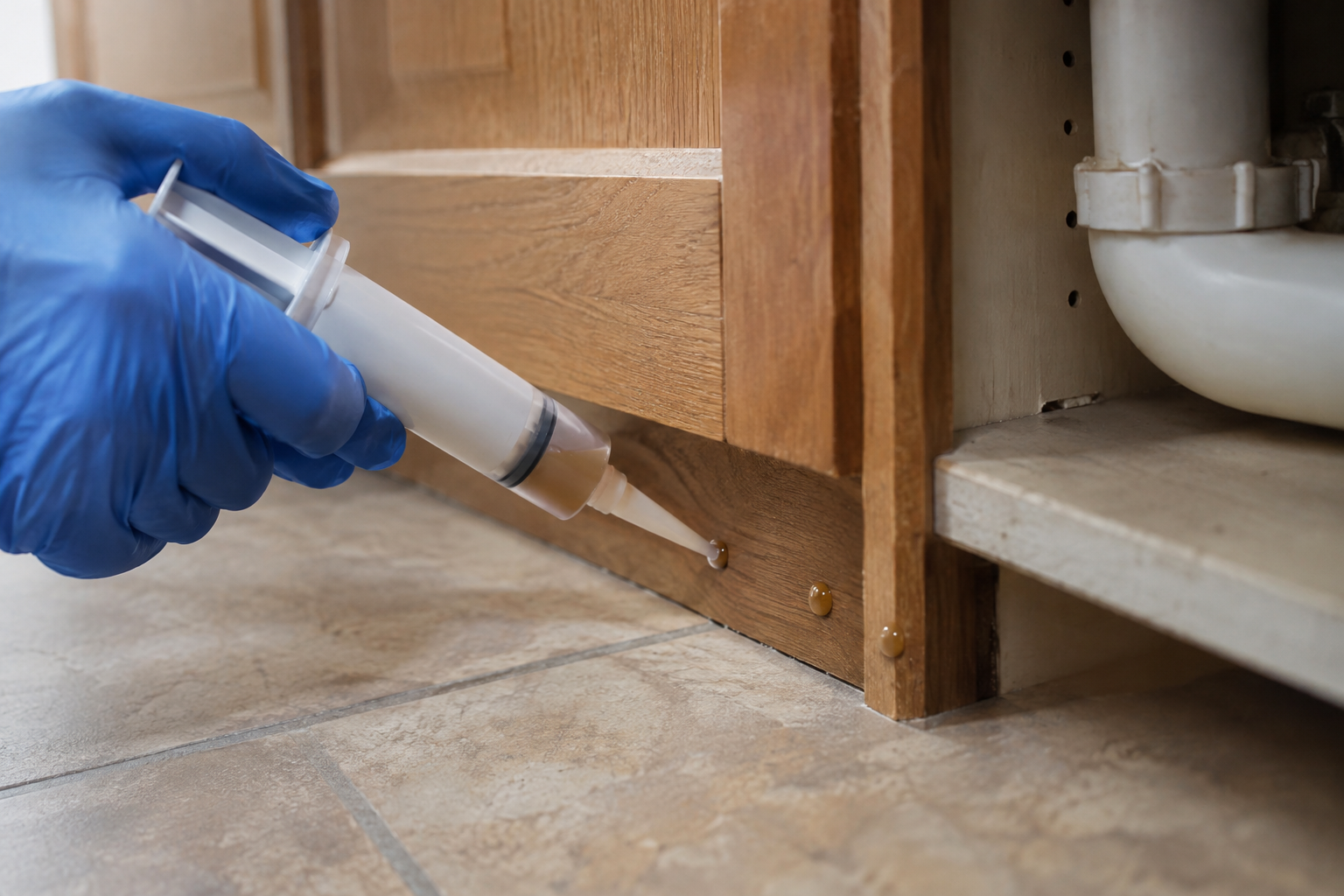
If you are comparing cockroach gel bait syringe filling machines, the fastest route to a bad decision is to start from a rated speed. The right starting point is your product: the barrel, the piston, the plunger rod, and the tip or cap, plus how your gel actually behaves under a dosing pump.
This page is the hub for the whole topic. It walks the decision in the order we run a project with a customer: product first, then filling route and dosing, then production reality, then acceptance testing. Each section below summarises one cluster of decisions and links to the in-depth article that covers it, so you go deep only where your project needs it.
At the end, one requirement list gets you a line proposal instead of a generic quote. Send the parts and the paste; we work out the rest.
If you already know your exact question, jump straight to the matching article below. If you are still mapping the project, read the four stops in order.
The Decision Path at a Glance
Four stops, in order:
- Product — lock the syringe components and closure before you touch a machine.
- Route and dosing — decide front vs rear filling and the dosing principle.
- Production — plan for what happens across a full shift, not a demo run.
- Acceptance — buy against a sample trial and an agreed factory acceptance test.
Every linked article below sits on one of these four stops. This is a hub-and-spoke structure: the page routes you to the right deep article, and the deep articles point back here when you need the next step.
Start with the Product, Not the Machine
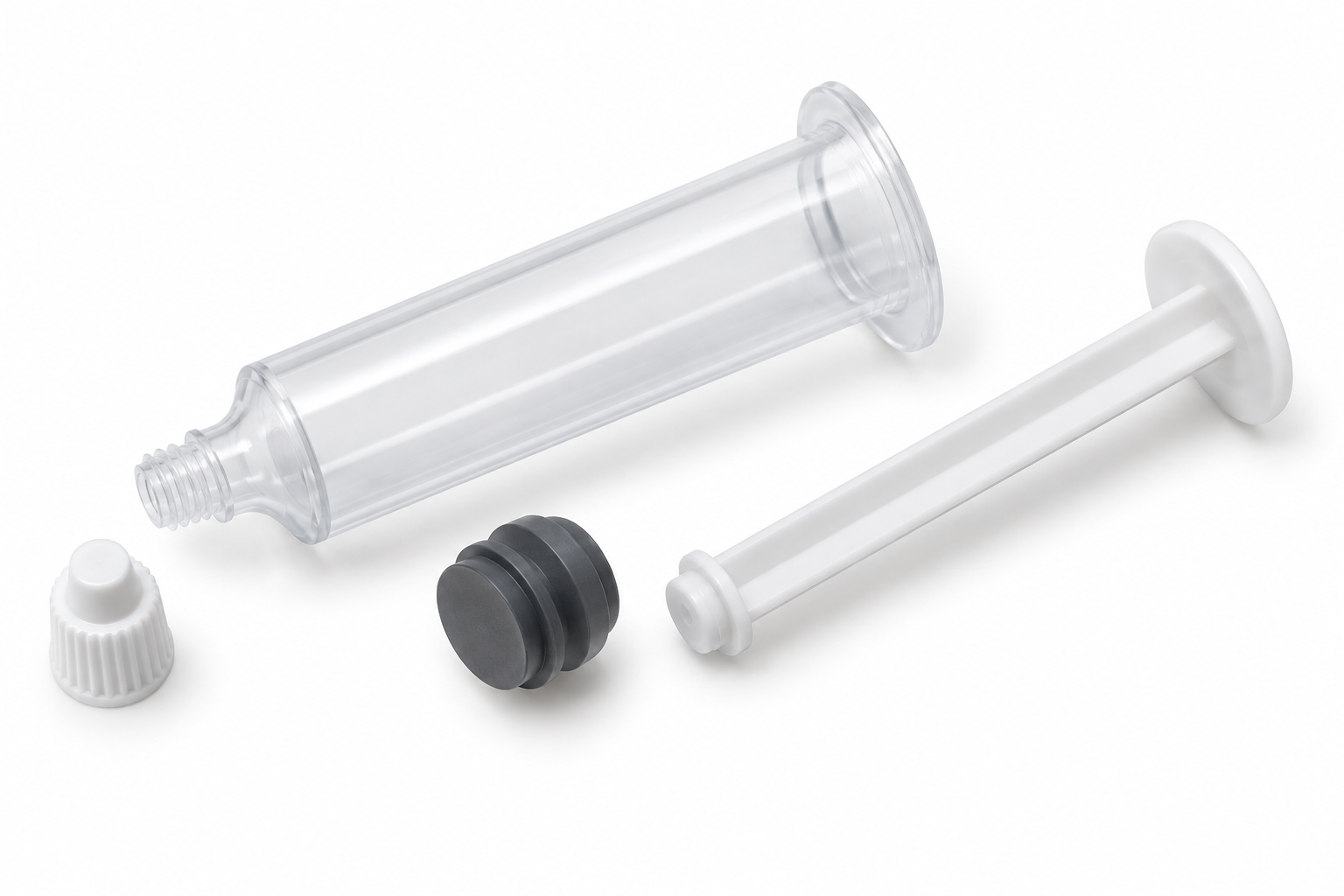
A gel bait syringe is a small paste-packaging assembly made of four parts: the barrel, the piston, the plunger rod, and the tip or cap. These parts are not details you sort out later; they are the machine’s real specification. Two buyers can ask for "the same" filling machine and need different lines, because one receives barrels with the piston already seated while the other receives loose parts that must be assembled on the line.
The format most buyers recognise is the 30 g tube used with a plunger, the style made familiar by products like Syngenta Advion cockroach gel bait. Market barrel sizes span roughly 5 mL to 20 mL, but the size matters less than the incoming component state: whether the piston is pre-seated, whether the plunger rod is assembled, and whether the tip or cap arrives separately.
Lock the component state early. A closure change or a barrel supplier change after the line is designed usually means redesigning a station, not adjusting a setting.
Where to go deeper:
- Selecting gel bait syringes for automated filling — how barrel, piston, and tip choices decide what the line has to do.
- Gel bait syringe tips, caps, and closure compatibility — screw cap, snap tip, or tip-plus-cap, and why the closure drives a whole station.
- Gel bait syringe plunger assembly — whether the plunger arrives pre-assembled or is added on the line.
Before any quote, send us the exact barrel, piston, tip, and cap you will run. Photographs help; physical samples help more.
Choose the Filling Route and the Dosing System
Once the parts are fixed, the next question is how the paste gets into the barrel. Front filling pushes paste through the tip with a narrow nozzle and higher pressure; rear filling doses through the open tail and seats the piston afterwards. The right route depends on whether your barrels arrive with the piston already seated and whether the tip end is sealed.
Then comes the dosing principle. For viscous insecticide gel, positive displacement is the realistic family; time-pressure and gravity are not. Inside that family you choose between piston, progressive cavity, peristaltic, and gear displacement, and the choice depends on viscosity, particle content, and shear sensitivity. The principle sets an accuracy ceiling, but the number that counts is the net content in grams on your actual paste, not a pump figure from a brochure.
Vendor-published figures, such as the order-of-magnitude ±1% cited by ViscoTec and Nordson EFD under their own test conditions, describe what a pump family can do in the lab. Treat them as a ceiling, not a guarantee for your paste and package.
Where to go deeper:
- Front vs rear filling for gel bait syringes — how to settle which route fits your incoming parts.
- How to select a dosing system for gel bait syringe filling — the principle trade-offs and why a trial beats a brochure.
- Grams vs millilitres in gel bait syringe filling — why a 10 mL barrel is not 10 g of product, and how to set the fill target.
Plan for What Happens Across a Full Shift
A line that fills one format cleanly in a demo still has to survive eight hours. Air bubbles and stringing, format changeovers, and the jump from a bench-top semi-automatic to an integrated line are where rated speed meets real output. Rated speed is a ceiling, not a promise. The number that matters is sustainable output per shift: correctly filled, closed, and inspected syringes over eight hours, including loading, changeovers, and minor stops.
Give the builder your shift target, not a peak you can only hold for ten minutes. If changeover has to happen in under ten minutes with no tools, say so up front; that changes the tooling and the price. Ask the builder to prove sustainable output at a trial with your product, not to repeat a catalogue speed.
Where to go deeper:
- Gel bait syringe filling problems: air bubbles and stringing — the two defects that eat accuracy and how to design them out.
- Changeover planning for gel bait syringe formats — how many formats you run, and what that does to tooling and downtime.
- From manual to automatic gel bait syringe filling — whether the bottleneck is dosing or handling, and when automation earns its cost.
Buy Against Acceptance Criteria, Not a Brochure
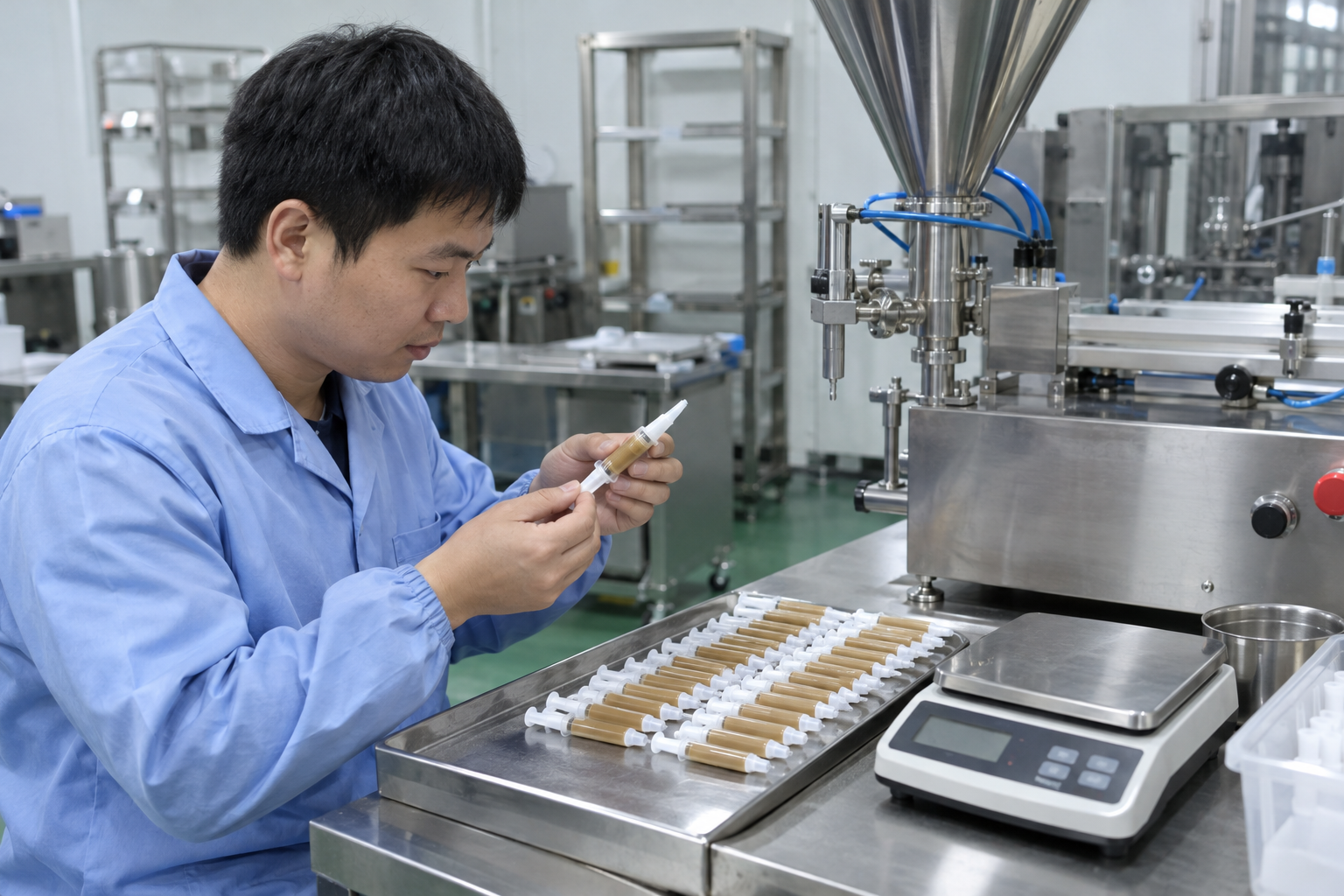
You buy a filling line against criteria, not against marketing claims. A sample trial on your actual gel is the cheapest place to find a problem: it is where air traps, piston seating, and cut-off stringing surface while changing a design on paper costs nothing. Then a factory acceptance test with an agreed measurement method, sampling plan, and defect definitions turns "is the machine good?" into a check against a list everyone signed. Shipment inspection follows that same list, so what you saw at the factory is what you check when the crate arrives.
We also recommend planning installation preparation up front: floor space, utilities, and who on your side signs off each station. The line does not end at the factory gate.
Where to go deeper:
- Gel bait syringe filling trials: a buyer’s sample checklist — what to bring and what to watch at the trial.
- FAT checklist for a gel bait syringe filling line — the criteria to agree in writing before the line ships.
- Cockroach gel bait syringe filling: a manufacturing guide — the full end-to-end reference if you want every step in one read.
Send Your Requirements
The four stops above share one conclusion: a good quote starts with the product on the table, not with a price on a screen. Send us your syringe samples, component drawings, the SDS, viscosity and density data, your fill target in grams, and the defects you already see or worry about.
With that package we can tell you whether your gel fills front or rear, which dosing principle fits, and which stations you actually need. Without it, you get a generic quote that changes the moment real samples arrive. The SDS matters more than buyers expect: a gel that is flammable, corrosive, or temperature-sensitive changes the pump seals, the wetted parts, and the machine enclosure.
Send your requirements now and we will return a line proposal with a clear acceptance-test plan. An engineer replies, not a sales script.
FAQ
What is a cockroach gel bait syringe filling machine?
A paste-packaging line built to dose insecticide gel into small plastic syringes, seat the piston, and close the tip or cap. The machine is specified by your syringe parts and your gel’s viscosity, not by a generic "3,000 per hour" number.
Where should I start with a filling project?
Start with the product. Lock the barrel, piston, plunger rod, and tip or cap, and send one full set of parts as they will arrive. The incoming component state decides the line; everything else follows from it.
Should I fill the syringe from the front or the rear?
It depends on your incoming parts. Front filling suits pre-assembled barrels with the piston already seated and the tip end sealed; rear filling doses through the open tail and inserts the piston after. See the front vs rear filling guide for the full decision.
How do I know if my gel bait can be filled automatically?
Run a sample trial on the actual product. Viscosity, particle content, and shear sensitivity all change how a paste doses, and two gels that look the same can behave differently. A trial answers it faster and cheaper than any brochure.
What do you need from me to prepare a quote?
Syringe samples, component drawings, the SDS, viscosity and density data, your fill target and tolerance, and a defect list. With those we can recommend the route, the dosing principle, and the stations, and return a line proposal with an acceptance-test plan.
Conclusion
A cockroach gel bait syringe filling machine is chosen from the product outward, not from a speed chart. Lock the syringe parts, match the route and dosing principle to your paste, plan for a full shift, and buy against a trial and an agreed acceptance test. The in-depth articles linked above cover each step; this page exists so you always know where you are in that path.
Most projects that stall skipped one of these stops: they bought a machine, then found the gel was thixotropic, the piston did not seat, or the rated speed did not survive the first shift. All of that is cheaper to find at a sample trial than after installation. Get the product details on the table first, and the machine decision becomes simpler than it looks.
Get a Quote
Send your syringe samples, component drawings, SDS, viscosity and density data, fill target, and defect list. We will review your product, recommend the filling route and dosing principle that fit, and return a line proposal with a clear acceptance-test plan. No pressure, no inflated promises. An engineer replies.