 Skip to content
Quick answer
ABL and PBL are laminated tube constructions used for products that need different combinations of barrier performance, feel, printability and recyclability goals. The machine decision is not made from the abbreviation alone. Buyers should verify the tube structure, diameter, shoulder, cap, seal area, artwork registration and product compatibility with real samples. Hot-air sealing is widely used for plastic and laminate tubes; ultrasonic sealing can be evaluated where the laminate structure and package design support it. A successful project validates seal appearance and integrity with the actual tube, product and planned operating conditions.
Introduction
Laminated tubes can look very similar at first glance, but the material layers beneath the print affect the sealing process and the way a tube behaves on a filling line. For a brand owner or contract manufacturer, the ABL versus PBL decision may begin with product protection and sustainability goals. For the production team, it also changes the questions asked of the tube filler: how the tube is indexed, how the seal zone is heated, how registration is controlled and what tests confirm the finished package is fit for shipment.
This guide is intended for buyers choosing a tube filling and sealing system for cosmetic, personal-care, pharmaceutical or household products. It explains the production questions that should be settled before committing to tooling or a sealing configuration.
What ABL and PBL mean in practice
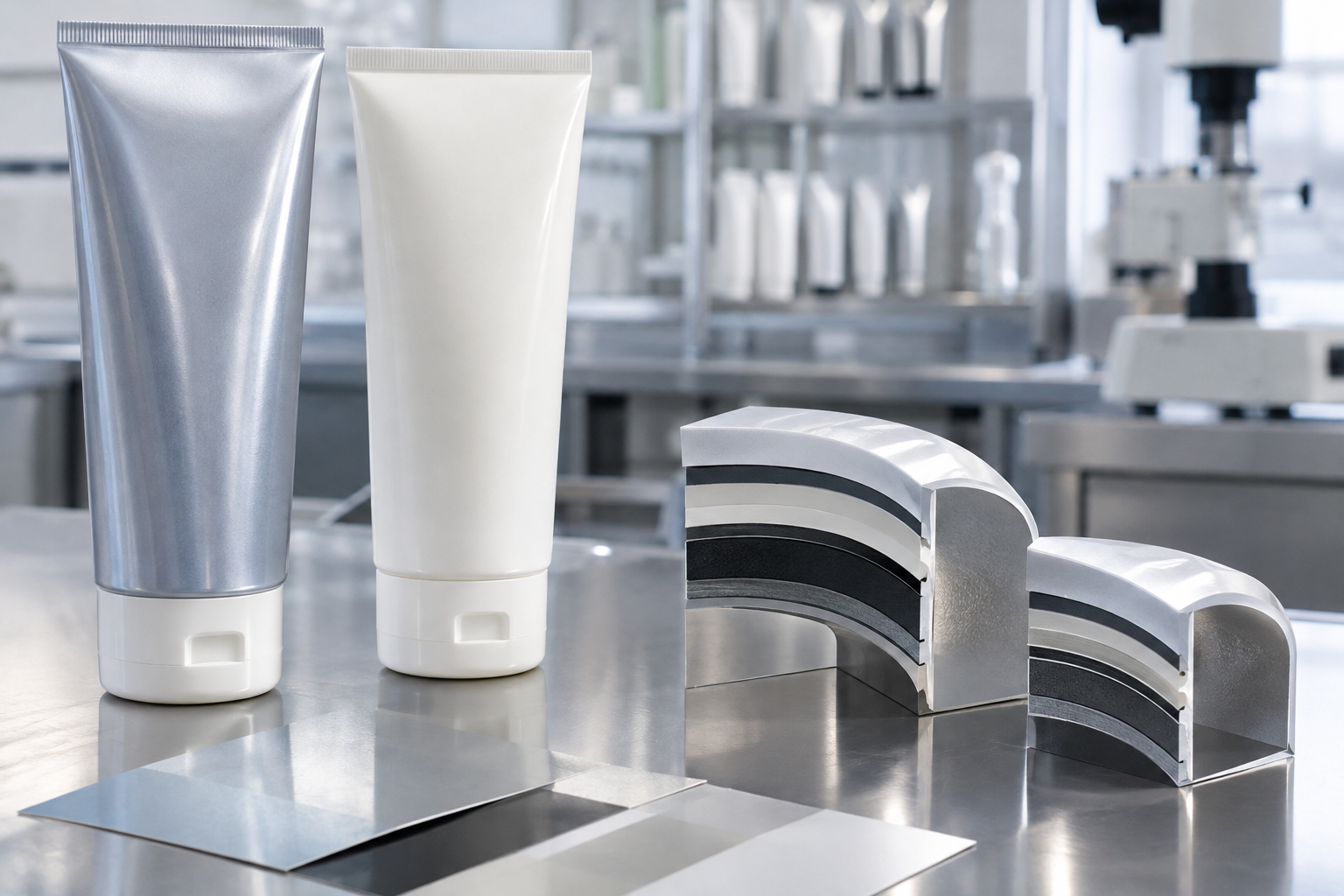
ABL usually refers to an aluminum-barrier laminate tube. Its layered construction includes an aluminum barrier layer, which can provide strong protection from oxygen, moisture and light depending on the full laminate design. PBL usually refers to a plastic-barrier laminate tube, in which polymer barrier materials are used instead of aluminum. The exact construction varies by tube supplier, so a generic label does not replace a material specification.
From a filling perspective, both are generally treated as laminated tubes, but the complete tube matters: wall stiffness, seam location, thickness, shoulder shape, cap, inner surface and sealant layer all influence handling and closure. A robust RFQ asks for tube drawings and samples from the selected packaging supplier, not just “ABL” or “PBL” as a line item.
| Question | Why it matters to filling and sealing |
|---|---|
| What is the complete layer structure? | Indicates the sealant interface and informs the sealing trial. |
| What is the tube diameter, length and shoulder profile? | Determines holders, guides, orientation and fill-nozzle access. |
| Where is the print registration mark or seam? | Affects orientation and the visual position of the finished seal. |
| What is the permitted seal-zone appearance? | Establishes acceptance criteria for wrinkles, burn marks, trim and coding. |
| What product will contact the inner layer? | Confirms compatibility, residue behavior and risk of product in the seal area. |
Material reference: EPL laminate construction overview identifies aluminum foil and polymer barrier options. The selected supplier’s current specification remains the basis for machine trials.
How tube construction affects sealing
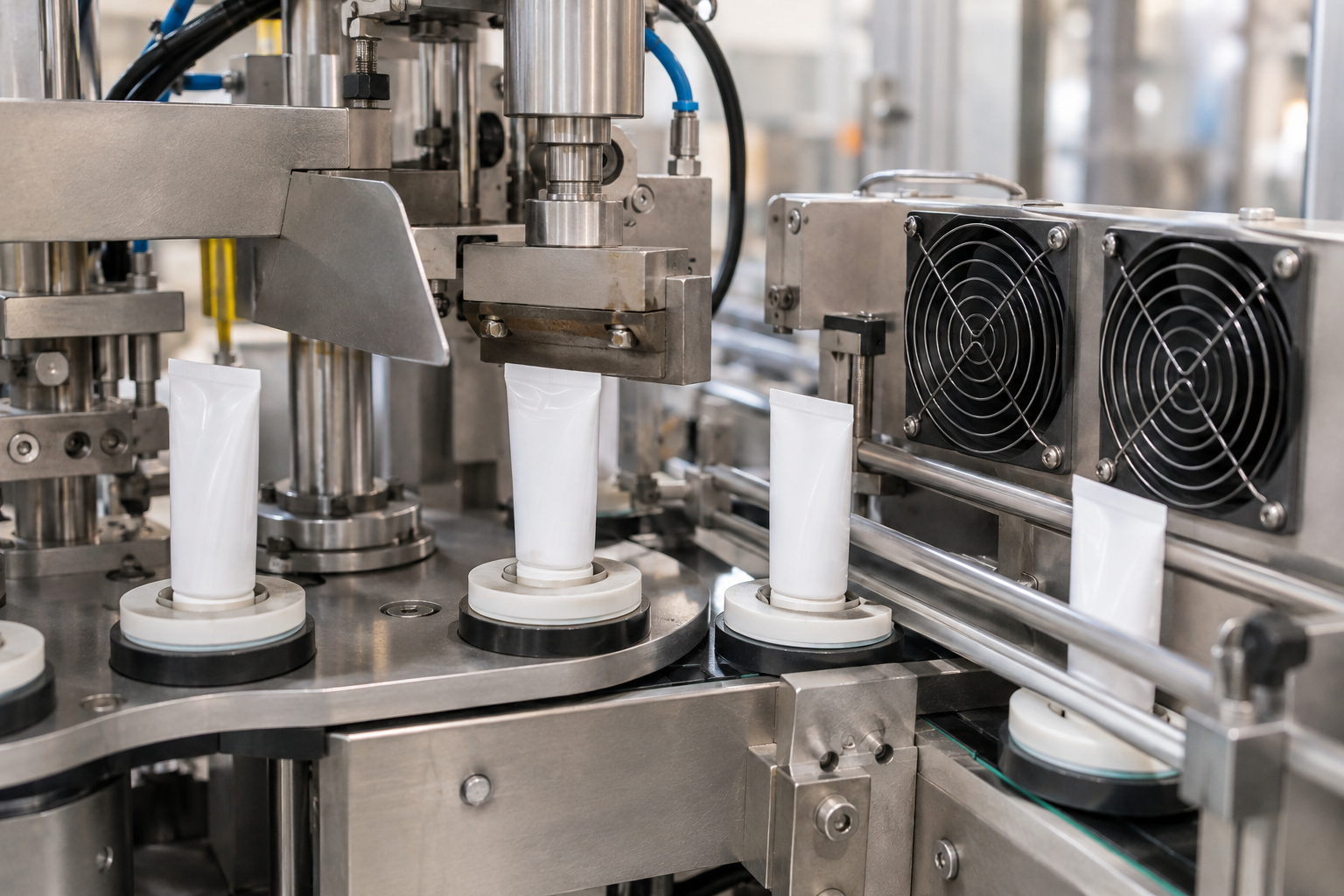
The fundamental objective is simple: bring the sealant layers into the required condition, apply the controlled pressure and dwell needed to form the closure, then cool or stabilize the seal so the tube can move to the next station. The way this is achieved depends on the selected technology and tube construction.
Hot-air sealing for laminated tubes
Hot-air systems direct controlled heat into the open tube end, primarily to activate the inner sealing layer while external jaws form the closure. A suitable configuration balances heat, air flow, jaw pressure, dwell and cooling. The team should avoid treating a “stronger” setting as automatically safer; excessive heat can damage appearance or distort the laminate, while insufficient activation can lead to weak seals.
Ultrasonic sealing evaluation
Ultrasonic sealing uses high-frequency mechanical energy and a tooling interface. It can offer different process characteristics and may be considered for certain laminate constructions, but suitability must be established with the actual tube and design. A trial should examine not only an immediate seal sample, but also package appearance, product contamination sensitivity, closure consistency and the downstream handling needed by the line.
Product contamination at the seal zone
Many field seal problems do not start with the tube material. They start when product is pulled onto the inner wall near the closure area. Viscous products, stringing formulas, foam, overfill, poor nozzle cut-off or unstable tube presentation can make a good tube and correct heat setting appear unreliable. The filling sequence, nozzle position and air-removal approach should be reviewed alongside the sealer.
Select a machine with an evidence-based tube trial
A catalogue can identify which tube categories a machine can handle. It cannot prove the finished package for a particular formulation and tube supplier. Before final approval, agree a trial plan using the intended tube, product or a documented representative, and a clear list of observations.
During factory testing, typical observations include:
- tube orientation and artwork position;
- fill presentation, splash, stringing or air pockets;
- seal width, flatness, trim and coding position;
- visual signs of overheating, discoloration or laminate distortion;
- seal checks appropriate to the customer’s own quality procedure;
- repeatability over a meaningful sample sequence rather than one hand-picked tube.
The buyer’s quality team should define the acceptance method. For example, a cosmetic brand may emphasize appearance and leak checks, while a regulated product may also need documented settings, sample retention and a more formal qualification approach.
Choosing between ABL and PBL: packaging decision first
Tube filling equipment should support the chosen package, but it should not be the only reason to choose ABL or PBL. Product sensitivity, shelf-life study, distribution conditions, brand positioning, print needs, recycling policy and the availability of the required tube from qualified sources are packaging decisions. The machine builder’s role is to confirm that the selected tube can be accurately handled and sealed within the proposed line configuration.
Use this decision sequence:
- Define the product’s barrier, compatibility and shelf-life requirements with packaging and quality teams.
- Select candidate ABL or PBL structures with the tube supplier.
- Obtain current drawings, samples and print-registration details.
- Run sealing and filling trials with the intended product or a justified representative.
- Freeze the acceptance criteria and change-part list before final machine release.
This sequence prevents a familiar problem: a machine is ordered around an early tube sample, then the packaging is changed shortly before launch.
Setup and changeover considerations
If one line will process both ABL and PBL tubes, do not assume a simple material change. Review the format list with the supplier: diameter, length, cap, shoulder, print mark, seal requirement and product. Some projects can share many components; others need different holders, guides, orientation settings, filling parameters or sealing recipes. The exact answer comes from the tube format, not from a generic “laminate” label.
A practical changeover plan identifies what is physical tooling, what is a controlled recipe, who verifies the first acceptable tube and how the line is cleared between SKUs. This is especially important where multiple tube designs carry similar artwork or where batch coding must remain traceable.
Have both ABL and PBL samples? Send their drawings, tube dimensions and the product type. King Pack can review the format information before a filling and sealing configuration is proposed.
Common mistakes to avoid
Selecting by barrier label alone
The label ABL or PBL describes a broad construction family. It does not tell the machine builder the exact sealant layer, wall behavior or presentation of the tube. Always supply the current packaging specification.
Testing with empty tubes only
Empty-tube trials are useful for handling and seal appearance, but they do not reveal how the actual product behaves at the nozzle and seal zone. Include product trials before final acceptance when possible.
Treating visual appearance as the only seal check
Appearance matters, particularly for branded consumer packs, but the quality procedure should also address seal integrity using methods appropriate to the product and market.
Leaving future tube suppliers undefined
A second tube supplier may use a different construction or tolerance. If dual sourcing is planned, include samples from both suppliers in the project review.
Define acceptance criteria before the trial
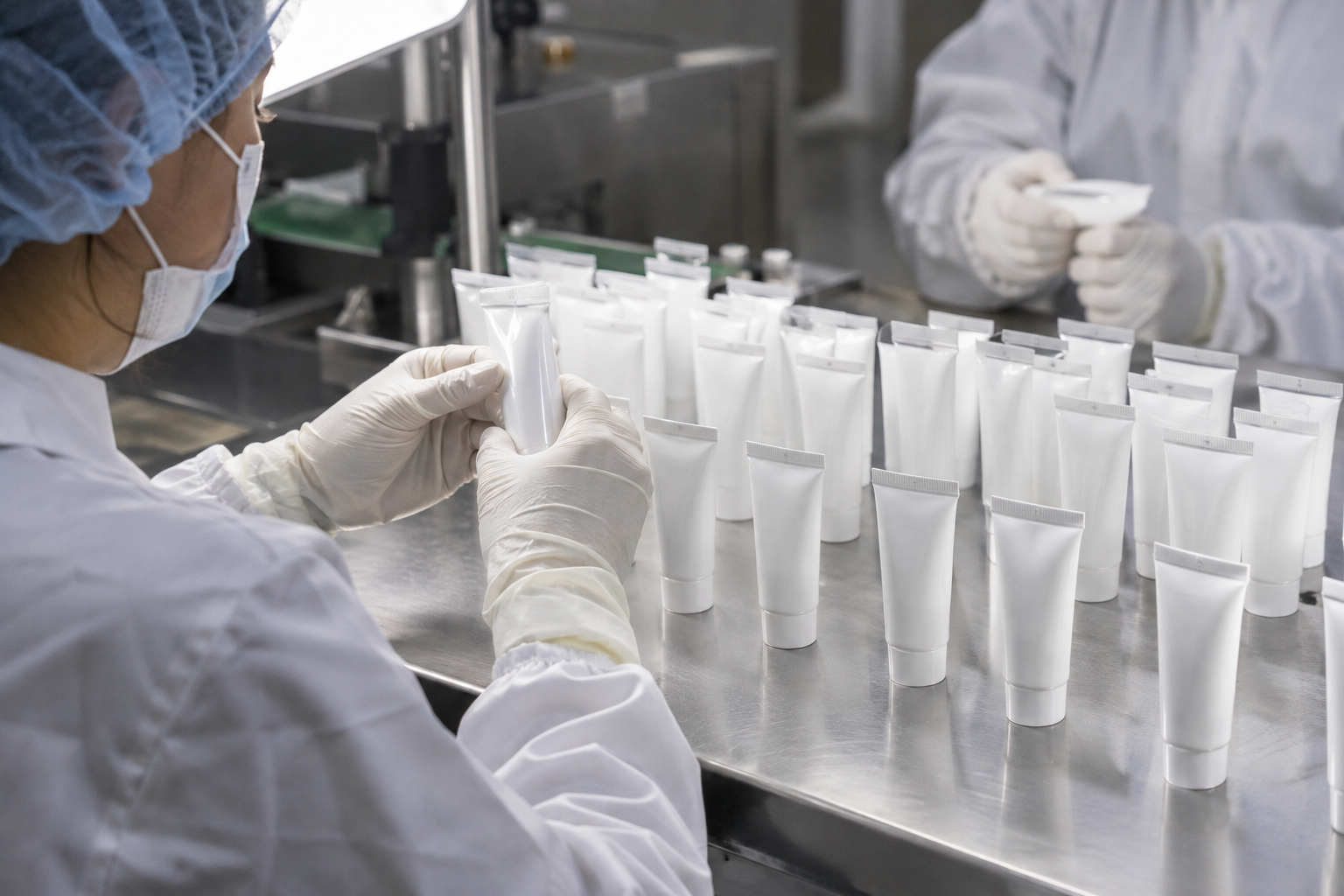
The final seal should be evaluated against an agreed acceptance sheet, not by general impressions on the day of the trial. The sheet can define the required code location, seal shape, trim appearance, registration position and the quality checks used by the product owner. It should also identify what is considered a cosmetic observation versus a reject condition. This lets the supplier prepare the correct tooling and lets the buyer bring the right quality representatives into the discussion.
Consider distribution conditions as well. A tube may be filled and sealed correctly at the factory but later experience vibration, stacked loads or temperature changes in transport. The brand owner and packaging team should decide how to test the finished pack for its intended distribution route. The machine supplier can explain process settings and line handling, while the product owner retains responsibility for product-package qualification.
If more than one tube source is planned, prepare a comparison table for each supplier’s sample. Record the nominal dimensions, measured tube-end behavior, print-mark location, wall feel, closure appearance and any setting adjustment made during the trial. A controlled record is far more useful than relying on memory when the sourcing team evaluates a second source months later.
Finally, establish a change-control process. A new tube laminate, printing process, shoulder design or cap supplier can change the machine interface even when the carton artwork looks identical. Any package change should trigger a review of the filling, orientation and sealing conditions before it enters routine production. This is a manageable discipline that protects both launch dates and product presentation.
Coordinate the tube supplier and machine supplier
Much of the purchasing risk sits at the boundary between packaging and equipment. The tube supplier defines the material construction and the finished tube tolerances. The machine supplier defines the handling and closure configuration. The product owner defines compatibility, shelf life, appearance and acceptance requirements. A successful review brings these responsibilities together before the tube and tooling are released.
Give both suppliers the same revision of the format information. Include the body dimensions, shoulder and cap drawing, open-tail condition, registration mark and required finished-seal appearance. State which details are fixed and which are still candidates. If the tube supplier changes the material during evaluation, make that change visible to the machine supplier rather than treating all samples as equivalent.
Plan sample quantities around the trial objectives. Handling trials, startup adjustments, filled-pack checks and retained reference samples have different uses. Agree the required quantity with the test team before shipment; this article does not prescribe a universal sample count. Send samples protected against deformation and identify each material or artwork variant clearly so that the trial record can be traced back to the correct source.
After the trial, review the results as a group. Separate observations caused by the tube, the filling presentation, the sealing configuration and downstream handling. A weak result should lead to an identified hypothesis and a controlled follow-up, not an unsupported conclusion that every ABL or PBL tube is unsuitable.
Release the package and machine configuration against a documented acceptance record. Retain the approved tube specification, tested format, settings reference and representative finished samples under the site’s procedure. When a second packaging source is introduced later, this record gives the team a concrete comparison basis. It also helps procurement ask whether additional trials or change parts are required before accepting a sourcing change.
FAQ
Can one tube filling machine run ABL and PBL tubes?
Often it can, provided the relevant formats, handling components and sealing settings are evaluated. The answer must be confirmed with the actual tubes and required production conditions.
Which sealing method is better for laminated tubes?
There is no universal answer. Hot-air sealing is widely used for laminate tubes. Ultrasonic sealing may be suitable for specific tube structures and designs. A controlled trial with actual tubes and product is the right way to select.
Why does laminate tube sealing fail during production?
Potential causes include incorrect heat or pressure settings, tube variation, contamination in the seal area, poor nozzle cut-off, unstable orientation or inadequate cooling. Diagnose the process as a system rather than changing one setting repeatedly.
What should a tube sealing trial include?
Include current tube samples, product information, output target, artwork-registration requirement, closure appearance criteria and the quality checks that will be used at acceptance.
Can the same sealing recipe be used for every laminated tube?
No. Even tubes within the same broad ABL or PBL family can differ in construction, wall thickness, sealant layer, dimensions and print treatment. Start with a controlled recipe for the approved tube and review any material change under the site’s change-control procedure.
What should be agreed with the tube supplier?
Ask for the complete drawing, laminate or material information available, dimensional tolerances, artwork-registration method, storage guidance and samples from the intended production source. These inputs help the filler supplier set up orientation, format parts and sealing trials correctly.
Prepare operators for the chosen package
Once a tube format is approved, translate the trial into a clear production instruction. Identify the correct tube code, approved orientation reference, fill parameters, sealing recipe, visual acceptance sample and escalation path for defects. Operators should know which conditions they can adjust within the approved procedure and which observations require packaging, quality or engineering review. This prevents well-intentioned settings changes from masking a tube-material issue.
Keep approved tube samples and photographs near the line where practical. They make it easier to judge artwork alignment, seal profile and trim presentation during start-up. For a new format, schedule the first production run with enough time for controlled observation rather than treating it as a routine changeover.
Conclusion
ABL and PBL selection connects packaging engineering with filling-line design. The strongest projects settle the package requirement first, then validate machine handling and sealing with real materials. Clear tube specifications, controlled trials and documented acceptance criteria give procurement teams a much more reliable basis for comparing equipment proposals.
Ask for a laminated-tube project review. Send the selected ABL or PBL tube details and your fill product so we can help define the required filling, orientation and sealing scope.
