 Skip to content
Quick answer
A tube filling machine should be budgeted as a production system, not as a single catalogue item. The quoted equipment price changes with tube material, filling product, speed target, sealing method, coding, inspection, change parts, line integration, documentation and the scope of site work. A useful RFQ states the product viscosity range, fill volume, tube dimensions, tube material, target output, utilities, package flow and acceptance criteria. Buyers should also budget for installation preparation, operator training, spare parts, qualification work and the operating cost created by changeovers and maintenance.
Introduction
When procurement teams search for a tube filling machine price, they usually need more than a number. They need to know whether the proposed system can make the required tube reliably, whether the quote covers the real production scope, and whether the total project can be approved without later additions. That is why two apparently similar tube filling and sealing machines can carry very different prices.
The useful question is not simply “How much does a tube filler cost?” It is “What configuration will control our product, package and output risks, and what will that configuration cost to own?” This guide gives a practical framework for comparing quotations for plastic, laminated and aluminum tube projects without relying on a misleading headline price.
Start with the job the machine must perform
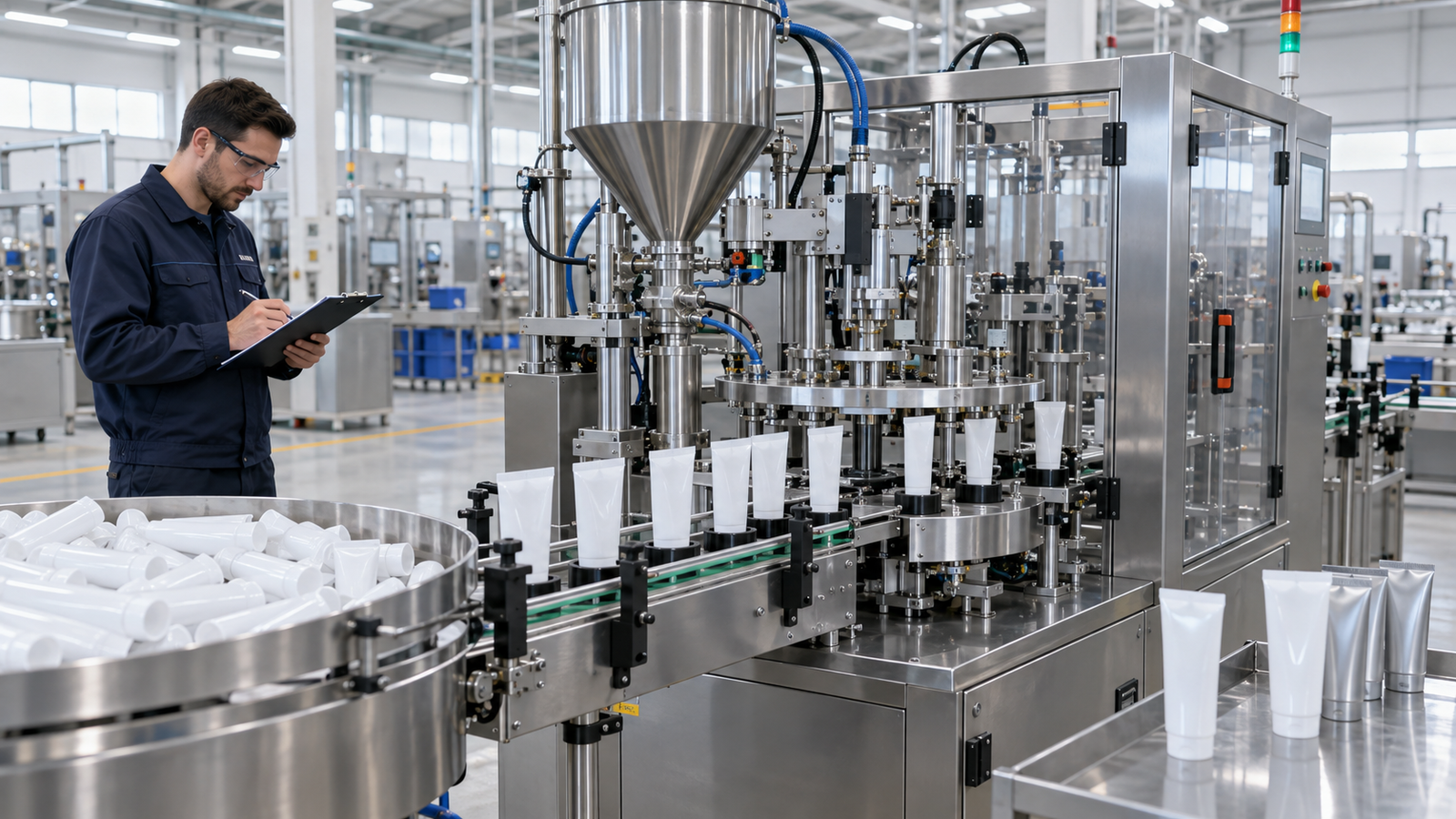
A tube is filled only after several conditions are controlled: the product has to arrive at the machine in a stable state, the tube must be correctly oriented, the dosing system must repeatedly deliver the intended quantity, and the closure must protect the product and present an acceptable package. The complexity of those conditions is what drives cost.
Before requesting a quotation, record the following information in a short user-requirements sheet:
| Input | Why it changes the scope |
|---|---|
| Product formula and viscosity range | Affects hopper design, transfer piping, dosing principle, agitation, heating or cooling requirements and cleaning approach. |
| Fill volume and tolerance expectation | Determines the dosing range and the way fill-weight checks should be handled at testing. |
| Tube material and dimensions | Drives tube magazines, holders, orientation, heating or ultrasonic sealing configuration, folding stations and change parts. |
| Required output | Influences indexing layout, automation level, upstream/downstream handling and the size of the production buffer. |
| Artwork, coding and traceability | May add embossing, batch coding, vision inspection or rejection handling. |
| Site utilities | Determines electrical, compressed-air, cooling-water, extraction and floor-space preparation. |
A supplier can give an indicative range from basic information, but a comparable proposal needs the actual tube samples or dimensional drawings, product characteristics and acceptance target. This protects the buyer as much as the machine builder: a low quote based on unknowns can become a long list of exclusions later.
The main factors behind tube filling machine price
1. Tube material and sealing technology
Plastic and laminated tubes commonly use hot-air sealing, while some laminate structures and package designs can be considered for ultrasonic sealing. Aluminum tubes use a different closure sequence involving folding or crimping. These are not interchangeable stations. The tube material, shoulder geometry, seal width, graphics position and required appearance need to be reviewed together.
The important buying step is to send representative empty tubes for a sealing trial or FAT planning. A seal that looks acceptable on a sample table may react differently when product contamination, production speed and real tube tolerances are introduced.
2. Product handling and dosing
A free-flowing gel, an abrasive toothpaste, a temperature-sensitive cream and a high-viscosity ointment all make different demands on the product path. Cost can increase when the project needs jacketed hoppers, slow-speed agitation, pressure control, positive-displacement dosing, special valves, dead-leg reduction or a more detailed cleaning procedure.
Do not specify a dosing principle only because it appeared in a competitor’s brochure. Ask how the proposed dosing system addresses viscosity variation, entrained air, stringing at the nozzle and product residue during changeover. Those answers matter more to total cost than a generic accuracy claim.
3. Automation and output target
Semi-automatic equipment can suit controlled, low-volume production where trained operators load tubes and manage product. Automatic systems add coordinated tube feeding, orientation, filling, sealing, trimming or coding, discharge and optional downstream equipment. Higher output may also require a larger infeed buffer, cartoning interface, accumulation or inspection stations.
Automation should be selected against the expected shift pattern, SKU count, operator availability and growth plan. A machine that is too small may create labor pressure and frequent overtime; one that is oversized may add expense and complexity without improving the actual bottleneck.
4. Change parts and SKU range
Tube diameter, length, cap style, fill volume and print-registration requirements can each generate change-part needs. A project with one stable tube format is different from a project that changes several sizes every week. Quote review should list every included tube holder, guide, format set and dosing component by SKU, rather than leaving “standard change parts” undefined.
5. Quality checks and documentation
Some projects only need visual operator checks. Others need batch coding, checkweighing interfaces, vision inspection, reject confirmation, data recording or a documentation package that supports internal validation. Pharmaceutical and regulated applications may request a more formal factory acceptance test, traceable manuals and qualification support. The needed level should be clear before price comparison.
Budget the project, not only the machine
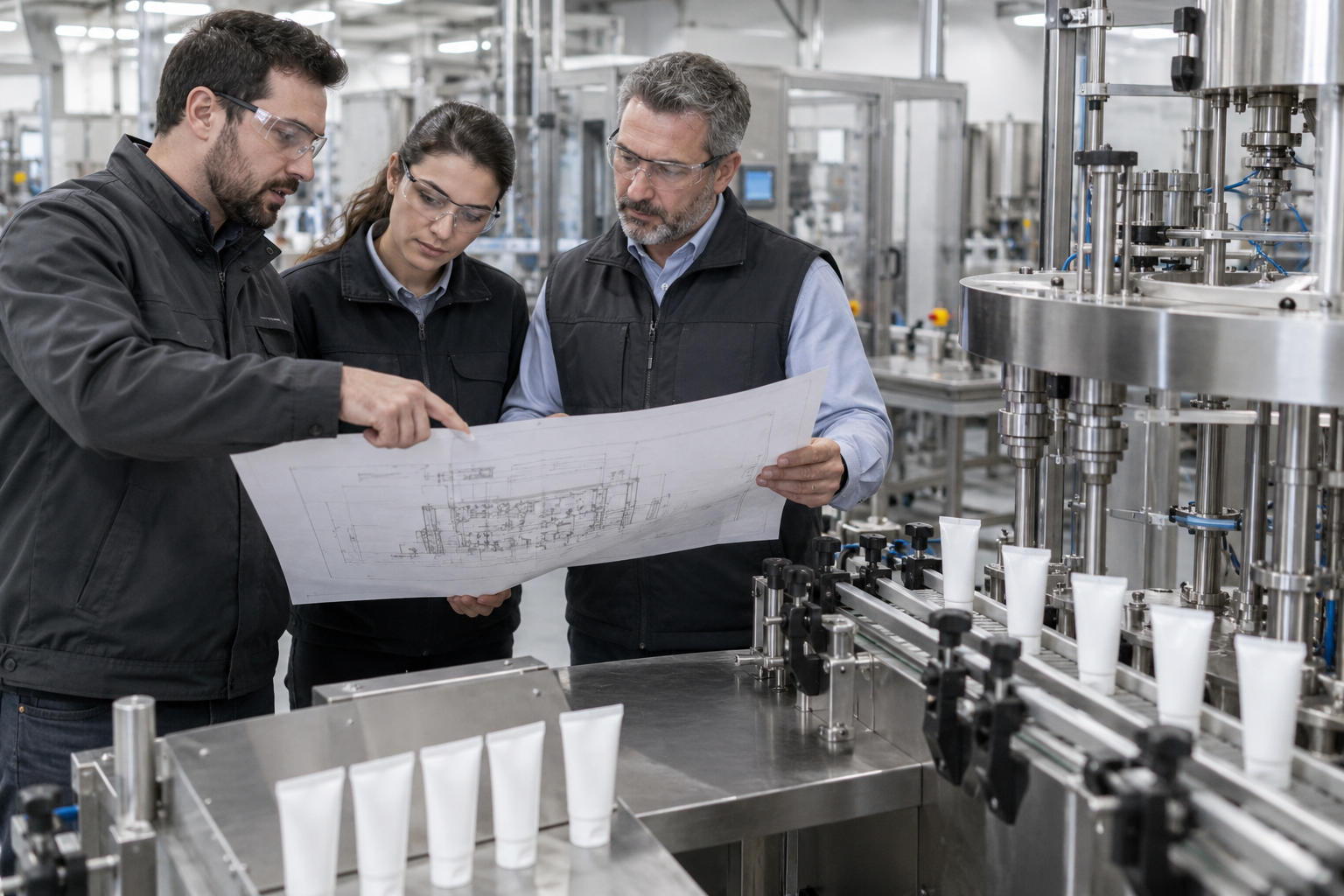
A transparent capital budget has several lines. The equipment price is one line; the complete project budget often includes the following.
| Cost area | Questions to ask |
|---|---|
| Core machine | Which stations, tube formats, tooling and electrical standard are included? |
| Product preparation | Is a hopper sufficient, or is a mixer, transfer pump, holding tank or vacuum emulsifying system needed? |
| Line integration | Who supplies interfaces for conveyors, cartoning, coding, vision, checkweighing or case packing? |
| Freight and packaging | What is the packing method, shipment scope and responsibility for unloading? |
| Installation preparation | What floor loading, access, utilities, extraction and drainage are needed before delivery? |
| Commissioning and training | What work is remote, what work is on site, and which personnel should attend? |
| Qualification and testing | What product, tubes, acceptance standards and witnesses are required for FAT? |
| Spares and consumables | Which wear parts, seals and recommended start-up spares should be held locally? |
| Ongoing operation | What changeover time, cleaning effort, energy use and maintenance access should be considered? |
This structure makes it easier to compare “machine-only” offers with more complete offers. It also prevents a procurement decision from being made before engineering, quality and operations have identified their own requirements.
How to compare quotations fairly
Ask every supplier to respond to the same RFQ and comparison sheet. Include a line-by-line scope matrix with the following headings: included equipment, excluded equipment, tube types, fill range, output basis, product assumptions, sealing method, controls, utilities, documentation, FAT, delivery terms, installation scope and warranty or service conditions.
Then check the assumptions beneath the output figure. A throughput number is meaningful only when its tube diameter, fill volume, product behavior, number of lanes or stations, operator tasks and inspection activities are known. If the production schedule includes frequent size changes, ask for the proposed changeover procedure and the list of tools required. During a factory acceptance test, observe the agreed product or a documented representative, actual tubes and the agreed test sequence.

Installation cost and readiness checklist
Installation cost is often underestimated because it starts outside the machine boundary. Before shipment inspection, confirm the route from receiving door to production floor, available lifting equipment, electrical supply, air quality and pressure, ventilation or extraction needs, water connections where applicable, and access for maintenance. A clean layout with room for tube loading, product preparation, finished-goods discharge and safe operator movement reduces later rework.
The site should also nominate people responsible for mechanical acceptance, electrical connection, product trials, quality checks and operator training. A clear responsibility list helps the supplier arrive to a prepared site and makes commissioning more efficient.
Total cost of ownership: the questions that matter after delivery
The total cost of ownership includes the labor, utilities, changeover effort, rejects, maintenance and downtime that occur after the purchase order. It does not require speculative ROI claims to be useful. Teams can estimate it using their own production data:
- Calculate the planned batches per month and the number of format changes.
- Estimate the labor roles required during loading, product preparation, sampling and packing.
- Identify the inspection and cleaning steps that must occur between products.
- List components that are expected to wear or require routine inspection.
- Compare the production loss created by a slow changeover or a seal issue with the cost of the equipment option that prevents it.
A supplier should be able to explain where operators need access, how routine adjustments are made, what maintenance points are visible and which spare components are prudent to keep. These practical answers are stronger evidence than a generic “low maintenance” statement.
Planning a tube filling project? Send your product description, tube samples or drawings, target output and destination country. We can help structure the RFQ before a formal quotation is prepared.
Build an RFQ that avoids false price comparisons
A useful RFQ gives every potential supplier the same technical basis. Include a photograph or drawing of every tube, the product safety and handling information available to you, a sample pack where possible, and a simple diagram showing what happens before and after filling. State whether you need one machine for current production only or whether it must accommodate a defined future SKU. If information is uncertain, identify it as an assumption instead of allowing each supplier to assume something different.
Ask for a scope table that separates included, optional and excluded items. An optional water chiller, product transfer pump, coding system or downstream conveyor may be appropriate, but it should not disappear into a vague “available on request” note. The table should also say which party supplies installation materials, utility connections and any site acceptance activities.
A strong commercial comparison checks four things. First, compare the physical configuration: stations, formats, construction, product-contact materials and controls. Second, compare the acceptance basis: tube, fill, product representative, output condition and quality checks. Third, compare the implementation scope: packing, shipping, installation preparation, commissioning and training. Finally, compare the operating implications: access for cleaning, planned spares, availability of manuals and the changeover method. These questions often explain a difference in price that a one-page quotation cannot.
It is also prudent to separate a budgetary estimate from a final technical proposal. The budgetary phase identifies whether the project range is viable. The final proposal follows the review of tube samples, product behavior and format list. Treating those stages differently makes approval easier and reduces the risk of committing to a configuration before the package is defined.
Keep commercial risk visible in the scope sheet
A quotation is easier to evaluate when each commercial boundary has a technical owner. Procurement should identify the delivery term, payment milestones and exclusions. Engineering should confirm the configuration, utility requirements and interfaces. Quality should agree the materials, checks and records used at acceptance. Operations should review staffing, changeovers, cleaning and the start-up spare list. These reviews can be brief, but all four should use the same revision of the requirement.
Ask how changes will be handled after approval. A different tube diameter, product formula or coding requirement may require further tooling or engineering. Record the original assumptions and agree how a revised scope will be reviewed before work proceeds. This helps distinguish a buyer-requested change from an item that was already part of the agreed delivery.
For freight and installation, compare the actual responsibility rather than only a combined price line. Establish who provides packing, transport, unloading, positioning, utility connections and any on-site support. The costs can be estimated by the responsible party once the destination, machine dimensions and access route are known. Do not assume that a machine quotation includes local taxes, lifting equipment or site preparation unless those items are explicitly stated.
Finally, retain the signed scope matrix with the purchase record. During shipment inspection and installation, it becomes the reference for checking supplied tooling, documentation and open items. A clear matrix does not guarantee that a project will have no changes, but it gives both parties a practical method for resolving them.
FAQ
What is included in a tube filling machine price?
It depends on the quotation scope. Confirm the included filling and sealing stations, tube formats, tooling, controls, coding, conveyors, documentation, FAT, packing and commissioning support. Treat unspecified items as exclusions until clarified in writing.
Why is an automatic tube filling machine more expensive than a semi-automatic model?
Automatic equipment adds coordinated feeding, orientation, transport, sealing and discharge functions. It is selected when output, labor use, repeatability and production flow justify the added automation.
Does tube material change the cost?
Yes. Plastic, laminated and aluminum tubes need different closure methods and may require different format parts or stations. Send representative tubes before finalizing the configuration.
What should I send for an accurate quotation?
Provide the product type and viscosity range, fill volume, tube material and dimensions, cap details, target output, number of SKUs, required utilities, destination and any quality or documentation requirements.
How can procurement compare two very different quotations?
Create one scope matrix and ask suppliers to complete it against the same requirement. Compare the actual tube formats, product assumptions, output basis, machine stations, installation boundaries, documentation, testing and after-delivery support. If one proposal includes a defined FAT and start-up spare package while another does not, these are material scope differences rather than a simple price difference.
Is it sensible to ask for a low price first and define details later?
A preliminary budget can be useful, but final technical details should not be deferred until after a purchase order. Product behavior, tube construction and format count influence the configuration. Record any unresolved item as an assumption and update the proposal when samples or technical data become available.
Conclusion
A credible tube filling machine budget starts with the product and package, then builds outward to automation, inspection, installation and operating needs. The best quotation is not necessarily the lowest first number. It is the proposal whose configuration, assumptions and exclusions are visible enough for operations, quality and procurement to approve with confidence.
Request a tube filling project checklist or send your requirements to King Pack Machinery. We will review the product, tube format and intended line scope so the quotation can be compared on a like-for-like basis.
