
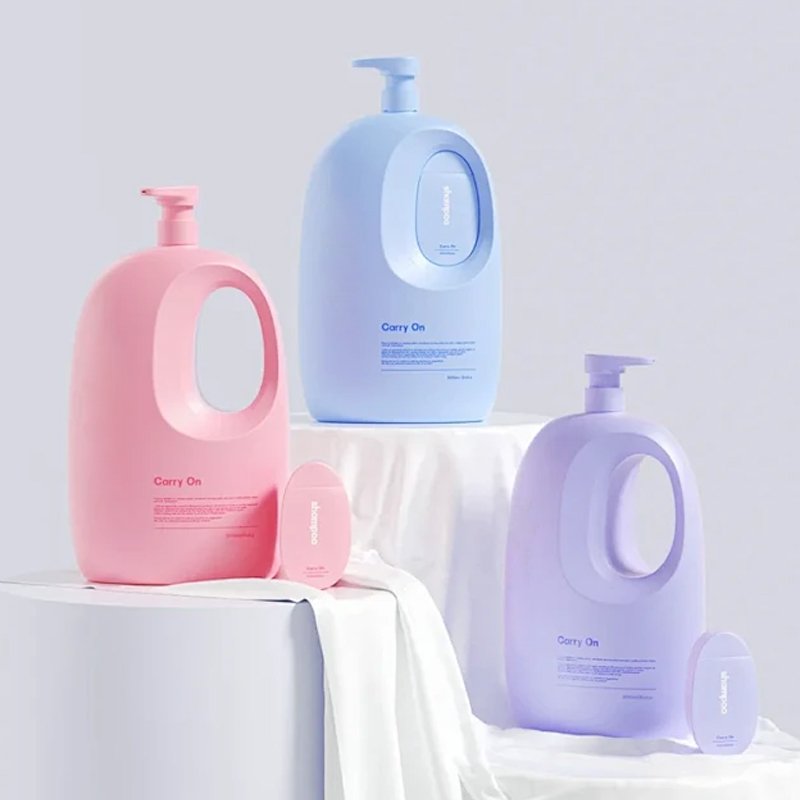

Shampoo packaging often requires controlled filling and closure for viscous or foamy formulations. Automation may improve repeatability, but results depend on the product, bottle, pump, nozzle, controls, operators, and acceptance criteria.
King Pack presents liquid-filling configurations for selected high-viscosity and foamy products. Filling, capping, labeling, hygiene, and labor outcomes are model- and application-specific and should be confirmed with representative trials.
In this article, we’ll explain how King Pack’s shampoo filling systems support large and small manufacturers in building efficient, hygienic packaging lines.
Challenges & Objectives in Shampoo Filling
Shampoo viscosity, surfactants, temperature, and foam behavior can make filling difficult. Air pockets and uneven fills may result from the product, pump, nozzle, speed, temperature, or setup.
Piston, peristaltic, or other pump options may be selected for the product. Foam control and temperature management are application-specific; confirm fill tolerance, cleanability, and process limits during testing.
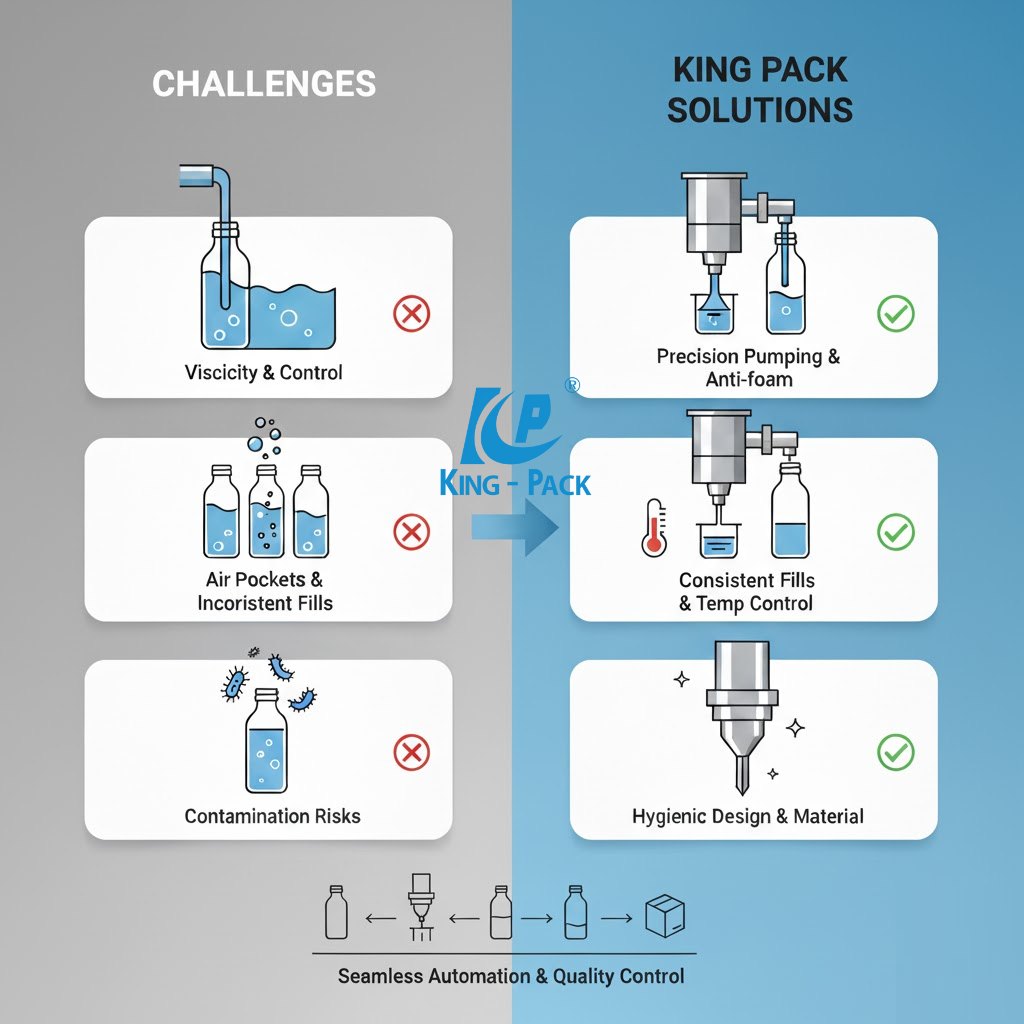
Product-contact materials and cleaning procedures should be selected for the formulation and quality system. Stainless steel can support cleanability, but no material alone prevents residue or contamination.
Bottom-up filling, nozzle cutoff, capping, and sealing may reduce splashing or exposure when correctly configured. Verify closure torque, seal performance, and storage behavior for the selected bottle and product.
Recommended Reading: Liquid Shampoo Sachet Packaging Machines Guide: Working, Types, and Buying Tips – King Pack Machinery
Core Modules of the Shampoo Filling Line
Mixing & Homogenizing (Product Preparation)
Batch uniformity, deaeration, temperature, and viscosity should be established by the product and process specification.
Vacuum mixing may reduce entrained air in suitable formulations. Confirm pressure, mixing time, temperature, and product results with trials.
Homogenization and temperature control effects depend on formulation, shear sensitivity, batch size, and process settings; verify texture, stability, and ingredient behavior.
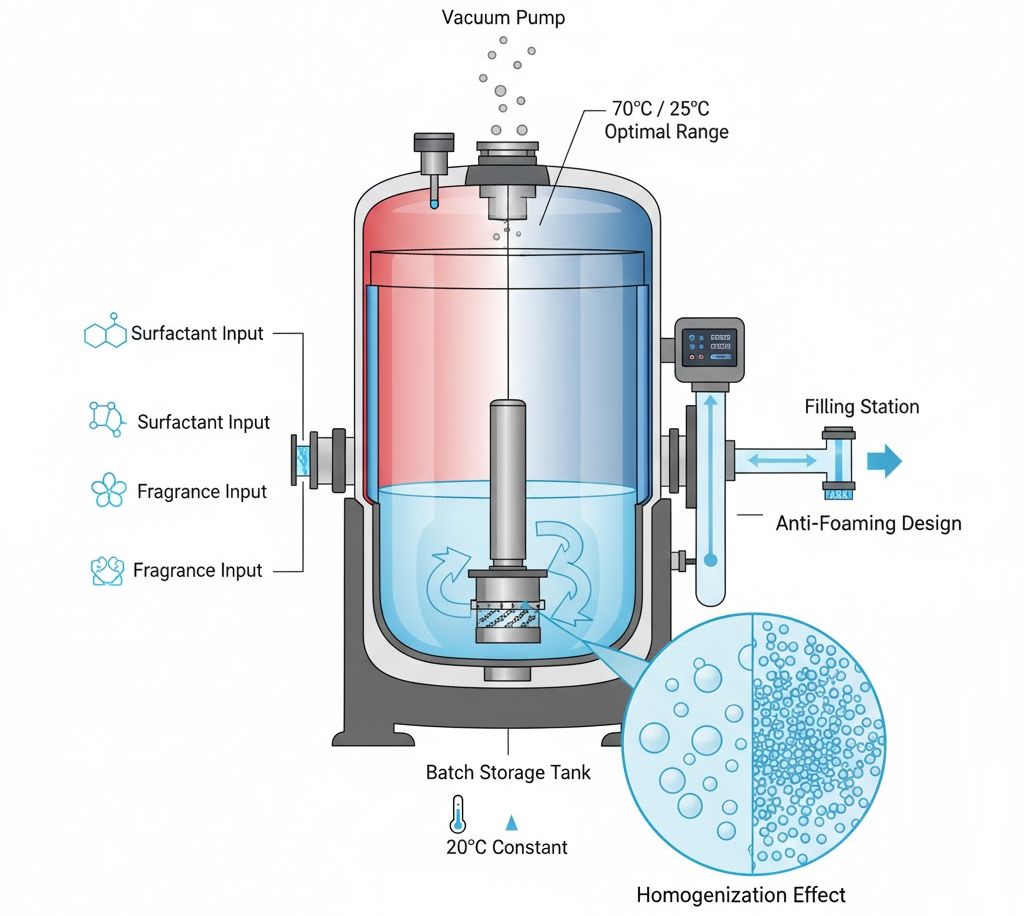
Tanks and transfer pumps should be selected to maintain the target product condition without excessive shear, heating, or air entrainment. Hygiene depends on the complete product path and cleaning program.
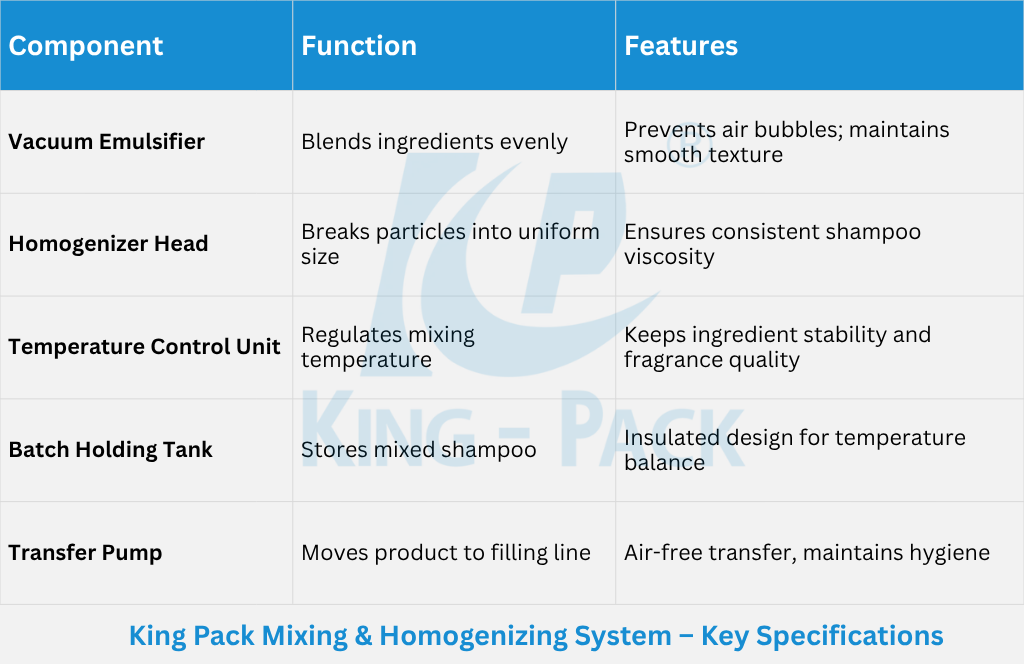
Integrated preparation may support repeatable production when the formulation, equipment, utilities, and quality checks are validated.
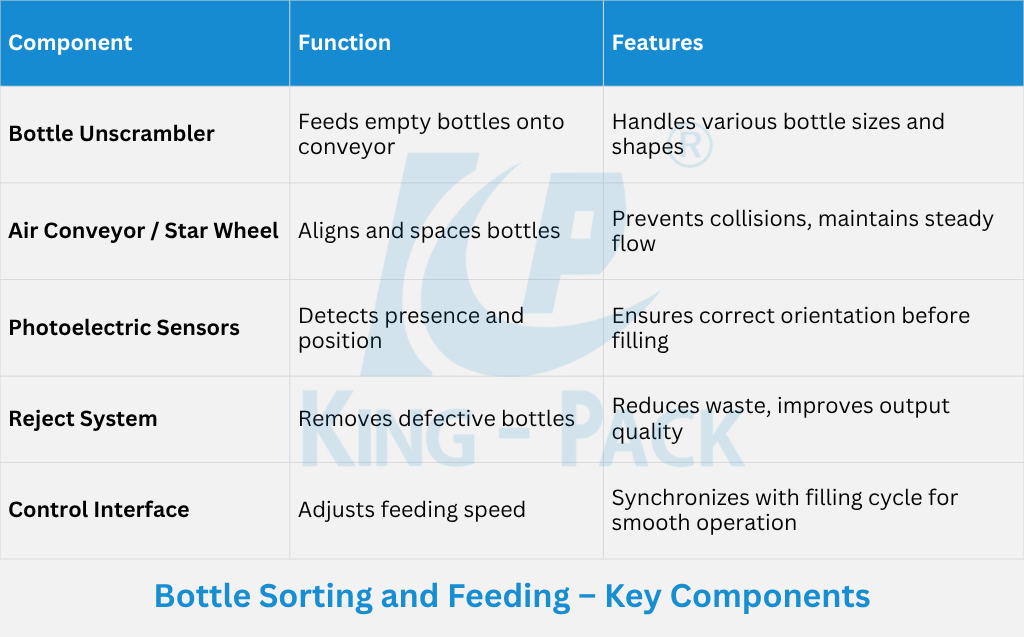
Bottle Sorting and Feeding
Bottle feeding and orientation systems are model-specific. Confirm bottle dimensions, detection limits, spacing, speed, and reject behavior.
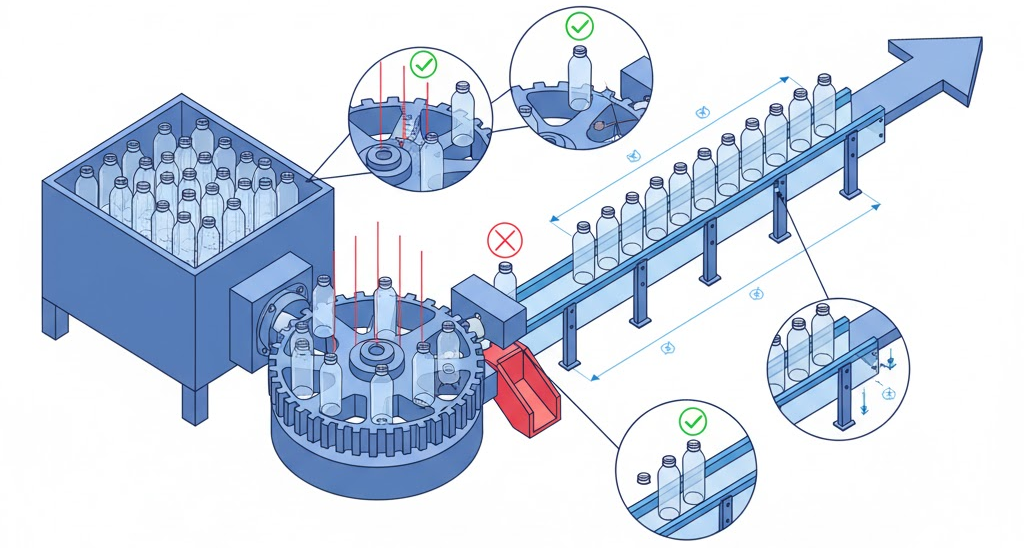
Star wheels or air conveyors guide bottles into single-file order, keeping the flow consistent with the filling cycle rate. Proper spacing reduces contact between bottles and prevents spills or scratches.
Inspection and rejection may remove selected damaged or misaligned bottles. Detection coverage, false rejects, and response depend on sensors, bottle format, and validation.
Control panels may allow operators to monitor flow and adjust configured settings. Stable production still depends on maintenance, training, changeover, and the complete line.
Precision Filling System (Piston / Peristaltic Type)
Piston filling can suit selected medium- or high-viscosity products. Fill stability depends on piston, nozzle, temperature, pressure, speed, and the acceptance method.
Peristaltic pumps keep product in tubing, which may simplify some product-contact and changeover arrangements. Tube compatibility, wear, cleaning, and dosing tolerance must be verified.
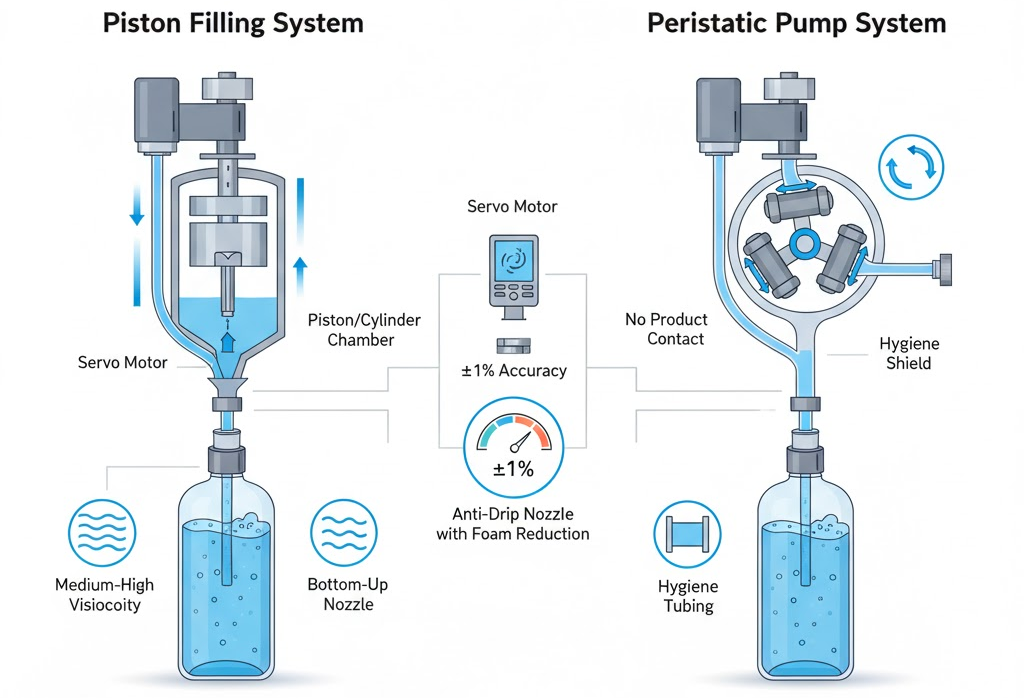
Servo controls, bottom-up filling, and anti-drip nozzles are model- and application-specific. Any ±1% figure must be tied to the product, equipment, measurement method, and trial conditions.
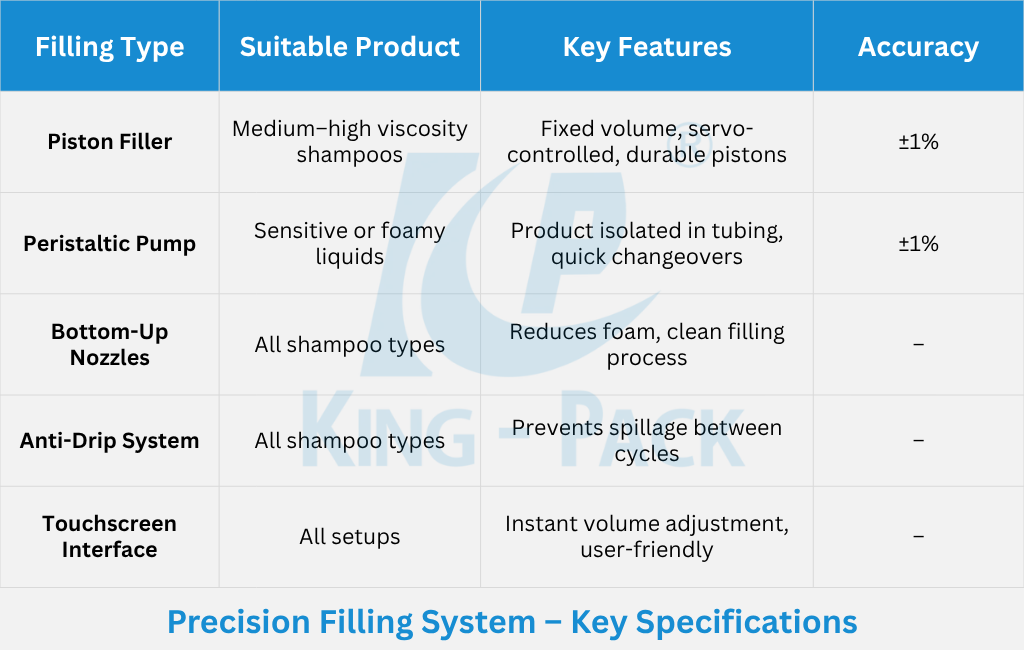
The filling and capping arrangement should be selected and validated for the product, bottle, closure, speed, and hygiene requirements.
Capping and Sealing (Pump / Screw / Flip Cap)
A capping station can be configured for pump, screw, or flip-top closures. Correct alignment, insertion, torque, and sealing depend on the bottle and closure design.
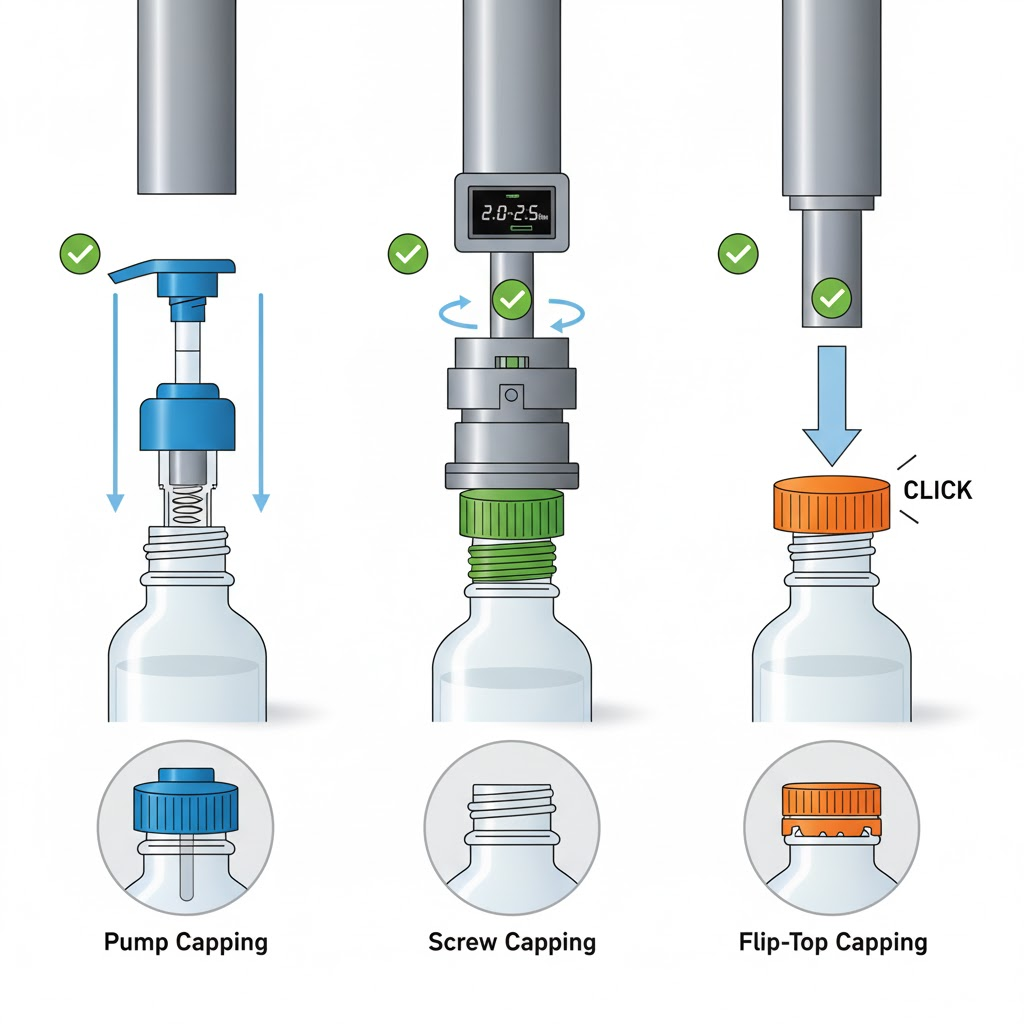
Closure settings should be matched to the cap and bottle. Torque, insertion pressure, and seal performance must be confirmed by testing rather than assumed from the cap type.
Sensors may detect selected missing or tilted closures and trigger a reject. Coverage, false rejects, induction sealing, and storage protection depend on the model and package validation.
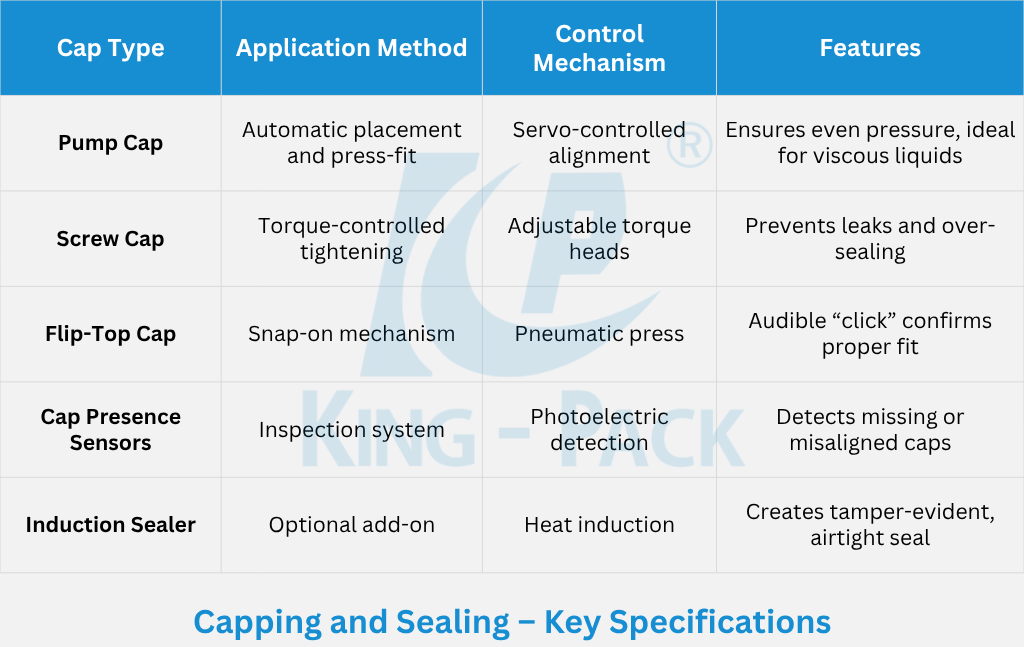
Integrated filling, capping, and labeling may support repeatable production. Actual capacity, quality, and hygiene depend on configuration and operating controls.
Recommended Reading: Fragrance Filling Machine Handbook: How it Works, Types, and Buying Guides – King Pack Machinery
Labelling and Coding (Traceability and Branding)
Labeling and coding systems are model-specific. Confirm bottle geometry, label stock, code requirements, inspection limits, and applicable traceability rules.
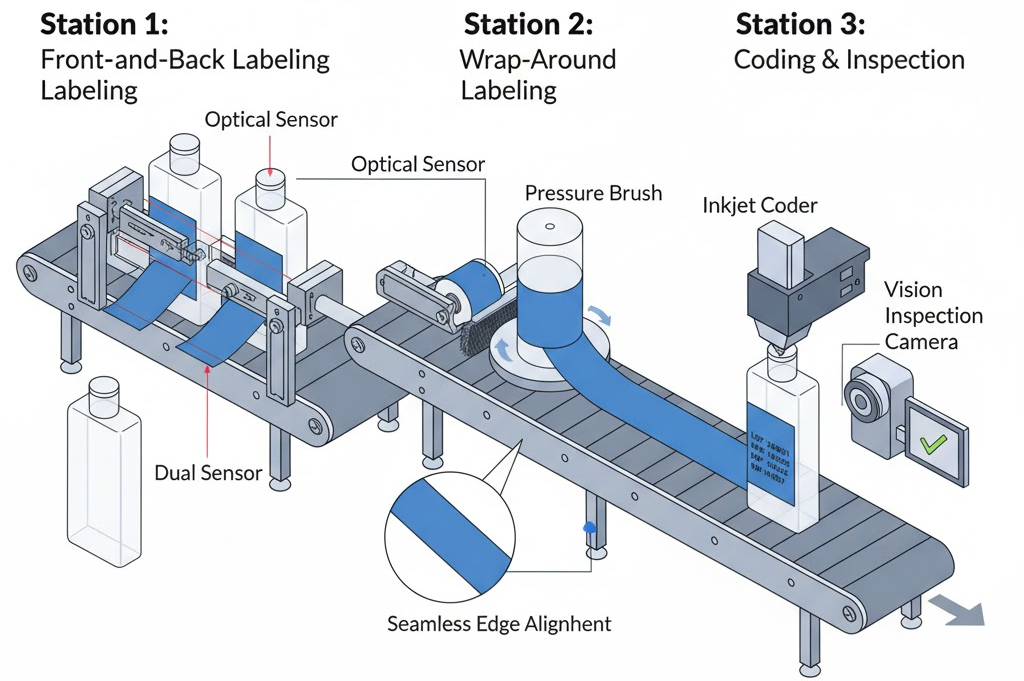
Optical sensors can assist label placement on selected shapes. Wrinkles, bubbles, adhesion, and alignment depend on label, bottle, speed, and setup.
Coders and vision systems may print or inspect selected batch and expiry information. Traceability and regulatory suitability require documented data controls and validation.
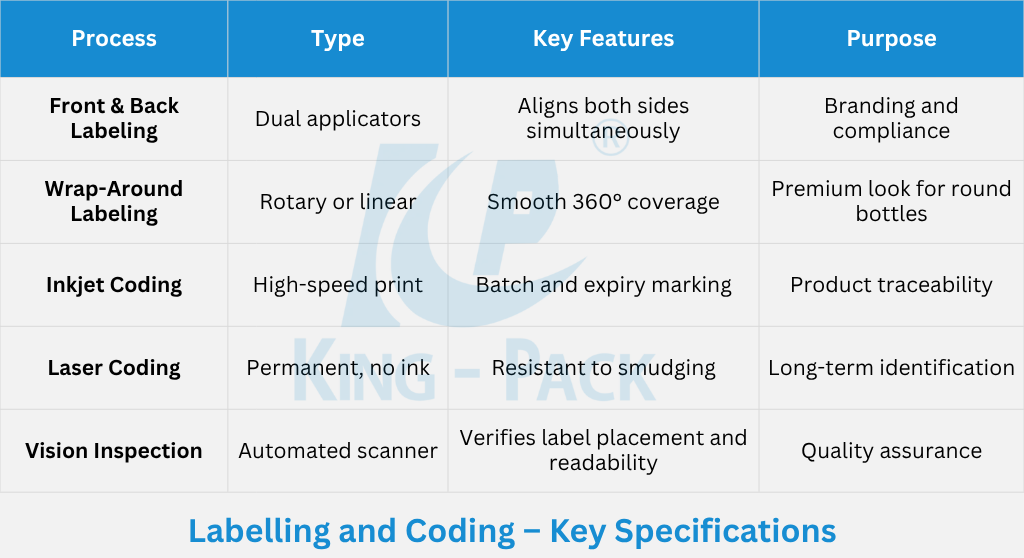
Labeling and coding can support presentation and traceability when the equipment, data, inspection, and quality system are correctly configured.
Recommended Reading: What Is a Planetary Mixer? – King Pack Machinery
Advanced Line & System Solutions
Integrated Turnkey Shampoo Filling Lines
A complete line may combine mixing, filling, capping, labeling, and palletizing. The actual scope, interfaces, utilities, controls, and acceptance criteria should be documented.
Turnkey projects may arrive with agreed configuration and testing, but installation, commissioning, training, qualification, and site acceptance remain necessary.
A single supplier can simplify coordination for some projects, but responsibility, exclusions, service response, and interface risks should be defined in the contract.
Flexible Configurations for Various Bottle Sizes
Quick-change parts may support selected bottle sizes. Confirm tooling, cleaning, recipe, operator steps, and actual changeover time.
The stated 30–1000 ml range is model- and configuration-specific; verify bottle height, diameter, shape, fill range, and tested tolerance.
Recipe storage and automatic adjustments are model-specific. Operators should verify each recipe, changeover, and quality result before production.
Automation, Servo Control, and Smart Operation
Servo controls may adjust configured fill and line settings, but changes in viscosity and temperature still require calibration and validation.
Smart sensors monitor line performance continuously. Data collection tracks output rates, reject counts, and downtime causes. Manufacturers gain insights for continuous improvement.
Remote diagnostics may help with selected faults when secure access, data, and service coverage are available; they cannot replace site inspection in every case.
Supporting Systems & Material Handling
Conveying and Buffering Systems
Conveyors and speed matching should be sized for the bottle, line layout, buffer capacity, and controls.
Buffer zones may absorb short variations, but they do not guarantee uninterrupted operation or a particular OEE result.
Accumulation and inspection areas should be designed for safe access, bottle stability, and the site’s manual or automated handling procedure.
Bottle Feeding and Outfeed Integration
Bottle unscrambling systems orient containers from bulk. Vibratory bowls or centrifugal feeders sort and align empties. Output matches filling line speed requirements.
Outfeed conveyors carry finished products to secondary packaging. Height and speed match downstream equipment. Smooth transitions prevent product damage.
Collection tables accumulate bottles for batch processing. Manual packing or automated case loading happens efficiently. King Pack designs these interfaces carefully.
Compatibility with Cartoning and End-of-Line Systems
Complete packaging requires multiple stages. King Pack’s automatic bottle filling machine connects with cartoning equipment. Filled bottles flow directly to carton loading.
Case packers bundle multiple units for distribution. Palletizers stack cases for warehouse storage. The entire system operates as one coordinated process.
Control system integration allows centralized monitoring. One operator oversees filling through palletizing. Alarm systems identify issues immediately.
Hygienic Design & Quality Control
Stainless-Steel Construction and Sanitary Design
316L contact parts may suit selected formulations and cleaning agents. Confirm grade, finish, welds, corrosion resistance, and product-contact documentation.
Drainage, trays, materials, and cleaning procedures should be evaluated for the product and quality system. Food-contact or FDA statements require current, application-specific documentation.
CIP/SIP Cleaning and Maintenance Accessibility
CIP or SIP features are model- and application-specific. Verify chemical compatibility, coverage, temperature, contact time, residue testing, and whether sterile processing is actually required.
Maintenance access and downtime depend on the model, wear parts, training, cleaning, and service plan; no configuration guarantees minimal downtime.
Inspection, Leak Detection, and Quality Assurance
Vision, leak, fill-volume, and check-weighing systems may inspect selected attributes. Detection limits, sampling, false rejects, and statistical controls should be validated for the package.
Quality outcomes should be evaluated using documented acceptance criteria, test methods, and representative production data.
Choosing King Pack for Your Shampoo Line
High Accuracy for Viscous and Foamy Liquids
Testing with representative shampoo or personal-care products can help assess viscosity, foam, fill tolerance, and cleaning. Results are application-specific.
Experience with similar products may inform design, but it is not a guarantee of performance for a new formulation or package.
Supplier trials can support equipment selection; request documented conditions, samples, measurements, and acceptance criteria before purchase.
GMP-Compliant Design and Global Certifications
GMP suitability depends on the complete equipment, facility, procedures, validation, and quality system. It is not automatically included in every model.
CE, ISO, and other documents are model- and market-specific. Confirm current certificates, scope, validity, and applicable import or regulatory requirements.
IQ/OQ/PQ or other qualification support may be available; confirm the protocol, responsibilities, deliverables, and customer quality requirements.
Recommended Reading: World Top 10 Vial Filling Machine Manufacturers – King Pack Global Pharma Solutions – King Pack Machinery
Customization, Service, and Long-Term Support
Customization should be based on bottle, product, output, floor space, utilities, controls, cleaning, and service requirements.
Installation and commissioning scope, timing, training, and acceptance should be defined in the project documentation.
Spare-parts availability and model support vary by product and service agreement. Confirm stock, lead times, and discontinued-model support in writing.
Technical response times depend on service coverage, time zone, remote access, spare parts, and the support agreement; verify any 24-hour commitment.
Conclusion
King Pack presents shampoo filling and packaging configurations for selected viscosities and containers. Fill accuracy, waste, throughput, hygiene, and integration depend on the product, machine, facility, and validated process.
If you’re ready to improve your shampoo production line or build a new one from scratch, our team can guide you through machine selection, setup, and integration.
Contact King Pack today to explore our shampoo filling and packaging solutions that boost productivity, protect quality, and strengthen your brand’s efficiency.