
Servo Filling vs Pneumatic Filling for Syringes
AI Answer Snapshot
Servo and pneumatic syringe filling can both be suitable, but the decision depends on product rheology, fill target, format range, control strategy, utilities, cleaning and evidence requirements. Servo systems offer programmable motion and recipe control; pneumatic systems use regulated air and mechanical or fluid components to drive the dosing action. Neither principle is automatically better. The correct choice should be confirmed with the actual product, syringe and acceptance method.
Introduction
Choosing between servo filling and pneumatic filling is a technology decision with consequences for dosing behavior, changeover, maintenance and installation. Buyers often compare the actuator first, yet the pump, valve, nozzle, syringe support and control logic are equally important. A well-designed pneumatic system can be practical for a stable application, while a servo-driven system can be useful where motion profiles and recipe changes need tighter control.
This guide compares the two approaches for veterinary, pharmaceutical and other viscous syringe applications. It focuses on how to structure a machine specification and sample trial without making unsupported claims about accuracy, speed or cost. The final decision should be based on product and package evidence rather than a label on the machine.
1. What the two principles mean
In a servo filling system, an electric servo motor drives a controlled movement through a screw, piston, pump or other mechanism. The control system can define position, speed, acceleration and sometimes multiple motion segments. The machine may store recipes for different products or syringe formats, subject to the design of the controls and the change parts.
In a pneumatic system, compressed air moves a cylinder, piston or diaphragm through regulated pressure and valve timing. The dose is influenced by the mechanical geometry, pressure behavior, product resistance, dwell and repeatability of the complete system. Pneumatic dosing can be straightforward, but the pressure and air supply must be stable enough for the intended process.
2. Compare product behavior first
Viscosity, yield stress, stringing, temperature sensitivity, entrained air and particle content influence both technologies. A thick paste may need a positive-displacement pump and a controlled cutoff regardless of whether the actuator is servo or pneumatic. A low-viscosity liquid may require a different valve, nozzle and anti-drip strategy.
Describe the product at the condition used for filling. Record preparation temperature, hold time, batch variation, shear sensitivity and any tendency to foam. If the product changes during a campaign, the actuator comparison alone will not solve the dosing problem. A sample trial should test the real formulation and the intended syringe.
3. Servo filling: strengths and trade-offs
Servo motion can provide a programmable profile for approach, filling and return. This may help when the process needs different speeds during a stroke, controlled acceleration or recipe-based adjustments. A servo can also make it easier to record or reproduce a position-based setting when the controls are designed for that purpose.
The trade-offs include control-system complexity, parameter management, electrical and software requirements, and the need for trained maintenance support. A servo setting is not proof of a good dose. The pump, seal, valve, nozzle, product preparation and inspection method still determine whether the process meets its acceptance criteria.
Questions for a servo specification
Ask what motion parameters are adjustable, how recipes are protected, how an operator changes format parts, what alarms are available and what data can be recorded. Ask which functions are confirmed capabilities and which require a sample test.
4. Pneumatic filling: strengths and trade-offs
Pneumatic systems can be practical when the application uses a repeatable mechanical stroke and the site already has suitable compressed air. The architecture may be familiar to maintenance teams and can avoid some servo-drive components. For a stable product and limited format range, a well-engineered pneumatic station can be a reasonable choice.
The trade-offs include dependence on air pressure, air quality, regulator behavior, valve timing and cylinder condition. Changes in pressure, leaks, temperature or friction can influence the process. The system should include a defined air preparation and monitoring approach, and the customer should understand how the dose is adjusted and verified.
5. Dosing control is more than actuator choice
Compare the complete dosing chain: hopper or feed vessel, pump chamber, piston or diaphragm, valves, hoses, nozzle, syringe nest and cutoff. Look for dead volume, cleanability, seal access and the way product is recovered during changeover. For an intramammary syringe, also consider the plunger, cap and tip sequence because a fill result can be affected by downstream assembly.
Define how dose is checked. Depending on the product, this may be mass, volume, expelled dose, visual appearance or a combination. State sample size, balance or measurement equipment, inspection conditions and the response to an out-of-range result. Avoid selecting a technology based only on a brochure repeatability figure that was generated with another product.
6. Changeover and recipe management
Servo systems may offer convenient recipe parameters, but the machine still needs the correct nozzle, nest, pump or format parts. Pneumatic systems may use mechanical stops, pressure settings or timing adjustments. In both cases, changeover should include part identification, cleaning, line clearance and first-article approval.
For multiple syringe sizes, list the parts that change and the settings that remain common. Label change parts and define the setup sequence. A simple, well-documented changeover can be safer than a highly automated recipe system that operators do not understand.
7. Utilities and installation
Pneumatic filling requires compressed air with the pressure, flow, filtration and dryness specified for the machine. The site should plan connection points, regulators, drains and maintenance access. Servo filling requires electrical capacity, control cabinet space, grounding and appropriate environmental conditions. Both systems require space for cleaning, tooling storage, product preparation and downstream transfer.
Utilities should be verified during installation qualification. A machine may operate during a short demonstration and still be unsuitable if the site supply fluctuates during a campaign. Record the utility condition during testing and define the responsibility for site-side services.
8. Maintenance and lifecycle considerations
Maintenance planning should cover seals, hoses, valves, nozzles, cylinders, servo drives, sensors and software backups as applicable. Pneumatic equipment requires attention to air quality, leaks and cylinder or valve wear. Servo equipment requires attention to drive alarms, feedback, mechanical transmission and parameter backup.
Ask for a spare-parts list, preventive-maintenance recommendations, fault messages and training scope. The best choice is often the one the site can support consistently, not the one with the most advanced label.
9. FAT comparison method
Use the same product, syringe, fill target and inspection method when comparing two concepts. Run start-up, stable operation, planned pause and restart samples. Record recipe, pressure or motion settings, product condition, component lot, operator intervention and rejects.
Inspect dose, air, stringing, cutoff, syringe damage, plunger or cap fit and cleanability. If one system uses a substitute product, record that limitation. FAT should produce evidence for the agreed requirements, not a generic claim that one technology is always superior.
10. Practical decision matrix
Choose servo as a candidate when the process needs programmable motion, multiple recipes, controlled acceleration, or an existing site capability for servo maintenance. Choose pneumatic as a candidate when the application is stable, the site has reliable air, the dosing mechanism is well understood and the customer values a simpler actuator architecture. These are starting points, not final selections.
For either approach, ask the supplier to explain product-contact materials, cleaning access, format parts, air or electrical requirements, test evidence, open assumptions and the proposed acceptance method. A transparent scope is more useful than a broad performance promise.
FAQ
Is servo filling always more accurate than pneumatic filling?
No. Dose performance depends on the complete dosing system, product, package, settings and verification method. The actuator alone does not prove the final result.
Which system is better for viscous veterinary paste?
Either may be suitable with the correct positive-displacement mechanism, nozzle and cutoff. Test the actual formulation at the intended temperature and document the result.
Does pneumatic filling require more maintenance?
It requires controlled air quality and attention to regulators, valves, leaks and cylinders. Servo systems also require planned maintenance for drives, feedback and mechanical components.
What should be included in an RFQ?
Provide product data, syringe drawings, fill target, format range, cleaning method, utilities, inspection criteria, changeover expectations and FAT requirements.
Can servo and pneumatic systems use the same filling pump?
Sometimes, but the interfaces, motion, controls and safety design must be reviewed. A sample trial should confirm the complete configuration.
Conclusion
Servo filling and pneumatic filling are both engineering options for syringe production. Compare the full process around product behavior, dosing mechanism, controls, utilities, cleaning, changeover, maintenance and evidence. Request a sample-based recommendation that clearly separates confirmed capability from items requiring a trial.
Send your syringe drawings, product details and utility conditions to request a technology comparison and quotation.
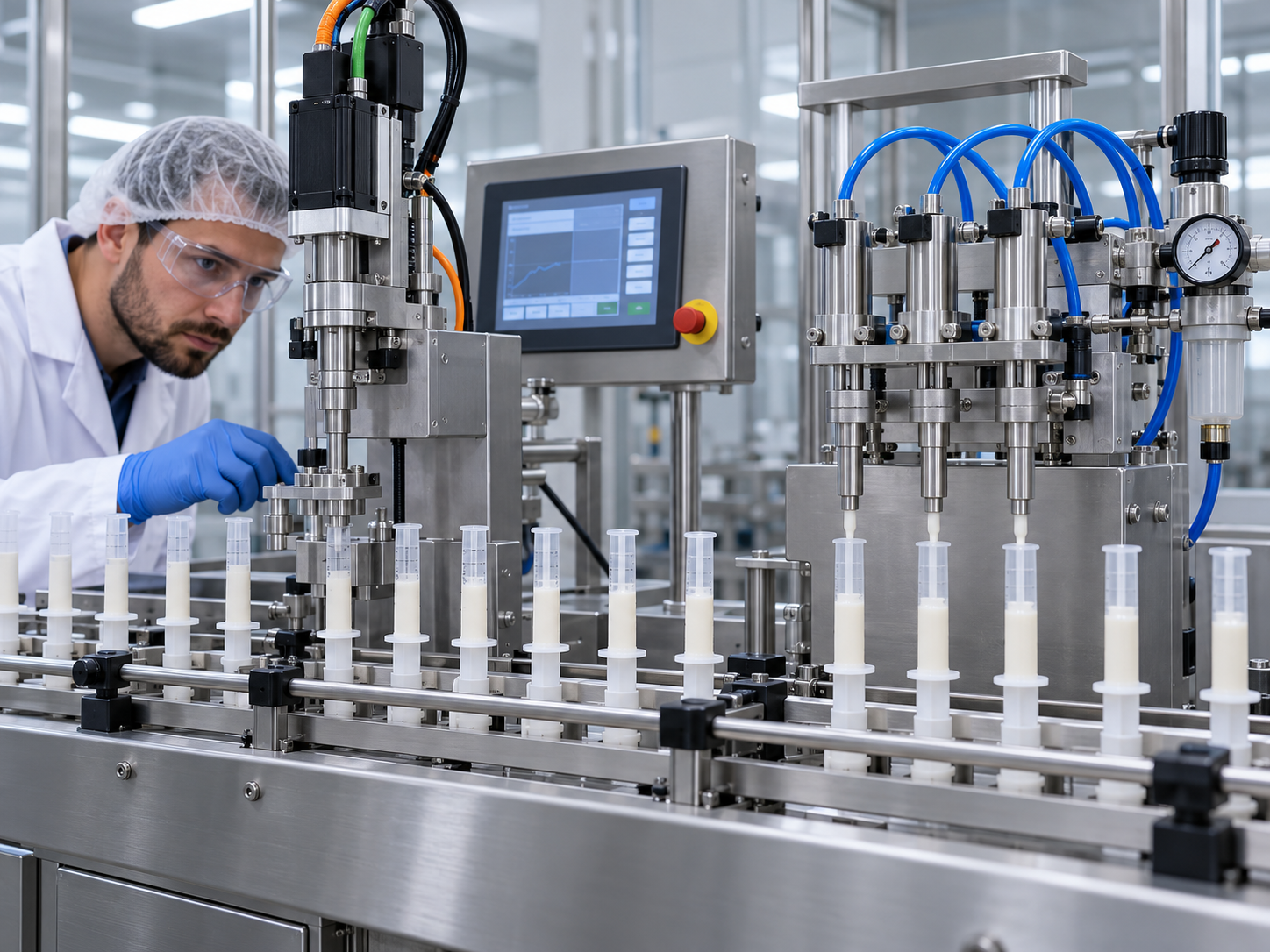
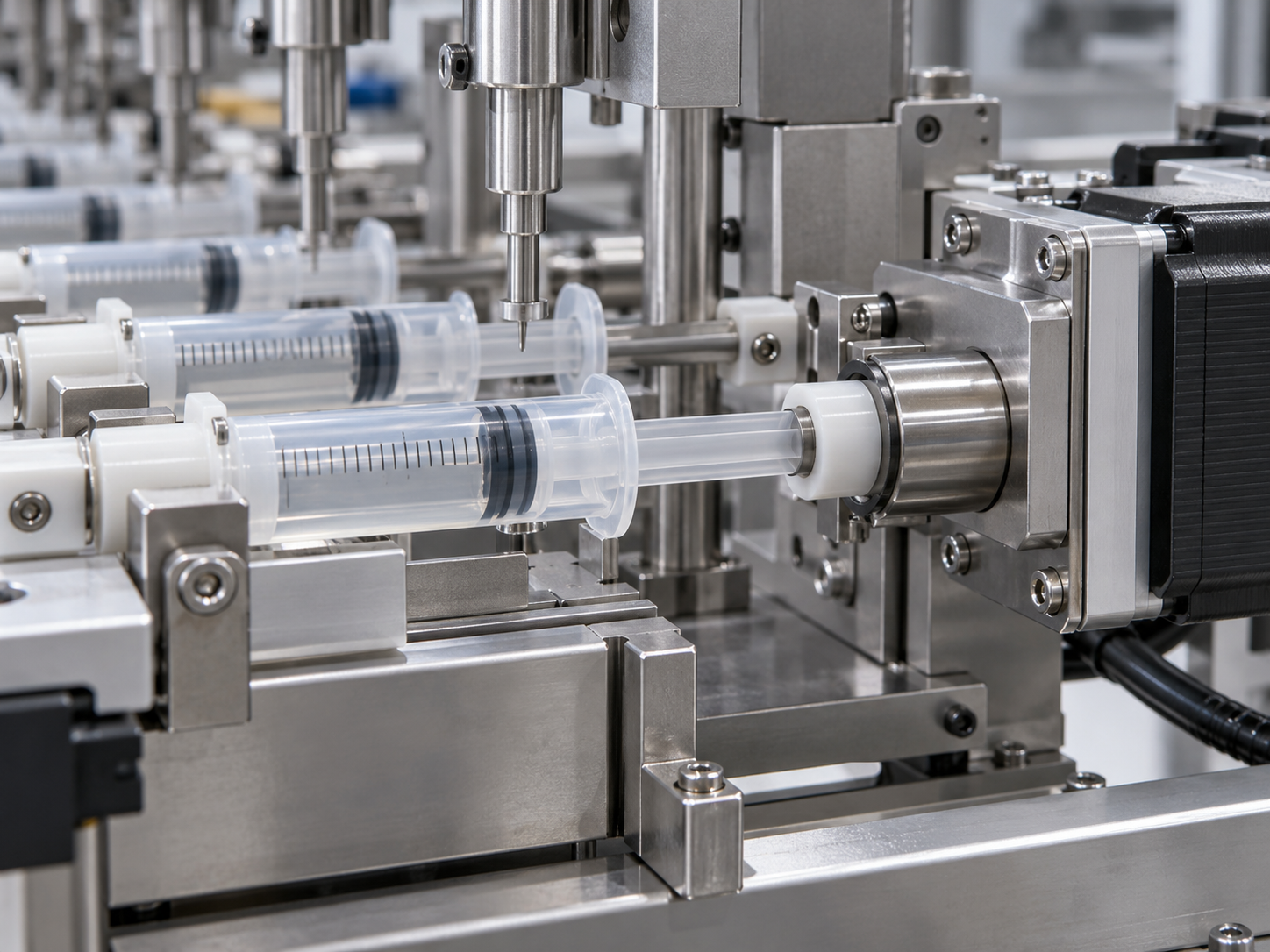
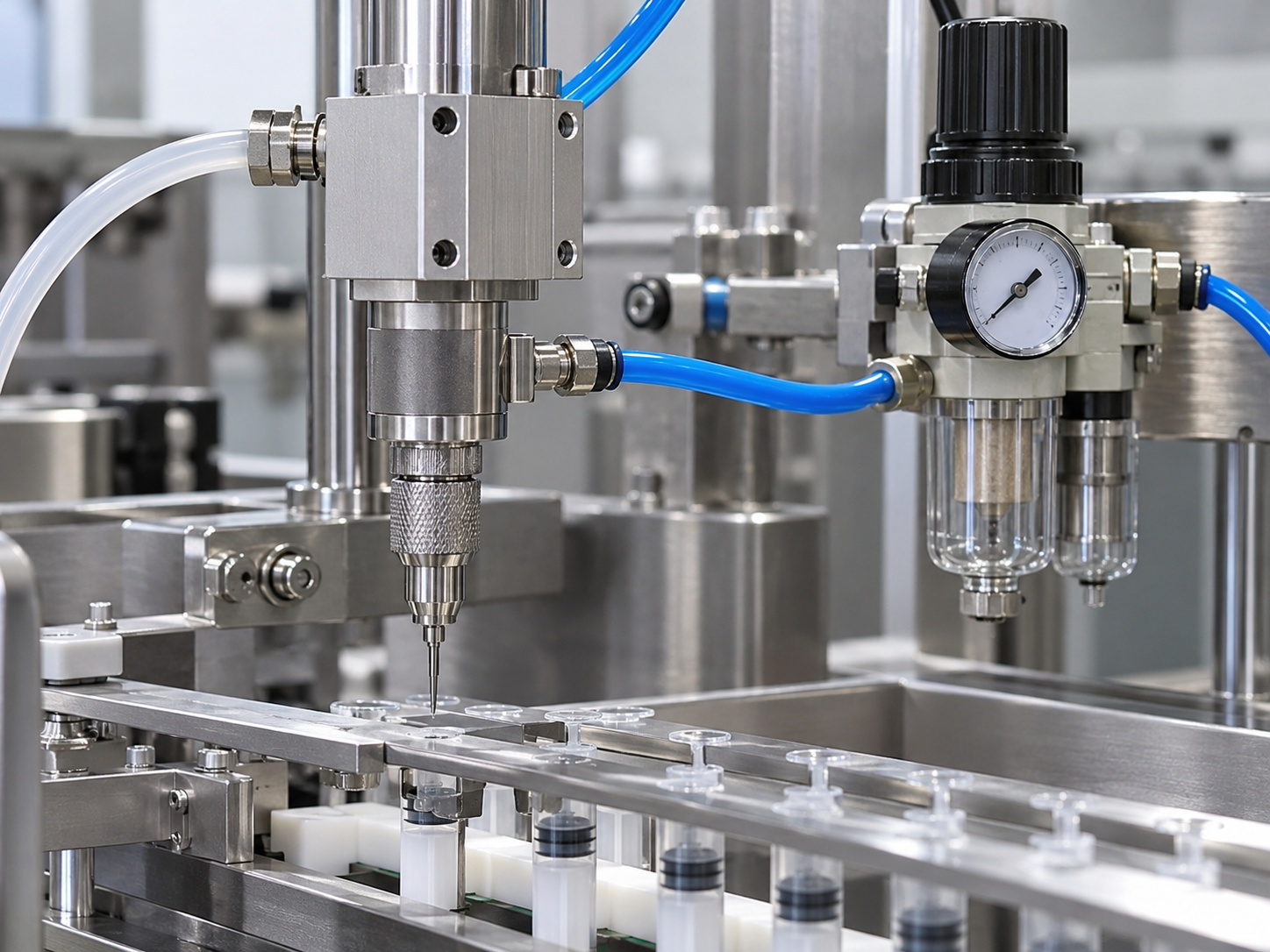
The following images are illustrative equipment references and do not show measured results.
Compare the syringe filling machine range, veterinary medicine application, intramammary syringe solution, filling and capping line, packaging solutions, product catalogue, plunger insertion guide, cleaning guide, nozzle selection guide, waste reduction guide, contact page and request-a-quote page. Include product behavior, fill target, format range, utilities and inspection criteria when requesting a proposal.