
Plastic and aluminum tubes do not behave the same way during loading, filling, sealing and discharge. A machine that runs one format reliably may need different holders, nozzles, tail tools, sensors or sealing equipment for the other. The practical question is therefore not whether one frame can “handle both,” but whether the complete product-contact and packaging process can be configured, tested and changed over without damaging the tube or compromising the seal.
This guide helps purchasing and engineering teams compare compatibility before ordering. It covers tube construction, open-tail filling, dosing, hot-air and ultrasonic sealing, changeover parts, cleaning, factory acceptance testing, shipment inspection and installation preparation.
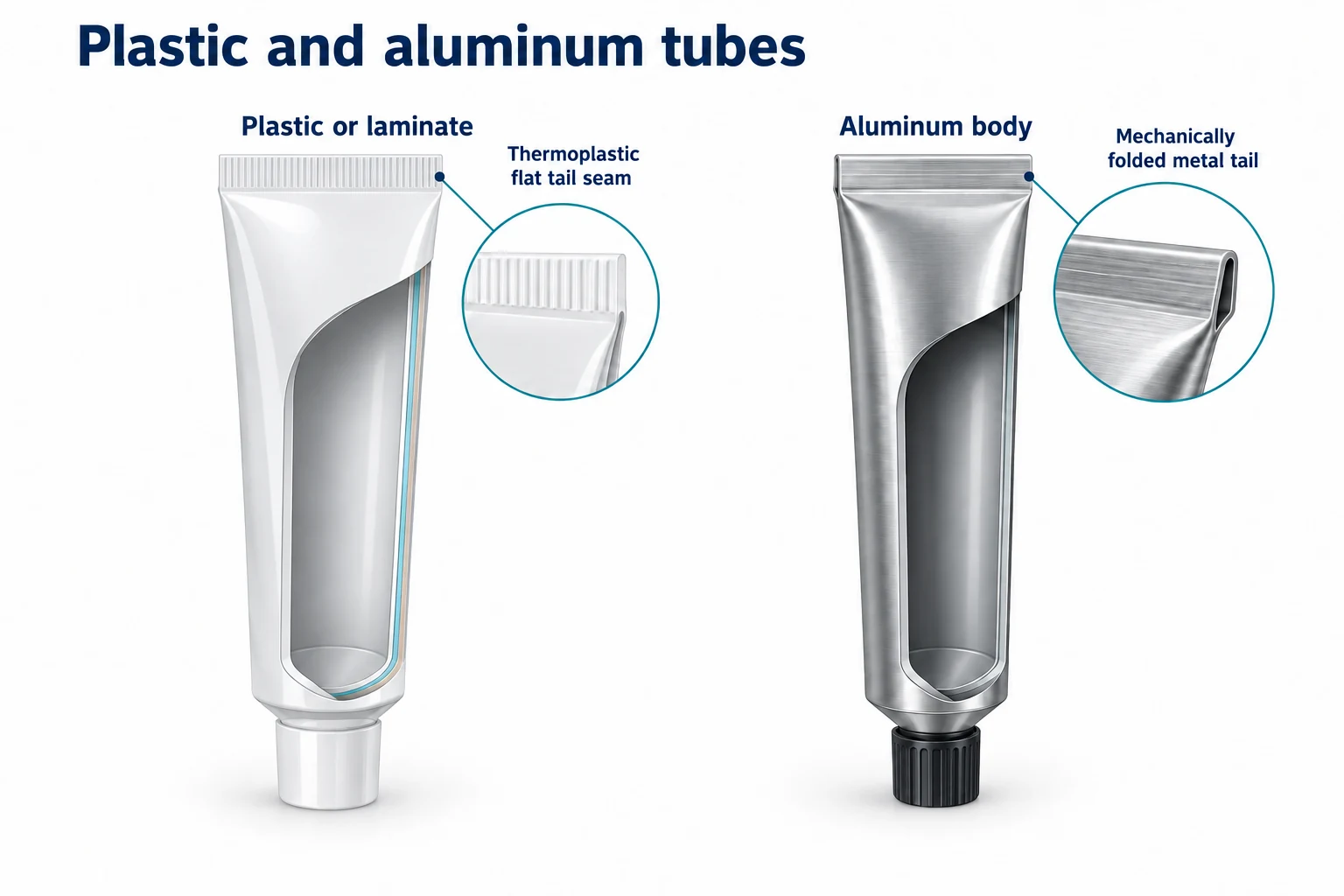
Why tube material changes the machine requirement
Plastic tubes are usually made from PE, multilayer laminate or another thermoplastic structure. Aluminum tubes are metal and may arrive with a different shoulder shape, wall stiffness, internal coating and tail behavior. The material influences how a pocket supports the tube, how a nozzle enters the open tail, how the product moves inside the body and how the final tail is closed.
Tube dimensions are more important than the material label
Provide the supplier with tube diameter, body length, shoulder geometry, tail width, tail thickness, cap or closure type and drawing tolerances. Two plastic tubes with the same nominal diameter may still require different holders. Aluminum tubes may have a more easily marked surface or a different collapse behavior. Sample tubes should be reviewed before tooling is released.
Product and inner coating interaction
The product may contact an inner laminate or coating rather than the outer tube material. Ointments, creams, gels, toothpaste and cosmetic products can respond differently to each surface. Share product temperature, viscosity range, particle content and any compatibility restrictions. The filling machine supplier should avoid assumptions and identify which product-contact parts require confirmation.
Open-tail filling sequence
Both formats should be presented with the unsealed tube tail open and facing upward. The tube is loaded into a pocket, aligned to the dosing nozzle and filled through the open tail. After dosing, the tube moves to its material-appropriate sealing station. The process must never show a nozzle filling through an already sealed shoulder or cap end.
Plastic tube handling
Plastic tubes can be flexible and may need a supportive pocket or guide to prevent ovalization. The holder should support the body without marking decoration. Check how the machine detects a missing tube, a tilted tube or a tube with a deformed tail. The nozzle lift and cut-off motion should keep product away from the seal zone.
Aluminum tube handling
Aluminum tubes can be more rigid in the body but may be sensitive to dents, scratches and excessive clamp pressure. The pocket, guide rails and transfer fingers should be adjusted so that the tube is centered without rubbing the printed surface. The tail-forming and crimping tools must match the specified closure profile.
Dosing system selection
The dosing principle is selected for the product, not simply for the tube material. Piston pumps are common for creams, toothpaste and gels, while other products may need a servo-controlled system or a different valve arrangement. The important checks are fill-weight repeatability, clean cut-off, air control and the ability to change a recipe without confusing tube-specific settings.
Accuracy and product behavior
Define the target fill weight, sample quantity and acceptance rule for the factory trial. Test start-up, stable operation and recovery after a short stop. If the same product is filled into plastic and aluminum tubes, repeat the test because tube position and tail geometry can influence nozzle depth and cut-off behavior.
Temperature and shear
Some creams and ointments need controlled warming, while toothpaste or abrasive products may require attention to seal cleanliness and wear. State the product temperature limits and where the temperature should be measured. A heated hopper does not automatically prove that the material at the nozzle has the same temperature.
Sealing compatibility
Plastic tube sealing
Plastic laminate or PE tails are often sealed with hot air. The open tail is heated, then the jaws form the seal. Heating time, air temperature, jaw pressure, cooling and tail cleanliness affect the result. Decoration must be protected from excessive heat and the tail must be free of product.
Aluminum tube closure
Aluminum tubes may use folding, crimping or another mechanical tail closure rather than the same hot-air process used for plastic. The machine requires a suitable set of forming and crimping tools. Check the desired fold pattern, mark or code and the inspection method for the finished closure.
When ultrasonic sealing is considered
Ultrasonic sealing is intended for compatible thermoplastic layers. It is not a universal solution for aluminum tubes. Confirm material construction, horn geometry, anvil support and the energy window with representative samples. Request a technical trial before approving the equipment.
Changeover design for two tube materials
A dual-material project needs a clear changeover list. Include pockets, holders, nozzles, guides, tail tools, sealing jaws or crimping heads, sensors, coding parts and recipes. Label left and right components and record the correct installation orientation. The team should know which parts are cleaned between products and which are exchanged between tube formats.
Preventing cross-format errors
Store plastic and aluminum tooling in separate labeled locations. Add a recipe confirmation step that displays the tube format before start-up. Use a first-piece approval for body alignment, fill level, code position and seal appearance. This is more reliable than relying on memory when several SKUs share the same frame.
Cleaning and hygiene
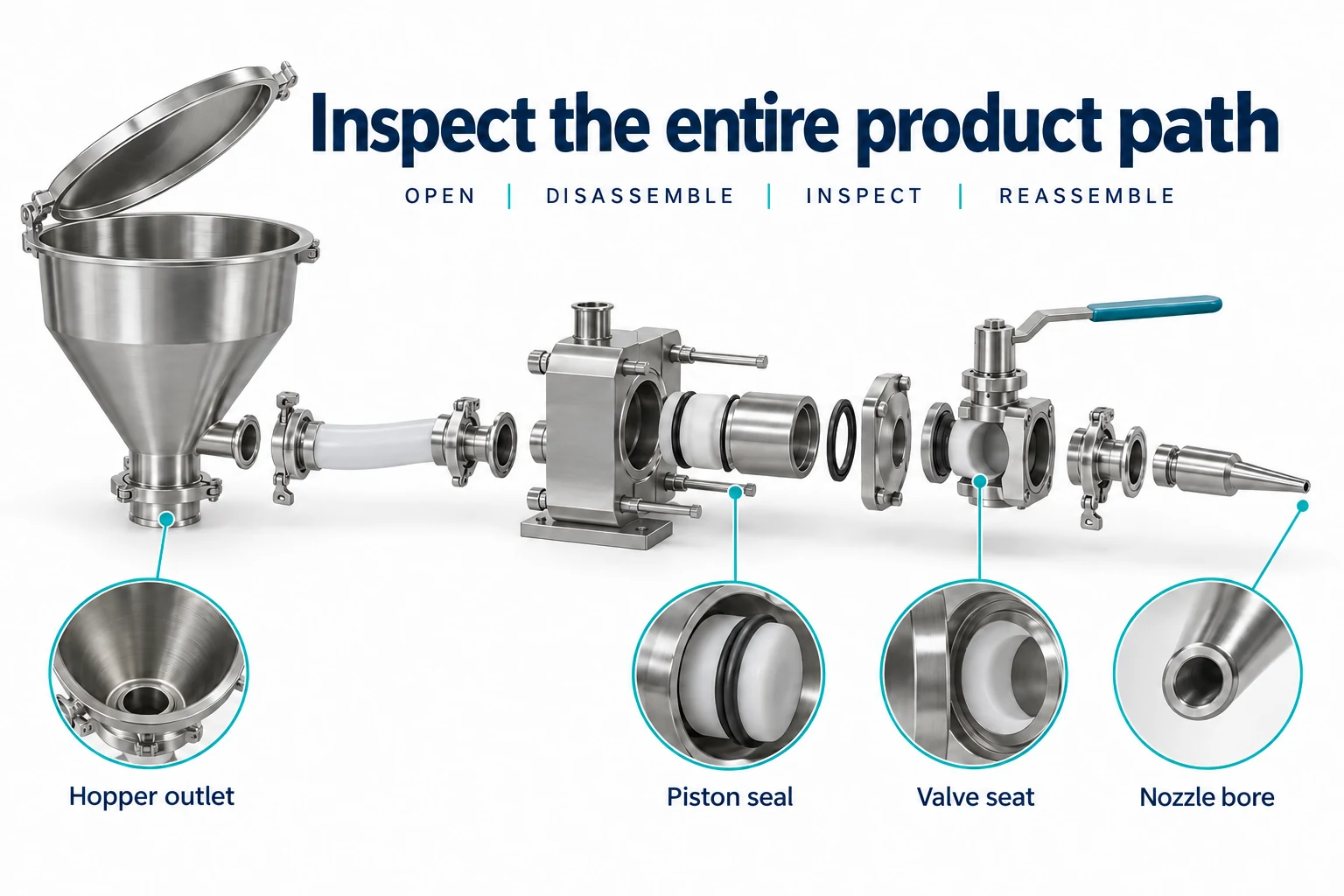
Cleaning requirements come from the product and the factory procedure. Review product-contact materials, drainability, hose routing and access around the nozzle, hopper outlet and pump. If the line changes from a colored cosmetic cream to a white product, define a clearance inspection and identify parts that may retain residue.
Inspection points
Inspect the nozzle bore, piston seal, valve seat, hopper outlet, tube pocket and tail tooling. For aluminum projects, check that metal particles or damaged coating cannot enter the product path. Record wear parts and replacement intervals in the maintenance file.
Factory testing and approval
A meaningful FAT uses the tube material, size and product conditions that represent the planned production. Run plastic and aluminum samples separately, using their own tooling and recipes. Record dose results, seal or crimp appearance, code position, reject handling and changeover steps. If a substitute product is used, label the result as a substitute trial and list the tests to repeat at commissioning.
Ask for sample photographs and a written FAT record. The evidence should identify the tube lot, recipe, settings, operator and date. Avoid approving a machine from a short demonstration that does not include the difficult format or the actual sealing method.
Shipment inspection and installation preparation
Before shipment, check the machine frame, guards, electrical labels, spare tooling, manuals and packing list. Confirm that the destination has the specified power, compressed air, floor access, product handling method and operator space. Mark the direction of tube flow and the location of the hot-air, ultrasonic or mechanical closure station on the layout drawing.
How to choose a supplier
Choose a supplier that can explain the difference between a shared frame and a fully validated dual-material solution. Ask which components are standard, which are custom, how a format change is documented and what support is provided during installation. A useful proposal states assumptions and open questions instead of hiding them behind a broad compatibility claim.
Discuss your requirements: Send your plastic and aluminum tube drawings, product type, fill weight and closure specification to King Pack for a compatibility review and sample-trial plan.
Compare the proposed station and tooling scope with the tube filling and sealing equipment overview; suitability still depends on the actual product and tube samples.
Tube supply and feeding considerations
Feeding is often overlooked when teams focus on the sealing head. The tube feeder, orienter and pocket loading sequence must accommodate the actual tube stiffness and surface finish. Plastic tubes may flex or stick together after storage, while aluminum tubes can be slightly oval or carry a delicate print. Ask how the feeder detects a missing, reversed or damaged tube and how the operator clears a jam without touching the product path.
Storage and conditioning
Record how the tubes are stored before the trial. Temperature, stacking pressure and moisture can affect tube shape and decoration. If tubes arrive from different suppliers, use a sample from each source during design review. A small variation in shoulder or tail length can change nozzle alignment and closure quality.
Seal inspection and acceptance criteria
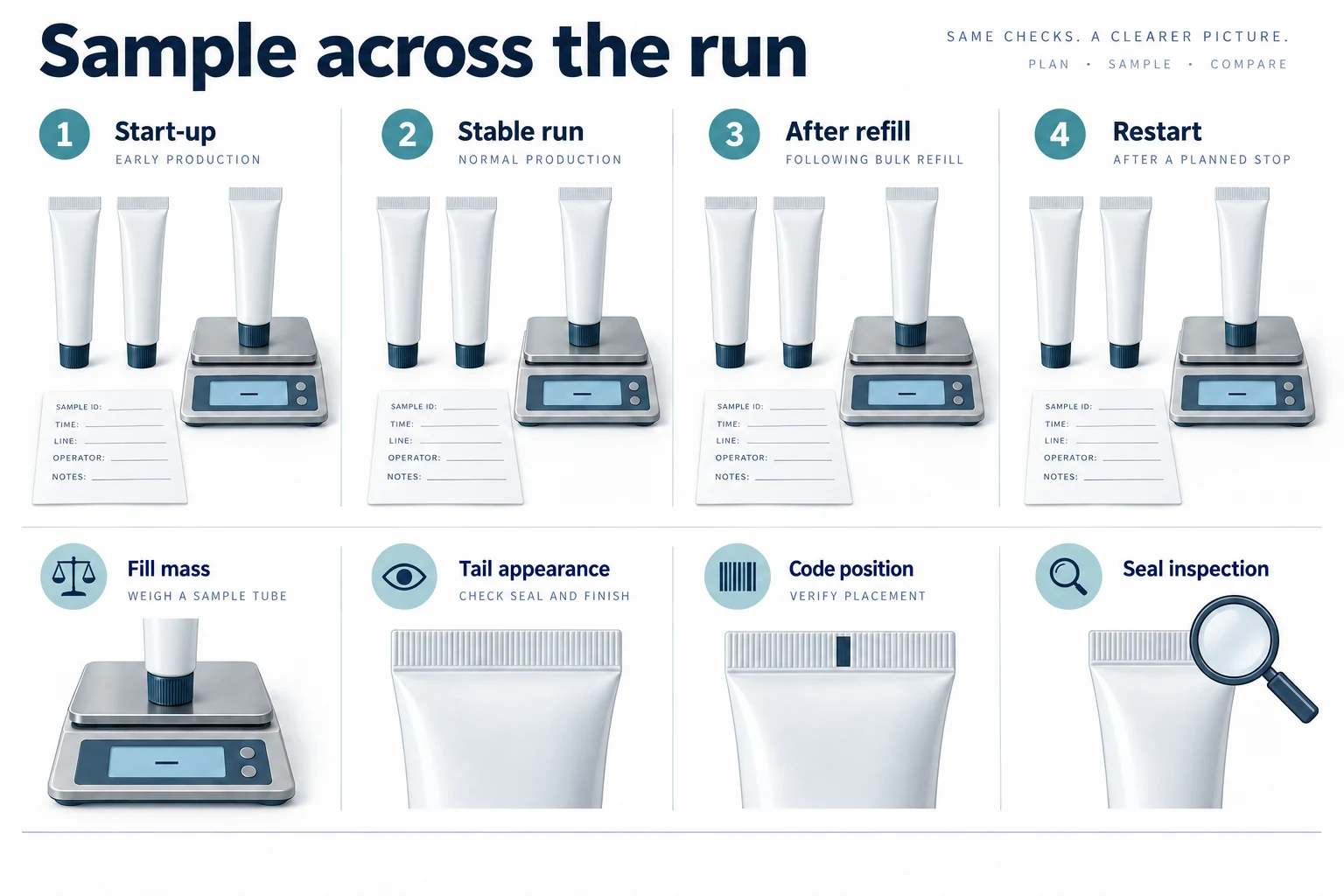
Define how the final closure will be inspected. Visual inspection can check wrinkles, marks, incomplete folds, product contamination and code position. A seal-integrity or leak test may be appropriate for plastic laminate tails, while aluminum closures may require a fold or crimp profile check. The method should match the package risk and the customer’s quality procedure.
Sampling plan
Use a sampling plan that covers both formats and all relevant change points. Inspect the first pieces after tool installation, after a recipe change, after a short stop and near the end of a batch. Record defects by type instead of reporting only a pass rate. This helps engineering decide whether the issue comes from tube supply, dose cut-off, heating or closure tooling.
Product-contact and material documentation
Ask for the material specification of product-contact parts and the cleaning instructions supplied with the machine. The customer should verify that the proposed materials and elastomers are suitable for the formula and cleaning agents. For abrasive toothpaste or filled creams, review wear points such as nozzle tips, valve seats and piston seals. Replacement material should be identified so that an unapproved substitute is not installed during maintenance.
Controls, alarms and traceability
A dual-format line benefits from clear alarms. Useful alarms include no tube, tube not centered, low hopper level, insufficient air, door open, heater fault and coding fault. The operator should be able to see which format recipe is active and which station has stopped. Record the recipe name, tooling number and product lot in the production log where the customer’s system allows it.
Safe recovery after a stop
Define what happens to tubes remaining in the machine after an emergency stop or utility interruption. The recovery procedure should prevent a tube from receiving a partial dose or entering the sealing station with product in the tail. Train operators to remove questionable pieces and restart with a first-piece check. This practical instruction is more useful than a generic statement that the machine has automatic control.
Commercial and lifecycle review
When comparing supplier quotations, separate the base machine from format tooling, coding equipment, spare parts, installation, training and validation support. Confirm which tests are included and which samples the customer must provide. For a site that changes between plastic and aluminum, consider the storage and identification of tooling as part of the total project cost.
Review future expansion as well. If a new tube diameter or a different closure profile is likely, ask whether the frame has the access and controls to support an additional kit. The answer should be based on a written engineering assessment rather than an informal promise.
Recommended decision sequence
- Collect tube drawings, samples and product requirements.
- Review feeding, pocket, dosing and closure concepts.
- Run representative samples with material-specific tooling.
- Approve the FAT protocol and acceptance criteria.
- Complete shipment inspection and installation preparation.
- Repeat first-piece and seal checks during site commissioning.
Following this sequence helps the customer make a decision that remains useful after delivery. It also gives the supplier enough information to identify a genuine compatibility limit before the order is finalized.
Keep a controlled sample set from the factory trial and site commissioning. Each sample should be identified by tube material, supplier, product or substitute, recipe, tool set and date. The set provides a reference for future maintenance and helps the quality team explain whether a change came from packaging material, process settings or equipment condition.
When the project serves more than one market, add local code language, electrical requirements, operator documentation and spare-part logistics to the installation checklist. These details do not change the basic filling sequence, but they often decide whether the line can be put into routine production without delay.
Include training, spares and commissioning requirements in the equipment service and handover scope so the plant can prepare its own personnel and utilities.
Do not confuse barrier foil with an aluminum tube body
An aluminum-barrier laminate can contain a thin foil layer inside a plastic-based wall. Its tail normally depends on compatible sealing layers. A collapsible aluminum tube has a metal body and a mechanically folded tail. These packages may share a product application but require different closure engineering. Request a wall cross-section rather than selecting tools from the word “aluminum” alone.
Review the material-specific failure modes
For a laminate, check whether the seal is continuous across the tail, whether the side seam affects local thickness and whether heating distorts artwork. For an aluminum tube, inspect body marking, fold shape, trapped product and closure security using the approved package method. Avoid applying a plastic-tail appearance limit to a metal fold.
Product compatibility also includes cap and shoulder components. A body material approval does not establish that every coating, liner or closure is suitable. The packaging owner should confirm this relationship before equipment trials are treated as evidence about the final pack.
Specify the delivered conversion kit
The kit list should identify holders, guides, closure tooling, recipes and the approved format range. Include photographs or drawings showing the installed position of each part. Ask whether the change requires service attendance or can be performed by trained site staff. A written answer helps the buyer assess staffing and downtime alongside the purchase scope.
After conversion, approve the first filled pack and verify coding, discharge orientation and all guards. A successful mechanical fit does not establish dose or closure quality until samples have passed the agreed checks.
Send your specifications: Use the King Pack technical enquiry form to share the product profile, tube drawings and the conditions you need verified.
Material and closure review matrix
| Package | Closure review |
|---|---|
| Plastic | Thermoplastic sealing compatibility |
| Laminate | Actual inner layers and side seam |
| Aluminum body | Specified mechanical folding tools |
| All formats | Contact compatibility and package integrity |
FAQ
Can one machine fill plastic and aluminum tubes?
Sometimes, if the frame, holders, dosing parts and closure tools are designed for both formats. Compatibility must be proven with representative samples.
Is hot air suitable for aluminum tubes?
Aluminum usually requires a mechanical closure method such as folding or crimping. Confirm the tube design and closure specification before selecting the equipment.
Do plastic and aluminum tubes need different nozzles?
They may. Nozzle diameter, insertion depth and cut-off behavior should match the product and tail geometry.
What should be tested before purchase?
Test tube loading, open-tail filling, dose weight, material-specific closure, coding, reject handling, cleaning access and changeover.
Is an aluminum-barrier laminate a metal-body tube?
No. The laminate may contain barrier foil while its tail seals through thermoplastic layers. Obtain the construction drawing before selecting closure tools.
Conclusion
Plastic and aluminum tube filling machine compatibility is a complete process question. Review tube drawings, product behavior, open-tail filling, material-specific sealing, cleaning and changeover before approving the frame. Use representative factory testing, shipment inspection and installation preparation to reduce risk.
Request a technical review: Contact King Pack with your tube samples and application requirements. Request a technical proposal, compatibility checklist and FAT plan for your plastic and aluminum formats.