 Skip to content

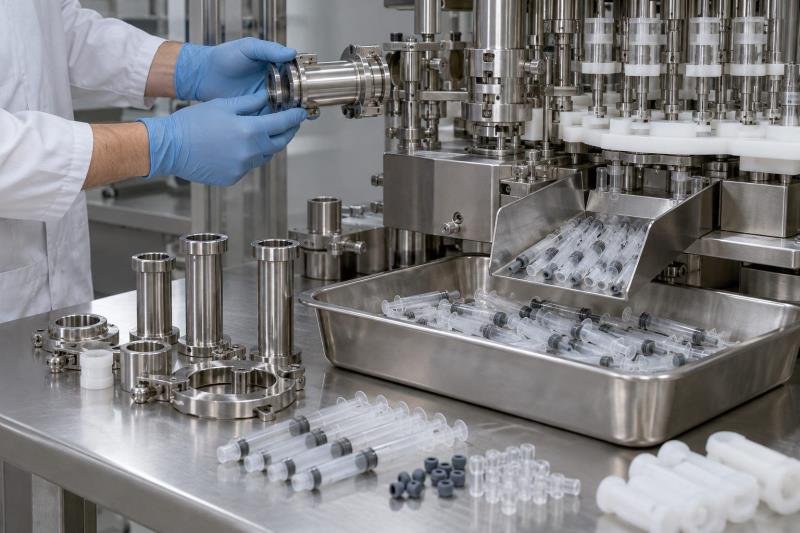
Short answer: The most reliable way to reduce product waste in syringe filling is to measure waste by stage, then control the causes that can be adjusted: line priming, dead volume, nozzle drip, changeover losses, rejected units, and recovery of usable product. A filler should be evaluated not only by nominal speed, but also by how consistently it starts, stops, changes format, and records evidence during factory testing.
For veterinary, pharmaceutical, dental, and other single-use syringe applications, a small loss at each step can become a meaningful cost when multiplied by every batch. The practical objective is not to promise zero waste. It is to make the loss visible, repeatable, and proportionate to the product and quality requirements.
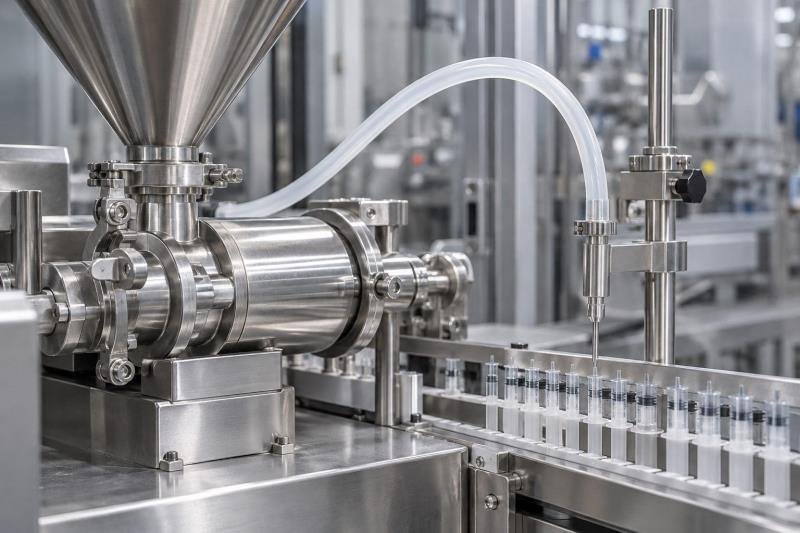
1. Map where product is lost before changing machine settings
Start with a simple material-balance sheet for one representative batch. Record the quantity loaded into the product tank, the amount used for priming, the quantity remaining in hoses and manifolds, samples taken for checks, rejected units, and the recoverable product returned under your approved procedure. This separates process loss from quality loss and prevents a team from blaming the filler for waste created by formulation or packaging.
A useful factory acceptance test records the same fields at start-up, steady running, stop, and changeover. The result is a baseline that can be compared after a nozzle, hose, piston, or recipe change. When customers review a machine remotely, these records are more useful than a general statement that the line is “high efficiency.”
For a practical equipment comparison, review the syringe filling machine configuration together with the product-contact path and planned changeover frequency.
2. Reduce priming and start-up waste
Start-up waste often comes from filling the product path until air is removed and flow becomes stable. The required quantity depends on the tank outlet, pump or piston arrangement, hose length, manifold design, nozzle geometry, and product viscosity. It should be measured for the actual configuration rather than copied from a catalog.
Use a controlled priming sequence
A practical sequence is to confirm product temperature and mixing status, fill the supply path at a low controlled speed, inspect the first units for bubbles or incomplete fills, and only then move to the production recipe. A recipe can include a priming quantity or time, but the operator should still verify the result because a different hose length or formulation can change the required volume.
For installation preparation, ask the machine supplier for the product-contact path drawing, inlet and outlet sizes, recommended hose lengths, and the procedure used during the factory acceptance test. These details help the plant prepare the right connections before commissioning.
3. Minimize dead volume in the product path
Dead volume is product that remains in a hose, valve, pump chamber, manifold, or nozzle after the batch stops. Some residual volume is unavoidable, especially when hygienic design, cleaning, or sterile handling requires specific components. The engineering goal is to keep it known and manageable.
Questions to ask about dead volume
- Which parts remain filled after the final dose?
- Can the path be drained without exposing the product to contamination?
- Are the product-contact parts removable for cleaning and inspection?
- Does the same path support the planned range of syringe sizes?
- Will the product viscosity change the amount that remains attached to the wall?
When comparing a syringe filling machine, compare product-path layout and recovery procedure, not only the advertised dose range. A compact path may reduce residual loss, while a larger manifold may be justified for a multi-nozzle line. The right choice depends on the batch size, product value, cleaning method, and changeover frequency.
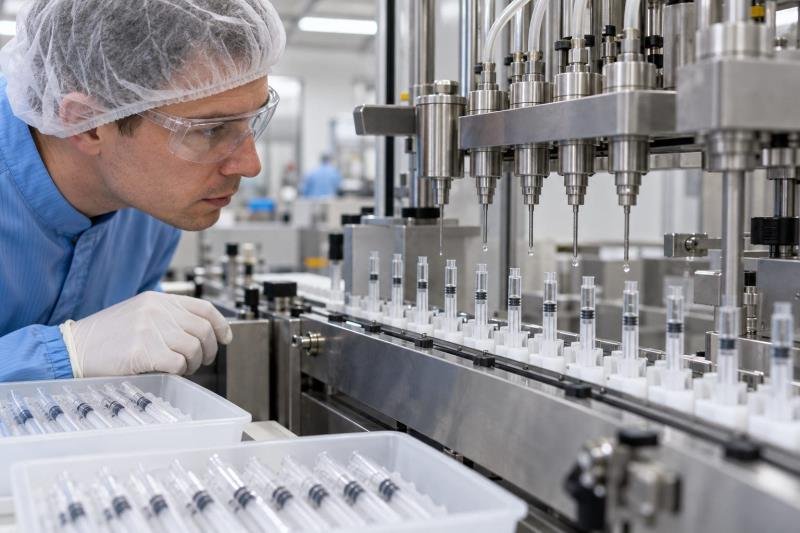
4. Control nozzle drip, stringing, and tailing
Nozzle behavior can create two types of waste: product that falls outside the syringe and product that remains as an unacceptable tail on the filled unit. The causes may include shut-off timing, nozzle height, fill speed, product temperature, viscosity, surface tension, and air entrainment.
Use a test matrix instead of one adjustment
Change one variable at a time and record the result. A useful matrix includes fill speed, dwell time, nozzle height, suck-back or anti-drip setting where available, and the temperature range permitted by the formulation owner. Inspect the first, middle, and last units of a run because a nozzle may behave differently as the product level or temperature changes.
For thick creams or pastes, the nozzle may need a slower withdrawal profile or a different tip design. For free-flowing liquids, the priority may be faster shut-off and stable positioning. Do not copy a setting from a different product simply because the syringe size is the same.
5. Match filling technology to product behavior
Product waste increases when a machine is selected around a nominal volume but not around the product’s flow behavior. Piston filling, peristaltic filling, time-pressure filling, and other arrangements each have different strengths and limitations. The best selection depends on viscosity, shear sensitivity, particulate content, foaming, required cleaning method, and dose range.
For a viscous or structured product, ask the supplier to review the viscous product filling solution and confirm what sample is required for a meaningful test. For veterinary products such as intramammary preparations, the veterinary medicine filling solution may involve a different syringe format, nozzle, closure, and inspection sequence than a general liquid line.
A rejected syringe is more expensive than a small adjustment made before a defect spreads. At minimum, define checks for fill volume or weight, visible bubbles, leakage, contamination, plunger or tip position, and closure presence. The exact checks should follow the product specification and quality system.
Use a start-up approval sample and periodic checks during production. If the process allows it, connect the check results with the time, recipe, nozzle, and operator record. This makes it easier to identify whether a problem began after a refill, a format change, or a stop-and-restart.
For products that require a separate closure operation, coordinate the filler with the syringe capping machine or tip-fitting station. A fill that is correct but later leaks because a closure is misapplied is still process waste.
7. Treat changeover as a waste-control project
Changeover losses include product left in the old path, trial units made while aligning the new format, and rejects created by incorrect recipes or component supply. A repeatable changeover checklist can reduce all three.
A practical changeover checklist
- Confirm the next product, syringe size, closure, and approved recipe.
- Identify product-contact components that must be drained, cleaned, or replaced.
- Check the new nozzle height, guide rails, sensor position, and stopper or plunger settings.
- Run a controlled dry cycle where appropriate before introducing product.
- Use a defined number of trial units and inspect them against acceptance criteria.
- Record the first approved unit and the time at which stable production begins.
Modular parts and clear adjustment scales are helpful, but they do not replace a documented setup method. During installation and commissioning, train operators to record the settings that actually produced acceptable units.
8. Recover usable product only under an approved procedure
Some facilities can recover product from a tank or product path; others cannot because of sterility, cross-contamination, traceability, or formulation restrictions. Recovery should never be treated as an automatic efficiency claim. It must be defined by the responsible quality and production teams.
If recovery is permitted, document the container, identification, time, quantity, and disposition. Use dedicated containers and prevent mix-ups between products or batches. A machine supplier can describe how the product path drains, but the product owner must decide whether the recovered material is acceptable for reuse.
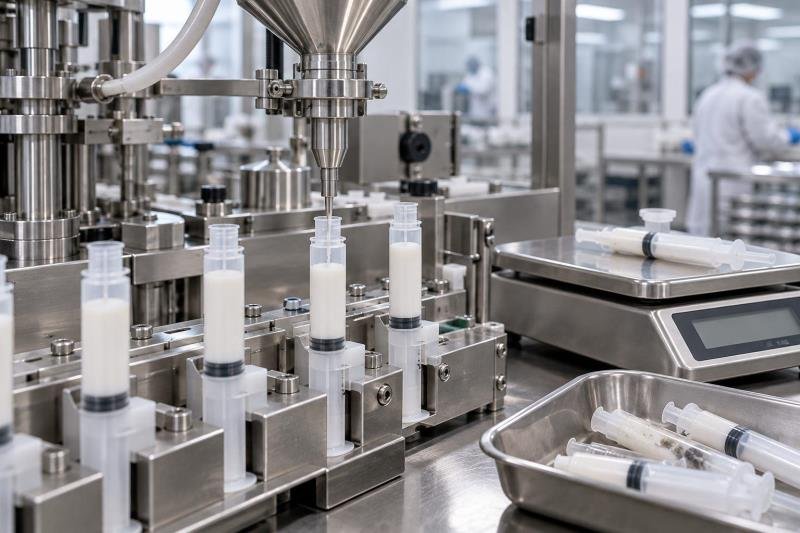
9. Verify waste reduction during FAT and site trials
Factory testing should use an agreed sample, container, and acceptance plan. Before the test, define the target dose range, acceptable fill variation, number of units, start-up procedure, and what constitutes a reject. Include the amount of product consumed during priming and test repeats in the record.
For a new project, request a short video or test report showing the full sequence rather than only a close-up of a running nozzle. The evidence should cover feeding, filling, inspection, closure handling, and the operator interface. A shipment inspection can then confirm that the delivered configuration matches the tested configuration.
When a site trial is possible, repeat the material-balance calculation with the customer’s product and utilities. This is especially important when the product is more viscous, warmer, colder, or more shear-sensitive than the sample used at the factory.
10. A buyer’s checklist for reducing syringe filling waste
When requesting a quotation, provide the product name or category, viscosity range, target dose, syringe sizes, closure type, batch size, expected changeovers, cleaning requirements, and any restrictions on product recovery. Ask for the product-contact path, recommended sample quantity, test plan, and the information that will be included in the FAT report.
It is also useful to ask which adjustments are recipe-controlled and which require manual intervention. A line may be technically capable of a wide range but still require a long changeover if each format needs extensive mechanical adjustment.
For a broader equipment review, compare the filling machine category, the packaging machine range, and related automatic filling guidance. These pages help place a syringe filler in the context of upstream preparation, filling, and downstream packaging.
FAQ
What is the biggest source of waste in syringe filling?
There is no universal answer. In one project it may be priming and dead volume; in another it may be rejects caused by nozzle drip, bubbles, component feeding, or changeover. A stage-by-stage material balance is the fastest way to identify the largest controllable loss.
Can a smaller nozzle always reduce waste?
No. A smaller opening can change pressure, shear, filling time, and the tendency to string or clog. Nozzle selection should be tested with the actual product and dose range.
How much sample is needed for a filling machine test?
The amount depends on the product path, number of trials, cleaning restrictions, and whether the test includes start-up and changeover. The supplier should provide a test estimate after reviewing the product and container details.
Should recovered product be reused?
Only when the product owner’s quality procedure permits it. Sterility, contamination, traceability, and formulation requirements may make recovery unacceptable.
Conclusion
Reducing product waste in syringe filling is a combined engineering and operating task. Measure priming, dead volume, nozzle losses, rejects, and changeover separately; select the filling method around real product behavior; and verify the result with a documented FAT or site trial. A machine supplier can support the product-path design, testing, and training, while the final acceptance criteria remain with the product owner.
Need a practical review of your syringe filling project? Contact King Pack Machinery with your product, syringe size, target dose, and expected output. You can also send your requirements for a quotation or ask for a product catalog before selecting the line configuration.
