 Skip to content

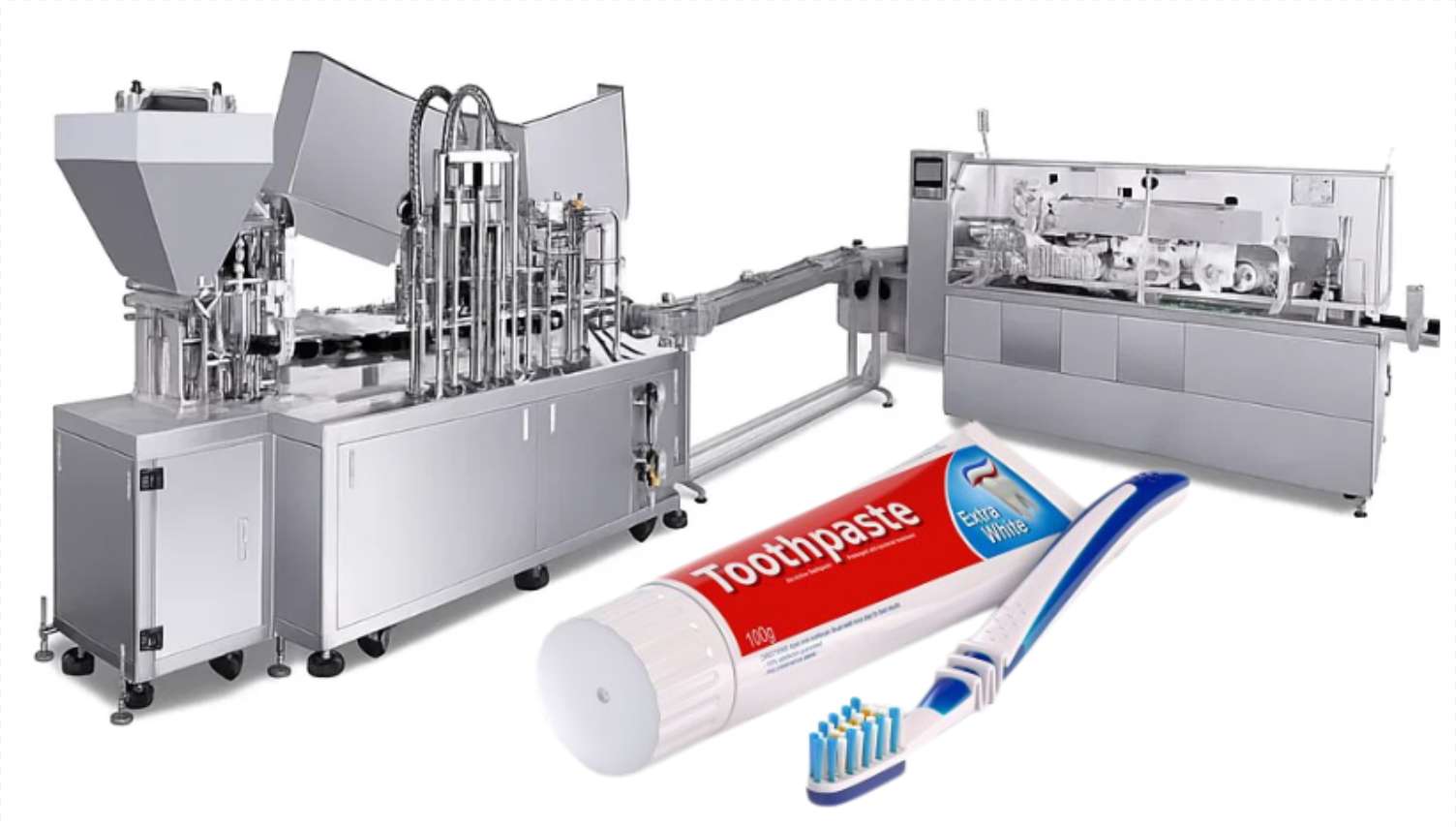
Toothpaste packaging begins after mixing, deaeration, and batch release. The packaging line must handle the product’s viscosity, air content, tube material, and hygiene requirements without creating avoidable waste.
King Pack can configure filling and sealing equipment for toothpaste and other viscous products. The actual fill repeatability, seal quality, and throughput depend on the formulation, tube, tooling, and validated operating settings.
This guide explains the typical transition from prepared toothpaste to a finished tube, and which filling, sealing, and integration questions should be confirmed during equipment selection.
Key Stages in Manufacturing Toothpaste Before Packaging
Toothpaste manufacturing is not just a process of mixing different ingredients. It is a process where every single step is an integral part of getting the final product.
Before the tubes hit the shelves, here’s what happens behind the scenes:
- Raw materials are measured and blended to form a smooth, consistent base
- The mix goes through homogenization to break down particles and refine texture
- Each batch is tested to confirm quality and meet safety standards
Filling and sealing are important control points, but the main risks depend on the formulation, tube material, hygiene program, equipment settings, and inspection plan.
Thick toothpaste requires a filling method matched to its rheology and package. Air removal, nozzle design, cleaning, and fill verification should be assessed during product trials.
Filling and sealing equipment may improve repeatability and reduce manual handling when correctly configured, but regulatory compliance and product integrity still depend on the manufacturer’s quality system and validation.
Toothpaste Filling Technology: Precision and Efficiency
Toothpaste is a viscous product that often benefits from positive-displacement dosing, but the suitable mechanism and nozzle depend on viscosity, particle content, fill volume, and tube format. Confirm the result with representative product trials.
Here’s a brief overview of popular filling machine types utilized in the manufacturing of toothpaste:
| Filling Type | Best For | Filling Method | Offered by King Pack |
| Piston Filler | Thick, viscous pastes | Volume-based piston drive | ✅ Yes |
| Pump Filler | Lower-viscosity or runny pastes | Continuous flow control | ✅ Yes |
| Volumetric Filler | Consistent batches | Pre-set chamber fill | ✅ Yes |
| Weight-based Filler | Sensitive fill requirements | Real-time weight feedback | ✅ On request |
These filling methods can provide controlled dosing and reduce manual contact when the selected configuration is properly designed, cleaned, and validated. Actual speed and contamination-control performance must be confirmed for the line.
Sealing That Locks In Product Quality
A weak or inconsistent seal can lead to leakage or package-quality failures. The suitable sealing method depends on tube construction, material, coating, product, and required seal-strength criteria.
King Pack Solutions provides both:
- Heat sealing can be suitable for some laminated or plastic tubes when temperature, pressure, dwell, and cooling are controlled for the selected material.
- Ultrasonic sealing can be suitable for compatible tube materials and products. Do not assume it is universally “perfect”; confirm seal strength, appearance, and process capability with representative tubes.
Sealing performance depends on temperature, pressure, dwell, cooling, alignment, tube material, and product residue. Adjustable settings and monitoring may be available; confirm the controls and validation evidence for the selected machine.
A Smoother Workflow With Integrated Systems
Integrated filling and sealing lines may reduce manual transfers and simplify line balancing. Whether a combined system is preferable depends on capacity, layout, cleaning, validation, and the customer’s downstream equipment.
The major advantages are:
- Less changeover time
- Less manual setup
- Integrated quality control checkpoints
Induction sealing or automatic capping may be added where compatible with the container and packaging specification. Confirm the required module and its validation scope.
Final Thoughts
Toothpaste packaging performance depends on the formulation, tube, filling method, sealing process, hygiene controls, and inspection plan. Select equipment using product trials and documented acceptance criteria.
Need more control over your filling and sealing process?
Discuss your formulation, tube material, target volume, capacity, cleaning method, and validation requirements with the equipment supplier before final selection.
Related resources: Encyclopedia resources, Premade Pouch Packing Machines – King Pack Advanced Filling & Sealing, and How High-Speed Cartoning Machines Improve Production Efficiency.
