
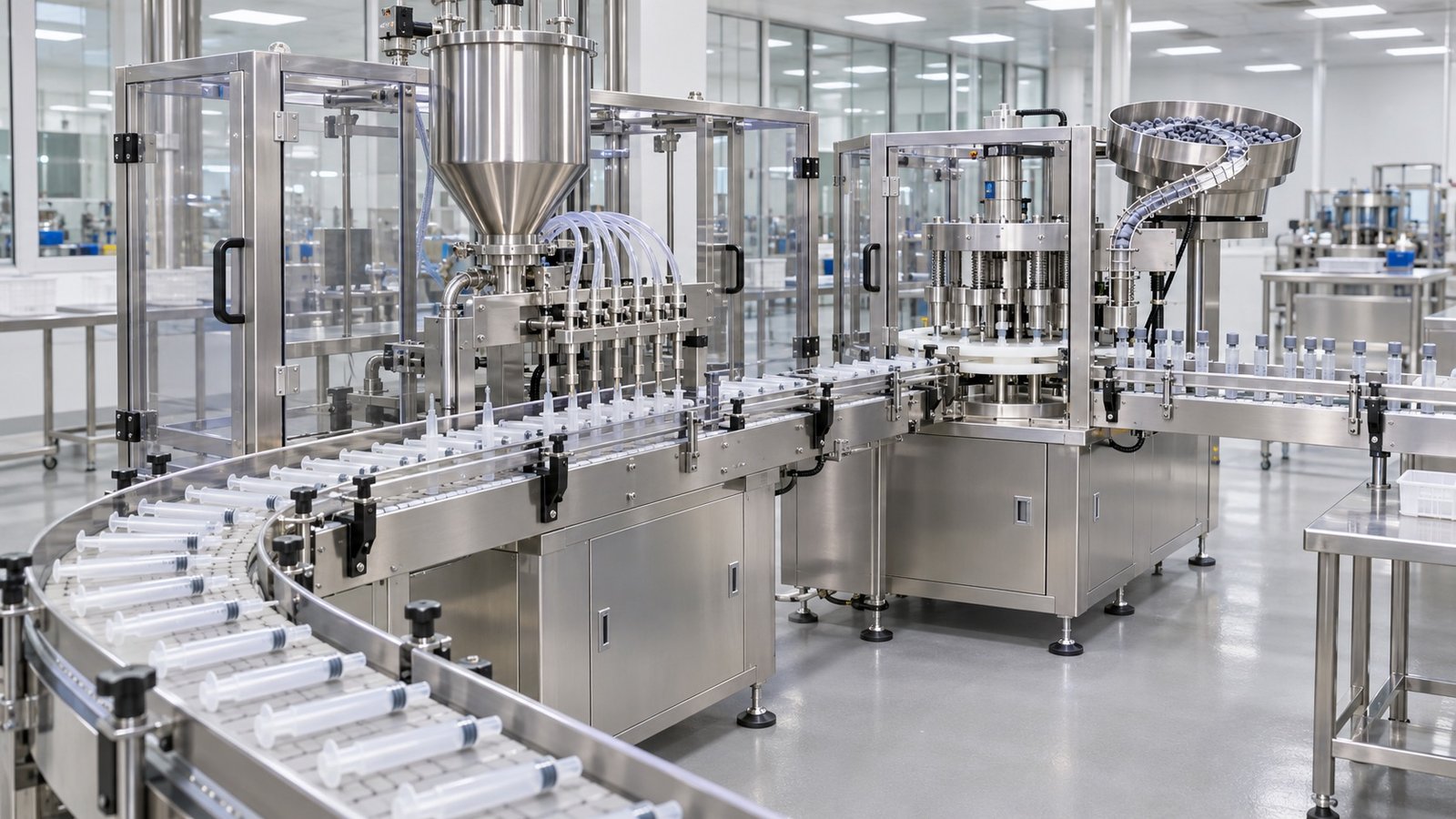
Teat sealant syringe filling should be planned as a connected process: condition and feed the product, present the syringe, dose it consistently, apply the specified closure, inspect the assembled pack, and control residue before changeover. A filler alone cannot prove a workable line. The actual formulation, syringe geometry, plunger or cap design, cleanability expectations, and the agreed acceptance criteria determine what needs to be tested.
For a veterinary project, the safest starting point is a written process map and a representative-material test plan. Teat-sealant products may be paste-like, and their flow behavior can vary with temperature, dwell time, agitation, and batch history. Treat any starting settings as project-specific engineering inputs to verify—not as a universal recipe or a production claim.
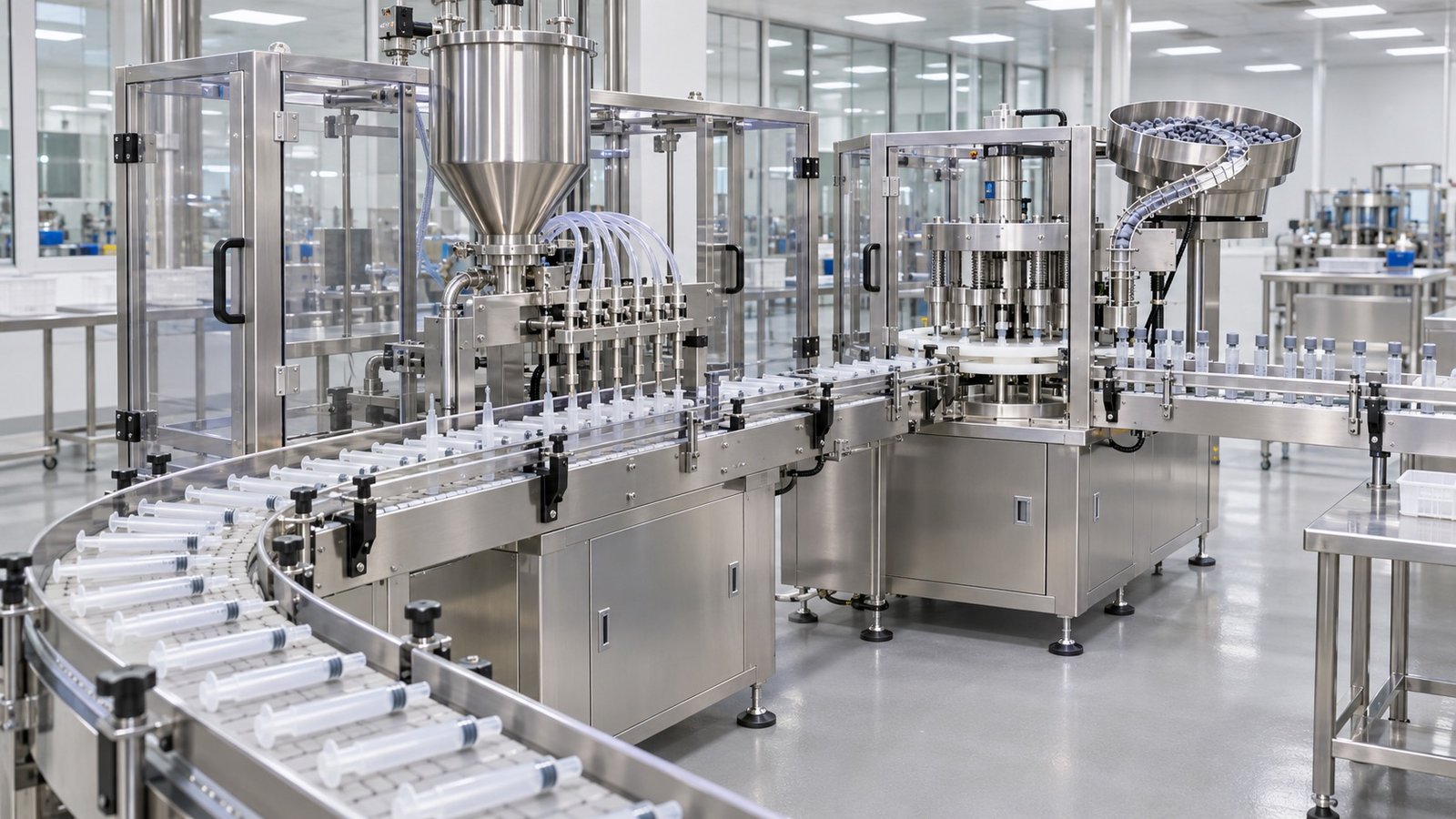
What does a teat sealant syringe filling line need to control?
The line needs to control the conditions that influence the agreed pack quality at the point of inspection. Depending on the project, this includes product transfer, syringe orientation, dose setting, fill cut-off, plunger or cap application, component feed, inspection, reject handling, and handoff to packing. The buyer should define the exact output point: filled only, filled and closed, or fully inspected and transferred for the next step.
Do not assume that the nominal cycle of the filling station is the complete-line result. A closure feeder, manual component replenishment, product refill, or downstream packing interface can set the practical pace. The project team should therefore document the sequence for the actual syringe and the intended operating mode before comparing machinery proposals.
| Process area | What to define before selection | What to verify in testing |
|---|---|---|
| Product preparation and feed | Batch size, transfer method, temperature window if applicable, hold-time expectations, and allowable agitation. | Stable product presentation to the filler without unagreed separation, entrapped air, or feed interruption. |
| Syringe presentation | Barrel dimensions, orientation, component tolerances, clean-pack handling, and format mix. | Reliable infeed and controlled positioning at the filling and closure stations. |
| Filling and cut-off | Target fill quantity, product behavior, nozzle approach, allowable residue or stringing criteria, and cleaning needs. | Repeatable dosing and an agreed cut-off appearance with representative material. |
| Closure handling | Plunger, tip cap, or other closure type; insertion or capping sequence; component feed; inspection point. | Correct component placement and handling without damage to the syringe or closure. |
| Inspection and reject handling | Which attributes are checked, who approves them, and how nonconforming units are segregated. | Documented inspection method and a clear response to a rejected unit. |
Start with product behavior, not a generic setting
The product team should provide enough information for the equipment discussion to be meaningful. Useful inputs include formulation type, viscosity or flow data where available, density, temperature sensitivity, settling tendency, allowable shear or mixing approach, batch hold time, cleaning constraints, and the material used for trials. Where product information is confidential, the buyer and supplier can agree an appropriate test method and documentation boundary.
Teat sealant syringe filling is often evaluated for residue control at the nozzle and around the closure interface. The correct approach depends on the formulation and pack geometry. Nozzle bore, tip profile, lift or dive motion, product shut-off method, and the timing of the next station should be discussed together. A proposal that gives a fixed answer without product and component evidence leaves a material risk unresolved.
Map the filling and capping sequence
A typical project sequence may include controlled product feed, empty-syringe infeed, filling, plunger insertion or other closure operation, tip capping where applicable, visual or automated inspection, reject handling, and transfer to a tray, carton, or other packing stage. The final sequence is determined by the pack design and required controls; not every project uses every station.
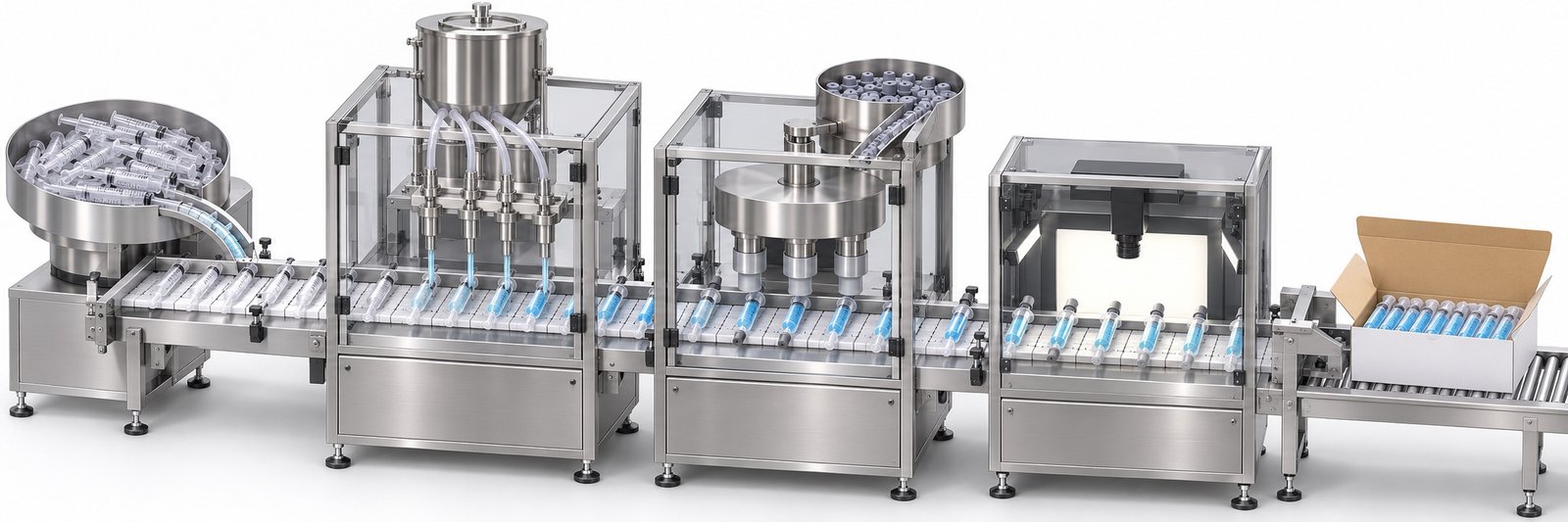
For each station, record the input, output, operator intervention, component-replenishment method, accumulation available, and stop response. This makes interfaces visible. For example, a product vessel supplied by the site, a cap feeder supplied by another vendor, or a cartoning handoff may sit outside the filling machine quotation but still constrain the line.
Closure application deserves its own acceptance criteria
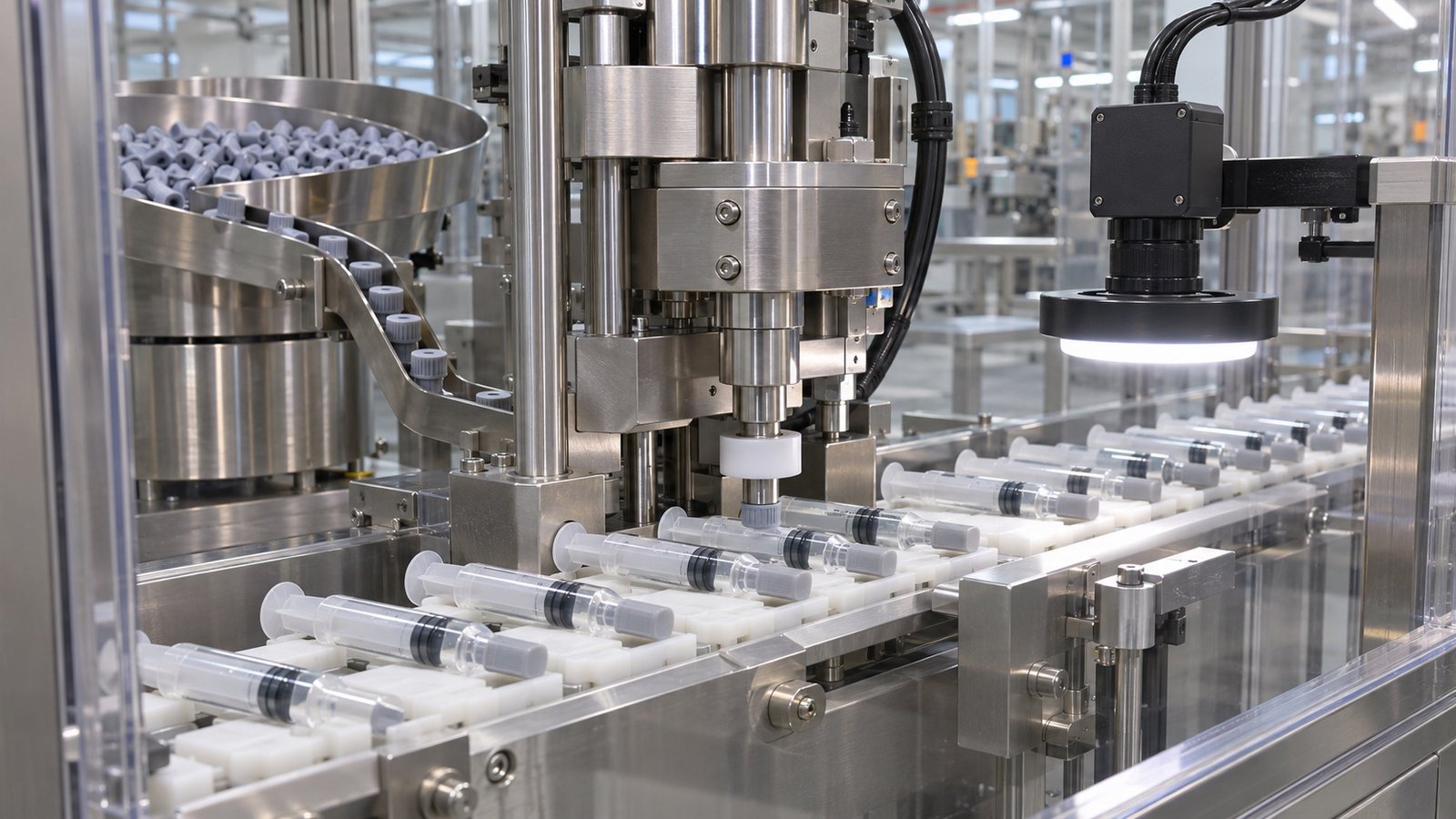
A filled syringe is not necessarily a completed syringe. The project should identify which closure or plunger attributes matter at the agreed inspection point: component presence, position, seating, orientation, visible damage, and any format-specific feature required by the buyer’s pack specification. These are specification topics, not claims about a particular machine configuration.
Ask the supplier how the proposed sequence handles a missed component, a misoriented part, a temporary feed interruption, or an inspection failure. Also ask which items are supplied in the quoted scope and which are site or third-party responsibilities. This prevents a common procurement gap in which filling is defined but closure inspection and reject segregation are left ambiguous.
| Question for the RFQ | Why it matters | Evidence to request |
|---|---|---|
| What closure components and variants are in scope? | Component geometry and feed method affect the machine layout and change parts. | Supplier scope list, component drawings, and a variant matrix. |
| Where is closure quality checked? | The inspection point determines what the output count means. | Process map and agreed acceptance attributes. |
| How are rejects handled? | Segregation supports traceable investigation and prevents an unaccepted unit moving downstream. | Reject-path description and test scenarios. |
| How are change parts identified? | Format changes require controlled setup and repeatable reassembly. | Change-parts list, drawings, and changeover work instructions where agreed. |
Use a residue and cleanability plan for every changeover
Residue management is more than wiping the nozzle at the end of a run. The team needs to identify product-contact surfaces, low points, seals, transfer hoses, valves, filling paths, and locations where material can remain after draining. A cleaning or product-recovery approach should reflect the actual formulation, applicable site procedures, and the intended validation or quality system.
Buyers should not assume one cleaning sequence fits every product. Instead, document the available cleaning method, disassembly expectations, access requirements, permitted cleaning media, drying or line-clearance steps, and the evidence required before the next product or format. If a validation protocol applies, the responsible quality team should define it; equipment suppliers can support with machine documentation and access information within the agreed scope.

Build a useful FAT and site-trial plan
A factory acceptance test (FAT) is most useful when it tests the agreed supplied scope with a written sequence and pre-agreed evidence. It should not be treated as a generic promise that all site conditions have been reproduced. Before FAT, align on the representative syringe, closure components, product or agreed substitute, test sequence, inspection method, acceptance criteria, and treatment of interruptions.
At the site, confirm that utilities, upstream product feed, component storage, operator roles, packaging interface, and cleaning requirements match the project assumptions. A factory acceptance test can document the supplied machine scope before shipment; commissioning and site trials confirm the integrated production environment.
Buyer checklist for teat sealant syringe filling
- Provide syringe, plunger or cap drawings and representative samples for every format in scope.
- State the target output definition: filled units, filled-and-closed units, or accepted inspected units.
- Share the formulation’s relevant handling information and agreed trial-material approach.
- Identify the product feed, closure feed, inspection, and packing interfaces supplied by the site or another vendor.
- Define the desired inspection attributes and how rejects will be handled.
- Record planned cleaning, line-clearance, and changeover expectations rather than assuming a generic method.
- Agree the FAT sequence, evidence, and open-item process before fabrication or shipment.
How King Pack Machinery can support the project
King Pack Machinery can discuss configuration for syringe and prefilled-syringe filling, component handling, filling and capping integration, FAT planning, documentation, training, and line interfaces. The appropriate configuration depends on the syringe format, product behavior, closure design, cleanability needs, and agreed project scope. A technical proposal should make these assumptions visible rather than substituting a generic headline capacity.
For related veterinary applications, see the veterinary medicine filling solution. Buyers can also compare the upstream and downstream scope with a syringe filling machine configuration before finalizing an RFQ.
Frequently asked questions
What is teat sealant syringe filling?
It is the controlled process of dosing a teat-sealant formulation into the specified syringe and completing the agreed closure, inspection, and handling steps. The exact line sequence depends on the product, syringe format, and pack specification.
Why is capping or closure handling important?
The completed pack must meet the project’s specified component-placement and inspection criteria. Closure feed, orientation, application, and reject handling therefore need to be defined alongside filling.
What product information should I send to a supplier?
Provide relevant handling data, target fill quantity, temperature or hold-time limits where applicable, cleaning constraints, and a representative-material test plan. Any missing information should be recorded as an assumption for evaluation.
How should I define line capacity?
Define the counting point first, then evaluate the slowest applicable connected station and the available operating time. Do not use a filling-station speed as a complete-line commitment without the associated conditions.
What should be included in an FAT plan?
Identify the agreed machine scope, materials, sequence, inspection method, acceptance criteria, documentation, and the treatment of interruptions or open items. Site integration should be evaluated separately during commissioning.
Start with a documented process, not an assumed machine setting
Teat sealant syringe filling and capping becomes easier to specify when the buyer defines the product, pack, output point, interfaces, acceptance criteria, and changeover expectations early. King Pack Machinery can review these inputs and prepare a configuration-specific technical proposal. Request a technical quotation with your syringe and closure details, or contact King Pack Machinery to discuss the proposed line scope.
Viscosity, Air Entrapment and Nozzle Control in Syringe Filling
High-viscosity syringe filling requires a controlled product path from hopper and transfer line to the dosing nozzle. Viscosity, temperature, agitation, deaeration, suck-back and nozzle cutoff should be checked with the actual intramammary or veterinary syringe product before settings are accepted.
| Item to confirm | Why it matters | Evidence |
|---|---|---|
| Product and viscosity | Controls feed, dosing and nozzle behavior | Product notes and representative samples |
| Syringe and closure | Defines format handling and assembly sequence | Drawings, components and format matrix |
| Test and acceptance | Shows how the proposed scope is proven | FAT protocol, records and open-point log |
FAQ
How can air bubbles be reduced?
Check product preparation, feed stability, transfer connections, fill direction and start-stop behavior with representative samples; do not assume one setting suits every formulation.
What causes nozzle stringing or drips?
Product rheology, temperature, nozzle geometry, cutoff timing and residual pressure can all contribute, so the trial should record the condition and the setting used.
Related: How to Choose a Veterinary Syringe Filling Machine · Intramammary Filling Line URS and FAT Checklist · Request a Quote