
Build a nozzle-fill line around your paste syringe format.
A focused machine page for paste syringe manufacturers who need controlled nozzle entry, clean cut-off, stopper handling and format changeover across 10–60 mL package sizes.
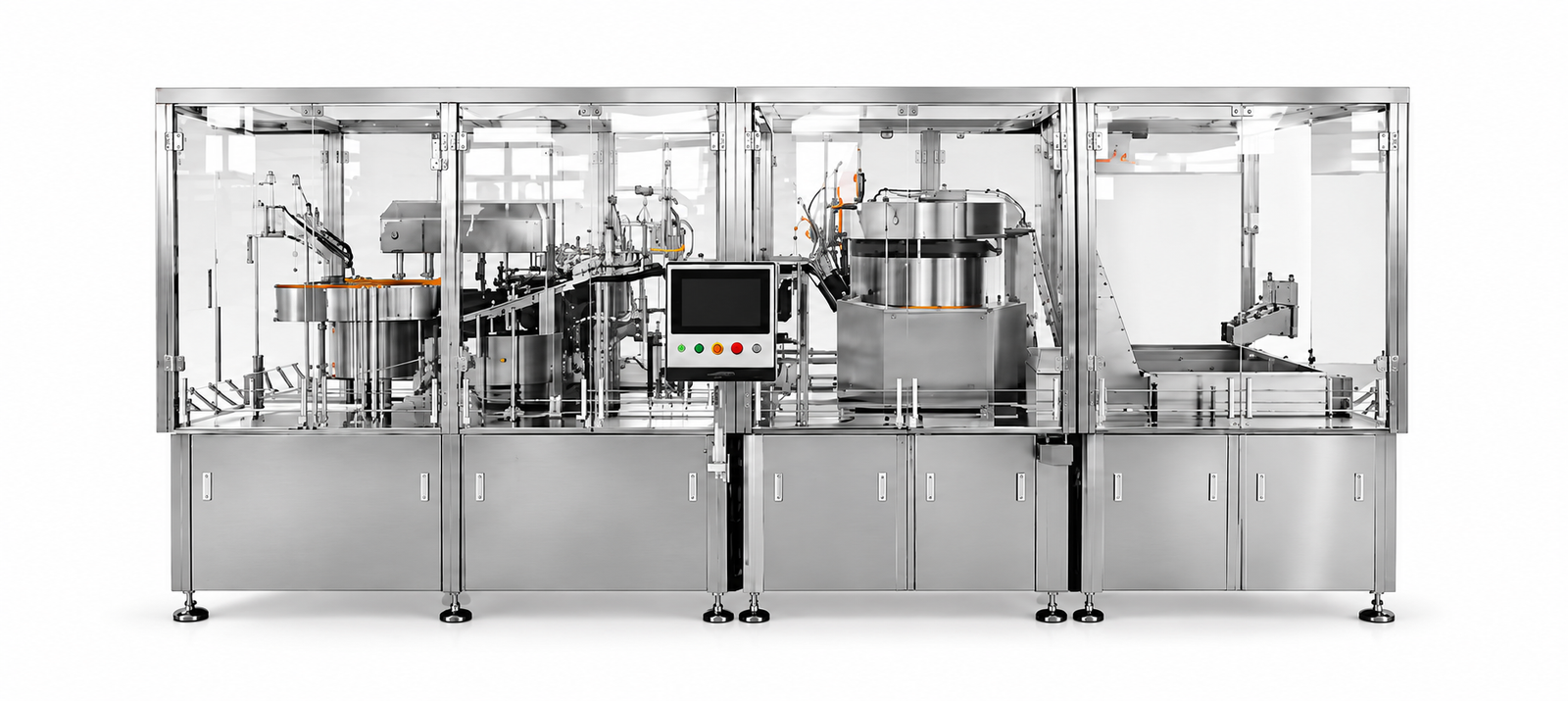
Match the line to your package drawing
Send the syringe format, nozzle geometry, target dose and closure sequence. The proposal is built around your approved package set and production target.
Why this format-specific line?
This page is about the paste syringe package and its station sequence—not a general veterinary filling platform. The key engineering questions are nozzle access, fill cut-off, stopper placement and repeatable format changeover.
Paste syringe format fit
Product scope for this page
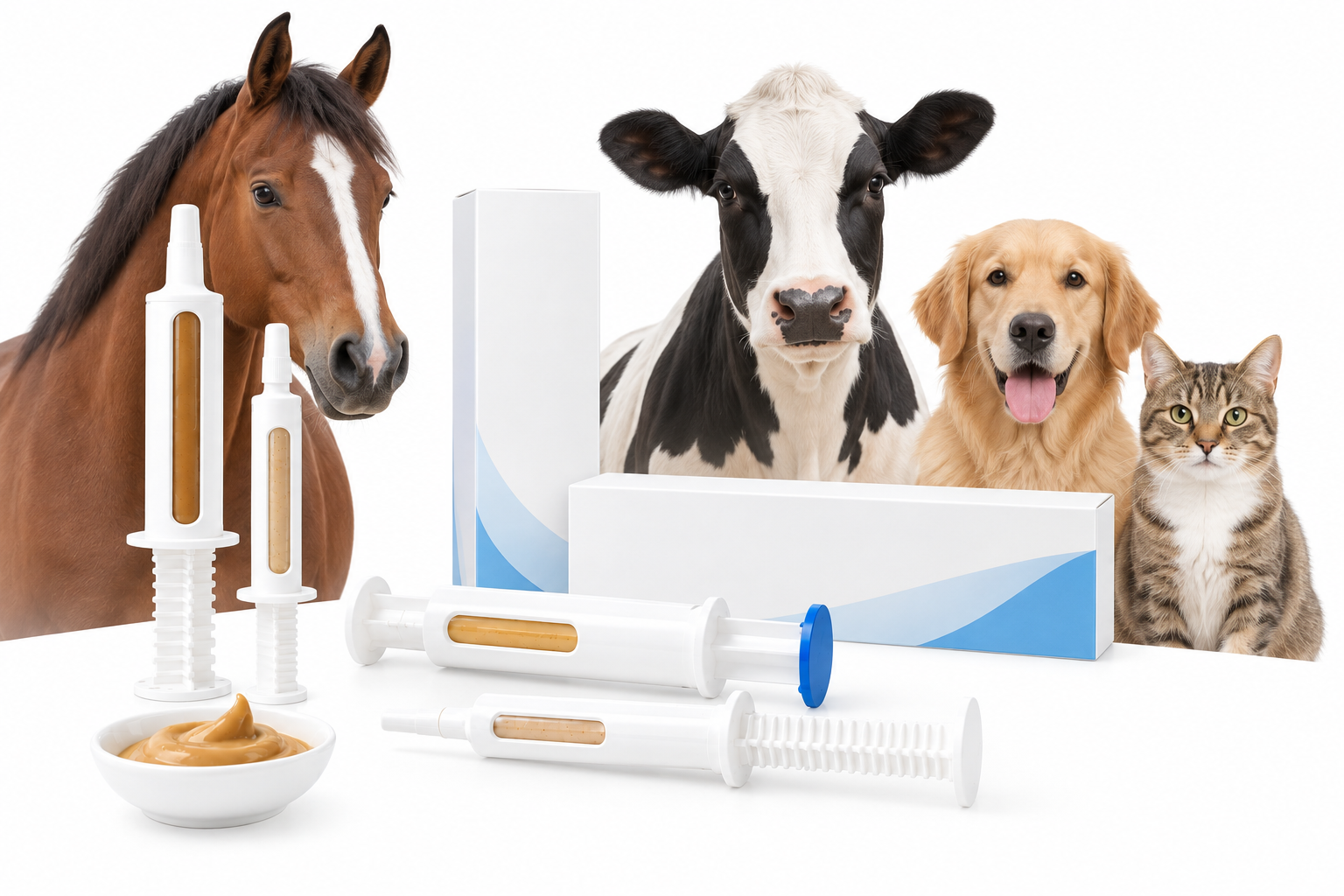
Designed for veterinary oral pastes, deworming doses, pet nutrition gels and other high-viscosity products that need controlled nozzle entry, clean cut-off and reliable stopper or plunger placement.
- Horse and livestock oral paste syringes
- Deworming paste and pet nutrition paste
- High-viscosity gels requiring nozzle control
- Single-dose and multidose paste formats
- Package-led front filling and stoppering
Paste syringe formats to test
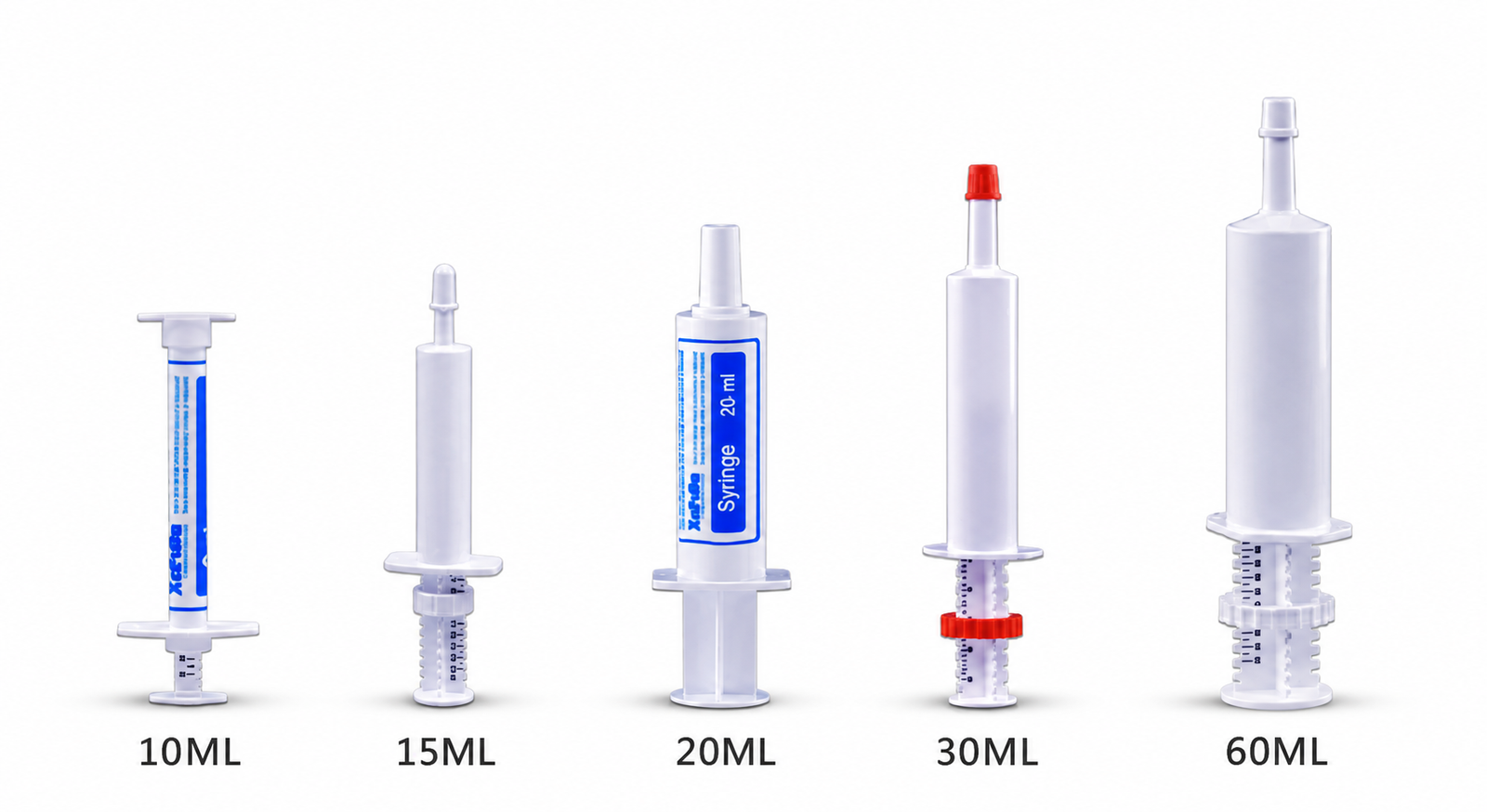
- Shown reference sizes: 10 mL, 15 mL, 20 mL, 30 mL and 60 mL
- Nozzle, barrel, plunger and closure fit
- Format-specific fixtures and change parts
- Fill weight, cut-off and stopper position checks
- Final acceptance based on supplied drawings and samples
Paste syringe station sequence
The page follows the package journey from empty syringe to closed, inspected unit. The exact station count depends on the supplied components and target output.
1. Orient and support
Index the syringe mouth-up and stabilize the barrel before product entry.
2. Fill through the mouth
Dose the paste through the nozzle and tune withdrawal or cut-off for a clean tip.
3. Insert stopper / plunger
Control seating depth, venting and insertion force for the selected format.
4. Inspect and discharge
Check fill presence, closure position, residue and reject conditions.
Machine options to define
10–60 mL changeover
Confirm barrel diameter, nozzle, stopper and fixture parts.
Paste behavior
Provide viscosity, temperature, stringing and air sensitivity.
Stopper sequence
Define stopper type, insertion depth and downstream cap handling.
Target production
Set cycle target, batch size and inspection requirements.
Inputs for a format-specific quotation
| Input | Examples | Used to define |
|---|---|---|
| Package | 10, 15, 20, 30 or 60 mL; drawing and tolerances | Fixtures, indexing and change parts |
| Nozzle | Tip ID, length, cap and closure geometry | Entry tooling and cut-off motion |
| Paste | Viscosity, temperature, stringing and air behavior | Transfer and dosing setup |
| Stopper | Type, insertion depth and acceptance limit | Stoppering station and inspection |
| Target | Dose tolerance, output and batch profile | Cycle design and FAT criteria |
Format trial and FAT acceptance
Testing for this page is centered on the paste syringe format, not a generic veterinary line demonstration.
Paste syringe machine details
The following detail views show the same white, wide-barrel paste syringe package through indexing, filling, stopper insertion and discharge positions.
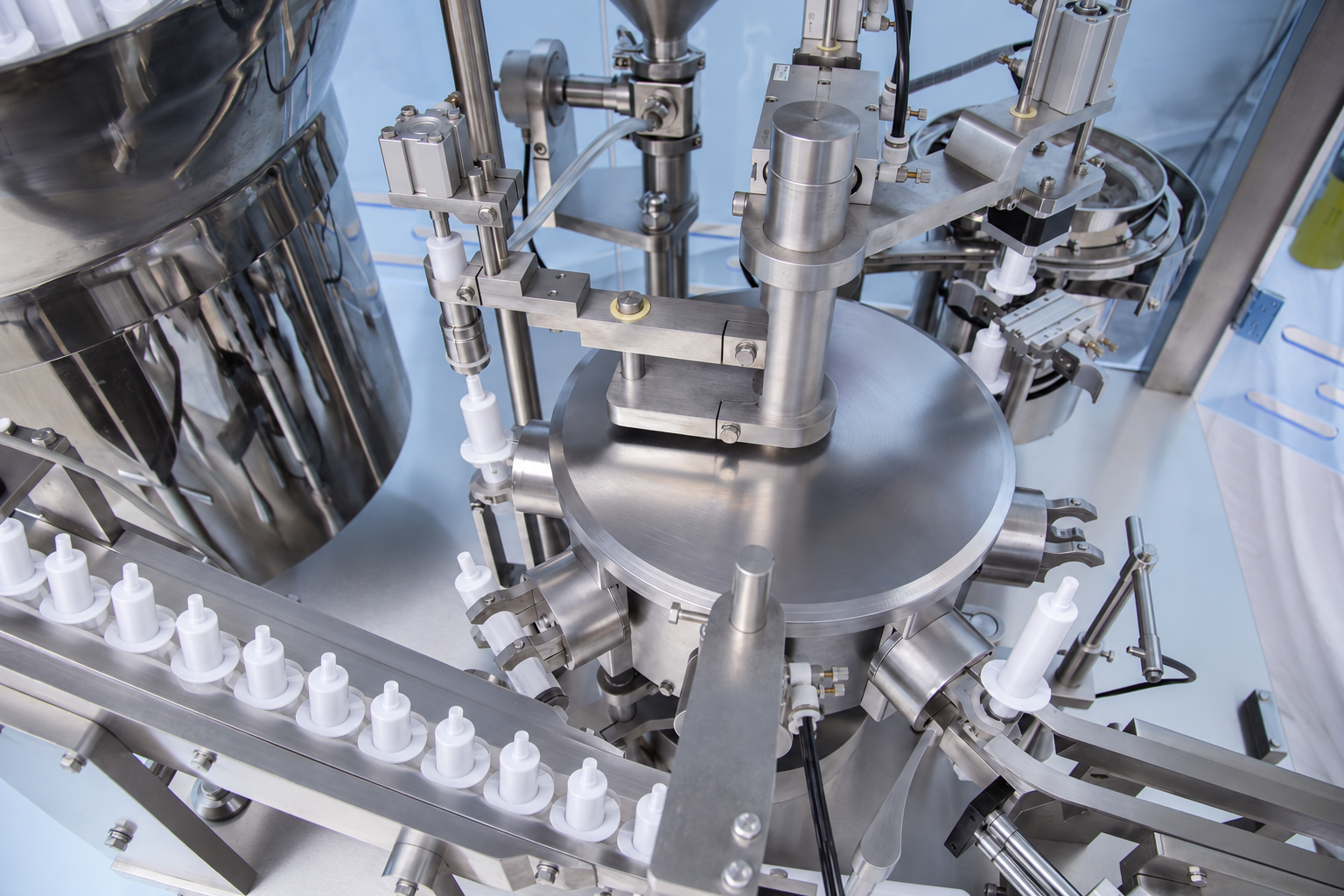
Indexing and package feeding
White wide-barrel syringes are oriented and transferred into the rotary filling station.
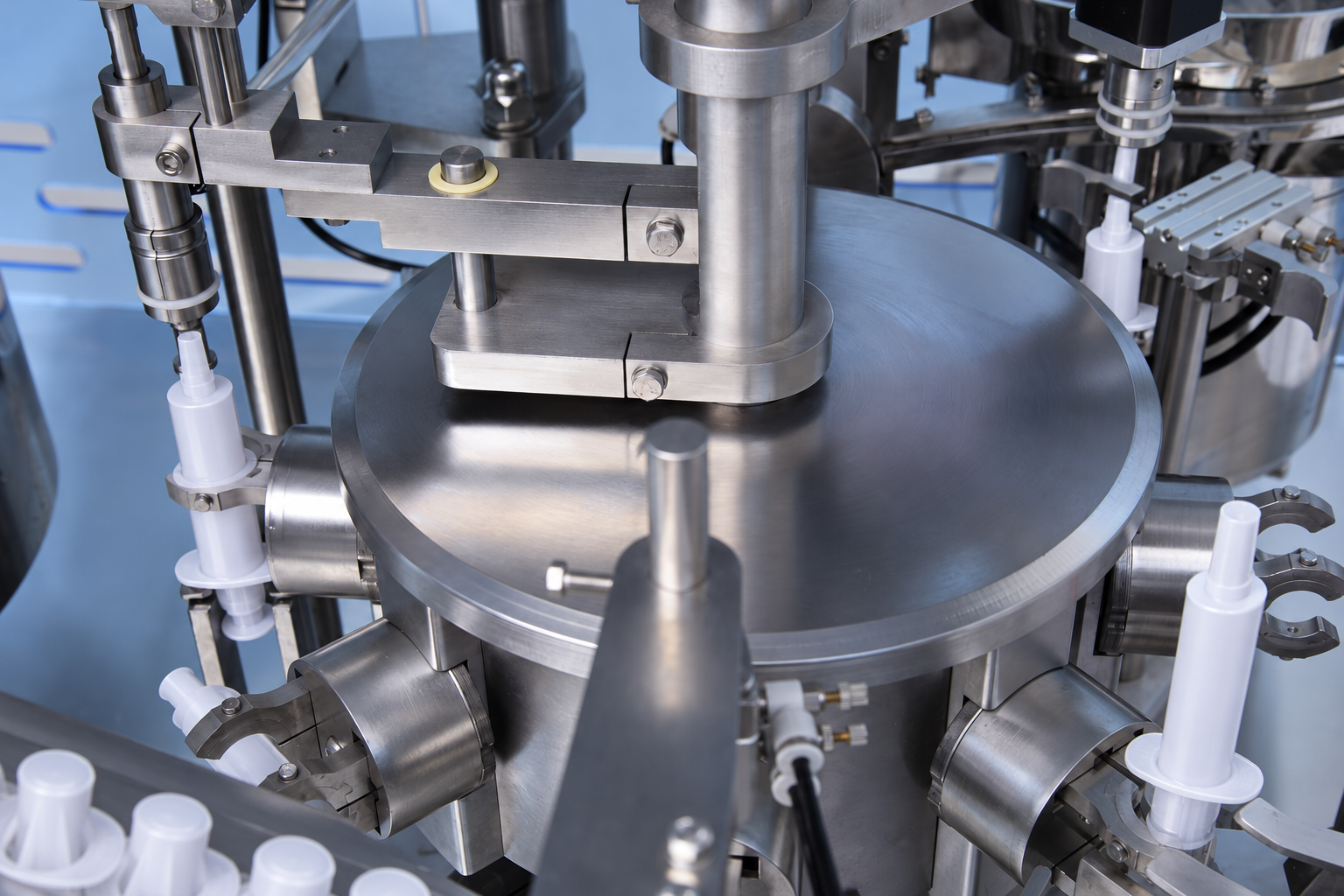
Nozzle entry and dosing position
Fixtures support the syringe mouth while the paste dosing head enters the package path.
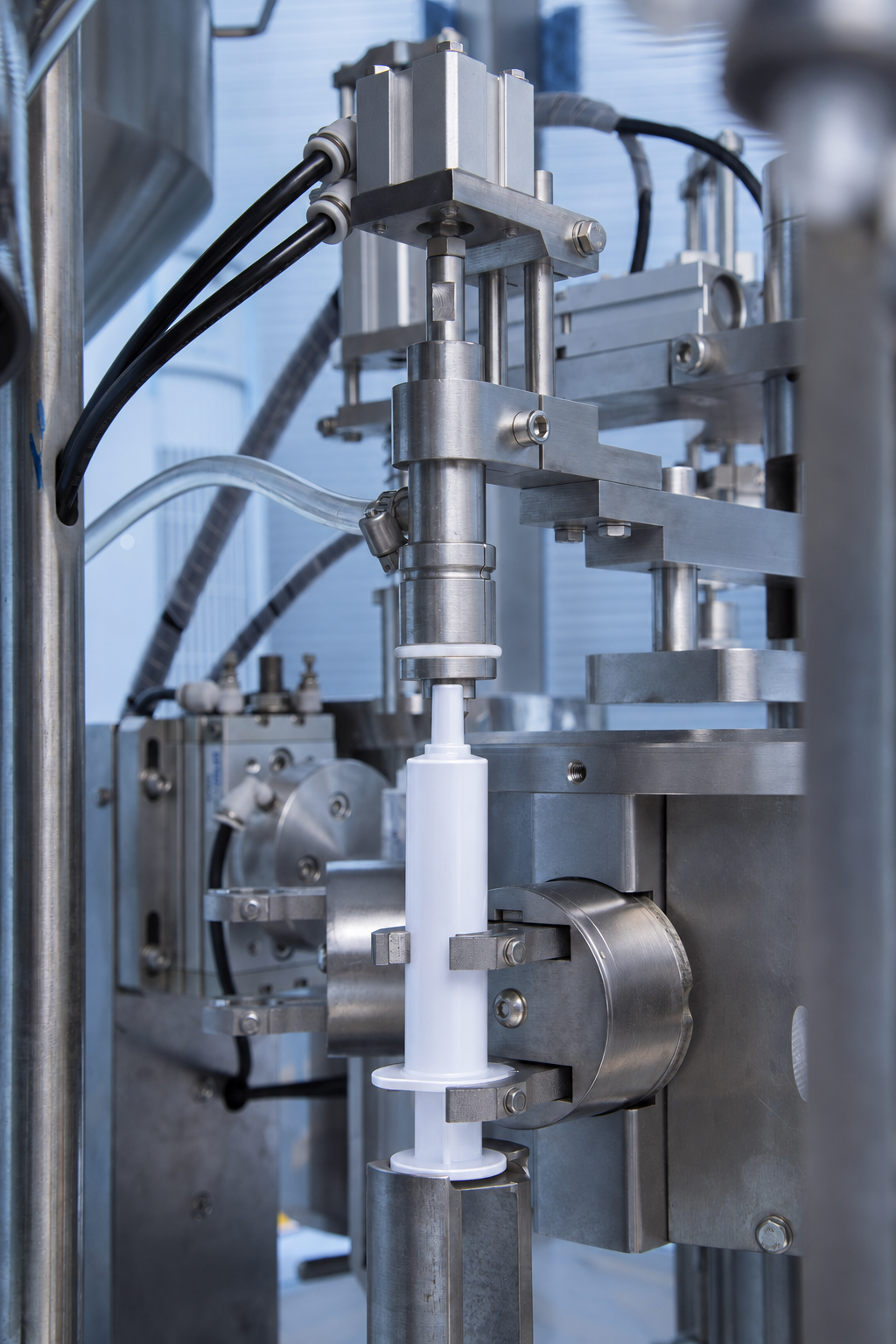
Stopper / plunger insertion
Vertical motion controls seating depth and alignment for the selected white syringe format.
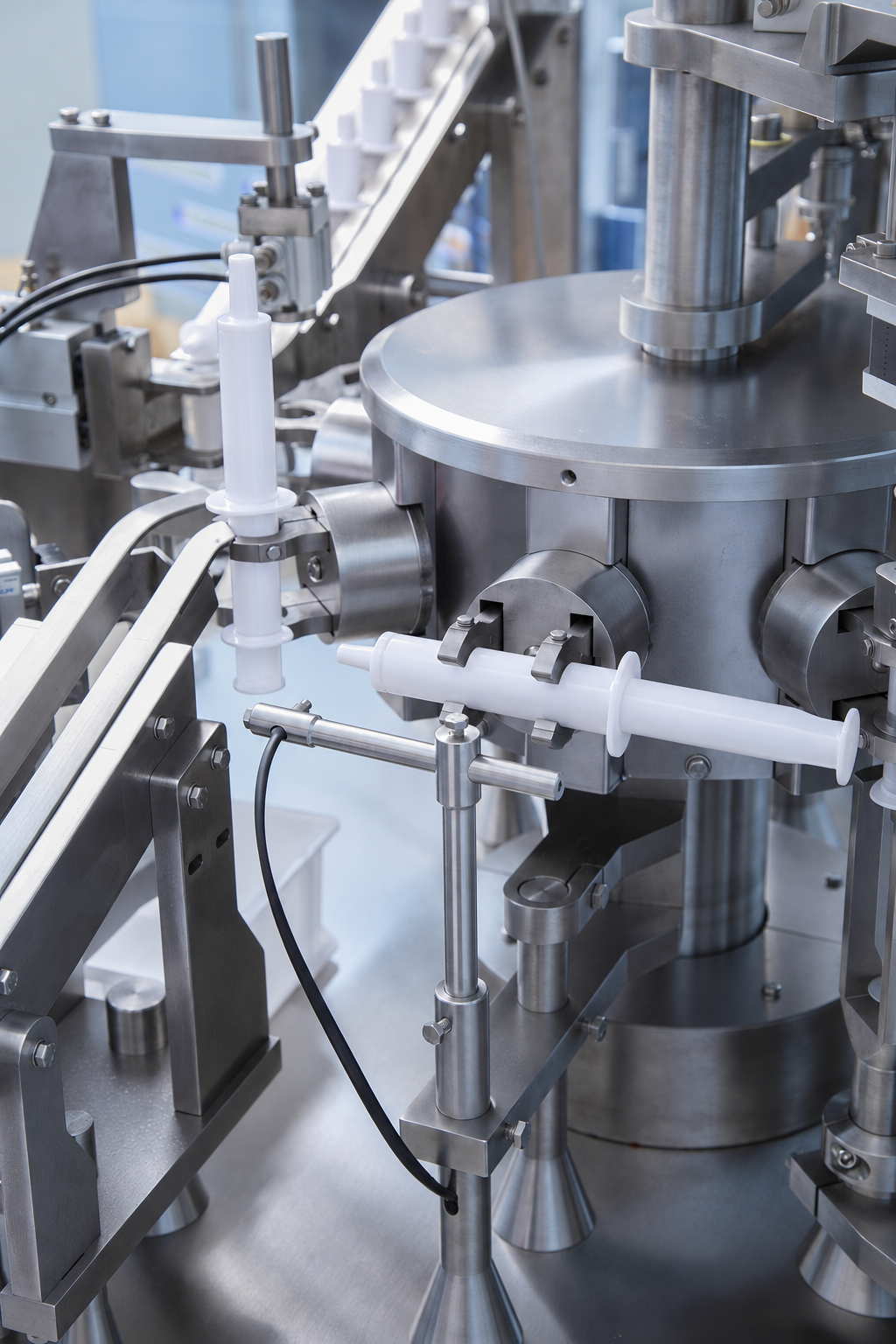
Transfer and discharge
Filled and assembled paste syringes move to the next packaging or inspection step.
More about veterinary syringe filling
Practical guides for paste, gel and other veterinary syringe formats, from package drawings to filling and stopper testing.
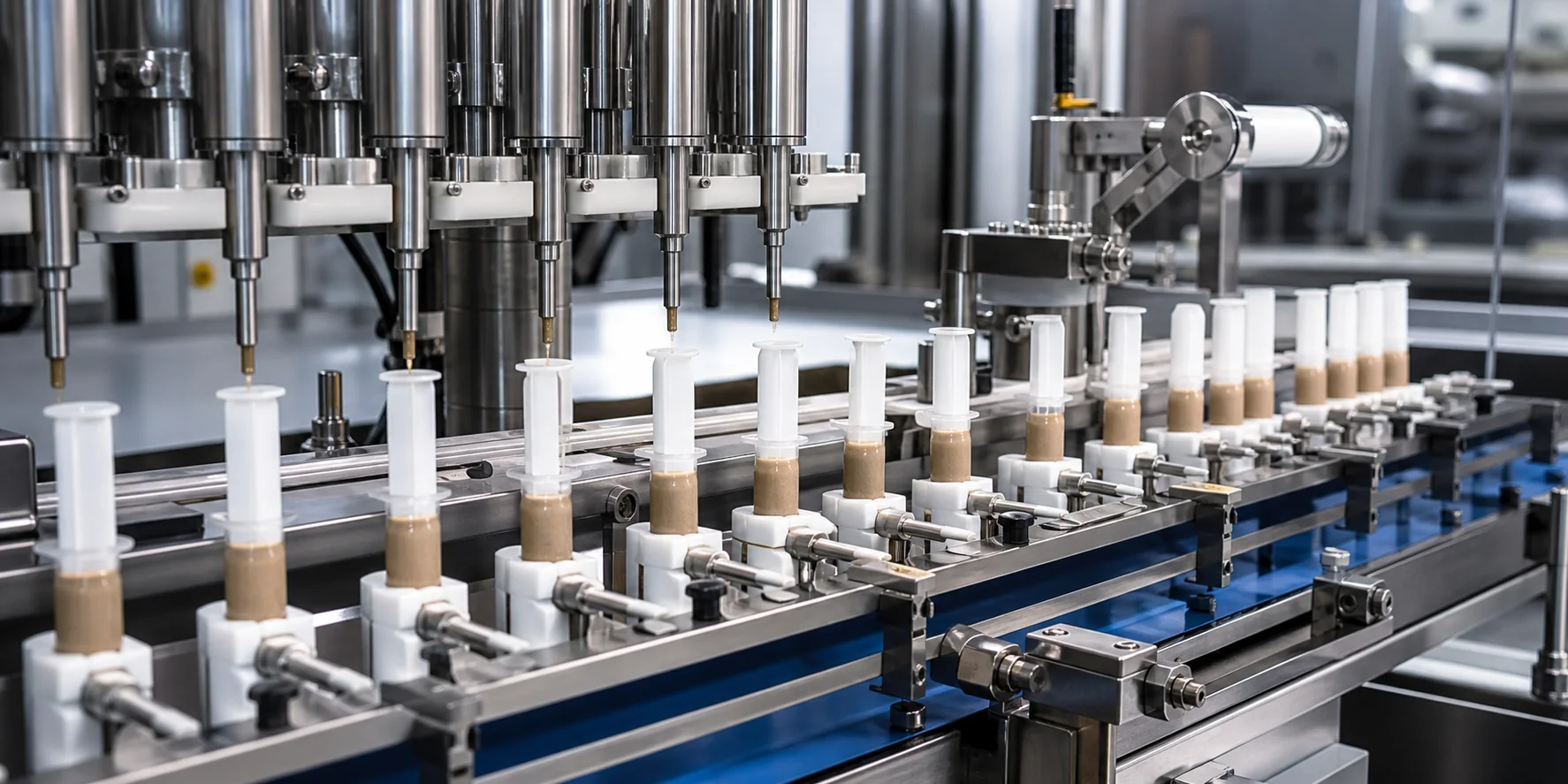
Veterinary Oral Paste Syringe Filling Machine Guide
How nozzle entry, high-viscosity paste behavior and plunger placement shape the package sequence.
Read the guide →
Intrauterine Infusion Syringe Filling Line Guide
Prepare package drawings, dose targets, paste data, stopper details and sample requirements.
Read the guide →
IQ OQ PQ Evidence Matrix for Veterinary Filling Lines
Review dosing path, cut-off motion, residue control and format-specific testing.
Read the guide →Paste syringe format FAQ
Can the line cover 10–60 mL paste syringes?
That range can be evaluated when the barrel, nozzle, stopper and fixture dimensions are compatible. Confirm with drawings and samples.What does nozzle entry change?
It changes the support tooling, product path, cut-off motion and the order of stopper or plunger assembly.What should we send for a quotation?
Provide the complete syringe set, format drawings, paste data, target dose, tolerance and output.Can stopper insertion be included?
Yes, when the stopper type, insertion depth and inspection criteria are part of the approved package sequence.Need support for your veterinary syringe line?
Tell us your machine model, product, syringe format and the support you need. We will route your request to the right technical contact.