
Introduction
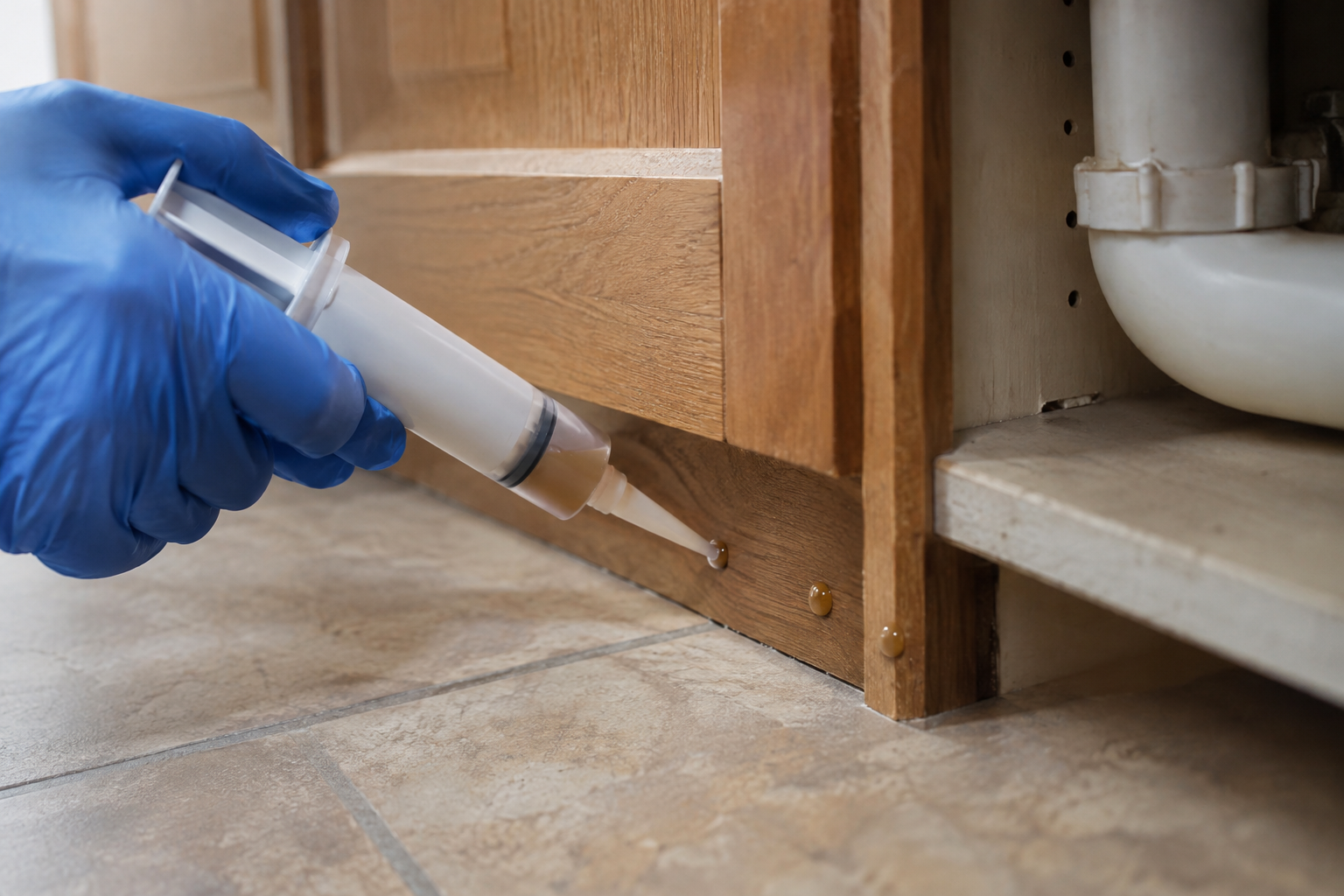
This cost question sits between equipment selection and operating-model choice. Start with the gel bait syringe filling machine buying guide, then compare in-house and contract routes in the in-house vs contract filling guide.
There is no single price for a cockroach gel bait syringe filling machine. The machine is configured around your syringe, your gel, and your output target, so a bench-top semi-automatic doser and an integrated line that also inserts pistons, closes tips, and checks net weight are different purchases. A supplier who quotes a number before seeing your product is guessing.
A cockroach gel bait syringe filling machine is equipment that doses high-viscosity insecticide gel bait into syringe-style containers and assembles the piston and closure. The gel can be thixotropic, particle-filled, or temperature-sensitive, so the machine is matched to the material rather than picked from a catalogue.
This article gives you the honest cost framework. It walks through the variables that move the price, explains why two machines with the same headline spec can quote far apart, and lists exactly what to send so your quote is real and comparable across suppliers.
Why There Is No Price List
We do not publish a price list, and you should not trust one from anyone else. A filling machine price only means something once the scope is fixed. The same phrase "gel bait syringe filling machine" can mean a single dosing head on a bench or a complete line with orientation, dosing, piston insertion, closure, checkweighing, and reject. Those are not the same product at different prices; they are different machines.
As a relative cost ladder, the ordering usually runs like this:
- Manual bench station. Lowest cost. An operator loads the syringe and a simple positive-displacement head applies the dose. In a manual operation, dosing is rarely the bottleneck; the operator’s hands are.
- Bench-top semi-automatic. A step up. One or two stations automate dosing and one assembly step, while the operator still loads and closes.
- Integrated semi-automatic. Fill, piston insertion, and cap placement run in sequence on one frame. Cost rises because you add stations and the controls that sequence them.
- Full automatic line. Orientation, filling, piston insertion, closure, inspection, labelling, and cartoning. This sits at the top of the ladder because you are buying several stations plus synchronization, not one machine.
We deliberately do not attach numbers to these rungs. A number without your product and scope would be fiction. The reliable path is to define the scope first and let the configuration set the price.
The Variables That Set the Price
1. Dosing method
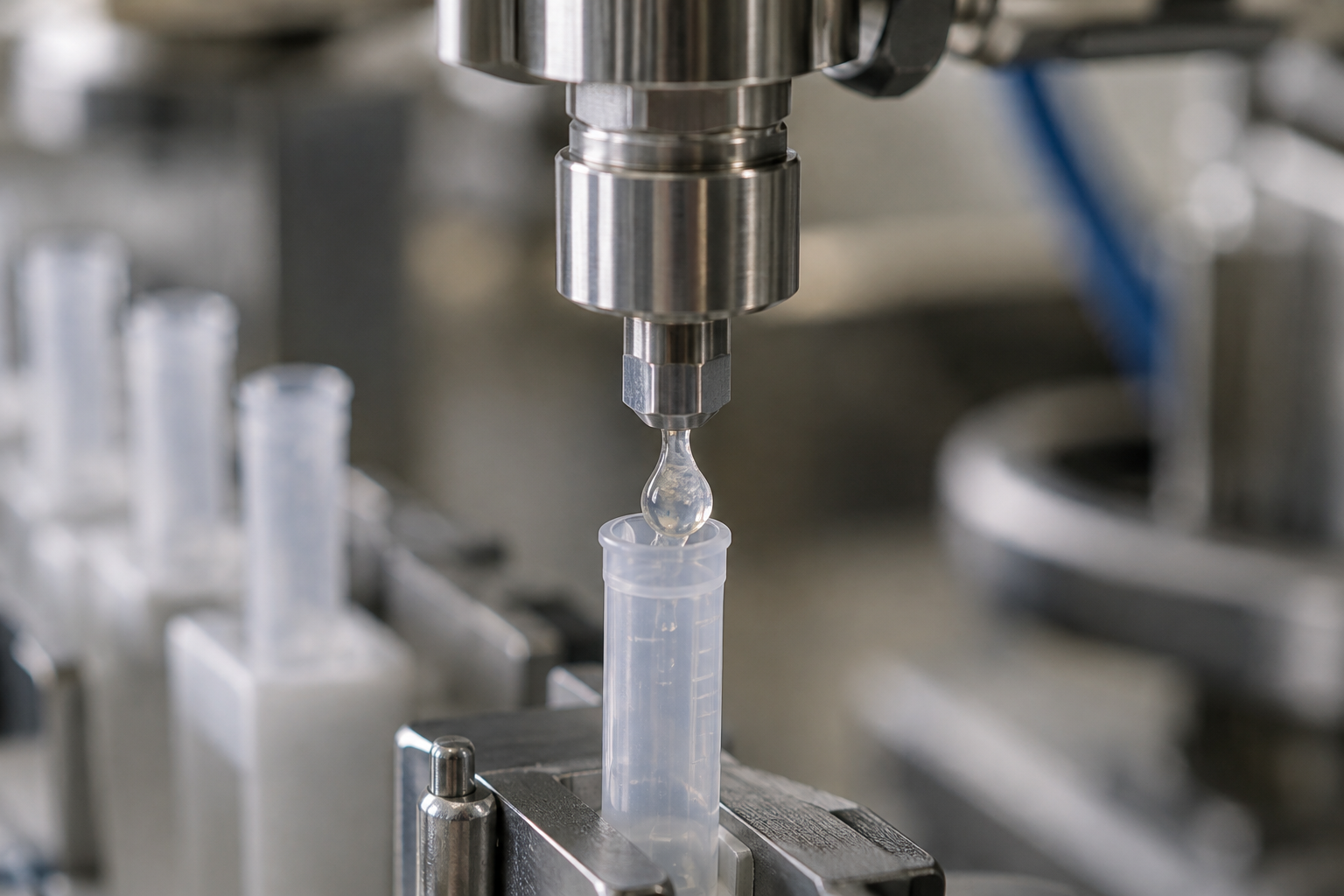
For viscous gel bait, the correct principle is positive displacement. Within that family you choose among piston/plunger, progressive cavity, peristaltic, and gear displacement, and each has a different cost profile.
Piston positive displacement is a common, robust choice that tolerates particulate pastes. Progressive cavity pumps give smooth, low-shear flow at high viscosity, but the rotor and stator are wear parts you replace. Peristaltic pumps use cheap, replaceable tubes, which keeps the initial cost down but adds consumable cost over time and suits thinner gels. Gear displacement works best on uniform paste without large particles.
The method also sets the accuracy ceiling. As vendor-published figures under vendor conditions, ViscoTec cites roughly ±1% at the pump outlet with an endless-piston principle, and Nordson EFD cites roughly ±1% with progressive cavity pumps. Treat these as what the pump family can do in a lab, not as your guarantee. Your own sample trial on your gel is the number that matters. Read our guide to selecting a dosing system for the full comparison.
2. Fill accuracy grade
Accuracy is the difference between ±1% and ±0.5%, and it is one of the cleanest price drivers there is. A tighter tolerance costs more because it demands a better pump, tighter cut-off control, and more validation work.
Cut-off is where accuracy is won or lost. Stringing and tailing waste paste and spread the fill weight, so the machine needs suck-back, a nozzle valve, or lift-and-dispense timing to break the paste cleanly. Better cut-off costs more, and it is usually worth it. We would rather you buy a slightly slower machine with clean cut-off than a fast machine that strings.
Keep the unit straight. Gel bait is sold by mass, not volume, so a pump that is accurate at its outlet can still show variation at the syringe if the cut-off strings or the piston traps air. We agree the checkweighing method up front so the same scale, tare, and sampling interval are used at the trial, at the factory, and on your floor. See grams vs millilitres for why net content is the control.
3. Automation level
How much the machine does by itself is the biggest single price driver. A machine that doses but leaves loading, piston insertion, and closure to operators costs far less than a line that does all of it. The decision is not "more automation is better"; it is "which step is your bottleneck". In a manual gel bait operation, dosing is rarely the bottleneck. Loading, closure, and inspection usually are. Buy automation for the step that is actually holding you back, not the step that looks impressive on paper. Our manual vs automatic article explains when each level earns its cost.
4. Syringe format range and changeover
Every barrel size, piston, and closure you run needs change parts and a changeover procedure. One format forever is the cheapest configuration. Three sizes with different tips mean more tooling, more change parts, and more engineering. The changeover time you demand also moves the price: a tool-less changeover under ten minutes needs a different mechanical design than a 45-minute changeover with hand tools. Lock the format list and the changeover target before you ask for a quote. See changeover planning and selecting syringes.
5. Inspection, sealing, and coding stations
Every downstream station is a separate cost line. Checkweighing net content, vision inspection for piston seating or cap faults, cap torque verification, date coding, and labelling each add a station and its controls. A buyer who starts with "just fill it" and later adds checkweighing, coding, and a reject chute will watch the price climb as each station lands. Decide the full station list at the start so the quote is complete. Our FAT checklist explains how we agree what each station must prove before shipment.
6. Wetted material and hygiene grade
The parts that touch the gel drive material cost. Stainless wetted parts, seals compatible with your gel’s chemistry, and a frame that can be washed down all cost more than basic finishes. Your SDS matters here more than most buyers expect: a gel that is corrosive, flammable, or temperature-sensitive changes the pump seals, the wetted parts, and the enclosure. Send the SDS with the samples, and the material spec becomes a calculation instead of a guess.
7. Control system
The control cabinet is a quiet cost driver. A basic PLC with a few recipes is cheaper than a servo-driven system with recipe storage, user accounts, data logging, and remote access. Higher-end controls cost more to buy, but they make repeat orders and changeovers faster. Ask what you actually need. If you run one product all day, you may not need 50 stored recipes.
8. Certification and documentation
Compliance is a buyer requirement, and it adds cost and lead time. If your destination market requires CE-marked electrical components, that changes the control cabinet. If your own product is regulated and you need validation documentation such as DQ, IQ, and OQ, that is engineering and paperwork time on top of the machine. State these requirements in your URS. A machine quoted without them is not cheaper; it is just missing a requirement you will pay for later.
9. Delivery, installation, and spare parts
Two quotes for the same machine can differ because one includes freight, installation preparation, commissioning, training, and a spares kit, and the other does not. Before you compare prices, ask each supplier what the number includes. We ship with the same agreed acceptance list we used at the factory, so the shipment inspection you run at arrival checks the same points you saw at FAT. Ask whether installation and the first service visit are in the quote or billed separately.
Why Two Machines With the Same Spec Quote Differently
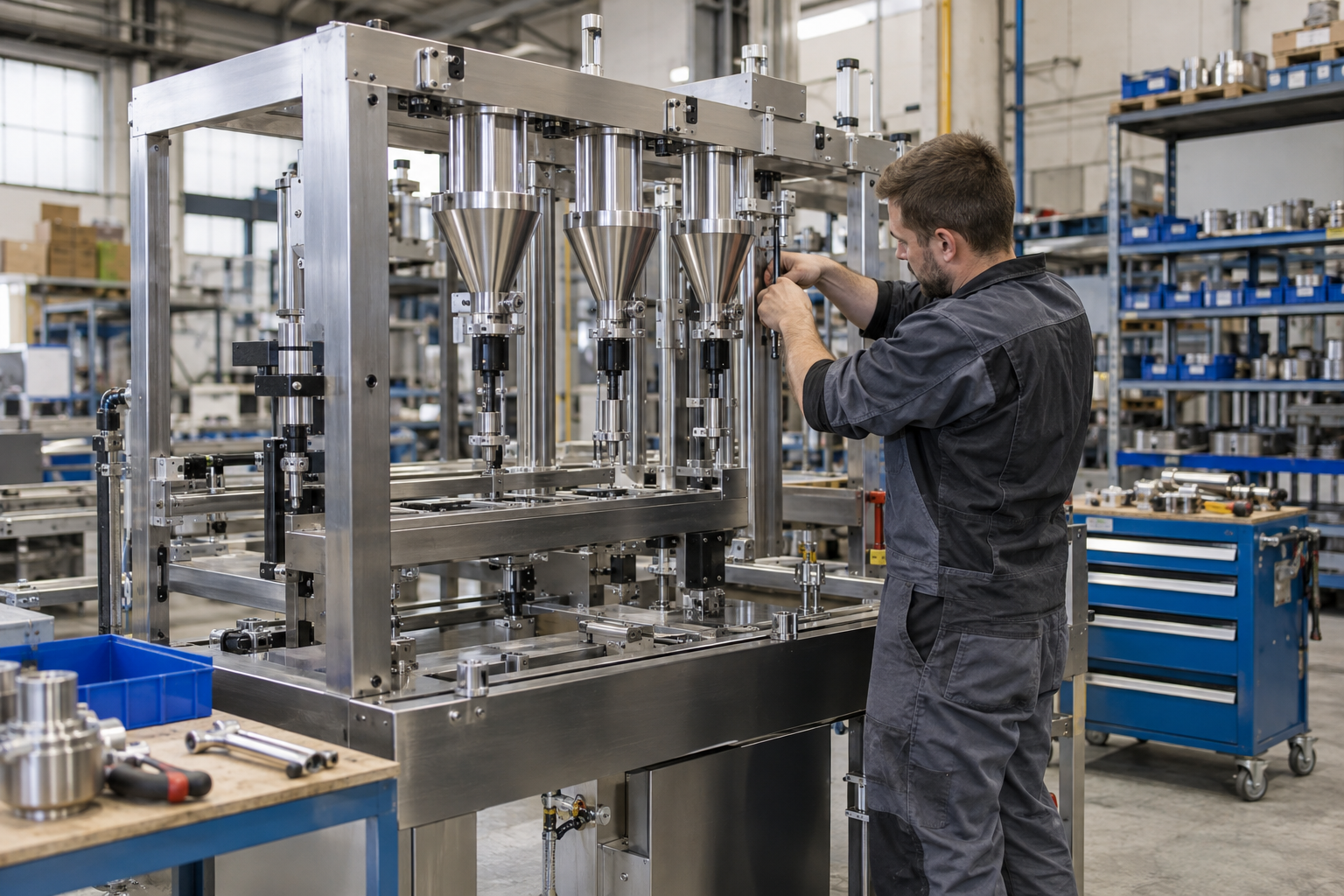
A dosing head that "does ±1%" and a machine that "fills 20 mL syringes" can be built a dozen ways, and the build quality is where quotes separate.
The differences show up in the wetted parts, the frame, the controls, and what is bundled. One supplier may quote stainless contact parts and a servo-driven axis; another may quote cheaper materials and pneumatic actuation. One may include the sample trial, FAT, shipment inspection, spares, and installation in the number; another may quote the bare machine and bill everything else as extras.
A low quote is not automatically a good deal. If it skips the sample trial and the FAT, the savings move to your floor as rework, rejects, and downtime. The cheapest number usually means the scope is smallest, not that the supplier is more efficient. When you compare, compare the scope line by line, not the total.
How to Get a Quote You Can Compare
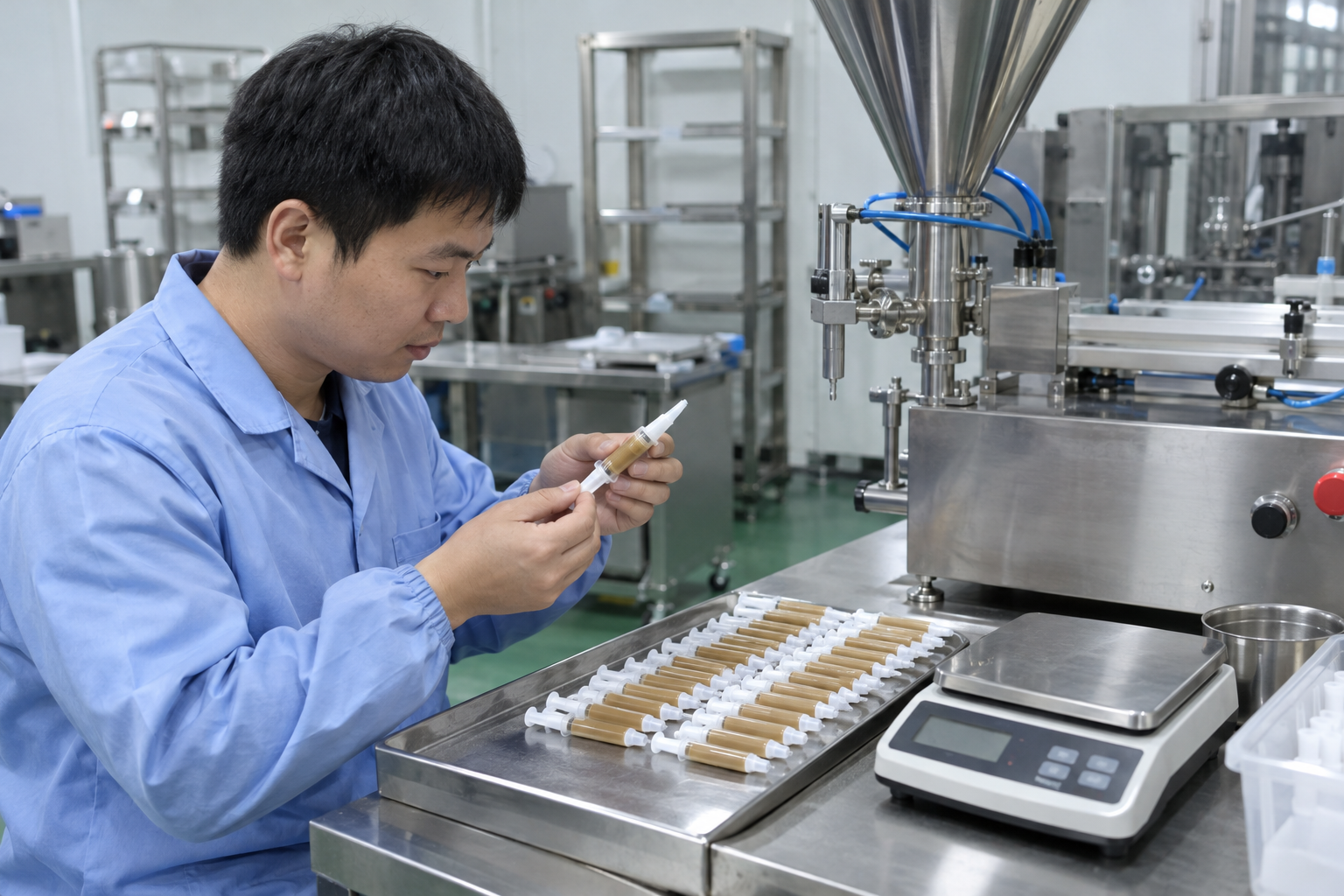
- Send the full URS package. Syringe samples (filled and empty), component drawings, the SDS, viscosity and density data, your fill target in grams with tolerance, and a defect list.
- State the automation level and output per shift, not per minute. Give a realistic eight-hour target that already allows for a meal break, size changeovers, and minor stops.
- Define the station list. Dosing, piston insertion, closure, inspection, coding, labelling. Decide now, not after the first quote.
- Ask what the number includes. Trial, FAT, shipment inspection, freight, installation, training, spares, and warranty. Ask for a line-item breakdown.
- Run the sample trial on your actual gel and packaging before you commit. This is the cheapest place to find a problem. Our sample trial checklist tells you what to bring and what to measure.
What Drives the Price Up
- Treating all gels as one viscosity. Gels are not one material. Some flow like thick toothpaste, some are thixotropic, some carry particles or fibers. Testing the actual product before quoting avoids buying the wrong pump.
- Buying on rated speed. Rated speed is a ceiling, not output. A machine built for a peak you never sustain costs more than one sized to your real shift.
- Adding stations after design freeze. Every late station is more expensive than the same station in the original scope.
- Changing the closure or barrel supplier late. The incoming component state is the machine’s real specification. Lock it early, because the later the change, the higher the cost.
- Skipping the sample trial to save a week. You pay for it in months of adjustment on your own floor, with product and labour on the line.
FAQ
How much does a cockroach gel bait syringe filling machine cost?
There is no single number. The price is set by the dosing method, accuracy grade, automation level, station list, wetted material, controls, certification, and what is bundled in the quote. A bench-top semi-automatic is a different purchase from a full automatic line. The only reliable way to get a real number is to send samples and requirements for a line-item proposal.
Why won’t suppliers give a price without samples?
Because the price depends on your gel’s viscosity and chemistry, your syringe and closure, and your output target. Without them, any number is a guess that changes the moment real product arrives. A supplier who insists on samples before quoting is being honest, not evasive.
Is a cheaper machine a better deal?
Not necessarily. If the lower quote skips the sample trial, FAT, spares, installation, or training, the savings move to your floor as rework and downtime. Compare the scope line by line, not the headline total, and ask what each quote includes.
What makes the price go up the most?
Automation level and station count, meaning inspection, coding, and closure on top of dosing. After that come the accuracy grade, the wetted material and hygiene spec, and then certification or validation documentation. A tighter accuracy spec and more stations are the two fastest ways to raise the price.
What should I send to get an accurate quote?
Syringe samples, component drawings, the SDS, viscosity and density data, your fill target in grams with tolerance, a defect list, your automation level, and your output per shift. With that package we can tell you which dosing method and station list fit and return a real number.
Conclusion
Cost is the wrong first question, and it is also the one every buyer asks. The honest answer is that the price is set by your product and your scope, not by a catalogue. Fix the syringe, the gel, the accuracy, and the station list, and the price falls out of the configuration. Skip that and you buy the wrong machine cheap, then pay for it in rework.
Before you compare any numbers, run a sample trial, agree the FAT criteria, and ask each supplier what their quote includes. Then the numbers mean something.
Get a Cost Estimate
Send us your syringe samples, component drawings, SDS, viscosity and density data, fill target, and defect list, plus your automation level and output per shift. We review your product, recommend the dosing method and station list, and return a line-item proposal with a clear acceptance-test plan. No pressure, no made-up ballparks. An engineer replies.