 Skip to content


Introduction
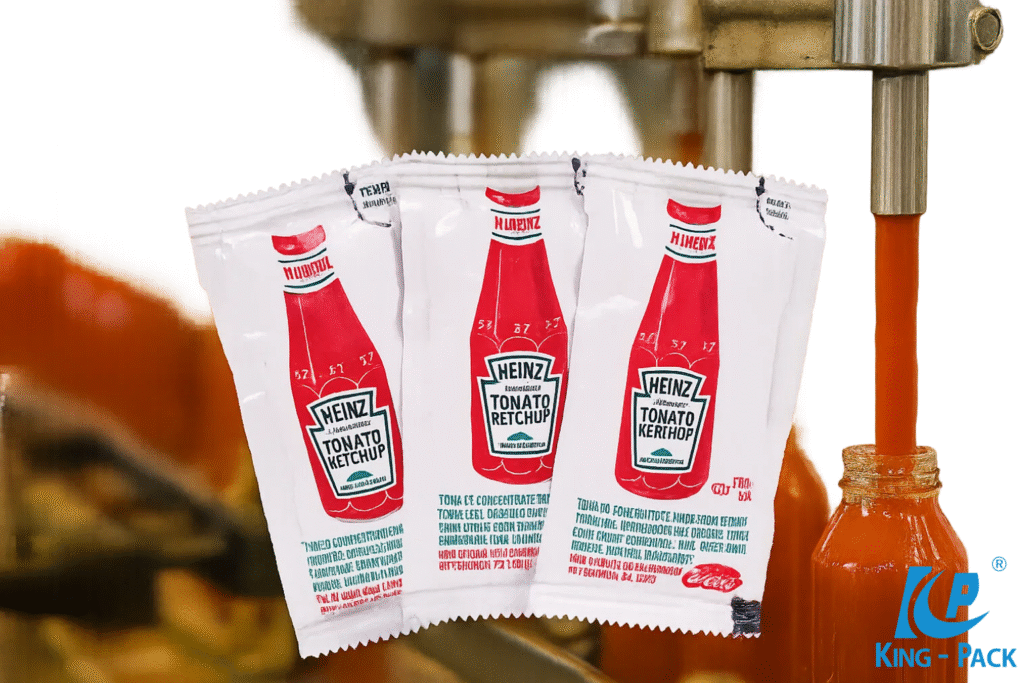
You can find single-serve ketchup packets in a lot of places, like fast food restaurants, airlines, and school cafeterias. They are easy to serve and help with portion control, hygiene, and simplicity. In this article, we’ll show you how to make these packets step by step, from getting the ketchup ready to sealing them.
King Pack can discuss FFS and liquid/paste packing configurations for compatible ketchup and sauce products. Actual efficiency, consistency, hygiene and regulatory performance depend on the selected machine, film, product, process and quality system.
The suitable equipment can be evaluated for viscosity, portion size, film, seal integrity and shelf-life requirements. No fixed portion accuracy or shelf-life result should be assumed without product and package trials.
Market Overview and Statistics
Market estimates vary by source and definition; use them only as background. The equipment decision should follow the customer’s volumes, formats and packaging plan.
Here are the key market drivers of Ketchup Packets production:
- Consumer Convenience: Growing demand for portable, mess-free condiment dispensing
- Food Service Growth: Expansion of quick-service restaurants and delivery services
- Portion Control: Cost management and waste reduction in commercial operations
- Hygiene Standards: Increased focus on contactless food service post-pandemic
Demand trends can support investment decisions, but manufacturers should verify local requirements, material availability, product specifications and the target food-safety system.
Step-by-Step Process of Ketchup Packet Manufacturing
1. Ketchup Preparation and Processing
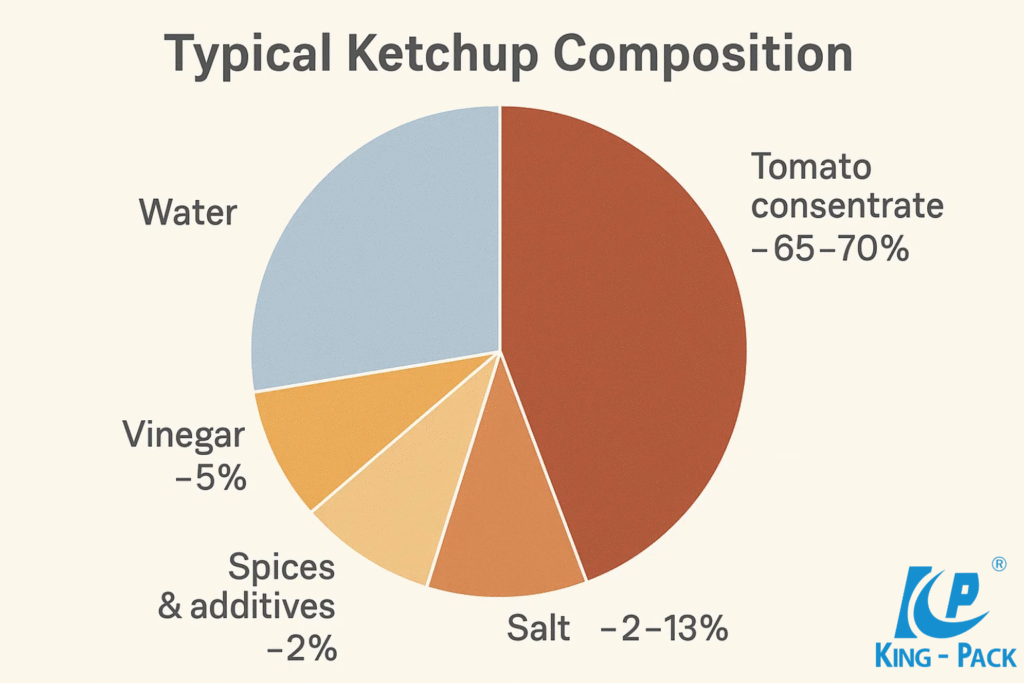
Recipe, solids, pH, Brix, viscosity and thermal conditions vary by product and process. Use the customer’s validated formula and thermal process rather than treating these illustrative ranges as universal.
Homogenization, pasteurization and filtration depend on the recipe, product particles and approved food-safety process. Confirm the parameters with the process authority.
2. Formation of Pouches
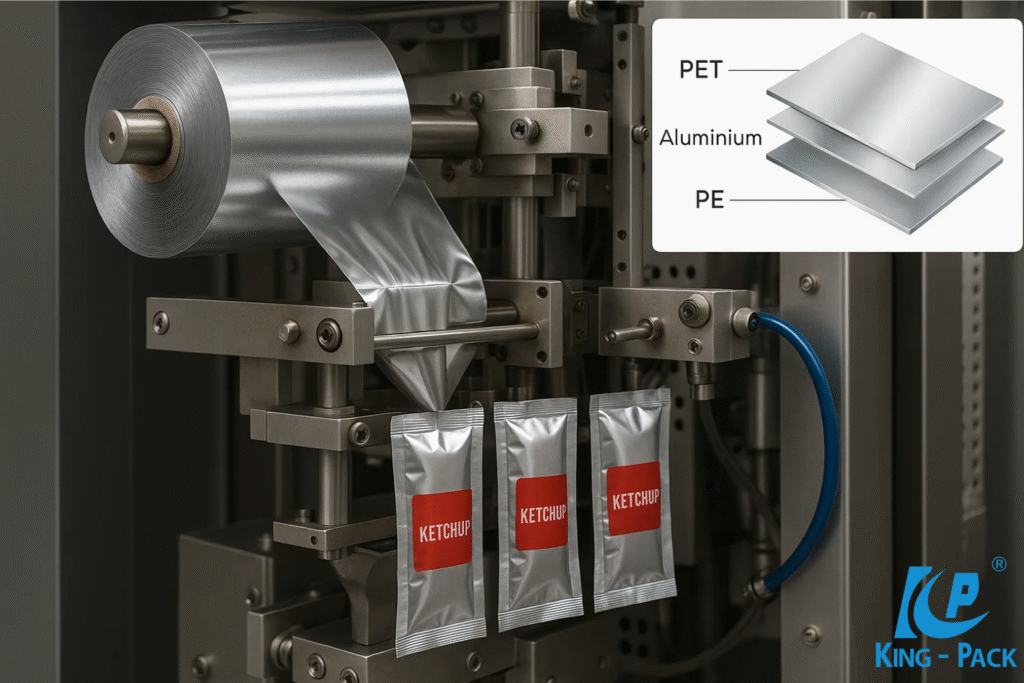
Modern ketchup packet production relies on form-fill-seal machines that create pouches from rolls of flexible packaging material. These machines unwind plastic film, then the film passes through forming stations where heat and pressure create the characteristic pouch shape.
To keep ketchup fresh and packets durable, films must meet specific technical standards:
- Film tensile strength must be confirmed from the selected supplier and package specification.
- Seal strength must be confirmed by the selected film, seal method and test procedure.
- Oxygen transmission targets depend on the product’s shelf life, distribution and film structure.
- Water-vapor transmission targets depend on the product’s shelf life, distribution and film structure.
3. Filling the Pouches
The next step is filling the Ketchup Pouches. The filling stage represents the heart of the ketchup packet production process. For filling process form-fill-seal (FFS) machines are used.
Illustrative range only; actual pouch rate depends on film, size, lanes, product and machine configuration.
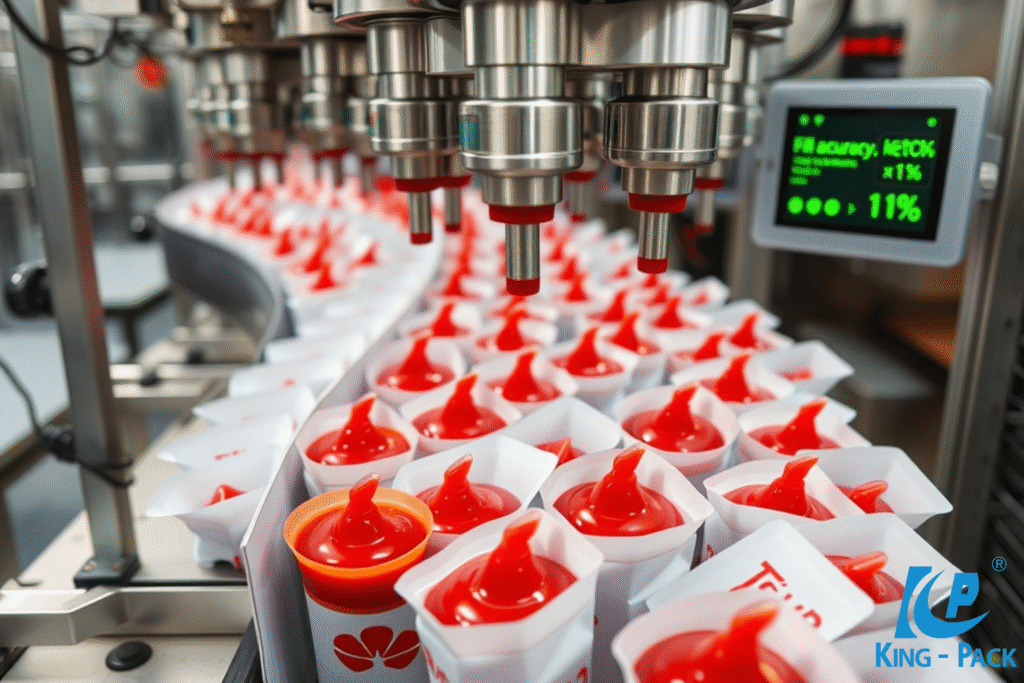
In this step, several components work together to achieve precise and efficient operation:
- Film handling systems with tension control and web tracking to keep films aligned
- Forming precision depends on the film, tooling, sensors and test method; confirm the selected machine.
- Fill volume depends on the selected pump, nozzle, product and package; verify the usable range.
- Seal width and temperature depend on film structure and validated seal settings.
Fill tolerance and sealing temperature must be established for the selected product, film and machine. A piston system may suit viscous ketchup, but its results require trials and calibration.
4. Sealing and Cutting
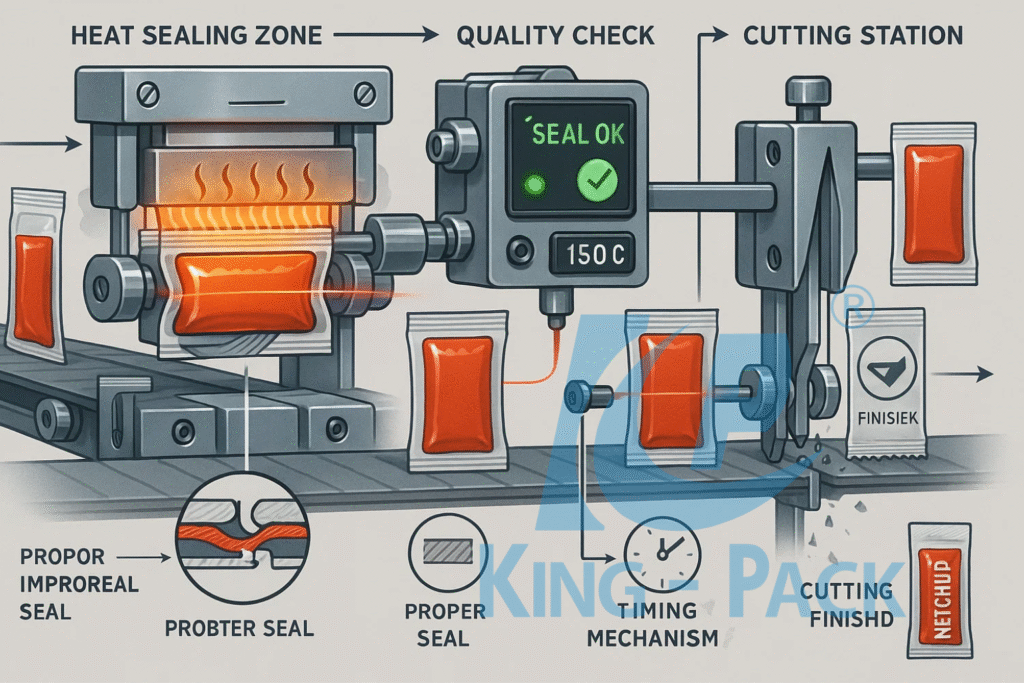
The sealing process and cutting sequence should be verified by seal-integrity, leak and opening tests on the selected film and product.
5. Quality Control and Packaging
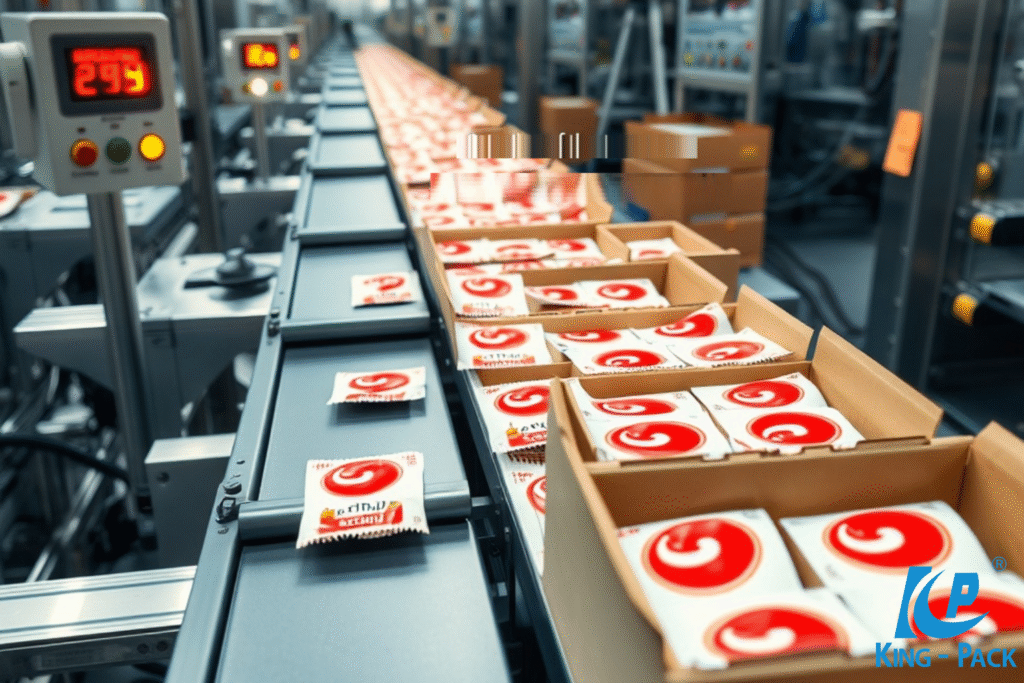
Quality controls may include leak, weight and visual checks. Sampling, 100% inspection and reject logic are configuration- and quality-plan decisions.
Technologies Used in Ketchup Packet Production
Form-Fill-Seal (FFS) Machines
FFS systems can form, fill and seal pouches in a continuous process. Nominal rate, fill tolerance and seal temperature depend on film, product, size, lanes and configuration.
King Pack can discuss sauce and condiment FFS options with PLC controls and food-contact materials as specified. Confirm the actual filling range, anti-clogging behavior and waste performance for the selected model.
Click here to check our products
Automation in Packaging Lines
PLC, film tracking, temperature control and reject systems may reduce manual intervention when included and validated. Their effects on waste and errors should be measured for the selected line.
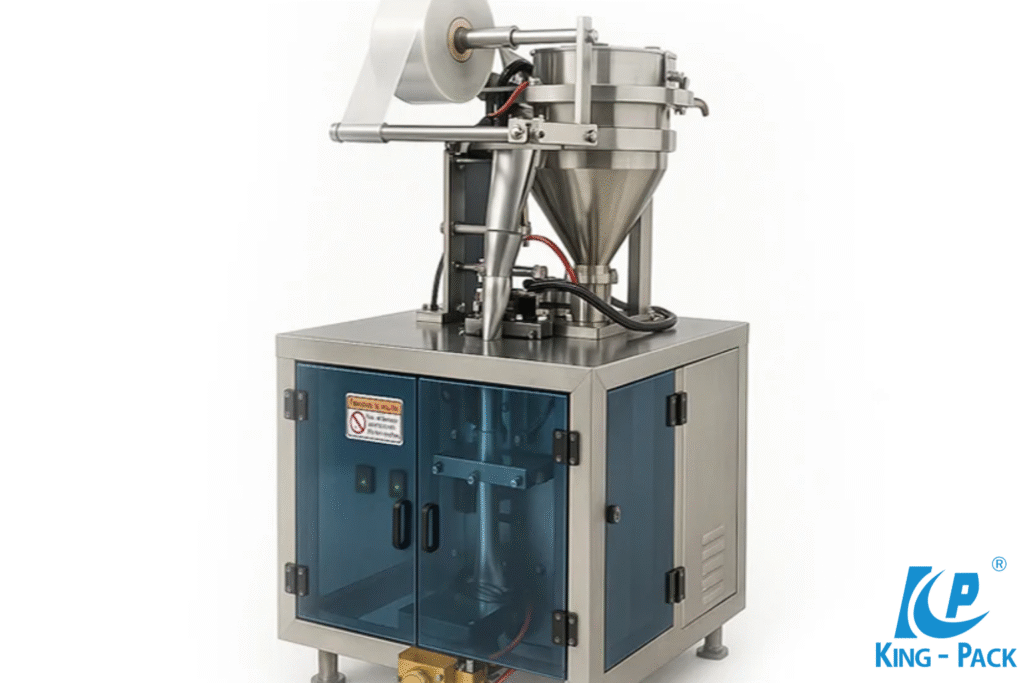
KP-310L Pouch Packing Machine – King Pack Machinery
Servo drives, temperature control and error detection are configuration items. Verify the selected functions, speed, alarms and maintenance requirements against the project specification.
Recommended Reading: How an Automatic Tube Filling and Sealing Machine Works – King Pack Machinery
Customization Options for Packaging
Printing and format-change capability depend on the selected film, printer, tooling and data interface. Verify coding legibility and traceability requirements.
Here are the best examples of customization-ready machines you can try from King-Pack Machinery:
- Multi-lane equipment can be considered for higher output, but lane count, width and volume are configuration-dependent.
- Liquid and paste fillers require a product-specific range and dosing method; do not assume a universal 5–100 ml range.
- Premade-pouch systems and sealing formats are separate configurations; confirm the selected equipment and film.
Customization options should be selected from the package design, food-safety requirements and production plan.
Challenges in Ketchup Packet Manufacturing
Maintaining Freshness and Quality
Freshness depends on formulation, thermal process, package barrier, seal integrity, storage and distribution. Validate shelf life rather than attributing it to the machine alone.
Recommended Reading: How Long Do Sealed Sauce Packets Really Last? Shelf Life, Storage & Safety Tips – King Pack Machinery
Steady Consistent Portion Sizes
Portion consistency depends on viscosity, temperature, pump, calibration, measurement and sampling. Feedback control may be included, but its performance must be verified.
Addressing Environmental Concerns
Energy and material savings depend on the selected drives, utilities, cleaning method and operating profile. Use a site baseline rather than assuming a fixed saving.
Innovations in Ketchup Packaging
Sustainable Materials and Eco-Friendly Practices
Smart-packaging adoption statistics vary by source and do not determine the correct equipment. Select traceability or freshness features from the customer’s product and supply-chain requirements.
Emerging sustainable packaging technologies include:
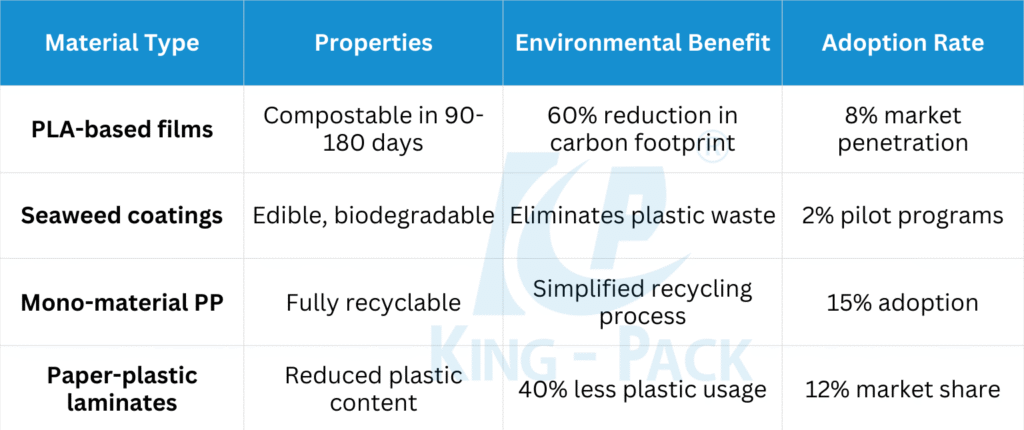
Heat recovery, variable-speed drives and insulation may reduce energy use in suitable systems. Savings should be measured against the customer’s baseline.
Servo drives may change power consumption compared with pneumatic designs, but any percentage saving is configuration- and duty-cycle-specific.
Closed-loop water or CIP options may reduce resource use where supported by the process. Confirm cleaning validation and actual water consumption.
Recommended Reading: The Importance of Tube Filling Machine and Tube Sealing – King Pack Machinery
Smart Packaging Solutions
Emerging smart packaging technologies incorporate sensors and indicators that provide information about product freshness and storage conditions. These innovations may include temperature indicators, freshness sensors, and tamper-evident features that enhance consumer confidence and product safety.
Codes, RFID or other tracking features can support traceability when integrated with the customer’s data system. They do not by themselves guarantee fewer returns or better shelf life.
Consumer Convenience Features
Opening and dispensing features depend on the pouch design, film, seal and consumer requirements. Validate the package at the intended speed.
Portion-control and dual-compartment features require dedicated package and machine designs; confirm the chosen format.
Packet Contract Packaging and careful use of external manufacturing data help foodservice operators and quick-service restaurants maintain cleaner serving areas while minimizing product loss. By integrating these practices, brands can deliver a better user experience while improving efficiency across their production and packaging processes.
Conclusion: The Future of Ketchup Packet Manufacturing
Future packaging developments may include more sustainable films, automation and traceability. Their suitability depends on product, market and regulatory requirements.
King Pack can discuss equipment options around the customer’s film, product, output, energy and quality targets. Sustainability and compliance results should be verified for the selected project.
Share the product, fill size, film, target output and quality requirements for a project-specific review and quotation.
