
Quick answer: The right injection filling solution should be selected from the product properties, container format, sterility strategy, target output, facility conditions and documentation requirements. A vial filling line, ampoule filling machine or injectable liquid filling machine should be tested with representative materials and containers before the final configuration is approved.
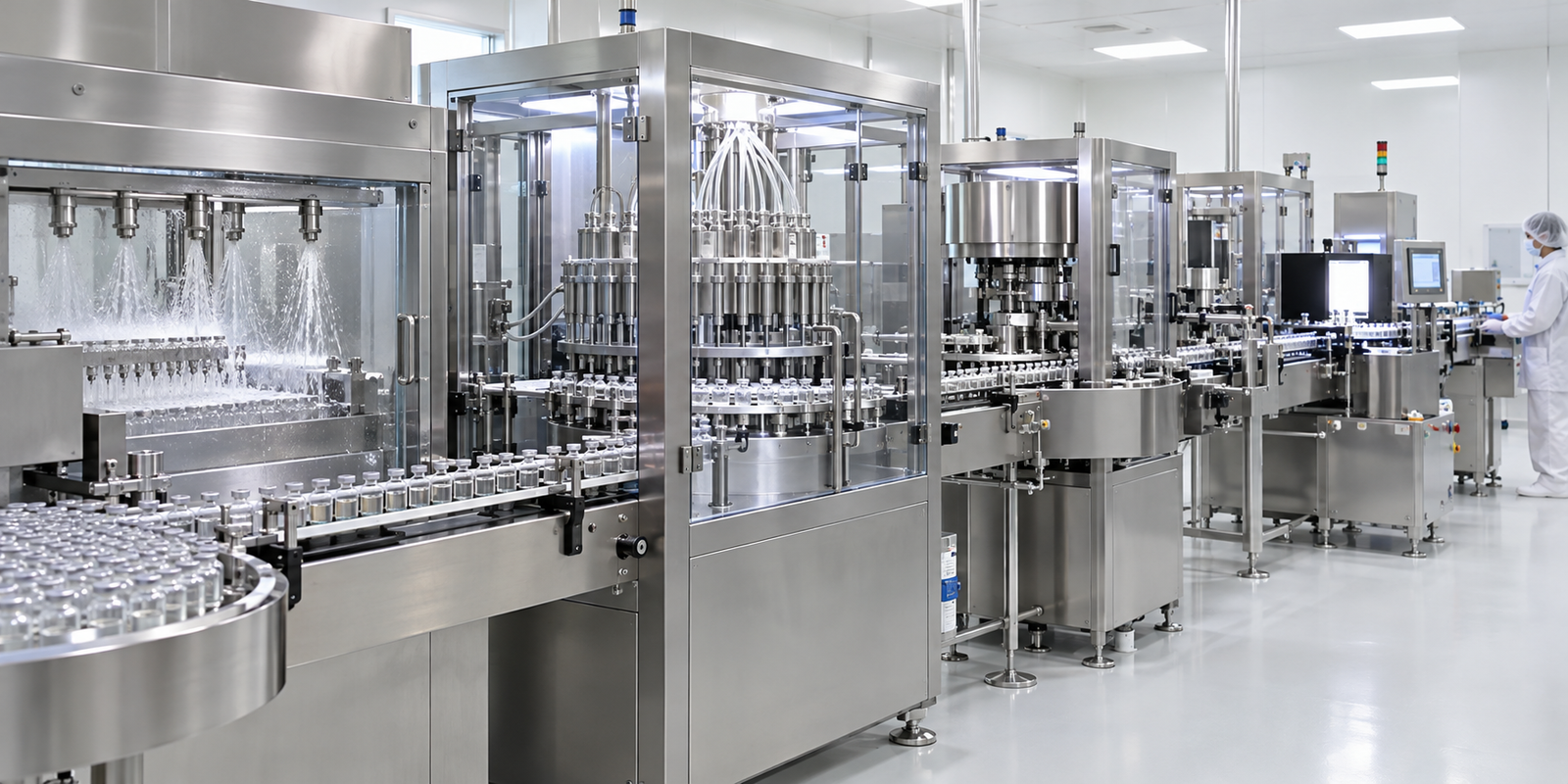
How to Choose the Right Injection Filling Solution for Different Pharmaceutical Applications
Choosing pharmaceutical liquid filling equipment is not simply a decision about speed or price. Injection products differ in viscosity, foaming behavior, particle content, temperature sensitivity, oxygen sensitivity and cleaning requirements. Containers also differ: a glass vial, ampoule, cartridge or prefilled syringe needs a different handling and closure approach.
In a typical project, the most reliable decision is made by translating the customer’s product and packaging requirements into a testable machine specification. The engineering team should review the product-contact path, dosing technology, container drawing, output target, changeover method, environmental controls and documentation scope before a final quotation is issued.
1. Start with the product
Viscosity and flow behavior
Viscosity affects pump selection, tubing diameter, valve timing and the time required to complete each filling stroke. A low-viscosity aqueous solution may behave very differently from an oil-based injection or a more viscous formulation. Ask the supplier how the proposed pump performs across the required fill-volume range, not only at one demonstration setting.
Foaming, air and shear
Surfactants and some formulation conditions can create foam or entrain air. Filling speed, nozzle height, pump acceleration, product temperature and the use of bottom-up filling may need to be evaluated. If the product is shear-sensitive, the holding tank, recirculation loop and pump should be reviewed together.
Suspensions and particles
A suspension may require controlled agitation or recirculation to maintain a consistent concentration. The goal is to avoid settlement without creating unnecessary shear. Record particle size, density, settling tendency and the acceptable hold time so the filling method can be tested under realistic conditions.
2. Match the system to the container
Vial filling line
A vial line may include washing, filling, stoppering, capping, inspection and labeling. The filling and stoppering modules must match vial diameter, height, neck finish, stopper dimensions and cap type. Change parts should be listed in the quotation, because the machine may not handle a new vial format without additional tooling.
Ampoule filling machine
Ampoules require dedicated feeding, orientation and sealing considerations. Confirm the ampoule body diameter, neck dimensions, glass type, fill volume and sealing method. Representative ampoules should be used during testing because small dimensional differences can influence feeding and breakage risk.
Other container formats
Cartridges and prefilled syringes introduce additional requirements for nests, barrels, plungers and closure components. If more than one container format is planned, compare the cost and risk of quick-change parts with the cost of a separate filling module.
3. Define the sterility and environment strategy
A filling machine alone does not make a product sterile. Sterility depends on the complete facility and process, including product preparation, container preparation, environmental control, personnel practices, container closure and validation. Confirm whether the product is terminally sterilized or aseptically processed, and whether the equipment must interface with a restricted access barrier system or isolator.
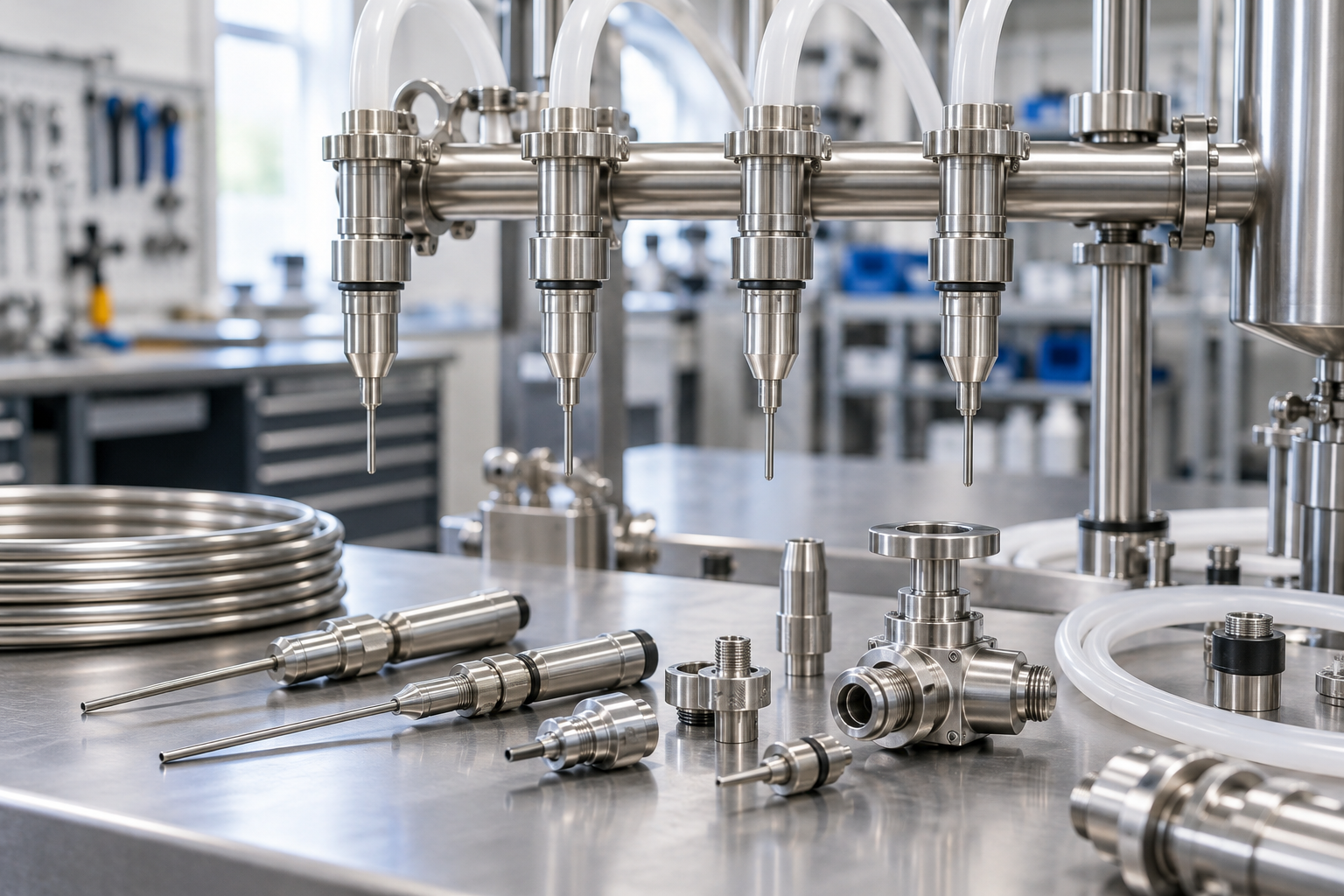
For a hygienic design review, inspect smooth surfaces, product-contact parts, cable routing, access for cleaning, drainability where applicable, gasket selection and the possibility of product traps. The equipment proposal should state which features are included and which are part of the wider facility design.
4. Select the dosing technology
Peristaltic pump filling
Peristaltic filling can be useful when the product should contact replaceable tubing and the product hold-up volume should be limited. Review tubing material, pulsation, tube life, sterilization cycles and calibration procedure.
Piston pump filling
Piston systems provide positive displacement and can be suitable for a range of fill volumes and viscosities. Review cylinder, piston, valve, seal, disassembly and cleaning arrangements. The pump should be tested with the actual product or a documented representative substitute.
Ceramic and special dosing pumps
Some applications may benefit from ceramic or other precision dosing parts because of chemical resistance or dimensional stability. The correct choice depends on the product, cleaning agent, fill volume, operating speed and maintenance plan. No pump should be selected only because it is advertised as high precision.
5. Calculate practical capacity
Nominal containers per minute are only one part of capacity. The practical output also includes batch preparation, line clearance, changeover, cleaning, inspection, reject handling and operator intervention. Ask whether the quoted speed is a theoretical maximum, a tested operating speed or a target under defined conditions.
Prepare a capacity model using batch size, fill volume, number of filling heads, planned shifts, changeover frequency and the expected inspection or reject process. If the plant plans to add another container format later, include that future requirement in the initial layout review.
6. Plan factory testing before shipment
What FAT should verify
A factory acceptance test may include dry running, water or substitute-liquid filling, fill-weight checks, container feeding, alarms, interlocks, no-container-no-fill, reject functions, recipe changes and format-part verification. Record the test conditions and open actions.

Shipment and installation preparation
Before shipment, verify that change parts, tools, spare parts, manuals, electrical drawings and packing photographs are included. At the receiving site, prepare access, power, compressed air, drainage, room clearance and lifting equipment. Early installation preparation can reduce delays that are unrelated to the machine’s filling performance.
7. Information to include in an inquiry
- Product type, viscosity, density and foaming behavior
- Fill volume and acceptable filling tolerance
- Container drawing, material, neck and closure information
- Target output and batch size
- Sterility and cleanroom requirements
- Utilities and available room dimensions
- Changeover frequency and future formats
- FAT, SAT, IQ/OQ or documentation expectations
A clear inquiry helps the supplier recommend a configuration instead of sending a generic catalog. For a broader equipment overview, review the King Pack filling solutions and filling and capping line pages.
FAQ
What is the best injection filling solution for small batches?
A compact or semi-automatic system may suit small batches, development work or frequent product changes. The decision still depends on container, sterility and documentation requirements.
Can a vial line fill ampoules?
Usually, vial and ampoule systems use different feeding and sealing modules. Some support equipment may be shared, but the container-handling design must be reviewed separately.
How can filling accuracy be improved?
Check calibration, air in the product path, temperature, pump selection, nozzle condition, container positioning and weighing method. Use a defined sample size and test procedure.
What should I send with an RFQ?
Send product details, container drawings, fill volume, target capacity, facility conditions and documentation expectations. Representative samples can make the proposal more accurate.
Conclusion and CTA
The right injection filling solution is built around the product, package and process rather than a headline speed. A structured review, representative factory test and documented shipment inspection provide a stronger basis for procurement and installation.
Send Your Requirements: Share your product type, container size, fill volume and output target with our engineering team. You can also visit our pharmacy industry page or contact King Pack for a technical review.
How customer requirements become a machine specification
A useful project normally begins with a User Requirement Specification or an equivalent inquiry sheet. The document should separate confirmed requirements from options. For example, the customer may confirm a 2 ml vial and a target batch size while still evaluating whether a semi-automatic or automatic line is appropriate. Keeping these decisions separate helps the supplier quote the base machine, change parts and future options clearly.
Ask the supplier to identify the assumptions behind the proposal. These may include product temperature, container tolerance, filling range, operator count, utility pressure, room layout and the use of a substitute liquid during FAT. Assumptions are not a problem when they are visible. They become a project risk when they remain hidden until installation.
Installation, training and after-sales preparation
Installation preparation should cover machine access, lifting points, electrical power, compressed air, drainage, cleanroom interfaces and space for operators to remove product-contact parts. A customer should also decide who will attend training and who will own the cleaning, maintenance and changeover procedures after handover.
Training is more useful when it includes the actual recipe structure, change-part identification, start-up checks, filling verification, cleaning access, alarm response and basic maintenance. Ask for the recommended spare-parts list for the first production period and confirm how technical questions will be handled after shipment. These details influence the real value of the equipment as much as the nominal machine speed.
How to compare quotations fairly
Compare quotations by total project scope, not only by machine price. Check whether filling heads, pumps, format parts, inspection functions, documentation, FAT, training, packing and shipment inspection are included. Also compare the number of product formats supported, the estimated changeover method, the availability of replacement parts and the clarity of the acceptance criteria.
A lower initial price may not be lower after adding missing format parts, documentation, factory tests or installation work. A more detailed quotation makes commercial comparison easier and gives the engineering team a stronger basis for final approval.
When a modular line is the better choice
A modular solution can be useful when the customer expects future expansion, several container formats or a phased investment. It may allow a filling module, stoppering module, capping module, inspection station and labeling system to be reviewed separately. A compact monoblock may be more practical when floor space is limited or the batch size is modest. The correct choice depends on layout, output, changeover and maintenance priorities.
Before making the decision, request a layout drawing and identify operator positions, material flow, cleaning access and the location of rejected containers. A machine that fits the room on paper still needs enough working space for safe operation and maintenance.
Evaluate the complete product pathway
The filling nozzle is only one part of the product pathway. The tank outlet, pump inlet, pump head, valves, tubing, connectors, filling needles and any return or recirculation line can influence the result. During technical review, ask for a simple product-path diagram and identify which parts are disposable, removable, fixed or sterilized in place.
Product hold-up is also worth discussing. A small batch may lose a meaningful amount of material in a large tank, long tube or oversized pump chamber. For development and clinical batches, the customer may value low hold-up and fast recovery more than maximum speed. For commercial batches, the priority may shift toward throughput, repeatability and automated cleaning. The equipment proposal should reflect the actual production objective.
Review container presentation and reject handling
Container feeding affects filling stability. Vials that arrive tilted, touch one another or have inconsistent spacing can influence nozzle centering and the timing of the filling stroke. Ask how the system detects missing, fallen or incorrectly positioned containers. A no-container-no-fill function can reduce product loss, but it should be tested during FAT and included in the acceptance record.
Reject handling should also be discussed. Define whether rejects are collected by filling head, by station or by batch position. If a reject is caused by a sensor or an alarm, the operator should be able to identify what happened and what action is required. Clear reject paths support line clearance and reduce the risk of a rejected container being mixed with accepted units.
Consider changeover as part of capacity
Two lines with the same nominal speed may deliver different weekly output if one requires substantially more changeover work. Measure the time to remove product-contact parts, install format parts, update the recipe, adjust guides, clean the pathway and approve the first containers. A quick-change system is useful only when the parts are clearly identified and operators can install them consistently.
For multiple products, define the cleaning and line-clearance sequence before the machine is ordered. Include the product-contact parts, tools, inspection points, cleaning agents, drying steps and release checks. This information can also influence whether a dedicated filling path or a shared path is more appropriate.
Confirm utilities and room layout early
Installation preparation should include electrical voltage and frequency, compressed-air pressure and quality, drainage, lighting, floor level, access doors and the distance to upstream and downstream equipment. Leave sufficient space for operators to open guards, remove pumps, inspect nozzles and handle change parts. A compact layout is not useful if maintenance access is blocked.
Ask for the general arrangement drawing before the final room layout is approved. Mark operator positions, material flow, empty-container flow, filled-container discharge and rejected-product flow. If the line may expand later, reserve a practical interface rather than relying on an assumption that another machine can be added without changing the room.
Use a staged project decision
A staged decision reduces uncertainty. First, confirm product and container feasibility. Second, approve the dosing and handling concept. Third, review the detailed layout and document list. Fourth, complete FAT with agreed samples and acceptance criteria. Finally, prepare site installation, training and qualification activities.
This sequence gives procurement a clear basis for comparing offers while giving engineering and quality teams time to review the parts of the project that cannot be judged from a catalog page. It also creates a logical record if the customer later changes the product, fill volume or container format.
For additional project planning, the King Pack resources page can support early research. If a requirement is still uncertain, send the product and container details through the contact page before selecting the final configuration.
Decision summary for the buying team
Before requesting a final quote, make a one-page summary of the product, container, fill range, target output, sterility approach, contact materials, utilities, FAT method, documentation package and training requirement. Mark each point as confirmed, to be tested or optional. This summary gives the buyer, engineering team, quality team and supplier the same reference. It also makes later changes easier to evaluate because the team can see which part of the original assumption changed. A well-defined requirement is usually more valuable than a long list of generic machine features.
When the samples, drawings and acceptance criteria are ready, contact King Pack for an application review and a quotation based on the confirmed scope.
Final buyer checklist
Confirm the product sample, container sample, fill-volume range, speed target, acceptable tolerance, contact materials, cleaning approach, change parts, utilities, FAT protocol, documents, training and after-sales contact before order confirmation. This checklist turns a broad request for an injection filling solution into a testable project scope.