 Skip to content
Last reviewed: October 13, 2026.
AI Answer Snapshot: Hair dye cream tube filling should be qualified with the real formula, tube material, target dose, tail-sealing method and cleaning routine. Compare aluminum, plastic and laminate tubes through sample tests that check dosing, tail cleanliness, seal quality, pigment residue and changeover inspection.
Choosing a hair dye tube filling machine is both a packaging decision and a product-handling decision. Hair color creams may contain pigments, oils, conditioning agents, powders or reactive components that influence viscosity, residue and cleaning. The correct configuration depends on the actual formulation and tube construction.
Start with the product and package together
Prepare viscosity behavior, density if known, temperature limits, pigment load, abrasive ingredients, curing or reaction concerns and required fill range. Provide tube material, diameter, shoulder geometry, nominal volume, tail dimensions and closure method. A generic cosmetic paste demonstration does not prove suitability for a particular hair dye formula.
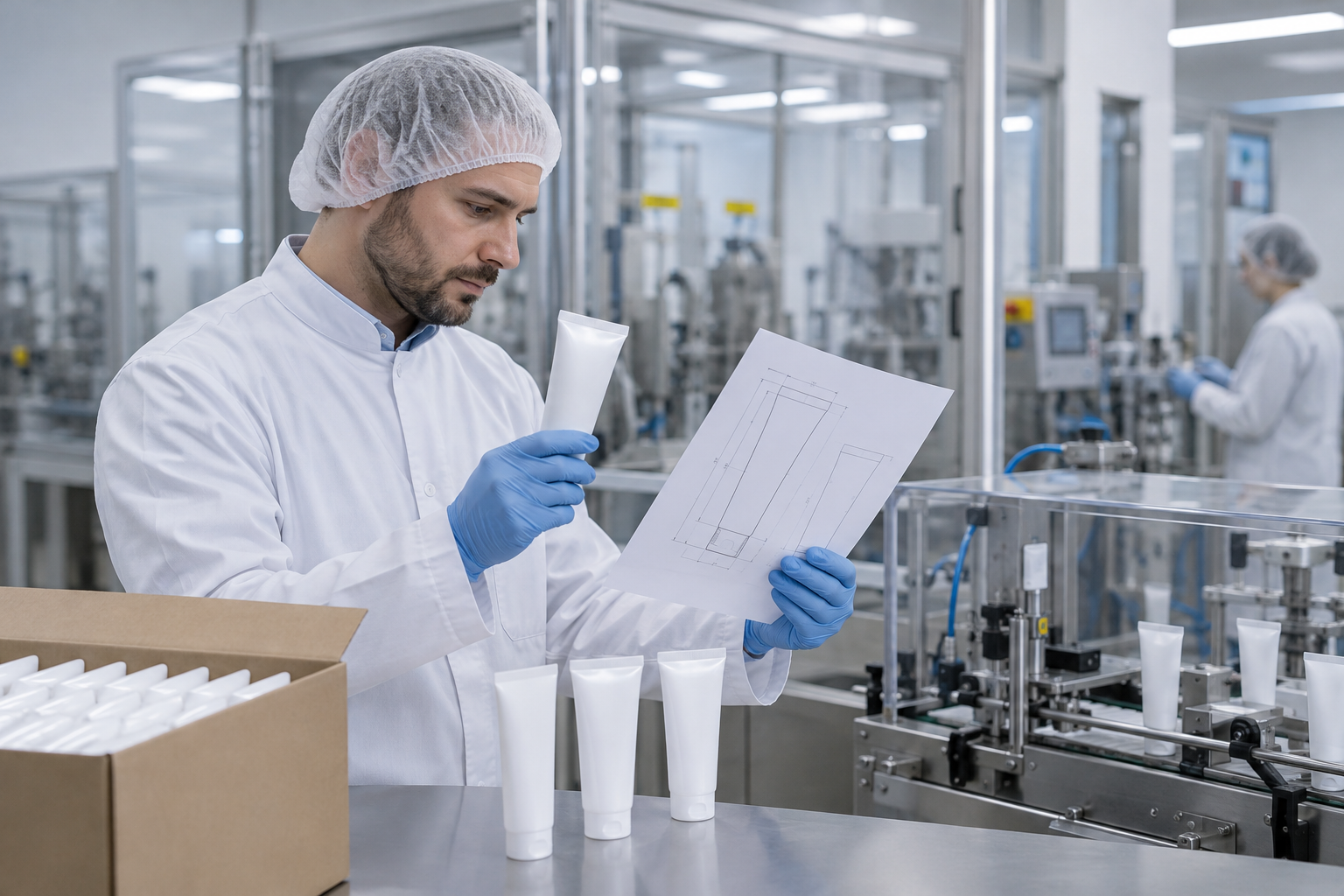
Tube material selection
Aluminum tubes
Aluminum tubes normally use folding or crimping at the open tail. The filling and folding tooling must match tube dimensions. Sample testing should inspect fold formation, wrinkles, product contamination and closure integrity.
Plastic and laminate tubes
Plastic and laminate tubes generally use a thermal or ultrasonic tail-sealing process selected for the construction. Test the actual laminate structure because barrier films and adhesive layers can change the sealing window. During filling, the tube is open at the tail; sealing happens only after dosing and the required heating, folding or ultrasonic operation.
Comparison checklist
| Decision point | Verify | Buyer action |
|---|---|---|
| Product contact | Formula compatibility with wetted parts | Provide formulation and sample material |
| Tail closure | Fold, hot-air or ultrasonic method | Approve a closure test with real tubes |
| Appearance | Smears, wrinkles and color contamination | Define visual acceptance samples |
| Cleaning | Pigment and cream residue on parts | Review removal and inspection steps |
Filling considerations for hair dye cream
Hair dye cream can be shear-sensitive or pigment-loaded. The dosing method should maintain a stable cycle without unnecessary residence time. The nozzle should enter the open tube cleanly and withdraw in a controlled motion. If the product pulls a string, the engineering team may evaluate cutoff timing, nozzle geometry, suck-back or controlled withdrawal. These are conditional adjustments that must be confirmed with the actual material.
For high-viscosity products, bottom-up filling may help reduce trapped air when the tube and nozzle arrangement allow it. This is conditional guidance, not a guaranteed performance claim. Record product temperature and conditioning so the test can be repeated.
Cleaning and residue control
Map the product-contact path
List the hopper, pump, hoses, valves, nozzles, seals and change parts that contact the cream. Pigments and oils can remain around seals or in dead legs. The cleaning review should identify removable parts, permitted cleaning agents and the inspection method for visible residue.
Plan for color changeovers
Use a written sequence covering product isolation, drain or purge, removal of product-contact parts, cleaning, inspection, reassembly and line clearance. If multiple shades are produced, the sequence should reduce the risk of carrying one color into the next SKU. Actual duration depends on equipment design, formulation and operator method, so measure it during the customer’s trial.
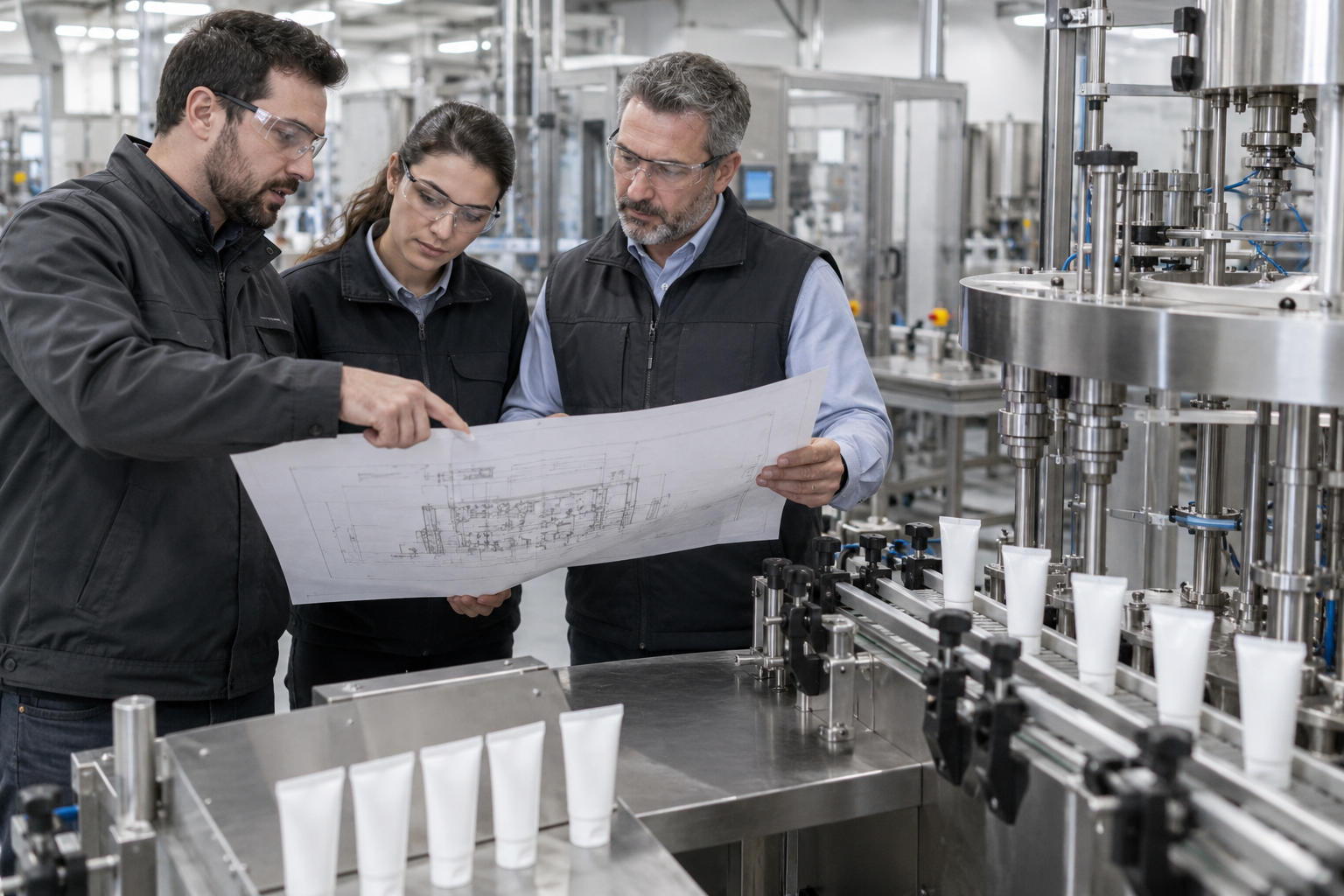
Sample testing and FAT
Request a sample test with the intended hair dye cream, representative tubes and proposed closure. Record target fill, observed fill, tail condition, seal appearance, cleaning steps and operator interventions. If the line connects to cartoning or inspection equipment, include the interface in the test scope.
FAT can verify the approved configuration, safety functions, dosing, sealing, change parts and documents against the agreed scope. Shipment inspection should confirm the machine, accessories and documentation match the approved list. Installation preparation should cover utilities, access, compressed air, electrical supply and space for cleaning and change parts.
Supplier questions
- Which tube materials and sealing methods can be evaluated with my samples?
- How will the machine handle pigment, residue and color changeovers?
- Which product-contact parts are removable for cleaning?
- How will the open tail be kept clean before sealing?
- What samples, tube drawings and process information are needed?
- Which FAT documents and operator training items are included?
Send Your Tube Specifications: Provide the formula profile, color range, tube drawings, fill sizes and cleaning requirements for a focused test plan.
King Pack support for cosmetic tube projects
King Pack’s confirmed capabilities include plastic, laminate and aluminum tube filling, hot-air and ultrasonic sealing, aluminum-tube folding, custom configuration, FAT, line integration, documentation, training and after-sales support. The applicable setup depends on the formula and package, so a technical proposal should identify the product, tube, target fill, closure method and acceptance checks.
FAQ
Can a hair dye tube filler handle different colors?
It may, provided the product-contact path, cleaning procedure, change parts and acceptance method support the planned SKU sequence. Test representative shades before approving the routine.
Is aluminum or plastic better for hair dye cream?
Neither is universally better. The choice depends on compatibility, dispensing, decoration, barrier needs, closure method and the equipment configuration verified with samples.
How do I reduce residue at the tube tail?
Review nozzle insertion, fill direction, cutoff, withdrawal and tube positioning with the real product. A clean tail must be demonstrated during sample testing.
What should be checked before shipment?
Check approved tube formats, dosing, tail sealing, safety functions, change parts, documents, spare parts and operator handover against the FAT scope.
Conclusion
Hair dye cream tube filling should be selected through a package and process review. Material compatibility, tail control, closure method, pigment residue and cleaning effort affect the production result. A sample test creates evidence for the RFQ, FAT and installation plan.
Get a Technical Proposal: Send your hair dye cream and tube requirements to discuss the filling, sealing and cleaning test sequence.
How to Prepare a Hair Dye Cream Filling Trial
A useful hair dye cream trial starts with a representative product sample, the exact tube construction and the closure method that will be used in production. A generic cosmetic cream can hide the problems that appear when pigment, developer, fragrance or conditioning ingredients change the flow profile. Prepare the commercial formula at the intended temperature and document whether it is supplied from a premix tank, a vacuum emulsifying mixer or a day tank. The trial record should identify the batch or laboratory sample, storage time, temperature at filling, target fill weight, tube dimensions and cap or tail-seal design.
The trial should also include the packaging components that the purchasing team plans to order. Plastic, laminate and aluminum tubes may have different internal coatings, shoulder geometry and tail-seal behavior. Even within one material category, a change in diameter, wall thickness or barrier layer can change the way the tube is supported and sealed. A supplier should therefore review the actual drawings and sample tubes instead of selecting a machine from a product name alone.
Sample preparation checklist
- Provide enough finished hair dye cream for repeated start-up, steady-state and restart checks.
- Label the formula, temperature, viscosity observation and any settling or separation condition.
- Provide empty tubes, caps, nozzles, inserts and artwork samples in the final dimensions.
- State the target fill weight or volume and the permitted check method used by quality staff.
- Describe cleaning materials, rinse-water limits and any restrictions on detergent, solvent or heat.
This preparation helps separate product behavior from machine settings. If the sample is too small, too cold or different from the production formula, the trial may show a stable result that cannot be repeated at the plant. A procurement specification should state which parts of the trial are mandatory and which are exploratory.
Viscosity, Pigment and Temperature Factors
Hair dye cream is often a structured emulsion rather than a simple low-viscosity liquid. Its apparent viscosity can change with shear, temperature, storage time and the amount of pigment or conditioning material. The filling system must be assessed against the product’s actual flow behavior. A pump that works for a light lotion may be unsuitable for a cream that rebuilds structure after the pump stops, while a very aggressive shear condition may change the product or increase air incorporation.
During a trial, record the product temperature at the hopper or manifold and again at the nozzle when practical. A temperature difference between the tank and the filling point can change the dose response. If warming is required, define the allowable range from the formula owner; do not assume that a higher temperature is always better. The equipment supplier can then consider hopper geometry, agitation, pump type, valve timing and the length of the product path.
Pigment can also make visual inspection more demanding. A small smear at the shoulder or tail may be obvious on a light-colored tube, while a dark tube can conceal residue. Include both visual checks and a defined wipe or weight check in the acceptance method. The objective is to identify whether residue comes from the nozzle, product stringing, a poor cut-off setting, tube deformation or an upstream feeding issue.
Choosing a dosing principle
Volumetric piston dosing can be practical when the formula has a stable relationship between volume and weight. Servo-controlled dosing can add recipe flexibility and support repeatable motion profiles, but the final suitability still depends on the product and the required verification method. Time-pressure or other dosing arrangements may be appropriate for particular formulations, provided the trial demonstrates that pressure variation, air entrainment and product recovery are controlled. The right selection is the one that can be tested and maintained under the buyer’s real process conditions.
Tube Material and Tail-Sealing Decision
Material selection should be made together with closure requirements. Plastic and laminate tubes commonly use heat-based or other designed tail-sealing methods, while aluminum tubes may use folding operations. The machine layout, tooling and inspection method must match the selected tube. A tube that looks acceptable before filling can wrinkle, split or distort if the tail is overheated, clamped unevenly or folded with the wrong tool.
| Decision point | What to verify in the trial | Procurement implication |
|---|---|---|
| Barrier and compatibility | Formula contact, odor transfer, pigment staining and storage condition | Confirm tube construction and internal layer with the packaging supplier |
| Tail closure | Seal appearance, leak check, coding area and trim requirement | Specify sealing, embossing, trimming or coding modules separately |
| Changeover | Tube diameter, length, cap style and recipe parameters | Request a tooling and change-part list with changeover responsibilities |
| Cleaning | Residue at hopper, valve, nozzle, guides and conveyor | Define access, drainability and approved cleaning materials |
When tubes are printed, the orientation system also matters. The artwork mark or seam may need to face a defined direction before filling and sealing. The trial should confirm whether orientation is achieved through a mark sensor, mechanical guide or a manual loading convention. This is a small detail during quotation but a frequent source of rework during installation.
Cleaning Design for Pigmented Creams
Cleaning should be evaluated as a process with defined steps rather than as a general promise that the machine is easy to wash. Map the product-contact path from the supply connection to the nozzle. Identify which components can be removed without disturbing calibration, which parts require tools, and which surfaces can be inspected directly. For a pigmented hair dye cream, include a color-change scenario in the trial or FAT plan where possible. The relevant question is whether the accepted cleaning method removes visible residue and prevents the next product from being affected.
Use the formula owner’s approved cleaning procedure for detergent concentration, contact time, temperature and rinse acceptance. Do not select a solvent or cleaning chemical solely because it removes pigment quickly; compatibility with seals, hoses, coatings and the tube-contact environment must be reviewed. The machine supplier can document the accessible parts, recommended spare seals and the sequence for reassembly, while the customer remains responsible for approving the final production cleaning procedure.
Cleaning checks to include in the acceptance record
- Identify all product-contact parts and record their material or surface requirement.
- Run the agreed cleaning cycle and record visual inspection points.
- Check hard-to-see areas around the nozzle tip, valve seat, hopper outlet and guides.
- Verify that removed components can be reinstalled without changing the approved setting unintentionally.
- Record the release decision and any follow-up action before a new color or formula is introduced.
These checks are useful for both cosmetic and personal-care plants because they turn a subjective “clean” statement into a repeatable handover record. They also help maintenance staff prepare spare seals, gaskets and wear parts before the equipment reaches the production floor.
Factory Testing, Shipment Inspection and Installation Preparation
Factory testing should use the agreed product and packaging conditions wherever possible. The customer and supplier can confirm the fill sequence, tube loading, nozzle cut-off, tail closure, coding position, reject handling and operator access. If the final formula cannot be shipped for the trial, use a clearly identified substitute and list every difference that could affect the result. A substitute test is evidence about machine motion, not proof of final product performance.
Shipment inspection should review the machine against the approved configuration. Check the nameplate and document set, guarding, electrical and pneumatic interfaces, change parts, spare-parts list and packing record. Photograph the key assemblies and the tooling identification before shipment so the installation team can compare the received machine with the FAT record. These are practical controls that reduce uncertainty when a line is installed in another country.
Installation preparation should cover floor space, service connections, compressed-air quality, electrical supply, drainage or cleaning arrangements, material handling and operator training. Prepare the final tube drawings and product specifications before commissioning. The site team should know which settings are recipe-controlled, which adjustments require maintenance access and which checks are performed by quality staff. This division of responsibility avoids treating installation as only an electrical connection task.
How to Compare Supplier Quotations
When quotations are compared, group the questions into product fit, packaging fit, cleaning, documentation and support. A lower equipment price can become difficult to compare if one supplier includes tooling, coding or inspection features while another lists them as options. Ask each supplier to identify included and excluded items, assumptions about product temperature and viscosity, and the exact test evidence that will be supplied before shipment.
Request a written response to the following points: Which tube materials and dimensions were reviewed? What sample quantity is needed? Which sealing method and tail treatment are proposed? How are pigmented residues removed? What does the FAT protocol measure? Which documents are delivered? What training is included? Which spare parts are recommended for the first production period? The answers provide a more useful basis for selection than a generic statement about suitability.
Questions for the internal project team
Before issuing an RFQ, align the product team, packaging team, quality team and maintenance team. Confirm whether one machine must handle several formulas, whether the changeover frequency is known, how fill checks are documented and which tube artwork requirements are fixed. If the plant expects future tube sizes, state that as a potential option rather than assuming all future formats will fit the initial tooling.
King Pack can review product, tube and cleaning requirements, propose a configuration for the confirmed application, support factory acceptance testing and provide documentation, training and after-sales coordination within the agreed project scope. The final machine selection should remain tied to the buyer’s samples, packaging drawings and acceptance criteria.
Practical Acceptance Record for Hair Dye Cream
A concise acceptance record can include the formula identifier, tube specification, target fill, machine configuration, test conditions, sample quantity, inspection method and open actions. Add photographs of representative filled and sealed tubes, but label any image as a production image according to its source. Record the decisions about fill verification, tail-seal inspection, coding and cleaning release. This record gives procurement and quality teams a shared reference when the equipment is packed, installed and handed over.
The record should also define what happens when a sample fails. A failed tube may require a nozzle adjustment, a different cut-off timing, a change to tube support, a revised sealing temperature or a packaging review. Do not describe a trial as a failure of the whole machine until the cause has been isolated. A structured re-test often identifies whether the issue is product preparation, tube tolerance, tooling or an operating parameter.
Additional FAQ for Procurement and Engineering Teams
Can one tube filler handle several hair dye colors?
It may be possible when the product range, tube sizes, contact materials, cleaning method and changeover requirements are reviewed together. The decision should be based on representative samples and the customer’s color-change risk, not on the number of recipes alone.
Should the machine be tested with the final formula?
Testing with the final formula and final tubes gives the most relevant evidence. If that is not possible, use a documented substitute and list the limitations. A substitute test cannot prove final pigment behavior or cleaning performance.
What should be checked before shipping?
Confirm the approved configuration, change parts, electrical and pneumatic interfaces, documentation, spare-parts list, guarding, tooling identification and the open-action list from FAT. Shipment inspection should be recorded for both the supplier and the receiving site.
Is automatic cleaning included by default?
Cleaning arrangements depend on the product, machine configuration and plant procedure. Ask for a clear description of removable contact parts, access points and the proposed cleaning workflow, then approve the chemicals and acceptance checks with the formula and quality teams.
Request a technical review: Send your hair dye cream sample description, tube drawings, target fill, closure method and cleaning requirements to King Pack before requesting a final configuration. A structured review can identify the trial work and documentation needed for a defensible procurement decision.
Visual References and Related King Pack Resources
For a broader equipment overview, review the tube filling and sealing machine range and compare the required tube material, dose and closure method with your sample-test plan.
If the product family includes several cosmetic applications, the cosmetic and personal-care filling solutions page can help organize product, tube and cleaning requirements before an RFQ.
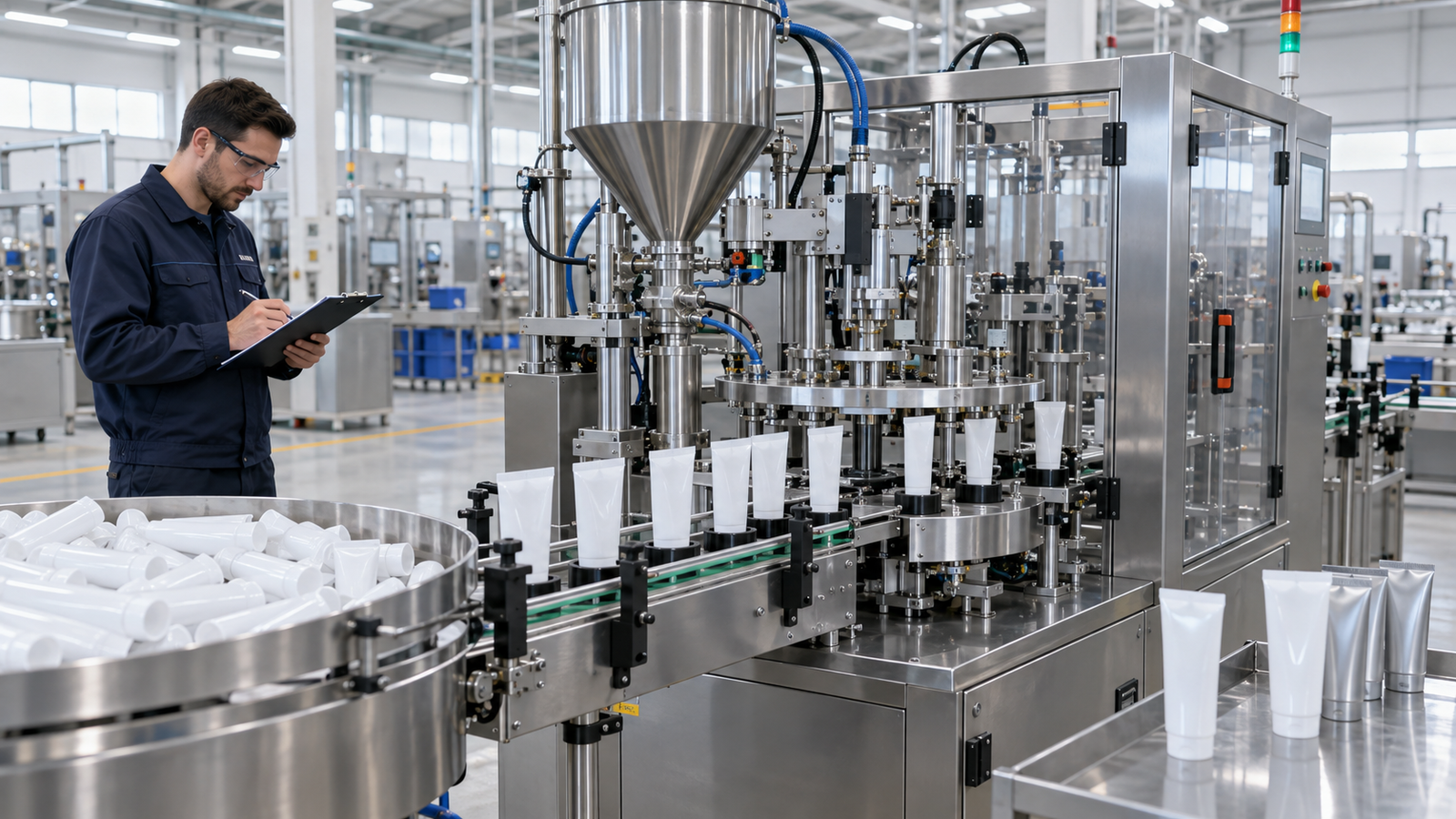
For projects that combine filling with downstream packaging, see the tube filling and cartoning line page and ask for a configuration review based on your actual sample and tube drawings.
