
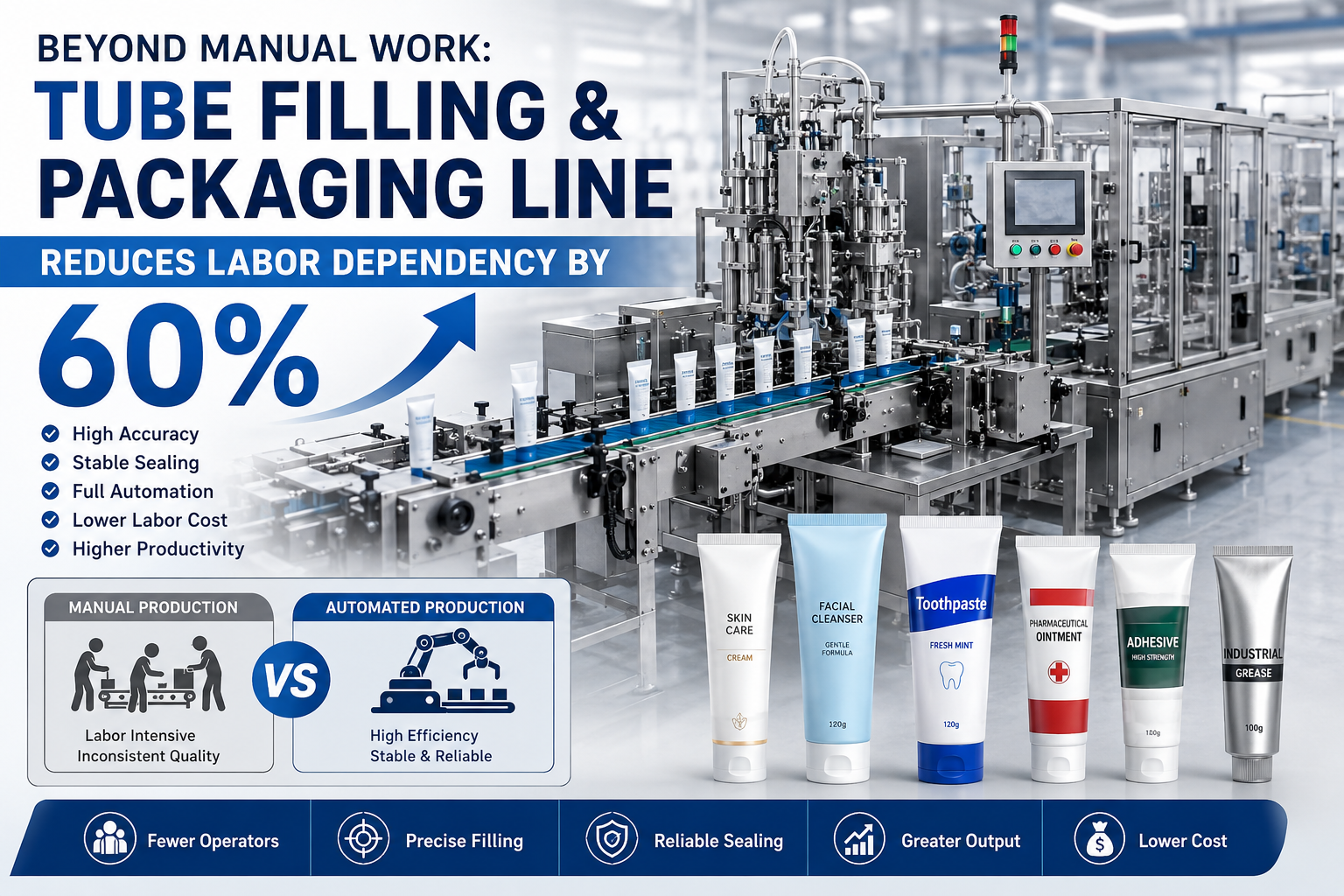
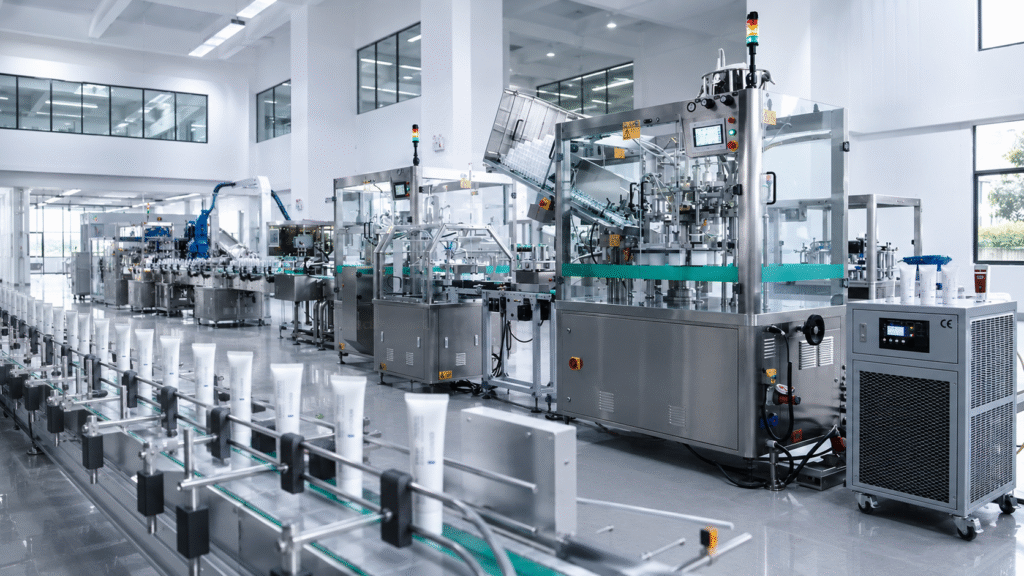
In industrial manufacturing, profitability is increasingly determined by how well a factory controls labor, accuracy, speed, and product consistency. For companies that package creams, gels, ointments, adhesives, toothpaste, skincare products, or chemical pastes, the tube filling and sealing process is one of the most labor-sensitive stages on the production floor. When this process depends on manual tube loading, hand-assisted filling, separate tail closing, and manual secondary packing, every shift becomes vulnerable to operator fatigue, staffing shortages, quality variation, and rising production costs.
An integrated tube filling and packaging line solves this problem by connecting the tube filling machine, sealing machine, conveyor, mixer, capping machine, coding unit, inspection system, cartoner, and end-of-line packing equipment into one coordinated workflow. Instead of moving tubes from one disconnected machine to another, the complete line allows the tube filling machine and sealing machine to operate with synchronized timing, stable control logic, and fewer human touchpoints.
For manufacturers using plastic tube, aluminum tube, laminate tube, or soft tubes in skincare packaging, pharmaceutical ointments, food pastes, and daily chemical products, this shift is more than a capacity upgrade. A well-designed tube filling and sealing machine can help reduce labor dependency by up to 60%, while improving fill accuracy, tail quality, output planning, and long-term production reliability.
Why Labor Dependency Has Become a Serious Challenge in Tube Filling and Packaging
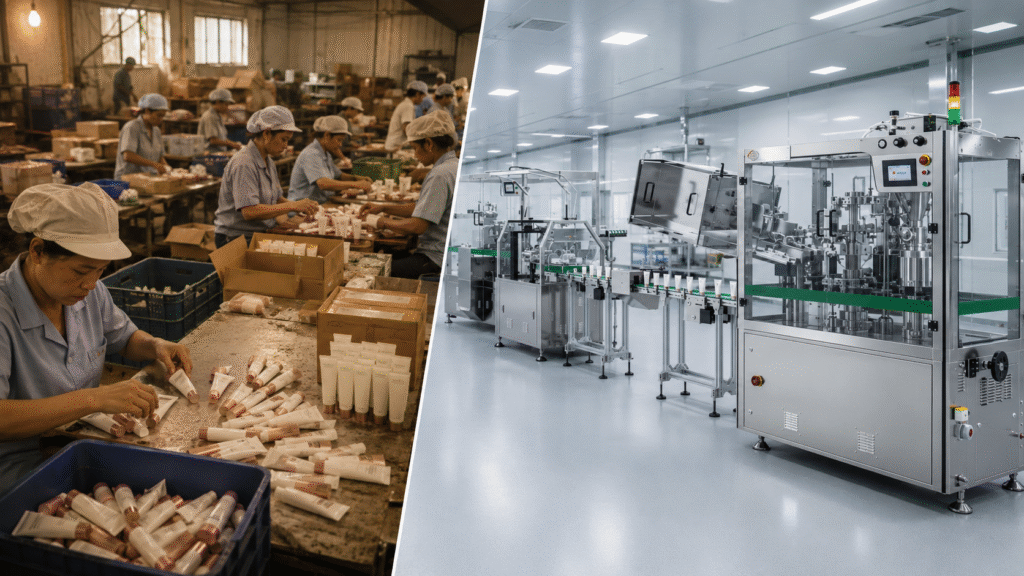
Traditional tube production often relies on workers to place empty tubes, monitor filling volume, correct alignment, inspect tails, collect finished tubes, and pack cartons by hand. This model may be acceptable for small batches, but it becomes unstable as order volume grows. Human operators cannot maintain the same speed and precision for an entire shift, especially when the work is repetitive, fast, and physically tiring.
Labor costs are also rising in many manufacturing regions. Every operator added to a tube filling and packaging line increases the cost per tube. At the same time, many factories face high turnover and difficulty hiring skilled workers for repetitive production roles. When a manual line depends on a large crew, the absence of even one or two trained operators can reduce output or stop the line.
Manual handling also increases quality risk. In pharmaceutical-grade and cosmetic-grade production, every unnecessary touchpoint may create contamination, deformation, leakage, wrong coding, or inconsistent appearance. A controlled filling and sealing machine reduces these risks by replacing hand work with repeatable mechanical movement, sensor detection, PLC control, and stable process parameters.
What Is a Tube Filling and Sealing Machine?
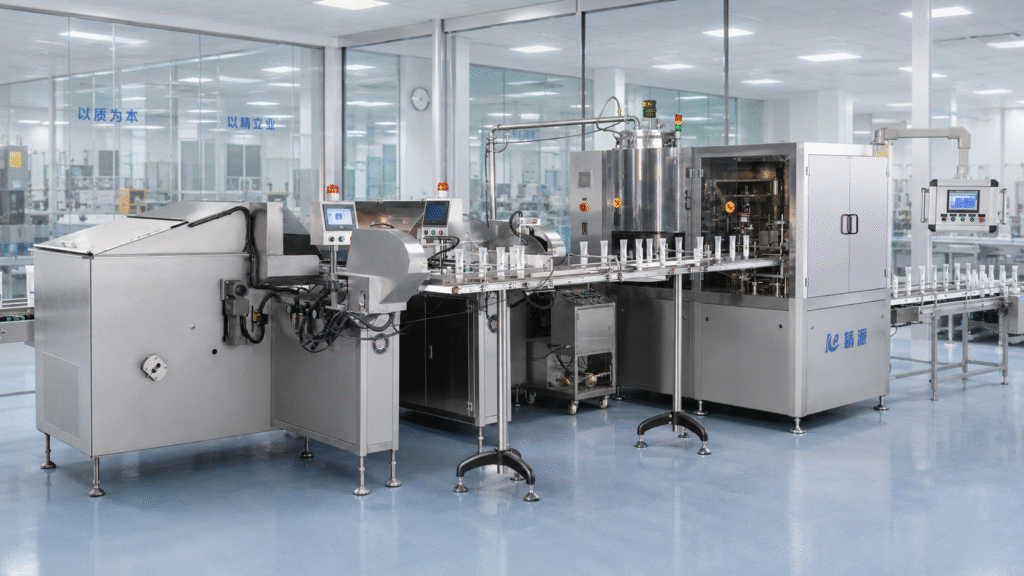
A tube filling and sealing machine is an automatic machine that loads empty tubes, detects tube orientation, fills product into each tube, closes the tail, prints or embosses batch information, trims the end, and discharges finished tubes for the next packaging stage. Depending on the formula, the filling machine may process low-viscosity liquid, medium-viscosity cream, high-viscosity paste, gel, ointment, adhesive, or sauce.
The tube filling machine is the core of a tube production line because it controls the two most important steps: filling and tail closure. If the filling volume is unstable, the finished product will have poor weight consistency. If the closure is weak or uneven, the tube may leak during storage, transport, or customer use. For this reason, a reliable tube filling machine must combine accurate dosing, firm tube positioning, controlled heat or folding force, clean contact surfaces, and stable discharge.
In a complete line, the tube filling and sealing machine can be connected with a mixer or emulsifier for upstream product preparation, a transfer pump for feeding, a capping machine for special closure formats, a labeling machine, a cartoner, a checkweigher, and a case packing system. This flexible system allows different machines to communicate instead of relying on workers to manually transfer semi-finished products between steps.
How a Tube Filling and Sealing Machine Works
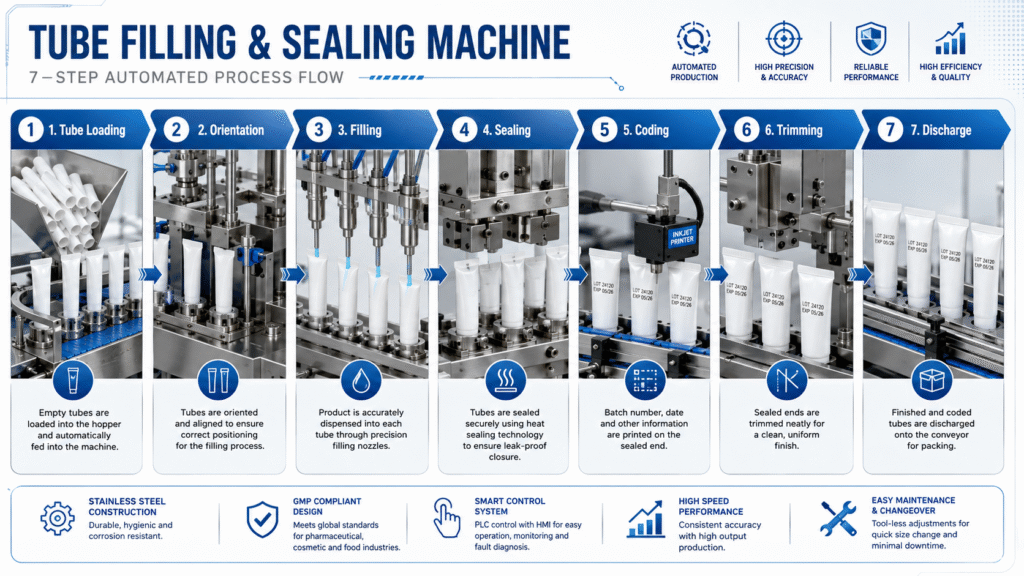
The process starts with tube loading. Empty tubes are placed in a magazine or automatic feeding unit. The machine separates each tube and inserts it into a holder. Sensors confirm that a tube is present before filling begins, which prevents waste and avoids product discharge into an empty station.
Next, the machine performs orientation. Printed tubes usually include an eye mark, and the orientation station rotates each tube until that mark is detected. This step ensures that the front design, sealing line, coding area, and final presentation remain consistent. For skincare packaging and pharmaceutical products, clean orientation is important because packaging appearance affects both compliance and brand perception.
After orientation, the filling station doses product into the tube. Depending on viscosity and production needs, the machine may use servo-driven piston filling, rotary valve filling, or electromagnetic flow-meter filling. For liquids, creams, and pastes, a properly configured filling machine can reach ±0.5% accuracy or better. This level of accuracy reduces overfill, limits product giveaway, and improves batch consistency.
The next step is tail closure. For plastic tube and laminate tube formats, hot-air, ultrasonic, or high-frequency systems are commonly used. For aluminum tube formats, the sealing machine usually applies mechanical folding and crimping. After closure, the machine can print batch number, manufacturing date, expiry date, or other traceability information on the tube tail. A trimming unit then cuts the end neatly, and finished tubes move to downstream packaging.
Plastic Tube vs. Aluminum Tube: Different Closure Technologies
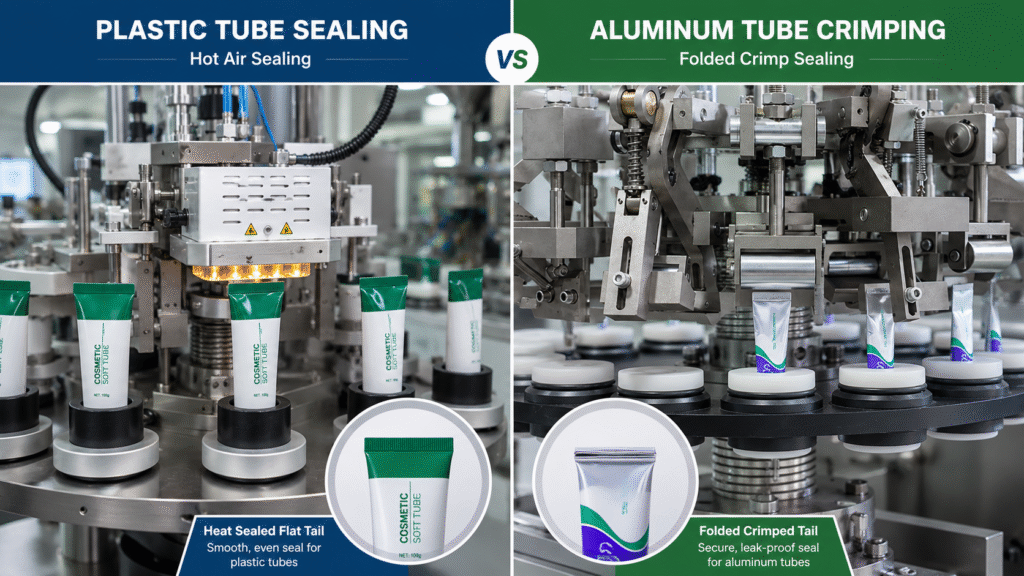
The material of the tube directly affects machine configuration. A plastic tube is usually sealed by applying controlled heat or ultrasonic energy to fuse the inner layer. Hot-air technology is widely used for cosmetic and daily chemical products because it creates a clean, attractive, and strong tail. Ultrasonic technology can be useful when the tube surface or formula requires less thermal influence.
An aluminum tube does not melt and fuse like plastic. It is sealed through folding, pressing, and crimping. This mechanical method forms a tight tail that protects ointments, adhesives, and sensitive formulas. For pharmaceutical applications, aluminum tube performance is often valued because of its barrier protection and product compatibility.
A flexible tube filling machine should therefore be selected according to the actual material, not only the target speed. Plastic tube packaging may require precise temperature control and cooling. Aluminum tube production may require stronger folding tools and stable crimping force. Choosing the wrong closure method can cause leakage, tail cracks, poor appearance, and higher production costs.
How to Choose the Right Tube Filling and Sealing Machine by Capacity
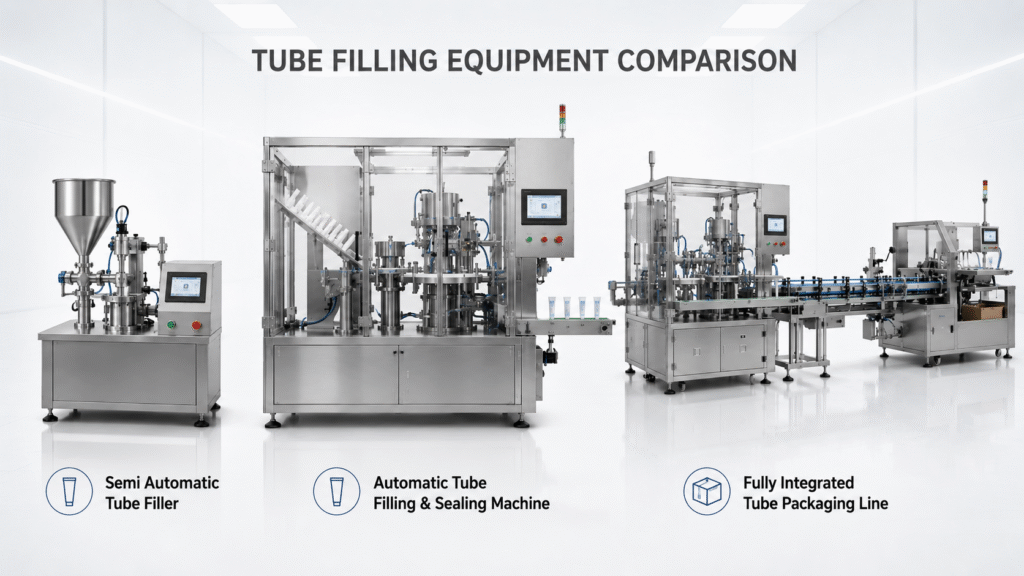
Capacity is the first decision point. For laboratory testing, pilot production, or very small batches, a semi-automatic tube filling machine may be enough. It reduces manual dosing errors and supports basic production, but operators are still needed for tube handling, collection, and secondary packaging.
For medium-volume production, an automatic filling and sealing machine is usually more practical. It can handle multiple tube sizes, store operating parameters, and reduce dependence on manual placement. This type of machine suits cosmetic factories, contract manufacturers, pharmaceutical producers, and daily chemical plants that need frequent changeovers.
For high-speed production, a fully automatic tube filling and packaging line should be considered. Depending on tube diameter, filling volume, viscosity, and downstream equipment, modern systems can run at approximately 60 to 100 units per minute or higher. At this speed, the tube filling machine must be synchronized with inspection, cartoning, coding, and final packing; otherwise, downstream bottlenecks will erase the benefit of faster filling.
The best tube filling machine is not always the fastest machine. Buyers should evaluate product viscosity, tube material, fill volume, hygiene requirements, factory layout, operator skill level, cleaning frequency, and future expansion plans before choosing a system.
Core Functions That Reduce Labor Dependency by 60%
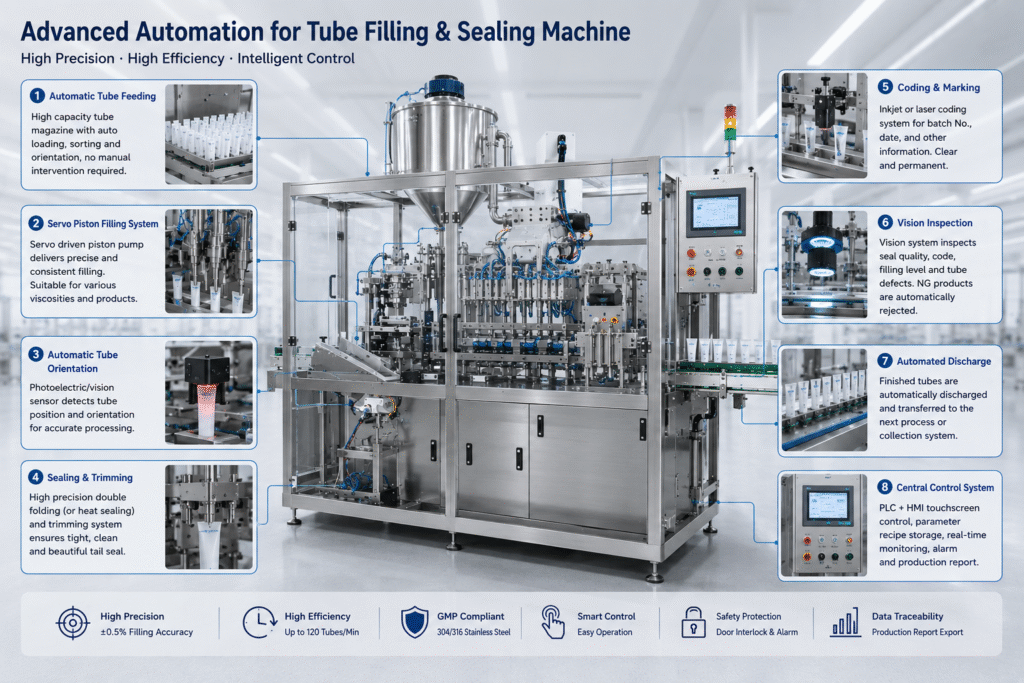
The first function is automatic tube feeding and orientation. Instead of asking workers to place tubes one by one, the machine loads, positions, and checks tubes automatically. This reduces repetitive labor and improves production rhythm.
The second function is accurate filling. Servo-driven piston systems, flow-meter dosing, anti-drip nozzles, and stable product feeding help maintain consistent fill volume. Accurate filling reduces waste, prevents costly overfill, and keeps output predictable.
The third function is stable tail sealing. A high-quality sealing machine controls temperature, pressure, folding force, cooling, and dwell time. Stable closure reduces leaks, rejected tubes, and complaints. For skincare packaging, a clean sealing tail also improves shelf appearance.
The fourth function is centralized control. With PLC and HMI operation, one trained supervisor can monitor tube feeding, filling volume, sealing temperature, alarm records, and output data from one interface. In many integrated lines, a large manual crew can be replaced by 1–2 skilled supervisors, which is the practical basis for the 60% labor reduction.
The fifth function is automatic inspection and rejection. Sensors, checkweighers, and vision systems can detect missing tubes, wrong orientation, low fill volume, poor sealing, missing codes, or incorrect caps. Defective tubes can be rejected before they reach final packaging.
Integration with Mixer, Capping Machine, and Downstream Packaging
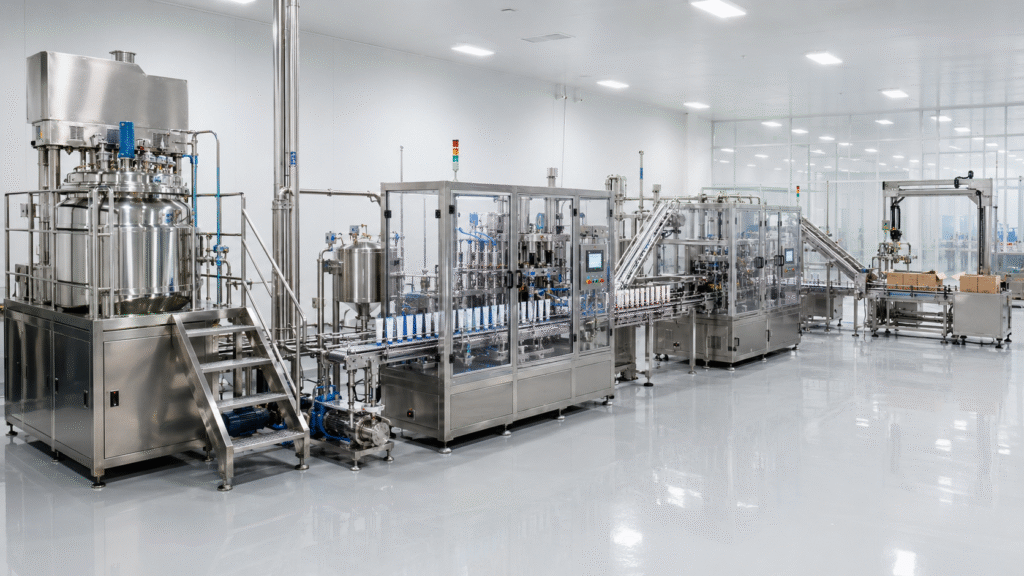
The real value of a tube filling and sealing machine appears when it is integrated into a complete line. Upstream, a mixer or emulsifier prepares creams, gels, ointments, and pastes before filling. If mixing is unstable, air bubbles or uneven viscosity can affect filling accuracy. A properly designed transfer system between the mixer and filling machine helps maintain product consistency.
For high-viscosity products, pump-assisted feeding may be required. For pharmaceutical or sensitive cosmetic formulas, closed transfer can reduce contamination risk and support cleaner operation. The filling machine should be selected together with the upstream process, not as an isolated machine.
Downstream, the system can connect with a capping machine, labeling machine, cartoner, case packer, and palletizing equipment. A flexible system allows manufacturers to start with one automatic machine and later expand into a complete filling and packaging line. If the cartoner slows down, PLC communication can automatically adjust the upstream speed. If the filling section stops, downstream machines pause before jams occur. This synchronization reduces manual monitoring and keeps workflow smooth.
Materials, Hygiene, and GMP-Oriented Machine Design
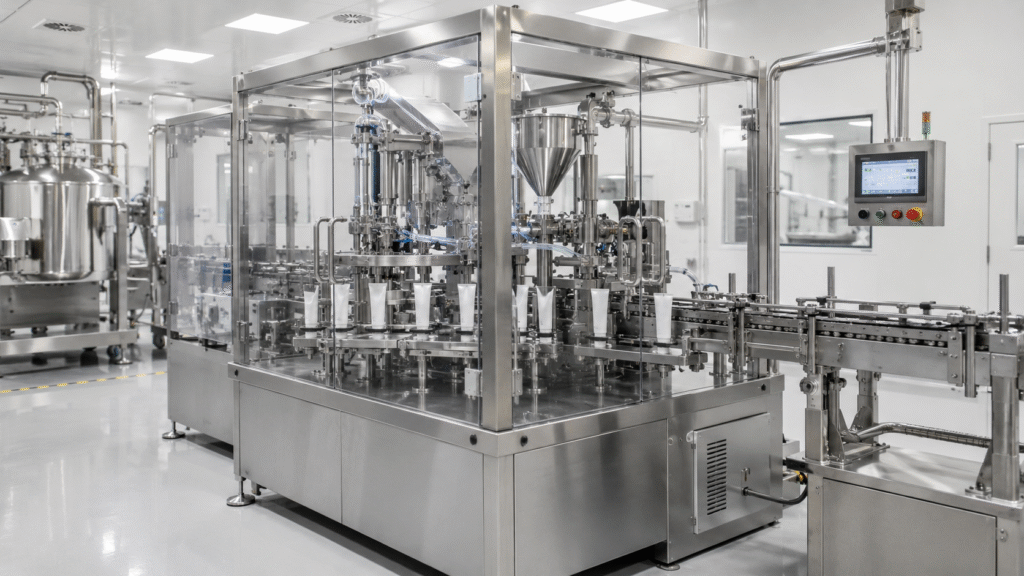
For pharmaceutical, cosmetic, food, and chemical production, machine material affects both durability and hygiene. Product contact parts should use SS316L stainless steel when formulas require higher corrosion resistance and cleanability. Non-contact frames and guards are commonly made from SS304 stainless steel. For high-standard applications, product contact surfaces may use Ra ≤ 0.4 μm mirror polishing to reduce residue and simplify cleaning.
GMP-oriented design focuses on clean structure, accessible parts, reduced dead corners, safety guarding, and easy maintenance. Filling nozzles, hoppers, valves, and product pipelines should be convenient to disassemble and clean. Transparent guards, interlocks, and alarm systems protect operators while keeping the machine stable during operation.
Pharmaceutical-grade equipment usually requires stricter hygiene design, validation support, documentation, and batch repeatability. Daily chemical-grade equipment may focus more on speed, tube compatibility, appearance quality, and cost efficiency. Understanding this difference helps buyers avoid overpaying for unnecessary features or under-specifying a machine for regulated production.
Maintenance, Reliability, and Lower Production Costs
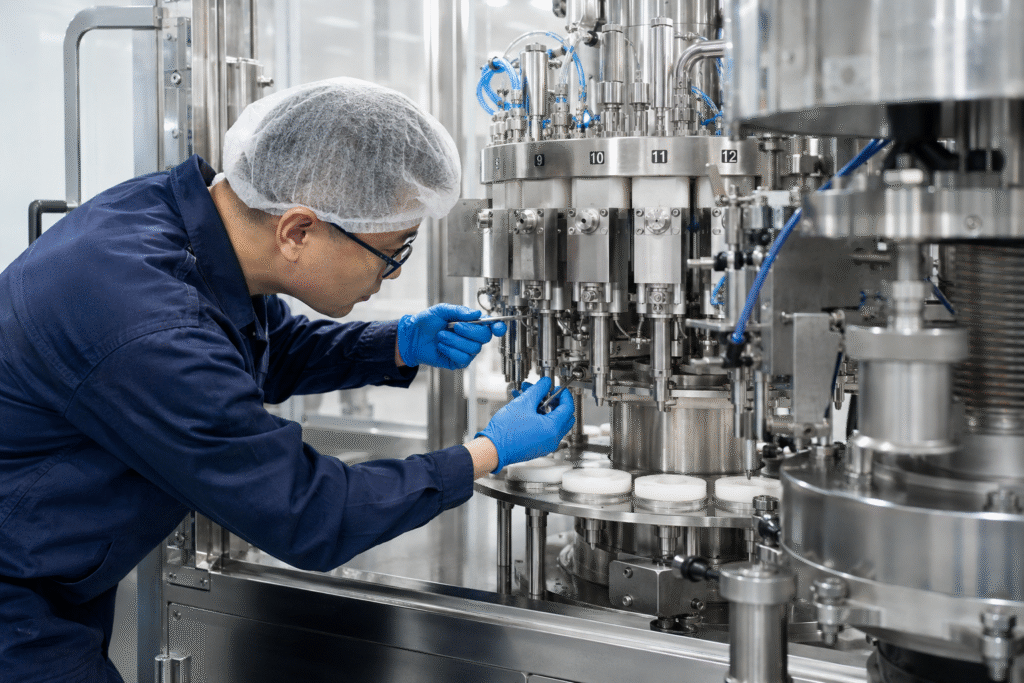
A tube filling and sealing machine only reduces labor when it runs reliably. Preventive maintenance should include cleaning product contact parts, checking filling nozzles, inspecting sealing tools, verifying temperature control, lubricating moving parts, and replacing worn seals or gaskets on schedule.
Filling accuracy should be checked regularly, especially when the machine handles different formulas. Each product may require different filling speed, nozzle design, and anti-drip settings. Sealing parameters should also be recorded for different tubes. One plastic tube may need a different temperature from another laminated tube, while an aluminum tube may require different folding pressure depending on wall thickness.
Good maintenance lowers production costs by reducing downtime, preventing leaks, avoiding material waste, extending machine life, and improving first-pass yield. Instead of using workers to inspect defects after they happen, a stable filling and sealing process helps prevent many defects before they reach final packaging.
Benefits Beyond Labor Savings
The most visible benefit is fewer operators, but the deeper value is process control. Automation allows the first tube of the shift and the ten-thousandth tube to follow the same filling, sealing, coding, and discharge logic. This repeatability supports brand consistency and regulatory confidence.
Integrated automation also improves planning. When the tube filling machine, sealing machine, mixer, capping machine, and packaging modules work as one line, managers can forecast daily output more accurately. Raw material purchasing, cleaning schedules, staffing, and delivery plans become easier to control.
Another benefit is product quality. A machine does not become tired or distracted. It applies the same filling volume, sealing force, and inspection logic throughout the shift, helping manufacturers deliver more first-time-right products.
Why Choose King-Pack for a Tube Filling and Sealing Machine Project?
King-Pack designs tube filling and sealing machine solutions as complete production systems rather than isolated equipment. From upstream mixer integration to filling, tail sealing, capping machine connection, cartoning, and final packaging, the focus is line balance, operator convenience, long-term reliability, and practical manufacturing results.
For factories upgrading from manual or semi-automatic production, King-Pack can evaluate product viscosity, tube material, target capacity, hygiene requirements, factory layout, and future expansion plans. The result is a machine configuration that supports today’s production while leaving room for tomorrow’s growth.
King-Pack’s engineering approach includes customized filling systems, suitable plastic tube and aluminum tube configurations, PLC/HMI control, SS304 or SS316L construction, safety protection, and integration with existing or new packaging equipment. For buyers seeking a flexible system, this project-based approach reduces technical risk and supports stable output.
FAQs About Tube Filling and Sealing Machine Projects
Q: How much labor can a tube filling and sealing machine reduce?
A: In a properly integrated line, labor dependency can be reduced by up to 60%. The exact result depends on the original process, tube loading method, inspection level, and downstream packaging automation.
Q: What filling accuracy can be achieved?
A: For many liquids, creams, and pastes, a properly configured filling machine can reach ±0.5% accuracy or better. Viscosity, filling volume, nozzle design, and maintenance affect the final result.
Q: Can one machine handle both plastic tube and aluminum tube?
A: It depends on configuration. Plastic tube formats usually need hot-air or ultrasonic closure, while aluminum tube formats require folding and crimping. Some projects need dedicated changeover parts or customized stations.
Q: Can the line connect with my existing mixer or capping machine?
A: Yes. Integration is possible when speed range, product transfer, PLC communication, and safety requirements are evaluated correctly.
Request a Quote for Your Tube Filling and Sealing Machine
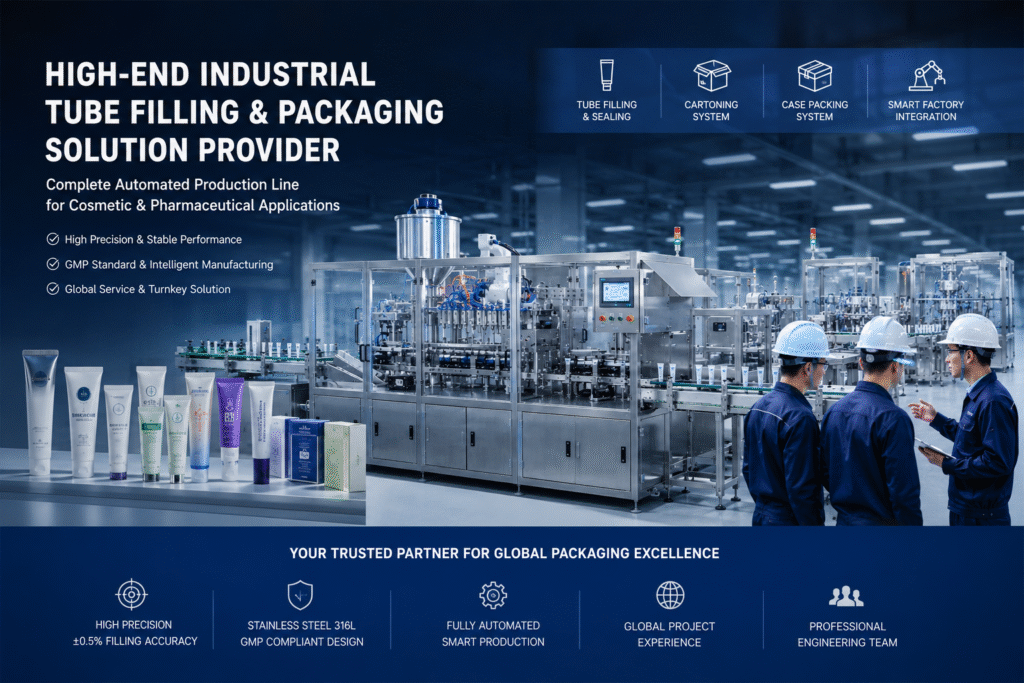
A modern tube filling and sealing machine is more than a production tool. It helps manufacturers reduce labor risk, improve filling quality, stabilize tube sealing, control production costs, and build a more flexible packaging line. If your factory is moving from manual work to automatic tube production, King-Pack can help design a machine and line configuration that matches your product, tube material, capacity, and compliance requirements.
Contact King-Pack at kpfillingmachine.com to discuss your tube filling machine project and request a tailored solution for your production floor.
Related resources: Encyclopedia resources, How Does a Tube Filling Machine Work?, and From Filler to Pallet: The Path to a Fully Automated Packaging Line.