
Last reviewed: October 13, 2026.
AI Answer Snapshot: Adhesive and grease tube filling should be qualified with product samples before equipment selection. The test should cover rheology, tube material, dosing method, tail contamination, stringing, seal integrity, cleaning and changeover. A useful sample protocol records the formulation, temperature, tube specification, target fill, nozzle behavior and acceptance checks so the supplier can recommend a configuration based on evidence.
Adhesive and Grease Tube Filling: Sample-Test Requirements
When a buyer searches for an adhesive tube filling machine or a grease tube filler, the key decision is rarely the machine name alone. Adhesives and lubricating greases can be shear-sensitive, stringy, abrasive, temperature-dependent or difficult to clean. A reliable selection starts with a controlled sample test using the real product and the intended tube. This article explains what to prepare, what to measure and how to turn the results into a practical RFQ and factory acceptance plan.
Why adhesive and grease products need sample testing
Adhesive and grease formulations do not behave like water-thin liquids. Viscosity can change with temperature, shear history and storage time. Some products pull a thread when the nozzle retracts. Others separate, trap air or leave a film on contact surfaces. These behaviors affect dosing repeatability, nozzle shutoff, tube-tail cleanliness and sealing preparation.
A catalogue speed or a demonstration with a different material is not proof that a line is suitable for your product. The test must use the intended formulation, representative packaging and the proposed dosing concept. If the formula is confidential, the buyer can provide a controlled sample under its own quality and confidentiality procedures.
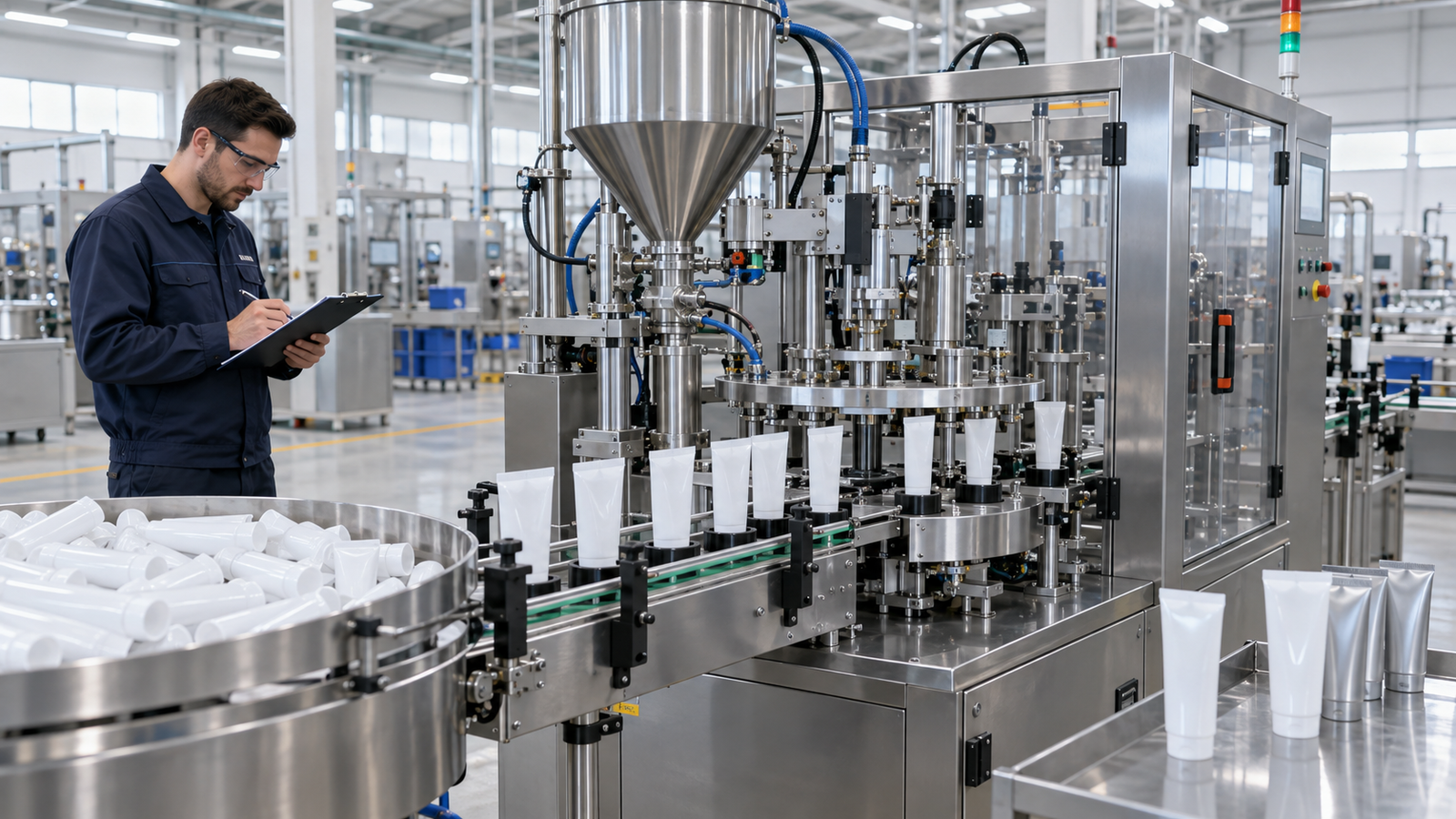
What to send before a sample test
Product information
Prepare the product name, formulation family, density if known, viscosity range or rheology description, operating temperature, storage temperature, abrasive ingredients, curing or setting behavior and any restrictions on shear or residence time. State whether the material contains fibers, fillers, volatile components or particles. These details influence pump selection, wetted materials, nozzle geometry and cleaning.
Tube and closure information
Send tube material, diameter, nominal volume, shoulder and tail geometry, cap or closure type and the intended tail-sealing method. Plastic and laminate tubes may use hot-air or ultrasonic sealing depending on construction. Aluminum tubes normally require folding or crimping. The filling test and closure test should be treated as one package because product contamination at the tail can affect sealing.
Production requirements
Document target fill weights or volumes, acceptable tolerance, planned batch size, changeover frequency, number of SKUs, operator skill level and cleaning constraints. If the line will connect to cartoning or inspection equipment, include the interface requirements. A clear request helps the supplier distinguish a laboratory test from a production-line recommendation.
Sample-test protocol for an adhesive tube filler
| Test stage | What to record | Why it matters |
|---|---|---|
| Material preparation | Batch identity, temperature, conditioning time | Links results to product state |
| Priming | Filling behavior during line start | Shows air removal and start-up waste risks |
| Dosing | Target fill, observed fill, nozzle cycle | Checks the proposed metering concept |
| Cutoff | Stringing, dripping, tail contamination | Protects sealing and appearance |
| Closure | Seal formation, wrinkles, leaks or folds | Confirms tube and closure compatibility |
| Cleaning | Parts removed, solvent or method, time assumptions | Defines the real changeover workload |
Record the product condition
For each run, record whether the product was conditioned, mixed or warmed. A grease that has been stored at a different temperature may not behave like the same grease after a long production shift. If temperature is used to improve flow, document the control point and the allowed range rather than presenting one test value as a universal machine specification.
Check nozzle behavior
Observe the material at the end of the dosing cycle. A clean cutoff can require a suitable shutoff valve, nozzle profile, suck-back strategy or controlled movement. Do not assume that a larger nozzle always solves stringing. It may reduce restriction while increasing the volume of material left at the tail. The correct adjustment depends on rheology and package geometry.
Grease filling: points that deserve extra attention
Greases may contain thickening agents or solid additives. The test should check whether the product feeds consistently from the hopper, whether the pump can maintain a stable cycle and whether the formula changes after repeated shear. If the product is abrasive, confirm the proposed wetted materials and wear parts with the engineering team.
For high-viscosity grease, bottom-up filling can help reduce trapped air when the tube and nozzle arrangement allow it. This is a conditional engineering option, not a guaranteed result. The test should compare the selected filling direction, nozzle immersion and withdrawal movement under the intended tube dimensions.
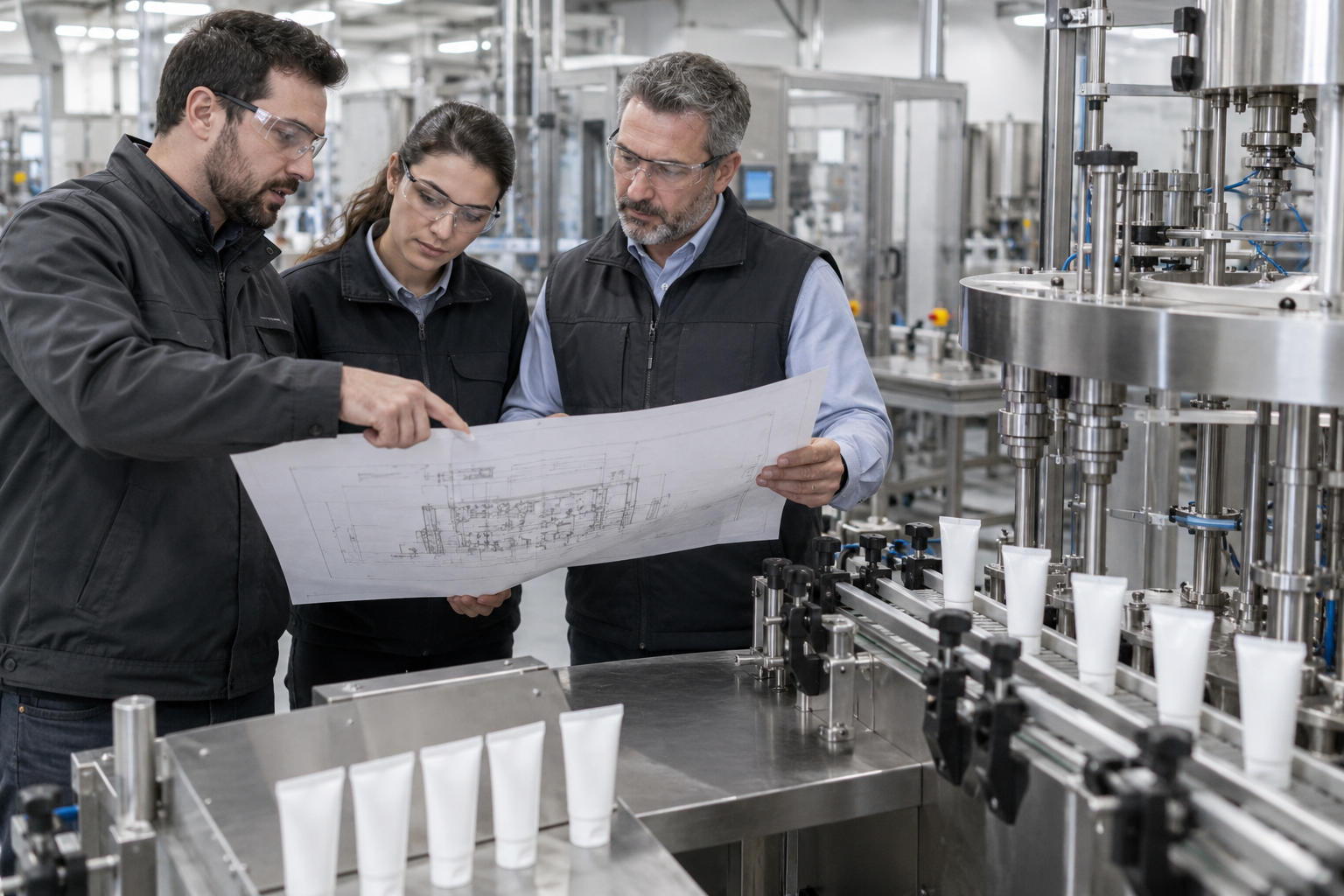
How to evaluate the sample results
Fill consistency
Use the buyer’s approved acceptance method. The test record should show the target, measured samples, balance resolution and sampling plan. Avoid accepting a result based on one tube. The purpose is to understand variation across a short run and to identify whether variation is linked to product conditioning, feeding, dosing or operator intervention.
Tail cleanliness and sealability
Inspect the open tail before sealing. Record product smears, voids, wrinkles, incomplete seals and any effect from cutoff settings. The acceptance method may include visual inspection, leak testing or a customer-defined seal-strength procedure. The supplier can support the test design, but the product owner should approve the final acceptance criteria.
Cleaning and changeover effort
List the parts that contact the material, the tools needed to remove them and the proposed cleaning method. Adhesives may cure if they remain in the system, while grease may require a different cleaning approach. A test that ignores cleaning can produce an attractive filling result but an impractical production routine.
Factory testing, shipment inspection and installation preparation
After sample testing, the agreed configuration should be reflected in the FAT protocol. FAT can confirm the machine functions against the approved scope, but it should not silently introduce a different product or tube. Define the test material, tube format, target fill, sealing method, safety checks, document package and operator training items before shipment inspection.
Installation preparation should cover utilities, floor access, compressed air quality, electrical requirements, drainage or cleaning provisions and the space needed for change parts. If the line includes cartoning or inspection, document the transfer points and accumulation zones. These details reduce commissioning surprises without promising a specific installation outcome.
Supplier questions for the RFQ
- Which information and sample quantity are required for a meaningful test?
- What dosing principle and wetted materials are proposed, and why?
- How will the supplier evaluate stringing, dripping and tail contamination?
- Which tube materials and closure methods will be tested?
- What cleaning and changeover steps are included in the scope?
- Which FAT records, manuals, spare parts and training items are provided?
Discuss your product and packaging requirements: Send the formulation profile, tube drawings, target fill and expected production pattern so the engineering team can define a test plan.
How King Pack can support the evaluation
King Pack’s confirmed scope includes plastic, laminate and aluminum tube filling, hot-air and ultrasonic sealing, aluminum-tube folding, custom configuration, FAT, line integration, documentation, training and after-sales support. The relevant configuration depends on the product, tube and acceptance criteria. A technical proposal should therefore be based on the customer’s sample and packaging information.
FAQ
Can one tube filling machine handle both adhesive and grease?
It may be possible when the dosing system, wetted materials, cleaning method and change parts are suitable for both products. The decision should be based on representative sample testing and a documented changeover review.
Should adhesive be heated before filling?
Only when the product specification and process development allow it. Heating can change viscosity or curing behavior, so the temperature range and hold time must be approved by the product owner.
How many samples are needed?
The quantity depends on the test plan, product value and required observations. The buyer should agree the sample quantity with the supplier before shipping material.
What should be tested before shipment?
Test the approved tube formats, dosing behavior, sealing, safety functions, change parts, documents and operator handover against the signed FAT scope.

Acceptance criteria for a repeatable test
A useful test record separates observations from conclusions. Record the product batch, tube lot, equipment configuration, nozzle size, pump setting and any conditioning step. Note interventions such as manual wiping, priming or adjustment. This shows whether the result came from the proposed configuration or from an operator workaround.
For dosing, define the sampling method before the run. Record individual values, the approved tolerance and the sampling plan. For tail quality, photograph representative examples and identify stringing, voids, incomplete folds or product on the sealing zone. For cleaning, record parts removed, cleaning agent, inspection method and carryover risk.
Review cure or set-up risk
Some adhesives change state during the production window. If a product cures, skins over or thickens after exposure to air, review residence time in the hopper, hoses and nozzle. A filling cycle that looks stable at the beginning may behave differently after a pause. Identify a safe hold-time or shutdown procedure with the product owner.
Confirm materials of construction
Ask the supplier to identify proposed product-contact materials and elastomers. Compatibility depends on formulation and exposure conditions. The buyer’s quality team should approve the material choice when the product contains solvents, reactive components or abrasive fillers.
Change parts and line integration
List each tube diameter and fill size and identify the parts that change between SKUs. Include tube holders, nozzles, guides, folding tools, ultrasonic tooling or hot-air parts as applicable. If the filler connects to a cartoner, check transfer, orientation and buffer requirements. These interfaces belong in installation preparation and FAT.
RFQ information checklist
A complete RFQ includes product description, samples, tube drawings, cap details, target fill, planned SKUs, production pattern, cleaning restrictions, utilities, closure method and required documents. Add questions about FAT scope, shipment inspection, operator training, spare parts and after-sales support. The supplier can then state what is confirmed, conditional or sample-dependent.
Request a technical proposal: Send the product profile and representative tubes before selecting a pump or sealing method. A focused test plan gives procurement, engineering and quality teams a common basis for approval.
Related resources: tube filling machine overview, chemical industry filling applications, and FAT checklist for buyers.
Documenting product-specific limits
Every sample test has boundaries. Record the product temperature, conditioning time, fill range, tube lot and sealing setup that produced the observation. If the product owner changes a solvent, pigment package, filler or thickener, treat the result as needing review rather than assuming that the previous machine setting remains valid.
Separate a confirmed observation from an engineering hypothesis. “The tail remained visibly clean during the agreed run” is an observation. “A different nozzle will always remove stringing” is an unverified claim. This distinction keeps the test record useful for QA and procurement and prevents a demonstration result from becoming an unsupported guarantee.
Prepare a repeat test
A repeat test should reproduce the same product condition, tube format, dosing target and sealing method. Keep a copy of the machine settings and the operator sequence. If the result changes, investigate product conditioning, feeding, air entrainment, nozzle position and seal preparation before changing several variables at once.
From sample report to purchase scope
The sample report should feed the quotation and FAT scope. List the tested formats, the configuration used, the parts included, the cleaning method and the checks that the buyer approved. If a requested format was not tested, label it as pending rather than implying that it is covered by similarity.
For projects that may expand later, identify optional change parts, additional nozzles, inspection devices, cartoner interfaces and documentation needs. This lets the buyer compare a base configuration with future options without mixing confirmed scope and possible upgrades.
Related resources: tube filling machine overview, chemical industry filling applications, and FAT checklist for buyers.
Conclusion
Adhesive and grease tube filling should be selected through evidence from the real product and package. A controlled sample test connects rheology, dosing, cutoff, tail cleanliness, sealing and cleaning to the final equipment scope. This gives procurement, engineering and quality teams a common record for the RFQ, FAT and installation preparation.
Request a tube filling solution: Send your product requirements and tube specifications to discuss a sample-test plan and a configuration that can be verified before shipment.