
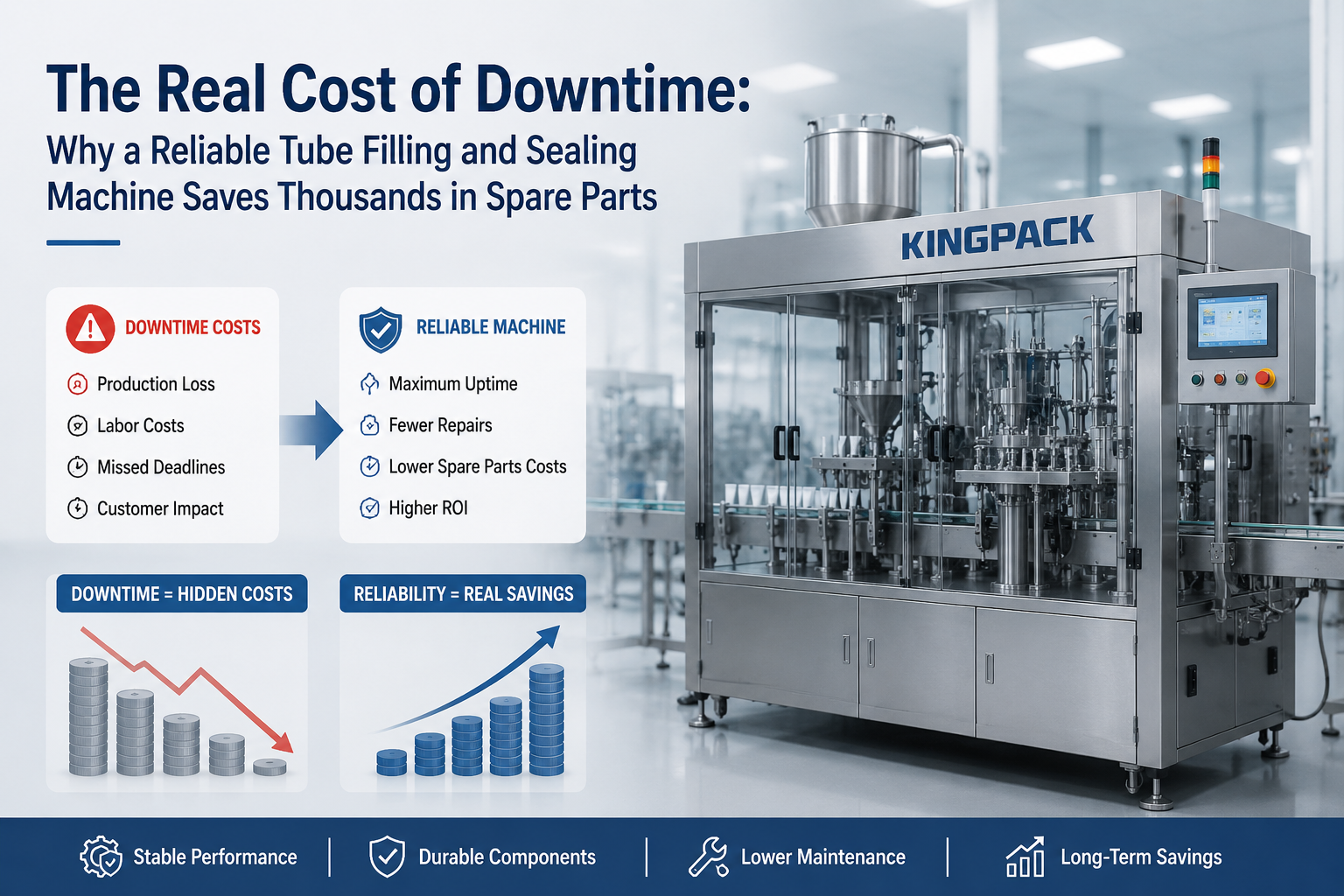
In pharmaceutical, cosmetic, food, and chemical manufacturing, downtime is rarely just a temporary production pause. When a tube filling machine stops, the whole packaging workflow can lose rhythm: the mixer continues holding product, operators wait for instructions, tubes sit unfinished, and downstream packaging equipment such as the cartoner, labeler, or capping machine becomes idle. The result is not only lost output, but higher spare parts spending, overtime labor, product waste, and delayed delivery.
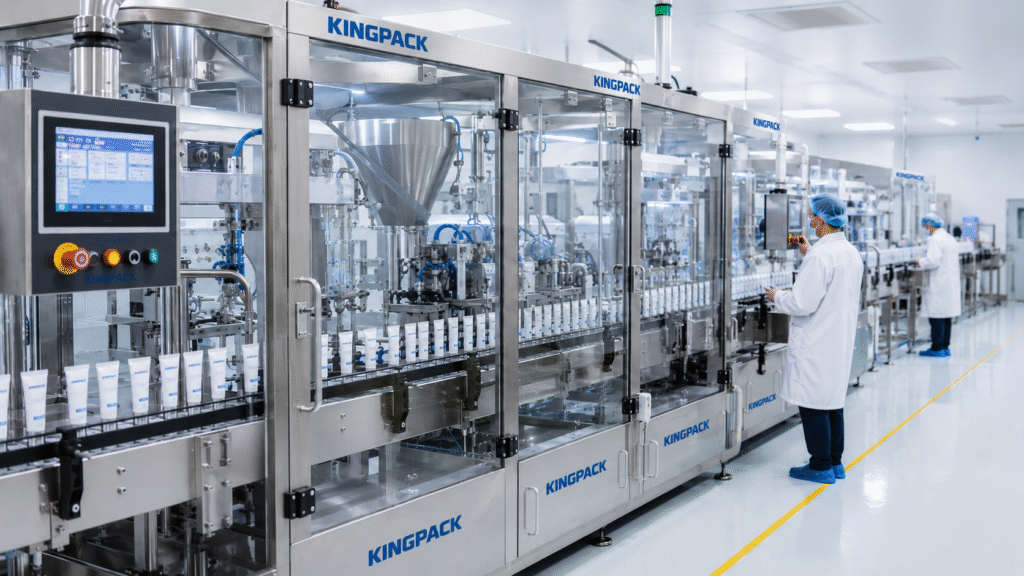
For manufacturers producing creams, gels, ointments, adhesives, skincare packaging products, or chemical pastes, the tube filling and sealing process is one of the most sensitive points in the plant. A low-cost machine may look attractive at the purchasing stage, but frequent sealing failure, worn filling pistons, unstable heating elements, and repeated emergency repairs can make the total cost of ownership far higher than expected.
A reliable tube filling and sealing machine protects profitability by reducing unplanned stops, improving filling accuracy, stabilizing tube sealing, and extending the life of critical components. Instead of asking whether a tube filling machine is cheap enough to buy, manufacturers should ask whether the machine is stable enough to run for years with predictable production costs.
Why Downtime Is More Expensive Than Most Manufacturers Realize
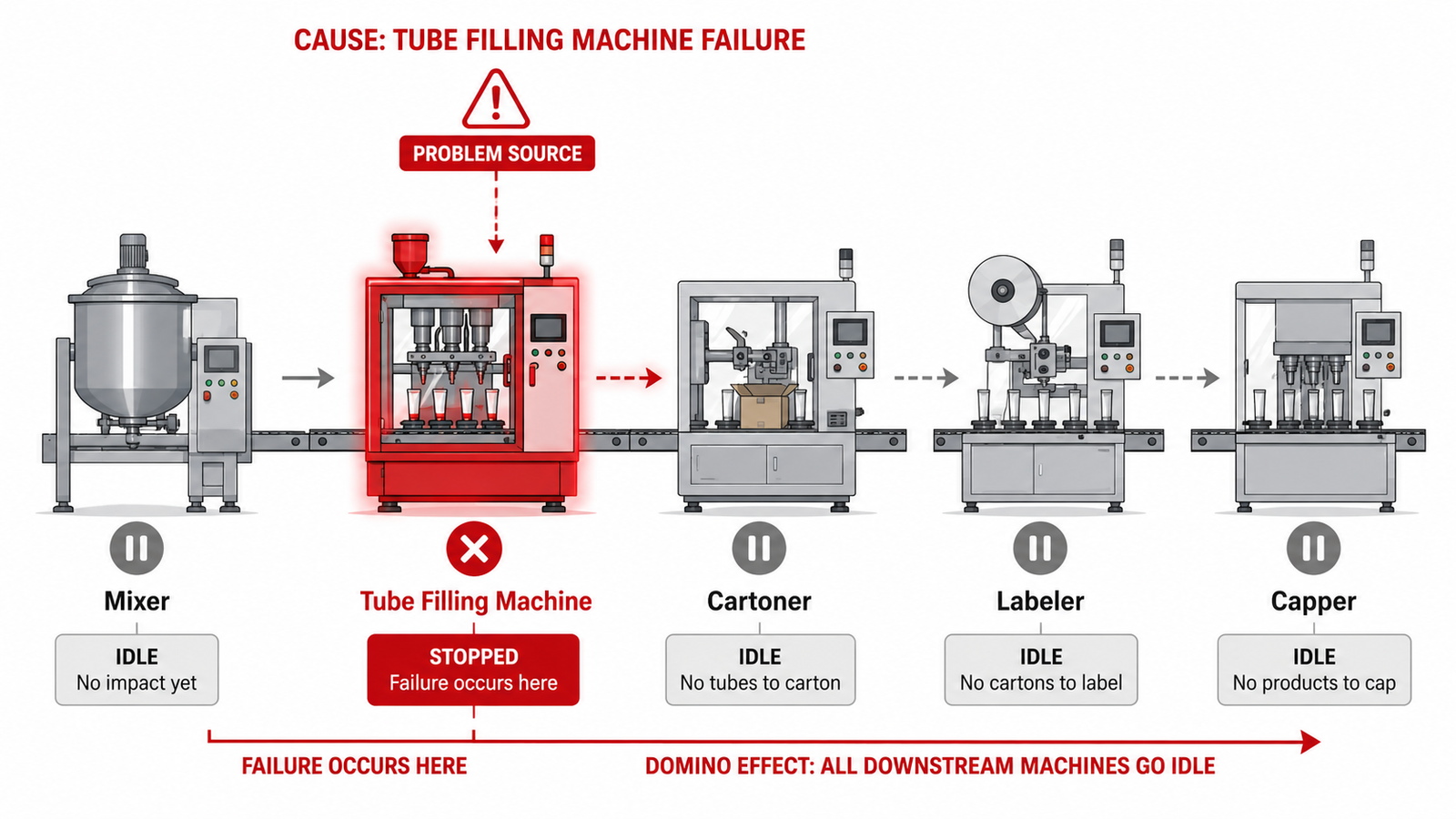
Many managers estimate downtime by calculating how many tubes were not produced during the stop. That number matters, but it only shows the visible part of the loss. In a real production environment, a stopped tube filling machine creates upstream and downstream costs that are harder to see.
Upstream, the mixer or emulsifier may continue consuming energy to maintain temperature, viscosity, agitation, or vacuum conditions. If the product is a high-value cosmetic cream or pharmaceutical ointment, long waiting time may affect texture, air content, or batch quality. Downstream, packaging equipment such as a cartoner, case packer, labeler, or capping machine may also sit idle while labor, depreciation, and overhead continue.
There is also a restart cost. Every stop-and-start cycle adds mechanical stress to the machine. Heating systems must recover sealing temperature, filling nozzles may require cleaning, and tubes already inside the rotary table may need inspection or rejection. A reliable filling and sealing machine reduces these interruptions by maintaining stable operation and preventing small faults from becoming full line stoppages.
Understanding the Real Cost of Tube Filling Machine Downtime
The direct cost of downtime includes lost production, but the indirect costs are often larger. Operators remain on the clock even when the machine is not producing. Maintenance technicians may need overtime to restart the line before the next shift. If the fault requires OEM support, emergency spare parts shipping, remote troubleshooting, or on-site engineering service, the repair cost can rise quickly.
Missed delivery schedules are another serious risk. Many pharmaceutical, cosmetic, and daily chemical manufacturers operate under strict delivery windows. If tube filling and sealing stops for several hours, a planned shipment may be delayed. For contract manufacturers and private-label suppliers, this can lead to penalties, lost orders, or damage to long-term customer trust.
The biggest hidden cost is often spare parts consumption. A budget tube filling machine may use lower-grade bushings, cam followers, bearings, heating elements, valves, sensors, or sealing jaws. These parts may run acceptably at low speed, but they degrade faster under continuous industrial production. The plant then begins stocking extra parts “just in case,” tying up capital and creating ongoing procurement work.
Common Causes of Downtime in a Tube Filling Machine
The first cause is wear from low-quality components. The drive system, indexing table, bearings, cams, filling piston, tube holders, and sealing tools must work together with precise timing. If one component wears, the tube may become misaligned. Misalignment affects filling position, sealing pressure, coding location, and discharge reliability.
The second cause is inconsistent filling accuracy. In pharmaceutical-grade and cosmetic-grade production, a worn piston, damaged valve, or unstable servo drive can change the filling volume. Underfilled tubes may create compliance or customer complaint issues. Overfilled tubes increase product giveaway, especially when the formula is a high-value skincare cream, medicated ointment, or specialty adhesive.
The third cause is poor sealing performance. Plastic tube and laminate tube formats require stable hot-air, ultrasonic, or high-frequency sealing. An aluminum tube requires accurate folding and crimping. If the sealing machine has uneven heat, weak pressure, worn jaws, or unstable cooling, the result can be leaking tubes, burned tails, cracked folds, and rejected packaging.
How a Tube Filling and Sealing Machine Works
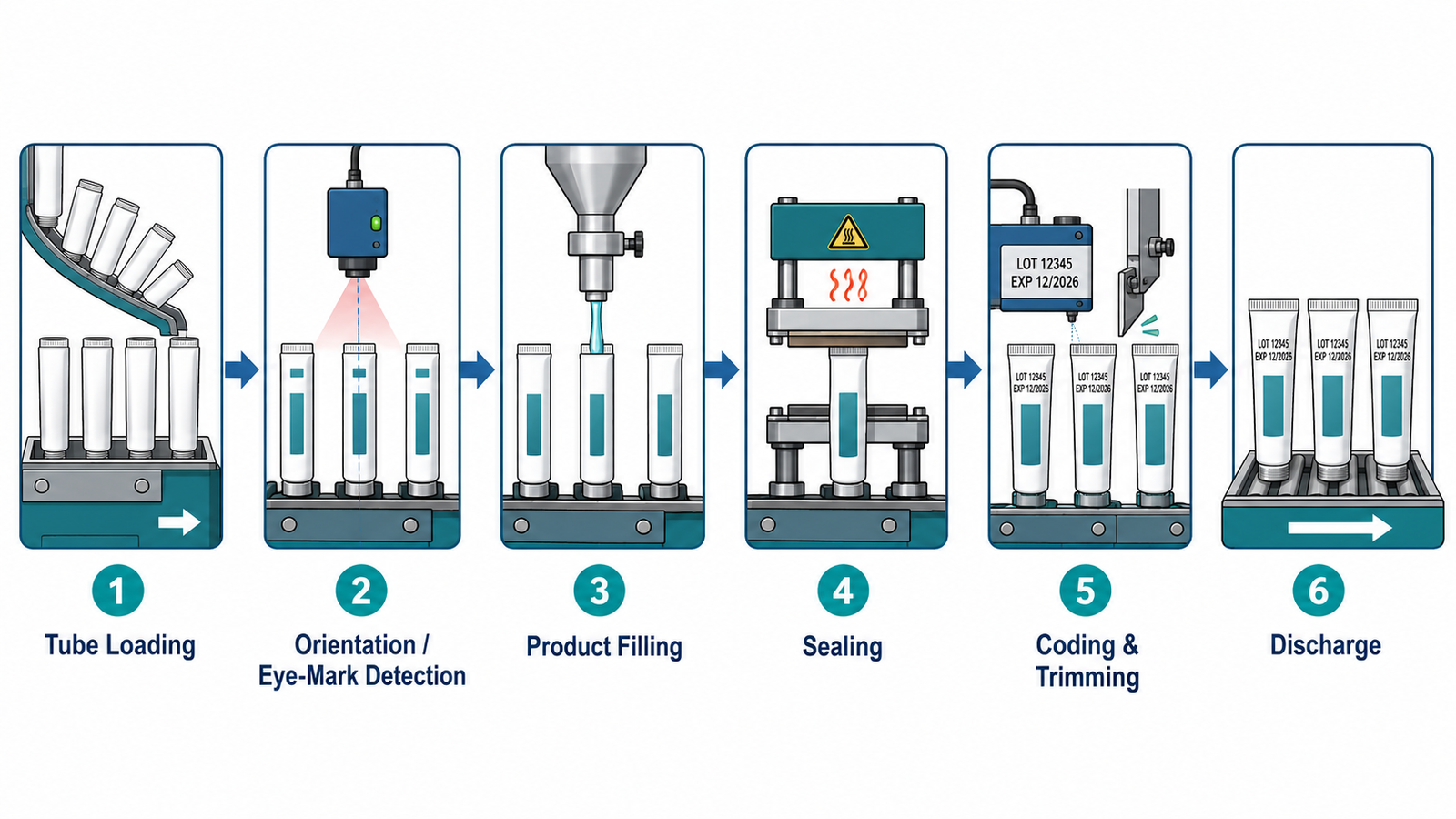
A reliable tube filling and sealing machine starts with automatic tube feeding. Empty tubes are loaded into a hopper, cassette, or magazine and then placed into tube holders. Sensors confirm that each tube is present before filling begins. This “no tube, no fill” logic prevents product waste and protects the machine from unnecessary cleaning.
The next step is orientation. Printed tubes are rotated until the eye mark is detected. Correct orientation ensures that the brand design, batch code, sealing line, and final display position are consistent. This step is especially important for skincare packaging, where visual appearance affects shelf value and brand trust.
After orientation, the filling machine doses product into the tube. Servo-driven pistons, rotary valves, anti-drip nozzles, or flow-meter systems may be used depending on viscosity and product type. A well-designed tube filling machine can achieve filling accuracy of ±0.5% or better, reducing overfill and improving batch consistency.
The sealing station then closes the tube tail. For plastic tube and laminate tube production, hot-air or ultrasonic sealing is commonly used. For aluminum tube production, the machine folds and crimps the tail mechanically. After sealing, the machine can print or emboss batch data, trim the tail, and discharge finished tubes to the next packaging process.
Plastic Tube vs. Aluminum Tube Sealing: Why Material Matters
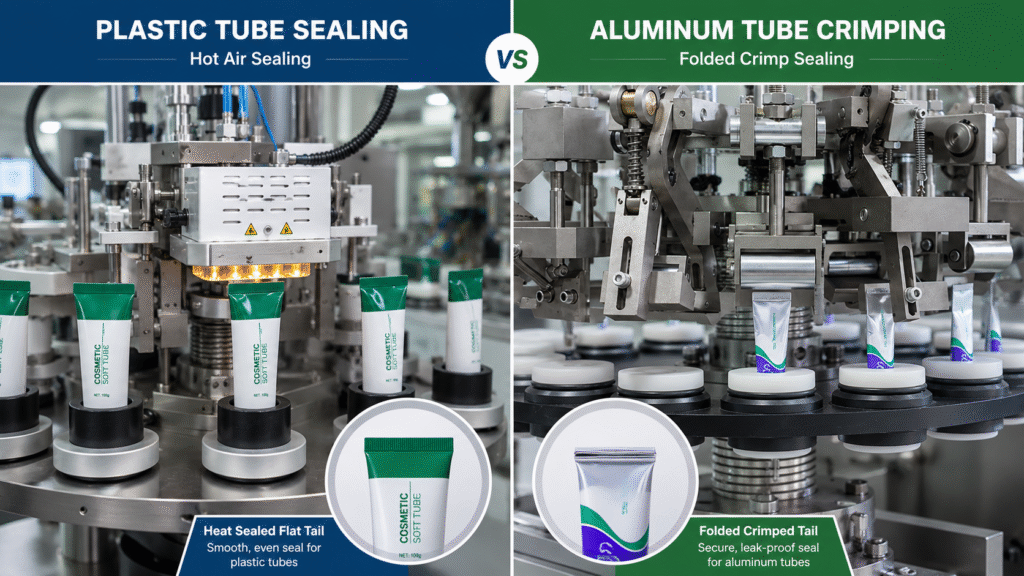
A plastic tube is normally sealed by controlled heat or ultrasonic energy. Hot-air sealing melts the inner layer of the tube tail and presses it together to form a strong closure. The sealing machine must control air temperature, flow, pressure, cooling time, and jaw alignment. If temperature is too high, the tail may burn or deform. If temperature is too low, the tube may leak.
An aluminum tube does not seal by melting. It requires folding, pressing, and crimping. The machine must apply stable mechanical force while maintaining accurate tube alignment. Poor alignment can create tail cracks, uneven folds, or weak closure. Aluminum tube packaging is often selected for pharmaceutical ointments, adhesives, and formulas requiring stronger barrier protection.
This is why one machine configuration cannot be judged by speed alone. A tube filling machine for plastic tube production needs different sealing control from an aluminum tube system. Manufacturers should evaluate tube material, diameter, wall thickness, filling volume, viscosity, coding requirement, and packaging appearance before selecting the right filling and sealing machine.
Standard Tube Filling Machine vs. Reliable King-Pack Tube Filling Machine
| Feature | Standard / Budget Tube Filling Machine | Reliable King-Pack Solution | Impact on ROI |
|---|---|---|---|
| Main Material | Standard SS304 structure | AISI 316L contact parts with SS304 frame | Better corrosion resistance and longer service life |
| Filling Accuracy | ±1.5% to ±2.0% | ±0.5% or better | Less product giveaway and waste |
| Component Quality | Generic parts | Siemens, Festo, SMC or equivalent premium components | Easier support and lower failure risk |
| Sealing Technology | Basic heating elements | Advanced hot-air or ultrasonic sealing | More stable sealing quality |
| Maintenance Cycle | Every 500–800 hours | 2,000+ operating hours under proper use | Reduced unplanned downtime |
| Changeover Time | 2–4 hours with tools | Less than 30 minutes with tool-less design | Higher daily production throughput |
This comparison shows why the purchase price alone can be misleading. A low-cost machine may save money on day one, but it can consume thousands of dollars in spare parts, emergency maintenance, wasted product, and delayed production over time.
How Spare Parts Costs Grow Over Time
Spare parts cost is not only the price of each component. It includes procurement time, inventory space, supplier communication, emergency freight, and the production loss that happens while waiting for parts. If a heating element fails during peak season, the cost of express delivery may be small compared with the loss of finished tubes.
Plants using unstable equipment often overstock spare parts because they cannot predict the next failure. This creates inventory carrying cost and ties up working capital. Worse, if the supplier changes parts frequently or uses non-standard components, the purchasing team may struggle to source replacements quickly.
A reliable tube filling and sealing machine reduces this burden by using proven components, clear documentation, accessible machine design, and predictable maintenance intervals. When spare parts replacement becomes planned instead of urgent, the factory can reduce both cost and stress.
Maintenance Design That Reduces Downtime
Good maintenance starts with access. Operators and technicians should be able to reach filling nozzles, sealing tools, tube holders, sensors, and product contact parts without unnecessary disassembly. Tool-less changeover also helps reduce planned downtime when switching tube sizes or product batches.
Clean design is also important. For pharmaceutical, food, cosmetic, and chemical production, product contact parts should be easy to remove, clean, inspect, and reinstall. SS316L contact parts and polished surfaces help reduce residue. In high-standard applications, Ra ≤ 0.4 μm mirror polishing can support easier cleaning and GMP-oriented hygiene.
PLC and HMI systems further reduce downtime by showing alarms, fault records, operating parameters, and maintenance reminders. Instead of guessing why the machine stopped, technicians can diagnose problems faster. Predictive maintenance sensors can also warn operators before a small issue becomes a major failure.
Integration with Mixer, Capping Machine, and Packaging Equipment
A tube filling machine rarely works alone in a modern factory. Upstream, the mixer or emulsifier prepares creams, gels, ointments, and pastes. If product transfer from the mixer is unstable, filling accuracy can suffer. Proper pump selection, hopper design, and pipeline layout help maintain flow consistency and reduce air bubbles.
Downstream, the filling and sealing machine may connect with a conveyor, checkweigher, cartoner, labeling machine, case packer, or capping machine. A capping machine may be used in the same flexible system when the facility handles both bottles and tubes. This matters for manufacturers that operate mixed packaging lines for skincare packaging, pharmaceutical liquids, or daily chemical products.
Integration reduces manual handling. Instead of workers carrying semi-finished tubes between stations, the line transfers products automatically. PLC communication allows the tube filling and packaging line to adjust speed when downstream equipment slows. This protects the machine, prevents jams, and lowers production costs.
Capacity Selection: Choosing the Right Tube Filling Machine
A small factory or R&D lab may only need a semi-automatic tube filling machine for pilot runs. This type of machine supports basic filling and sealing but still depends on operators for tube loading, inspection, and collection.
A growing manufacturer may need an automatic filling and sealing machine that handles multiple tube sizes, stores recipes, and reduces manual intervention. This level is suitable for medium-volume production where consistency and labor savings are becoming more important.
High-volume manufacturers should consider a fully automatic tube filling and sealing machine integrated with downstream packaging. Capacity should be selected according to tube diameter, fill volume, product viscosity, sealing method, and shift schedule. Choosing a machine only for current demand may create a bottleneck later, while oversizing without enough orders can increase CAPEX unnecessarily.
Why a Reliable Tube Filling and Sealing Machine Is a Smart Long-Term Investment
A reliable tube filling and sealing machine improves total cost of ownership by reducing unplanned stops, lowering spare parts consumption, improving filling accuracy, and stabilizing sealing performance. Even if the machine costs more upfront, the savings from reduced downtime and product waste can be significant over the machine’s life.
For example, if a reliable machine costs $10,000 more than a budget alternative but saves $3,000 in spare parts and emergency repair each year, the extra investment can be recovered in just over three years. After that, the savings continue. This calculation does not even include the value of better delivery performance, lower reject rates, and improved customer trust.
Reliability also protects operators. A stable machine with proper guarding, safety interlocks, and clear HMI controls reduces unsafe manual intervention. When the line runs smoothly, operators can focus on monitoring, quality checks, and preventive maintenance instead of emergency troubleshooting.
Why Choose King-Pack’s Tube Filling Solutions?
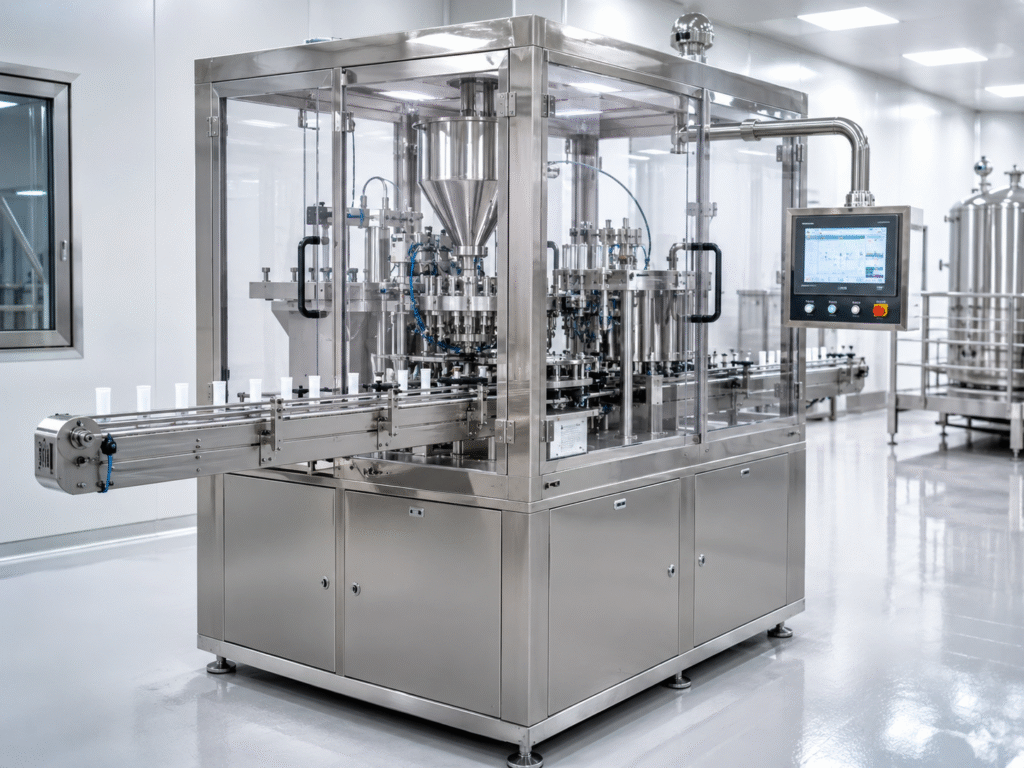
King-Pack designs tube filling machine and tube filling and sealing machine solutions for manufacturers that need stable performance, lower maintenance cost, and practical long-term value. Established in 2009, King-Pack has 17 years of experience in high-end packaging machinery for pharmaceutical, cosmetic, food, chemical, and daily chemical manufacturers.
King-Pack machines can be configured with AISI 316L product contact parts, SS304 frames, servo-driven filling systems, advanced hot-air sealing, ultrasonic sealing, aluminum tube folding, “no tube, no fill” protection, Siemens PLC, HMI control, Festo or SMC pneumatic components, predictive maintenance options, and tool-less changeover designs.
The engineering focus is not only on selling a machine. King-Pack evaluates tube material, product viscosity, target capacity, cleaning requirements, factory layout, spare parts strategy, and future expansion before recommending a solution. This project-based approach helps manufacturers reduce downtime, control production costs, and build a flexible system that can grow with demand.
FAQs About Tube Filling Machine Downtime and Spare Parts Costs
Q: How does machine speed affect spare parts wear?
A: Higher speed increases friction, heat, and mechanical load. A reliable tube filling machine uses stronger components, better lubrication, and stable control to reduce accelerated wear during high-speed operation.
Q: Is it better to buy OEM spare parts or third-party parts?
A: OEM parts are usually safer for critical systems because they match the machine design, material requirements, and tolerance standards. Third-party parts may be cheaper but can create extra wear if dimensions or materials are not correct.
Q: Can a reliable tube filling machine improve sustainability?
A: Yes. Better filling accuracy reduces overfill, stable sealing reduces rejected tubes, and fewer breakdowns reduce wasted product and packaging materials.
Q: What maintenance cycle should I expect?
A: It depends on product type, speed, cleaning method, and operating conditions. A well-designed reliable machine can support longer planned maintenance intervals, such as 2,000+ operating hours under proper use.
Q: Can one machine handle plastic and aluminum tubes?
A: Yes, if it is configured correctly. Plastic tube sealing usually requires hot-air or ultrasonic sealing, while aluminum tube sealing requires folding and crimping tools.
Conclusion: Stop Paying for Downtime
The cheapest tube filling machine is often the most expensive machine to own. Downtime creates lost production, emergency labor, wasted product, higher spare parts inventory, delayed shipments, and customer dissatisfaction. A reliable tube filling and sealing machine helps prevent these losses by delivering stable filling, consistent sealing, easier maintenance, and predictable operation.
For manufacturers that want to reduce production costs, protect tube quality, and improve long-term packaging performance, investing in reliability is not optional. It is the foundation of profitable production.
Visit kpfillingmachine.com to request a quote for a King-Pack reliable tube filling machine and discuss a solution built for your product, tube material, capacity, and packaging line.
Reduce Tube Filling Line Downtime
Review KING PACK’s tube filling and sealing machines, planned after-sales support, and broader machine services to protect output and simplify maintenance planning.