 Skip to content
Introduction
Cosmetic tube packaging is under real regulatory pressure for the first time in decades. The European Union’s Packaging and Packaging Waste Regulation (PPWR), which entered into force in February 2025 and begins applying from August 2026, requires all packaging placed on the EU market to be recyclable by design. For cosmetic brands using traditional multi-layer laminated tubes, that deadline is a direct call to switch materials.
Mono-material tubes, made entirely from a single polymer such as polyethylene (PE) or polypropylene (PP), are the leading answer to that requirement. They are sortable, recyclable at scale, and increasingly available in formats that meet cosmetic brand expectations for aesthetics and barrier performance. The challenge is that sealing them correctly requires a different approach from traditional laminate sealing.
This article covers what that means for the tube sealing machine market in 2026 and what manufacturers need to understand before making the switch.
The Sustainability Shift Reshaping Cosmetic Packaging in 2026
Global Pressure for Recyclable Packaging
The regulatory pressure is real and dated. According to the European Commission, the PPWR will generally apply from August 12, 2026, requiring all packaging to be recyclable in an economically viable way by 2030. Contact-sensitive plastic packaging, which includes cosmetic tubes, must contain a minimum of 10% post-consumer recycled (PCR) content by 2030, rising to 25% by 2040.
As Gleiss Lutz notes in its PPWR compliance guidance, companies that place packaging on the EU market must comply with the new design and recyclability requirements from August 2026. That is not a distant target. For cosmetic manufacturers currently using ABL or PBL laminated tubes, the transition planning needs to be active now.
Beyond Europe, brand ESG commitments are accelerating the same shift in markets where regulation is still forming. Major cosmetic groups have publicly committed to 100% recyclable packaging by 2025 or 2030. Mono-material tubes are the most technically straightforward path to meeting both commitments simultaneously.
From Multi-Layer to Mono-Material Tubes
Traditional laminated cosmetic tubes combine aluminum foil, adhesive layers, and multiple plastic films into a single structure. The resulting laminate offers strong barrier properties against oxygen and moisture. The recycling problem is that these materials cannot be separated after use, which means the tube is rejected by standard plastic recycling streams.
Mono-material PE or PP tubes use a single polymer throughout the tube body, shoulder, and cap. Recycling facilities can sort, clean, and process them through standard polyethylene or polypropylene streams. For brands that need some barrier performance, mono-material structures with EVOH or other barrier coatings in PE-compatible formulations offer a middle ground that retains recyclability classification under PPWR criteria.
Impact on the Tube Sealing Machine Market
The material change has a direct consequence on sealing equipment. Traditional laminated tubes seal reliably at established temperature and pressure parameters built up over years of production experience. Mono-material PE and PP tubes behave differently under heat. They have lower melting points, different thermal conductivity, and less forgiving windows between proper fusion and thermal damage.
The tube sealing machine market is responding with equipment designed specifically for these materials. That shift is visible in market data: according to Towards Packaging, the mono-material cosmetic tubes market is valued at $1.80 billion in 2025 and is projected to reach $3.89 billion by 2035 at a CAGR of 8%, with PE tubes currently holding the largest material share. Every tube in that market volume needs a compatible sealing machine.
What Are Mono-Material Tubes and Why They Matter
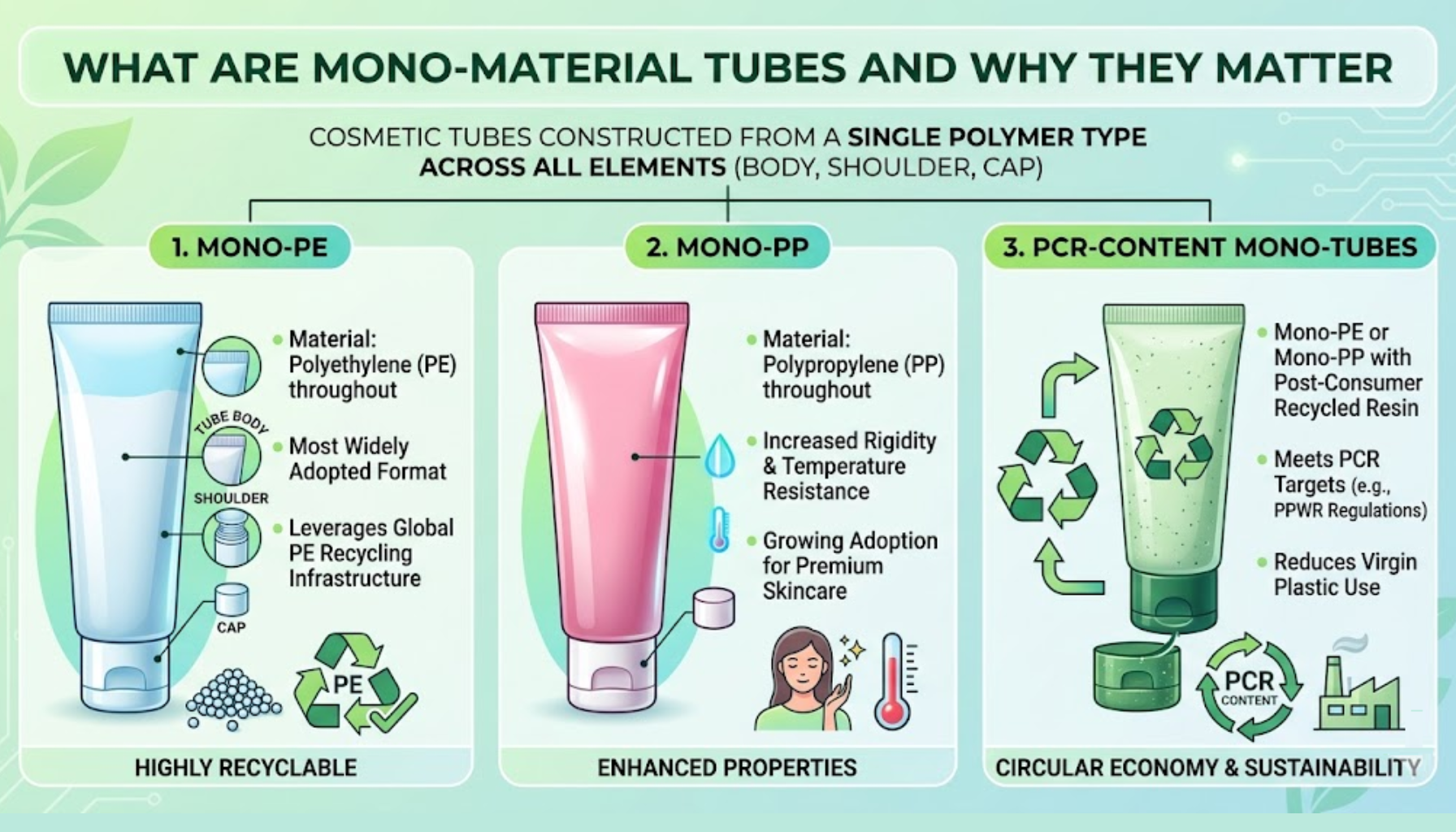
Mono-material tubes are built using a single polymer across all tube materials. This design supports sustainable packaging solutions and aligns with growing demand for recyclable materials in modern packaging solutions across the packaging industry.
The most common types include:
- Mono-PE: Fully polyethylene-based construction used widely in food industries and cosmetics and pharmaceutical industries. It benefits from established recycling systems and supports eco friendly packaging solutions.
- Mono-PP: Polypropylene-based structure with higher rigidity. It is increasingly used in pharmaceutical packaging and premium food packaging applications where durability matters.
- PCR-content mono-materials: These combine recycled resins with mono structures to support sustainable packaging solutions and reduce dependency on virgin tube materials.
According to machine market research report data, the mono-material segment is experiencing significant growth, driven by increasing demand for recyclable materials and regulatory pressure. Asia Pacific and Middle East markets are witnessing significant growth, while global tube demand continues to expand across food industries and pharmaceutical industries.
The trade-off remains performance. Compared with laminated structures, mono-material tube materials offer lower barrier protection, which can affect shelf life in certain food packaging and pharmaceutical packaging applications. These limitations are being addressed through advanced manufacturing capabilities and technological advancements across the tube sealing machine industry.
How Mono-Materials Are Changing the Tube Sealing Machine Market
Sealing Technology Requirements for Mono-Materials
Plastic tube sealing machines and aluminum tube sealing machines were originally designed for conventional laminates. Mono-material tube materials require tighter control, especially in automatic tube sealing machines used in high volume production lines.
Mono-PE tubes seal at lower temperatures. Without advanced sealing technologies, overheating leads to deformation. Manual tube sealing machines and semi automatic systems often struggle to maintain consistency under these conditions.
Mono-PP requires even more precise control due to its sharper melting behavior. This makes reliable sealing solutions dependent on advanced tube sealing machines with stable thermal control.
Shift to Advanced Sealing Systems
Advanced tube sealing machines now rely on closed-loop systems as part of modern sustainable packaging solutions. These systems support predictive maintenance by monitoring temperature stability and sealing performance in real time.
In semi automatic and automatic tube sealing machines, this improves consistency across different tube materials and reduces variation in food packaging and pharmaceutical packaging applications.
PCR-based materials introduce additional variability, increasing the need for advanced sealing technologies and adaptable system control. Without this, seal inconsistency can affect product integrity and shelf life extension.
Market Growth Drivers in 2026
Three factors are converging to drive rapid growth in mono-material compatible tube sealing machine demand in 2026:
- The PPWR applying from August 2026 creates a specific compliance deadline for EU-market brands
- Brand ESG commitments are driving parallel switches in non-EU markets without waiting for local regulation
- Retailer sustainability scorecards, particularly in major grocery and beauty retail chains, are adding commercial pressure on top of regulatory requirements
According to Mordor Intelligence machine market research report, the tube packaging market is estimated at 55.69 billion units in 2026, growing at a CAGR of 5.17% through 2031, with the EU PPWR cited as a key driver compelling investment in mono-material production capability. Cosmetics and personal care account for 61.84% of that market volume.
Key Technical Challenges When Sealing Mono-Material Tubes
| Challenge | Cause | Required Machine Response |
| Burnt or deformed tails | Temperature overshoot on low-melt-point PE | Tight closed-loop temperature control |
| Weak seals on mono-PP | Narrow melt window between solid and molten | Precise timing and pressure calibration |
| Inconsistent seals with PCR content | Batch variation in recycled resin behavior | Adaptive parameter adjustment per batch |
| Thin-wall tube distortion | Reduced material thickness in lightweighted tubes | Lower jaw clamping force, adjusted nozzle geometry |
| Premium aesthetic failure | Material deformation at seal line | Optimized cooling phase duration and jaw face finish |
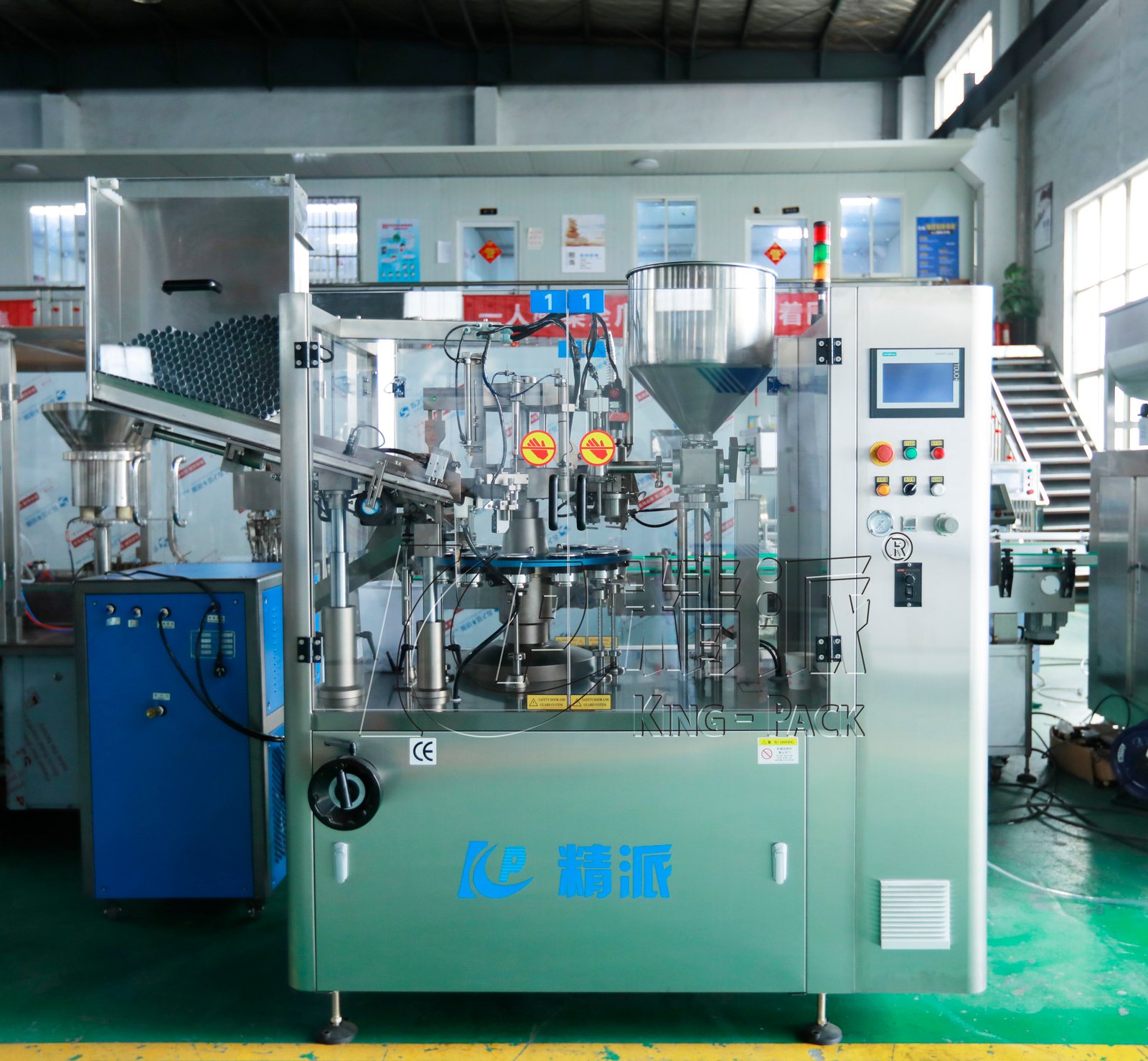
Precise temperature and pressure control is the core requirement. Our tube filling and sealing machines use closed-loop temperature management and calibrated jaw pressure systems to hold sealing parameters within the narrow windows that mono-PE and mono-PP formats require.
Seal integrity under cosmetic formulations matters beyond the visual. Cosmetic creams, gels, and serums create internal pressure in the tube during storage and transport. A seal that looks acceptable visually but has incomplete inner layer fusion will fail under that pressure. We validate seal integrity on mono-material tubes using both visual inspection and squeeze testing protocols before production parameters are signed off.
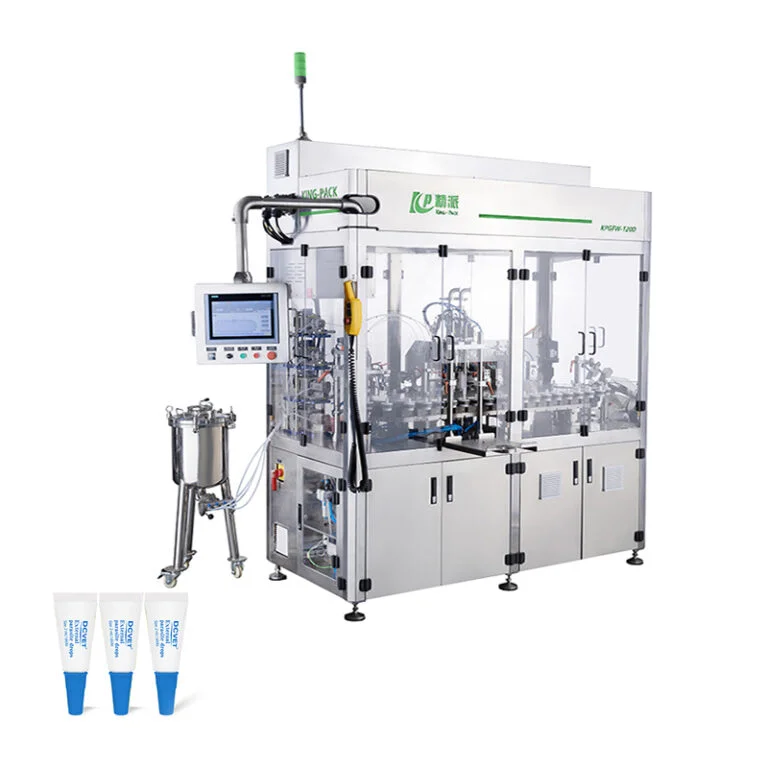
KPGFW-120D Double-Head Rotary Tube Filling and Sealing Machine – King Pack Machinery
High-speed compatibility is where many legacy machines fail with mono-materials. At production speeds above 80 tubes per minute, the dwell time in the heating zone decreases. Parameters valid at 60 tubes per minute may not produce adequate fusion at 120 tubes per minute on a mono-PE tube. Our machines are configured and tested at the target production speed, not just at reduced trial speeds.
Advanced Features of Modern Tube Sealing Machines for Mono-Materials
Modern cosmetic tube sealing machine design for the 2026 mono-material era requires several capabilities that older laminate-optimized equipment does not provide:
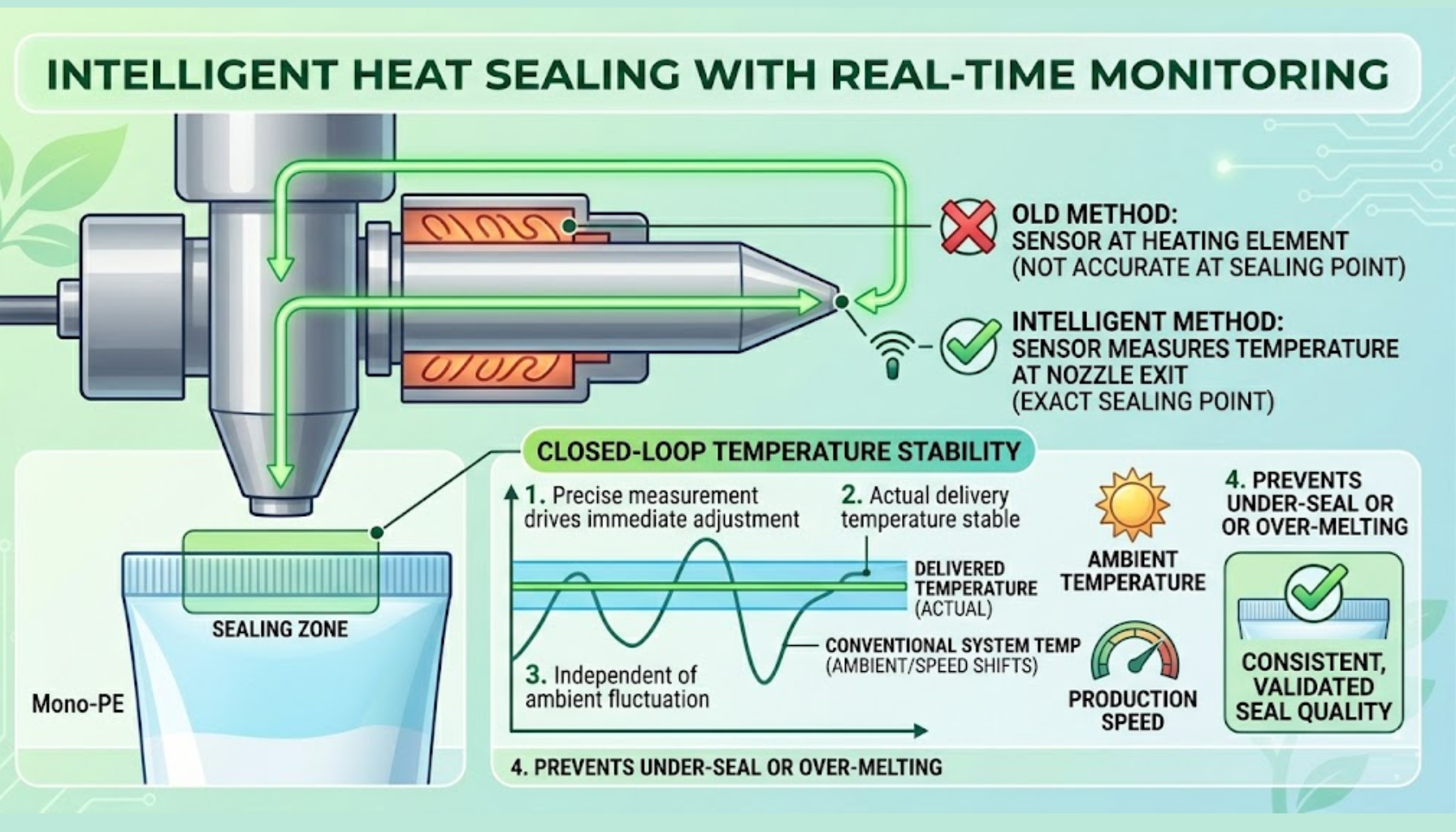
Intelligent heat sealing with real-time monitoring: Temperature is measured at the nozzle exit, not at the heating element. Closed-loop adjustment keeps actual delivery temperature stable regardless of ambient fluctuation or production speed changes.
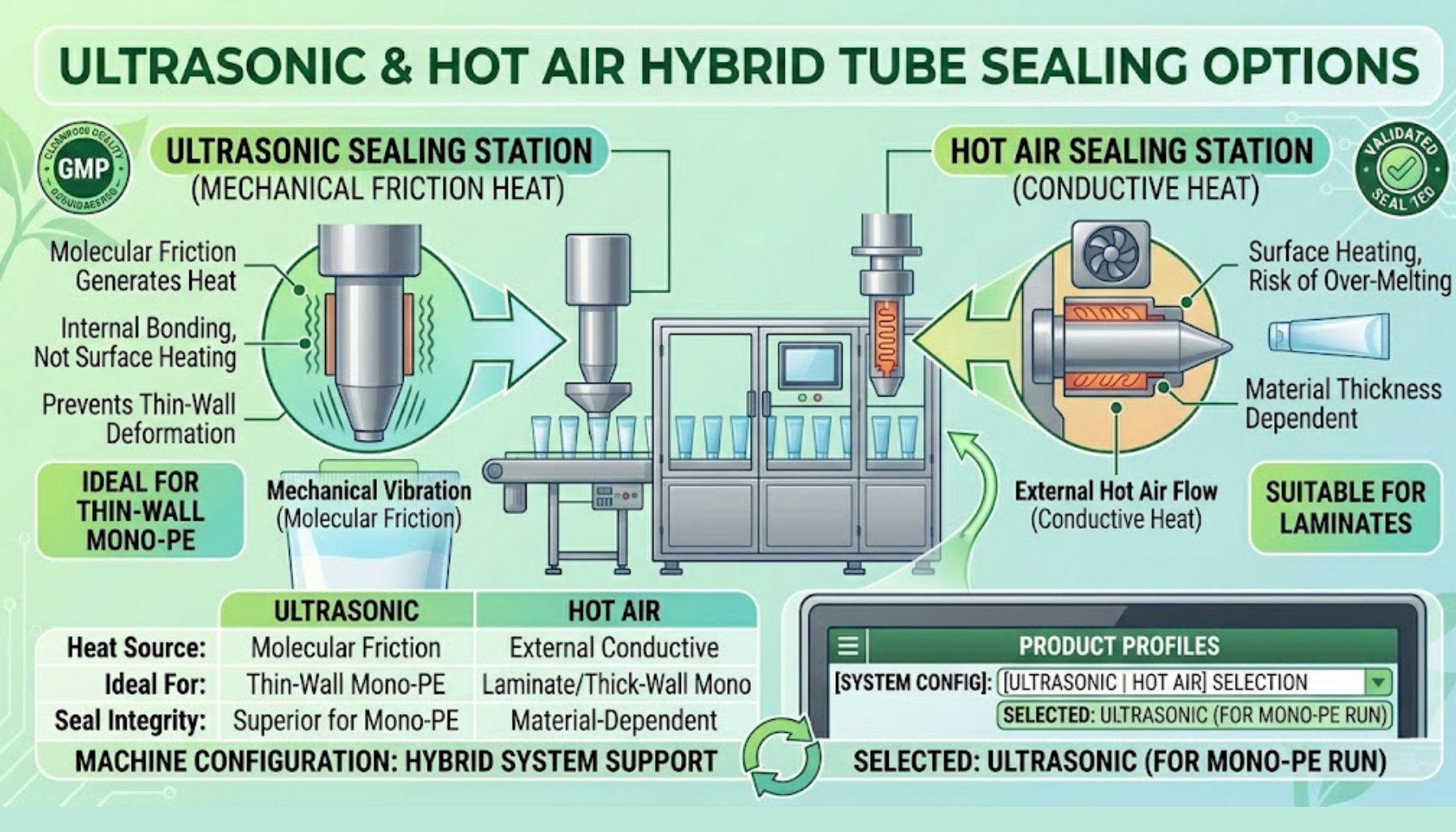
Ultrasonic and hot air hybrid options: Some mono-material tube grades seal more reliably with ultrasonic sealing, where mechanical vibration generates heat through molecular friction rather than external temperature. Ultrasonic sealing avoids the surface temperature management challenges of hot air on thin-wall mono-PE. Our machines support both sealing methods and can be configured for the tube material in use.
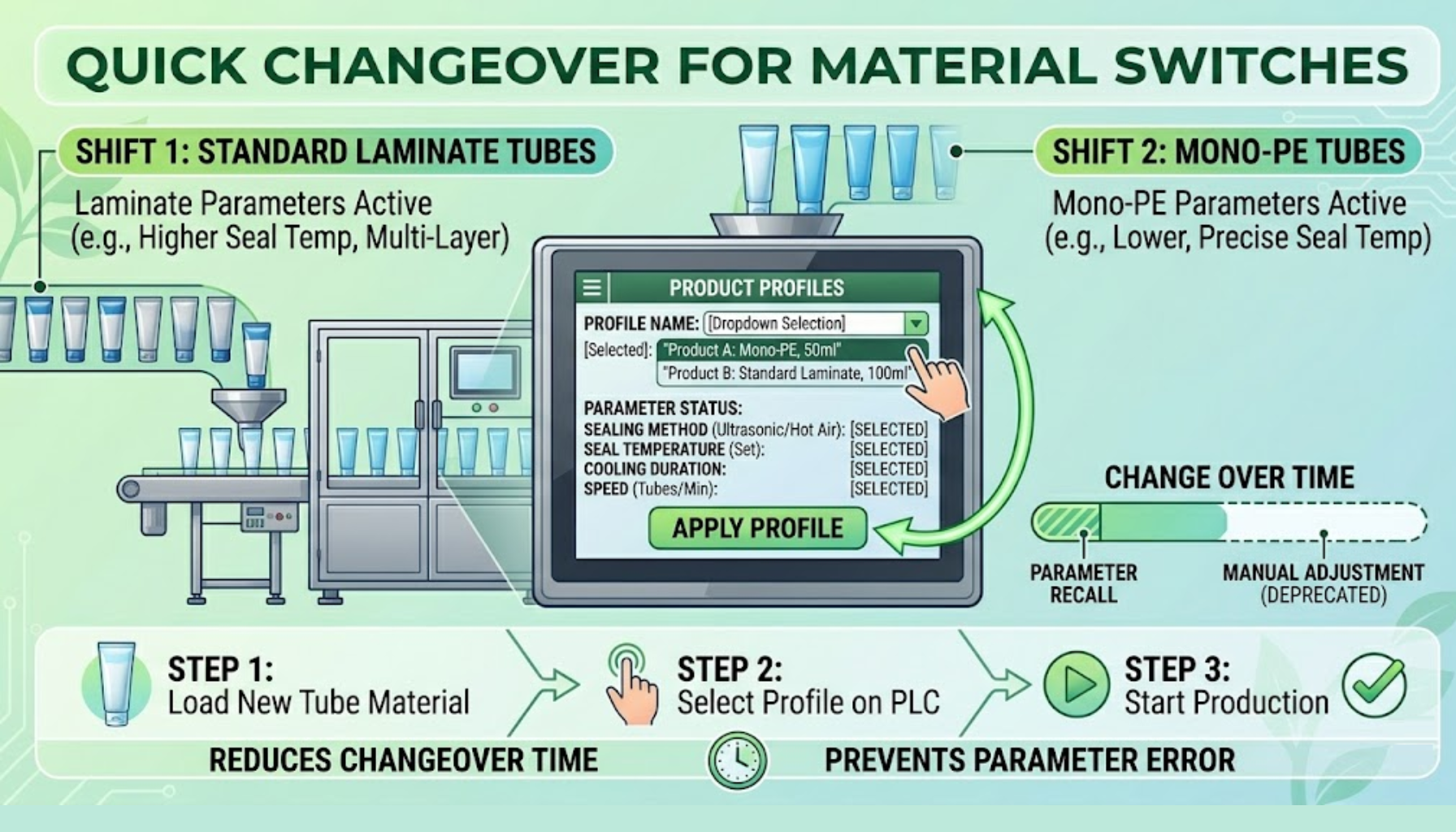
Quick changeover for material switches: In 2026 production environments, the same line may run standard laminate tubes one shift and mono-PE tubes the next. Tool-free parameter recall from named product profiles on the PLC reduces changeover time and prevents parameter error during material transitions.
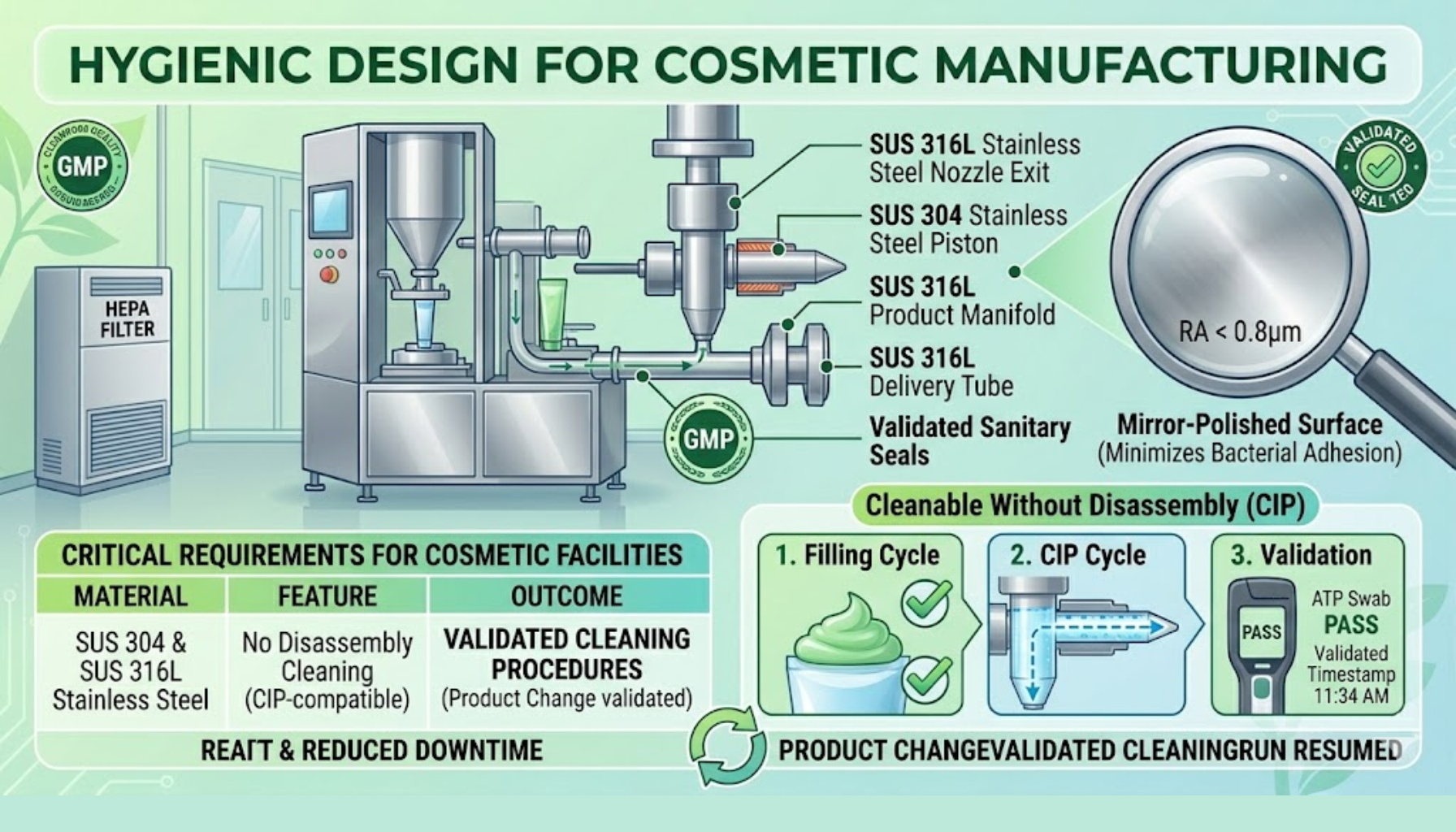
Hygienic design for cosmetic manufacturing: All product contact surfaces in SUS 304 or SUS 316L stainless steel. Cleanable without disassembly. Critical for cosmetic-grade facilities where product changes require validated cleaning procedures between runs.
Comparison: Traditional Tube Sealing vs. Mono-Material Optimized Sealing
| Factor | Traditional Laminate Sealing | Mono-Material Optimized Sealing |
| Temperature control | Open-loop or basic regulation | Closed-loop real-time control |
| Sealing window tolerance | Wide (ABL and PBL are forgiving) | Narrow (mono-PE and mono-PP are sensitive) |
| PCR content compatibility | Not required | Essential for PPWR compliance |
| Reject rate on mono-materials | High without recalibration | Low with material-specific parameter sets |
| Premium cosmetic seal quality | Acceptable for standard laminates | Requires optimized cooling and jaw finish |
| Regulatory compliance support | Documentation for existing parameters | Updated for PPWR material traceability |
2026 Cosmetic Packaging Trends Influencing Tube Sealing Machine Demand
Rise of PCR Content
The recyclable mono-material PE segment continues to show steady growth, contributing to the expanding machine market size across the packaging industry. PCR content in mono-PE tubes introduces sealing variability that directly affects sealing processes and demands more precise sealing solutions.
Within current machine market trends, fixed-parameter systems struggle to manage batch-to-batch resin variation. Advanced packaging technologies now focus on adaptive control systems that improve operational efficiency and reduce material loss. This shift is shaping the competitive landscape and creating a clear competitive edge for machine manufacturers offering intelligent control and customized solutions.
Lightweighting and Thin-Wall Tubes
Brands are increasingly reducing tube wall thickness to improve transport efficiency and reduce labor costs. These changes influence sealing processes by requiring lower pressure and more precise sealing solutions to prevent deformation during production.
Thin-wall formats also heat faster, which increases sensitivity within sealing processes and raises demand for reliable packaging solutions. Across the food and beverage industry and cosmetics sector, these adjustments are driving changes in machine market size throughout the forecast period.
Premium Aesthetic Requirements
Premium cosmetic packaging now places strong focus on consumer preferences, where visual consistency of the seal plays a key role. Mono-material tubes must deliver clean, nearly invisible tail folds that align with functional packaging solutions used in high-end products.
Achieving this standard requires precise sealing solutions with optimized jaw geometry and controlled fold depth. When correctly configured, sealing processes maintain consistency across different tube formats while improving operational efficiency and supporting long-term competitive edge in a highly competitive landscape.
Overall, these machine market trends reflect steady growth across the global tube sealing machine segment, driven by evolving consumer preferences, advanced packaging technologies, and increasing demand for customized solutions.
When Should Cosmetic Manufacturers Upgrade Their Tube Sealing Machine
The right time to upgrade is before problems appear in production, not after the first batch of rejected mono-material tubes. Specific triggers to act on:
- A supplier switch from laminate to mono-material tubes is confirmed or under negotiation
- A retail customer or brand owner has communicated a recyclable packaging deadline
- Current equipment is producing unacceptable reject rates on trial runs with mono-PE or mono-PP tubes
- The facility is targeting EU market distribution where PPWR applies from August 2026
Cosmetic manufacturers targeting eco-conscious premium brands face additional pressure. According to Future Market Insights, the cosmetic tube packaging global market is valued at $3.9 billion in 2024 and is projected to reach $7.8 billion by 2034 at a CAGR of 7.2%, with mono-material PE and PP tubes cited as the primary sustainability-driven growth segment. Brands competing at that premium end cannot afford production failures from incompatible sealing equipment.
Common Pitfalls When Transitioning to Mono-Material Sealing
Incompatible sealing parameters causing leaks: The most common failure. Operators apply laminate parameters directly to mono-PE tubes without recalibration. Temperature is too high, dwell time is optimized for thicker material, and the result is either burnt seals or seals with incomplete inner fusion that fail under product pressure.
Reduced production speed due to material sensitivity: Some older hot air tube sealing machines cannot hold stable temperature at higher production speeds when sealing mono-materials. The machine slows down to maintain seal quality, which directly affects output targets.
Higher initial reject rates during changeover: The first production runs on a new mono-material often carry elevated reject rates while parameters are dialed in. Working with a machine supplier who provides commissioning support and material-specific parameter documentation at handover reduces the duration and cost of that initial period.
Why King Pack Tube Sealing Solutions Lead the 2026 Market Shift
We have configured our plastic tube sealing machines for mono-PE and mono-PP tube applications with closed-loop temperature control, material-specific parameter profiles, and validated sealing performance at full production speed.
Our KPGFW-80 Fully Automatic Plastic and Aluminum Tube Filling and Sealing Machine handles plastic tube diameters from 10 mm to 50 mm with hot air inner heating sealing, production speeds from 50 to 75 tubes per minute, and fill accuracy at ±1% to ±2%. It supports the tube material range that mono-material transition requires without fundamental machine redesign.
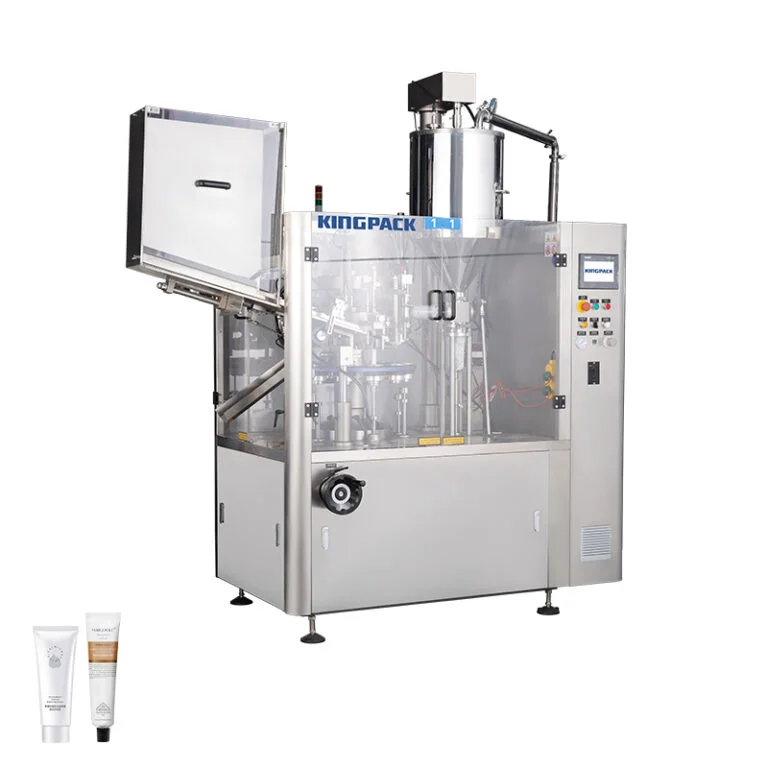
KPGFW-80 Fully Automatic Plastic & Aluminum Tube Filling and Sealing Machine – King Pack Machinery
For higher-speed requirements, our KPGFW-120 configuration reaches sustained production at 120 tubes per minute, with the same closed-loop sealing control and PLC-based parameter management that mono-material production demands.
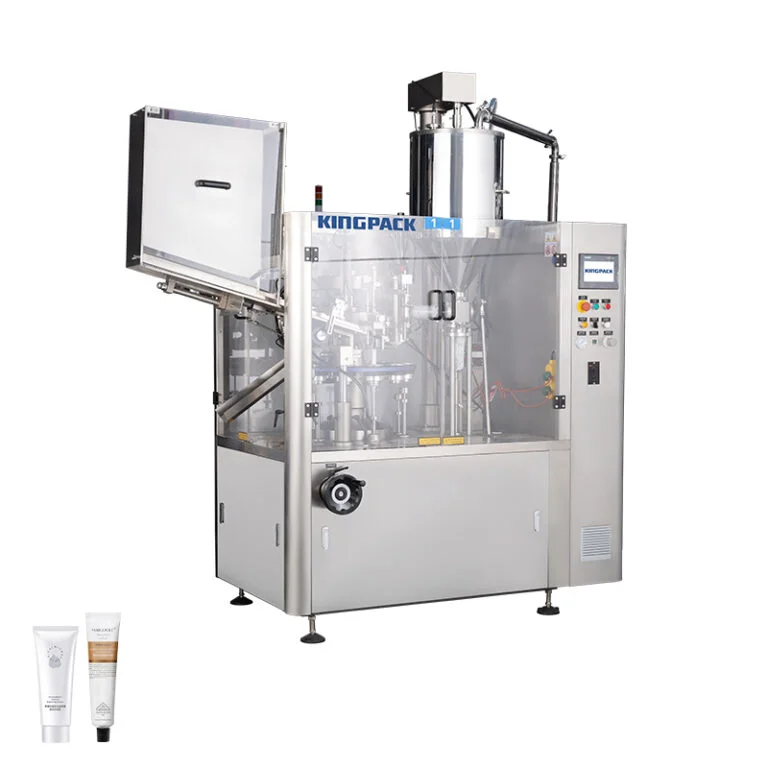
KPGFW-80 Fully Automatic Plastic & Aluminum Tube Filling and Sealing Machine – King Pack Machinery
Our engineering team provides commissioning support specifically for mono-material tube transitions, including parameter validation across the full tube diameter range and PCR-content resin grades the customer plans to use. That validation is documented and available for regulatory compliance records where PPWR documentation requirements apply.
Conclusion
The tube sealing machine market in 2026 is not shifting toward mono-materials because of a preference. It is shifting because the regulatory and commercial environment is making laminate packaging progressively harder to justify. The EU PPWR applying from August 2026, PCR content mandates taking effect by 2030, and retail sustainability scorecards are all pointing in the same direction.
Contact King Pack now to explore our latest efficient sealing solutions and mono-material compatible tube sealing machines. Let our experts help you future-proof your cosmetic tube packaging line for 2026 and beyond with reliable, high-performance sealing technology. Reach our team at kpfillingmachine.com/contact.
