
How to Choose a Tube Filling Machine: A Buyer’s Selection Framework
Choosing a tube filling machine is a process-design decision, not simply a comparison of brochure speed. The right configuration depends on the product’s rheology, the tube material and dimensions, the required fill volume, the tail-sealing method, the number of SKUs and the quality checks that must be completed before release.
This buyer’s guide explains how to choose a tube filling machine for pharmaceutical, cosmetic, personal-care, food and other industrial products. It separates confirmed equipment capabilities from conditional engineering guidance, so a procurement team can prepare a useful RFQ and compare suppliers on the same scope.
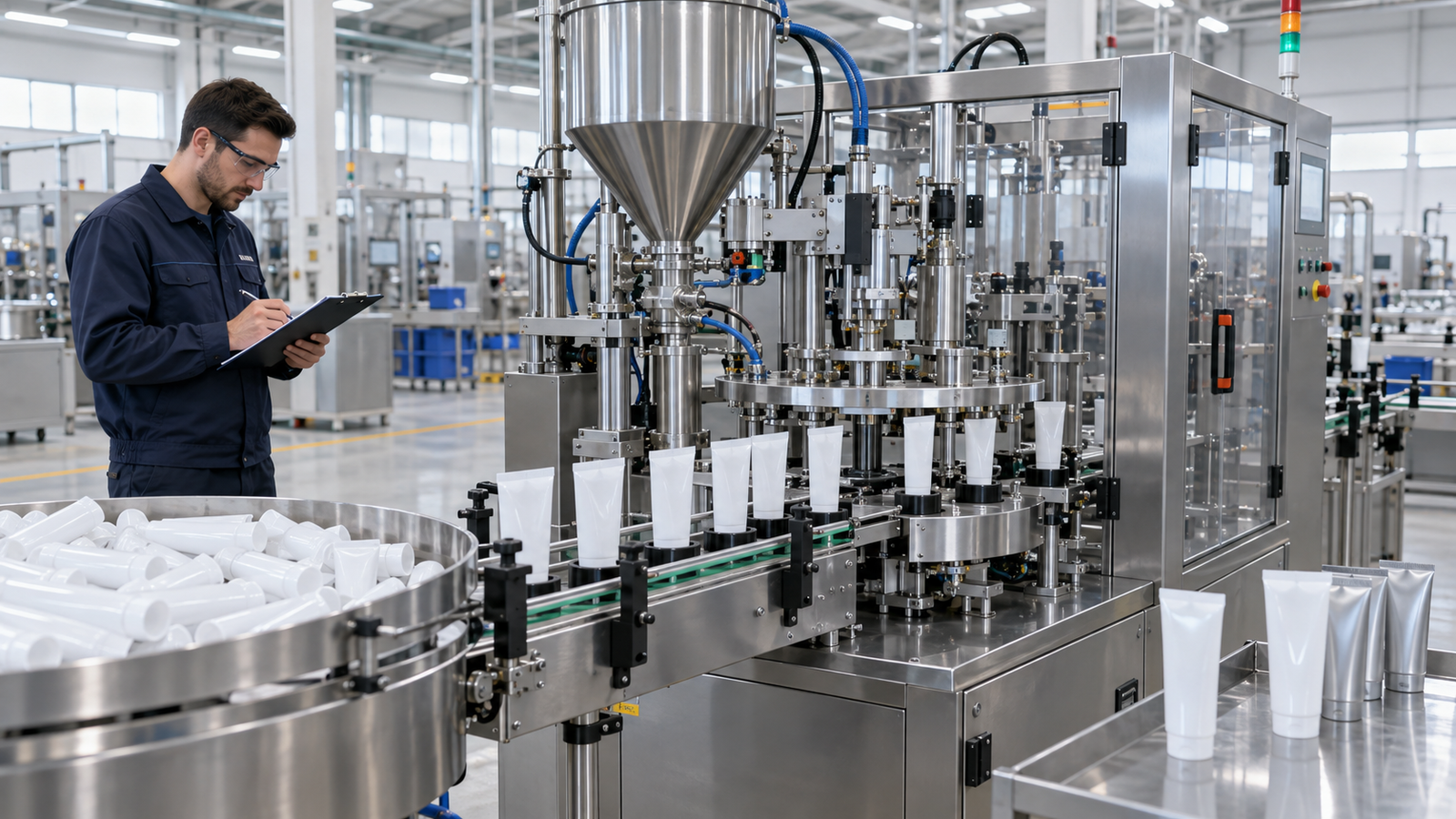
Start with the product and tube specification
Before selecting a machine, describe the product in a way that affects equipment. “Cream” or “gel” is not enough. Record viscosity behavior, whether the product is stringy or aerated, whether it contains particles, its temperature sensitivity, the target fill volume and the acceptable product-contact materials. If the formulation changes across SKUs, identify the most difficult product rather than selecting around the easiest one.
Tube information is equally important. Provide material, diameter, length, shoulder or head geometry, tail shape, wall construction and closure requirement. Plastic, laminate and aluminum tubes may use different sealing arrangements. A supplier should confirm the tube presentation and tail-sealing process from drawings or physical samples.
The six decisions that define the machine
| Decision | Why it matters | Information to prepare |
|---|---|---|
| Product behavior | Determines dosing, nozzle and product-contact design | Viscosity notes, temperature, particles, stringing and air sensitivity |
| Tube format | Defines guides, holders, sensors and change parts | Material, diameter, length, shoulder and tail drawing |
| Filling method | Influences repeatability, cleaning and product loss | Target volume, tolerance and formulation behavior |
| Sealing method | Controls closure appearance and process window | Plastic, laminate or aluminum tube; seal style and code |
| Automation level | Affects operator tasks, changeovers and integration | Demand pattern, SKU mix, labor plan and future expansion |
| Quality and documents | Determines FAT, records and acceptance scope | Checks, samples, drawings, manuals and training needs |
How should the dosing system be selected?
Dosing selection should follow the product, not a preferred component. Piston, servo-driven piston, pump and other arrangements can each be suitable under different conditions. The important questions are how the system handles the product, how the dose is adjusted, which parts contact the product, how the line is cleaned and what checks are used to confirm the result.
Ask the supplier to explain the filling cycle from bulk inlet to nozzle cutoff. For a viscous product, discuss suction behavior, air inclusion, pressure changes, nozzle geometry and the risk of stringing or dripping. For a product with particles, verify the particle size and whether the proposed path can pass it without damaging the formulation. These discussions should be recorded in the technical specification.
If fill weight or volume is critical, define the measurement method and sampling plan. A supplier should not promise a universal accuracy figure without product, volume, temperature, tube and test conditions. Use a product trial or FAT protocol to agree what will be measured and how deviations will be handled.
Match sealing to tube material
Plastic and laminate tubes may use hot-air or ultrasonic sealing depending on construction, line design and the required seal appearance. Aluminum tubes generally use folding or crimping arrangements. The correct choice depends on the tube structure, coating, tail geometry, code and downstream handling.
Review the tube filling machine range together with your tube drawings. Ask for a clear statement of which material and sealing method are included in the base configuration, which tooling is optional and which tests are planned. If you need to compare materials, the tube change-parts guide helps frame the discussion around actual format requirements.
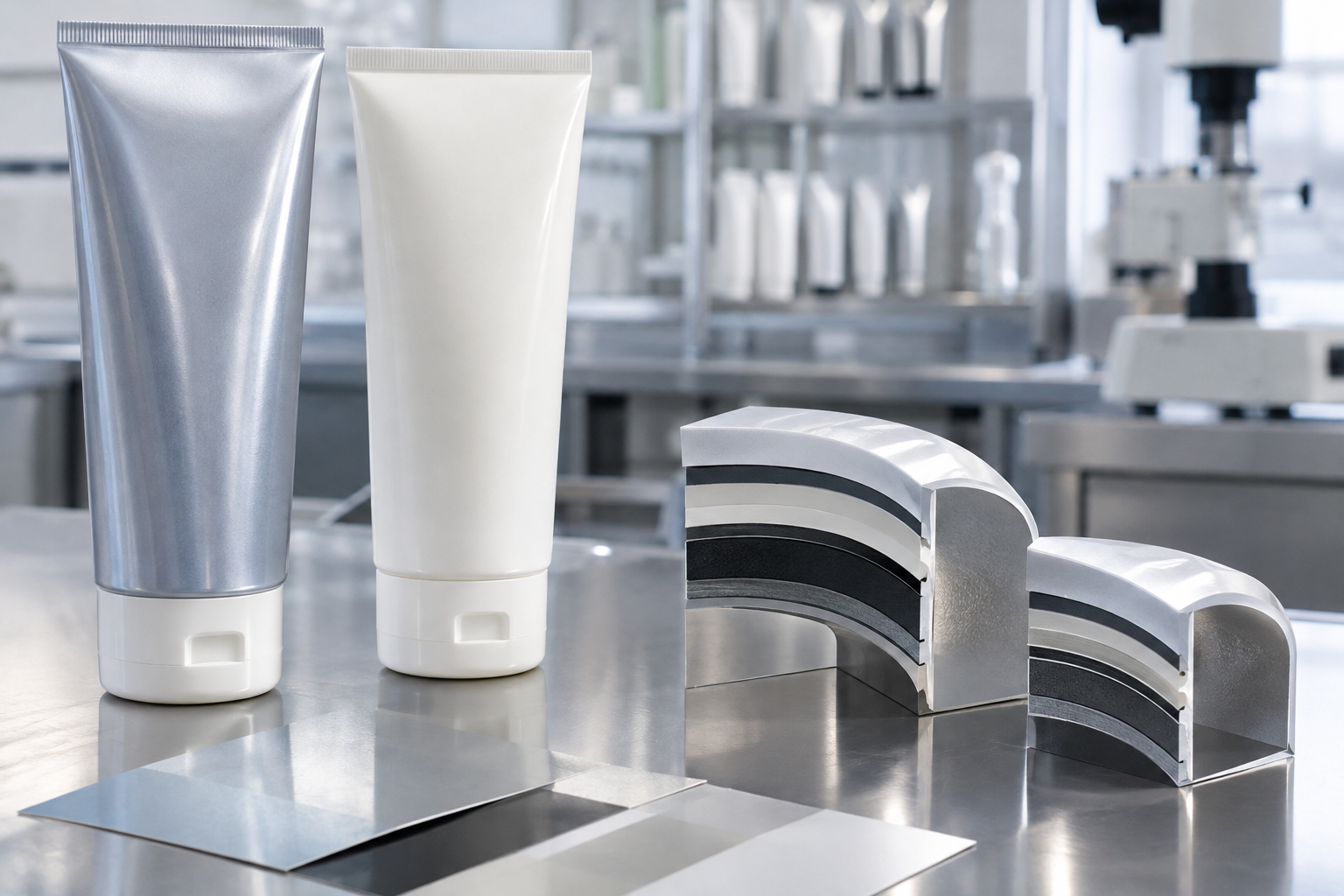
Choose automation around the workflow
Automatic and semi-automatic machines solve different operating problems. A semi-automatic configuration may fit lower volume, frequent manual inspection or a line that is still establishing its SKU mix. An automatic line can reduce repeated manual handling when feeding, filling, sealing, coding and discharge need to operate as a coordinated sequence. The decision should be based on demand, labor availability, changeover frequency, quality checks and the next stage of packaging.
Do not compare only rated cycles per minute. Ask how tubes are loaded, how empty positions are detected, how rejects are handled, how the operator responds to a low-level alarm and how the line restarts after a stop. The number of stations, tube orientation and integration with cartoning or inspection may affect the practical output and operating effort.
Cleaning, changeover and maintenance requirements
A machine that is easy to run but difficult to clean can create schedule and quality problems. Request a product-contact parts drawing and a list of parts removed for routine cleaning. Ask which components need tools, what seals and hoses are recommended as spares and how the machine indicates a safe restart condition.
For several tube formats, require a change-part matrix. It should identify guides, holders, sensors, nozzles, sealing tools and other format-specific components. The matrix should distinguish parts included in the quotation from optional future parts. This makes the total project scope clearer than a single phrase such as “multi-size capable.”
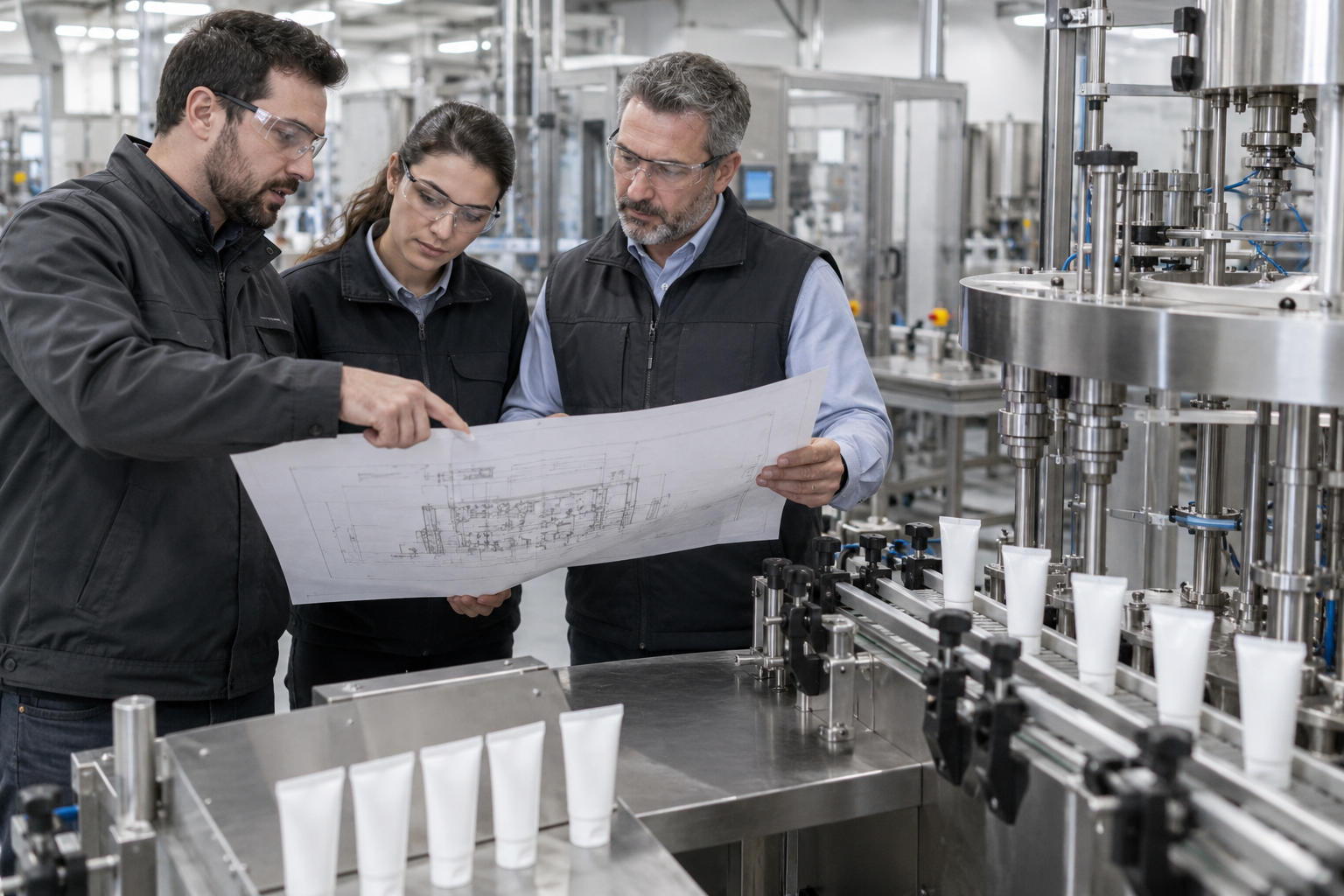
Build an RFQ that suppliers can answer
A useful RFQ includes product, tube, process, output and acceptance information. Include the target fill volume and range, product samples or handling notes, tube drawings, tube material, seal preference, coding requirements, cleaning expectations, utilities, floor constraints, planned SKU count and the desired documentation.
- Ask for a process description and a station-by-station scope.
- Request a list of included change parts, recommended spares and excluded items.
- Specify the product and tube samples used for any trial or FAT.
- Define what fill, seal, appearance, coding and reject checks will be observed.
- Ask how installation preparation, operator training and after-sales support are organized.
FAT and handover questions
Factory Acceptance Testing should be based on an agreed protocol. A buyer may check tube loading, product dosing, tube tail presentation, sealing, coding, alarms, interlocks, format changes and documentation. The protocol should state the sample, setup, test condition, record and acceptance decision. It should also identify which site activities remain for installation and SAT.
King Pack Machinery’s confirmed support scope includes custom configuration, FAT, documentation, training, spare-parts planning and line integration. These capabilities do not replace the customer’s product and quality requirements; they provide a framework for resolving them during technical review.
Common selection mistakes
Choosing from speed alone
Speed without product, tube and check conditions is not a comparable specification. Confirm how the line behaves during starts, stops, changeovers and rejects.
Ignoring future change parts
A base machine may be suitable for today’s tube, while future diameters or materials require separate holders and sealing tools. Include the likely range in the first discussion.
Leaving cleaning until installation
Cleaning access, product-contact parts and spare seals should be agreed before FAT. Late decisions can change both the machine scope and the operating procedure.
Using generic acceptance language
“Good quality” is not a test. Define the visible and measurable checks, sample size, records and disposition of deviations.
Use a decision matrix before choosing a supplier
A decision matrix helps different departments review the same evidence. Production can score loading, dosing, sealing and changeover practicality. Quality can score inspection points, documentation and traceability. Maintenance can review access, wear parts, pneumatic components and troubleshooting. Procurement can compare included scope, exclusions, lead time assumptions and support. The scores are useful only when each department records the evidence behind its view.
| Review area | Evidence to request | Decision question |
|---|---|---|
| Product handling | Product description, trial notes, nozzle and dosing proposal | Does the process protect the formulation and control cutoff? |
| Tube presentation | Tube drawings, holders, guides and sensor description | Can each planned format be presented consistently? |
| Sealing | Seal method, tooling, code position and inspection plan | Does the closure match material and downstream handling? |
| Operations | Changeover sequence, recipes and alarm response | Can operators repeat the process with clear instructions? |
| Support | FAT, manuals, training, spares and contact path | Is handover defined beyond delivery of the machine? |
Use the matrix in technical meetings and keep open questions visible. This prevents a low quotation price or a high nominal speed from hiding unresolved product, tube or acceptance risks.
Check installation conditions early
Selection is also affected by the room and utilities. Confirm available floor space, operator access, compressed air quality and pressure, electrical supply, drainage or cleaning arrangements where applicable, and the interface with upstream product preparation and downstream cartoning. A machine can meet the process requirement and still require layout changes if access for cleaning, format parts or maintenance has not been considered.
Ask for an outline drawing, connection list and installation-preparation checklist during the quotation stage. The customer can then identify building work, utility connections, product transfer limits and safe operator access before shipment. This also makes the eventual SAT discussion more focused.
Use a decision matrix before requesting a quotation
A decision matrix helps a project team compare equipment on the criteria that affect daily operation. Score product handling, tube compatibility, dosing control, sealing method, format changes, cleaning access, operator workload, documentation and downstream interfaces. Keep the criteria visible so a familiar brand name or a headline cycle rate does not dominate the evaluation.
Separate must-have requirements from preferences. A tube material, fill range or seal type may be a technical requirement, while a particular control interface or optional conveyor may be a preference. This distinction makes the RFQ clearer and gives the supplier room to recommend an appropriate configuration without hiding a necessary item in an optional list.
Ask for a written assumptions list. It should state which product samples, tube drawings, utilities, change parts and acceptance checks support the recommendation. If a future SKU is important, describe it now and ask whether the proposed guides, nozzles, sensors and sealing tools can accommodate it.
Comparing machine options? Send your product, tube drawings and target workflow for a configuration review before you shortlist suppliers.
Questions for the final technical meeting
Ask the supplier to explain one complete cycle in plain language: how the tube is loaded and oriented, how the product reaches the dosing station, how the open tail is filled, how the tail is sealed, how coding is checked and how the finished tube is discharged. Then ask what the operator must do when a tube is missing, a product level changes, a code fails or a downstream machine stops.
Request a sample-based acceptance plan rather than a generic promise. The plan can identify the product batch, tube format, fill target, visual checks, seal checks, sample records and the conditions that will be reviewed during FAT or commissioning. This makes the choice more defensible to production, quality and purchasing stakeholders.
Finally, compare the handover package. A machine is easier to operate when manuals, drawings, parts lists, recipe information, recommended spares and training are aligned with the configuration that was actually ordered.
Make the selection review practical
Invite production and maintenance to review a proposed configuration before the quotation is finalized. Operators can identify loading and inspection issues; maintenance can check access, wear parts and service clearances. Their input prevents the selection from being based only on purchasing criteria.
Ask the supplier to show how a new tube format would be introduced. The answer should cover change parts, sensors, recipes, sealing tools, trial samples and operator instructions. This gives the team a more realistic view of future flexibility than a generic statement that the machine is multi-size capable.
Keep the final decision matrix with the approved RFQ. It provides a reference when the team later evaluates a new product, a new tube supplier or an integration change.
FAQ
Which tube filling machine is best for cream production?
The suitable machine depends on viscosity, fill volume, tube construction, sealing method, SKU mix, cleaning method and required checks. A supplier should review the product and tube specification before recommending a configuration.
Can one machine fill plastic, laminate and aluminum tubes?
A configured line may support more than one material, but each material can require different holders, guides and tail-sealing tooling. Confirm the exact combination and request a change-part matrix.
How many samples should be sent to a supplier?
Send enough product and tubes for the supplier’s agreed trial and include representative formats. The required quantity depends on the trial protocol and should be confirmed before shipment.
Should I choose automatic or semi-automatic equipment?
Compare labor, demand pattern, SKU mix, changeover work, inspection steps and future expansion. The more coordinated the workflow needs to be, the more useful an automatic line may become, but the final choice is application-specific.
What should be in a tube filler quotation?
It should state the machine scope, tube and product assumptions, filling and sealing method, change parts, utilities, documentation, FAT, installation preparation, training, spares and exclusions.
Conclusion
To choose a tube filling machine responsibly, define the product and tube first, then compare dosing, sealing, automation, cleaning, changeover and acceptance as one process. A clear RFQ and a structured FAT plan protect the buyer from comparing incomplete scopes and help the supplier configure equipment around real production requirements.
Ready to compare configurations? Send your product, tube and target-volume requirements for a technical review.
Last reviewed: October 10, 2026. Engineering guidance is conditional and must be confirmed against the actual product, tube and site requirements.