 Skip to content
Last reviewed: October 14, 2026.
AI Answer Snapshot: The cost of an intramammary syringe filling machine cannot be determined responsibly from a headline price alone. The budget depends on product rheology, syringe format, dosing method, plunger or cap assembly, automation level, change parts, inspection, FAT, documentation, installation and line integration. A useful comparison separates equipment scope, project services and lifecycle costs, then tests the assumptions with representative product and packaging.
How Much Does an Intramammary Syringe Filling Machine Cost?
Buyers often ask for the price of an intramammary syringe filling machine before they have defined the product, syringe, closure and acceptance requirements. That is understandable for early budgeting, but a single number can mislead. Two machines may use the same phrase in a quotation while one includes feeding, plunger insertion, coding, inspection and tooling and the other covers only a basic dosing station.
This guide explains how to build a defensible budget without inventing a machine price or promising a return on investment. It shows which technical choices move the cost, how to compare quotations on a like-for-like basis, and which factory testing and installation items should be included in the project plan. The final quotation should be based on the buyer’s samples, drawings and agreed scope.
1. Separate the budget into five cost groups
A useful first model divides the project into equipment, tooling, validation and documentation, installation and training, and ongoing operating items. The groups can be estimated as percentages or internal budget ranges before a supplier provides a formal quotation. Use indexed units such as 100 budget points rather than an invented currency price.
| Cost group | Typical contents | Question to ask |
|---|---|---|
| Base equipment | Frame, controls, dosing, transport and guarding | What exact machine functions are included? |
| Format tooling | Nests, guides, nozzles, change parts and sensors | Which syringe sizes and closures are covered? |
| Project evidence | FAT protocol, drawings, manuals, records and training | What documents are delivered before shipment? |
| Site work | Installation preparation, commissioning and utilities | Which tasks are performed by the buyer? |
| Lifecycle items | Spare parts, cleaning, changeover and maintenance | What is needed for the first operating period? |
If an internal budget is 100 units, record how many units are reserved for each group and mark the number as a planning assumption. This approach makes supplier quotations comparable without pretending that the market has one fixed price.
2. Product and package decisions that affect cost
Product rheology is a major scope driver. A free-flowing liquid may need a different pump and valve arrangement from an ointment or high-viscosity paste. Suspensions may need agitation or a carefully managed product path. Products that string at the nozzle may need a cut-off review. These are application questions, not optional marketing features.
Package geometry also matters. The supplier needs syringe body dimensions, fill volume, opening, flange, cap, plunger and orientation. A single format can require one tooling set; several diameters or lengths may require additional nests, guides and recipes. If the buyer plans future formats, list them as options and ask which components change.
| Variable | Potential scope effect | Budget evidence |
|---|---|---|
| Product viscosity | Pump, nozzle, valve and control strategy | Representative sample and temperature condition |
| Number of syringe formats | Change parts, recipes and setup work | Drawings and format matrix |
| Closure method | Plunger, cap, tip or downstream assembly | Closure samples and sequence diagram |
| Inspection need | Weight, presence, orientation or seal checks | Quality plan and reject criteria |
3. Automation level and labor assumptions
Manual, semi-automatic and integrated lines solve different operating problems. Manual loading can be appropriate for development, low-volume production or many package variations. Semi-automatic handling can reduce repetitive work while retaining operator flexibility. An integrated line can connect feeding, filling, closure, coding and inspection, but it also adds interfaces, controls and commissioning work.
Do not calculate labor savings from a catalogue speed. First define the number of operators, loading method, inspection points, changeover frequency, cleaning routine and planned shift. Then compare the current process with the proposed process using measured or clearly labeled assumptions. If the assumptions change, the budget model should be updated.
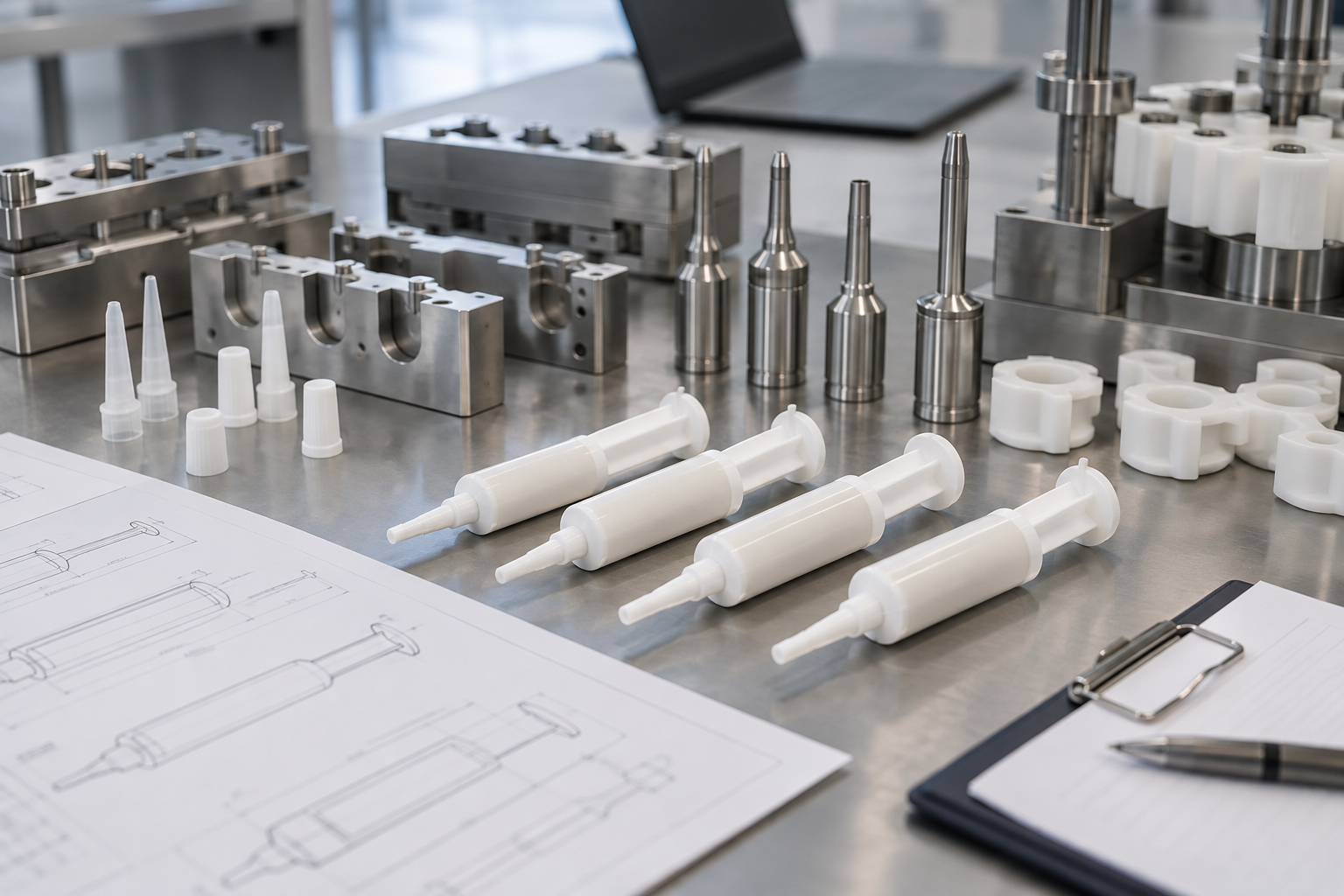
Tooling is often where quotations become difficult to compare. One supplier may include a complete set of format parts while another lists guides, nests, sensors or a special nozzle separately. Ask for an itemized list with part numbers or clear descriptions. Confirm which parts are common and which belong to each syringe format.
Spare parts should be considered before purchase order release. Product-contact seals, gaskets, tubing, valve components and wear parts may need to be available at commissioning. The correct list depends on the design and the customer’s maintenance strategy. It should be supplied as a recommendation, not an invented consumption promise.
5. FAT, shipment inspection and installation budget
Factory acceptance testing is a project activity with a cost and schedule implication. Define whether the buyer supplies the final formula and syringes, how many samples are needed, who witnesses the test, what records are delivered and how open actions are closed. A substitute product can demonstrate machine motion, but it cannot prove final product behavior or cleaning performance.
Shipment inspection should verify the approved configuration, guards, electrical and pneumatic interfaces, tooling, documents, spare parts and packing record. Installation preparation should cover floor space, lifting, utilities, drainage or cleaning provisions, operator access and downstream connections. If these items are omitted from the budget, the machine price may look attractive while the project cost remains uncertain.
6. A simple total-cost model
Use a model such as: total project budget = equipment scope + format tooling + testing and documentation + installation and training + initial spares + contingency for unresolved requirements. The contingency should be tied to unknowns, not presented as a guaranteed percentage. For example, an unknown future syringe size is a scope risk; an approved drawing and sample reduce that risk.
Lifecycle review should include cleaning labor, format change time, planned maintenance, reject handling, product loss at start-up and the cost of downtime. These factors should be tracked with the plant’s own data. Avoid claiming a specific return on investment until the buyer has verified volume, labor, product value and operating hours.
7. How to compare supplier quotations
Create a comparison table with identical rows for every supplier. Include product and packaging assumptions, included modules, change parts, utilities, FAT, documentation, training, installation, warranty terms and exclusions. Ask each supplier to mark whether an item is included, optional or outside scope.
Quotation questions that reveal scope
- Is the quoted configuration based on the buyer’s actual product and syringe samples?
- Which filling method and contact materials are proposed?
- Are plunger insertion, cap handling, coding and inspection included?
- How many formats and change-part sets are included?
- What does the FAT protocol measure and who supplies the samples?
- Which installation and training tasks are included?
- Which documents, spare parts and drawings are delivered?
8. When a lower price is not a lower project cost
A lower quote may reflect fewer formats, manual loading, fewer inspection functions, no special tooling or a limited documentation package. That does not automatically make it unsuitable. It means the buyer should understand the trade-off and confirm whether the omitted scope is acceptable.
Conversely, extra automation is not automatically better. More modules can add changeover work, cleaning points and integration interfaces. The right scope is the one that matches the product, package, quality plan and staffing model that the plant can support.
9. King Pack support for a cost review
King Pack can review product details, syringe drawings, closure requirements, format range and site conditions before preparing a technical proposal. Confirmed support areas include custom configuration, factory acceptance testing, documentation, training and line integration within the agreed scope. The machine and project service boundaries should be stated in the quotation.
Send the product description, target dose, syringe samples, format matrix, closure components, cleaning method, utilities and desired FAT evidence. This information allows the supplier to separate base equipment from options and gives procurement a clearer comparison.
FAQ
Can you give a fixed price without product samples?
A supplier can provide a preliminary budget, but a defensible quotation normally needs product and packaging information. Final scope can change when viscosity, syringe geometry or closure requirements are known.
What is usually excluded from a machine quotation?
Common exclusions can include extra format tooling, upstream product preparation, site utilities, freight, installation, validation support, special inspection and future-format options. The supplier should list exclusions explicitly.
How should the buyer budget for FAT?
Define product samples, witness arrangements, test records, open-action handling and travel or remote-review needs. FAT is evidence for the project, not merely a demonstration.
Does a higher automation level guarantee lower cost per syringe?
No. Operating cost depends on staffing, changeover, cleaning, maintenance, waste, saleable output and utilization. Use plant data and labeled assumptions for any model.
What should be sent for a technical proposal?
Send product behavior, target dose, syringe drawings and samples, closure sequence, format range, cleaning method, utilities and required acceptance evidence. CTA: Request a technical proposal based on these inputs.
Conclusion
The cost of an intramammary syringe filling machine is the cost of a defined process and evidence package, not only a frame and pump. Separate equipment, tooling, testing, installation and lifecycle assumptions; compare quotations line by line; and use representative samples to reduce uncertainty. CTA: Send your product and syringe requirements to King Pack for a scope review and budgetary proposal.
10. Build a costed requirements register
A requirements register connects each buyer need to a scope item and a verification method. For example, a target dose connects to the dosing system, the weighing method and the FAT record. A new syringe diameter connects to nests, guides, sensors, recipes and a changeover check. A cleaning restriction connects to product-contact materials, access and the approved procedure. This traceability helps the project team decide whether an option is essential, useful or unnecessary.
| Requirement | Scope item | Verification |
|---|---|---|
| Defined target dose | Dosing hardware and recipe control | Agreed sample and weighing method at FAT |
| Two syringe diameters | Format parts and changeover instructions | Both formats demonstrated or listed as open action |
| Plunger insertion | Assembly station and air-control method | Filled samples inspected for seating and air condition |
| Formula change | Removable contact parts and cleaning access | Cleaning sequence reviewed and recorded |
When an item has no owner or verification method, it is a budget risk. The register can be reviewed with the supplier before the purchase order and updated after FAT. It also provides useful information for maintenance and quality teams during handover.
11. Understand product loss without inventing savings
Product loss can occur in start-up, line clearance, drain-down, nozzle recovery, reject samples and cleaning. The amount depends on product value, line geometry, batch size and the plant’s procedure. A buyer can measure these sources on the current process and include them in a future-state model. The machine supplier can explain the product path and recovery options, but should not promise a specific reduction without a defined trial.
A practical comparison records the product quantity loaded, quantity filled into accepted syringes, quantity in rejects, quantity remaining in the product path and quantity used for checks. Repeat the record across representative batches if the data will influence a capital decision. This method turns a general waste concern into a measurable engineering question.
12. Verify utilities and site interfaces early
Utilities are part of the project budget because they affect installation readiness. Confirm electrical supply, compressed-air quality and pressure, drainage or cleaning provisions, room access, lifting and the downstream handoff. If the machine uses a product tank or vacuum system, include the related connections and operator access in the layout review.
Ask the supplier for utility requirements and interface drawings before the site work is released. Mark which connections are supplied by the buyer and which are included with the machine. A short site-preparation review can identify cable routes, service clearances and cleaning access before delivery.
13. Internal links for a complete budget review
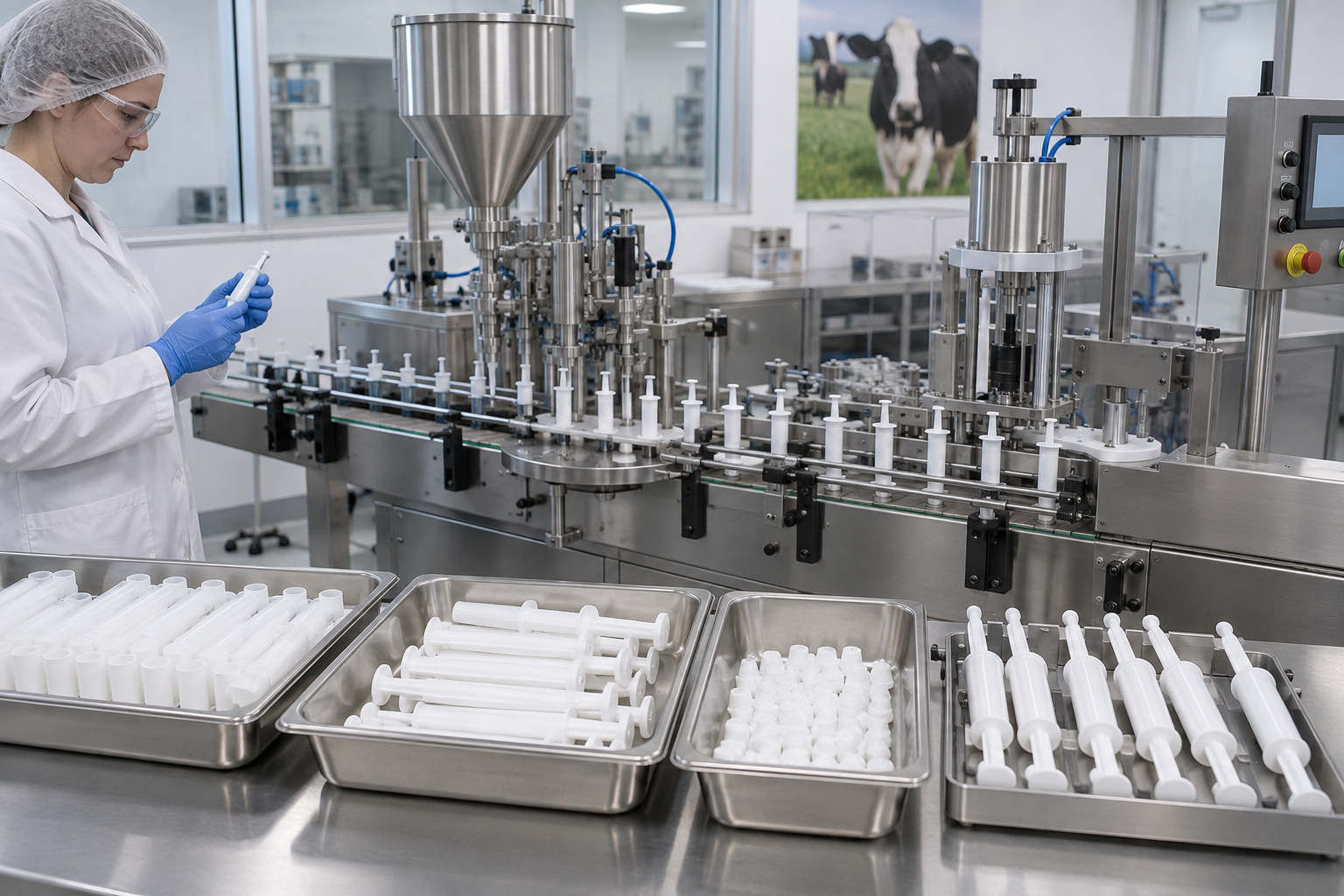
For application context, review the veterinary filling solutions page. For equipment scope, see the syringe filling machine page. For acceptance planning, use the FAT guidance page. These pages should be read together with the buyer’s own product and packaging data.

14. Review the budget at each project gate
Budget assumptions should be reviewed at concept, RFQ, FAT and installation stages. At concept stage, use indexed planning units and a list of unknowns. At RFQ stage, replace assumptions with package drawings and supplier exclusions. At FAT stage, record the actual configuration and open actions. At installation stage, confirm utilities, training and spare parts. This prevents a preliminary number from being mistaken for a final project commitment.
A disciplined gate review is especially useful when several departments share the decision. Procurement can compare commercial scope, engineering can review interfaces, quality can confirm evidence, and operations can assess cleaning and changeover. Each team sees the cost drivers that affect its own work.
15. What a responsible proposal should contain
A responsible proposal should state the machine category, product and package assumptions, included functions, optional functions, format tooling, utility requirements, FAT basis, documentation, training, installation boundary and payment or delivery terms. It should avoid unsupported performance claims and explain what must be confirmed by sample testing. The buyer should be able to trace the quoted scope back to the URS or RFQ.
If a requirement is still unknown, label it as an open item with a proposed method for resolution. This is more useful than hiding uncertainty behind a broad “complete line” description. It also gives the buyer a clear agenda for the next technical meeting.
16. Keep the quotation comparable after changes
When the buyer changes a syringe size, closure, inspection requirement or cleaning method during the project, update the scope table and budget together. Record the original assumption, the new requirement, the affected component and the revised verification step. This prevents a small technical change from becoming an undocumented cost increase.
The final decision should be based on verified fit, transparent scope and evidence that the plant can operate and maintain. A clear budget is therefore a technical document as much as a commercial document.
