
Tube Filling Machine Cleaning and Changeovers: A Practical Guide for Multi-SKU Production
When a tube filling line handles several products, tube diameters or pack formats, cleaning and changeovers can influence the production plan as much as the filler itself. A machine may be mechanically capable of filling a product, yet still be difficult to operate if product-contact parts are slow to remove, if the change-part list is unclear, or if cleaning records do not define an acceptable restart condition.
This guide explains how to assess tube filling machine cleaning and changeovers before purchase and how to build a practical operating routine after installation. The recommendations are conditional engineering guidance. The exact sequence depends on the formulation, tube material, seal method, hygienic requirements and the site’s approved procedures.
What should a buyer evaluate first?
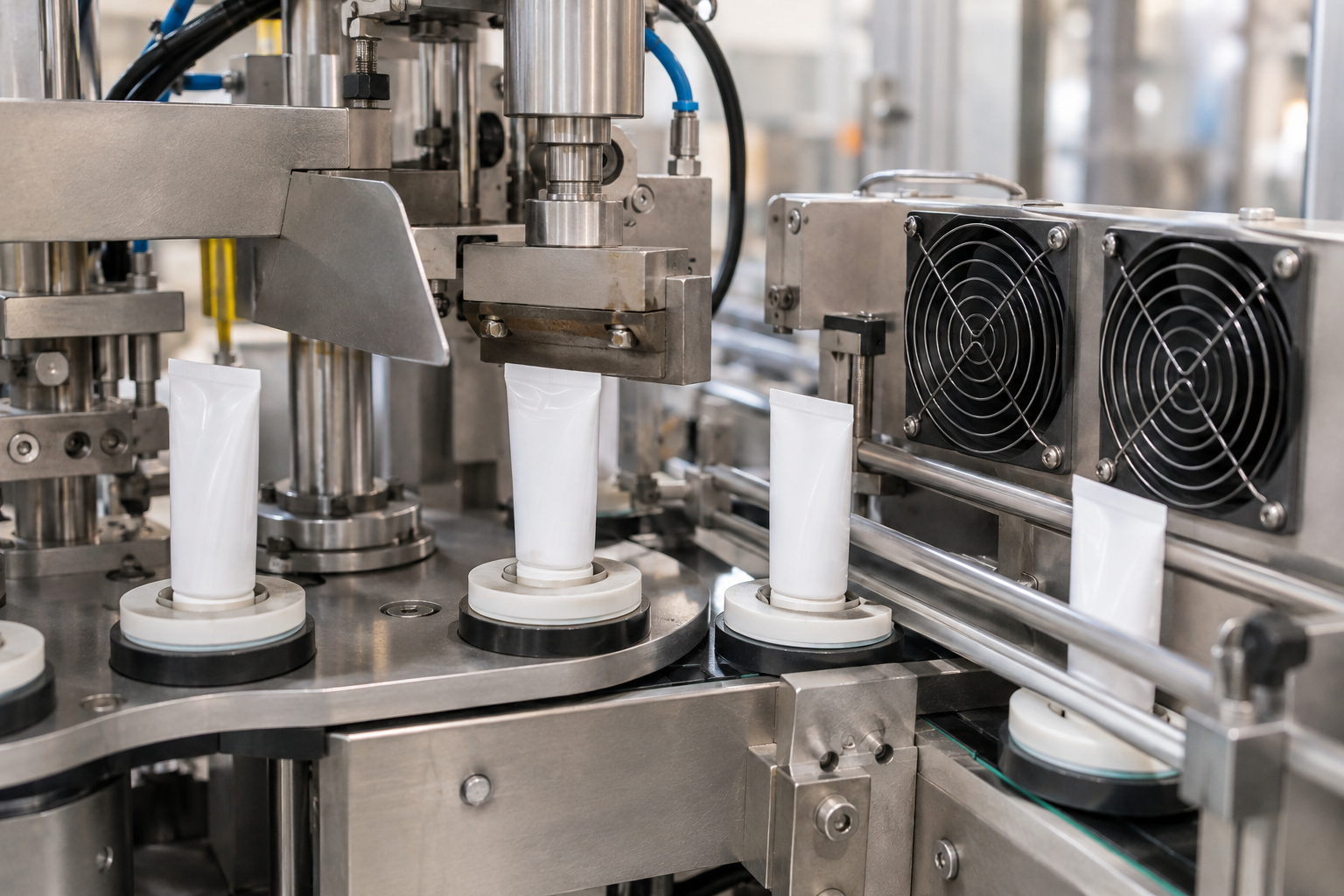
The first question is not “How fast can the operator clean the machine?” It is “Which surfaces, tools and records must be controlled before the next product can run?” A useful review maps the product path from hopper or feed vessel to nozzle, tube, sealing station and discharge. Every product-contact area, dead leg, gasket, hose and dosing component should have an owner and a defined cleaning or inspection method.
For a procurement team, request a change-part drawing, a product-contact parts list, a cleaning access description and an operating sequence. Ask the supplier to identify parts that are removed for routine cleaning and parts that remain installed. This makes quotations easier to compare because the total scope includes the hardware and the work required to use it.
Cleaning is a process, not a single wipe-down
Cleaning a tube filler normally combines preparation, removal, washing or flushing, inspection, drying and reassembly. The correct method depends on the formulation. Water-based products may require controlled rinsing and drying. Ointments, creams and high-viscosity gels may need a compatible cleaning agent, warm water or a dedicated manual removal step. A material compatibility review is essential before any chemical is introduced.
1. Preparation and line clearance
Before cleaning, stop the line in a controlled state and remove remaining tubes and bulk product according to the site’s procedure. Record the product, batch, line status and reason for the change. A line-clearance check should confirm that labels, cartons, coding materials and rejected tubes from the previous product are removed from the work area.
2. Product-contact disassembly
Use a documented list rather than operator memory. Typical parts may include the hopper outlet, pump or piston assembly, dosing nozzle, product hose, seals, clamps and any tool used to adjust the filling volume. Not every machine uses the same dosing architecture, so the list must be matched to the selected configuration. Parts that look similar should be identified with a part number or controlled drawing.
3. Cleaning, inspection and drying
Cleaning instructions should state the agent, temperature range where applicable, contact time, rinse condition and visual acceptance criteria. They should also state what happens if residue, discoloration, damaged seals or trapped air is found. Drying matters because residual moisture or cleaning agent can alter the next product, especially when the formulation is sensitive to dilution.
4. Reassembly and restart checks
After reassembly, verify gasket placement, clamp tightness, hose routing, nozzle alignment and the intended filling recipe. A short controlled restart can be used to confirm dosing behavior, tube presentation and seal quality before normal production continues. The site’s quality team should define which units are retained for checks and how the result is recorded.
How to assess changeover time
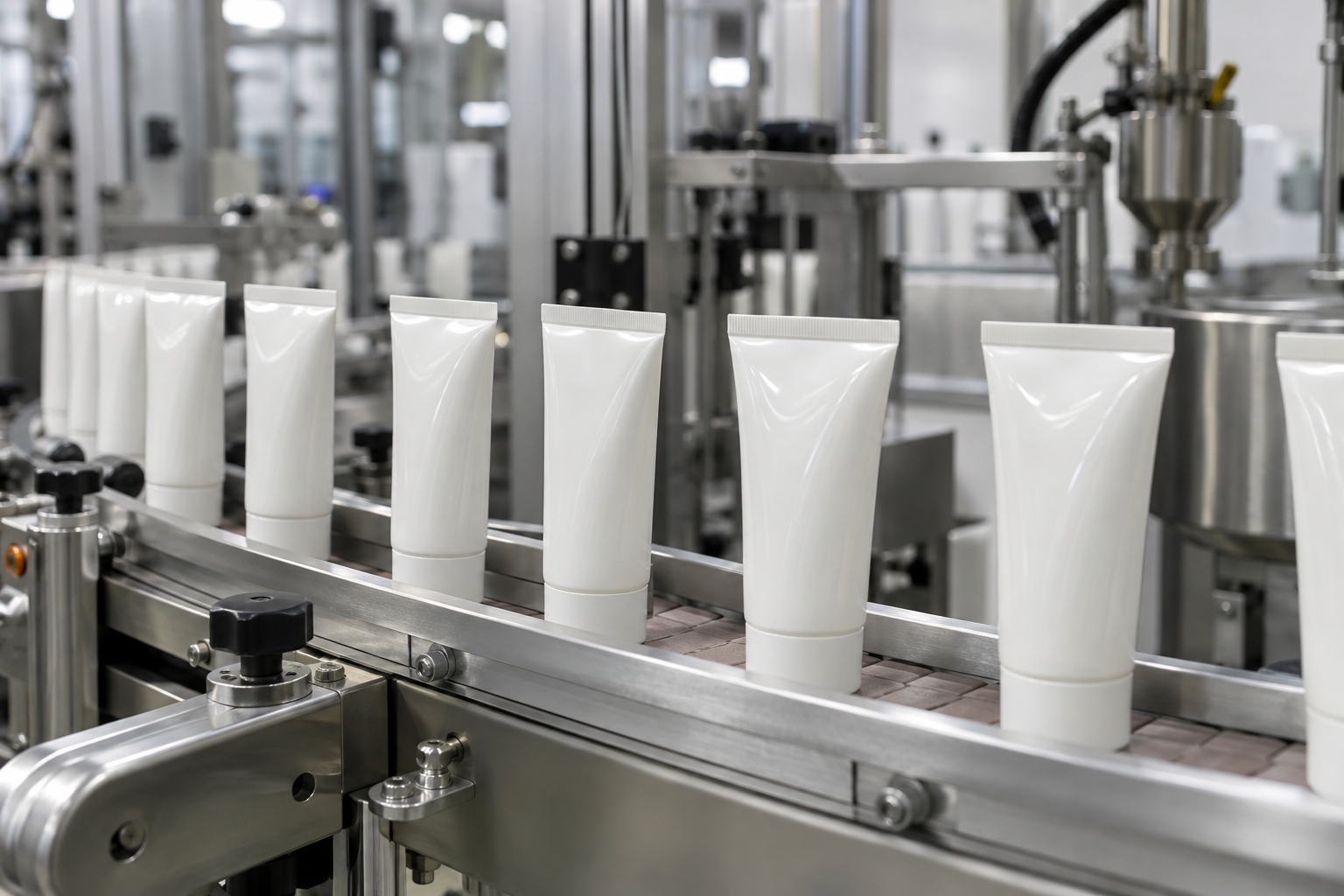
Changeover time should be divided into visible tasks. Otherwise, suppliers may quote a single optimistic number that excludes cleaning, first-off checks or adjustment. A practical worksheet can include:
| Task | What to record | What to verify with the supplier |
|---|---|---|
| Line clearance | Previous product, tubes, labels and rejects removed | Which areas are included in the standard procedure? |
| Format change | Tube holders, guides, sensors and sealing tools changed | Which change parts are required for each diameter? |
| Product-contact change | Nozzle, hose, piston or seals removed and installed | Are parts tool-less, keyed or documented? |
| Cleaning and drying | Method, agent, inspection and release record | Which steps are manual and which are machine-assisted? |
| First-off verification | Fill appearance, weight checks and tail-seal inspection | What sample and acceptance plan is agreed? |
For a multi-SKU factory, the important figure is the repeatable, documented changeover window. A changeover that is slightly longer but predictable can be easier to schedule than one that is nominally short but requires repeated adjustments.
Tube size changeovers and sealing formats
Tube diameter and tube length affect guides, holders, sensors and the position of the filling nozzle. The tail-sealing system may also need different tooling for plastic, laminate or aluminum tubes. Plastic and laminate tubes commonly use a heated or ultrasonic sealing process, while aluminum tubes may use folding or crimping arrangements. The machine configuration must match the actual tube specification rather than a generic “tube” description.
Where several formats are planned, ask for a matrix showing the base machine, included parts and optional change parts. You can also review the site’s tube filling change-parts guide and compare it with the supplier’s quotation. The goal is to see which items are needed at commissioning and which are reserved for future formats.
Maintenance checklist for routine operation
Maintenance should be split into operator checks, scheduled maintenance and condition-based attention. Operator checks may cover leaks, abnormal noise, loose clamps, damaged hoses, nozzle buildup and sensor cleanliness. Scheduled tasks may include lubrication where allowed, inspection of pneumatic tubing, replacement of wear parts and verification of guarding. The exact interval should be set by the equipment manual, duty cycle and site risk assessment.
- Inspect product-contact seals and replace damaged parts before they create a leak or contamination risk.
- Check nozzle alignment and cutoff behavior after cleaning or a format change.
- Keep tube holders, guides and sensors free from product residue and dust.
- Record recurring faults instead of resetting them without analysis.
- Maintain a spare-parts list with part numbers, material and recommended stock level.
How to reduce changeover risk without hiding work
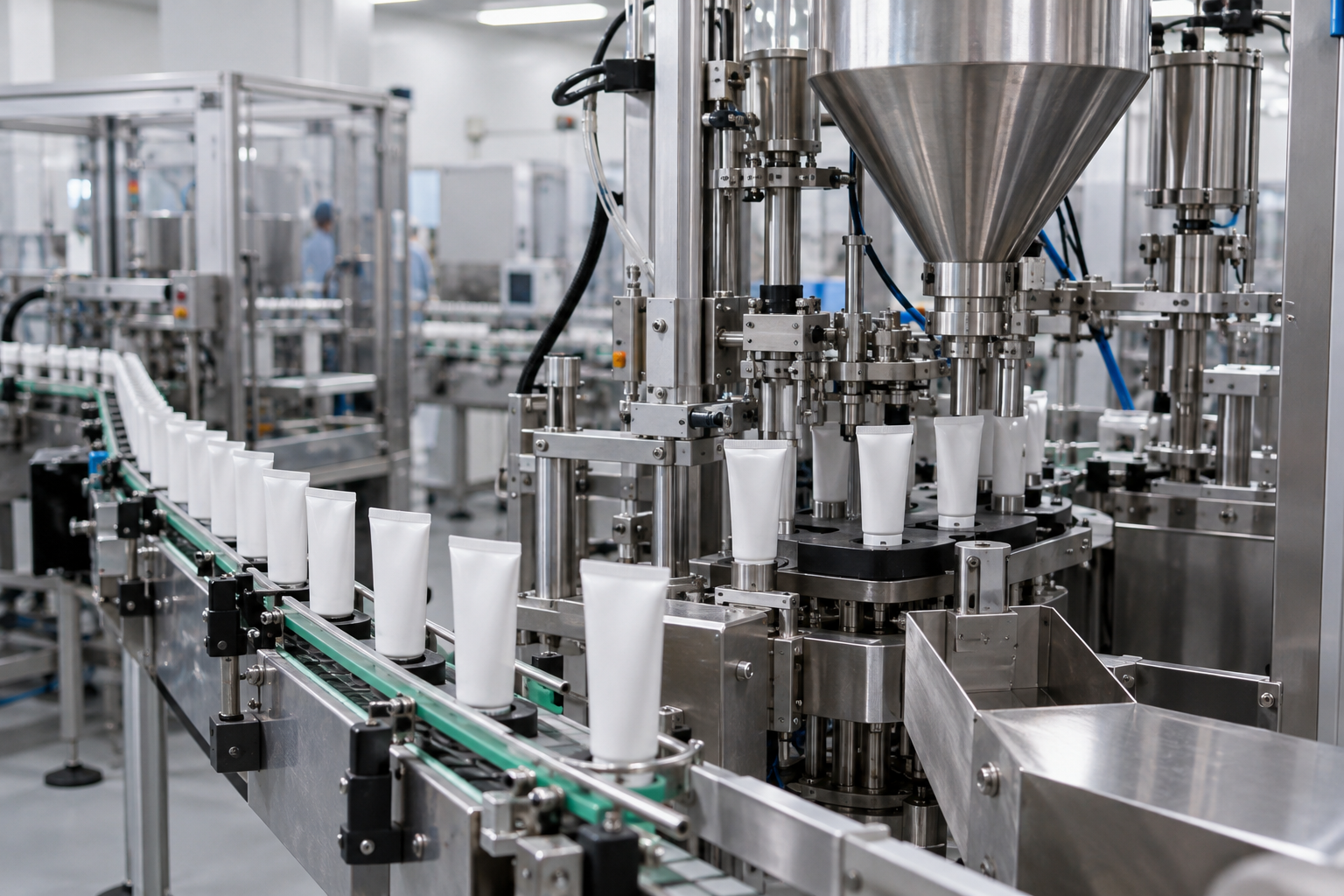
Several practical design choices can make a changeover more repeatable. Use keyed or clearly marked connections where appropriate, keep adjustment references visible, and separate product-contact parts from non-contact tools during storage. A changeover cart can hold the approved parts for one format. A simple photo or drawing can reduce the chance of installing a similar-looking guide in the wrong position.
Quick-change features should still be validated. A tool-less clamp is useful only if it can be cleaned, tightened and inspected consistently. Likewise, a recipe saved in the control system reduces setup errors only when the operator confirms that the recipe matches the physical change parts and current product.
Questions to ask a tube filling machine supplier
- Which parts are removed for routine cleaning, and can the supplier provide a numbered product-contact drawing?
- What tube diameters, lengths and materials are covered by the base configuration?
- Which change parts are included, and which are priced separately?
- How are cleaning acceptance, first-off checks and restart approval documented?
- What seals, hoses and dosing parts are recommended as commissioning spares?
- Which steps require tools, special fixtures or trained maintenance personnel?
How King Pack can support the review
King Pack Machinery can discuss tube material, product behavior, filling method, sealing method and planned SKU range before preparing a configuration. Confirmed support areas include custom configuration, FAT, documentation, training, spare-parts planning and integration with other filling or packaging equipment. The correct scope should be agreed from the customer’s product and tube specifications.
For a technical review, prepare the product description, viscosity or handling notes, tube drawings, target fill volume, tube material, diameter and length, sealing preference, cleaning expectations and planned SKU mix. Send these requirements to the King Pack team for a configuration discussion.
Cleaning strategy: product families and worst-case residue
If a site runs products with different colors, fragrances, active ingredients or viscosity, group them into sensible cleaning families. The grouping should be based on residue behavior and risk, not only on the commercial product name. A clear or low-viscosity product may not be the most difficult case; a sticky, colored or wax-containing formulation can require more attention at the nozzle, hopper outlet and seals.
For each family, define the changeover path, parts to remove, visual inspection points and restart checks. If a validated cleaning approach is required, the quality team should define the acceptance rationale and sampling method. The machine supplier can support the equipment description, but the site remains responsible for approving its operating procedure. This division of responsibility should be recorded before FAT so that equipment capability and site validation tasks are not confused.
When should a line use dedicated parts?
Dedicated hoses, nozzles or seals may be considered when products are difficult to clean, highly colored or subject to strict cross-contamination controls. The decision depends on the product and the facility risk assessment. Dedicated parts add inventory and storage requirements, so include them in the RFQ and spare-parts plan instead of treating them as an afterthought.
Turn the cleaning plan into a production routine
A cleaning instruction becomes useful when it is connected to a real production calendar. List the products and tube formats that share the line, then define which changeovers require a routine wipe-down, a full product-contact clean or a documented clearance. The decision should follow the formulation, allergen or cross-contamination risk, site hygiene rules and the product owner’s quality procedure.
Before the first commercial run, ask the team to walk through the sequence with the machine stopped. Identify where the operator isolates energy, drains or recovers product, removes the nozzle and hose assembly, labels parts, and records the line status. This walk-through often finds missing trays, storage locations or cleaning tools before they interrupt production.
Use a changeover checklist with sign-off points for product removal, tube removal, format-part verification, recipe selection, nozzle inspection and first-piece approval. If a step depends on a supplier recommendation, record the recommendation in the handover documents and confirm who owns the final site procedure.
Planning several SKUs? Send your cleaning, product and tube-format requirements for a practical changeover review.
What to capture during the first changeover
Record the product condition before cleaning, the parts removed, the tools used, the time at which the line became clear, the parts reinstalled and the checks completed before restart. These records are more useful than a single claimed changeover time because they show which activities created the work. They also help the maintenance team prepare spare seals, hoses and nozzles.
When a line is supplied with several format sets, label each set with the tube diameter, length, material and associated sealing tools. Store sensors and small fasteners in a way that prevents a part from being mixed with another format. A supplier can provide a change-part list, but the site should turn it into a controlled storage and issue process.
Connect cleaning with release checks
After parts are cleaned and reinstalled, define the checks that release the line: correct product-contact parts, correct format parts, recipe confirmation, tube presentation, nozzle position and first-piece inspection. A clear release step makes the changeover visible to production and quality teams.
For new products, review the sequence with the product owner before the first run. Note any special handling, temperature, hold-time or residue concerns in the site procedure. The machine supplier can explain the equipment interface, while the buyer remains responsible for the approved product and cleaning process.
Use the first few changeovers to improve the checklist. Record repeated questions, missing tools and parts that are hard to identify, then revise the work instruction through the site’s change-control process.
FAQ
How often should a tube filling machine be cleaned?
The frequency depends on product change, formulation, site procedure and contamination risk. A supplier cannot set a universal interval without the product and process context. Define routine cleaning, product-change cleaning and maintenance cleaning separately.
Can one tube filler handle several tube sizes?
Often it can, when the machine is configured with the required holders, guides, sensors and sealing tools. Confirm the exact diameter and length range and request a change-part matrix before purchase.
Does a faster changeover always mean lower cost?
No. A shorter nominal changeover can exclude line clearance, cleaning, adjustment or first-off checks. Compare the complete documented sequence and the repeatability of the result.
What is the most common cleaning mistake?
A common mistake is cleaning visible surfaces while overlooking product-contact hoses, seals, nozzle passages or trapped residue. The approved parts list should follow the complete product path.
Should cleaning records be part of the machine handover?
They should be included when the project requires controlled procedures or validation. At minimum, request product-contact drawings, operating instructions, maintenance information and recommended inspection points.
Conclusion
A tube filling machine cleaning and changeover plan should connect product-contact design, format parts, operator tasks, inspection and documentation. Before comparing equipment, define the products and tube formats, request a parts matrix, and separate line clearance, cleaning, change parts and first-off verification in the RFQ. This gives the production and quality teams a realistic basis for evaluating the line.
Need help reviewing your SKU range and cleaning requirements? Send your tube specifications and request a technical proposal.
Last reviewed: October 10, 2026. Engineering guidance is conditional and should be confirmed against the product, site procedure and applicable quality requirements.