 Skip to content
Quick answer
Tube filling capacity should be calculated from required finished tubes per period, realistic production time, SKU changeovers, product preparation, quality checks and downstream packaging limits. A nominal machine speed is not the same as usable line output. Start with demand by SKU, convert it to batches and available operating time, then identify the slowest linked process. Specify an output range with the tube material, fill volume, product behavior and inspection activities that apply. This produces a more reliable RFQ for an automatic or high-speed tube filling machine.
Introduction
A capacity figure can look precise while being commercially useless. “X tubes per minute” tells a buyer very little unless it states the tube size, fill volume, product type, sealing method, operator tasks, inspection requirement and the equipment around the filler. The real objective is to meet planned customer demand with a stable and manageable production schedule.
Capacity planning is therefore a line-design task. It connects sales forecast, batch policy, product preparation, tube filling, inspection, cartoning and staffing. A practical calculation does not need to predict every future variable. It needs to expose assumptions early enough that the equipment scope can be selected and quoted correctly.
Separate nominal speed from effective output
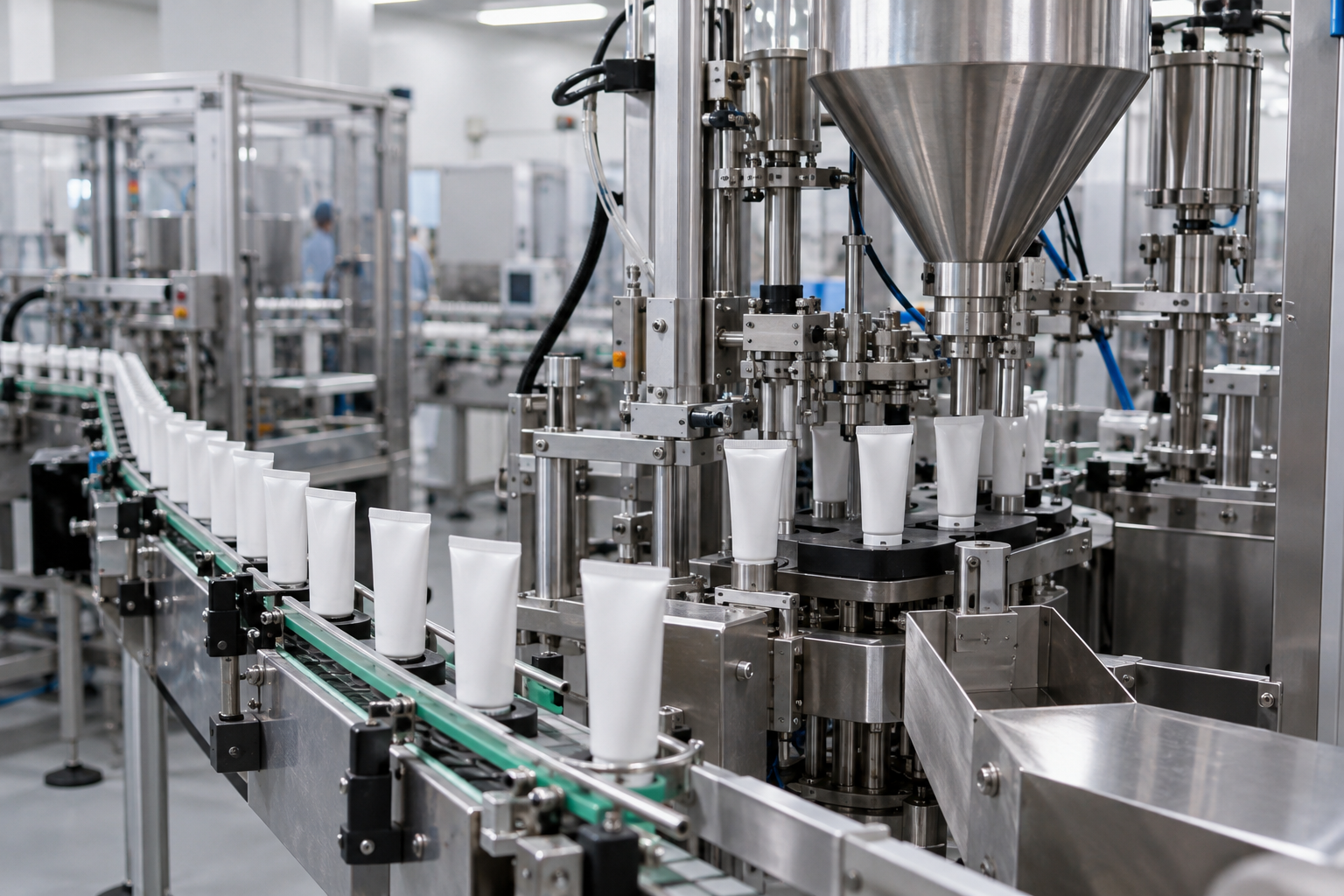
Nominal speed is a machine reference under stated conditions. Effective output is the number of acceptable finished tubes your operation can produce over a shift, week or month after normal production tasks are considered. Those tasks include start-up, material loading, product transfer, sampling, changeovers, cleaning, troubleshooting and downstream packing.
Use both figures, but do not confuse them. Procurement may need a nominal speed for the technical comparison. Operations needs an effective output model to decide whether the line actually meets demand.
| Capacity term | Meaning |
|---|---|
| Nominal machine speed | A defined machine output reference under specified conditions. |
| Run-time output | Output during a stable run while the machine is operating with materials available. |
| Effective line output | Accepted finished tubes over scheduled time after planned production activities and line constraints. |
| Peak demand requirement | The output needed in the highest expected demand period, including a sensible operating margin chosen by the business. |
Build the demand picture first
Start with the sales and production plan, not with a preferred machine model. Collect demand by SKU for at least the next planning horizon used internally. For each SKU, record tube size, fill volume, product type, packaging route and required delivery window.
Then ask:
- How many finished tubes must be produced per month and during the peak month?
- What batch size is practical for each product considering mixing, holding and shelf-life controls?
- How many production days and shifts are genuinely available?
- How many tube formats, cap types or artwork registrations will run on the line?
- What product preparation time occurs before filling can start?
- Where are the mandatory in-process checks, sampling or hold points?
- Does cartoning, coding, inspection or case packing create a lower downstream rate?
This process often reveals that “high speed” is not the central issue. A small number of large, stable batches has a very different need from a large portfolio of short runs with frequent cleaning and format changes.
A simple effective-output calculation
Use a transparent planning equation rather than a complex model that nobody updates:
Required effective output = planned finished tubes ÷ available productive minutes
The difficult part is defining available productive minutes honestly. Start with scheduled minutes, then subtract planned non-running time: product changeover, tube-format changeover, cleaning, quality sampling, set-up checks and routine maintenance windows. Keep unplanned disruption separate; it should be reviewed with real factory data, not guessed into a supplier quotation.
For example, a team may schedule one shift but have only a portion of it available for steady filling after preparation and changeovers. The resulting required output gives the supplier a meaningful basis for proposing the right automation level and line layout. The business can then test different scenarios: fewer formats, larger batch sizes, a second shift or additional downstream automation.
Do not size only the filler
Review the tube filling and cartoning line as one connected flow, with a stated output basis and responsibility for each interface.
A tube line moves at the pace of its constraint. The filler may be capable of a certain rate, but the overall line can be limited by bulk-product preparation, tube feeding, coding, inspection, cartoning, operator replenishment or finished-case handling.
Map the process in order:
- Raw materials and bulk-product preparation.
- Transfer or holding arrangement feeding the tube filler.
- Tube supply, loading and orientation.
- Filling, sealing, trimming and coding.
- Inspection or reject management, when required.
- Cartoning, tray packing or other secondary packing.
- Case packing, pallet staging and release flow.
For each stage, list the intended rate, buffer point, person responsible and interface requirement. A modest buffer can protect the filler from short downstream interruptions, while excessive accumulation can complicate quality control or damage presentation. The suitable design depends on the package and operating method.
How product properties affect capacity
Product is often the hidden variable in a capacity quote. High-viscosity products may require different transfer and dosing conditions than thin gels. Foaming products may need controlled filling presentation. Temperature-sensitive creams may need more careful preparation and holding. Multi-color products, particulate products or formulas with stringing tendency can add process-development work that changes the practical rate.
For a useful request for quotation, describe the product rather than only naming it. Include approximate viscosity behavior, temperature limits, density where relevant, particulate content, shear sensitivity, cleaning requirement and whether the product is aerated. The supplier can then explain the proposed product path and any assumptions that affect the output target.

Changeovers can determine the right machine
A tube format and change-parts review helps identify physical adjustments that must be included in the batch calendar.
A line that runs ten products on one tube size behaves differently from a line that runs ten different tube diameters and fill volumes. Each format may require holders, guides, dosing adjustments, recipe selection, code changes and a first-off approval. Include these activities in capacity planning from the start.
A useful changeover study records:
- what parts are changed physically;
- what settings or recipes are selected;
- whether tube orientation needs adjustment;
- what cleaning or line-clearance step is mandatory;
- who approves the first acceptable output;
- what materials must be staged before restarting.
This information helps determine whether higher mechanical speed will solve the business problem or whether improved planning, standardized formats and organized change parts would have a larger effect.
Specify capacity correctly in the RFQ
Avoid asking for “maximum output” without context. State the intended capacity as an agreed range and give the operating conditions. A strong capacity specification includes:
| RFQ field | Example of what to define |
|---|---|
| Tube | Plastic, laminate or aluminum; diameter and length range; cap and artwork requirements. |
| Fill | Target volume and acceptable range; product behavior; nozzle and cut-off concerns. |
| Output basis | Desired run-time rate or effective shift output, plus the relevant tube and product conditions. |
| SKU mix | Number of formats and expected changeover frequency. |
| Closure | Hot air, ultrasonic evaluation or aluminum folding/crimping as applicable. |
| Quality | In-process checks, coding, visual inspection, rejection and documentation needs. |
| Downstream | Conveyor, cartoning, packing and integration responsibilities. |
The supplier should state any limitations plainly. For example, a proposed rate may rely on a particular fill volume, tube diameter, product behavior or operator replenishment pattern. Capturing those conditions in the quotation is more valuable than receiving an unqualified peak-speed claim.
Use factory acceptance testing to verify the output basis
When evaluating a high-speed tube filling configuration, request performance conditions for your tube and product rather than transferring a catalogue figure directly into the capacity plan.
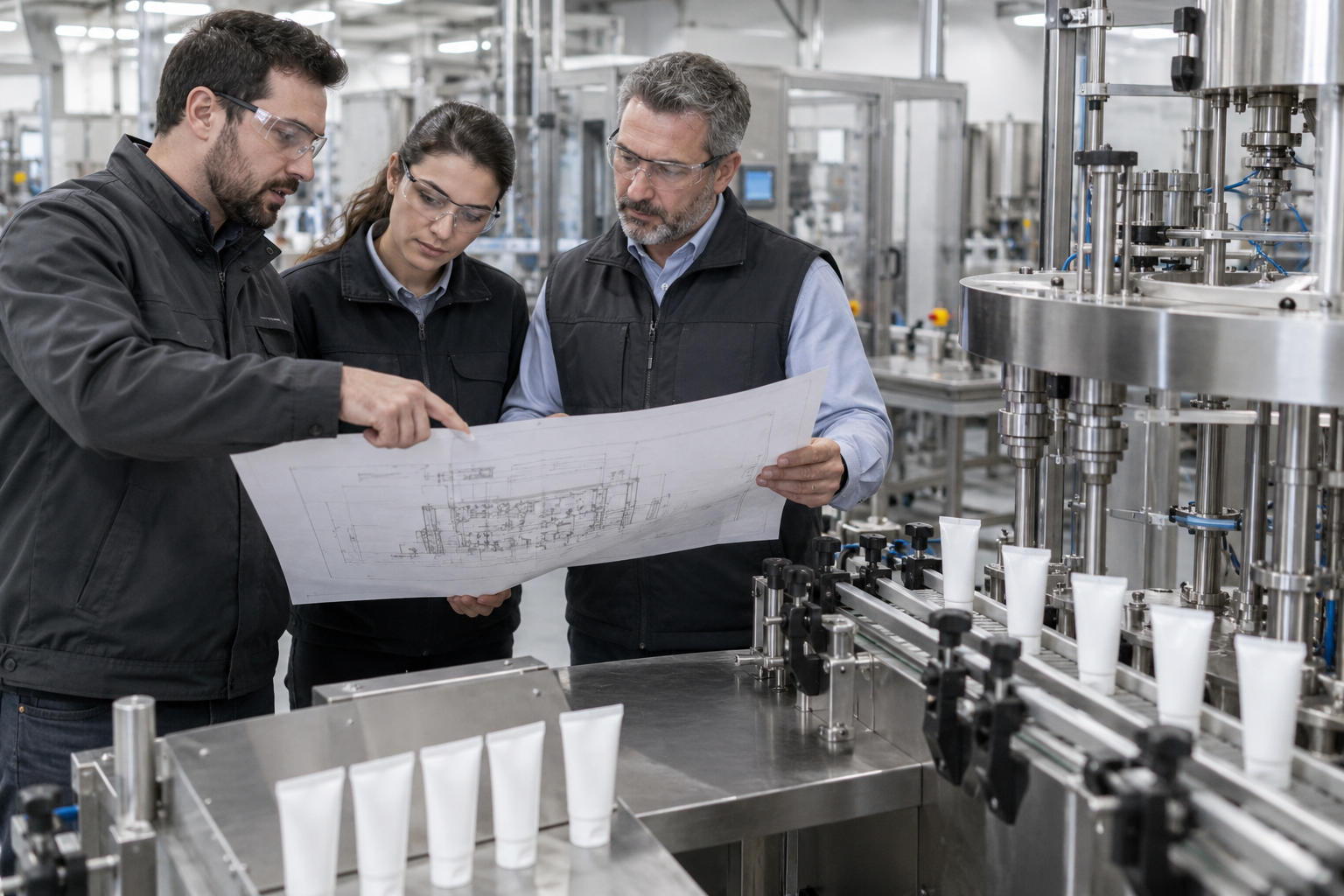
A factory acceptance test is the right place to check whether the agreed configuration performs under the defined conditions. Prepare the test around the approved tube format, product or representative, fill volume and target run. Agree in advance which observations and records are required: fill presentation, seal appearance, coding, reject handling, operating sequence and any package checks used by the customer’s quality procedure.
The aim is not to turn FAT into an unrealistic endurance trial. It is to confirm that the machine scope and acceptance method match the written project requirements before shipment. Any open items should be recorded with a clear owner and follow-up plan.
Send your monthly tube demand, batch sizes, SKU list and target shift pattern. King Pack can help structure a capacity worksheet before you request a machine proposal.
Scenario planning makes the investment decision clearer
Build at least three capacity scenarios before selecting the machine: a base case using the approved forecast, a peak case using the highest expected demand period, and a mixed-SKU case that includes the planned number of changeovers. For each scenario, show the planned batches, productive minutes, required effective output and the process constraint. This makes the commercial decision understandable to finance as well as operations.
The mixed-SKU scenario is often the most revealing. A line with a high nominal rate can still be constrained if each small batch needs product preparation, tube-format changes, coding changes, sampling and clearance. By contrast, a line with a more moderate rate may comfortably meet annual demand if formats are standardized and product scheduling is organized. The exercise helps teams decide whether to invest in higher automation, additional product preparation, more change parts or a different production calendar.
Review capacity after the first months of routine production. Record planned versus actual batch time, changeover duration, material waits, rejected packages and downstream interruptions. Use this evidence to improve scheduling and to identify the next constraint. The initial capacity plan is not a one-time purchase document; it becomes a useful operating tool for future expansion.
When discussing expansion with a supplier, state which parts of the line must be scalable. This may include space for an additional tube feeder, transfer interface, inspection station, conveyor or cartoning equipment. An interface that is visible in the initial layout is easier to implement later than one added after the floor area is congested.
Worked planning example: expose the assumptions
The following numbers are hypothetical planning inputs, not a King Pack machine specification or a measured production result. Suppose a batch requires 18,000 accepted tubes within a scheduled 480-minute shift. The team allocates 30 minutes for startup, 45 minutes for a tube-format change, 45 minutes for cleaning and 15 minutes for checks that require the line to stop. Available productive time is therefore 480 − 30 − 45 − 45 − 15 = 345 minutes.
The required accepted output during productive time is 18,000 ÷ 345, or approximately 52.2 accepted tubes per minute. This is a demand requirement, not proof that a machine can achieve that rate. It must still be checked against dosing behavior, closure conditions, tube feeding and the capacity of the downstream process.
If the team also tests a hypothetical 98% first-pass acceptance assumption, the corresponding gross running rate would be 18,000 ÷ (345 × 0.98), or approximately 53.2 tubes per minute. Use an acceptance factor only when its meaning is clear. Do not subtract reject losses twice, and do not treat this example’s percentage as an expected quality result. Replace it with justified site data when available.
Now test a different operating pattern. If another product change consumes 60 more minutes, productive time falls to 285 minutes. The accepted-output requirement rises to approximately 63.2 tubes per minute, even though batch demand is unchanged. This comparison shows why changeover frequency can materially alter the equipment decision.
Keep unplanned downtime separate from these scheduled losses. A site with reliable historical records can add a transparent allowance and explain its basis. A new project should show a range of scenarios and list the unknowns instead of presenting an invented efficiency factor as established fact.
Bring this worksheet to the quotation review. Ask the supplier to identify which assumptions can be demonstrated during FAT, which depend on the buyer’s materials and staffing, and which belong to upstream or downstream equipment. The resulting specification is easier to approve because each number has a defined input, boundary and verification method.
FAQ
How do I calculate tube filling machine capacity?
Divide planned finished tubes by available productive minutes, then test the result against the product-preparation, changeover and downstream limits. Define the tube, fill volume and product conditions so the supplier can quote against a real basis.
Should I buy the fastest tube filler I can afford?
Not necessarily. The line should be sized for demand, batch pattern, material flow and the slowest connected process. Excess speed can add cost and complexity without improving the finished output.
What makes a high-speed tube filling machine different?
High-output projects generally require a more coordinated automated sequence for tube feeding, filling, sealing, discharge and connection to downstream operations. The suitable configuration depends on the actual package and production requirements.
How do changeovers affect output?
They take planned production time and may involve physical format parts, cleaning, settings and quality approval. Frequent format changes can lower effective output even when nominal machine speed is high.
What data should be collected after installation?
Track planned and actual batch duration, steady run time, product-preparation waits, tube replenishment, changeovers, quality holds and downstream interruptions. These records show which assumption in the original capacity plan needs improvement and help prioritize future investments.
Can a small number of large batches need less automation than many small batches?
Often, yes. Frequent product and format changes consume planned time and increase the need for organized material flow and repeatable set-up. A capacity calculation should therefore include SKU mix and batch pattern, not only the annual volume.
Align capacity with the quality release route
Capacity does not end when tubes leave the machine. If a batch must wait for inspection, coding verification, packaging reconciliation or quality release before it can be shipped, include those steps in the production plan. A line that fills quickly but creates a large unreviewed queue may simply move the constraint to another department.
Discuss release timing with quality and warehouse teams while designing the layout. Define where samples, retain packs, rejected tubes and released finished goods will be held. This creates a capacity plan that reflects the complete manufacturing route instead of only the mechanical filler.
Conclusion
Capacity planning turns a broad wish for “more output” into an equipment specification that engineering, quality and procurement can use. Begin with finished-tube demand, calculate realistic productive time, map the whole line and make the output assumptions visible. That approach gives buyers a better chance of choosing a tube filling system that performs in the actual production schedule.
Contact King Pack Machinery for a tube line capacity review. Share the product, tube format, monthly demand and intended packaging flow, and we can help frame the technical questions for your next RFQ.
