
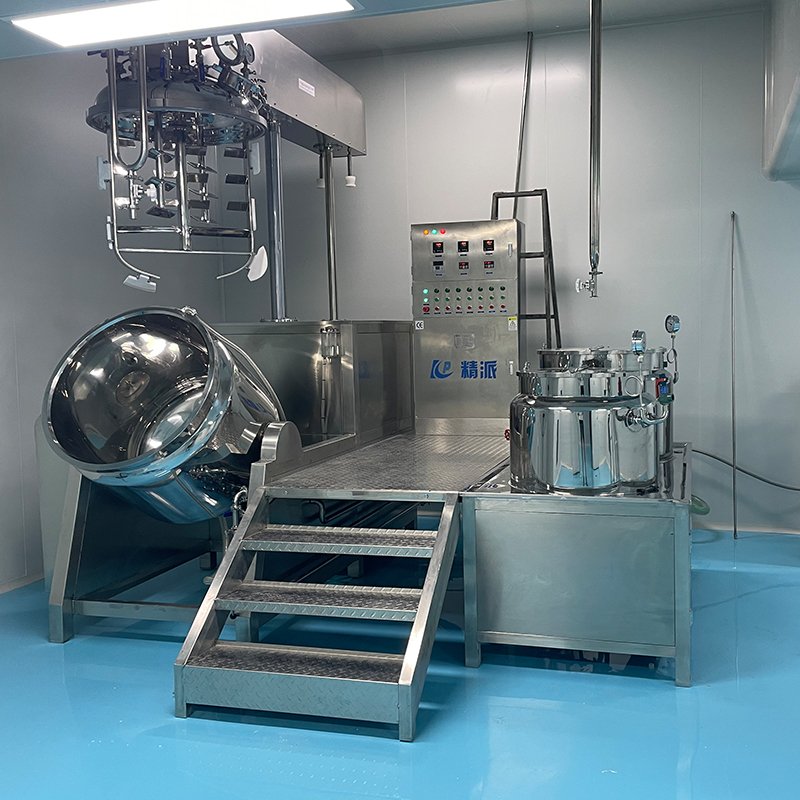

For businesses requiring trustworthy mixtures, emulsifier machines are the go-to solution. They are a common presence in food, cosmetics, pharma, and chemicals industries. These machines keep products consistent in texture and appearance. If you’ve ever wondered how mayonnaise doesn’t separate, why creams feel silky, or how drug suspensions stay uniform, emulsifier machines are behind it.
This guide answers the most common questions about emulsifier machines, including their applications, types, components, and working principles. You’ll also learn about safety standards, benefits, and what to consider before investing in one.
What Is an Emulsifier Machine?
Definition and Main Functions
An emulsifier is a machine built to create a stable emulsion of two or more immiscible materials, such as oil and water. These machines use mechanical force to break down particles and create homogeneous mixtures that would otherwise separate naturally.

The primary roles of an emulsifier machine are:
- Making fine and homogeneous emulsions
- Smooth blending of powders and liquids
- Preventing ingredients from separating
- Improving product shelf life and stability
Design Features
The majority of emulsifier machines are built with a stainless-steel body for cleanliness and longevity. It is also referred to as a “mixing-tank”. The mixing tank includes heating and refrigeration systems in order to process delicate material. It also includes safety valves, digital control, and vacuum pumps.
Uses of Emulsifier Machines
1. Food Industry
In the food industry, emulsifier machines are essential for producing smooth, stable products like ice cream, mayonnaise, salad dressings, chocolate, and dairy items. They help achieve consistent droplet size, proper homogenous mixing, and improved mouthfeel while maintaining nutritional quality.
Food-grade emulsifier machines often feature vacuum systems, in-line emulsifier mixers, and easy-to-clean mixing vessels. These designs support laboratory-scale mixers for testing and large-scale manufacturing for commercial production.
2. Cosmetics Industry
The cosmetics industry relies on vacuum emulsifying mixers and high-shear mixers to produce creams, lotions, foundations, and hair care products. These machines create smooth textures, distribute active ingredients evenly, and maintain delicate formulations. Precise control systems and temperature regulation protect fragile compounds and ensure high customer satisfaction.
3. Pharmaceutical Industry
In pharmaceuticals, emulsifier machines produce pharmaceutical ointments, liquid medications, and injectable emulsions. Machines like vacuum emulsifying mixers with stirring heads and high-shear mixers meet stringent standards for GMP compliance. They support precise processing capacity, maintain sterile conditions, and improve batch consistency for critical drug formulations.
4. Paint and Chemical Industries
For the chemical industries, emulsifier machines handle paints, adhesives, polymers, and other high-viscosity or corrosive materials. Equipment often includes aluminium metal outer cases, blade mixers, and rotor/stator designs to resist wear and maintain stable homogenous mixing. These machines ensure consistent product quality even in challenging chemical environments.
Working Principle of Emulsifier Machines
Understanding how emulsifier machines work gives a clear view of why different designs exist. Each type of machine uses the same core principles—shear mixing, emulsification, and vacuum functions—but they apply them in different ways depending on the product, scale, and industry needs.

Emulsification Process
The emulsification process begins when two immiscible phases enter the mixing vessel of a vacuum emulsifying mixer. The rotor/stator design generates intense shear energy, breaking droplets down to microscopic droplet sizes.
Precise control of speed, temperature, and processing time is crucial for achieving consistent results. Continuous recirculation ensures every part of the mixture receives uniform treatment, producing stable, high-quality emulsions.
High-Shear Mixing
High-shear mixers use rapid motion from specially designed impellers to create strong hydraulic forces. These forces overcome surface tension between phases, producing stable emulsions.
Operators can adjust the shear rate according to the material and desired homogenous mixing properties. The controlled environment ensures repeatable results across multiple batches.
Vacuum Function
The vacuum system in a vacuum emulsifying mixer removes air from the mixing tank, preventing oxidation and contamination. This is especially important for fragile materials, like luxury face cream emulsions or sensitive pharmaceutical formulations.
The vacuum also helps draw materials into the mixing zone and degas the product, improving product quality, texture, and overall stability.
Types of Emulsifier Machines
1. Vacuum Homogenizer

Figure 1: KPZ-500L Vacuum Homogenizer from King Pack
The vacuum homogenizer also includes air removal and emulsifying functionality. They are highly effective in dermatological and pharmaceutical uses where air-free material must be produced.
They usually consist of jacketed tanks, including temperature control, and are effective on water-oil and oil-water emulsions.
2. Vacuum Planetary Mixer

Figure 2: Vacuum Planetary Mixer from King Pack
Vacuum planetary mixers use a unique mixing action where the mixing tool orbits around the vessel while rotating on its own axis. This dual motion ensures thorough mixing of all materials, particularly effective for high-viscosity products.
Their vacuum feature prevents air incorporation during mixing.
3. Stainless Steel Mixing Pot

Figure 3: Stainless Steel Mixing Pot from King Pack
Stainless steel mixing pots provide the foundation for most emulsifier systems. These vessels resist corrosion, maintain hygiene standards, and offer excellent temperature control.
They come in various sizes to accommodate different production volumes and can be customized with specific surface finishes for particular applications.
Automatic Vacuum Emulsifier
The automatic vacuum emulsifier has programmable controls, automated feed of ingredients, and process control systems. These units minimize operator involvement, enhance consistency, and maintain detailed records of production.
They are best suited to high-volume production applications where stringent control over quality is necessary.
4. Semi-Automatic Vacuum Emulsifier

Figure 4: KPZ-100L Vacuum Emulsifying Machine Semi-Automatic Vacuum Emulsifier
Semi-automatic vacuum emulsifiers are balanced between automation and operator control. They consist of automated sequences of mixing, while manual control during processing is allowed.
They are ideal for small-scale operation or customized products that need unique processing parameters.
5. Tabletop Emulsifier

Figure 5: KPZ-10L Vacuum Homogenizing Emulsifier
Tabletop emulsifiers serve laboratory and small-scale production needs. These compact units offer the same technology as larger machines but in space-efficient designs.
They’re perfect for product development, quality control testing, and pilot production runs.
6. Inline vs. Batch Emulsifiers
Inline emulsifiers provide continuous processing capabilities, ideal for high-volume production. Materials flow through the machine continuously, offering consistent residence time and energy input.
Batch emulsifiers process fixed quantities at a time, providing better control for specialized products or smaller production runs.
7. Single-Stage vs. Triple-Stage Homogenizers
Single-stage homogenizers handle materials through a single high-pressure valve and are best used on general-purpose work in emulsifications. Triple-stage homogenizers use multiple stages of pressure, creating finer dispersions of particles and more stable emulsions.
The multiple stages provide improved performance on challenging work like pharmaceutical injections.
Key Components of Emulsifier Machines
1. Pre-Treating Boiler
The pre-treating boiler prepares materials before emulsification by heating, melting, or dissolving ingredients. This component ensures optimal temperature and consistency before materials enter the main mixing chamber. Temperature control systems maintain precise conditions throughout the preparation process.
2. Vacuum Pump
Vacuum pumps remove air from the mixing chamber and create the negative pressure necessary for vacuum operation. These pumps must maintain consistent vacuum levels throughout the process while handling vapors and potential liquid carryover. Regular maintenance ensures optimal performance and prevents contamination.
3. Emulsifying and Blending Boiler
This central component houses the high-shear mixing system where emulsification occurs. The vessel typically features jacketed walls for temperature control, multiple inlet ports for ingredient addition, and specialized mixing heads designed for specific applications. The size and configuration depend on production requirements.
4. Hydraulic Pump
Hydraulic pumps power the lifting mechanisms that position mixing heads and move vessel components. They provide precise control over mixing head positioning and enable automated operation sequences. These systems must deliver consistent pressure and smooth operation for optimal mixing performance.
5. Electric Control System
Advanced control systems manage all machine functions including mixing speeds, temperatures, vacuum levels, and processing times. Modern systems feature touchscreen interfaces, recipe storage, and data logging capabilities. These controls ensure reproducible results and provide documentation for quality assurance.
6. Work Platform
Work platforms provide safe access for operators during setup, operation, and maintenance. These structures must meet safety standards and provide ergonomic working conditions. Many include integrated controls and viewing windows for process monitoring.
Benefits of Using Emulsifier Machines
- Improved Mixing Efficiency: A homogenizer emulsifier machine processes ingredients faster and more effectively than manual mixing.
- Consistent Product Quality: Uniform texture and appearance improve consumer trust and brand reputation.
- Time and Labor Savings: Automation reduces manual effort, speeding up production cycles.
- Enhanced Product Stability: Emulsifier machines prevent separation, giving products longer shelf life and better performance.
Maintenance and Cleaning
Cleaning in Place (CIP)
CIP systems allow thorough cleaning without disassembling equipment. These automated cleaning cycles use heated cleaning solutions, sanitizers, and rinse water to remove all product residues. CIP systems reduce downtime, ensure consistent cleanliness, and minimize contamination risks between production runs.
Routine Maintenance Tips
Regular maintenance extends equipment life and ensures optimal performance:
- Check and replace seals regularly
- Monitor bearing temperatures and lubrication
- Inspect mixing heads for wear
- Calibrate temperature and pressure sensors
- Clean cooling systems and heat exchangers
- Verify vacuum pump performance
Troubleshooting Common Issues
Common problems include inconsistent emulsion quality, excessive foaming, and temperature fluctuations. Most issues stem from improper parameter settings, worn components, or inadequate cleaning. Systematic troubleshooting procedures help identify root causes quickly, minimizing production disruptions and maintaining product quality.
Safety and Operational Guidelines
Emulsification Operation Safety
Safe operation requires proper training, appropriate personal protective equipment, and adherence to established procedures.
Operators must understand emergency shutdown procedures, lockout/tagout protocols, and chemical handling requirements.
Regular safety audits ensure continued compliance with industry standards.
Electrical System Safety
Electrical safety involves proper grounding, circuit protection, and regular inspection of wiring and components.
Only qualified electricians should perform electrical maintenance. Emergency stops must be easily accessible and regularly tested to ensure functionality during emergencies.
Piping and Valve Safety
Pressure systems require regular inspection for leaks, proper support, and correct valve operation.
Safety relief devices must be calibrated and tested according to manufacturer specifications. Operators should understand pressure ratings and never exceed design limitations.
Factors Affecting Emulsifier Machine Performance
Factor 1: Material Properties
Viscosity, density, and chemical compatibility significantly impact emulsification results. Materials with similar viscosities emulsify more easily, while extreme differences require specialized techniques.
Chemical compatibility ensures materials don’t react adversely during processing, which could affect product quality or safety.
Factor 2: Particle Size and Shape
Initial particle size affects the energy required for emulsification and final product characteristics. Spherical particles generally emulsify more easily than irregular shapes. Understanding these factors helps optimize processing parameters and predict final product properties.
Factor 3: Electrostatic Charges
Static electricity can interfere with emulsification by causing particle agglomeration or repulsion. Proper grounding and humidity control minimize static effects. Some applications may require antistatic additives or specialized equipment to manage electrostatic challenges effectively.
Machine Selection Criteria
Choosing the right emulsifier machine requires considering:
- Production volume requirements
- Product viscosity ranges
- Temperature and pressure needs
- Cleaning and maintenance requirements
- Regulatory compliance demands
- Budget and space constraints
Quality Standards for Emulsifier Machines
Compliance with CGMP
Current Good Manufacturing Practices (CGMP) establish minimum requirements for pharmaceutical and food production equipment. Emulsifier machines must feature appropriate documentation, validation protocols, and design elements that prevent contamination and ensure consistent quality.
Material Standards (e.g., SS316L)
Stainless steel grade 316L provides excellent corrosion resistance and meets sanitary requirements for pharmaceutical and food applications. This material standard ensures compatibility with cleaning chemicals, prevents contamination, and maintains surface integrity over extended use periods.
Safety Features and Controls
Modern emulsifier machines incorporate multiple safety systems including emergency stops, pressure relief valves, temperature alarms, and interlock systems. These features protect operators, prevent equipment damage, and ensure safe operation under all conditions.
Automation and Control Systems
Advanced control systems provide precise parameter control, data logging, and alarm management. These systems enable operators to maintain consistent processing conditions, troubleshoot issues quickly, and maintain comprehensive production records for regulatory compliance.
Conclusion
Emulsifier machines are the backbone of many industries. They keep food smooth, cosmetics stable, and pharmaceuticals consistent. Without them, products would separate, spoil quickly, or lose quality.
King Pack has developed a full range of emulsifier machines designed for both small labs and full-scale factories. From vacuum homogenizers to automatic vacuum emulsifiers, each unit is built with precision, safety, and ease of use in mind.
If you’re looking to improve efficiency, consistency, and product quality, we can provide the right emulsifier machine for your needs. Get in touch with our team today to discuss your project and find the best equipment for your production line.