
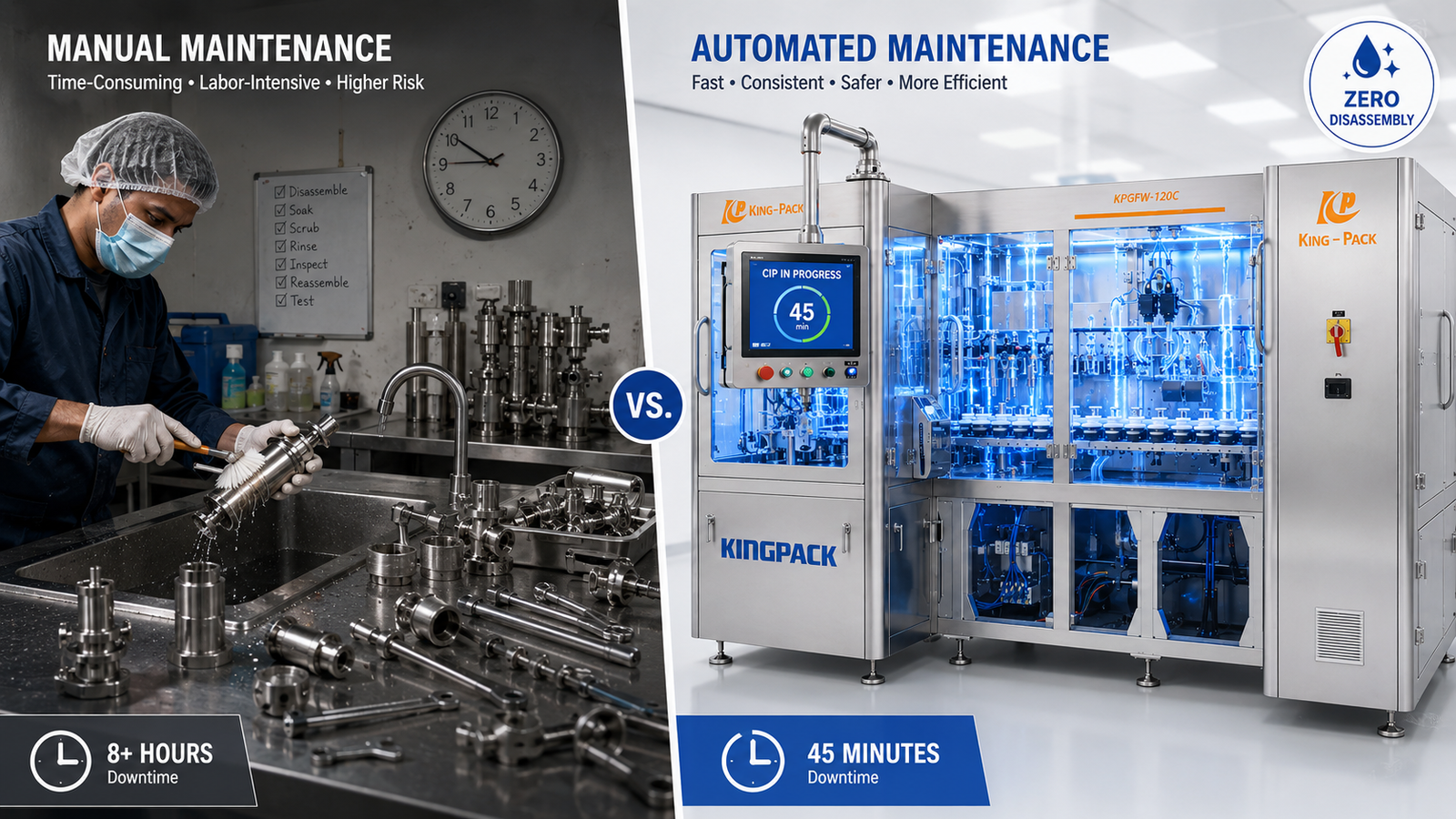
Manufacturing moves fastly. If you are running a tube filling operation, you already are familiar with the pressure that’s required to keep the machine running and batches moving. What often gets underestimated, though, is just how much the cleaning side of things eats into all of that.
Things like manual teardowns and inconsistent scrub-downs aren’t just annoyances; they become genuine drains on production time, product quality, and equipment life. The clean-in-place system was developed precisely to address this. And while CIP has been used in food and dairy processing for decades, it’s now becoming a real game-changer for plastic tube machine maintenance across cosmetics, pharma, and personal care manufacturing.
This article is written to give you a practical look into what CIP actually involves, where it makes the biggest difference, and why more and more tube filling and sealing operations are making it a non-negotiable part of how they run.
Introduction to Clean-In-Place (CIP) Technology
Let’s try to understand what a CIP tech really is.
What is a CIP System and How Does it Work?
The basic idea behind a clean in place system is very straightforward: clean the machine without taking it apart.
Instead of disassembling nozzles, pipes, and product-contact components to wash them manually, CIP circulates water and cleaning solution throughout the system. What this does is flush out residue, remove leftover cream, gels, and other liquid formulations, apply cleaning chemistry where needed, and rinse everything clean.
The hardware can take different forms. Some facilities use standalone CIP skids that feed into multiple machines. Others integrate CIP capabilities directly into the control system of the machine. Either way, once the parameters such as temperature, flow rate, and cycle duration are set, the operator starts the cycle and the system handles it. Because of this, there’s no guesswork and no variation between shifts.
The Challenges of Traditional Machine Maintenance
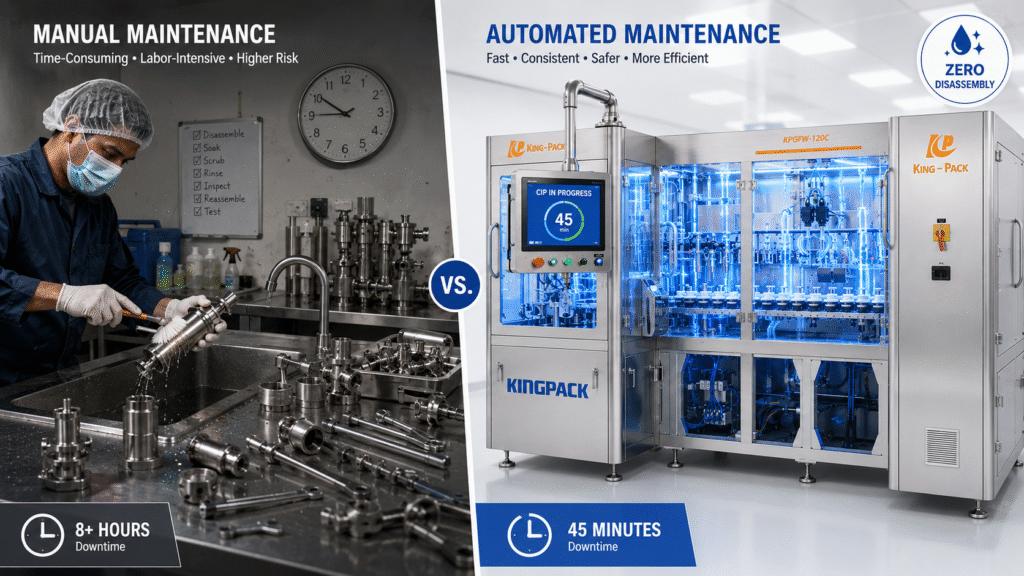
Ask any production manager what they’d fix first and cleaning downtime usually comes up early. If your team is still manually pulling apart a plastic tube filling machine between every product run, you’re paying for it in ways that don’t always show up as a line item.
The Hidden Costs of Manual Teardowns and Cleaning
The obvious cost is time. A manual clean on a tube filling and sealing machine can run anywhere from one hour on the quick end to four or more for a thorough job. Do that twice a day across multiple lines and it adds up to a serious chunk of lost production hours every week.
But it’s not just the time. There’s also the issue of consistency. Two different operators that clean the same machine can get two very different results. It depends on their experience, how tired they are, or how carefully they follow the cleaning process that day.
Residue gets missed. Cleaning agents don’t get fully rinsed. A component gets put back slightly wrong. In regulated industries, these aren’t just quality concerns. They’re compliance risks that can trigger a batch rejection or worse.
Then there’s what happens to the machine itself. Disassembly puts wear on everything it touches. Seals get nicked. Threads get stressed.
Precision-machined surfaces get handled by tools and hands more often than they should. Spread that over hundreds of cleaning cycles and you are looking at parts that are failing earlier than they should. This is especially true when handling plastic tubes, laminated tubes, and other packaging formats used in modern cosmetics and pharmaceuticals production. It also causes the machine to wear out faster than the manufacturer intended.
These costs are clearly not invisible though. They tend to get absorbed and normalized. CIP makes them avoidable.
How CIP Transforms Plastic Tube Filling Operations
For anyone running hygienic tube packaging in a pharmaceutical or cosmetic environment, contamination control isn’t a nice-to-have. That’s the whole point. And this is where automated machine cleaning genuinely outperforms manual methods, not just in speed but in actual hygiene outcomes.
Ensuring Maximum Hygiene and Cross-Contamination Prevention
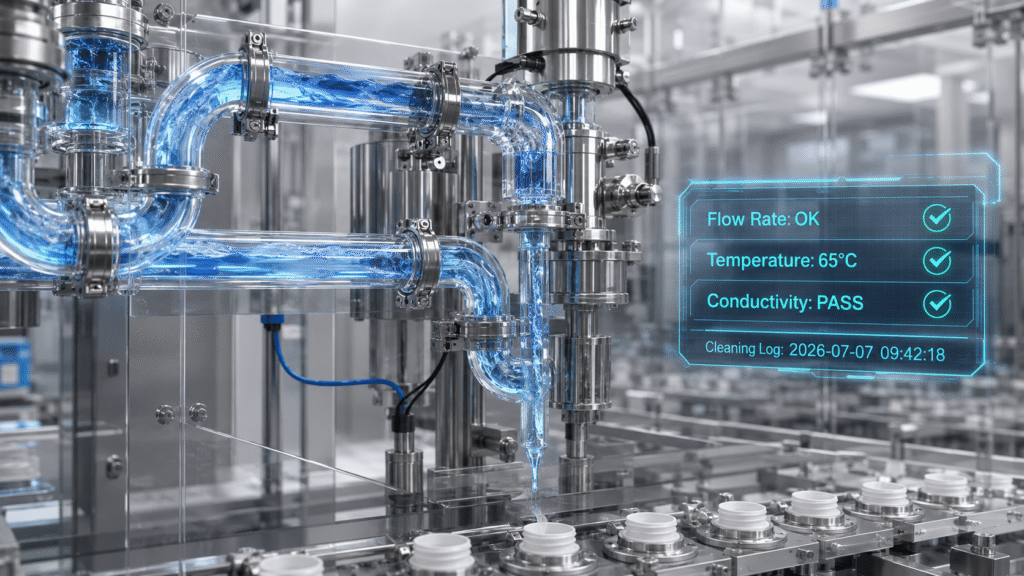
A CIP cycle reaches places that manual cleaning physically can’t. Bends in pipework, narrow internal channels, nozzle assemblies that are awkward to fully disassemble. The circulating solution gets everywhere, at a consistent concentration and temperature, for a validated dwell time. The result is a machine that’s been cleaned to a documented standard, not just wiped down by someone who was probably ready to go home.
For cosmetic tube filling operations running multiple formulations such as pigments, fragrance bases, active compounds, lotions, and cream products, this matters a lot. A single incomplete clean between product changeovers can introduce cross-contamination that ruins a full batch. The cost of rework, waste, and delays is real money. CIP reduces that risk dramatically and helps ensure the cleaning process was followed correctly through documented records and validation data.
Reducing Downtime and Boosting Production Efficiency
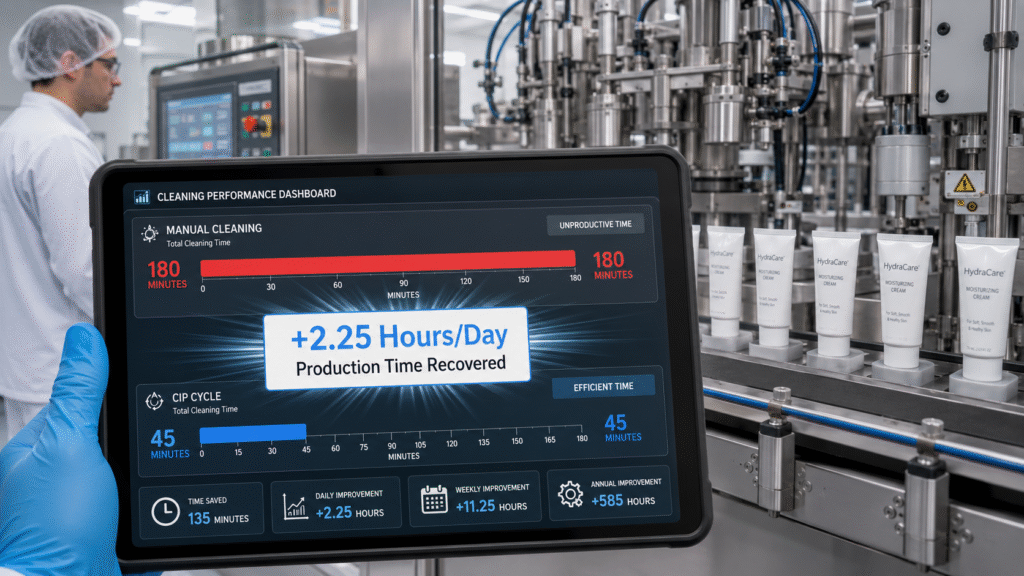
A CIP cycle on a properly configured automatic tube filling machine typically runs in thirty to sixty minutes. Compare that to a manual teardown that might take two to three hours, and you’re looking at recovering an hour or two of production time per clean. Across a week, a month, or a year, the numbers become significant very quickly.
There’s also a less obvious benefit. Because CIP runs automatically, one operator can kick off the cycle and continue doing other things while it runs. Changeover preparation, quality paperwork, equipment checks on other lines, or reviewing production date records can all continue. The cleaning doesn’t stop everything else the way a manual teardown does. That kind of parallel working is hard to put a precise number on, but anyone managing a busy production floor knows it matters.
King Pack builds its tube packaging machines with this operational reality in mind. CIP compatibility isn’t an optional upgrade or an afterthought in the specification sheet. It’s part of how the machines are engineered from the start, making them suitable for demanding cosmetics, personal care, and pharma production environments where reliable tube filling and sealing performance is critical.
Extending the Lifespan of Your Tube Machinery
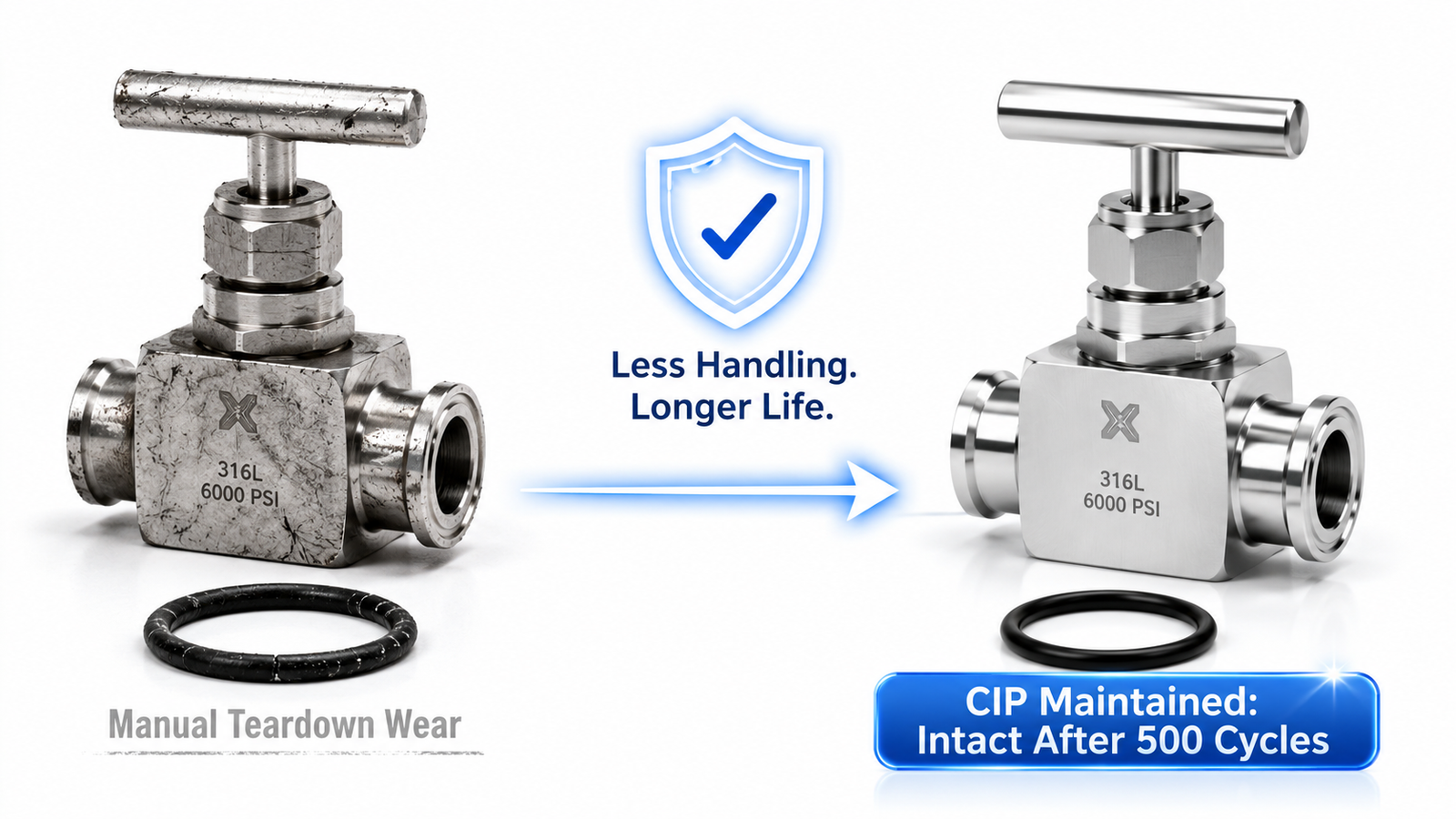
Here’s one benefit that doesn’t always get enough attention: CIP is gentler on machines than manual cleaning, even though it might not seem that way at first glance.
When a machine stays assembled and is cleaned through fluid circulation, the components that normally bear the brunt of manual handling (seals, o-rings, precision fittings, valve seats) stay where they are. They don’t get pulled apart, exposed to the wrong tools, or reassembled with slightly more torque than they should have. Over hundreds of cleaning cycles, that difference adds up to meaningfully longer component life.
Better tube filler maintenance doesn’t just mean cleaning more often or more thoroughly. It means cleaning in a way that doesn’t wear the machine down in the process. For capital-intensive tube packaging machines, extending the useful life of the equipment by even a year or two delivers a return that more than justifies the investment in CIP capability.
In facilities handling plastic tube filling, tube filling machine operations, and large volumes of tubes, reducing unnecessary wear is especially important. The less stress placed on critical components, the more efficient the overall operation becomes and the more reliable the output remains over time.
Key Stages of a Standard CIP Cleaning Cycle
CIP systems often vary in complexity and can be tuned for specific products and regulatory environments, but the underlying structure is consistent. Most cycles follow three stages, with each serving a distinct purpose. Whether you’re operating a plastic tube filling machine, a tube sealing machine, or a complete filling and sealing machine, maintaining a consistent cleaning routine is essential for performance and hygiene.
Step 1: Pre-Rinse for Bulk Residue Removal
The cycle starts with a plain water rinse. The goal at this stage is simple: get rid of as much of the leftover product as possible before any chemistry gets involved. Circulating water at temperature and velocity through the system flushes out the bulk of the residue and prepares the surfaces for the cleaning step.
For facilities handling cream, gels, lotions, ointment formulations, or other paste products, this stage is especially important because it prevents unnecessary buildup inside the tubes, nozzles, and transfer lines. Proper plastic tube filling operations depend on keeping these contact surfaces clean before the next production run.
Skipping or shortening this stage is a false economy. Cleaning chemicals work best when they’re not immediately overwhelmed by a heavy product load. A proper pre-rinse makes the chemical wash more effective and allows you to use less chemistry to achieve the same result while reducing unnecessary heat exposure on sensitive components.
Step 2: Chemical Wash and Circulation for Deep Cleaning
This is where the actual cleaning happens. The CIP cleaning process introduces controlled heat and chemical solution (alkaline, acid, or a sequence of both depending on what the product and process require) and circulates it through the system at a controlled discharge, temperature, and flow rate for a set dwell time.
Alkaline solutions are typically used to break down protein and fat-based residues. Acidic solutions handle mineral deposits and scale. The exact chemistry depends on the product being run and the regulatory framework the facility operates under. In pharmaceutical environments especially, the cleaning agent selection and the validated parameters for its use need to be documented and justified.
Many modern tube filling and sealing operations process a wide variety of materials, from cosmetic cream and gels to pharmaceutical ointment products and specialty adhesives. In these applications, the cleaning cycle must be carefully adjusted to match the material characteristics and production requirements.
Some facilities follow the chemical wash with a dedicated sanitization step using a low-concentration disinfectant, particularly where microbiological cleanliness requirements are strict.
Step 3: Final Rinse and Sanitization
The final rinse is straightforward in concept but non-negotiable in practice. All traces of the cleaning chemical need to be flushed from the system before the next product run. Any residue left behind can contaminate product, affect quality, or create a safety issue depending on the chemicals involved.
Modern CIP systems don’t rely on a fixed rinse time and hope for the best. They use inline conductivity sensors or TOC analyzers to verify that the rinse water coming out of the system meets the required purity standard before the cycle is signed off as complete. This verification is automatic, objective, and fully logged, exactly what regulators want to see.
Effective rinse validation helps confirm complete tube discharge and removal of residual cleaning agents from internal pathways.
Once that’s confirmed, the machine is production-ready. No reassembly. No manual sign-off checklist. That speed and certainty is what makes automated machine cleaning such a practical tool for demanding plastic tube machine maintenance programs.
Integrating CIP with Tube Filling and Sealing Machines
CIP compatibility isn’t magic. It requires machines to be designed in a way that supports it. Depending on the packaging format, manufacturers may use hot air sealing, ultrasonic sealing, or specialized plastic tube sealer machine technology for reliable closure performance.
Consistent cleaning contributes directly to better sealing tubes performance by preventing contamination that could affect seal integrity.
Upgrading Your Automatic Tube Filling Machine for CIP Compatibility
Smooth internal surfaces that don’t trap products. Hygienic fittings with no dead legs where residue can sit undisturbed. Materials that can handle repeated exposure to hot air, hot water, cleaning chemicals, and elevated heat levels without degrading. These aren’t difficult requirements, but they do need to be specified correctly.
If you’re evaluating a new automatic tube filling machine or a pharmaceutical tube filler, CIP compatibility should be on the checklist alongside output, speed, and format flexibility. Machines built with hygienic design principles will clean better, validate more easily, and cost less to maintain over their service life.
Modern equipment is often equipped with advanced cleaning features that make maintenance easy, safe, and more efficient. Components exposed to repeated cleaning cycles are typically manufactured from wear resistant and durable materials to withstand long-term operation.
Many manufacturers today process plastic tubes, aluminum tubes, and laminated tubes on the same line. The equipment therefore needs to be suitable for handling different diameters, lengths, and packaging formats while maintaining consistent tube filling and sealing quality.
King Pack‘s tube filling and sealing machine range is built with exactly this in mind. Product-contact surfaces are stainless steel. Fittings are designed for full flow-through cleaning. Control systems support automated CIP cycle management and logging. Whether the application is cosmetic tube filling, pharmaceutical production, or personal care manufacturing, the equipment is built to support compliance and reduce maintenance burden from day one.
Many production lines also handle aluminum plastic pipes, flexible hoses, aluminum tubes, and laminated packaging formats using a single tube sealing machine platform. Depending on the application, the system may process toothpaste, cosmetic creams, pharmaceutical products, paint, specialty ink, juice concentrates, or industrial formulations containing glue and other viscous compounds.
They incorporate advanced tube sealing machine technology featuring hot air sealing or ultrasonic sealing depending on the sealing type required. These methods provide reliable sealing performance across different material structures and packaging requirements.
For operations looking to add CIP to existing equipment rather than replace it, King Pack also provides technical consultation on retrofit options. Depending on the machine’s existing design, it’s often more achievable than expected and the team can give a straight assessment of what’s practical and what the likely return looks like.
Why Choose CIP-Ready Equipment for Your Production Line?
CIP-ready tube packaging machinery costs more upfront than standard alternatives. That’s just true. But the calculation shifts quickly once you start putting actual numbers against the problem.
Industry-Leading Hygiene Standards and ROI
Take a conservative scenario: two manual cleaning cycles per day, each taking two hours. That’s four hours of cleaning downtime every day. A CIP system that cuts each cycle to fifty minutes gives you back more than two hours of production time daily. Over a year, that’s roughly 700 hours. At even a modest output rate, the revenue impact of that recovered time is substantial.
Compliance is another dimension. For pharmaceutical tube filler operations operating under GMP, documented and validated cleaning processes aren’t optional. CIP provides that documentation automatically through cycle parameters, verification readings, timestamps, and recorded date information without anyone needing to fill in a paper log that may or may not reflect what actually happened.
There’s a workforce angle too. Cleaning machines by hand is hard work and it’s tedious. It also carries injury risk. Taking that off your operators’ plates isn’t just an efficiency gain; it’s a better use of people who have more valuable things to do.
When you put it all together (production hours recovered, compliance posture strengthened, equipment lasting longer, staff better utilized) the case for CIP-ready plastic tube filling machine investment isn’t really about hygiene technology. It’s about running a tighter, more competitive operation.
CIP-ready equipment is considered an ideal investment for facilities looking to improve productivity while maintaining safe and compliant manufacturing standards.
FAQs About CIP Systems and Machine Maintenance
Is CIP suitable for all types of tube filling products?
For most products run through tube filling equipment (creams, gels, lotions, ointments, and pastes), CIP works well. Both cosmetic tube filling and pharmaceutical tube filler applications are well suited to it. Where you might need to adapt the approach is with very high-viscosity or abrasive materials, which can require adjusted cycle parameters or supplementary manual cleaning on specific components. A qualified supplier can assess this for your particular formulations.
Modern systems are often customizable to accommodate different tube sizes, product viscosities, and production requirements.
How long does a typical CIP cycle take?
Thirty to sixty minutes covers most tube filling and sealing machine applications. Cycle time varies with machine size, product type, and how aggressive the cleaning requirements are. Either way, it’s considerably faster than the one-to-four-hour manual teardown that many facilities still rely on.
Can existing machines be retrofitted for CIP?
Often yes, though it depends on how the machine was originally designed. Key factors are the internal surface finish, fitting types, drainage configuration, and the overall system architecture. King Pack offers consultation on retrofit feasibility for existing tube packaging machines and gives practical guidance on what’s achievable and what it will realistically cost.
What cleaning chemicals does CIP use?
It depends on the product and the regulatory context. Sodium hydroxide is common for breaking down organic residues. Nitric or phosphoric acid handles scale and mineral deposits. Low-concentration disinfectants are used for final sanitization in microbiologically sensitive environments. Chemical selection needs to be validated against the material compatibility of the machine, particularly seals and gaskets, to avoid degradation over time.
Many of these solutions are used widely across cosmetics, pharmaceuticals, personal care, and specialty chemical industries.
How does CIP help with regulatory compliance?
Every CIP cycle generates an automatic record including cleaning agent concentrations, temperature readings, flow rates, dwell times, rinse verification readings, and date stamps. That documentation is exactly what GMP auditors want to see for pharmaceutical tube filler and hygienic tube packaging applications.
Does CIP replace manual cleaning entirely?
For routine cleaning between runs, largely yes. Periodic maintenance inspections will still require manual access to certain components, but the frequency and scope of hands-on cleaning drop significantly. CIP works best as part of a broader plastic tube machine maintenance program that includes scheduled preventive checks. It handles the regular cleaning workload so those inspections can focus on performance, wear, and long-term reliability.
Request a Consultation for Your Tube Packaging Needs
If you’re weighing up CIP integration for a new line, evaluating whether your existing equipment can be upgraded, or simply trying to get a clearer picture of what’s involved, King Pack is a good place to start that conversation.
We supply and support tube filling and sealing machine, tube sealing machine, and complete filling and sealing machine solutions for cosmetic, pharmaceutical, and personal care manufacturers globally. Our team has worked with operations of all sizes and complexity levels, and we’re straightforward about what will and won’t work for a given setup.
Whether you’re specifying a new automatic tube filling machine, comparing options for plastic tube filling, working with aluminum tubes, exploring ultrasonic sealing technology, or evaluating hot air sealing capabilities, our team can help identify the most suitable solution for your requirements.
We also support customers processing several kinds of tubes, including plastic, laminated tubes, and aluminum tubes, with equipment designed for different diameters, lengths, and production volumes.
Visit the website to explore the full range, or contact us directly to discuss your production requirements and find the right tube filling machine for your business.