
Pharmaceutical packaging does far more than simply contain medications. It protects drug integrity, communicates critical information, prevents tampering, and helps patients use medications correctly. From tablets and capsules to injectable liquids and topical creams, each pharmaceutical product requires specific packaging tailored to its physical properties, stability requirements, and intended use.
This guide explores the diverse types of pharmaceutical packaging, examining different levels of protection, materials, dosage-specific solutions, and emerging innovations that shape modern drug delivery.
Understanding Packaging Levels in Pharmaceuticals
Primary Packaging (Immediate Contact with Drug)
Primary packaging directly contacts the pharmaceutical product. It must be chemically compatible with the drug formulation, providing a barrier against moisture, oxygen, light, and other environmental factors that can cause degradation.
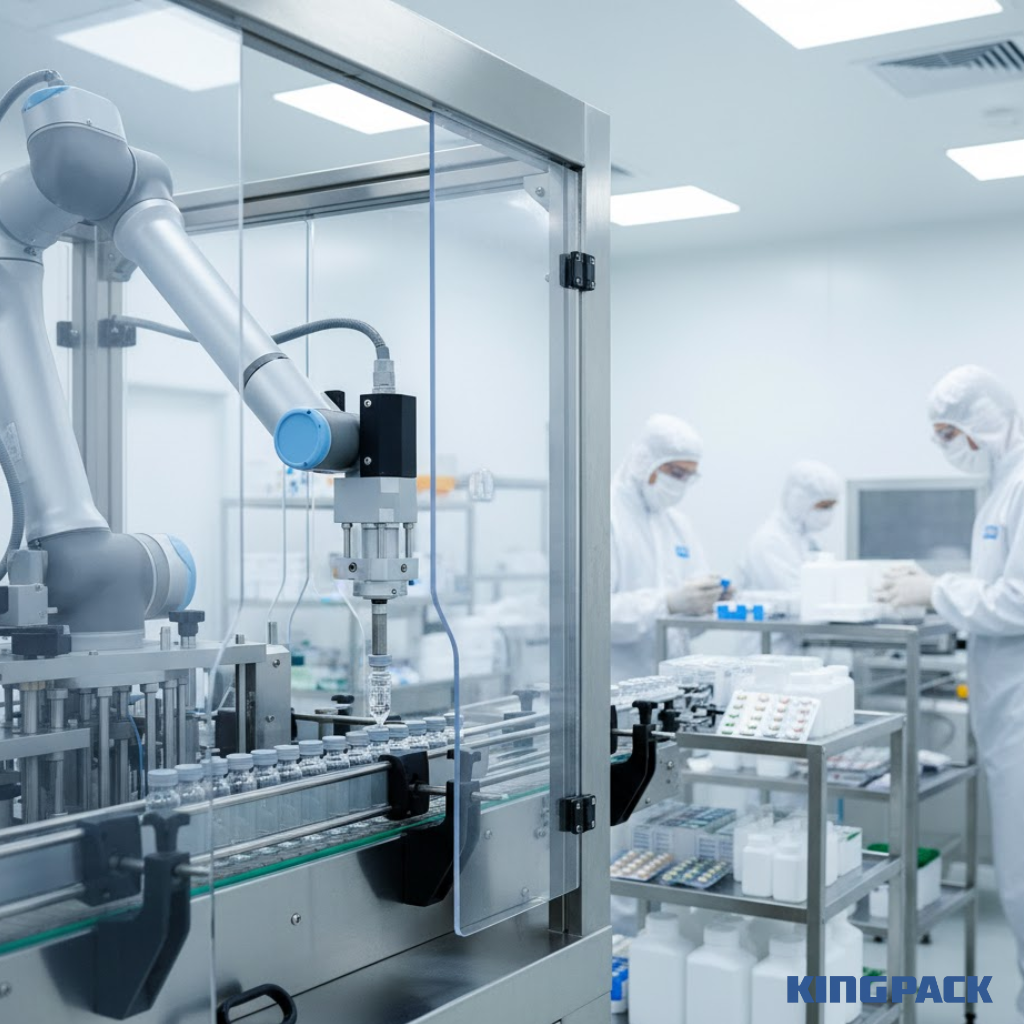
Common primary packaging formats include blister packs for tablets, IV Bags, glass vials for injectables, plastic bottles for syrups, and tubes for topical creams. The material choice directly affects drug stability and shelf life.
King Pack’s filling machines with isolators and floor-standing packaging machines manage primary packaging for injectables and medical devices, ensuring precise filling, sterile sealing, and consistent product integrity.
Secondary Packaging (Branding, Handling & Protection)
Secondary packaging surrounds the primary container, offering extra protection during distribution and serving as the main surface for branding, regulatory information, and patient instructions. Cartons, boxes, and labels are included here.
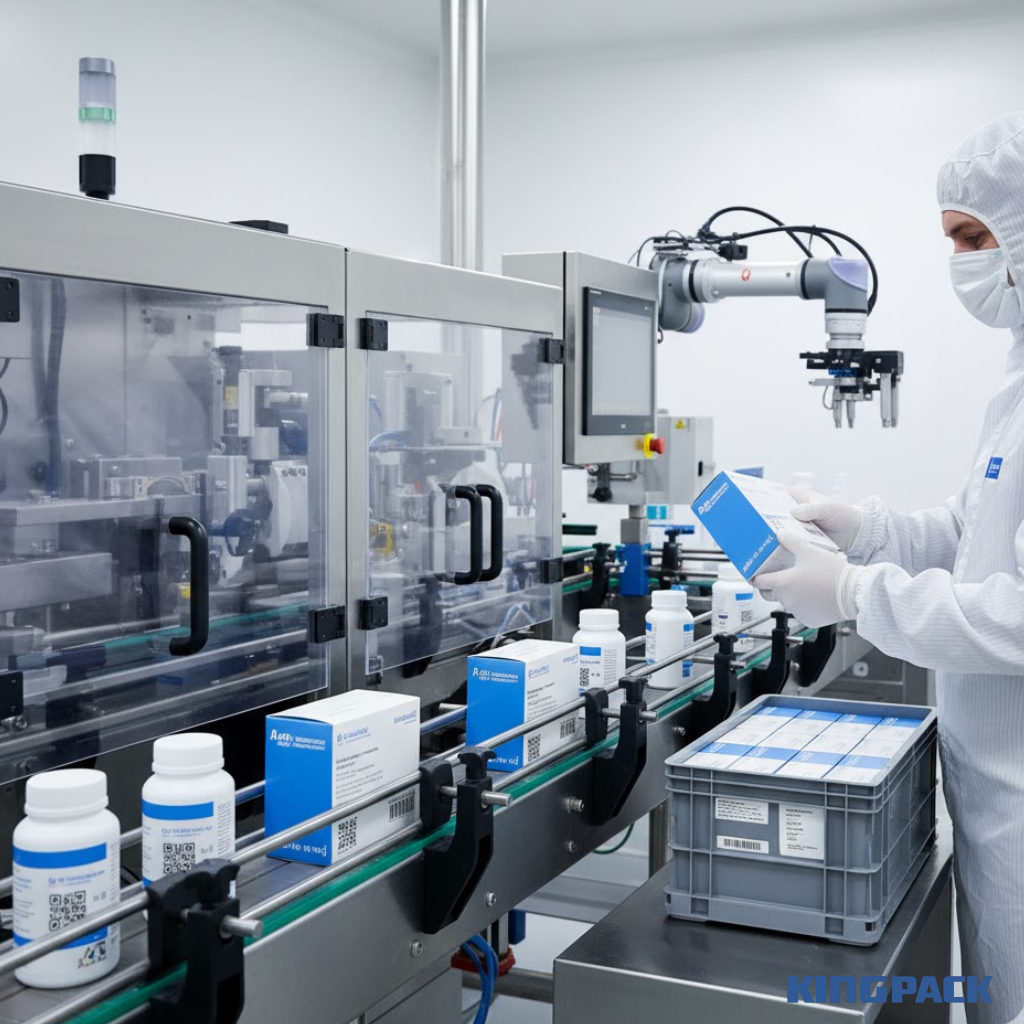
Using cartoning machines, closing machines, and inspection machines, pharmaceutical companies can add dosage instructions, warnings, ingredient lists, and brand identity. Regulatory requirements for batch numbers, expiration dates, and tamper-evident features are also integrated at this level.
Secondary packaging improves handling across the supply chain. Standardized carton dimensions allow efficient stacking, storage, and transport. Barcodes and serialization codes printed on pharmaceutical packaging machines enable product tracking and anti-counterfeiting measures.
Tertiary Packaging (Bulk Transport & Logistics)
Tertiary packaging consolidates multiple units for bulk shipping and warehouse storage. Corrugated boxes, shrink-wrapped pallets, and shipping containers protect products during transport and rough handling.

Although tertiary packaging doesn’t directly contact the product, it plays a key role in maintaining integrity. Poorly designed tertiary packaging can cause crushing, moisture exposure, or temperature excursions that compromise primary and secondary layers.
Efficiency and protection at scale are priorities here. Standard pallet sizes, stackability, and weight distribution matter for logistics optimization. Specialized tertiary solutions, including high-tech pharmaceutical packaging systems and temperature-controlled containers, ensure safe transport of biologics and vaccines.
King Pack’s Medical Packaging Solutions and automatic packaging machines integrate primary, secondary, and tertiary packaging processes across complete production lines, providing reliable, high-quality results for the pharmaceutical industry.
Recommended Reading: A Beginner’s Guide to Tube Filling Machines – King Pack Machinery
Packaging for Different Dosage Forms
Solid Dosage Forms – Tablets & Capsules
Tablets and capsules account for roughly 70% of all medications, making their packaging critical for maintaining stability and patient safety. Moisture, light, and physical damage can degrade solid formulations, so protective packaging is essential.
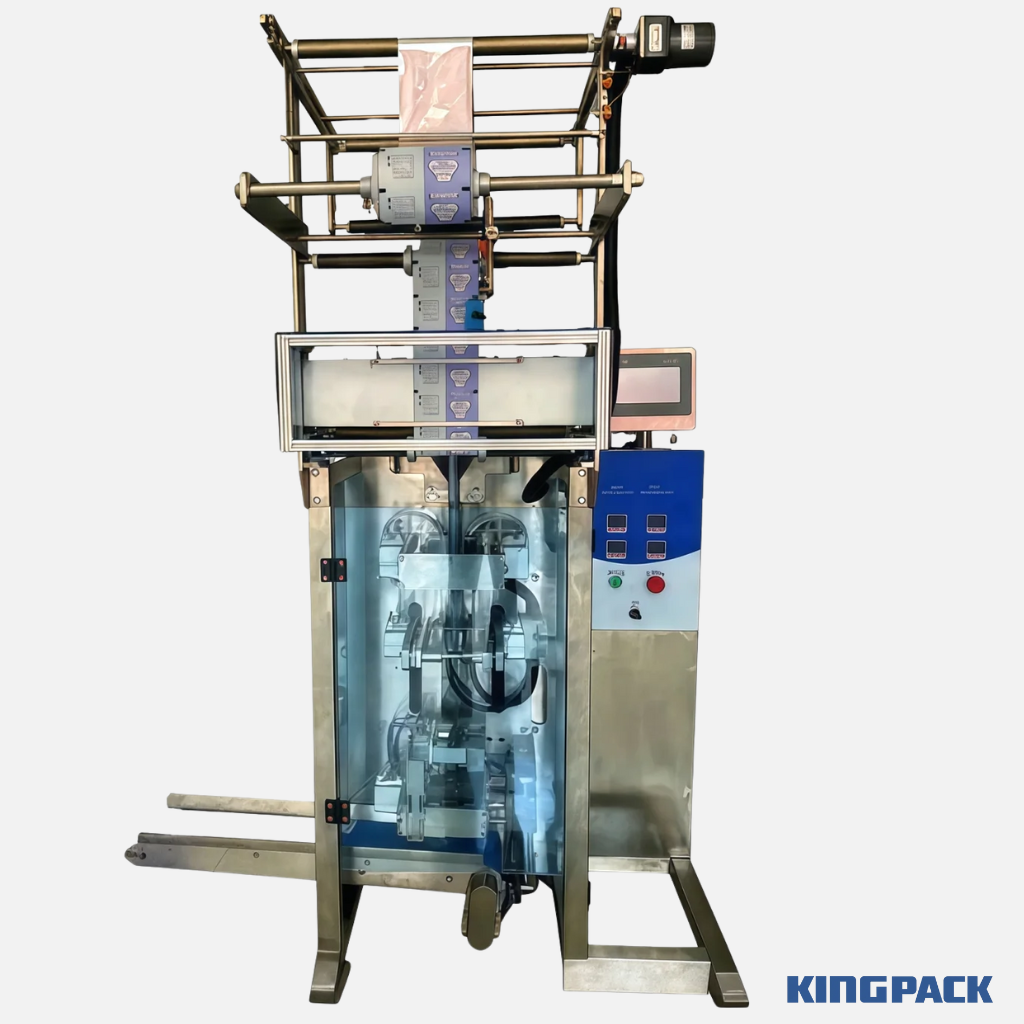
KP-50 Capsule and Tablet Packaging Machine – King Pack Machinery
Packaging Options for Solids:
- Blister Packs: Individual cavities protect each dose; transparent PVC allows visual inspection, while aluminum backing blocks moisture and light. Supports patient compliance.
- Bottles: HDPE bottles with desiccant caps are ideal for bulk dispensing; cost-efficient for large-quantity prescriptions.
- Strip Packaging: Flexible two-layer material seals each tablet or capsule individually, reducing material usage. Suitable for cost-sensitive markets.
Blister packs remain the preferred option for unit-dose control, but bottles and strips are viable alternatives depending on production volume and patient needs. King Pack’s tube filling and sealing machines can also support strip packaging for flexible materials.
Liquid Dosage Forms – Vials, Ampoules, Bottles
Liquid drugs require packaging that preserves sterility, prevents leakage, and protects sensitive formulations from light and oxygen. Selection depends on dosage type and storage requirements.
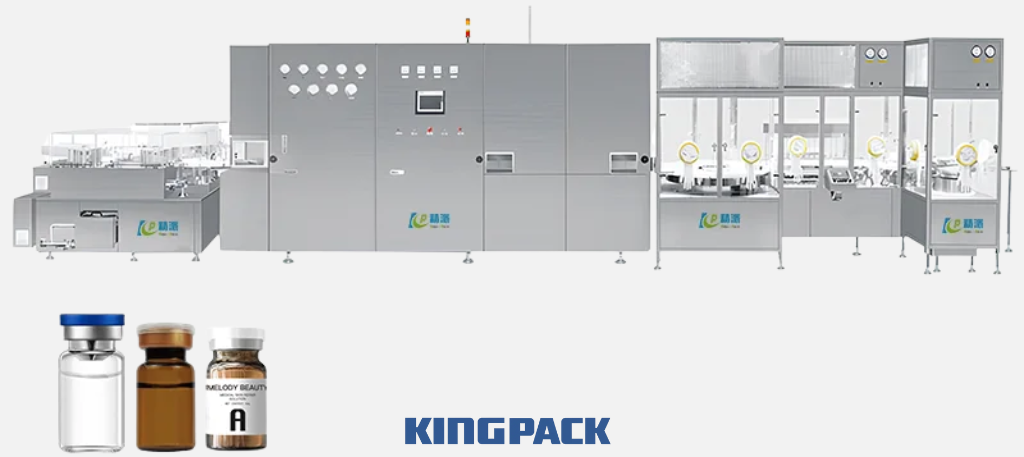
Vial bottle filling linkage line – King Pack Machinery
Packaging Options for Liquids:
- Glass Vials: Chemically inert; suitable for single- or multi-dose injectables; rubber stoppers provide hermetic seals.
- Ampoules: Single-use glass containers sealed by flame; eliminate leachables from closures.
- Plastic Bottles: HDPE or PET bottles for oral liquids; shatter-resistant, compatible with child-resistant caps.
Studies show glass vials offer superior protection for oxygen-sensitive injectables, with degradation rates up to 60% lower than plastic over 24 months. King Pack provides automated filling and sealing systems for liquid formats, ensuring sterility and precise dosing.
Semi-Solid Dosage Forms – Creams, Ointments, Gels
Semi-solid drugs need packaging that allows controlled dispensing while protecting the product from contamination and oxidation. Packaging choice depends on formulation stability and user convenience.
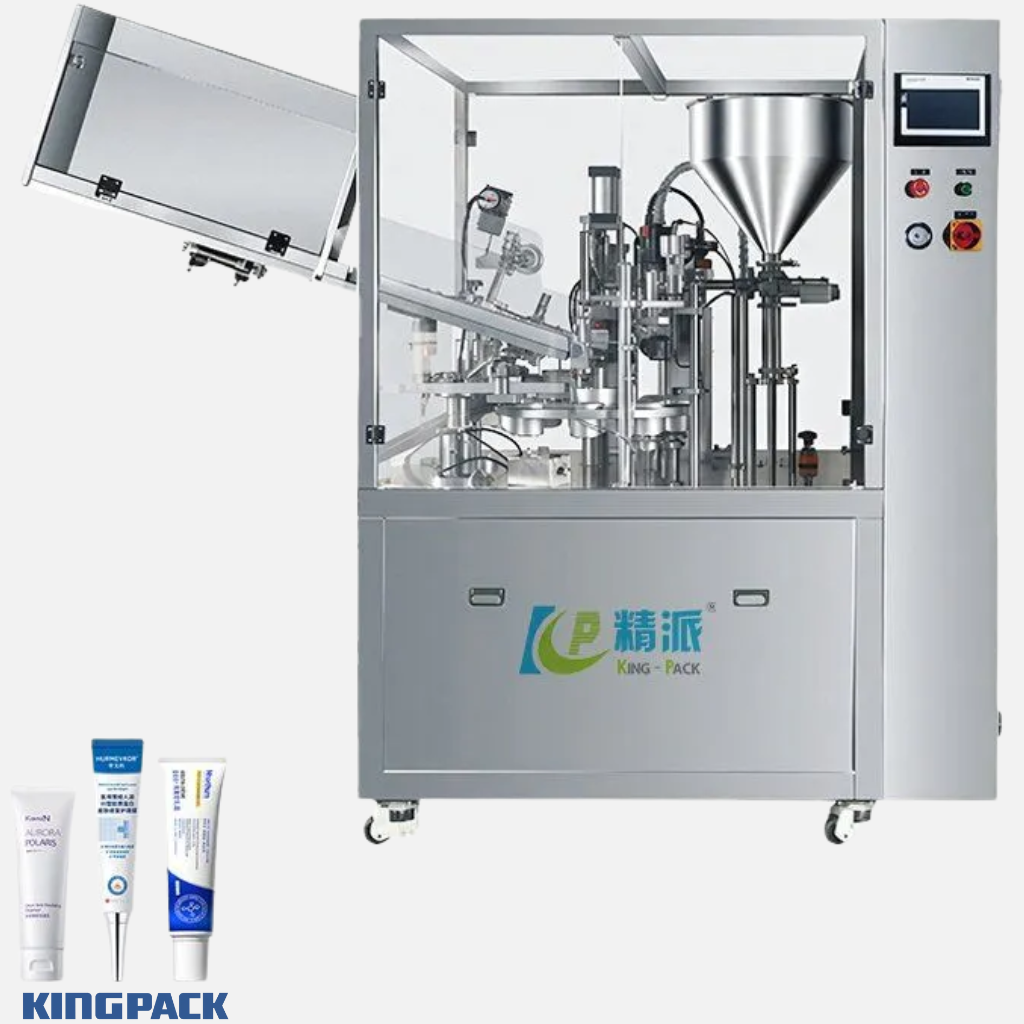
KPGFW-350BN creams & Gels filling and sealing machine – King Pack Machinery
Packaging Options for Semi-Solids:
- Tubes: Aluminum tubes offer excellent barriers; plastic laminate tubes reduce cost; both allow easy dispensing and minimal waste.
- Jars: Suitable for thick creams and ointments; wide-mouth jars allow access but can expose product to air.
- Pumps/Dispensers: Airless systems prevent oxygen contact, extending shelf life; ideal for premium formulations.
Tubes dominate pharmaceutical semi-solid packaging due to versatility and barrier performance. King Pack’s tube filling machines handle aluminum, plastic, and laminate tubes with capacities from 5ml to 250ml, ensuring precision and minimal waste.
Inhalation & Aerosol Formats – Inhalers, DPIs, Aerosol Cans
Respiratory drugs require specialized packaging for accurate dosing and stability of the medication.
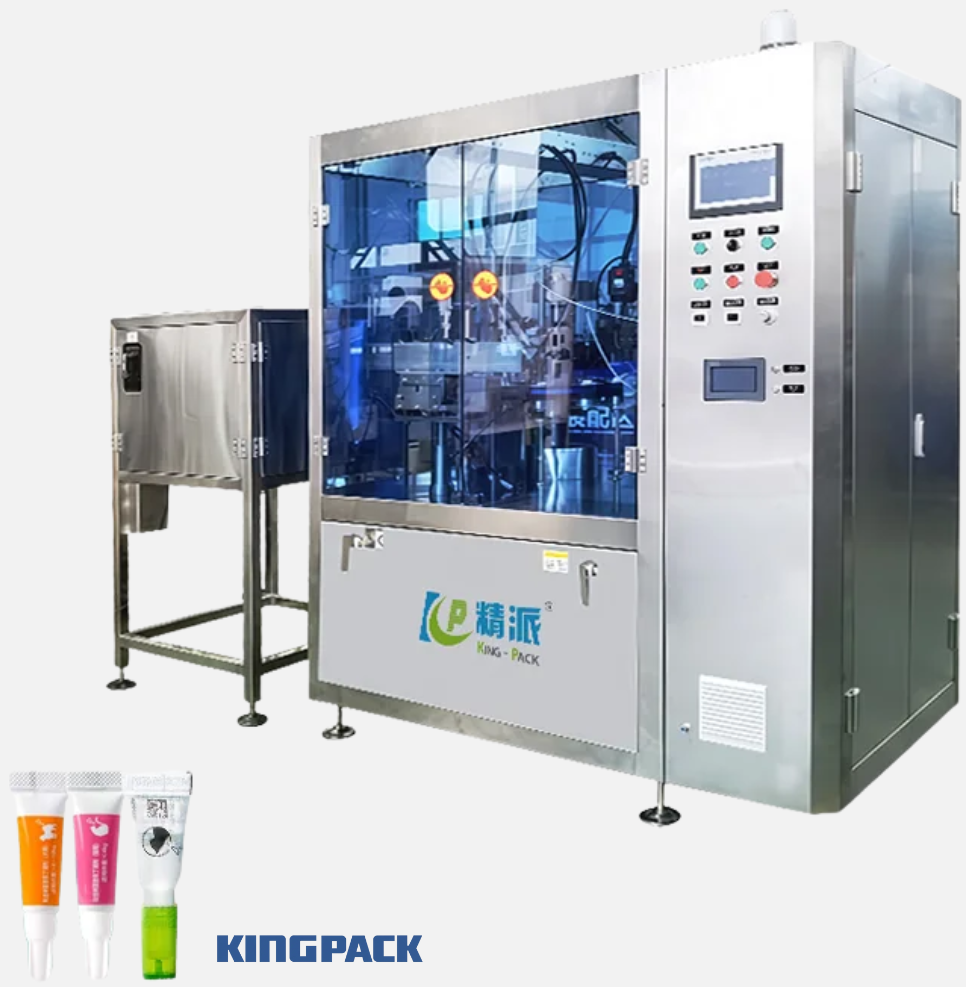
KPGFW-60D drop filling and sealing machine – King Pack Machinery
Packaging Options for Inhalation:
- Metered-Dose Inhalers (MDIs): Pressurized canisters with metering valves for precise dosing; integrated with delivery device.
- Dry Powder Inhalers (DPIs): Blister strips or capsules inserted into inhaler devices; must protect powders from moisture.
- Nebulizer Solutions: Single-dose vials or multi-dose bottles; reduce contamination risk and improve dosing accuracy.
These specialized packages ensure consistent therapeutic effect and patient safety. King Pack supports the production of vials and liquid filling lines compatible with inhalation or nebulizer solutions, combining precision with compliance standards.
Recommended Reading: Hand Sanitizer Filling Machine Guide: Working, Types, and Buying Tips – King Pack Machinery
Key Packaging Materials & Their Properties
Pharmaceutical packaging materials are chosen to protect drug stability, ensure patient safety, and support regulatory compliance. Each material has unique properties suitable for specific dosage forms, environmental conditions, and production requirements.
King Pack’s packaging systems are designed to work seamlessly with glass, plastic, aluminum, laminates, and paperboard containers.
| Material | Applications | Key Features | Notes |
| Glass | Injectable vials, oral liquids | Chemically inert, excellent barrier to moisture, oxygen, light | Type I borosilicate for sensitive biologics; fragile, heavier, higher cost |
| HDPE | Tablets & capsules bottles | Low moisture permeability, shatter-resistant, opaque | Cost-effective, widely used; best with desiccant caps for sensitive tablets |
| PET | Liquid bottles | Clear, lightweight, visual inspection | Higher oxygen/moisture permeability; suitable for stable formulations |
| PP | Autoclaved containers, hot-fill liquids | Heat-resistant, chemically stable | Moderate barrier; ideal for sterilized or hot-fill applications |
| Aluminum/Foils & Laminates | Blisters, protective wraps | Excellent barrier to light, oxygen, moisture; flexible for complex shapes | Cold-form aluminum for photosensitive drugs; laminates combine protection & printability |
| Paperboard/Cartons | Secondary packaging | Protective, printable, recyclable | Supports branding, regulatory info; sustainability-focused options available |
Choosing the right material depends on drug sensitivity, intended shelf life, and patient use. Glass remains ideal for injectables and sensitive liquids, plastics are versatile and lightweight, while aluminum and laminates provide maximum barrier protection.
Paperboard adds a sustainable, brandable layer to complete the packaging solution. King Pack ensures all its packaging lines accommodate these materials while maintaining precision, efficiency, and compliance.
Why Packaging Matters Beyond Containment
Drug Stability & Shelf Life Protection
Pharmaceutical products degrade through various mechanisms including hydrolysis from moisture exposure, oxidation from oxygen contact, photodegradation from light exposure, and temperature-induced chemical changes. Proper packaging selection directly determines how long medications remain safe and effective.
Different drugs exhibit vastly different stability profiles. Some antibiotics degrade within hours when exposed to humidity. Certain biologics lose potency after brief temperature excursions. Photosensitive drugs degrade under retail lighting conditions. Packaging must address the specific vulnerabilities of each formulation.
Accelerated stability testing during development reveals degradation pathways and establishes packaging requirements. These studies subject products to elevated temperature and humidity conditions, predicting long-term stability under normal storage. Packaging materials and formats get validated through these protocols before commercial production begins.
Patient Safety – Tamper Evidence, Child Resistant Design
Pharmaceutical packaging incorporates multiple safety features protecting patients from tampering and accidental poisoning.
Tamper-evident seals reveal any attempt to access products before first use. Shrink bands around bottle caps, sealed blister backing, and breakable seals on cartons all serve this purpose. Regulatory requirements mandate tamper evidence for most over-the-counter and prescription medications.
Child-resistant closures prevent children from accessing potentially harmful medications. These designs require coordination or strength beyond typical child capabilities while remaining accessible for adults, including elderly patients with reduced dexterity. Push-and-turn caps, squeeze-and-turn mechanisms, and blister packs requiring force to open all provide child resistance.
Senior-friendly designs balance child resistance with accessibility for elderly patients. Some medications now offer dual-closure options, allowing patients to choose between standard and easy-open caps based on household composition.
Recommended Reading: Top 10 Syringe Filling Machine Manufacturers in 2025 – King Pack Machinery
Regulatory Compliance – GMP, Serialization, Traceability
Pharmaceutical packaging must comply with extensive regulations covering materials, manufacturing processes, labeling, and tracking systems.
Good Manufacturing Practice (GMP) standards require that packaging materials won’t contaminate drugs or allow degradation during the intended shelf life. Documentation must prove material suitability through compatibility testing and stability studies. Manufacturing environments must maintain appropriate cleanliness and control to prevent contamination during packaging operations.
Serialization requirements combat counterfeit medications by assigning unique identifiers to each package. The U.S. Drug Supply Chain Security Act (DSCSA) and the European Union’s Falsified Medicines Directive mandate serialization for most pharmaceutical products. Packaging lines must integrate printing, verification, and data management systems to comply with these regulations.
Traceability systems track products from manufacturing through distribution to the point of dispensing. Barcodes, 2D data matrices, and RFID tags on packaging enable automated tracking. These systems support product recalls, inventory management, and anti-diversion efforts.
Emerging Trends & Innovations in Pharma Packaging
Smart Packaging – RFID, Sensors, Connectivity
Smart packaging technologies add functionality beyond passive protection by monitoring conditions, communicating information, and improving patient engagement.
Temperature sensors embedded in packaging verify cold chain maintenance for biologics and vaccines. These indicators change color or transmit data if products experience temperature excursions that could compromise efficacy.
RFID tags enable automated tracking throughout supply chains. Unlike barcodes requiring line-of-sight scanning, RFID allows bulk reading of multiple packages simultaneously. This technology improves inventory accuracy and speeds distribution.
Connected packaging links physical products to digital information through QR codes, NFC chips, or smartphone apps. Patients scan packages to access medication guides, dosing reminders, and authenticity verification. These systems also enable pharmaceutical companies to gather real-world usage data.
Sustainable Materials & Eco-Design
Environmental concerns are reshaping pharmaceutical packaging with focus on reducing plastic waste, increasing recyclability, and using renewable materials.
Recyclable mono-materials replace multi-layer laminates that can’t be recycled. While providing somewhat lower barrier protection, these materials suit stable formulations where environmental benefits outweigh marginally reduced protection.
Bio-based plastics derived from renewable resources rather than petroleum offer reduced carbon footprints. PLA (polylactic acid) and bio-PET show promise for pharmaceutical applications, though regulatory acceptance and barrier properties require careful evaluation.
Reduced material usage through lightweighting and design optimization decreases environmental impact without compromising protection. Thinner films, optimized carton designs, and concentrated formulations requiring smaller packages all contribute to sustainability goals.
Patient-Centric Packaging – Ease of Use, Single Dose Formats
Modern pharmaceutical packaging increasingly focuses on patient experience and medication adherence.
Easy-open designs help patients with arthritis, reduced hand strength, or visual impairments access their medications. Larger text, high-contrast colors, tactile indicators, and simplified opening mechanisms all improve usability.
Adherence packaging like calendar packs and reminder systems help patients take medications correctly. Blister cards marked with days of the week, dose-specific packaging, and integrated electronic reminders address the significant problem of medication non-adherence.
Single-dose formats improve dosing accuracy while reducing contamination risk for multi-use products. Pre-filled syringes, unit-dose vials, and single-serve sachets eliminate measurement errors and prevent preservative-related issues in multi-dose containers.
King Pack’s single-dose filling machines support this trend toward individualized packaging formats that improve patient outcomes.
How to Choose the Right Packaging Solution
Selecting the right packaging system means matching your drug’s properties and dosage form with the packaging material and machine capability.
You must balance cost, protection and patient experience, while ensuring the equipment aligns with your existing production line, allows for format changeover and supports multi‑spec operation.
Manufacturer experience, support, and compliance credentials (GMP, CE) matter just as much as the machine specs. Choosing a partner like King Pack offers access to integrated packaging and filling lines, high‑precision equipment and global after‑sales support.
Conclusion
From primary blisters to tertiary logistics packaging, every level of pharmaceutical packaging plays a vital role in safety, compliance, and market performance. As the packaging market grows and evolves, partnering with an experienced supplier becomes key. Contact King Pack today for a customised pharmaceutical packaging line solution that meets your drug format, production volume, and regulatory needs.