
Blister packaging equipment can automate forming, product placement, sealing, coding, and cutting for selected products. Market estimates vary by source; machine selection should follow the product, material, output, regulatory, and validation requirements.
In this guide, we cover how blister packaging works, the machines behind it, and their uses across different industries.
What Is Blister Packaging?
Blister packaging encloses individual units in formed cavities sealed with a lidding material. Protection, tamper evidence, and inspection depend on the material combination and validated package design.
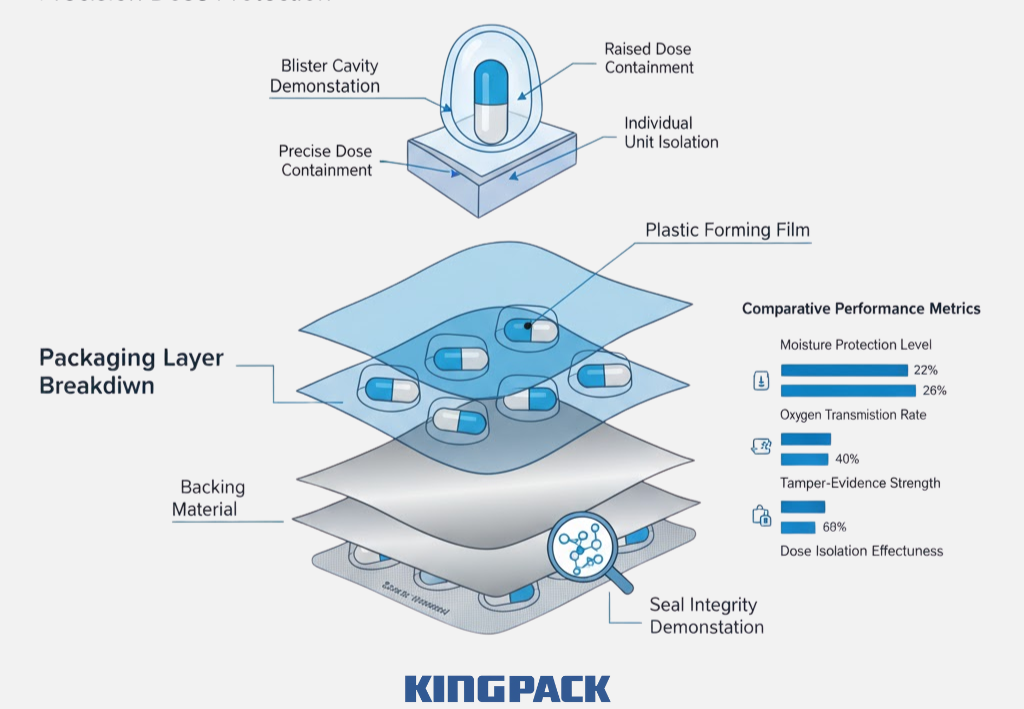
Individual cavities can help separate doses, but the barrier, shelf life, and regulatory performance depend on the forming film, lidding, seal, product, and process.
Recommended Reading: Cartoning Machine vs Case Packer – King Pack Machinery
How Blister Packaging Works
Blister lines can coordinate forming, filling, sealing, coding, and cutting. Quality and output depend on the materials, product, machine settings, inspection, and validated process.
The following are the main stages of the Blister Packaging process described in detail:
Step 1: Forming the Blisters
The process begins with a flat roll of PVC or PET film that unwinds and passes through a heating station. Controlled heat softens the film just enough to make it pliable without weakening its structure. Once the correct temperature is reached, the film enters the forming station, where vacuum suction or compressed air pushes it into a metal mold to create uniform cavities that will later hold each dosage unit.
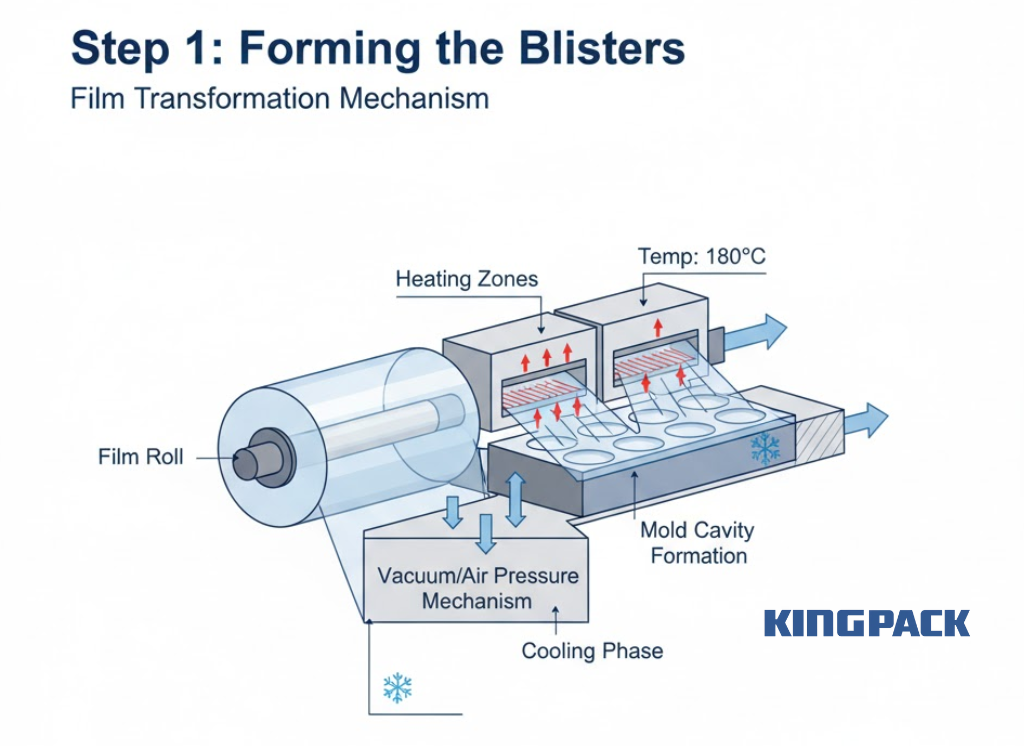
After shaping, the film cools briefly to help the cavities retain their form. This cooling phase is important because it prevents distortion or shrinkage before the next operation. A consistent temperature balance during heating and cooling ensures that every cavity has the same thickness and strength, which helps maintain product protection and visual uniformity across the final blister packs.
Step 2: Filling the Cavities
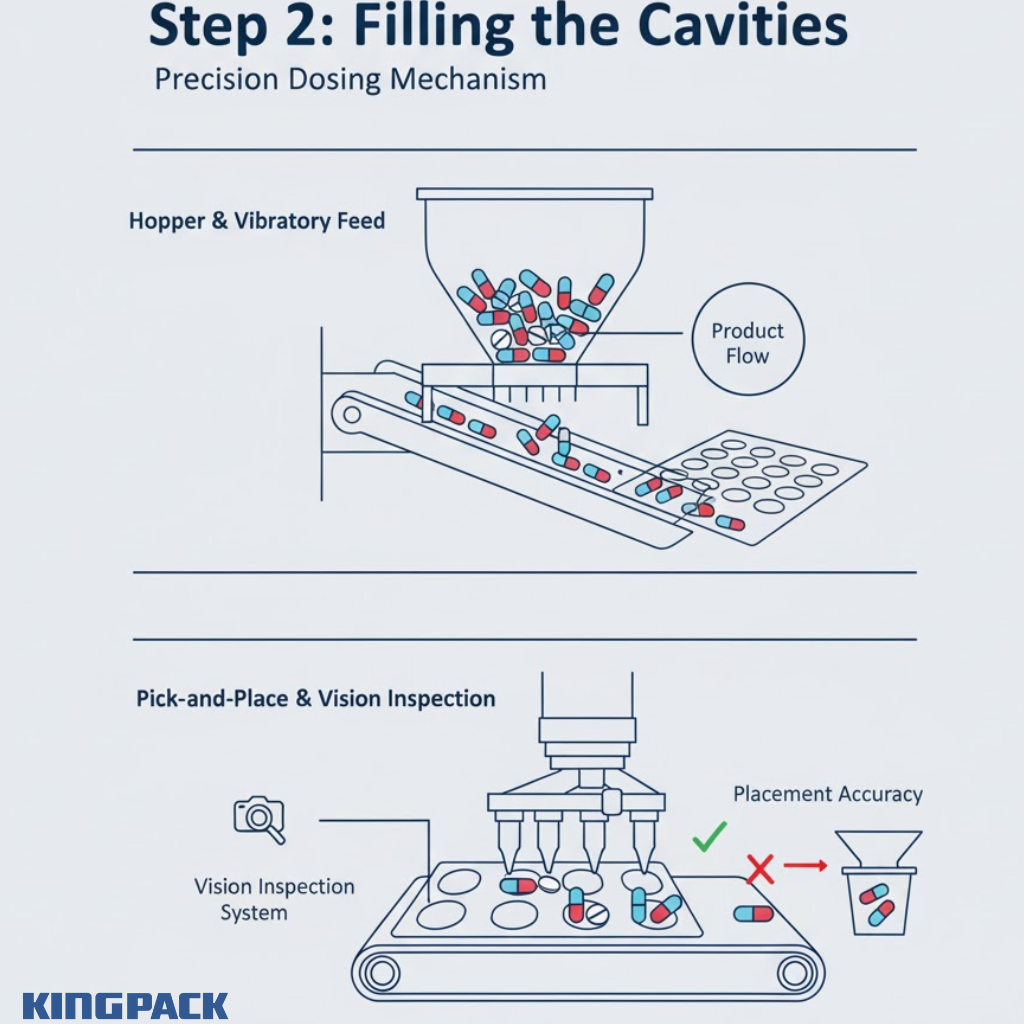
Once the blister pockets are formed, the product filling process begins. Tablets, capsules, or lozenges are carefully dropped into each cavity using a system suited to the product type. Gravity-fed hoppers are used for standard tablets that flow freely, while vibratory feeders provide better control for smaller or delicate units.
Pick-and-place systems are ideal for fragile products that need gentle handling to prevent chipping or breakage.
Recommended Reading: Liquid Filling Machine Manufacturer: Top Manufacturers Worldwide – King Pack Machinery
Vision inspection may check cavity presence, product position, or damage where included. Confirm the camera, lighting, reject logic, and validation scope.
Automatic rejection can reduce the risk of missing or damaged units reaching later stages, subject to the inspection capability and acceptance criteria.
Step 3: Sealing the Blisters
The lidding material and seal are selected for the product, barrier, and shelf-life requirements. Do not assume every blister seal is airtight or prevents all moisture, oxygen, or light transmission.
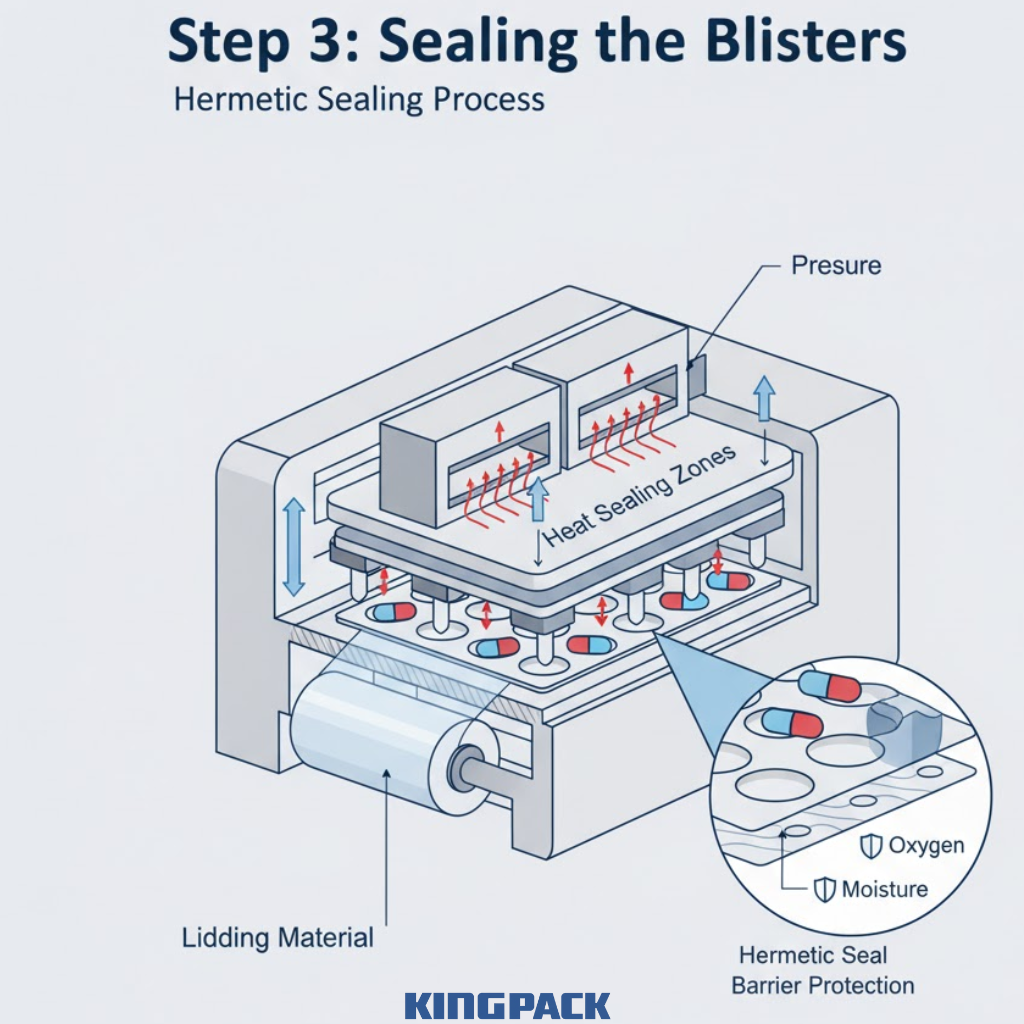
Seal quality depends on temperature, pressure, dwell, material, alignment, and machine settings. Establish the process window with seal-strength and package-integrity testing.
Step 4: Printing and Coding
Coding may include product and traceability information required by the market and customer. The exact data, print quality, and verification method must be specified.
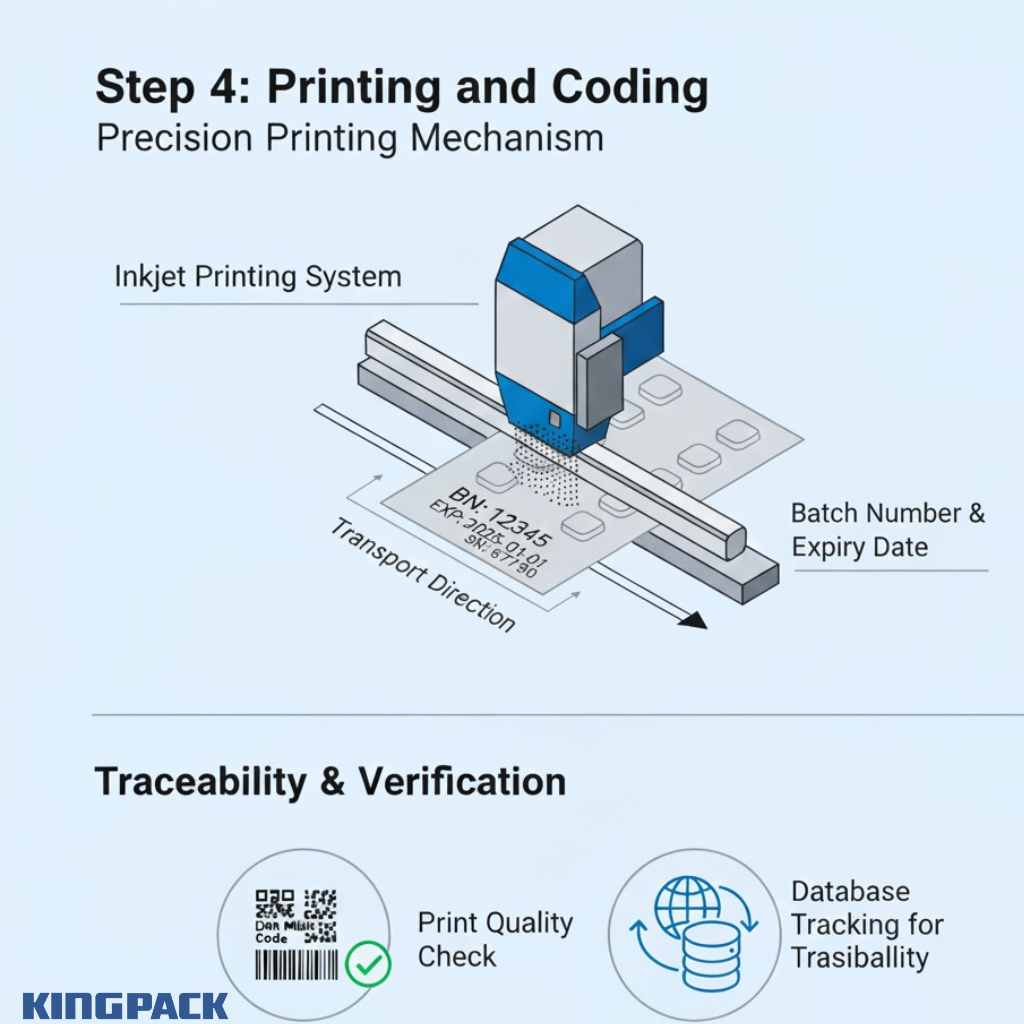
Inkjet, laser, or other printers may be used depending on the substrate, code, speed, and validation needs. Confirm legibility and verification performance.
Step 5: Punching and Cutting
Cutting tools and die layouts are selected for the pack format and material. The available card or strip designs depend on the machine and tooling.
Scrap collection and web monitoring may reduce material loss and help detect alignment or tension issues. Confirm the included controls and acceptance criteria.
Recommended Reading: The Ultimate Guide to Vial Filling Machines for Your Business – King Pack Machinery
Key Methods of Blister Forming
Thermoforming Blister Machines
Thermoforming may suit selected PVC, PVDC, PET, or other films. Output, cavity depth, and material compatibility depend on the machine and product.

Typical Characteristics:
- Roll‑to‑roll operation with continuous motion
- Example output only; confirm the tested speed for the selected format, material, and product.
- Works well with PVC/PVDC films and lidding foil
- Easier format changes compared to cold‑form foil
Thermoforming can provide efficient production for suitable films and barrier requirements. The actual balance of output, cost, and protection is configuration-specific.
Cold‑Forming (Alu‑Alu) Blister Machines
Cold forming uses aluminum-based laminate without heating the forming web. Its barrier performance depends on the laminate, seals, and package design, and it should be selected for the product’s stability requirements.
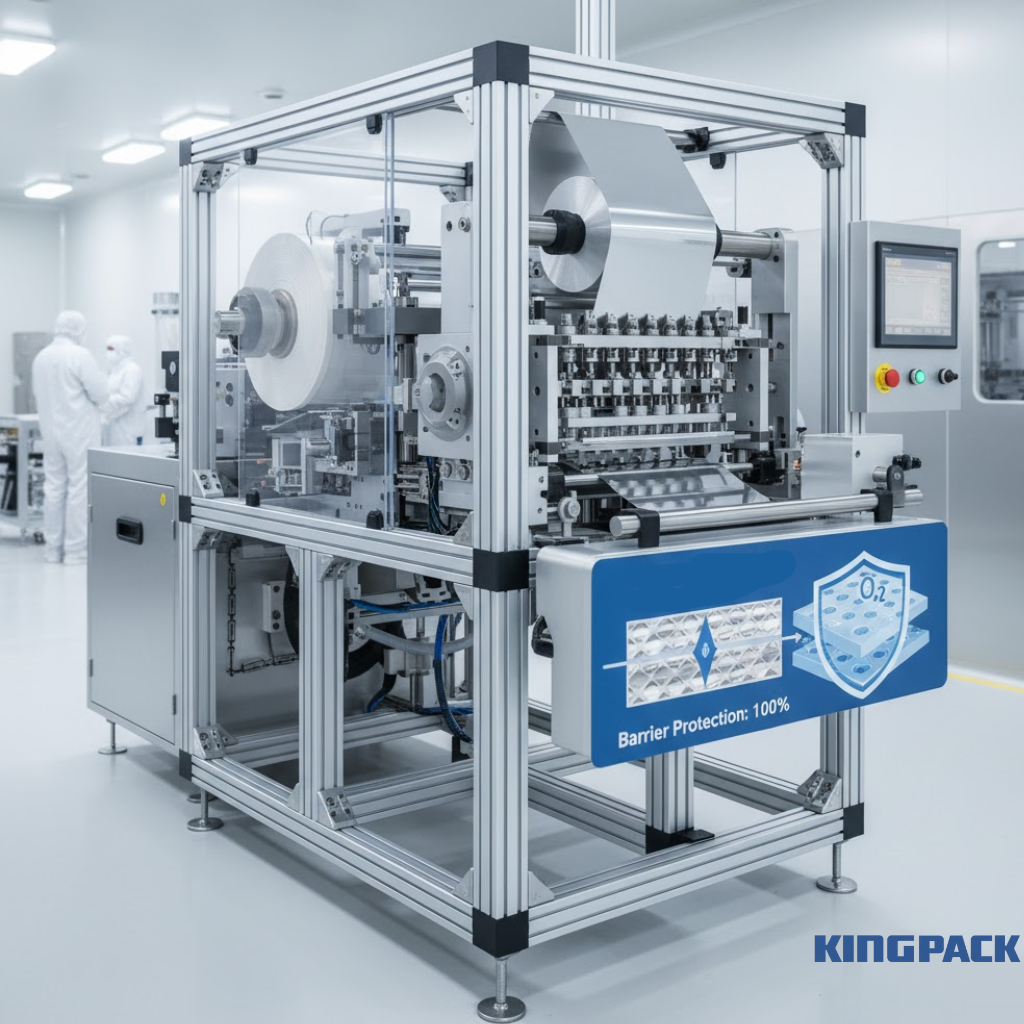
Typical Characteristics:
- Aluminum cavities can provide strong barrier protection when the laminate and seals are correctly specified.
- Often slower than thermoforming (because of forming complexity)
- Cost and speed depend on the material, tooling, format, and line configuration.
- Applications for moisture- or light-sensitive products require a product-specific stability assessment; do not infer suitability from the forming method alone.
Cold-forming is one option where the product and package require a higher barrier. Confirm shelf-life data and package validation.
Hybrid & Novel Forming Technologies
Hybrid designs and connected inspection may be available in selected lines. Confirm the materials, changeover method, controls, and validation scope.
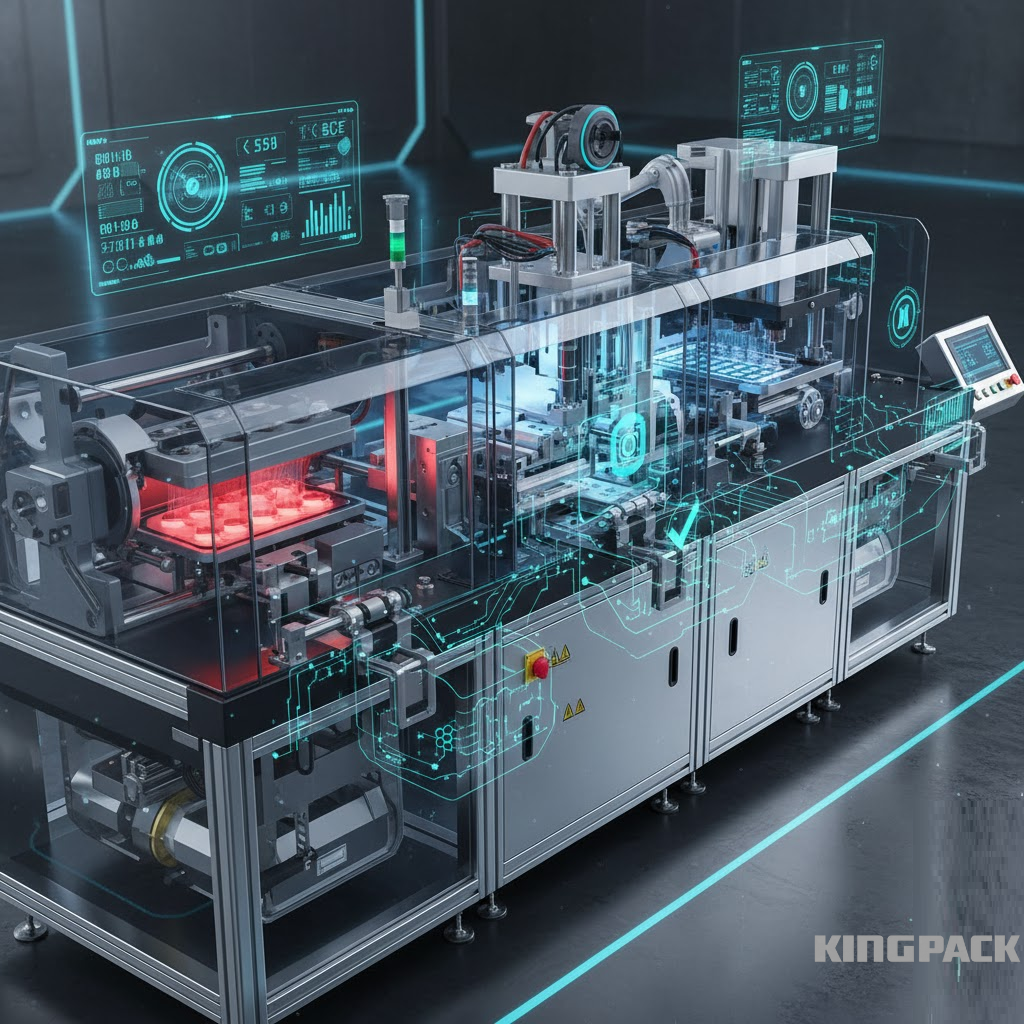
Typical Characteristics:
- Flexibility to handle multiple materials and formats
- Mid‑ to high‑speeds with enhanced protection
- Better for contract packaging or multi‑SKU lines
- Supports faster changeover and extended capabilities
The suitable forming method depends on the product, barrier, material, throughput, tooling, and regulatory requirements.
Applications Across Industries
Blister packaging is used across pharmaceutical, food, consumer, and medical applications, but the materials and quality requirements differ by product.
The following sectors highlight how this technology adapts to different products, materials, and regulatory demands while maintaining efficiency and protection standards.
Pharmaceutical & Nutraceutical Products (Tablets, Capsules)
Blisters can provide unit-dose separation and protection for tablets or capsules when the film, lidding, and seal are suitable for the product and shelf life.
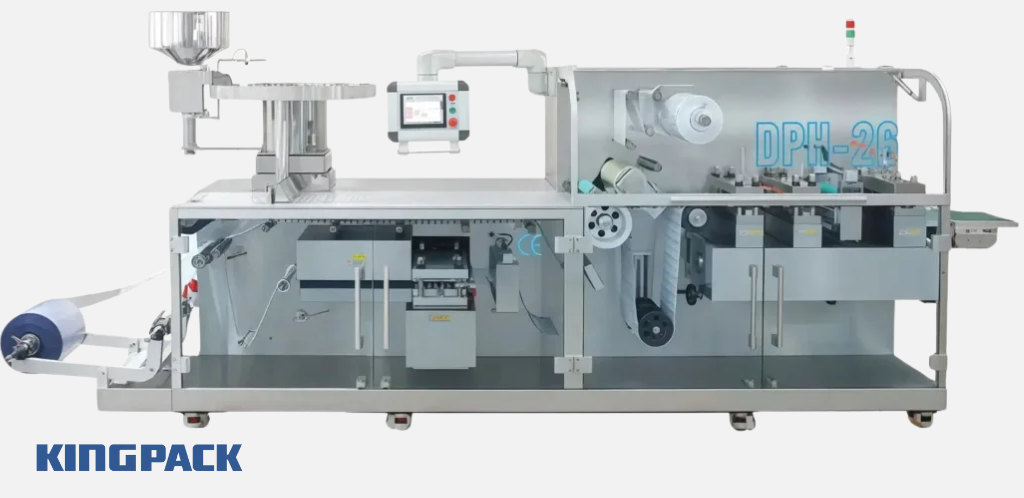
Specific blister machines may be configured for pharmaceutical or nutraceutical products. GMP compatibility, inspection, and desiccant or child-resistant options must be confirmed for the project.
| Aspect | Pharmaceutical Blisters | Nutraceutical Blisters |
| Purpose | Accurate, protected dosage | Appealing, hygienic packaging |
| Materials | PVC, PVDC, Aluminum Foil | PET, Paper-Foil Laminate |
| Main Benefit | Dose control and safety | Shelf appeal with protection |
Food, Snacks & Confectionery
Food or confectionery blisters require food-contact materials and package testing for the product. Freshness and contamination protection depend on the material and seal.
PET, PLA, paper, or other films may be suitable depending on food-contact, recyclability, barrier, and process requirements. Confirm claims with the material supplier.
| Aspect | Food Blisters | Confectionery Blisters |
| Common Products | Snack bites, lozenges | Chocolates, candies |
| Material Type | PET, PLA, Paper-Foil | PVC, PET |
| Key Benefit | Portion control, freshness | Shelf appeal, tamper resistance |
Electronics, Personal Care & Small Hardware
Blister packs can protect small consumer goods and provide product visibility, but the package design, material, and seal must match the item and distribution conditions.
Retail blister packaging can support presentation and tamper evidence where the design is appropriate. Theft prevention and durability are not universal outcomes.
| Aspect | Pharmaceutical Blisters | Nutraceutical Blisters |
| Purpose | Accurate, protected dosage | Appealing, hygienic packaging |
| Materials | PVC, PVDC, Aluminum Foil | PET, Paper-Foil Laminate |
| Main Benefit | Dose control and safety | Shelf appeal with protection |
Food, Snacks & Confectionery
Food and confectionery applications use blister formats for selected products. Visibility, hygiene, and freshness depend on the package material, seal, product, and shelf-life testing.
Food-contact and recyclable/biodegradable-film claims must be confirmed for the exact material and market; do not assume PET or PLA is automatically suitable.
| Aspect | Food Blisters | Confectionery Blisters |
| Common Products | Snack bites, lozenges | Chocolates, candies |
| Material Type | PET, PLA, Paper-Foil | PVC, PET |
| Key Benefit | Portion control, freshness | Shelf appeal, tamper resistance |
Electronics, Personal Care & Small Hardware
Blister packaging can protect small consumer goods during distribution when the cavity, film, lidding, and seal are matched to the product.
Retail and promotional designs can improve visibility and presentation. Tamper evidence depends on the package design and market requirements.
| Aspect | Electronics | Personal Care & Hardware |
| Typical Items | Batteries, adapters, earbuds | Razors, screws, toothbrushes |
| Sealing Type | Plastic-to-card or foil | Plastic-to-paper or foil |
| Benefit | Product visibility, protection | Tamper resistance, strength |
Medical Devices & Diagnostics
Medical-device packaging requires a validated sterile-barrier system where applicable. The package alone does not guarantee sterility or allow use without additional processing unless the product and process are qualified.
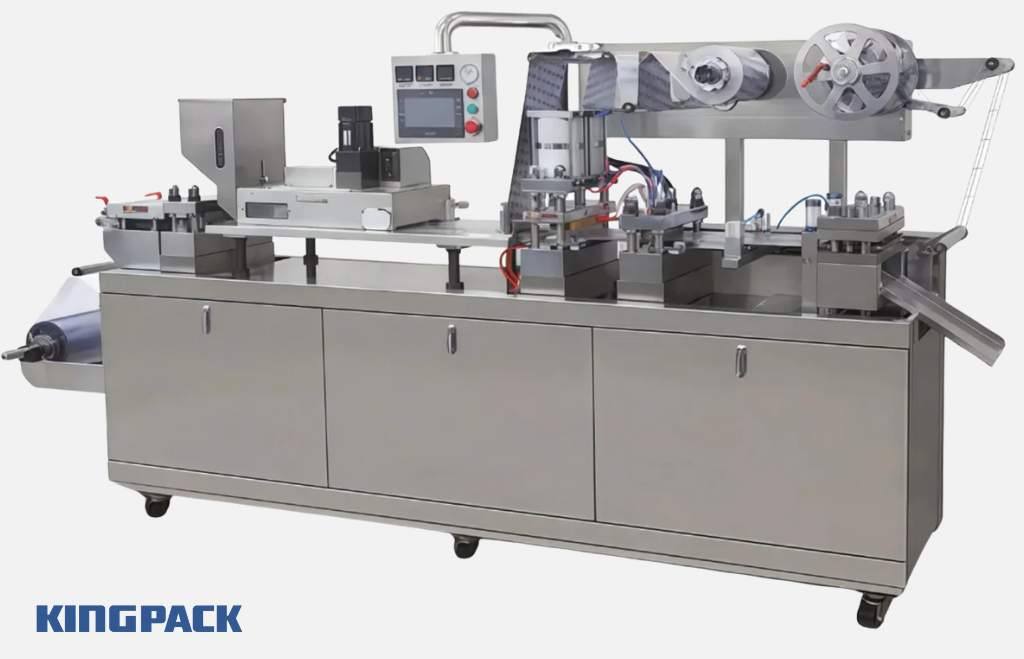
DPP-250 Flat Blister Packaging Machine – King Pack Machinery
Medical packaging materials such as medical-grade films, Tyvek® or foil may be selected for a defined sterile-barrier and peel performance. Confirm UDI, traceability, and validation responsibilities for the project.
| Aspect | Medical Devices | Diagnostics |
| Common Products | Syringes, catheters | Test kits, swabs |
| Lidding Material | Tyvek®, Foil | Foil, Paper |
| Main Benefit | Sterile barrier protection | Secure and traceable packaging |
Consumer Goods & Retail Promotions
Blister packaging also serves promotional and retail purposes across cosmetics, toys, and gift items. Its clean look and clear visibility enhance presentation while maintaining affordability. Brands often use shaped cavities and colorful backing cards to attract consumer attention in competitive markets.
This type of packaging allows easy customization in size, color, and shape, supporting both limited-edition and regular retail products. It’s a practical balance between cost efficiency, protection, and marketing appeal.
| Aspect | Cosmetics & Gifts | Retail Promotions |
| Typical Items | Lip balms, perfumes, jewelry | Collectibles, toys |
| Material Used | PET, PVC | PET, Cardboard |
| Key Benefit | Elegant presentation | Branding and shelf impact |
Selecting the right blister packaging machine involves evaluating several important factors:
Key Selection Factors:
- Supplier evaluation should cover the product, material, format, output, tooling, documentation, service, and validation responsibilities. GMP compatibility must be demonstrated for the intended application.
- Confirm the available format range, change parts, forming method, feeder, indexing, HMI, inspection, and tested speed for the actual product and material.
- Define the applicable GMP, FDA, CE, or other requirements for the market and project. Confirm spare parts, service response, documentation, and customer qualification responsibilities.
Why Partner with King Pack?
King Pack can discuss selected blister-forming, feeding, sealing, coding, inspection, and downstream integration options. The suitable thermoform or cold-form configuration depends on the product and project specification.
Engineering, integration, and support scope should be defined in the quotation and technical agreement. Compliance and line performance require customer-specific qualification.
Conclusion
Blister machine selection should follow the product, material, barrier, output, format, inspection, cleaning, and validation requirements. A project-specific trial and specification is more reliable than a generic performance claim.