
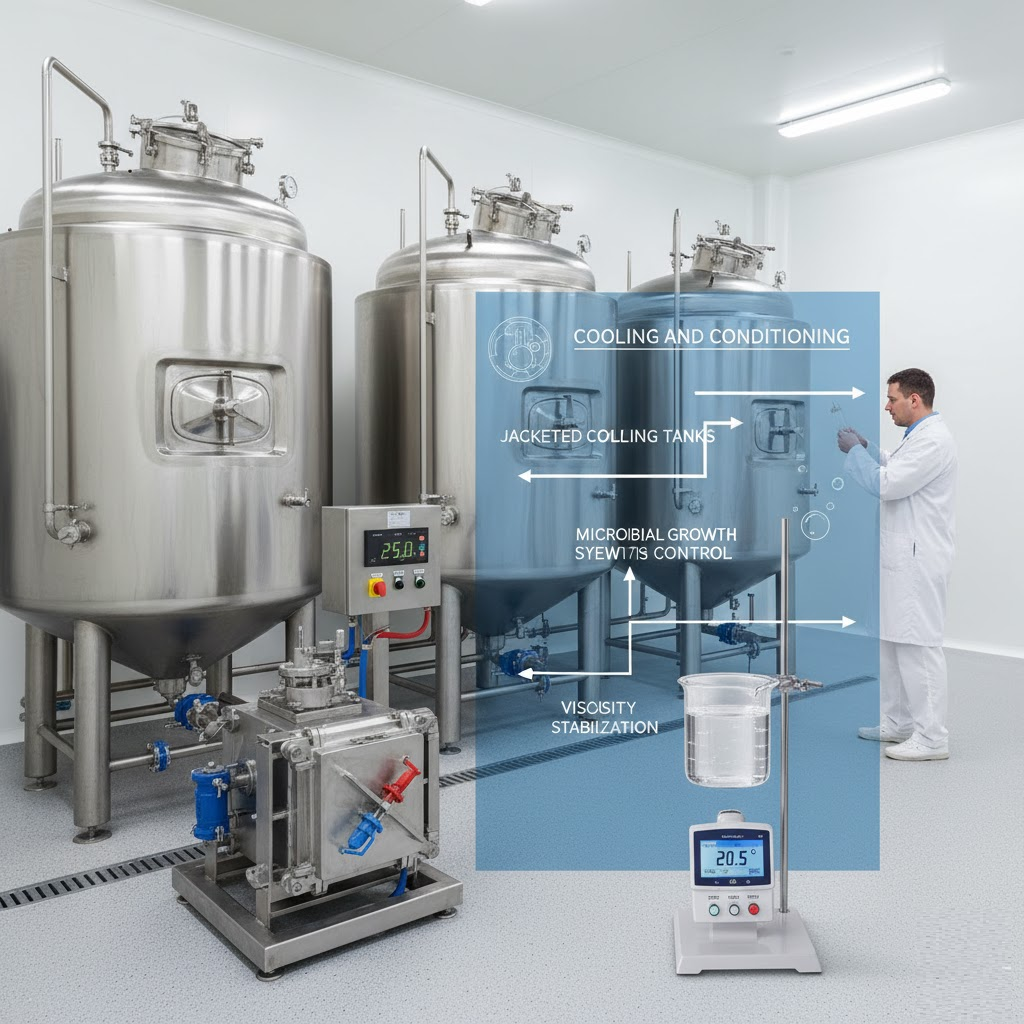
The industrial syrup manufacturing process normally includes ingredient verification, water and phase preparation, controlled dissolution, mixing, filtration or deaeration, holding, filling, capping and inspection. The exact process depends on whether the product is a food topping, beverage concentrate, liquid sweetener or pharmaceutical oral syrup. Formula limits, microbial controls and regulatory requirements must be defined for the specific product before equipment is selected.
Syrup Production and Filling at a Glance
| Product requirement | Common equipment starting point | What to verify |
|---|---|---|
| Clear, pumpable syrup | Jacketed mixing tank, filtration and flowmeter or piston filling | Dissolution, clarity, temperature and fill repeatability |
| High-viscosity dessert syrup | Heavy-duty agitation, positive-displacement transfer and piston or suitable pump filling | Whole-vessel mixing, heating, nozzle cut-off and cleanability |
| Syrup with fruit pieces or inclusions | Gentle agitation and large-bore product path | Maximum particle size, separation, bridging and product damage |
| Hot-fill product | Temperature-controlled holding and filling line | Validated fill temperature, container compatibility, closure and cooling |
| Pharmaceutical oral syrup | Validated processing and filling system designed around the product specification | Material control, cleaning, dosing, records and applicable drug requirements |
For a configured packaging system, review our filling and capping line solutions or send KING PACK your product and container details.
Food Syrup vs Pharmaceutical Syrup
These products can use similar tanks, pumps and fillers, but their specifications and compliance paths are not interchangeable. A food syrup may be governed by a food-safety plan and process controls. A medicinal oral syrup may require pharmaceutical raw-material control, validated manufacturing instructions, cleaning, in-process testing and batch records. Even within food products, acidified, low-acid or other categories may have additional requirements.
| Area | Food or beverage syrup | Pharmaceutical oral syrup |
|---|---|---|
| Formula authority | Approved food formulation and hazard analysis | Registered or approved drug formula and manufacturing instructions |
| Process limits | Product-specific food-safety and quality controls | Validated process parameters and in-process controls |
| Cleaning | Sanitation program based on hazards and allergens | Documented and validated as required by the manufacturing system |
| Release testing | Defined food-safety, quality and label checks | Approved specification, sampling and quality-unit disposition |
For U.S. food facilities, the FDA explains that 21 CFR Part 117 covers food CGMPs and risk-based preventive controls for applicable facilities. Pharmaceutical manufacturers should review the FDA’s official drug CGMP resources and the requirements applicable to their product and market. Equipment alone does not make a process compliant.
Step-by-Step Syrup Manufacturing Process
1. Define the product and process specification
Before sizing a tank or filler, define the formula, batch size, viscosity and temperature ranges, ingredient-addition sequence, target quality attributes, microbial strategy, packaging and required output. Do not apply one generic Brix, pH or preservative level to every syrup. Those values come from the approved formulation and safety or stability studies.
2. Verify water and raw materials
Confirm material identity, lot status and storage conditions before charging. Water quality must meet the product’s intended use and applicable requirements. Weighing and dispensing controls should prevent ingredient mix-ups and support traceability.
3. Charge, heat and dissolve
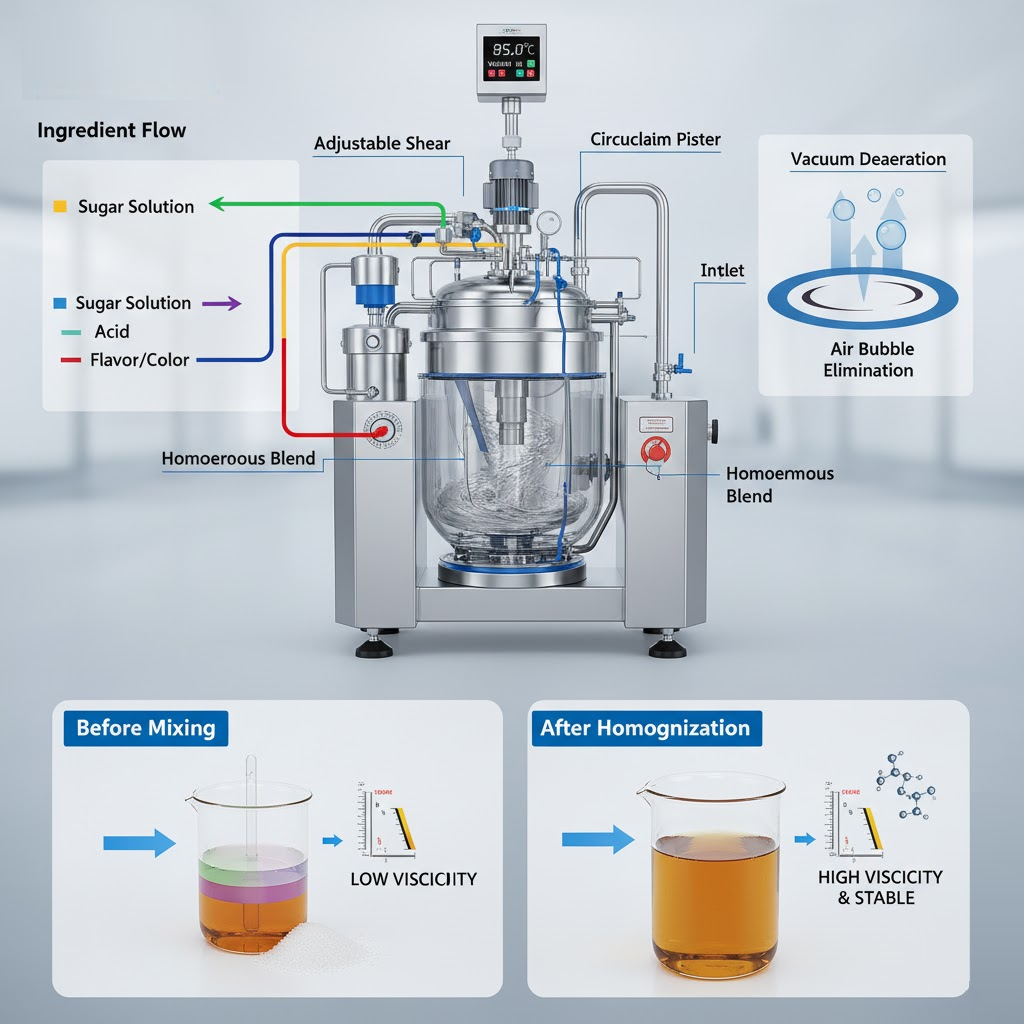
Water or another liquid phase is charged to the vessel, followed by sweeteners and other ingredients in the validated sequence. A jacket can provide controlled heating where needed for dissolution. Agitation must move material through the whole working volume without creating persistent dead zones, scorching or excessive air.
4. Add sensitive or minor ingredients
Flavors, colors, acids, active ingredients or preservatives may have product-specific addition points and temperature limits. The manufacturing instruction should define when and how they are added. A supplier should not prescribe universal addition temperatures or concentrations without the approved formula.
5. Filter, deaerate or condition
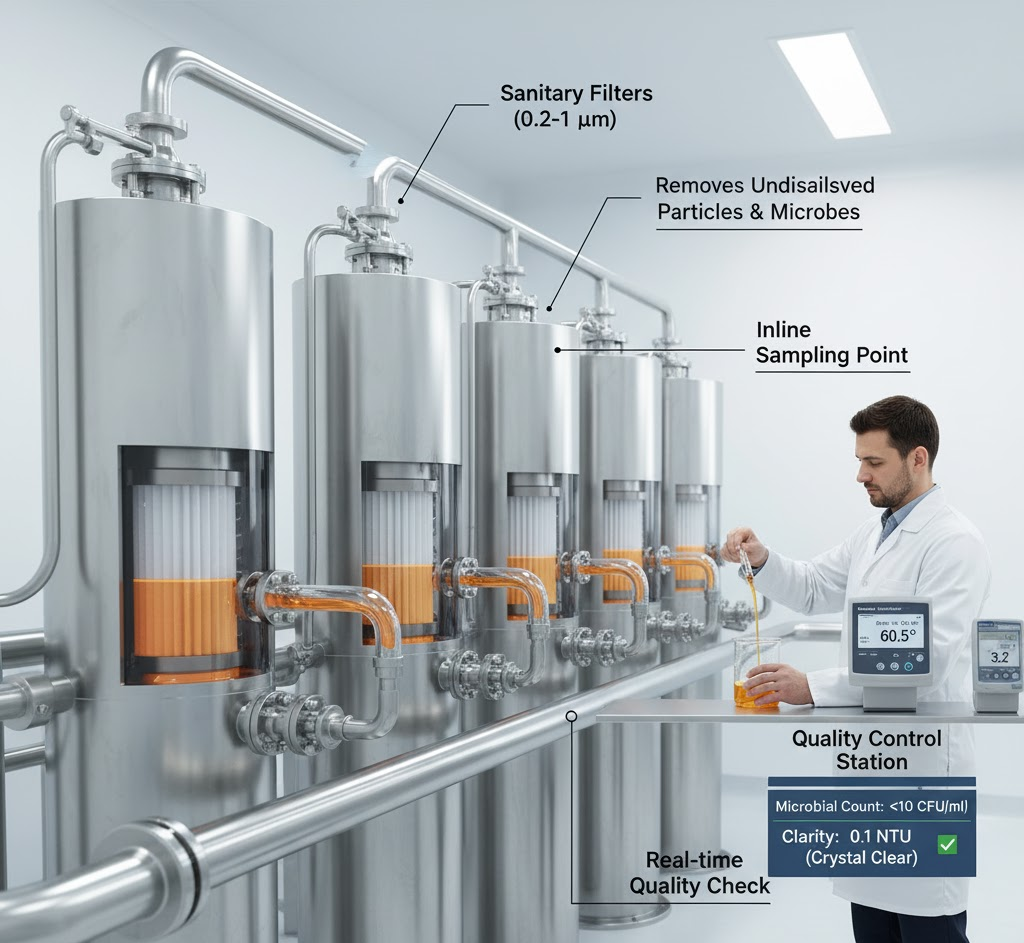
Filtration may remove undissolved material or foreign particles where appropriate, but filter grade and product loss must be evaluated. Vacuum deaeration or controlled hold time can reduce entrained air in some products. Syrups containing intentional fruit pieces need a different product path and may not be compatible with fine filtration.
6. Hold and transfer to the filler
The holding system should maintain the specified temperature and uniformity without excessive recirculation or aeration. Pumps, hoses and pipes must handle the actual viscosity and any particles. Long transfer lines can change pressure, temperature and fill behavior.
7. Fill, close and inspect
Containers are fed to the filler, dosed, capped or sealed, coded and inspected. The line may then label, pack and case the product. Hot-fill projects also need a validated relationship between product temperature, container, closure, hold time and cooling process.
Choosing a Syrup Filling Machine
Piston filling
Servo piston fillers are commonly considered for viscous and pumpable syrups. Cylinder volume, valve design, nozzle diameter and product path must match the fill range and product. Large pieces require sufficient clearances through the entire path.
Flowmeter filling
A compatible flowmeter system can suit uniform, pumpable liquids when conductivity, viscosity, aeration and temperature are within the selected meter’s working range. The calibration method should be defined for each product.
Positive-displacement pump filling
Lobe, gear or another suitable pump can meter or transfer syrup, depending on viscosity and inclusions. Evaluate shear, pulsation, pressure, cleanability, seal compatibility and start-up behavior.
Container and Closure Selection
Syrups may be packaged in glass or plastic bottles, jars, cups, pouches or sachets. Container choice depends on product compatibility, fill temperature, oxygen or moisture barrier, distribution and consumer use. The line must also match the neck finish, cap, liner, induction seal or tamper-evident feature.
- Test the lightest, tallest and least stable container.
- Confirm cap application and torque or closure integrity with actual components.
- Check product strings or drips before labeling.
- Validate container performance at the real fill and cooling temperatures.
Critical Process and Quality Checks
| Check | Why it matters | How to define it |
|---|---|---|
| Composition or soluble solids | Supports batch consistency | Approved method and product-specific limits |
| pH | Can affect flavor, stability and process safety | Validated formula and calibrated measurement |
| Viscosity and temperature | Affect mixing, pumping and filling | Specified method, temperature and acceptable range |
| Clarity or appearance | Indicates dissolution, filtration or stability issues | Defined visual or instrumental criteria |
| Net content | Controls giveaway and label compliance | Sampling plan and gravimetric or validated method |
| Microbial attributes | Support product safety and shelf life | Product-specific limits and approved test methods |
Cleaning and Changeover
High-solids syrup can dry on surfaces and become difficult to remove. Review vessel spray coverage, drainability, pump and valve access, hose routing, filler nozzles and capper splash zones. “CIP” should be translated into a documented sequence with defined time, temperature, flow, chemistry and acceptance criteria. Allergen or active-ingredient changeovers may require additional controls.
Information to Include in Your RFQ
- Food, beverage or pharmaceutical product classification and destination markets
- Approved formula properties without disclosing more confidential detail than necessary
- Batch size, annual output and operating shifts
- Viscosity, density, temperature and maximum particle size
- Container, closure and label drawings plus physical samples
- Fill range, required net-content tolerance and target accepted output
- Cleaning, allergen or active-changeover requirements
- Mixing, heating, cooling, filtration, deaeration and holding requirements
Factory Acceptance Test Checklist
Use representative syrup and normal production packaging, or document why a surrogate is equivalent for the tested risks. Demonstrate mixing, heating or cooling, transfer, filling, capping, coding and cleaning functions. Record temperature, viscosity, fill results by head, accepted output, drips, closure defects, changeover time, alarm recovery and residual product. Product quality and regulatory release remain the responsibility of the manufacturer’s approved quality system.
Syrup Manufacturing FAQ
What equipment is used to manufacture syrup?
A typical system may include ingredient weighing, a jacketed mixing vessel, agitator, transfer pump, filtration or deaeration, holding tank, filler, capper, labeler and inspection equipment. The exact configuration depends on the product and package.
What is the best filler for viscous syrup?
Servo piston or suitable positive-displacement systems are common starting points. Final selection depends on viscosity, particles, temperature, fill range, cleaning and required output.
Does every syrup need hot filling?
No. The required microbial control and filling process come from the specific product, packaging and validated safety or stability strategy.
Can one line fill food and pharmaceutical syrups?
Physical compatibility is only one issue. Cross-contamination risk, cleaning validation, documentation, regulatory status and facility controls must be assessed before products share equipment.
Plan Your Syrup Processing and Filling Line
KING PACK can configure mixing, transfer, filling, capping and downstream packaging around your product and containers. Explore our packaging solutions, review the industries we support, or send your syrup and packaging requirements for a technical proposal.