 Skip to content

Introduction
Tube filling and sealing machines are indispensable when precision, cleanliness, and productivity are required. It is possible to do the work manually, but today’s machines make it possible to save a considerable amount of time, minimize errors and maintain product safety.
In this article, we will explore in detail why tube filling and sealing machines are indispensable in modern packaging operations. By understanding their benefits, manufacturers in pharmaceuticals, cosmetics, food, and chemicals can make informed decisions when selecting equipment that meets both operational and regulatory demands.
Why Tube Filling and Sealing Matters in Packaging
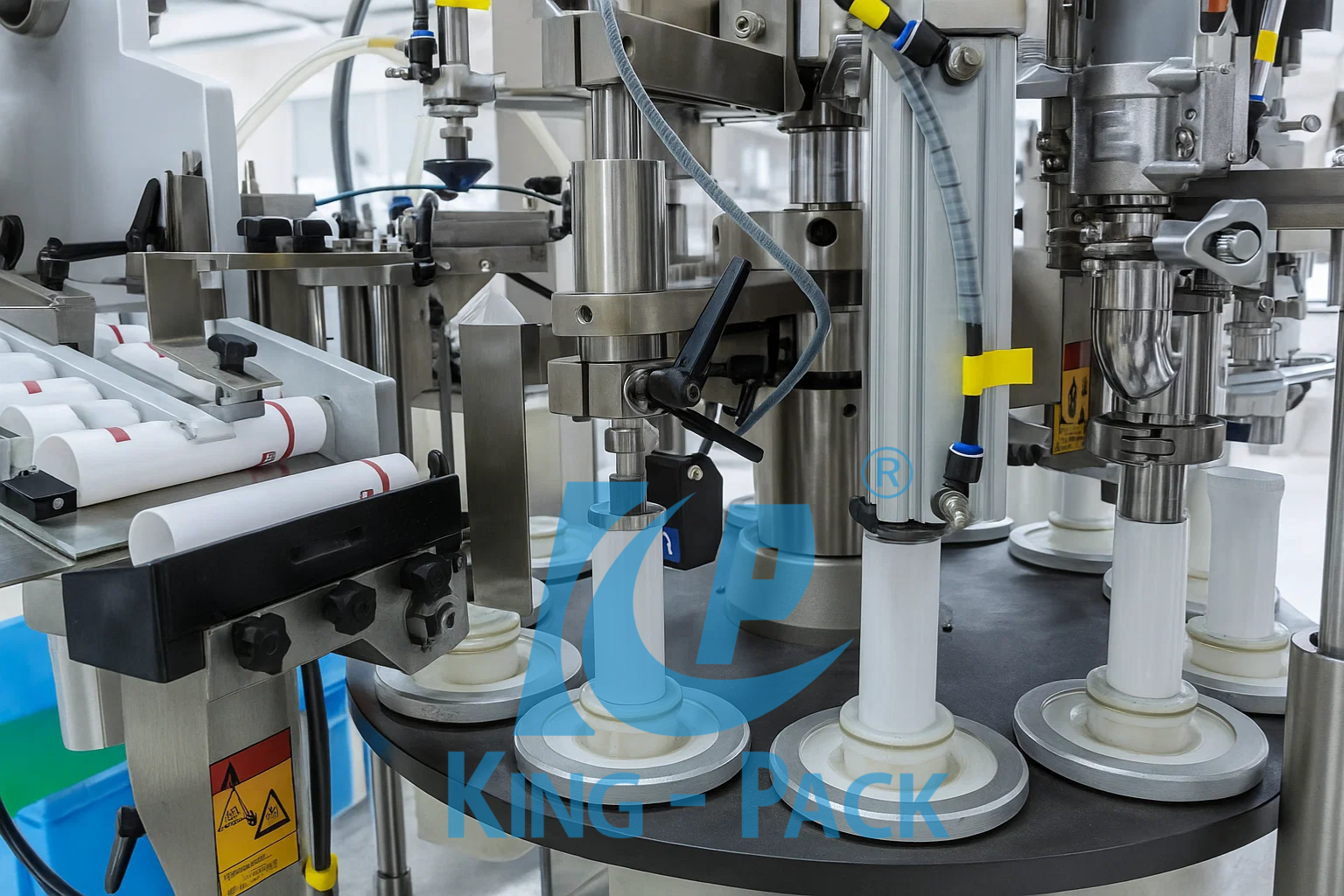
Accurate tube filling is crucial for maintaining product quality, controlling costs, and meeting regulatory standards. Manual filling often reaches only 85–90% accuracy, which can lead to inconsistent volumes and higher material waste. Automated tube filling and sealing systems consistently hit 99.5–99.8% accuracy, reducing variations from ±3–5% down to ±0.5–1%.
This level of precision not only saves material costs but also prevents overfilling and ensures every tube meets exact specifications. For high-value pharmaceuticals or specialty cosmetics, this can translate into significant savings and reduced product loss, while keeping customers satisfied with consistent quality.
Beyond cost and accuracy, automated systems improve production efficiency by maintaining consistent dosing and packaging integrity across large runs. They support brand reliability, simplify regulatory audits, and limit human contact to uphold hygiene standards. For manufacturers aiming to optimize both efficiency and product quality, investing in automated solutions from KP Filling Machine is a smart, strategic move.
Industries Benefiting Most: Pharma, Cosmetics, Food, Chemicals
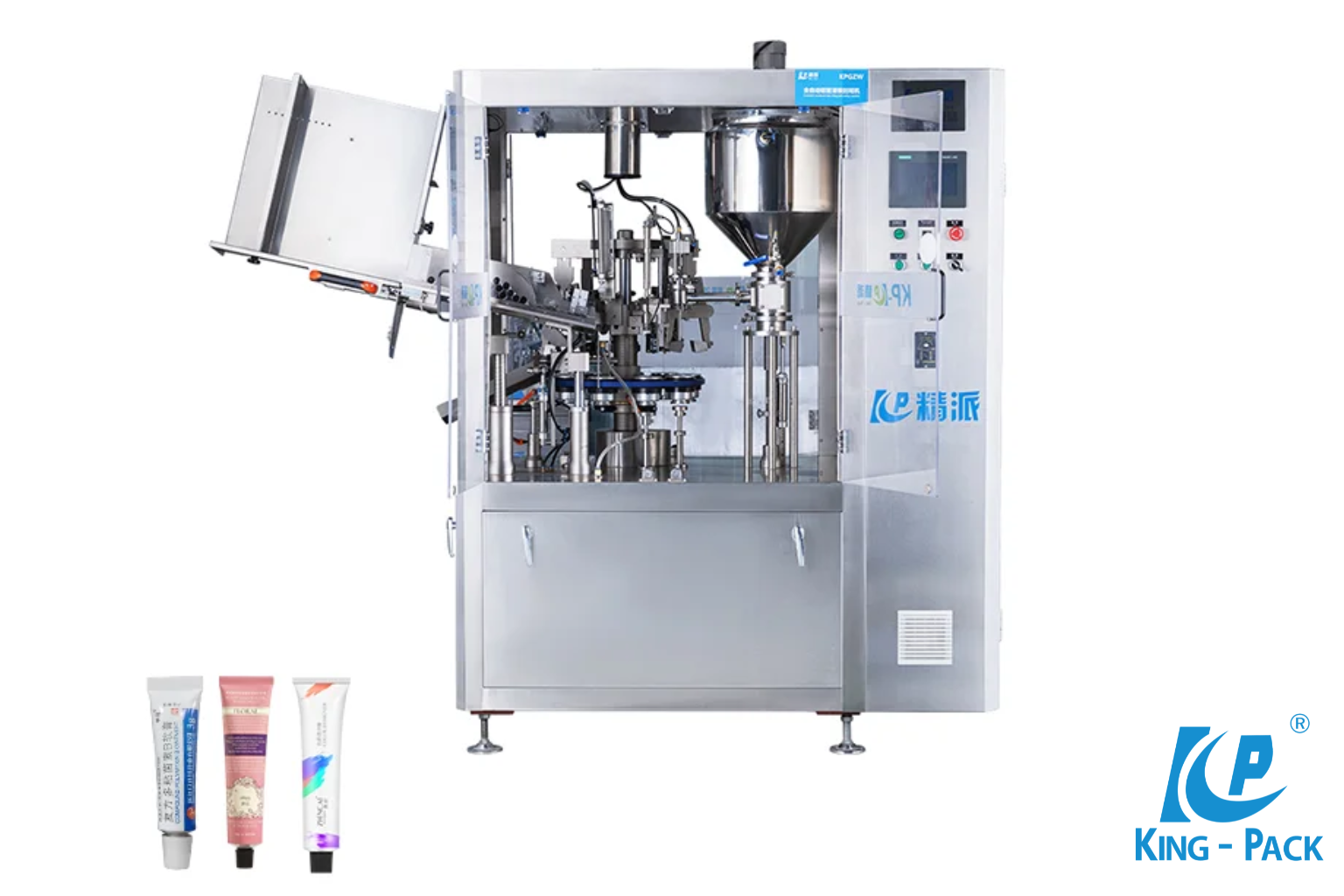
KPGZW-60 filling and folding machine – King Pack Machinery
Key sectors that rely heavily on tube filling and sealing machines include:
- Pharmaceutical: Creams, ointments, and gels require accurate filling and sterile sealing.
- Cosmetics: Lotions and gels packaged in plastic or laminate need containment, aesthetic sealing.
- Food: Paste sauces and condiments demand hygienic sealing to prevent spoilage.
- Chemical: Adhesives and lubricants require rugged seals due to viscosity and chemical content.
Machines from KP Filling Machine cater to these sectors. By providing industry-specific solutions, KP Filling Machine enables companies across pharmaceuticals, cosmetics, food, and chemicals to achieve high precision, maintain hygiene compliance, and ensure long-term reliability. Our machines not only improve operational efficiency but also safeguard the quality and safety of the packaged products.
Recommended Reading: Everything You Need to Know About Vial Packaging Machines – King Pack Machinery
1. Efficiency and Productivity Gains
Faster Throughput vs Manual Methods
Automation in tube filling and sealing significantly improves production throughput, accuracy, and overall efficiency. The following comparative analysis of manual, semi-automatic, and fully automatic systems demonstrates the operational benefits achieved through modern machinery.
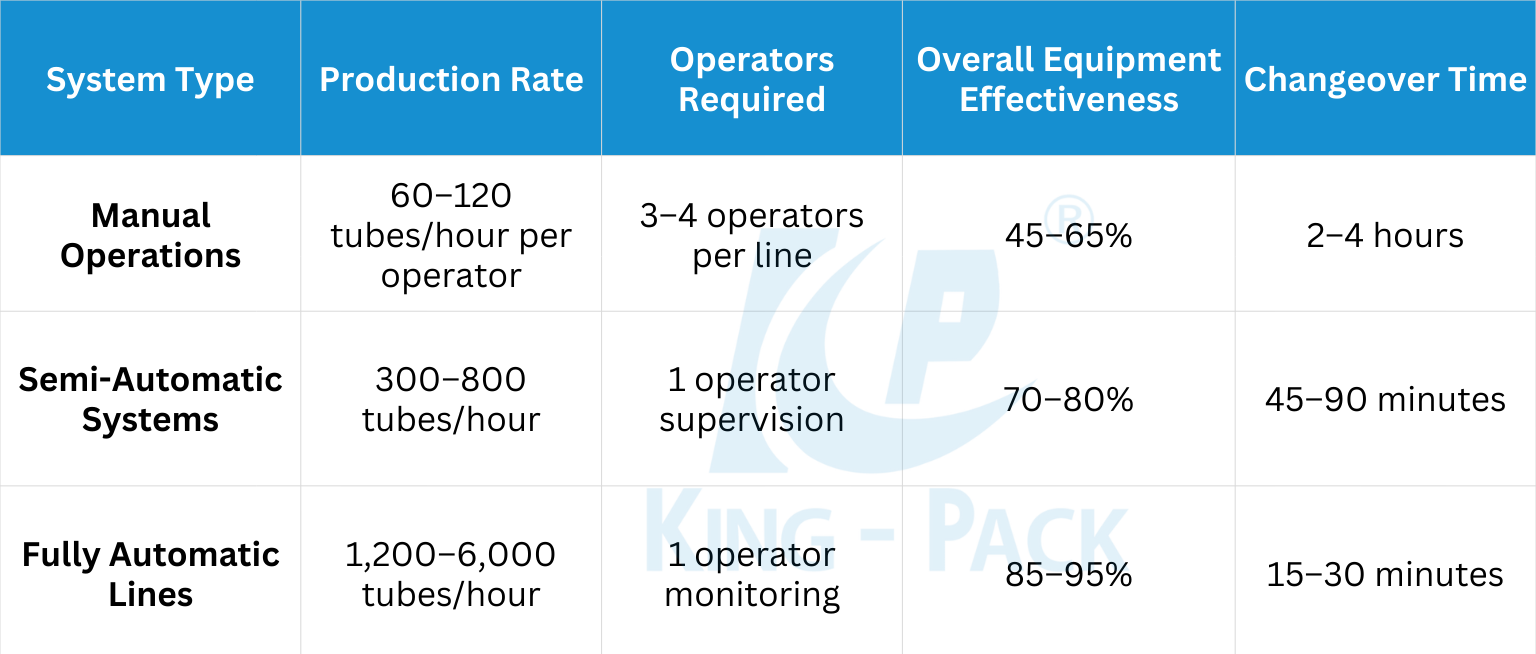
At KP Filling Machine, we provide scalable solutions tailored to these production ranges. Our equipment ensures consistent tube quality across all speeds while minimizing downtime and reducing operator-related variability. Automated systems also allow faster changeovers, improving line efficiency and meeting high-demand production schedules.
Consistent Filling Accuracy and Reduced Waste
Advanced filling technologies maintain precise volumes for diverse products, reducing material waste and rework. Key systems include:
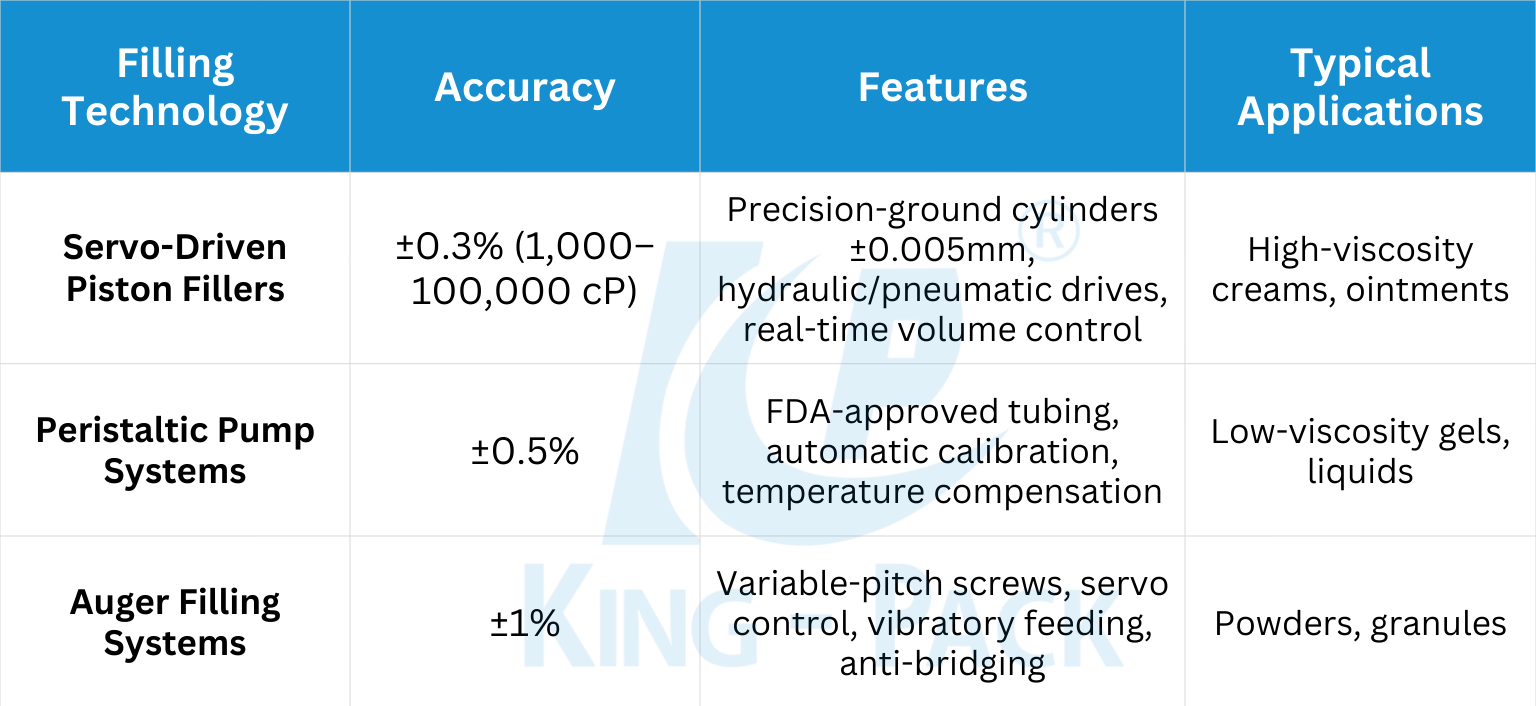 Additional quality assurance includes weight checking systems with 0.1g sensitivity and statistical process control data supporting Cpk values above 1.67—meeting pharmaceutical and medical device standards.
Material waste reduction averages 5–8% annually, translating to $100,000–$160,000 savings for operations handling $2 million in materials. Further savings come from lower rework, reduced quality investigations, and fewer customer complaints. Machines from kpfillingmachine.com integrate these precision technologies to optimize production and maximize ROI.
Click here to check our range of Tube Filling Machines and Tube Sealing
Hygiene and Contamination Control
Minimizing Human Contact and Cross-Contamination
Maintaining product integrity starts with reducing direct human contact. Automated tube filling and sealing machines from KP Filling Machine use enclosed filling chambers with HEPA-filtered air and 20–30 air changes per hour.
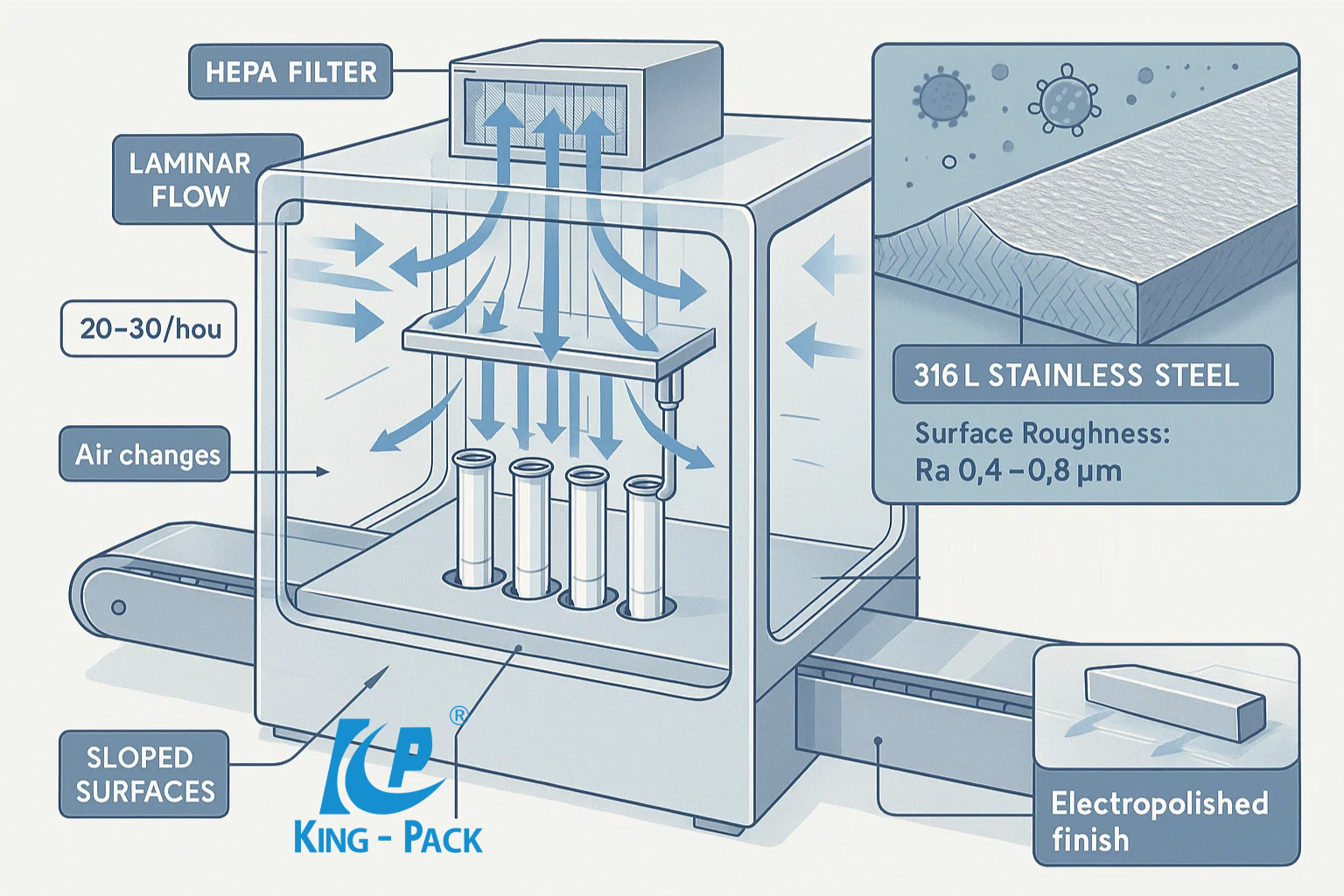
These chambers maintain positive pressure, preventing airborne contaminants from entering the production zone. Laminar flow conditions further reduce particle settling on product contact surfaces, a crucial factor for aseptic applications in pharmaceuticals and food-grade products.
Conveyor systems are designed with cleanable, food-grade lubricants and smooth surfaces to prevent bacterial growth. Critical contact components are made from 316L stainless steel with electropolished finishes (Ra 0.4–0.8 μm), eliminating microscopic irregularities where microorganisms could thrive.
Sanitary design principles include:
- Sloped surfaces for complete drainage
- Minimal dead spaces and crevices
- Accessible areas for inspection
- Quick-disconnect fittings
- Self-draining configurations
These features collectively reduce contamination risks while supporting faster cleaning cycles and easier inspection, essential for high-volume production.
Maintaining GMP and Clean-in-Place (CIP) Standards
Clean-in-place systems significantly improve cleaning efficiency. Automated CIP cycles reduce cleaning time from approximately four hours for manual methods to around 45 minutes, while achieving superior cleaning performance. These cycles typically include pre-rinse, caustic wash (2–4% sodium hydroxide), intermediate rinse, acid wash (1–3% nitric acid), and a final rinse with validated water quality.
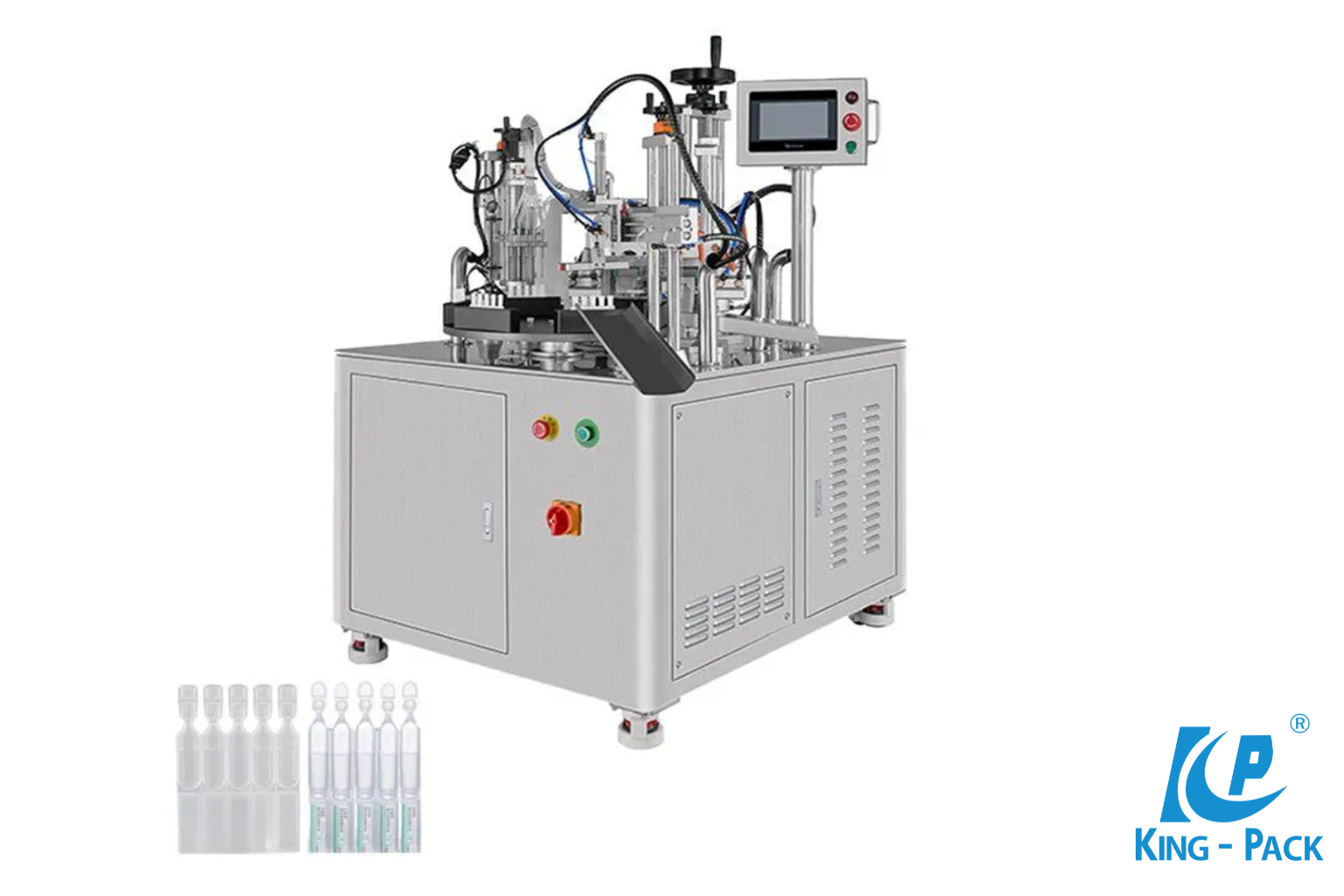
KPHX-50 secondary casting filling machine – King Pack Machinery
CIP validation relies on precise monitoring, including:
- Temperature monitoring: 80–95°C with RTD sensors
- Chemical concentration verification: Conductivity measurements
- Flow rate confirmation: Electromagnetic flowmeters
- Contact time verification: Automated timing sequences
- Rinse quality testing: Total Organic Carbon (TOC) and conductivity limits
Automated documentation systems record cleaning profiles, including time, temperature, chemical concentration, and water quality data. These reports are essential for regulatory compliance and support Installation Qualification (IQ) and Operational Qualification (OQ) protocols for FDA inspections and international audits.
Product Quality and Reliability
Precise Dose Control
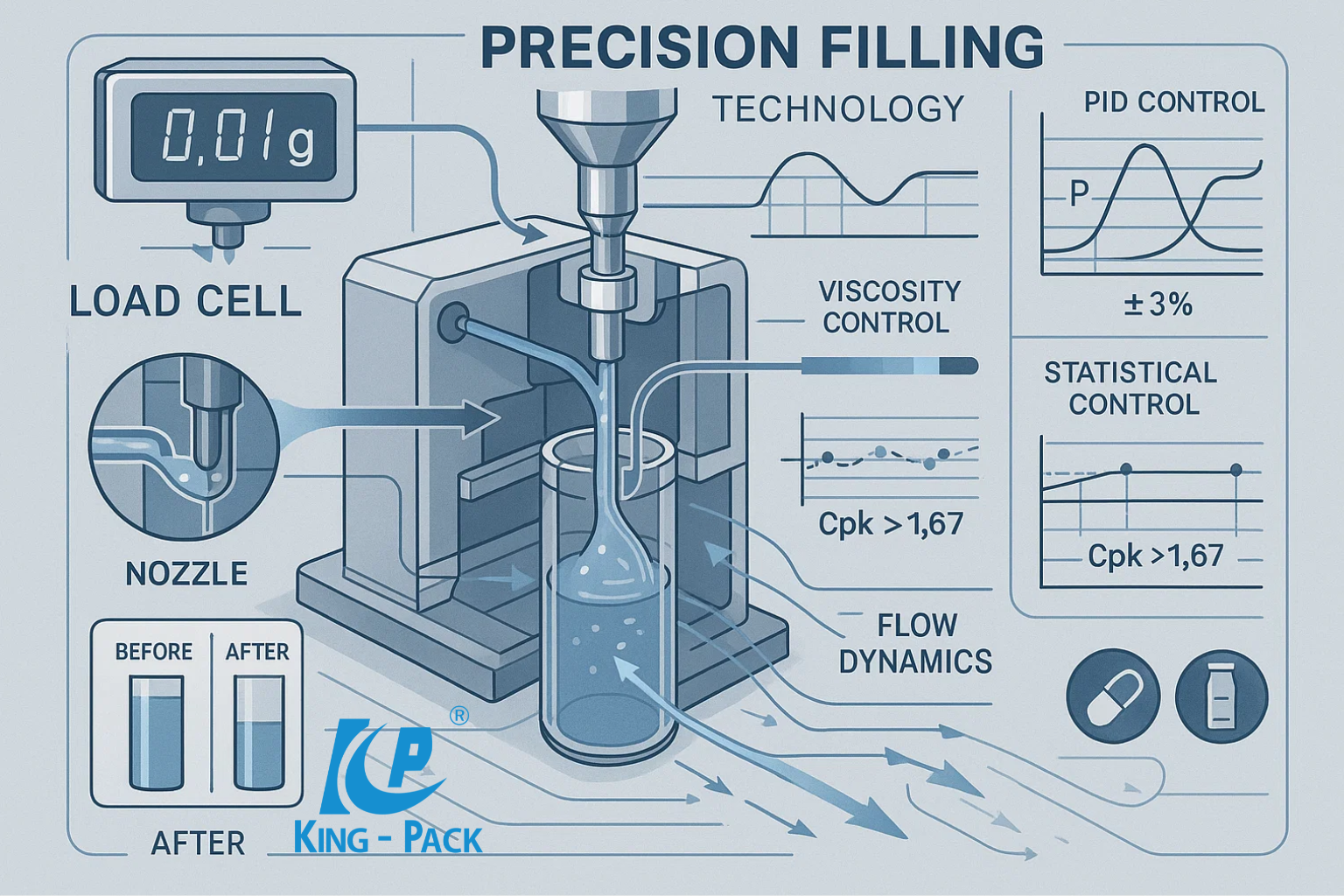
Accurate filling is essential to maintain product integrity, reduce waste, and comply with industry standards. Automated systems continuously monitor tube weight and adjust fill volumes in real time. Temperature, viscosity, and density variations are compensated automatically through advanced PID control algorithms. Key features include:
- Load Cells: 0.01g resolution; provides real-time weight monitoring and immediate process feedback.
- Control Algorithms: PID with auto-tuning; maintains stable fill volumes across different product formulations.
- Temperature Management: Heated hoppers, trace-heated insulated lines, and temperature-controlled nozzles; maintains product viscosity within ±3% of target, preventing overfill or underfill.
- Process Capability: Statistical analysis with Cpk >1.67; demonstrates compliance with pharmaceutical and cosmetic standards.
This integration ensures high accuracy, reduces rework, and supports repeatable, reliable production. Machines from KP Filling Machine incorporate these features to deliver consistent and efficient tube filling operations.
Recommended Reading: Top 10 Syringe Filling Machine Manufacturers in 2025 – King Pack Machinery
Detecting Tube Defects Before Sealing
Early defect detection prevents leaks, contamination, and downstream waste. Multi-technology inspection systems achieve defect detection rates up to 99.9% in modern production lines.
| Inspection Type | Technology & Accuracy | Application / Benefit |
| Vision Inspection | 2–5 MP cameras, LED diffused lighting, image processing | Detects surface defects, misalignment, and cosmetic imperfections |
| Dimensional Measurement | Laser micrometers ±0.1mm, ultrasonic sensors ±0.05mm, optical triangulation ±0.2mm | Monitors tube diameter, wall thickness, height, and thread profiles |
| Seal Integrity Testing | Helium leak detection 10^-9 cc/sec, pressure decay, non-destructive tests | Confirms airtight sealing; automatic rejection of defective tubes |
Data is collected in real-time and visualized using statistical process control charts, allowing immediate identification of trends or deviations before affecting production quality.
Versatility for Tube Types and Products
Handling Plastic, Aluminum, and Laminated Tubes
Quick-change tooling systems accommodate tube diameter ranges from 13mm to 60mm with servo-driven positioning providing ±0.02mm repeatability. Changeover procedures utilize color-coded components and visual guides, reducing setup time to under 15 minutes.
Material-Specific Parameters include:
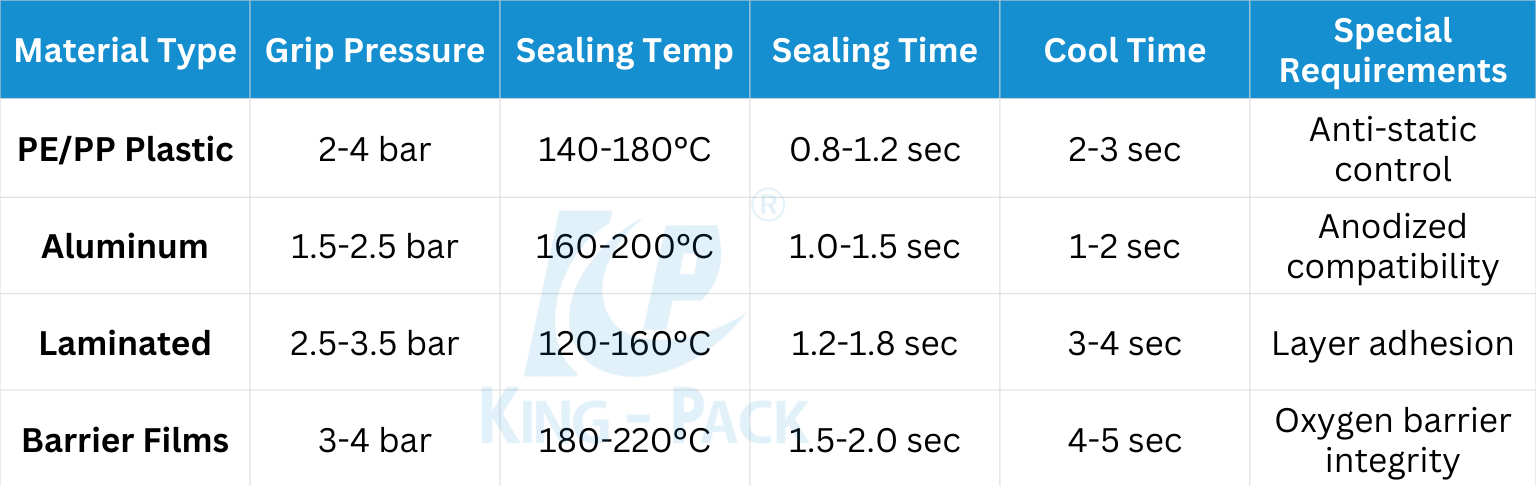
Material compatibility testing verifies chemical resistance for aggressive formulations, particularly important for products containing solvents or active pharmaceutical ingredients.
Suitability for Creams, Gels, Pastes, Ointments
Rheological characterization determines optimal filling parameters for different formulations. Viscosity measurements at various shear rates (0.1 to 1000 s^-1) provide data for pump selection and system design optimization.
Product-Specific Adaptations:
- Low-Viscosity Products (1-100 cP): Anti-drip nozzles with positive cutoff, high-speed filling capabilities
- Medium-Viscosity Products (100-10,000 cP): Standard piston fillers with temperature control
- High-Viscosity Products (10,000-100,000 cP): Large bore cylinders, heated systems, longer fill times
- Ultra-High-Viscosity Products (>100,000 cP): Progressive cavity pumps, heated hoppers, specialized nozzles
Degassing systems remove entrained air preventing oxidation and improving product appearance. Vacuum levels of 25-29 inHg eliminate air bubbles while maintaining product integrity.
Automation and Ease of Use
Integrated PLC Control and Touchscreen Operation
Modern control systems utilize Allen-Bradley CompactLogix or Siemens S7-1500 PLCs providing millisecond response times and distributed I/O architecture. Ethernet/IP communication protocols enable integration with Manufacturing Execution Systems (MES) for real-time production monitoring and data collection.
Control System Features:
- Recipe management (100+ stored configurations)
- Real-time production monitoring
- Historical data trending
- Predictive maintenance scheduling
- Alarm management with prioritization
- Automatic report generation
HMI touchscreens (12-21 inch displays) provide intuitive operator interfaces with multilingual support and role-based access control. Production dashboards display key performance indicators including throughput rates, quality metrics, and equipment efficiency data.
Quick Adjustments, Modular Design, User-Friendly Interface
Servo motor positioning systems enable precise adjustments with 0.01mm resolution and absolute encoder feedback eliminating re-homing requirements. Motor sizing calculations provide 150-200% torque margins for reliable operation across temperature and load variations.
Modular Construction Benefits:
- Selective component upgrades without line replacement
- Standardized interfaces and connections
- Reduced spare parts inventory
- Simplified maintenance procedures
- Scalable capacity expansion
Tool-free adjustments utilize quick-release mechanisms and visual indicators guiding operators through changeover procedures. Color-coded adjustment points reduce setup errors and training requirements.
Recommended Reading: Maintenance Tips for Vial Filling Machines to Ensure Longevity – King Pack Machinery
Return on Investment
Labor Cost Savings
Automation reduces direct labor from 3-4 operators per line to single operator supervision, representing $150,000-$250,000 annual savings based on average manufacturing wages plus benefits. Indirect labor reductions include decreased supervision, quality control, and material handling requirements.
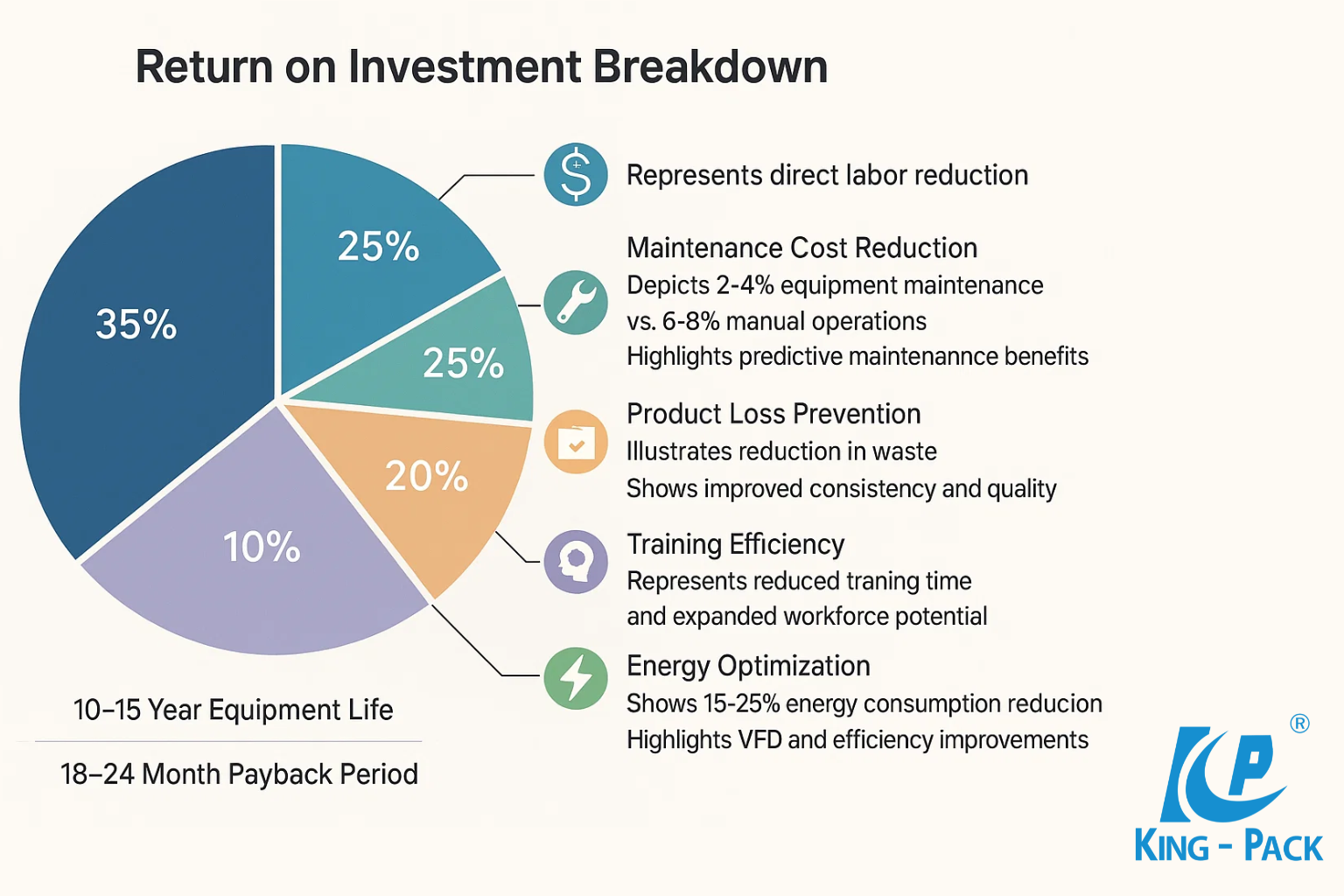 Switching from manual tube filling machines to automatic tube filling and sealing machines cuts direct labor needs from 3–4 operators to just one supervising operator. This change represents $150,000–$250,000 annual savings, factoring in wages and benefits.
Indirect labor reductions come from fewer quality control checks, reduced material handling on infeed systems, and streamlined oversight of rotary machinery, cartoning machines, and labeling machines.
Training and Skill Benefits
Automatic tube filling machines equipped with touch screen technology, Siemens S7-700 controls, and PLC-based operation minimize operator training. Workers can learn to operate tube filling & sealing systems in 3–5 days instead of 2–3 weeks.
Semi-automatic tube filling or manual tube filling machines demand higher skill levels, while automated lines with robotic tube loaders, tray packers, and oval tube transport systems expand the workforce pool. Operators gain improved consistency and job satisfaction through the use of sealing machinery and advanced touch screen control panels.
Reduced Product Loss and Long-Term Reliability
Equipment reliability studies demonstrate 95%+ uptime for properly maintained automated systems versus 75-85% for manual operations. Mean Time Between Failures exceeds 8,000 operating hours for quality equipment from established suppliers like KP Filling Machine.
Maintenance Cost Analysis:
- Automated systems: 2-4% of equipment value annually
- Manual operations: 6-8% due to higher wear rates
- Predictive maintenance reduces unexpected failures by 70%
- Energy optimization through VFDs reduces consumption 15-25%
Total Cost of Ownership calculations over 10-15 year equipment life demonstrate 18-24 month payback periods through combined savings in labor, materials, quality costs, and operational efficiency improvements.
Safety and Compliance Benefits
Modern tube filling machines prioritize safety with overload protection, fast-acting emergency stops, and independent safety PLC monitoring. Features like pressure relief valves, motor overload sensors, and ergonomic workstations reduce injuries and support OSHA compliance.
Compliance is ensured through ISO 9001, ISO 13485, FDA 21 CFR Part 820, CE marking, and other safety standards, making the equipment suitable for regulated industries.
KP Filling Machine provides full technical documentation, risk assessments, and factory acceptance certificates, simplifying regulatory submissions and audits while maintaining high operational safety.
Brief Technical Comparison Table
| Feature | Manual/Semi-Automatic | Fully Automatic |
| Throughput | ~30–60 tubes/minute | 60–120+ tubes/minute |
| Fill Accuracy | Variable | <1% error with servo/piston systems |
| Sealing Capability | Limited types | Heat, ultrasonic, crimp adaptable |
| Contamination Risk | High human contact | Low – CIP options, enclosed systems |
| Changeover Time | Slow, manual | Fast, modular |
| Regulatory Support | Basic | GMP, CE/ISO ready |
| Labor Dependence | High | Low |
Conclusion
Investing in modern tube filling and sealing machines delivers clear technical and operational advantages. These systems offer:
- High throughput (60–120+ tubes/min)
- Sub-1% fill error rates
- Flexible compatibility with tube types and viscosities
- Enhanced hygiene and regulatory compliance
- Faster changeovers and safer operation
- Strong return on investment
For businesses aiming to scale efficiently and maintain product quality, KP Filling Machine provides tailored solutions that meet these technical and commercial needs. Our machines are designed to deliver precision, safety, flexibility, and long-term reliability—making the investment both sound and sustainable.
Contact us today for a personalized consultation or a demonstration of our tube filling and sealing machines. Our team can help you choose the right system for your production volume, product type, and operational goals. With KP Filling Machine, you gain more than equipment—you gain a reliable partner in efficiency, quality, and growth.
