
Introduction
Most factories reach a point where the filling line becomes the constraint. Orders grow, but output does not keep pace. Quality complaints creep up. Regulatory auditors flag manual record-keeping gaps. The team works harder but the numbers do not improve.
In this article, we help production managers and plant directors decide whether 2026 is the right time to upgrade to a fully automated filling line for packaging line efficiency. We cover the clearest signs that a semi-automatic or manual line is holding a factory back. We will also explain how our automated filling line configurations at King Pack are designed to address these decisions practically.
Industrial Trends Driving Filling Line Automation Packaging Process in 2026
Market Competition and Production Speed Demands
According to Codewave’s analysis of manufacturing automation trends, the global market for industrial automation is projected to reach $307.7 billion by 2030, growing at more than 9 percent annually, a clear signal that automation is now central to enterprise operations, not a side initiative.
Contract manufacturers are scaling faster than ever. Buyers expect shorter lead times and consistent product quality across every batch. A factory automation upgrade for filling systems is increasingly the minimum requirement to compete for larger accounts, not an optional investment in efficiency.
Labor Shortages and Rising Labor Costs
According to DEVELOP LLC’s automation ROI analysis, the manufacturing industry is facing a looming labor shortage, with projections indicating a potential deficit of 8 million workers by 2030.Filling lines are among the most labor-intensive parts of a production facility, and trained operators for pharmaceutical and veterinary filling are increasingly difficult to recruit and retain.
According to SellersCommerce’s warehouse automation statistics report, real wages escalated 15 to 20 percent during 2024, eroding profit cushions for manual operations.For a factory running three shifts on a semi-automatic line, that wage inflation directly compresses margin on every unit produced.
Quality Consistency and Compliance Pressure to Improve Packaging Line Efficiency
Regulatory requirements for veterinary and pharmaceutical filling line upgrades have tightened consistently across all major export markets. Manual filling introduces operator-to-operator variability in fill volume, cap torque, and label placement that automated systems eliminate by design.
A fully automated liquid filling line with servo-driven dosing holds ±1% fill accuracy across every cycle. A trained manual operator, under normal production conditions, cannot match that consistency across a full shift. The gap between manual and automated accuracy widens further as shift length increases and operator fatigue sets in.
Recommended Reading: Automatic Case Packaging Machine — Intelligent Transformation of End-of-Line Packaging – King Pack Machinery
Signs Your Factory Needs a Fully Automated Filling Line to Improve Packaging Efficiency
Frequent Production Bottlenecks at Filling, Capping, or Sealing
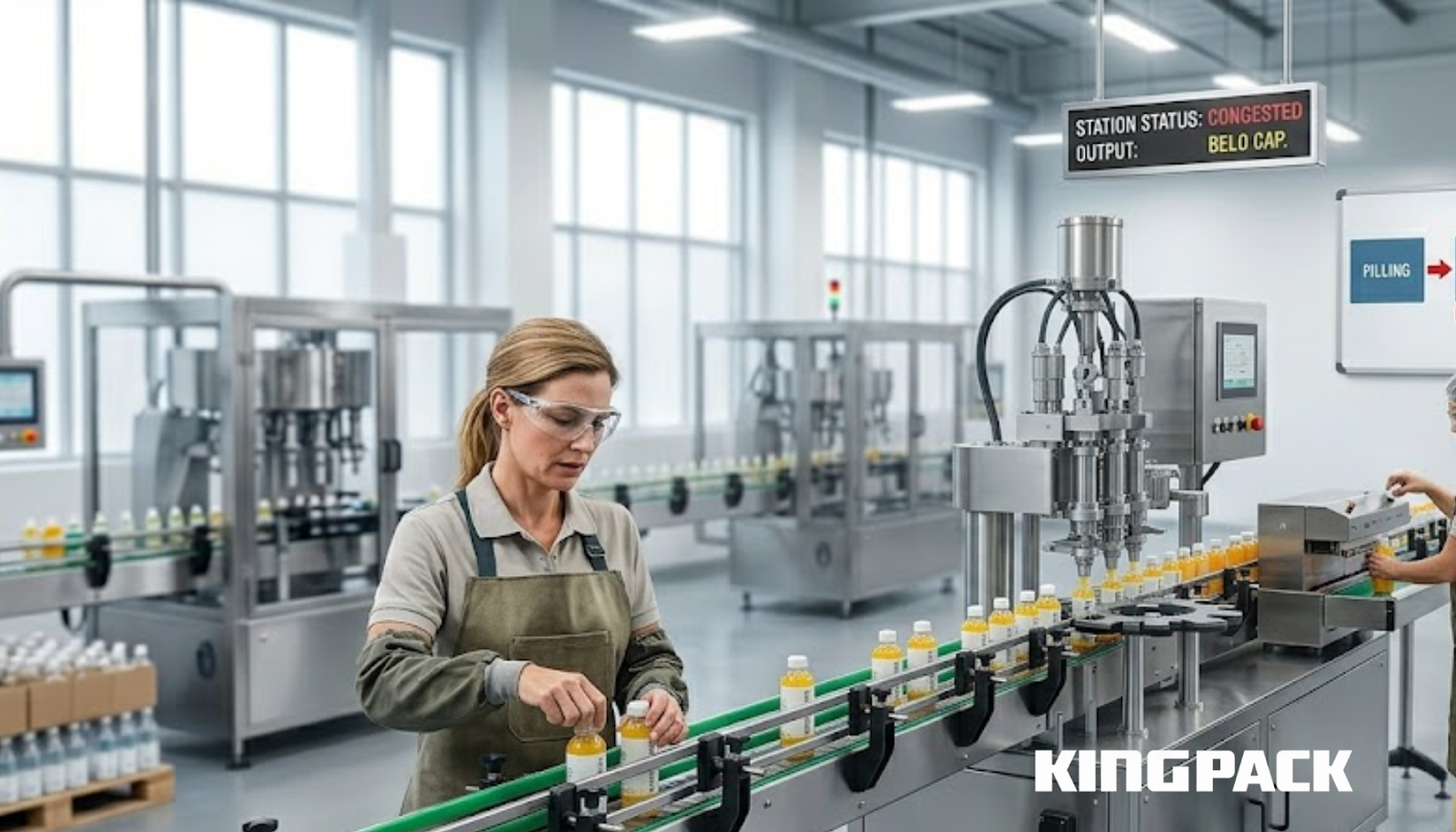
If downstream packaging processes are regularly waiting on the filling station, the filling line is the bottleneck. This typically appears as finished goods inventory gaps during peak order periods, extended lead times on standard products, and operators manually accumulating filled units between stations to smooth the flow.
A fully automated liquid filling line eliminates these inter-station gaps by synchronizing filling, capping, sealing, and labeling into a continuous process. Output rate is set by the machine, not by the pace of the slowest operator on the line.
Inconsistent Filling Accuracy and Package Quality
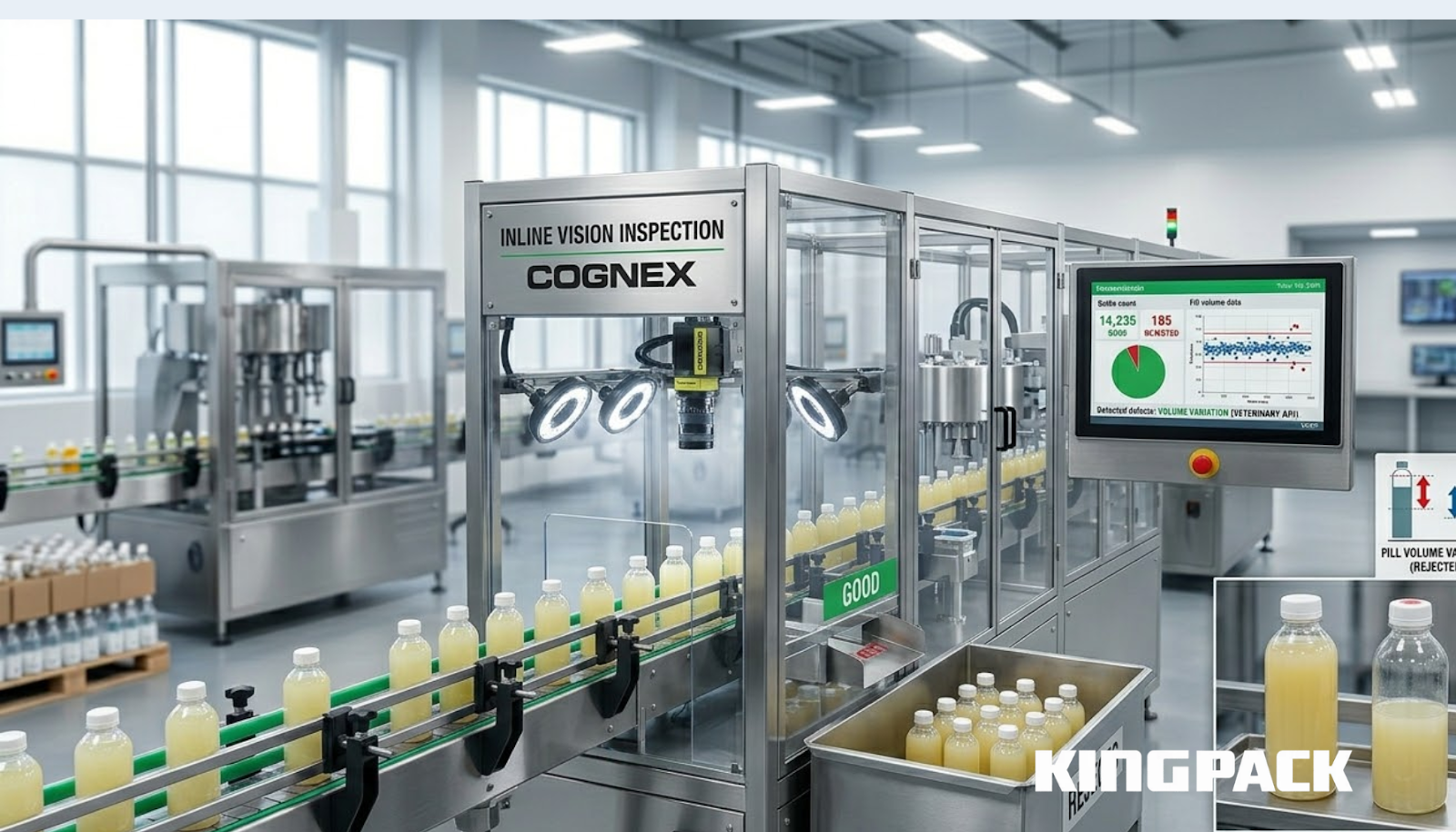
Rising reject rates are a direct signal that the current filling line is producing outside acceptable tolerances. In veterinary and pharmaceutical filling, even a 2% to 3% reject rate represents significant API waste per batch. When rejection is driven by fill volume variation rather than equipment failure, the cause is typically the filling mechanism itself.
According to Cognex’s factory automation ROI analysis, implementing vision-based automated inspection frees skilled employees from tedious, repetitive tasks that lead to fatigue and disengagement, while delivering higher quality output with fewer defects.Inline vision inspection integrated into a fully automated filling line catches defects at the point of production rather than at end-of-line quality control, reducing rework cost and the volume of non-conforming product reaching secondary packaging.
Rising Maintenance and Manual Error Costs
Manual intervention in the fill zone generates errors that compound downstream. A mis-seated cap detected three stations later means pulling and reworking multiple units. A fill volume deviation identified during in-process sampling means pulling and testing an entire batch segment.
According to VDL Steelweld’s automation ROI analysis, automated factories operate continuously, increasing throughput and meeting higher demand without requiring additional labor shifts, while robotic assembly lines ensure consistent output with minimal human intervention.
Regulatory Compliance Gaps
Manual batch records are a persistent GMP compliance risk. Transcription errors, missing entries, and illegible handwriting all generate observations during regulatory audits. For factories supplying export markets in the EU, US, or regulated Asian markets, a pattern of manual record-keeping deficiencies can delay batch release, generate import holds, or trigger warning letters.
A fully automated filling line with PLC-based electronic batch recording eliminates these risks. Every production parameter is recorded automatically, timestamped, and linked to the batch record without operator transcription.
Recommended Reading: Trends in Veterinary Drop Packaging Equipment: From Manual to Fully Automated Sterile Filling – King Pack Machinery
Comparing Semi-Automatic vs Fully Automated Filling Lines
Labor and Efficiency Differences
| Parameter | Semi-Automatic Line | Fully Automated Line |
| Operators required per shift | 3 to 6 | 1 to 2 |
| Typical throughput (units per hour) | 500 to 2,000 | 3,000 to 12,000 |
| Shift coverage flexibility | Limited by operator availability | 24-hour continuous operation capable |
| Labor cost per 1,000 units | High and variable | Low and fixed |
Accuracy and Quality Control
Semi-automatic filling relies on the operator to initiate each fill cycle, position each container, and verify each cap. Human variability in these actions produces fill-to-fill variation that automated systems eliminate. A servo-driven fully automated liquid filling line with closed-loop calibration holds ±1% fill accuracy independently of operator fatigue, shift length, or experience level.
Integrated vision systems on automated lines perform 100% inspection of every container at production speed. Semi-automatic lines typically rely on statistical sampling, which means a proportion of non-conforming units will always pass through to secondary packaging.
Scalability and Format Changeover
A key concern manufacturers raise about upgrading to factory automation for filling systems is the time and complexity of product changeover between SKUs. Modern automated filling lines address this through digital recipe management. Format parameters are stored as named recipes and recalled through the HMI. Physical changeover of wetted parts uses tool-free tri-clamp connections that reduce the time between the last unit of one product and the first unit of the next.
According to SDC Automation’s ROI calculator analysis, at a rate of $75,000 ROI per year from labor savings alone, a manufacturer can expect to recover their automation investment within two years of purchase, before accounting for savings from reduced recalls, improved product quality, and increased output consistency.
Key Technologies Behind Fully Automated Filling Lines
Servo-Driven Filling Systems
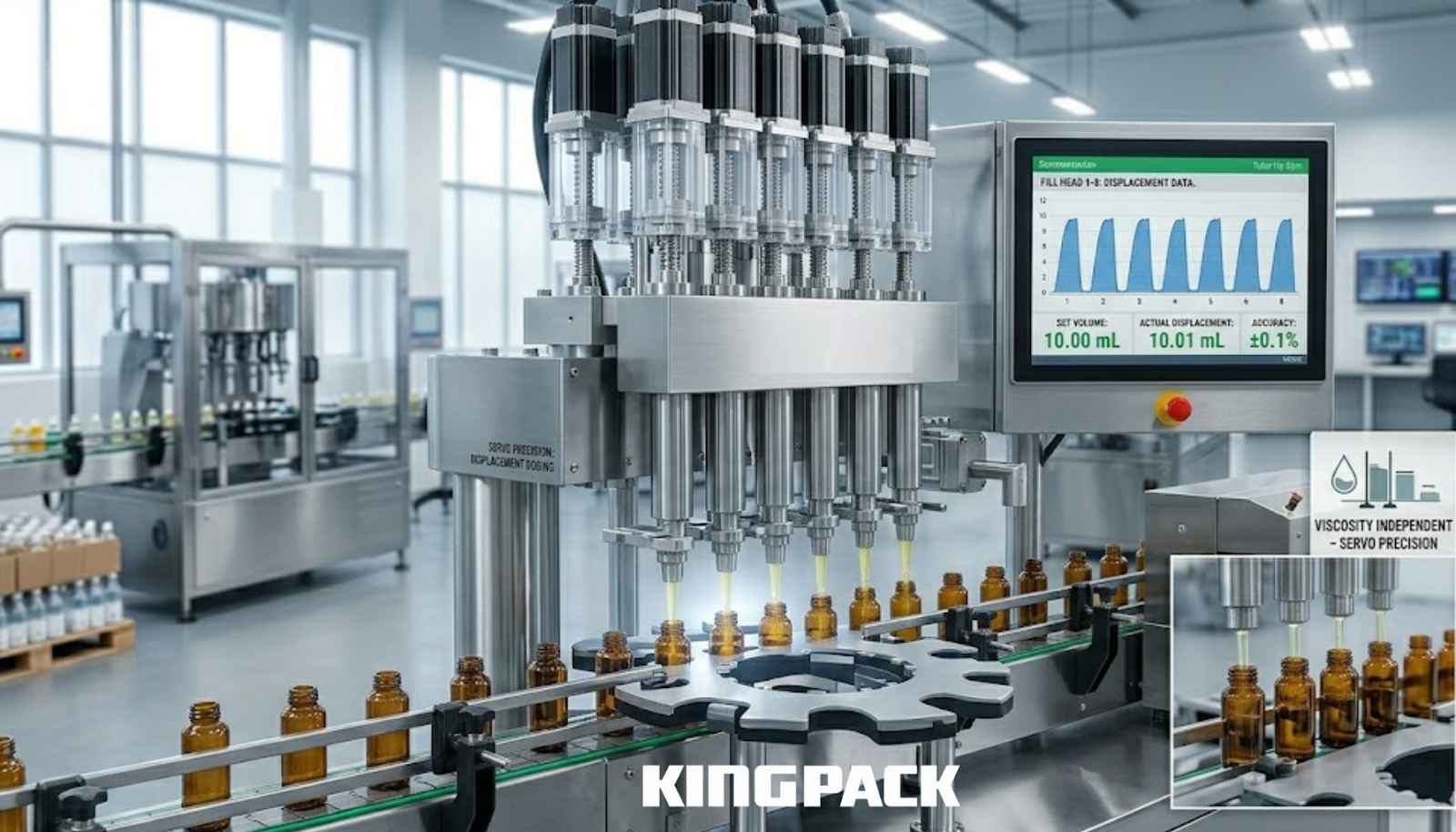
The servo-driven filling mechanism is the core of modern automated equipment. Unlike time-pressure or peristaltic systems, it uses positive displacement to deliver a fixed volume per cycle. This keeps fill accuracy stable at ±1% across the full shift. It also helps maintain consistent output despite changes in viscosity, temperature, or speed.
For pharmaceutical and veterinary upgrades, this level of control is essential. It supports regulatory compliance, reduces loss, and improves profitability across the product line. Our systems use this approach as standard, covering small-dose formats and larger liquid volumes while helping business operators assess performance and meet production goals.
Robotic Pick, Place, and Case Packing
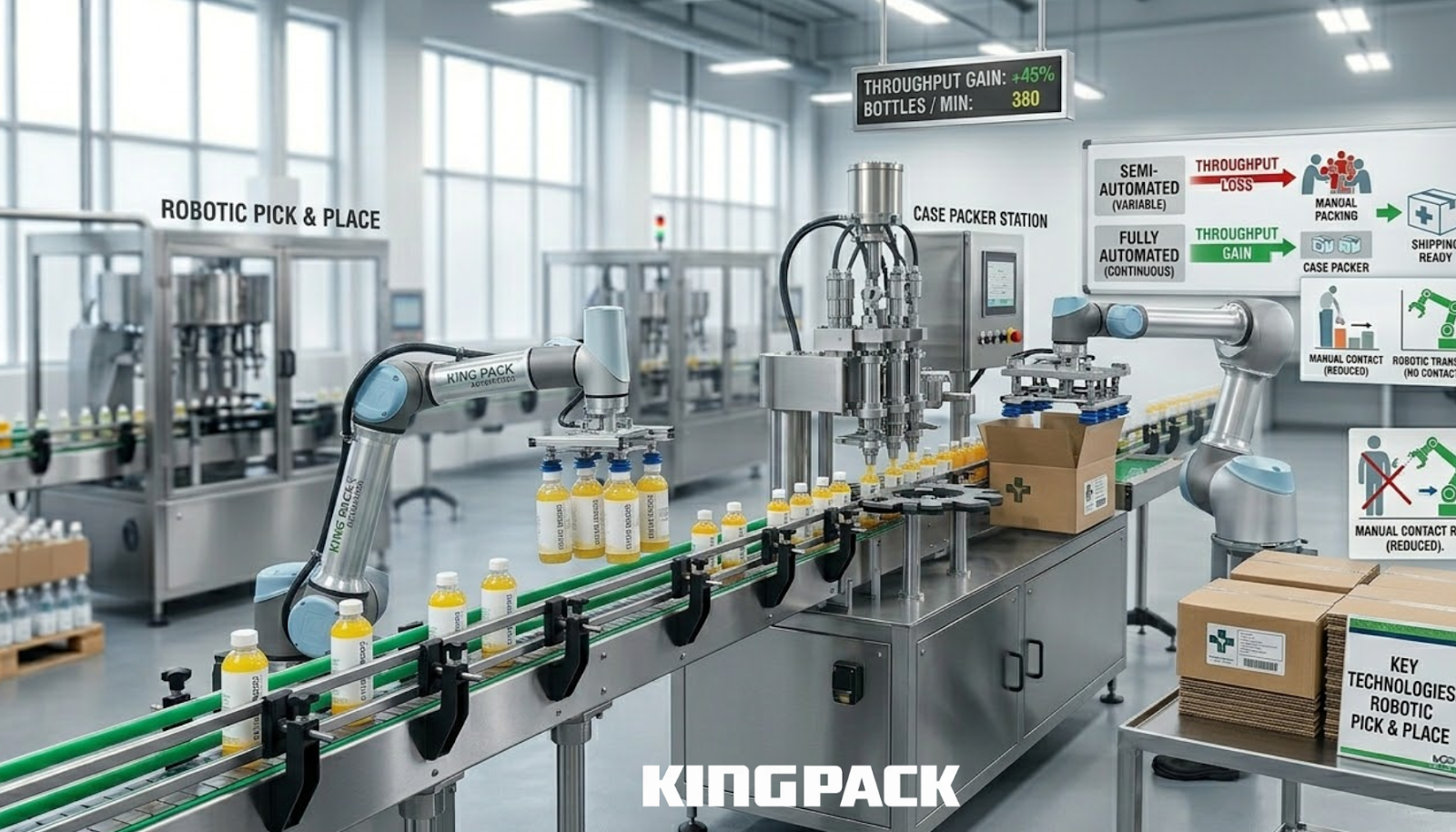
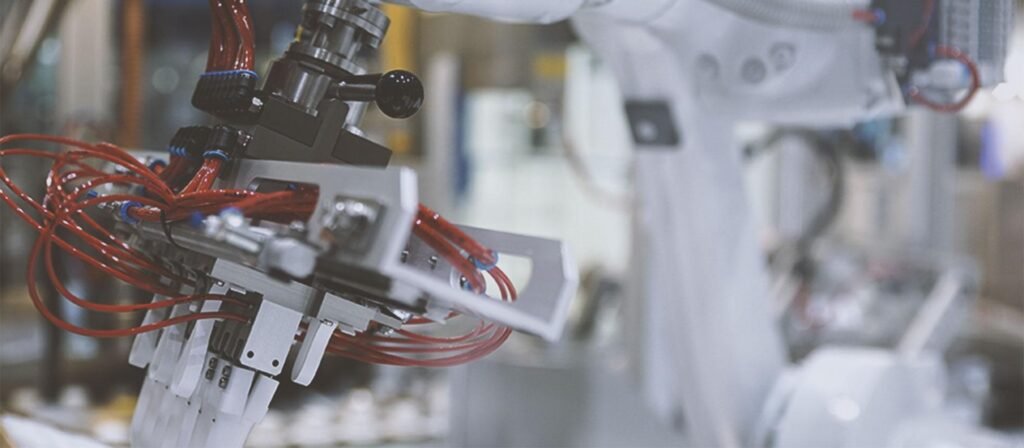
Manual transfer between stations slows output and increases risk. Robotic systems remove this step by handling containers with speed and precision. This reduces manual labor, limits contamination, and eliminates unnecessary movement across the entire line.
At the end of the line, automated case packing organizes finished units using optimized packaging materials such as air pillows and void fills for safe transport. These systems help boost throughput, improve protection, and support cost effective operations. The result is higher equipment effectiveness and better alignment with planned production time.
Automated Capping, Sealing, Labeling, and Inspection
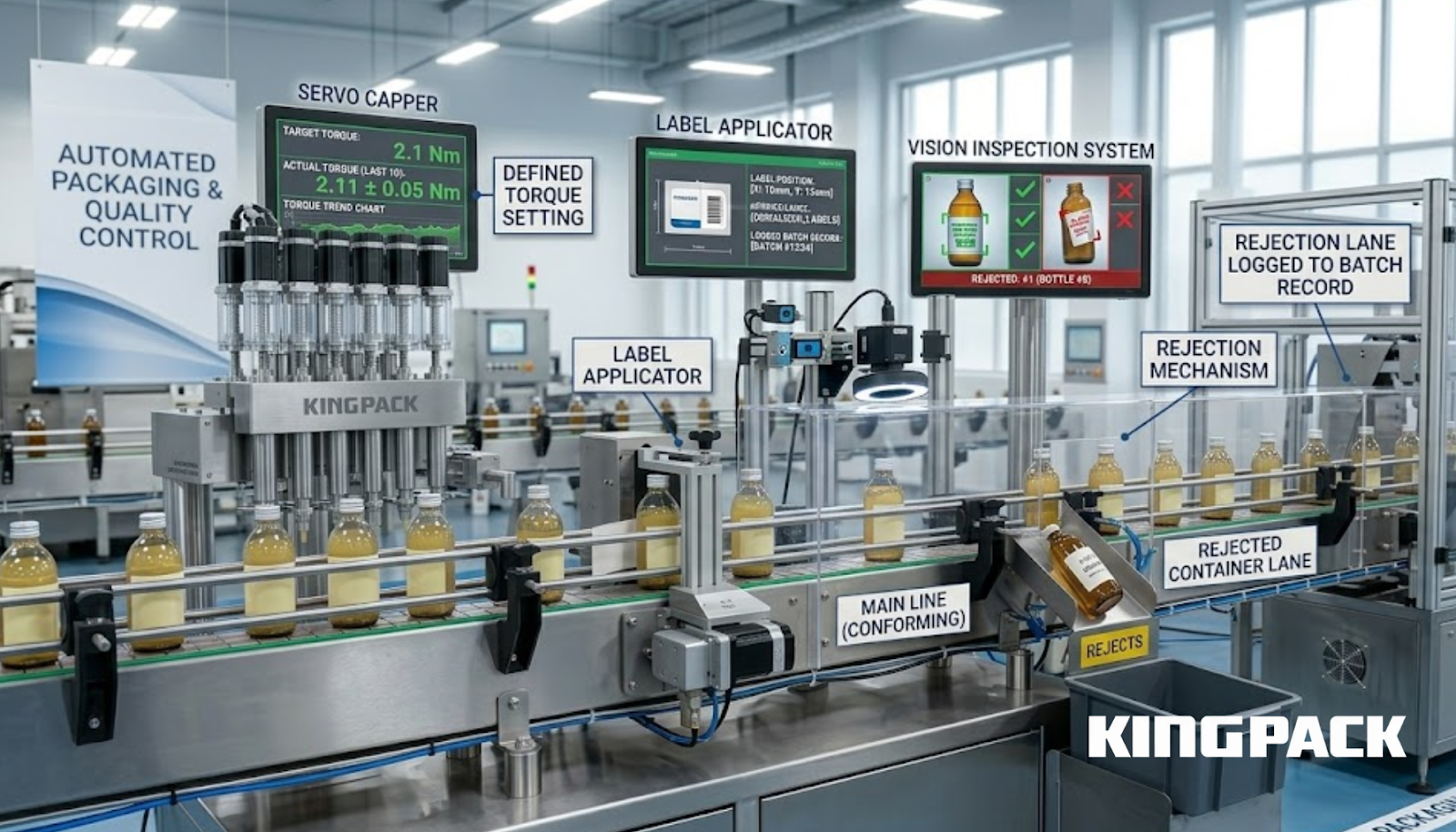
Inline automation replaces manual processes that create variation. Servo-controlled capping systems apply consistent settings, while labeling units handle positioning with precision. Vision systems verify each unit in real time.
Defective containers are removed automatically, which helps maintain quality without stopping the line. This improves overall equipment effectiveness and supports continuous improvement by allowing teams to identify inefficiencies quickly. It also reduces dependency on completely manual checks and improves customer satisfaction.
MES and Digital Production Monitoring
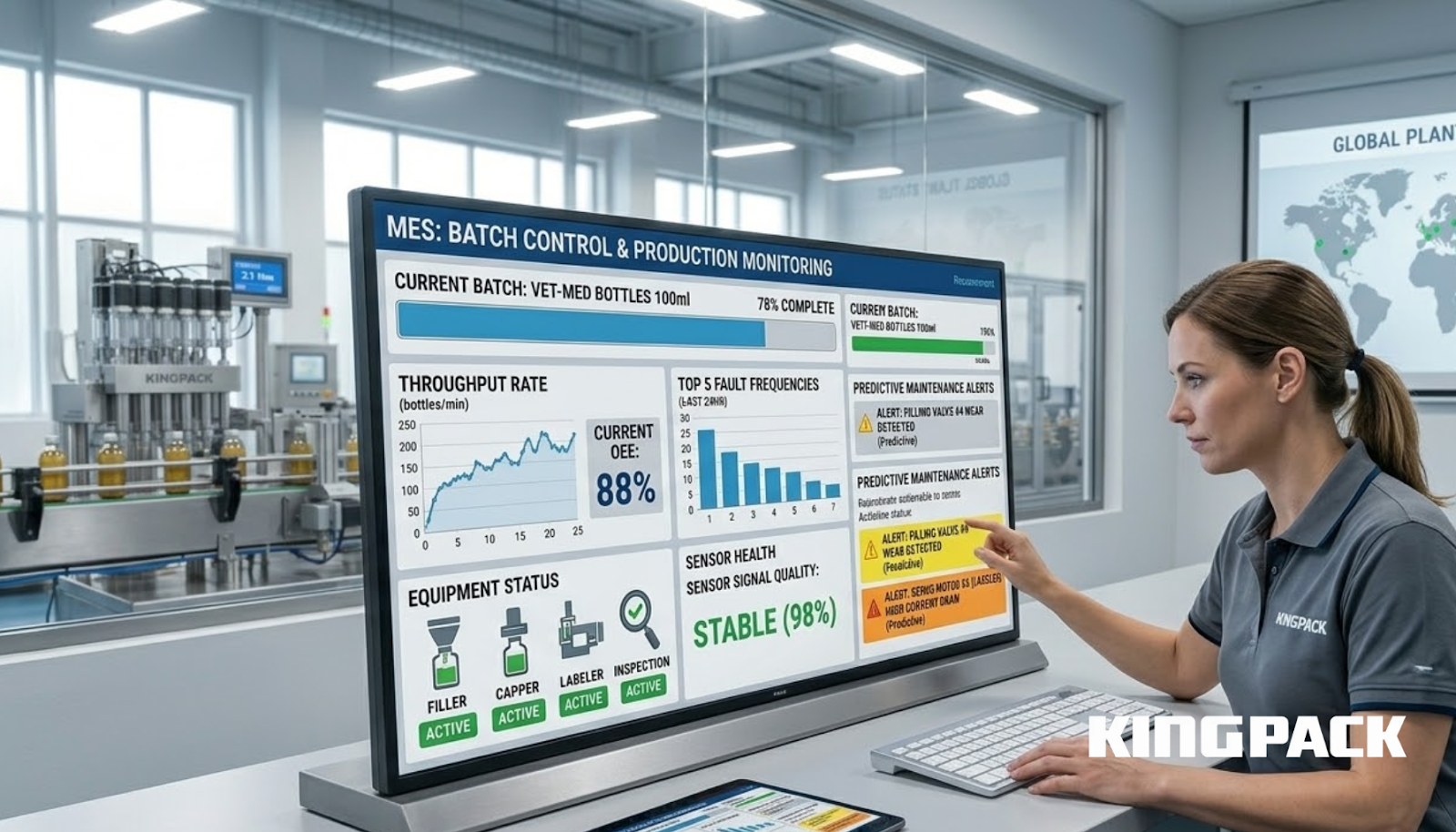
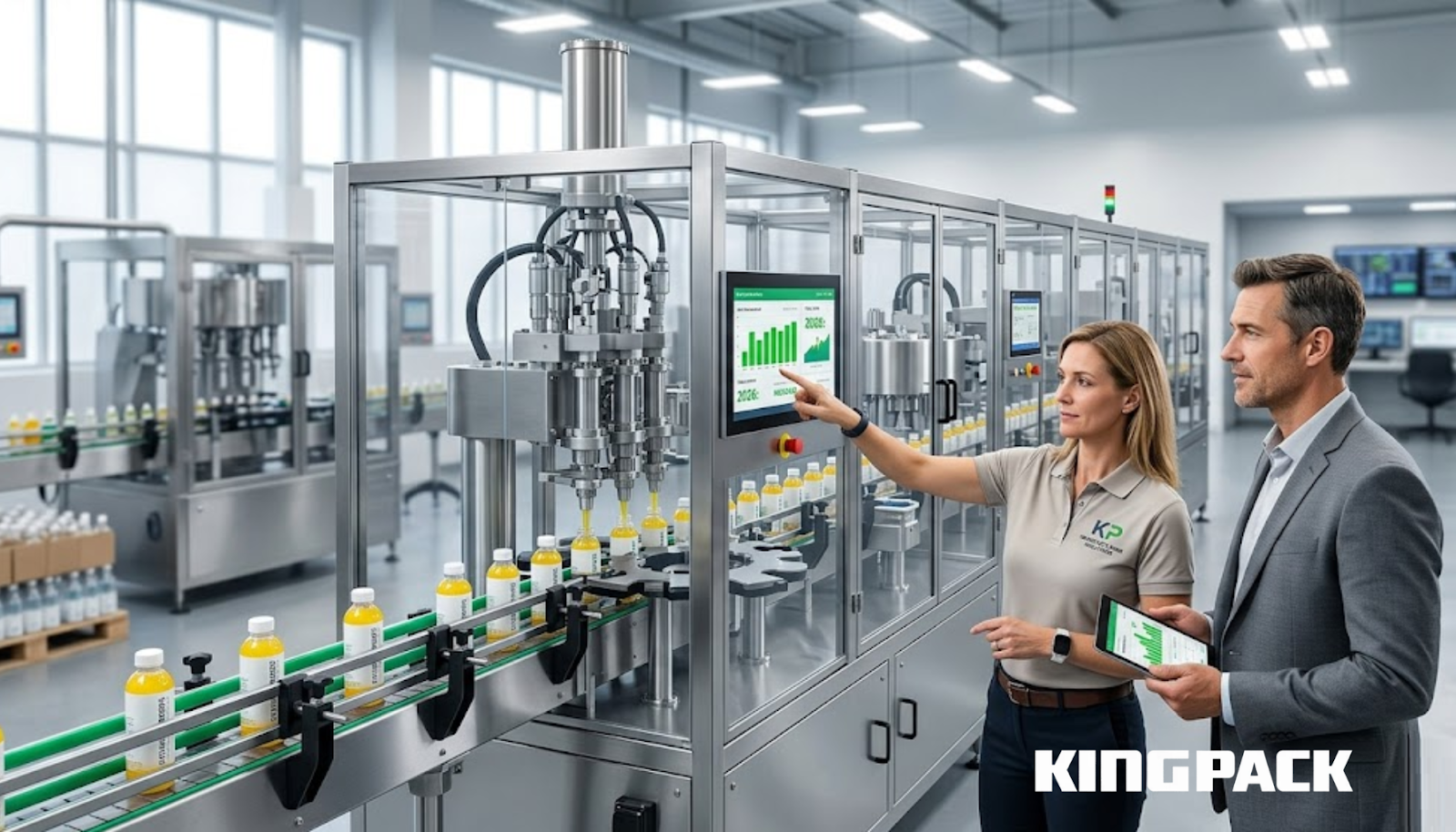
A Manufacturing Execution System (MES) connects all packaging equipment and tracks performance across the entire line. It provides real-time data on output, faults, and system status. Managers can monitor progress without being on the floor.
Predictive tools support preventive maintenance and help reduce downtime. Early warnings highlight issues before failure, allowing teams to act in advance. This improves equipment effectiveness, supports continuous improvement, and helps the business stay focused on output, quality, and long-term profitability.
Recommended Reading: How Small Pet Pharma Factories Can Cut Costs: ROI Analysis of Drop Filling Machine Investment – King Pack Machinery
Calculating ROI: When Automation Makes Financial Sense
Labor Cost Savings vs Equipment Investment
The most straightforward ROI calculation for a fully automated filling line starts with the labor cost differential. A semi-automatic line requiring five operators per shift, running two shifts per day, carries a direct labor cost that compounds annually.
| Cost Item | Semi-Automatic Line | Fully Automated Line | Annual Saving |
| Operators per shift | 5 | 1.5 | 3.5 FTE per shift |
| Shifts per day | 2 | 2 | |
| Operator cost per year (at $35,000) | $350,000 | $105,000 | $245,000 |
| Rejection rate cost (at 3% vs 0.5%) | High | Low | Variable |
| Compliance documentation cost | High | Minimal | Variable |
At $245,000 in annual labor saving alone, a filling line automation investment of $400,000 to $600,000 returns to zero within 24 to 30 months, before any contribution from reduced rejection rates, lower material waste, or avoided compliance costs.
Reduced Material Wastage
Precision filling reduces waste and improves productivity when upgrading to automated machinery. A semi-automatic line running at ±3% accuracy loses more API than new equipment holding ±1%. This gap directly impacts cost and output.
The same calculation used for dead volume applies here. At scale, the difference between ±3% and ±1% becomes a clear financial gain. It also helps reduce product damage caused by overfill or inconsistent dosing. This allows manufacturers to measure performance more accurately and save time on rework and corrections. Over time, the right machinery becomes a smart way to invest in stable operations and long-term growth.
Compliance Cost Avoidance
Regulatory audit preparation, documentation remediation, and batch release delays all carry costs that are difficult to quantify in advance but very visible after the fact. A fully automated liquid filling line with electronic batch records, automated CIP cycle logging, and integrated in-process check records eliminates most of the manual documentation that generates audit observations.
Fewer audit findings mean fewer CAPA actions, faster batch release, and lower regulatory affairs resource costs. For manufacturers in export markets where a single import hold can cost more than the filling line investment itself, compliance cost avoidance is a compelling part of the automation ROI calculation.
Increased Throughput and Order Capacity
A fully automated filling line running at 6,000 units per hour produces twice the output of a semi-automatic line running at 3,000 units per hour, with fewer operators and lower rejection rates. That additional capacity directly supports larger order volumes, new customer acquisition, and contract manufacturing opportunities that were previously out of reach.
Planning Your Upgrade: Step-by-Step Strategy for 2026
Production Assessment and Bottleneck Mapping
Before specifying any equipment, map the current production flow in detail. Identify exactly where units accumulate between stations, where rework events occur most frequently, and where operator interventions are highest. This bottleneck mapping tells you which part of the line to automate first for the highest immediate return.
Budgeting and Investment Planning
The capital expenditure for a fully automated liquid filling line varies significantly by production speed, fill volume range, and the degree of integration required. A realistic budget planning process separates the filling and capping core from the inspection, labeling, and case packing additions, allowing a phased investment approach if full capital is not available in year one.
Leasing or equipment financing options reduce the upfront capital requirement and allow the ROI from labor savings and waste reduction to fund subsequent phases of the automation upgrade.
Line Layout and Integration Strategy
A fully automated line requires more floor space than a semi-automatic equivalent. Before committing to equipment specification, confirm that the proposed line layout fits the available floor plan with adequate access for maintenance, cleaning, and material supply. Digital floor plan simulation, which we provide as part of our project planning service at King Pack, identifies space conflicts before installation begins.
Compatibility with existing upstream and downstream equipment must also be confirmed. A new automated filling core that cannot interface with the existing labeler or cartoner creates integration problems that delay commissioning and add cost.
Pilot Line Testing and Validation
Factory Acceptance Testing (FAT) at the manufacturer’s facility is the critical step between equipment delivery and production startup. During FAT, the line runs at production speed with representative product or a product analog, and fill accuracy, capping performance, inspection rejection rates, and throughput are all verified against the agreed specification.
Site Acceptance Testing (SAT) follows installation at the customer’s facility, confirming that the line performs to specification in the actual production environment, with actual product, under real operating conditions.
Recommended Reading: Pharmaceutical Emulsion Mixer Machine: Vacuum Emulsifying Mixer Machine – King Pack Machinery
Key Mistakes to Avoid When Upgrading
Manufacturers who approach a filling line automation upgrade without adequate planning consistently encounter the same preventable problems:
- Ignoring operator training costs in the project budget, then discovering that the new automated line requires a different skill set than the semi-automatic line it replaces
- Underestimating ongoing maintenance support requirements, particularly for servo systems and vision inspection components that require trained technicians to service
- Poor changeover planning that results in format changes taking longer on the new automated line than they did on the old semi-automatic one, because tool-free quick-change fittings were not specified
- Failing to future-proof the line for new product formats, then finding that the equipment cannot accommodate a new container size or cap type without expensive modification
- Overlooking data integration between the filling line control system and the factory ERP or MES, creating a digital record that cannot be automatically linked to inventory, order management, or quality systems
Why King Pack Filling Lines Are Ideal for 2026 Upgrades
At King Pack, our automated filling line configurations are designed specifically for manufacturers making the transition from semi-automatic to fully automated production in 2026 and beyond. Our lines combine modular architecture, servo-driven precision dosing, integrated inspection, and GMP-compliant engineering in a single supplier solution.
Our modular design allows manufacturers to start with the filling and capping core and add inspection, labeling, and case packing in subsequent phases as production volume and budget allow. Each module is designed to connect to the next without custom integration work, reducing commissioning time and validation effort.
For veterinary and pharmaceutical filling line upgrades specifically, our systems deliver ±1% fill accuracy, electronic batch recording, CIP integration, and full validation documentation support as standard. We have worked with manufacturers across pharmaceutical, veterinary, cosmetic, and specialty chemical production to design and deliver automated filling lines that meet both production efficiency targets and regulatory compliance requirements.
Contact King Pack to evaluate your current production line and receive a tailored automation upgrade plan for 2026.