

Introduction
Pet medicine is not a niche market anymore. Growing pet ownership worldwide, combined with owners treating companion animals more like family members, has driven sustained investment in veterinary pharmaceuticals across topical treatments, gels, and medicated pastes. Most of these products are packaged in small tubes, and filling them accurately is harder than it looks.
Small-dose tube filling and sealing machine operations bring technical demands that standard equipment cannot reliably meet.
Fill volumes as low as 0.5 grams, high-value active ingredients where overdosing or underdosing has real clinical consequences, and GMP compliance requirements borrowed directly from human pharmaceutical manufacturing all compound together. This article covers those challenges and the precision filling solutions that address them.
Why Small-Dose Precision Matters in Pet Medicine Packaging
Growing Demand for Pet Health Products
According to Grand View Research, the global veterinary medicine market was valued at $47.70 billion in 2024 and is projected to reach $113.48 billion by 2033 at a CAGR of 10.36%, driven by rising pet ownership, increasing prevalence of animal diseases, and growing willingness among pet owners to invest in premium treatment options.
The American Pet Products Association reported that U.S. household spending on pets rose from $90.5 billion in 2018 to approximately $150.6 billion in 2024, a 66% increase driven heavily by veterinary medicines and treatments. That spending is increasingly going toward specialized topical formulations: medicated gels, eye ointments, ear pastes, wound treatment creams, and skin condition treatments, all of which are filled and sealed in small tubes.
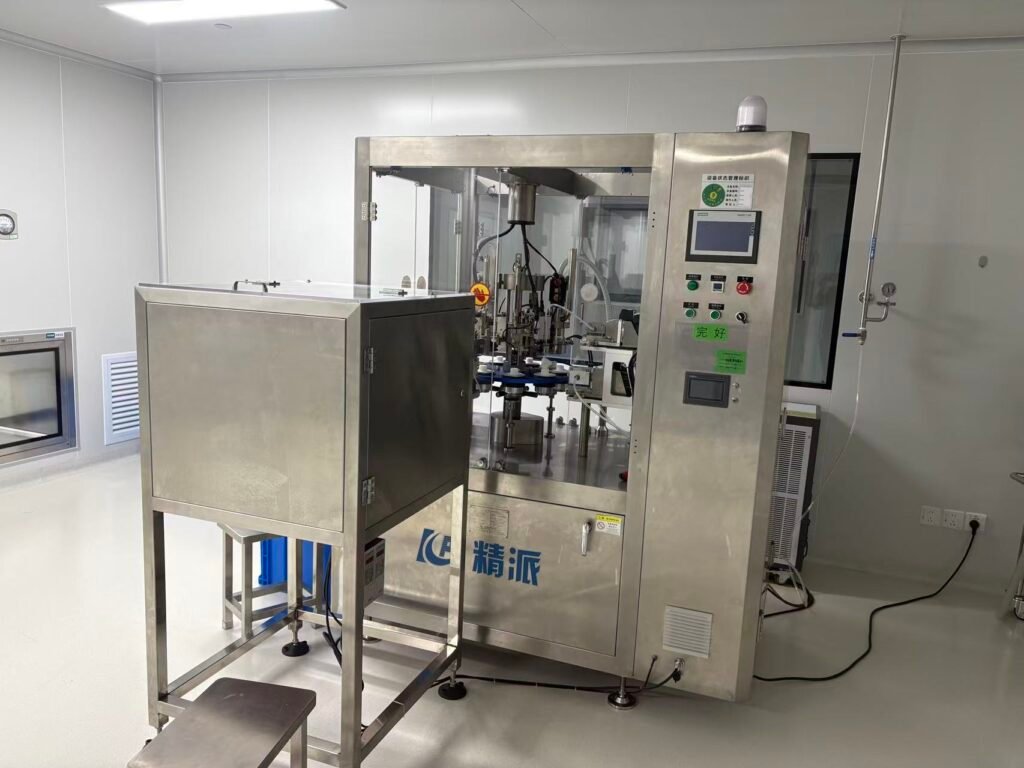
Unique Requirements of Veterinary Formulations & Paste Products
Veterinary topical products share two characteristics that make filling them technically demanding.
First, the active ingredients are expensive. Corticosteroids, antibiotics, antifungals, and analgesics used in veterinary ointments cost significantly more per gram than the carrier base. Fill weight variation of even 3 to 5% across a batch represents measurable product cost lost per tube, and for prescription products, it creates dosing accuracy problems with real clinical implications.
Second, dose sizing in veterinary medicine is species-dependent and weight-dependent. The correct dose for a 5 kg cat and a 30 kg dog are different numbers. Small-tube formats are designed specifically to deliver one correctly metered application. If the tube is filled inaccurately, the dosing intent of the entire product is compromised.
The Critical Role of Tube Filling and Sealing Machines
The tube filling and sealing machine is where fill volume accuracy is either achieved or lost. A machine that cannot hold fill weight within ±0.5% on a 2-gram fill is not suitable for veterinary pharmaceutical production. A machine that cannot seal a 13 mm diameter tube cleanly without leakage creates a shelf-life and regulatory problem from the moment the tube leaves the production line.
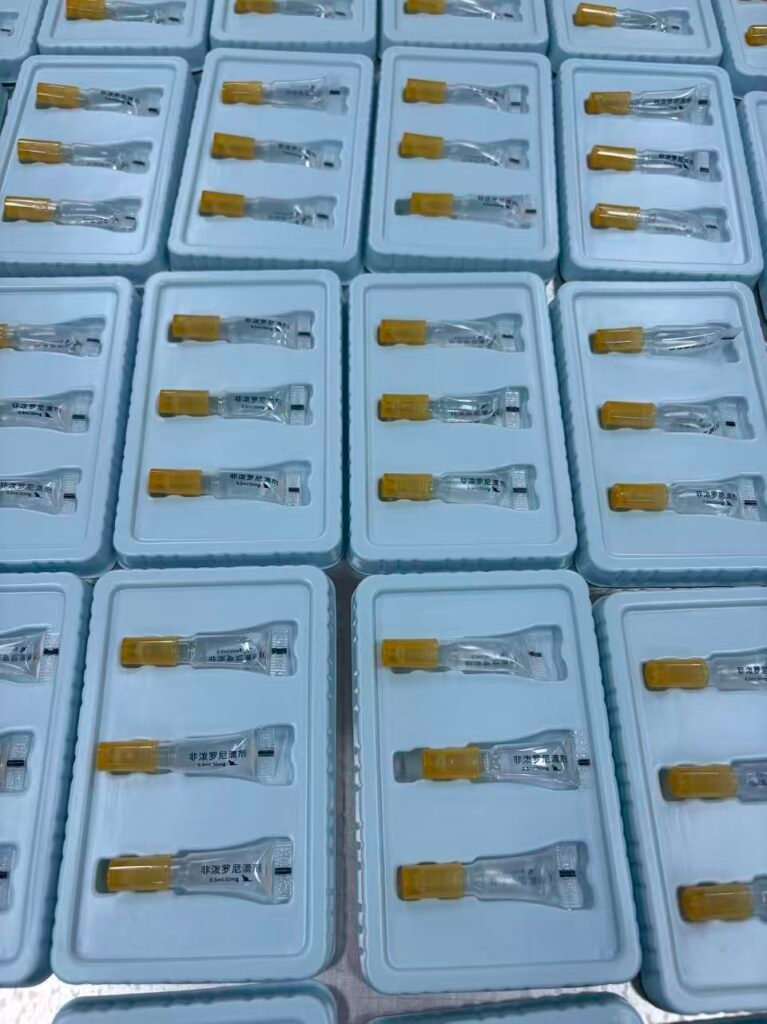
Getting precision right at the machine level is not optional in this market. In January 2024, the FDA’s Center for Veterinary Medicine issued draft guidance GFI #286 (VICH GL60) on Good Manufacturing Practice for Active Pharmaceutical Ingredients used in veterinary medicinal products, harmonizing veterinary GMP requirements across the US, EU, and Japan. That guidance explicitly covers production and in-process controls, packaging labeling, and documentation, placing manufacturing equipment quality directly in regulatory scope.
Understanding Small-Dose Automatic Tube Filling for Pet Medicine
Typical Dose Ranges and Product Types
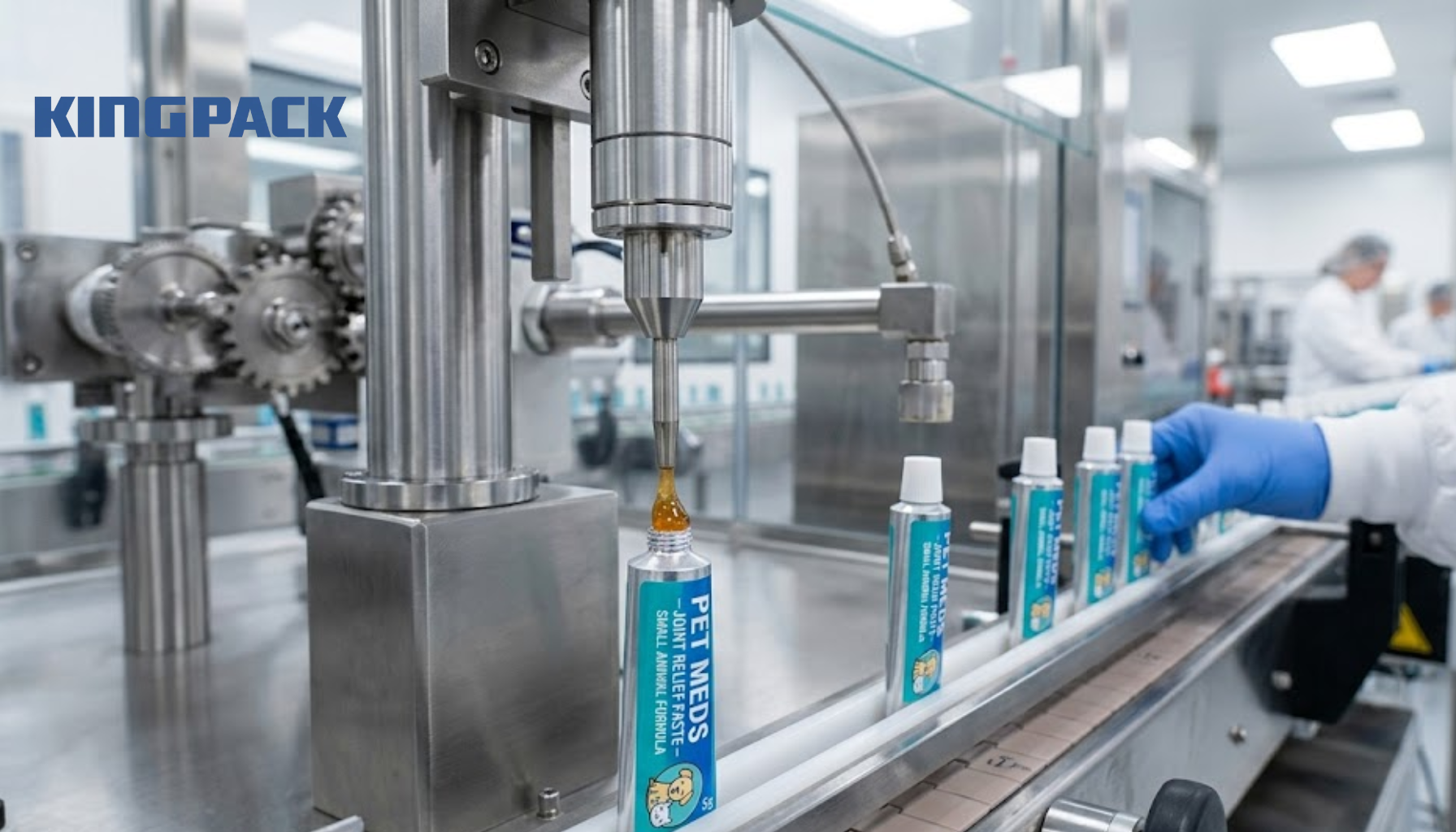
Small-dose pet medicine tube filling covers a specific product range:
- Eye ointments and ophthalmic gels: typically 1 to 5 grams per tube, sometimes as low as 0.5 grams
- Ear pastes and medicated ear gels: 5 to 15 grams per tube
- Wound treatment and skin condition creams: 5 to 30 grams per tube
- Topical anti-inflammatory gels: 5 to 20 grams, often in narrow-diameter tubes for precision application
- Veterinary dental gels: 1 to 10 grams per tube
These products are mostly filled into tubes with diameters between 10 mm and 20 mm. At those diameters and volumes, filling system tolerance requirements are tighter than in standard cosmetic or large-format pharmaceutical filling.
Key Formulation Characteristics
Most veterinary topical formulations are high-viscosity pastes or gels, typically in the range of 50,000 to 1,000,000 cps. Many contain shear-sensitive active compounds that can lose potency or change physical properties if exposed to excessive mechanical force during pumping or filling. Some contain suspended particles, such as mineral carriers or botanical actives, that can settle in hoppers or accumulate in nozzles during extended production runs.
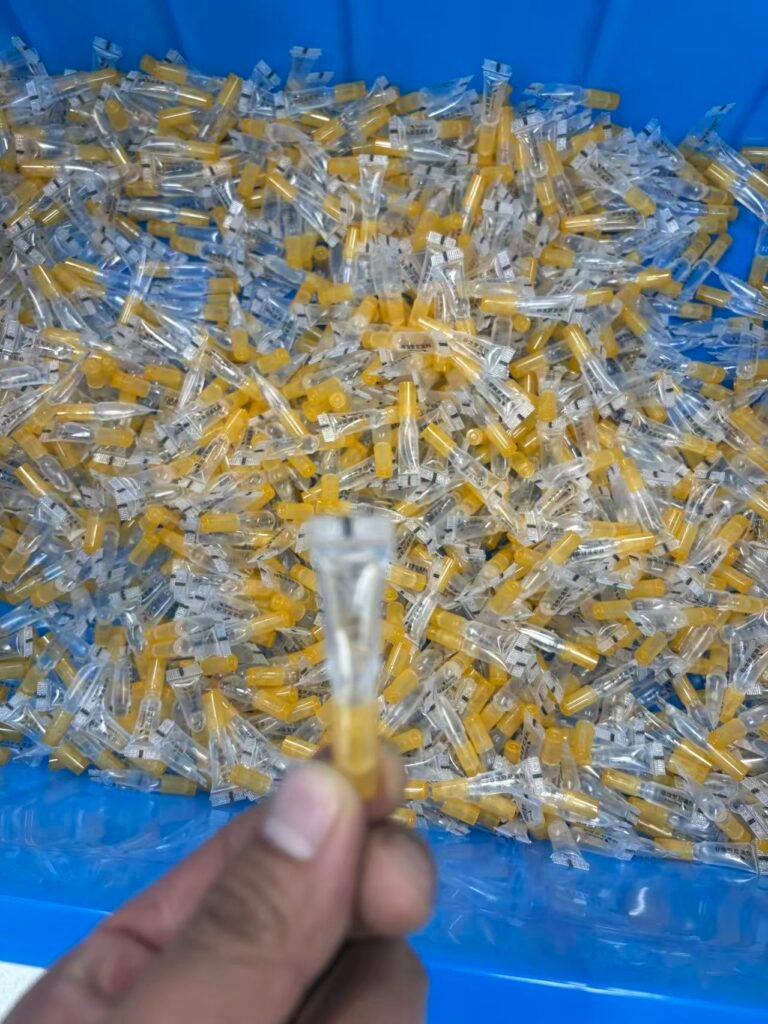
All of this means standard high-speed pumping mechanisms are not suitable. The filling system must apply controlled, gentle force to move the product without degrading it.
Why Standard Filling Approaches Fall Short
A standard volumetric filling machine calibrated for 30 to 200 gram cosmetic fills does not have the mechanical resolution to deliver accurate 1 to 5 gram doses consistently. The piston stroke or pump output calibrated for larger volumes carries proportionally larger absolute error at small doses. A 2% error on a 100 gram fill is 2 grams, which is acceptable. The same 2% error on a 2 gram fill is 0.04 grams, which may seem small but represents a meaningful proportion of the active ingredient dose.
Fill accuracy requirements for small-dose pet medicine tube filling are materially tighter than for standard cosmetic or food filling operations.
Major Challenges in Small-Dose Tube Filling and Sealing
| Challenge | Impact | Required Machine Capability |
| Fill accuracy at small volumes | Active ingredient dosing error, batch rejection | ±0.5% or better with calibrated piston system |
| High-viscosity shear-sensitive paste | Active compound degradation | Low-shear piston mechanism, gentle nozzle design |
| Contamination risk | GMP failure, product recall | Pharmaceutical-grade SUS 316L contact surfaces, CIP-compatible design |
| Small-diameter tube sealing | Leakage, seal deformation | Precisely calibrated jaw pressure and temperature for narrow tube tail |
| Multiple SKU changeover | Downtime, parameter error | Stored product profiles, tool-free format changes |
Achieving ±0.5% or Better Filling Accuracy
Small-dose production in automatic tube filling machines for gels, lotions, ointment, and other paste products depends on strict volume control. A tube filler must maintain ±0.5% accuracy across full runs of plastic tubes and aluminum tubes, even under continuous operation.
This level of control in plastic tube filling requires servo-driven piston movement inside an automatic tube system. Mechanical drift cannot sustain stable performance in a high-speed tube filling sealing machine. Each stroke must remain consistent across empty tubes loaded into the line.
Handling Viscous and Shear-Sensitive Pastes
Viscous gels, ointment, and cream-based paste products require low-shear displacement. A piston-based tube filler is preferred over pump systems in most automatic tube filling machines.
In plastic tube filling and aluminum tubes processing, shear damage can affect texture and stability. A controlled automatic tube system reduces this risk by moving product through positive displacement instead of high-shear pumping.
Nozzle design in a tube filling sealing machine matters for clean cut-off. Anti-drip control reduces residue inside plastic tubes and laminated tubes, supporting stable sealing under hot air sealing or ultrasonic sealing conditions. Our pharmaceutical and medical line tube filling equipment uses optimized nozzle geometry specifically designed for clean cut-off in high-viscosity veterinary and pharmaceutical formulations.
Preventing Contamination and Ensuring Hygienic Operation
GMP production requires strict hygiene across all automatic tube filling systems. A tube filler used for gels, lotions, or ointment must support full cleaning without complex disassembly.
All contact parts in a tube filling sealing machine should use SUS 316L to support safe plastic tube filling and aluminum tube production. Cross-contamination risk increases when one automatic tube line runs multiple SKUs.
Batch traceability through batch coding, printing batch numbers, date coding, and expiration dates is essential across all automatic tube filling machines.
Global production setups often standardize tube filling sealing equipment across regions such as china, netherlands, egypt, croatia, estonia, georgia, russia, malta, north macedonia, french guiana, new caledonia, aruba, antigua, laos, burma, niger, keeling, and guyana, where validation rules stay aligned.
Consistent Tube Sealing at Small Diameters
Tubes in the 10 to 20 mm diameter range present sealing challenges that wider cosmetic tubes do not. The sealing jaw must apply uniform pressure across a narrow tail width. Temperature must be precisely calibrated because the tube wall heats through faster on thin-wall narrow tubes than on standard cosmetic formats. Jaw clamping force must be controlled to avoid crushing the tube body while still generating adequate sealing pressure.
According to the FDA CVM guidance on GMP for veterinary medicinal products, packaging operations must include in-process controls that verify seal integrity across the production batch. This means sealing performance cannot be validated at setup and assumed to hold. It must be monitored continuously.
Technical Solutions for Precision Pet Medicine Filling
Advanced piston filling systems with servo drive deliver the fill accuracy small-dose pet medicine tube filling requires. Stroke length calibration at the servo controller level eliminates the mechanical tolerance stack-up that causes drift in cam-driven systems.
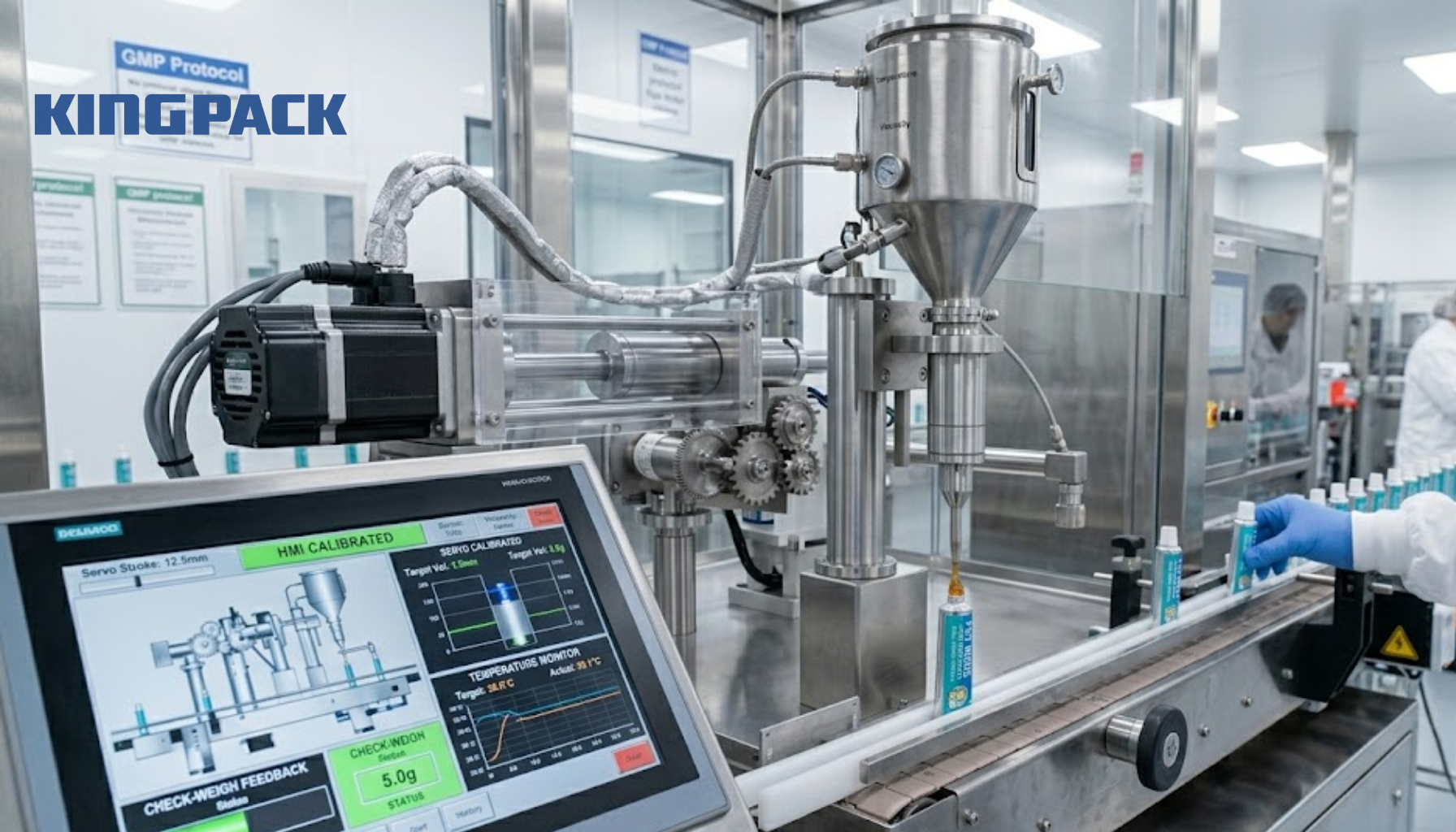
Fill volume adjustment is made from the HMI control panel rather than through mechanical component exchange, which speeds up dose size changes between product SKUs.
For products with particle content or variable viscosity between batches, inline check-weighing integration after the fill station provides real-time fill weight monitoring. If fill weight drifts outside the defined window, the system flags or rejects the tube automatically rather than relying on end-of-batch statistical sampling. This is aligned with the in-process control requirements of veterinary pharmaceutical GMP.
Temperature and viscosity control modules maintain consistent product temperature in the hopper and filling cylinder throughout the production run. For heat-sensitive veterinary actives, temperature stability in the product zone prevents both viscosity drift and active compound degradation during filling.
Sealing Challenges and Reliable Solutions for Veterinary Tubes
Small-diameter veterinary tubes require sealing parameter sets that differ meaningfully from standard cosmetic or pharmaceutical tube sealing configurations.
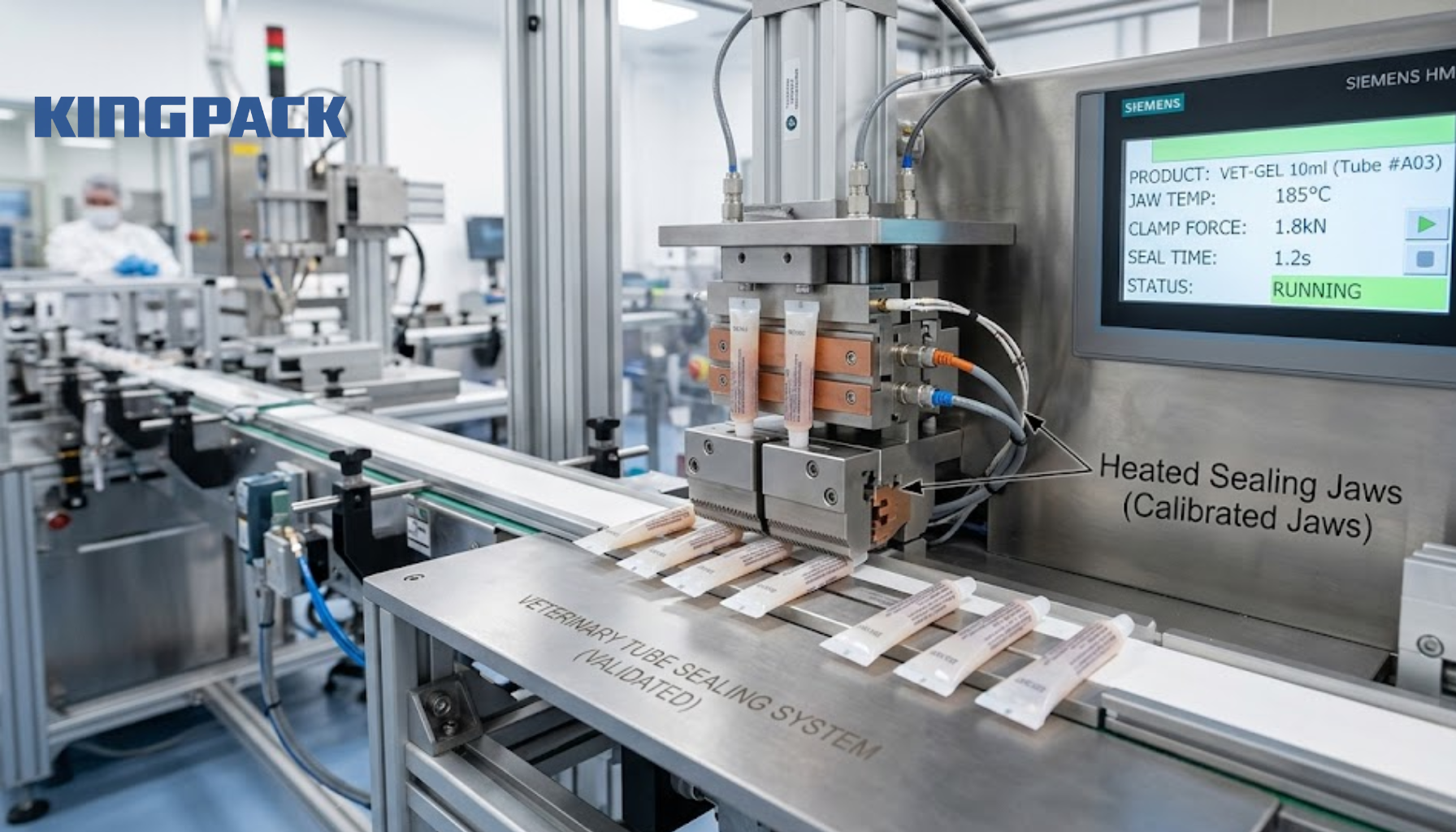
Sealing small-diameter and thin-wall tubes: Jaw geometry, contact width, and clamping force must all be calibrated for the specific tube diameter and wall thickness in use. Our precision tube filling and sealing machine configurations are calibrated for each tube specification before commissioning, with validated parameter sets documented for regulatory validation use.
Maintaining hermetic seal integrity: Active pharmaceutical ingredients in veterinary formulations are often sensitive to oxygen and moisture. A seal with marginal bond strength may pass visual inspection but fail integrity testing. We apply squeeze testing and visual inspection protocols to validate sealing performance across the tail width before production parameters are signed off.
Fast changeover for multiple veterinary SKUs: Veterinary manufacturers frequently produce multiple tube sizes and formulations across the same equipment. Named product parameter profiles stored on the PLC allow changeover without manual parameter re-entry, which reduces changeover time and eliminates parameter error as a source of seal quality variation.
Comparison: Standard vs. Precision Small-Dose Tube Filling and Sealing Machines
| Factor | Standard Tube Filling Machine | Precision Small-Dose Machine |
| Fill accuracy at 1 to 5 g | ±2 to 5% typical | ±0.5% or better |
| Mechanism | Cam-driven piston or pump | Servo-driven piston |
| Shear force on product | Moderate to high | Low (piston displacement) |
| Nozzle cut-off | Standard | Anti-drip, clean retraction |
| Check-weighing | End-of-batch sampling | Inline per-tube monitoring option |
| GMP documentation | Basic batch records | Full parameter logging, audit trail |
| Sealing at small diameters | Non-optimized | Calibrated jaw geometry and force |
| Changeover | Manual re-calibration | Named profile recall from PLC |
Best Practices for Optimizing Small-Dose Pet Medicine Operations
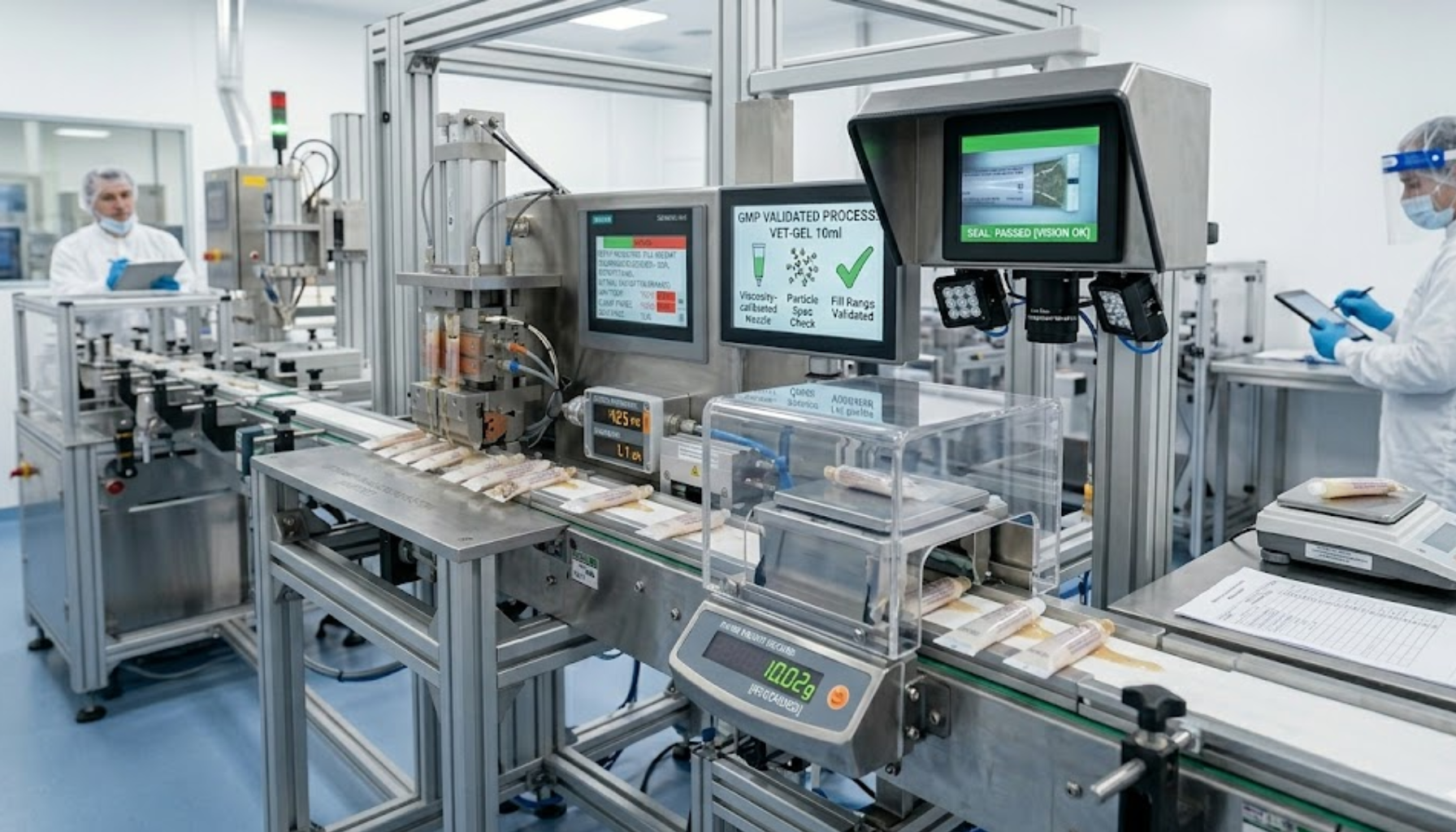
Formulation-specific machine configuration: Provide the machine supplier with viscosity data, particle content specifications, and fill volume range before ordering. A machine configured for your specific veterinary formulation characteristics arrives validated, not requiring field recalibration during production startup.
Regular calibration and validation protocols: Servo-driven filling systems hold calibration well, but fill weight should be verified with calibrated scales at the start of every production batch and at regular intervals during extended runs. Sealing parameters should be re-verified after any maintenance event that involves the jaw assembly.
Integration of inline check-weighing and vision inspection: For veterinary pharmaceutical production where regulatory documentation requirements are strict, inline check-weighing that generates a per-tube fill weight record is the appropriate investment. Vision inspection for seal quality completes the in-process control system required by GMP standards. Our pharmaceutical and medical filling line solutions can integrate both systems within the tube production line.
Common Pitfalls in Pet Medicine Tube Filling and Sealing
Inaccurate small-volume dosing leading to batch rejection: The most frequent and costly failure mode. Using standard cosmetic filling equipment for veterinary small-dose applications generates fill weight variation that exceeds pharmaceutical tolerance. The resulting batch rejection cost often exceeds the cost difference between standard and precision equipment within the first year of production.
Sealing failures causing leaks and shelf-life issues: Small-diameter tube sealing requires calibrated parameters. Applying standard cosmetic tube sealing parameters to 12 mm veterinary tubes frequently produces seals that look acceptable but fail under product pressure during storage or transport. The seal failure is discovered at the distribution or clinical level, not the production level.
Excessive product waste due to poor cut-off and dripping: At fill volumes of 1 to 5 grams, nozzle drip after each fill stroke represents a significant product waste percentage per tube. An anti-drip nozzle system that retracts cleanly reduces waste, maintains tube cleanliness, and prevents contamination of the tube tail sealing area.
Why King Pack Precision Tube Filling and Sealing Solutions
According to Mordor Intelligence, the veterinary medicine market is expected to reach $51.61 billion in 2025 and grow at a CAGR of 7.58% to reach $74.36 billion by 2030, with companion animal pharmaceuticals holding the largest market share at approximately 52%. That volume of veterinary topical products requires filling and sealing equipment precision that the market has not always prioritized.
We build precision tube filling and sealing machine configurations specifically for pharmaceutical and veterinary applications where small-dose accuracy, low-shear product handling, and GMP-grade hygienic design are baseline requirements.
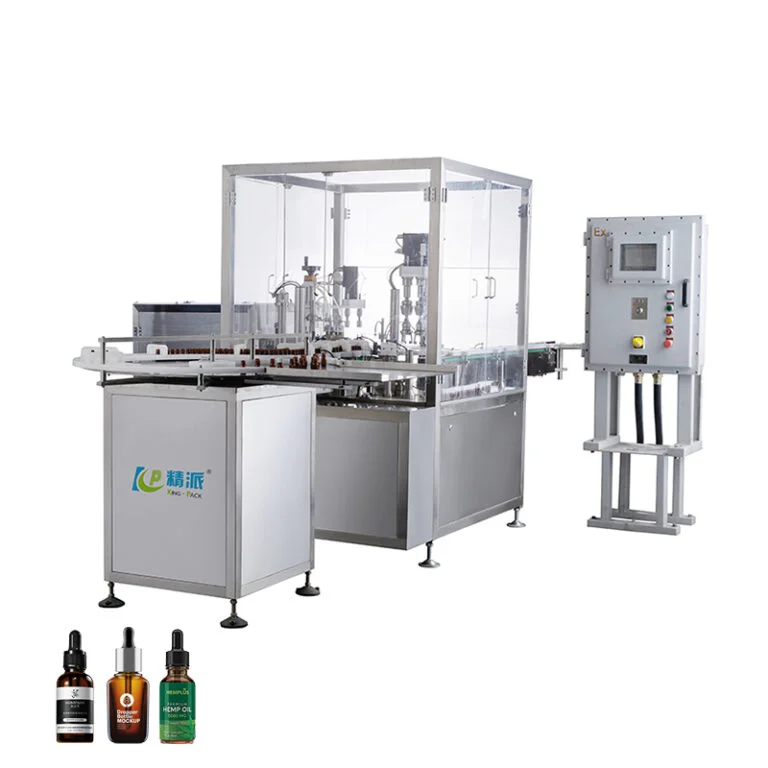
Dual-Head Explosion-Proof Liniment Filling and Capping Machine – King Pack Machinery
Specialized small-dose configurations for veterinary use: Our veterinary tube filling machines use servo-driven piston systems that achieve ±0.5% fill accuracy across the small volume ranges typical of pet ointment, gel, and paste formulations. Fill range covers 0.5 ml to 30 ml for small-dose veterinary applications, with tube diameters from 10 mm to 25 mm.
High-accuracy filling combined with reliable sealing: Our machines integrate servo-controlled filling with precisely calibrated sealing parameters for each tube format. The sealing station is configured and validated for the specific tube diameter, wall thickness, and material in use before production begins.
GMP-compliant hygienic design and easy validation: All product contact surfaces use SUS 316L stainless steel. Control systems support PLC-based parameter logging and audit trail generation for batch documentation. We provide technical documentation to support IQ, OQ, and PQ validation protocols required for veterinary pharmaceutical manufacturing.
Expert support for pet medicine formulations: Our engineering team reviews viscosity data, particle content, fill volume requirements, and tube specifications before machine configuration is finalized. We document validated parameter sets at commissioning so production can begin with known fill accuracy and seal performance.
Conclusion
Precision small-dose tube filling and sealing for pet medicine is a technically distinct challenge from standard cosmetic or large-format pharmaceutical filling. Active ingredient cost, species-specific dosing requirements, high-viscosity shear-sensitive formulations, small tube diameters, and GMP documentation requirements all converge in a single production operation.
Standard equipment addresses none of these requirements adequately. Precision small dose tube filling machines designed for veterinary pharmaceutical applications address all of them: servo-driven fill accuracy at ±0.5%, low-shear piston mechanisms that protect active compound integrity, GMP-grade stainless steel construction, and validated sealing performance at small tube diameters.
The veterinary medicine market is growing at sustained double-digit rates. Filling equipment that matches the precision demands of that market is the right investment for manufacturers competing in it.
Contact King Pack today to discuss your small-dose pet medicine requirements. Our experts will help you select or customize a precision tube filling and sealing machine that delivers reliable, high-accuracy performance for your veterinary product line. Reach our team at kpfillingmachine.com/contact.