 Skip to content
The hot sauce industry is booming—its global value of $3.54 billion in 2025 is set to climb to $5.98 billion by 2032. Growth like this creates opportunities. Hot sauce producers need efficient bottling systems to capture market share.
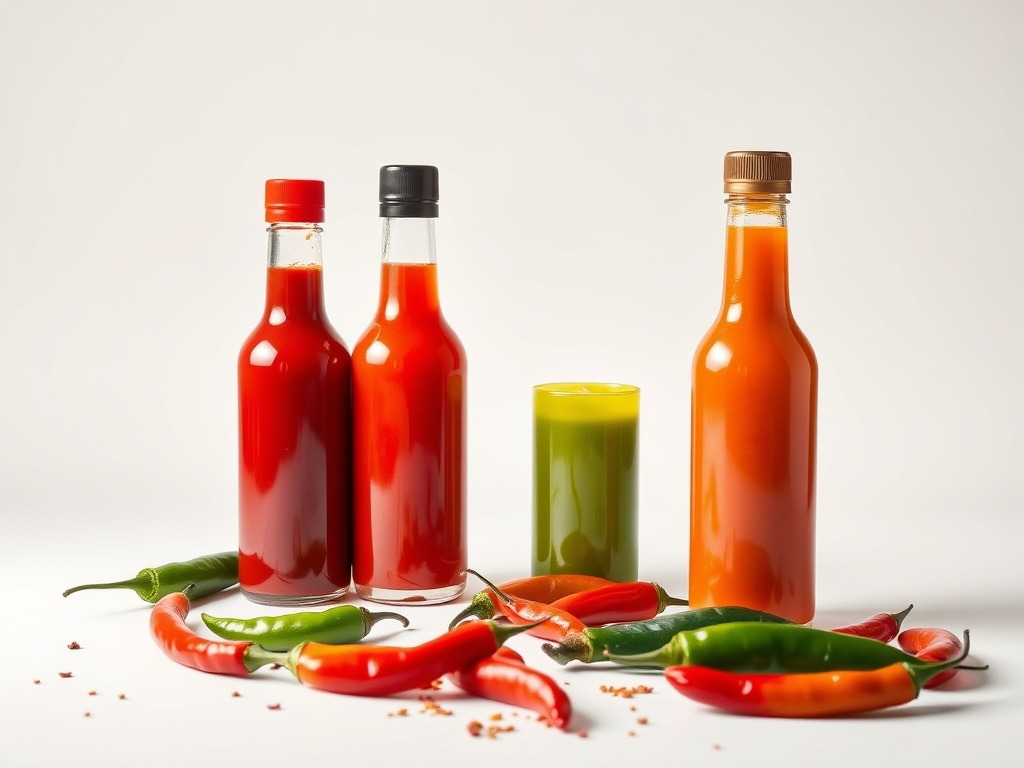
The U.S. hot sauce market alone was valued at $1,095.56 million in 2024. According to the Culinary Institute, 74% of American customers now add spicy sauce to their cuisine, with 45% doing so at least once a week. Consumer appetite for heat drives production demands. Your bottling line must keep pace.
King Pack provides complete bottling solutions for hot sauce manufacturers. From small batch artisanal operations to high-volume commercial production, the right equipment transforms raw ingredients into shelf-ready products. This guide covers everything you need to know.
Hot Sauce Bottle Selection
Glass Bottles
Glass bottles dominated the hot sauce packaging market, accounting for $1.9 billion in 2024. There’s good reason for this preference. Glass doesn’t react with acidic chili-based sauces. Glass sauce bottles do not absorb odors or alter the sauce’s composition, unlike plastic alternatives.
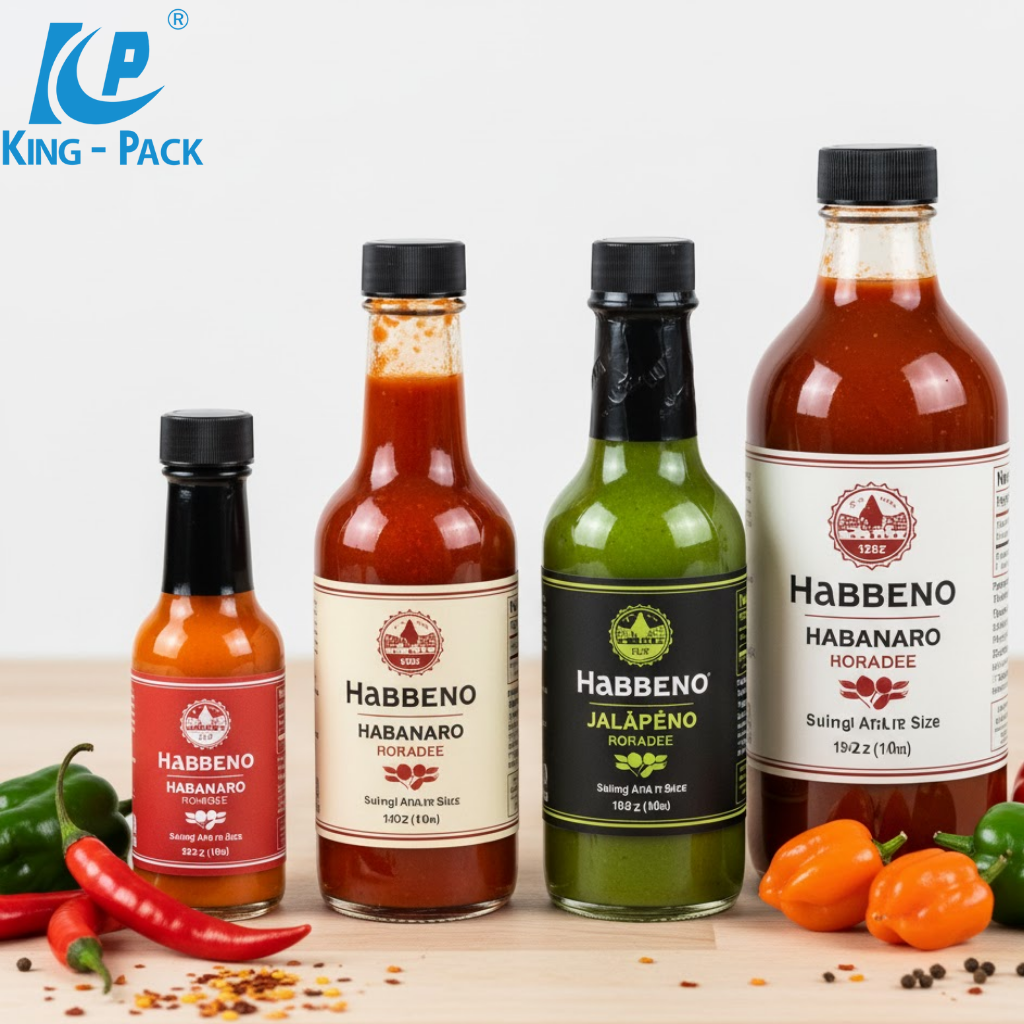
Premium hot sauce brands lean heavily toward glass. The material communicates quality before anyone tastes the product. Clear glass showcases the sauce’s vibrant red, green, or orange hues. Customers want to see what they’re buying.
Common glass bottle sizes include:
- 2 oz (50-60ml): Sample sizes and gift sets
- 5 oz (148ml): Standard retail size, the most popular format
- 10 oz (296ml): Value size for regular consumers
- 12 oz (355ml): Economy size for household use
Glass offers key advantages: it’s food-safe and non-reactive, preserves freshness with strong barrier properties, and enhances product appeal with its clear, premium look. The material also handles hot-fill processes. Many hot sauce manufacturers fill bottles at elevated temperatures to kill bacteria without chemical preservatives.
Glass isn’t perfect. Bottles break during shipping. Weight adds transportation costs. But for brands building premium positioning, these drawbacks rarely outweigh the benefits.
Recommended Reading: What is a pouch packaging – King Pack Machinery
Plastic Bottles
Plastic bottles serve specific market segments. Squeeze bottles let consumers control portion sizes. Food service operations prefer plastic for safety reasons. A dropped plastic bottle doesn’t shatter into dangerous shards.
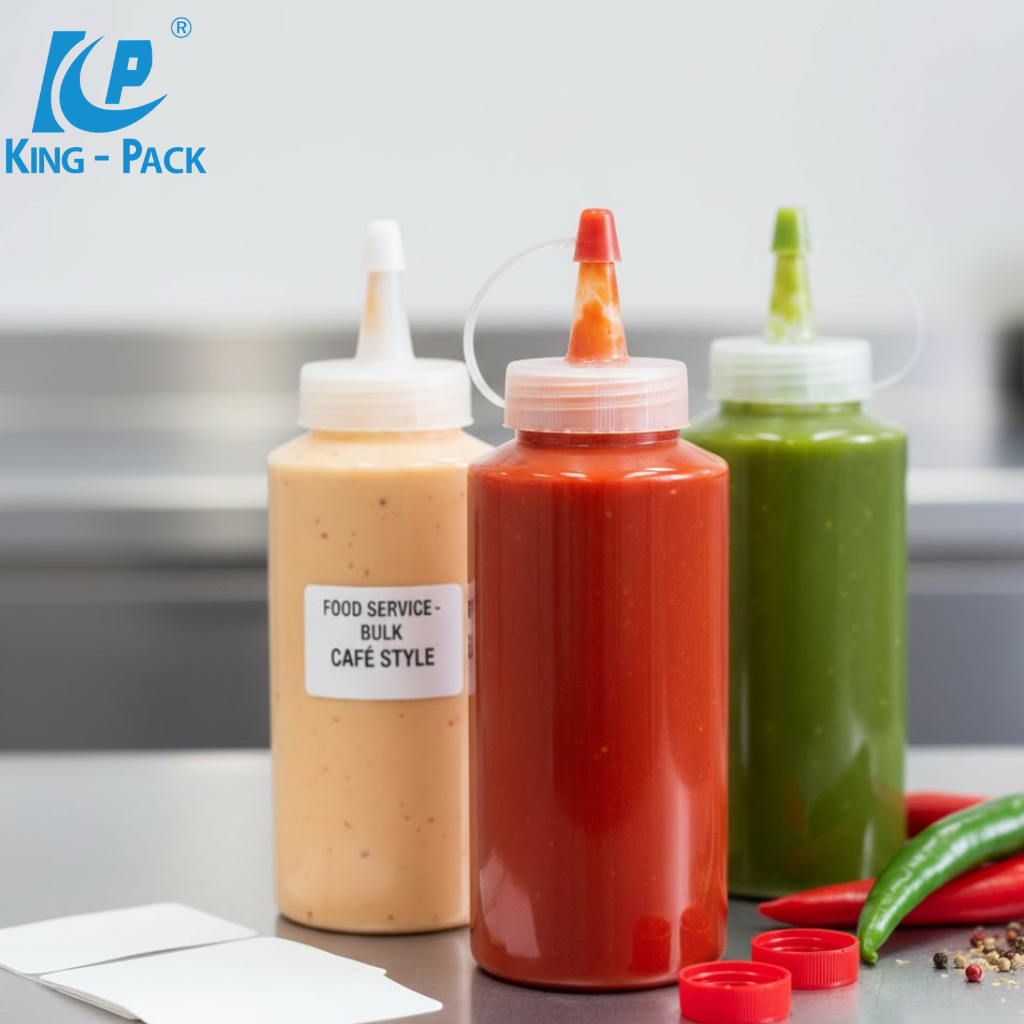
PET (polyethylene terephthalate) and HDPE (high-density polyethylene) are common choices. PET offers good clarity for product visibility. HDPE provides chemical resistance and durability. Both materials cost less than glass.
Plastic works well for:
- Squeeze applications where consumers dispense sauce directly
- High-volume food service packaging
- Budget-conscious brands competing on price
- Distribution channels where breakage creates major problems
Some manufacturers use plastic as a cost-cutting measure, though this exposes sauce to bacteria and spoilage, requiring more chemicals and preservatives. The acidic nature of hot sauce can also interact with plastic over time. Choose food-grade materials specifically rated for acidic products.
Recommended Reading: How Are Ketchup Packets Made – King Pack Machinery
Hot Sauce Bottling Machines
Volumetric Filling Machines
Volumetric fillers work by measuring fixed volumes. The machine dispenses the same amount into each bottle. For thin, free-flowing hot sauces without particulates, volumetric systems deliver consistent results.
These machines use time-pressure or flow meter principles. The system measures how long to keep valves open or tracks liquid volume passing through sensors. Accuracy depends on sauce viscosity remaining constant.
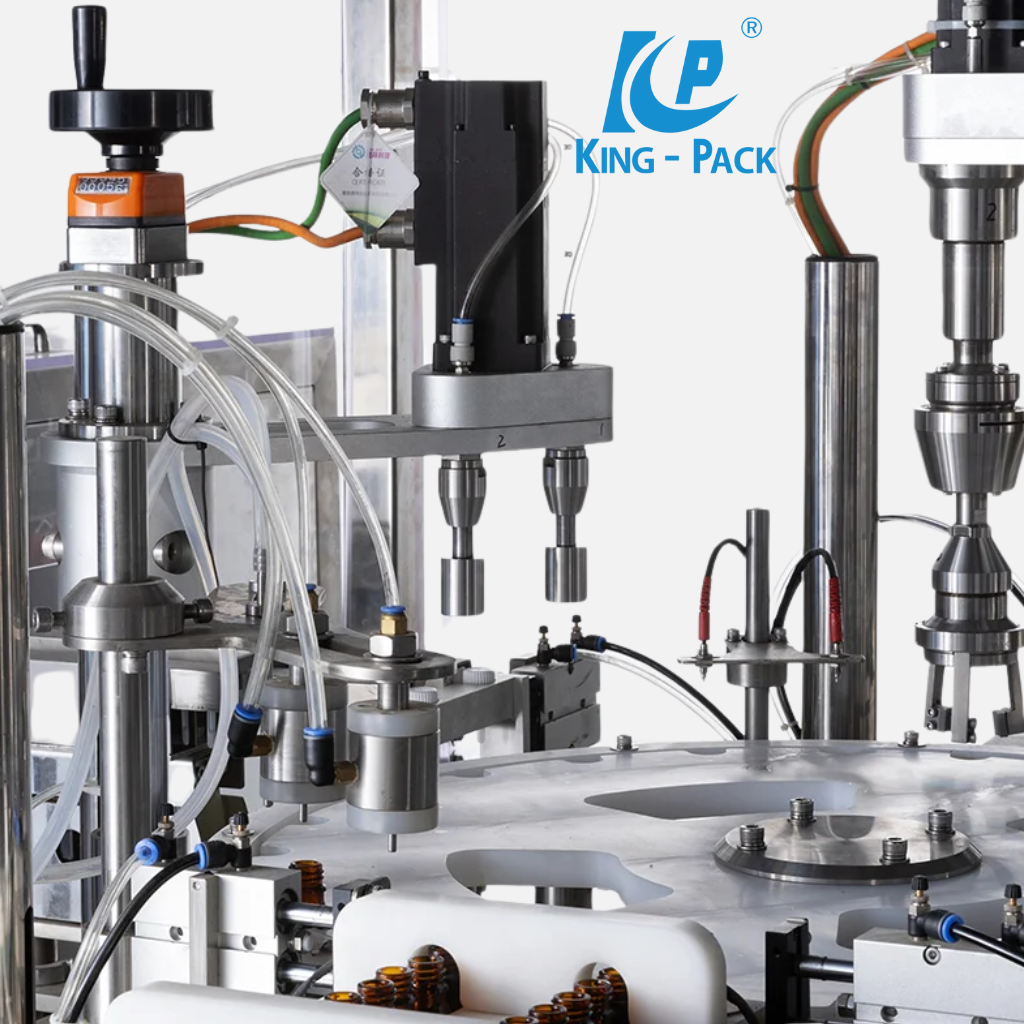
King Pack’s volumetric filling equipment handles production speeds from 30 bottles per minute up to 150 bottles per minute depending on line configuration. The systems work with bottles ranging from 50ml sample sizes to 500ml economy bottles.
Advantages include:
- Fast cycle times for high-volume production
- Simple operation and maintenance
- Lower initial equipment cost
- Good accuracy for thin to medium viscosity products
Volumetric filling works best when your sauce has consistent viscosity. Temperature changes affect viscosity. Maintain climate control in production areas for best results.
Piston Filling Machines
Piston fillers handle thicker sauces and products with particulates. The mechanism uses a piston cylinder to draw product from a hopper and dispense precise volumes into bottles. The system works regardless of sauce thickness.
Hot sauces with visible chili flakes, garlic chunks, or vegetable pieces need piston filling technology. The larger pathway accommodates solid particles without clogging. Fill accuracy remains high even with chunky products.
Some sauce contains small particles that can cause blockages in filling machines, requiring customized filling pumps, nozzles, and hoses. King Pack’s tube filling machines incorporate design features that prevent clogging. The systems can be customized for specific particle sizes.
Piston fillers offer:
- Precise volume control across wide viscosity ranges
- Ability to handle products with particulates up to 10mm
- Fill accuracy typically within ±0.5% of target volume
- Servo-driven systems that adjust for different bottle sizes
Production speeds range from 20 to 100 bottles per minute. Larger particles or very thick sauces reduce maximum speed. Balance throughput needs against product characteristics.
Recommended Reading: Types of Food Packaging Machines: Applications, Benefits, and Industry Uses – King Pack Machinery
Features to Consider
Hygienic design matters in food production. Equipment must disassemble easily for cleaning. Stainless steel construction resists corrosion from acidic sauces. CIP (clean-in-place) systems reduce downtime between production runs.
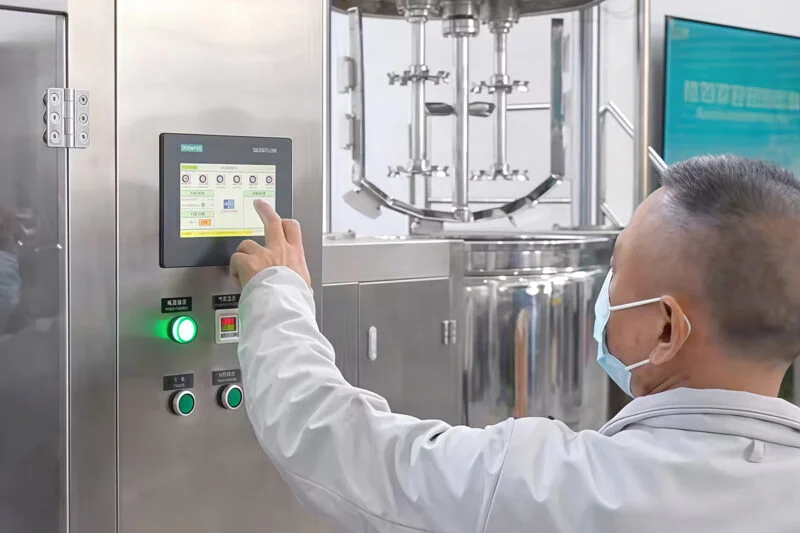
King Pack manufactures equipment from food-grade stainless steel 304 or 316. All product-contact surfaces polish to sanitary standards. This prevents bacterial growth and makes cleaning straightforward.
Adjustable fill volumes let you run multiple products on the same line. Recipe storage in PLC controllers means switching between 5oz and 10oz bottles takes minutes instead of hours. Servo motors provide precise position control for different bottle heights.
Bottle type compatibility varies by machine design. Some systems handle only round bottles. Others work with square, oval, or specialty shapes. Woozy bottles (the classic elongated hot sauce bottle shape) present specific challenges due to their narrow necks.
Vision systems verify bottle presence and orientation. Reject mechanisms remove improperly positioned bottles before filling begins. These quality controls prevent product waste and maintain line efficiency.
Sealing, Capping, and Labeling
Sealing Machines
Glass bottles accounted for significant market share in 2024 driven by superior freshness protection with strong barrier properties. But the bottle alone doesn’t preserve freshness. The seal between cap and bottle creates the critical barrier.
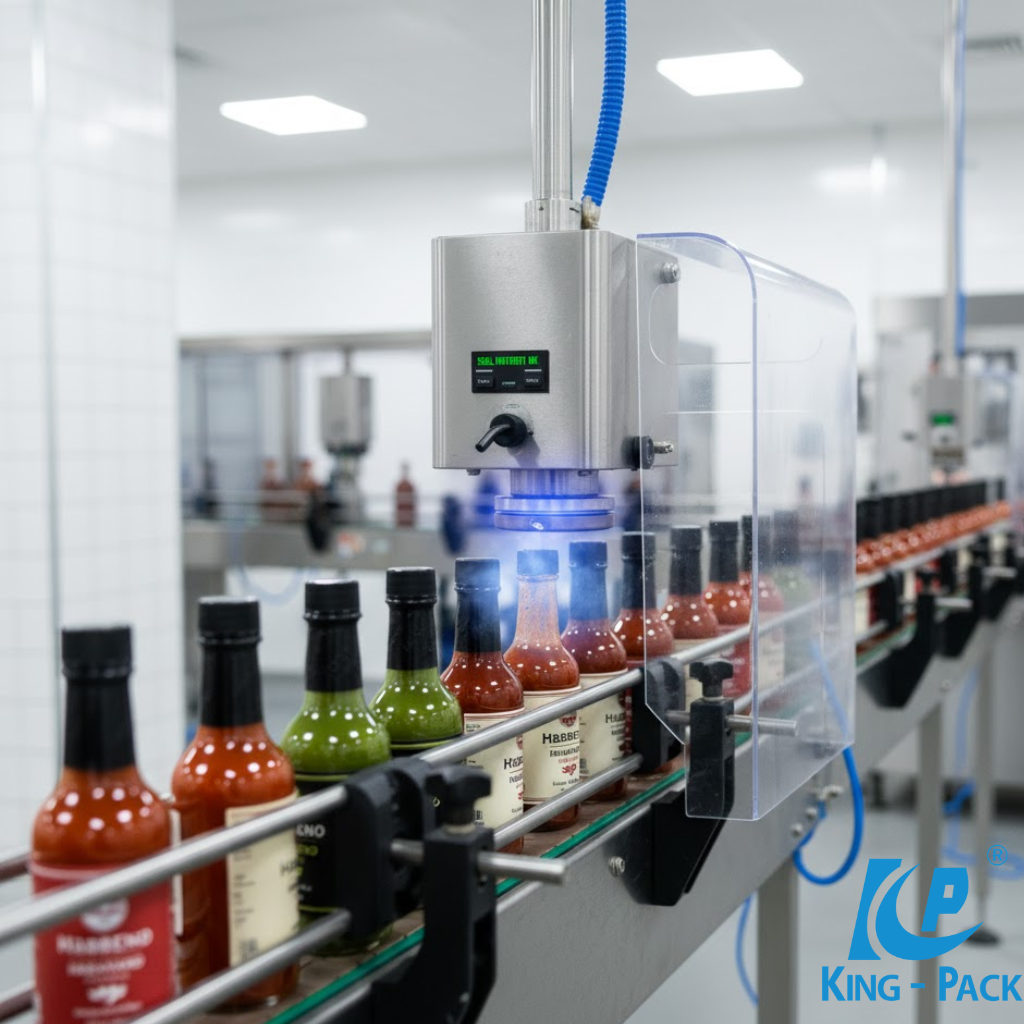
Induction sealing provides tamper evidence and extended shelf life. The process uses electromagnetic energy to heat a foil liner inside the cap. The heated liner bonds to the bottle rim, creating a hermetic seal.
This seal prevents:
- Oxygen infiltration that oxidizes flavor compounds
- Moisture loss that concentrates the sauce
- Contamination from external sources
- Product leakage during shipping and storage
King Pack’s filling and capping machines can integrate induction sealing into automated production lines. The systems verify seal integrity through visual inspection or electronic testing.
Recommended Reading: How Long Do Sealed Sauce Packets Really Last? Shelf Life, Storage & Safety Tips – King Pack Machinery
Capping Machines
Caps must tighten to exact specifications. Too loose and product leaks. Too tight and consumers struggle to open bottles. Torque control systems apply consistent closing force.
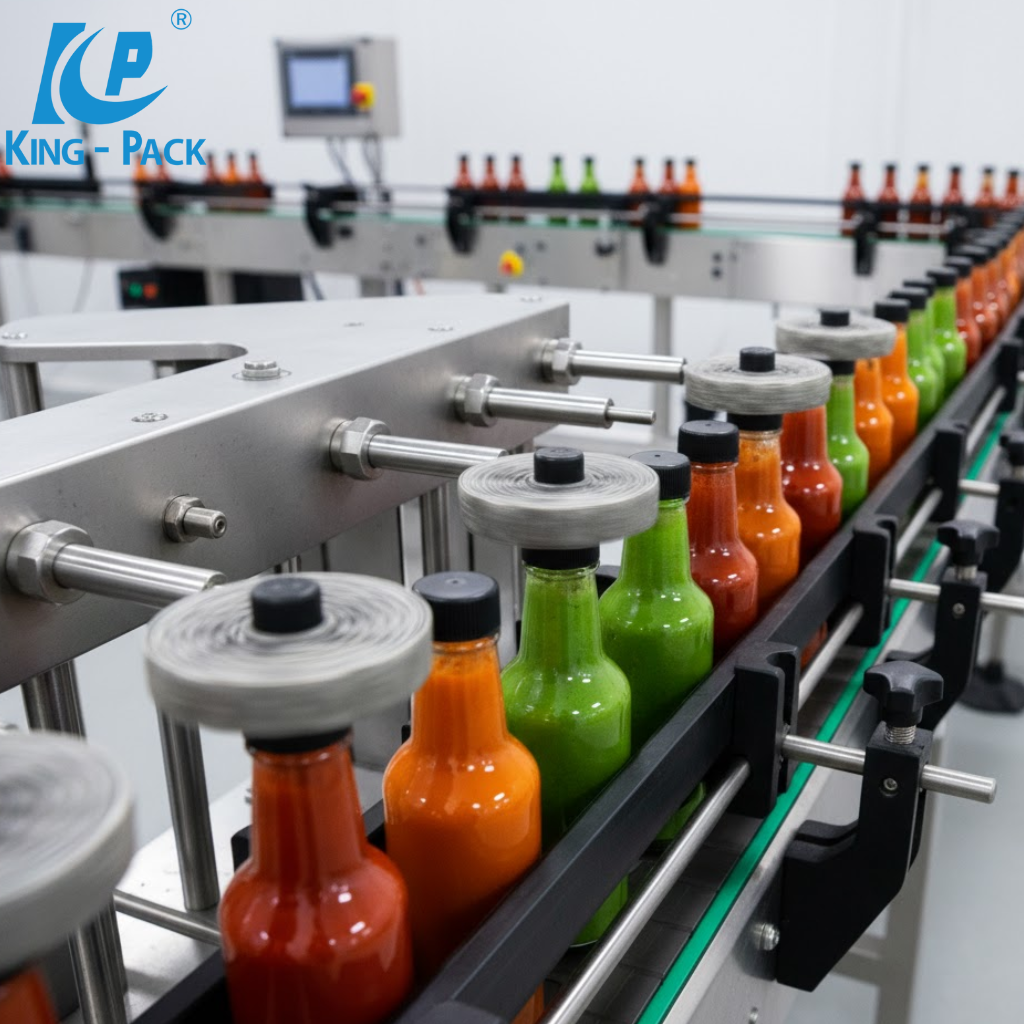
Automatic capping machines include:
- Spindle cappers: Multiple spinning wheels tighten threaded caps
- Chuck cappers: Pneumatic or servo-driven heads grip and rotate caps
- Snap cappers: Apply downward pressure to secure press-on caps
Production capacity ranges from 30 to 200+ bottles per minute depending on cap type and bottle format. King Pack offers both rotary and inline capping configurations to match your line layout.
Semi-automatic systems suit smaller producers. Operators manually place caps on bottles. The machine applies correct torque. This approach works well for production volumes below 20 bottles per minute.
Labeling Machines
Labels communicate brand identity and meet regulatory requirements. Automatic labeling equipment applies pressure-sensitive labels at high speeds with precise positioning.
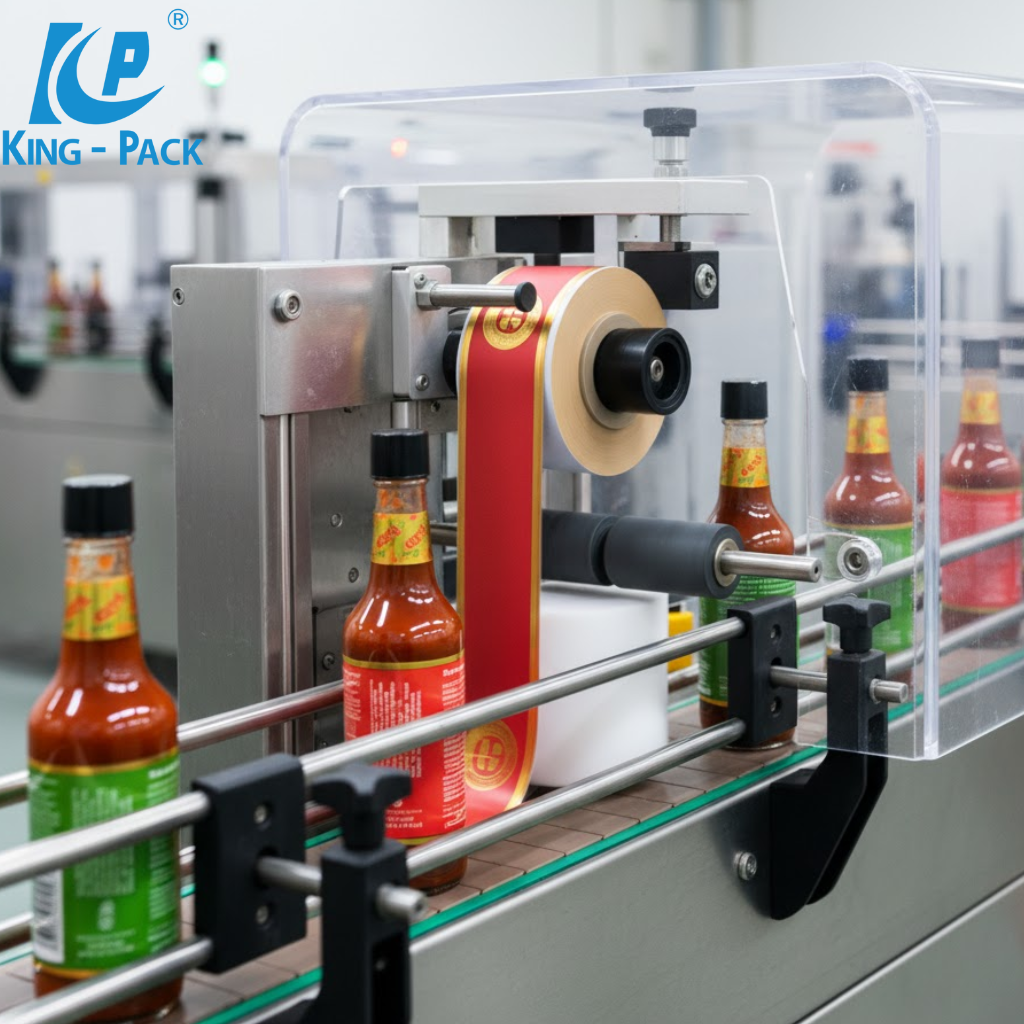
Different label types require different application methods:
- Wrap-around labels: Cover most of the bottle circumference, common for cylindrical bottles
- Front and back labels: Two separate labels for branding and nutrition panels
- Top labels: Applied to cap surface for additional branding
- Tamper-evident labels: Bridge the cap and bottle to show unopened status
King Pack’s labeling systems integrate with existing filling lines or operate as standalone units. Servo-controlled label dispensing places labels within ±0.5mm accuracy. This precision matters for premium brands where appearance drives purchasing decisions.
Vision inspection verifies label presence, position, and print quality. Defective labels trigger automatic rejection. This prevents mislabeled products from reaching customers.
Packaging Solutions
Cartoning Machines
Individual bottles need secondary packaging for distribution. Cartoning machines automate placing bottles into cardboard boxes. The process includes carton erection, bottle loading, and carton sealing.
Production speeds match your filling line capacity. A system filling 60 bottles per minute needs cartoning equipment that packs 60 bottles per minute. Mismatched speeds create bottlenecks.
Benefits include:
- Labor reduction compared to manual boxing
- Consistent pack counts and orientation
- Protection during shipping and storage
- Professional appearance for retail channels
King Pack provides integrated solutions where cartoning equipment connects directly to filling and capping lines via conveyors. Bottles flow continuously from filling through final packaging without manual handling.
Palletizing Systems
Filled cartons stack onto pallets for warehouse storage and truck loading. Manual palletizing works for low volumes. Automated systems handle high-volume operations while reducing injury risk from repetitive lifting.
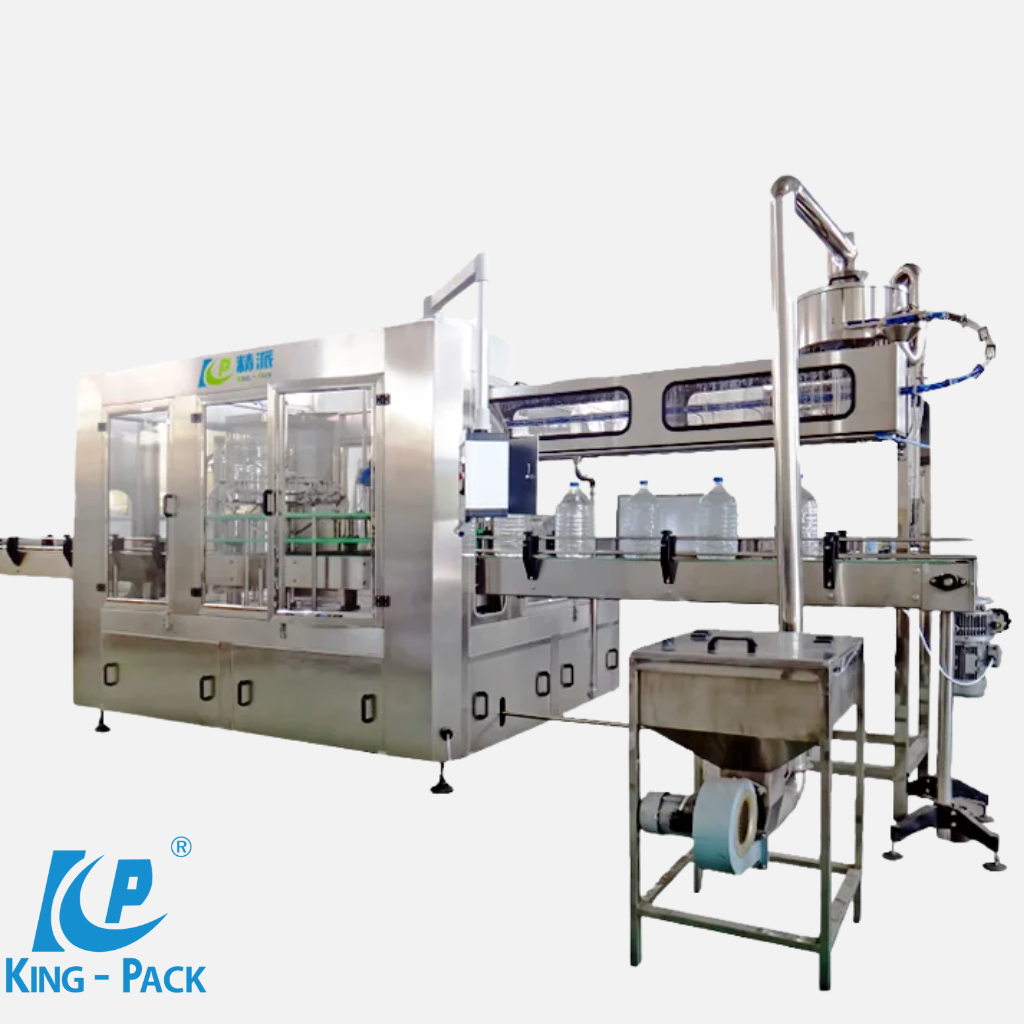
Robotic palletizers offer maximum flexibility. The systems handle different carton sizes and stacking patterns through programming changes. No mechanical adjustments needed when switching products.
Conventional palletizers use mechanical systems to position and stack cartons. These systems cost less but require more setup time when changing configurations. For producers running consistent pack sizes, conventional systems deliver excellent ROI.
Key Considerations When Choosing a Bottling Line
Product Viscosity and Consistency
Hot sauce viscosity varies dramatically. Thin Louisiana-style sauces flow like water. Thick Sriracha-style products behave more like ketchup. Your filling equipment must match product characteristics.
| Factor | Details | Impact on Filling |
| Sauce Type | Thin sauces (e.g., Louisiana-style) vs. thick sauces (e.g., Sriracha or chili paste) | Thicker sauces need piston fillers; thin sauces work with gravity or volumetric fillers |
| Viscosity Range | ~100 cP (watery) to ~50,000 cP (paste-like) | Determines pump pressure, nozzle size, and fill speed |
| Temperature Influence | Higher temperature reduces viscosity | Heated hoppers maintain consistent flow and prevent clogs |
| Sample Testing | Sending sauce samples to manufacturer for trials | Helps identify correct filling head and pump configuration |
| Product Separation | Can occur in thick sauces with particulates | Agitator hoppers or recirculation systems keep sauce uniform |
Sauce viscosity typically ranges from around 100 cP to 50,000 cP. Test your specific product before selecting equipment. Send samples to equipment manufacturers for filling trials.
Temperature affects viscosity. Sauce viscosity may change with time or temperature fluctuations, affecting accuracy and uniformity of filling. Heated hoppers maintain consistent sauce temperature. This improves fill accuracy and prevents product separation.
Recommended Reading: How an Automatic Tube Filling and Sealing Machine Works – King Pack Machinery
Container Sizes and Shapes
Standard woozy bottles simplify equipment selection. Custom bottle shapes may require specialized handling systems. Consider how bottle design affects production costs.
| Container Type | Key Features | Production Considerations |
| Standard Woozy Bottles | Common for hot sauce, round shape | Easy to handle, fits standard conveyors |
| Custom Bottles | Unique branding or ergonomic designs | May require custom grippers or bottle holders |
| Narrow-Neck Bottles | Smaller openings | Slower filling speed; nozzle fit is critical |
| Wide-Mouth Bottles | Larger openings | Faster filling but higher splash risk |
| Square/Rectangular Bottles | Distinct brand look | Need anti-rotation guides and special conveyors |
Narrow-neck bottles fill slower than wide-mouth containers. The fill nozzle must fit inside the opening without touching the rim. Smaller openings limit flow rates.
Square or rectangular bottles need different conveying systems than round bottles. Special guides prevent bottles from rotating during transport. These modifications add equipment cost.
Budget and ROI
Initial equipment investment represents only part of total cost. Consider:
- Operating costs: Labor, utilities, maintenance supplies
- Changeover time: How long to switch between products
- Uptime percentage: Reliable equipment runs more hours per day
- Quality consistency: Reducing waste and rework
| Cost Area | Details | Effect on ROI |
| Equipment Investment | Initial purchase cost | One-time but significant; must match production goals |
| Operating Costs | Labor, electricity, compressed air, maintenance | Ongoing costs; automation reduces long-term spend |
| Changeover Time | Time needed to switch between products or sizes | Long changeovers reduce uptime; modular setups save time |
| Uptime & Reliability | Hours equipment runs per day without failure | High uptime = faster ROI and consistent output |
| Product Quality & Waste | Consistent fill accuracy, fewer rejects | Less rework and material loss improve profitability |
A more expensive machine with better automation may deliver faster ROI through labor savings. Calculate cost per filled bottle rather than just purchase price.
Automation Level
Manual filling works for artisanal producers making a few hundred bottles weekly. One operator fills, caps, and labels by hand. Equipment costs stay minimal but production capacity is limited.
| System Type | Description | Typical Output | Investment Level | Best For |
| Manual | Hand-filling, capping, and labeling | A few hundred bottles per week | Low | Small-batch or artisanal producers |
| Semi-Automatic | Machines handle fill and cap; operator loads/unloads bottles | 1,000–5,000 bottles/day | Moderate | Growing businesses scaling up |
| Fully Automatic | Bottles are fed, filled, capped, labeled, and packed automatically | 10,000+ bottles/day | High | Large-scale production lines |
Semi-automatic systems increase throughput to thousands of bottles daily. Machines handle filling and capping. Operators load bottles and remove filled product. This approach balances cost and capacity for growing brands.
Fully automatic lines eliminate manual bottle handling. Systems feed empty bottles, fill, cap, label, and package without human intervention. Production scales to tens of thousands of bottles daily. Equipment investment is substantial but labor costs decrease dramatically.
Why Choose King Pack for Your Bottling Needs
Expertise in Hot Sauce Production
King Pack has supplied filling equipment to food manufacturers across multiple continents. The company understands the specific challenges hot sauce producers face. Acidic products require corrosion-resistant materials. Particulates need specialized pump designs. Temperature control affects fill accuracy.
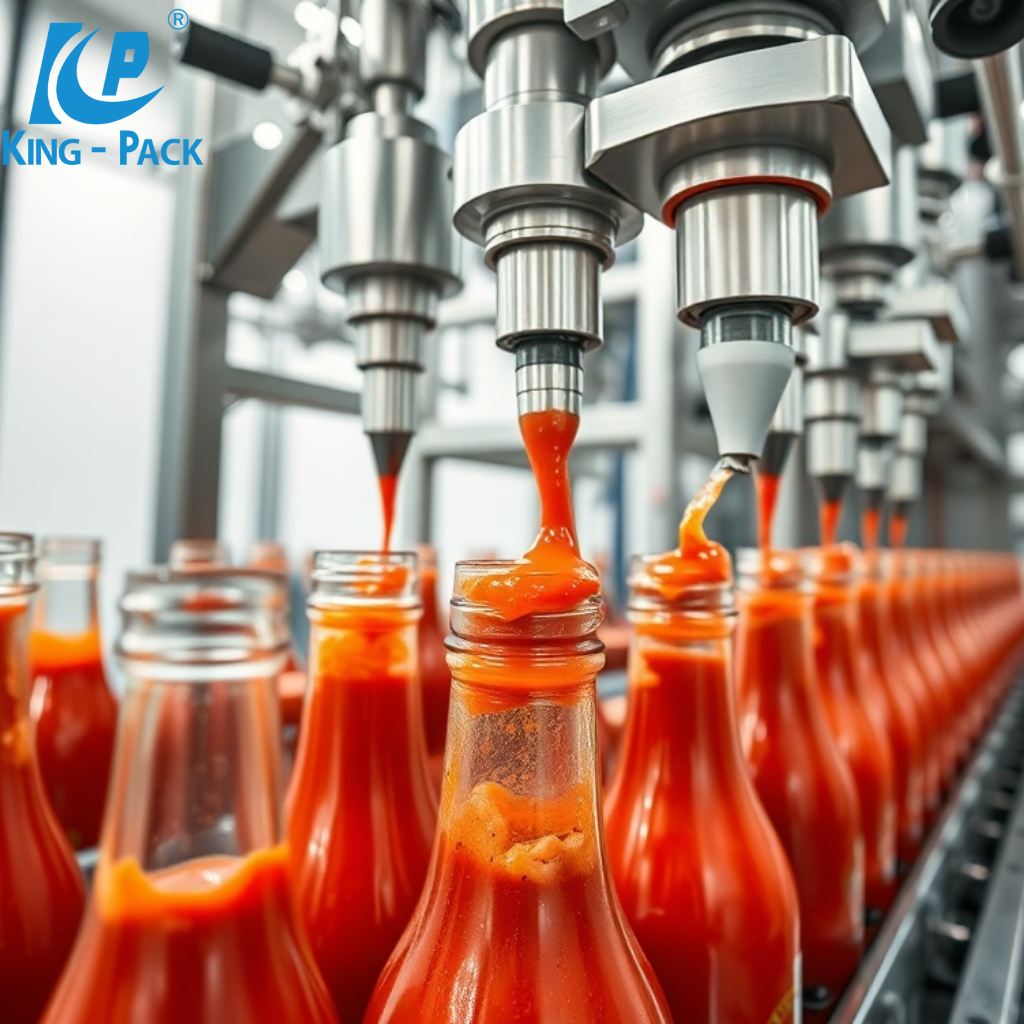
This experience translates into equipment that performs reliably. Machines arrive pre-tested with parameters set for your product. Startup time decreases compared to working with suppliers unfamiliar with hot sauce applications.
Customizable Equipment
No two hot sauce or condiment packaging operations are the same. Batch sizes, bottle formats, and production schedules vary widely. Automatic sauce filling machines and high viscosity filling machines from King Pack are designed to meet these unique requirements.
Customization options include:
- Filling volume ranges suited to your product line
- Bottle handling systems compatible with specific container shapes
- Integration with existing PLC Control Systems or other equipment
- Sanitary stainless hopper construction that meets hygiene standards
- Compact layout for optimal use of floor space
The same precision used in Paste Liquid Filling Machines applies to sauces. Piston pumps or diaphragm pumps with flowmeter filling ensure consistent dosing, while monoblock filling configurations streamline operations. Hot filling options and gravity feed designs support both low- and high-viscosity products, keeping liquid and viscous food safe and uniform.
Recommended Reading: The Importance of Tube Filling Machine and Tube Sealing – King Pack Machinery
After-Sales Support
Once equipment is installed, support continues. King Pack provides training for operators and maintenance teams, covering correct use, preventive maintenance, and troubleshooting.
Technical assistance is available via phone, email, or video consultation for remote diagnostics. For complex issues, field service visits bring expert hands directly to your facility.
Spare parts are stocked on-site to reduce downtime. Common components for automatic dosing & filling machines, CNC liquid filling machines, and filling turrets ship quickly, ensuring your production keeps moving.
Conclusion & Call to Action
North America dominated the hot sauce market with 44.24% share in 2024. The region’s appetite for heat continues growing. 86% of households have consumed hot sauce in their kitchens. This widespread acceptance creates stable demand.
Success in this market requires more than great recipes. Production efficiency determines profitability. Your bottling line either supports growth or constrains it. Choose equipment that scales with your business.
King Pack offers complete bottling solutions from filling through final packaging. Volumetric and piston filling machines handle products from thin Tabasco-style sauces to thick Sriracha varieties. Capping systems apply consistent torque. Labeling equipment positions labels precisely. The systems integrate into cohesive production lines.
Equipment selection depends on your specific situation. Batch sizes, product characteristics, bottle formats, and budget all factor into the decision. Generic solutions rarely optimize for your unique needs.
Contact King Pack today to customize your hot sauce bottling line and enhance your production capabilities. Technical representatives work directly with you to specify equipment matching your requirements. Sample testing verifies performance before purchase. Installation support and operator training come standard. Build your production capacity on proven technology designed specifically for sauce applications.
