 Skip to content
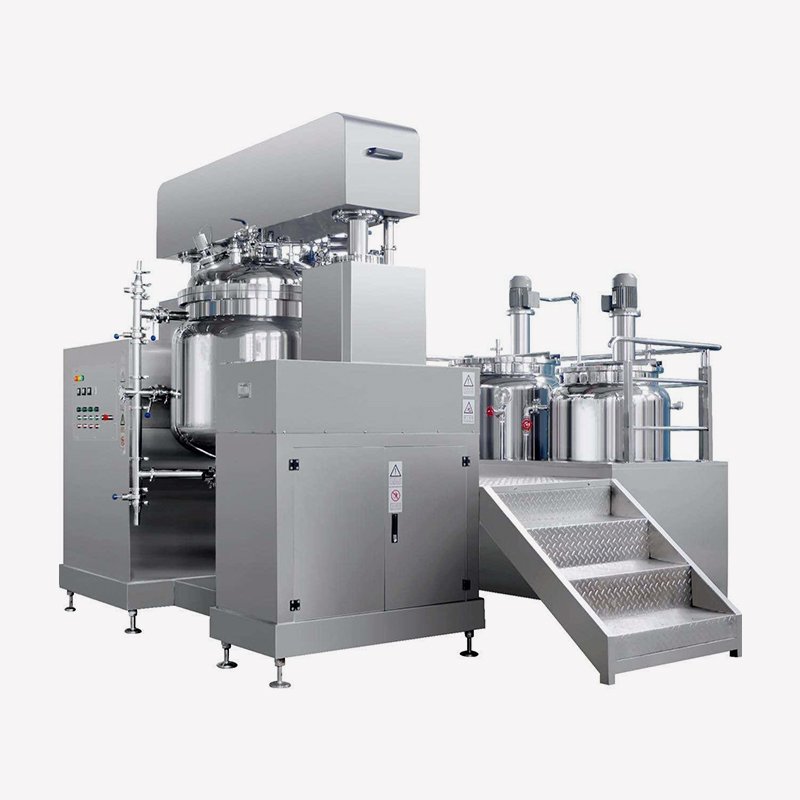
Pharmaceutical manufacturing is a highly regulated and precise industry where uniform mixing plays a critical role in ensuring the safety, efficacy, and consistency of drug formulations. Uneven mixing can lead to product quality issues, regulatory non-compliance, and potential risks to patients. Understanding the causes of uneven mixing and implementing effective solutions can help pharmaceutical manufacturers achieve optimal blending results. In this blog, we will explore the common reasons behind uneven mixing and practical strategies to address these challenges.
Causes of Uneven Mixing in Pharmaceutical Processing
Uneven mixing, also known as blend uniformity failure, can result from several factors, including:
1. Particle Size Variation
Pharmaceutical powders often consist of multiple ingredients with varying particle sizes. Large particles tend to settle at the bottom, while finer particles remain suspended, leading to segregation and inconsistent mixing.
2. Poor Flowability of Powders
Certain powders have low flowability due to their cohesive nature, making it difficult for them to distribute evenly during mixing. Poor flowability results in dead zones where ingredients fail to blend properly.
3. Inadequate Mixing Equipment
Using the wrong type of mixing equipment or outdated machinery can cause inefficient blending. Different formulations require specific types of mixers, such as V-blenders, high-shear mixers, or fluidized bed mixers, to achieve uniformity.
4. Improper Mixing Time and Speed
Over-mixing or under-mixing can negatively impact blend uniformity. If the mixing duration is too short, the ingredients may not blend completely. Conversely, excessive mixing can lead to particle attrition and demixing.
5. Electrostatic Charges
Static electricity can cause powders to cling together or stick to the walls of the mixing vessel, preventing homogeneous distribution.
6. Moisture and Humidity Effects
Environmental factors, such as humidity, can lead to powder agglomeration or sticking, resulting in uneven mixing. This is especially common in hygroscopic materials.
7. Incorrect Loading Order
The sequence in which ingredients are added to the mixing vessel can impact the final blend uniformity. If denser or more cohesive materials are not introduced correctly, they may not integrate properly with the rest of the formulation.
Solutions to Ensure Uniform Mixing in Pharmaceutical Processing
To overcome the challenges of uneven mixing, pharmaceutical manufacturers can implement the following strategies:
1. Optimize Particle Size Distribution
Ensuring a consistent particle size distribution through milling, granulation, or sieving before mixing can help improve uniformity. Particle size reduction techniques such as jet milling or wet granulation can help minimize segregation.
2. Use High-Performance Mixing Equipment
Selecting the appropriate mixing equipment based on the formulation’s properties is crucial. Common types of mixers used in the pharmaceutical industry include:
- V-blenders – Suitable for free-flowing powders.
- High-shear mixers – Ideal for cohesive and fine powders.
- Ribbon blenders – Used for bulk powders with minimal particle degradation.
- Fluidized bed mixers – Best for achieving uniformity in large-scale operations.
3. Control Mixing Time and Speed
Performing trials to determine the optimal mixing time and speed can prevent blend inconsistencies. Utilizing process analytical technology (PAT) tools, such as near-infrared (NIR) spectroscopy, can help monitor blend uniformity in real time.
4. Reduce Electrostatic Charges
Using anti-static agents or grounding equipment can help mitigate the effects of static electricity. Humidity control within the processing area can also prevent excessive electrostatic buildup.
5. Maintain Optimal Environmental Conditions
Controlling humidity and temperature within the mixing facility can prevent powder aggregation. Dehumidifiers and climate-controlled rooms can help maintain stable conditions for pharmaceutical processing.
6. Implement Proper Loading Techniques
Adding ingredients in a predefined order based on their flow characteristics and densities can significantly enhance mixing efficiency. Premixing minor ingredients with excipients before incorporating them into the main blend can also improve uniformity.
7. Conduct Regular Equipment Maintenance
Routine cleaning and maintenance of mixing equipment ensure consistent performance and prevent contamination. Inspecting mixer blades, ensuring uniform rotation, and calibrating mixing parameters help maintain high-quality blending.
Advanced Technologies for Enhancing Pharmaceutical Mixing
1. Process Analytical Technology (PAT)
PAT tools such as near-infrared (NIR) spectroscopy and Raman spectroscopy enable real-time monitoring of blend uniformity, allowing for adjustments during the mixing process to ensure consistency.
2. Computational Fluid Dynamics (CFD) Simulations
CFD modeling can predict how powders behave during mixing and help optimize equipment design and process parameters to improve uniformity.
3. Continuous Manufacturing Systems
Continuous mixing processes offer better control over blend uniformity compared to batch processing. This method reduces variability and ensures consistent drug formulation quality.
Conclusion
Achieving uniform mixing in pharmaceutical manufacturing is essential for product quality, regulatory compliance, and patient safety. By understanding the causes of uneven mixing and implementing best practices, manufacturers can significantly improve blend uniformity. Investing in high-performance equipment, optimizing process parameters, and leveraging advanced monitoring technologies can help overcome mixing challenges. At King Pack, we provide state-of-the-art pharmaceutical mixing and processing solutions to ensure consistent and high-quality production. Contact us today to learn more about how we can enhance your pharmaceutical manufacturing process!
Related resources: Encyclopedia resources, What Is a Blister Pack? – Pharmaceutical Packaging Guide by King Pack, and What Is the Manufacturing Process of Toothpaste?.
