 Skip to content
Introduction
Tube filling has come a long way from operators manually loading one tube at a time. Today, fully automated tube production lines run at speeds that would have been unthinkable two decades ago, with fill accuracy held tighter and labor requirements cut by a fraction.
Understanding how tube filler machines evolved, and where automation stands today, helps manufacturers make smarter investment decisions. This article covers the full journey, from basic semi-automatic tube filling machines to fully integrated automatic systems, along with the technologies behind the shift and what the economics look like in practice.
What is a Tube Filler Machine
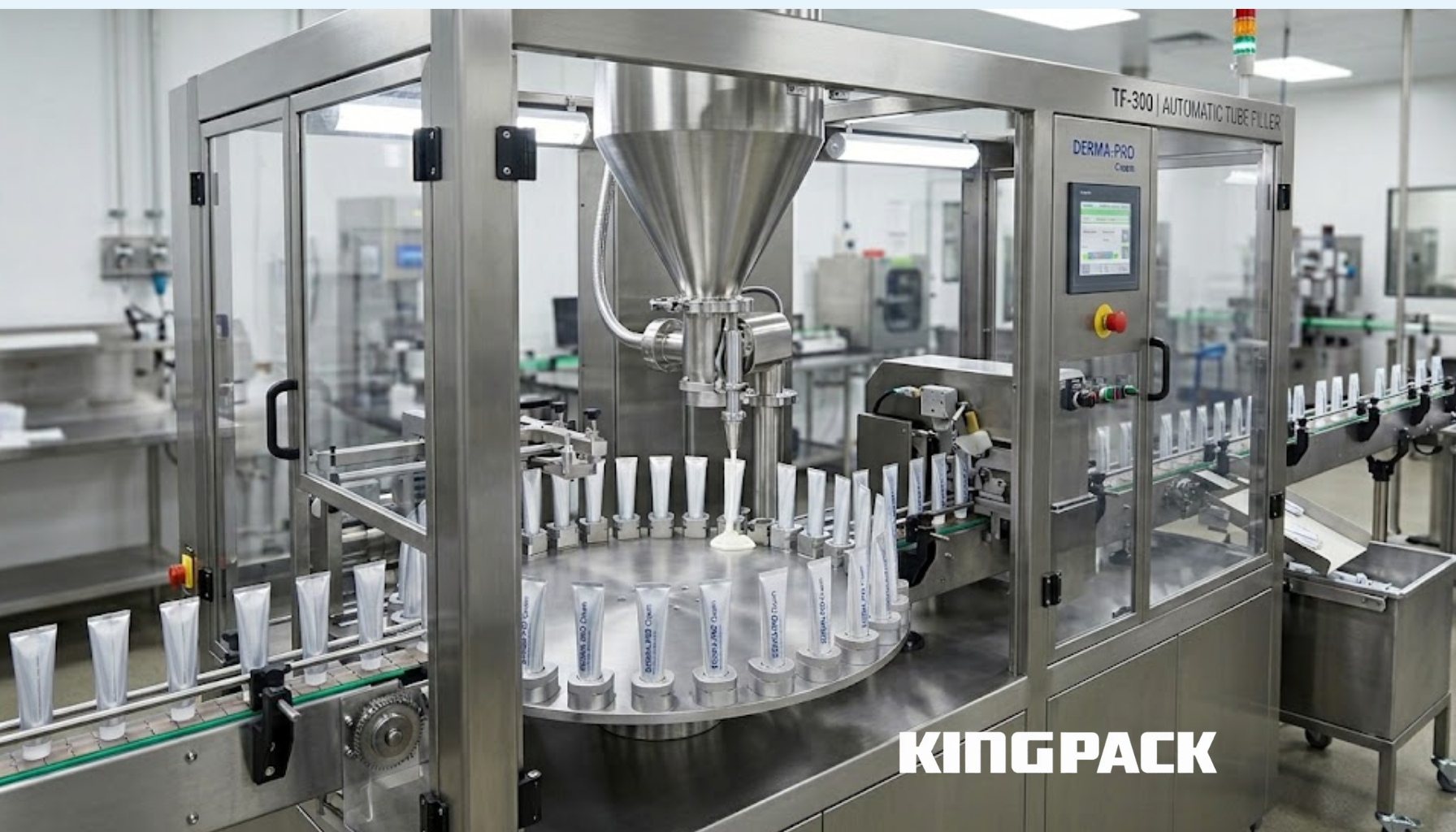
A tube filler machine fills a product into a collapsible tube, seals the tail, codes the batch information, and discharges the finished tube. Depending on the automation level, it may also handle tube feeding, orientation, capping, and transfer to secondary packaging.
Core functions are consistent across automation levels: filling, sealing, and coding. What changes is how much human involvement each step requires and how fast the machine can sustain those steps without errors.
Applications span across industries:
- Pharmaceuticals: ointments, medicated gels, and topical creams requiring fill accuracy for dosing compliance
- Cosmetics: face creams, serums, sunscreen, and toothpaste where visual seal quality affects brand perception
- Food: sauces, pastes, and condiments requiring hygienic, food-grade tube packaging
- Chemicals: adhesives, industrial pastes, and specialty compounds
Key performance indicators for any tube filler machine are speed (tubes per minute), fill accuracy (percentage deviation from target weight), and consistency (variation across a full production run).
Stage 1: Semi-Automatic Tube Filling Machines
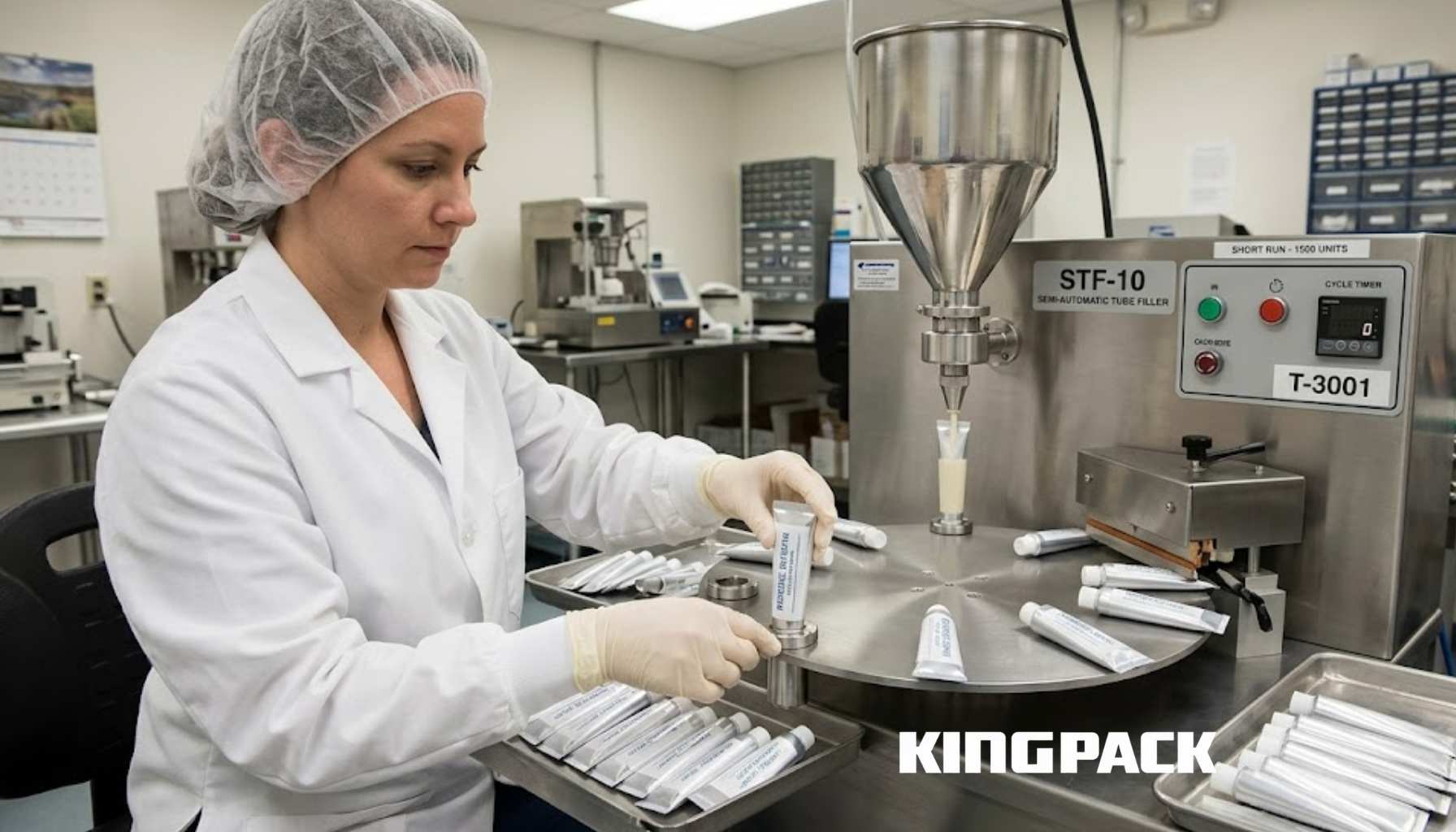
A semi automatic tube filling machine requires an operator to load tubes into the machine one at a time or in small batches. The machine then handles the fill and seal steps, but the operator controls the loading pace and monitors each cycle.
Advantages:
- Lower initial cost, suitable for startups and small-batch production
- Simple to operate with minimal training
- Easy to change over between products or tube sizes
- Adequate for production volumes under 20 tubes per minute
Limitations:
- Output is tied directly to operator pace and attention
- Fill consistency varies when operators are fatigued or change shifts
- Labor cost per unit is high relative to automated alternatives
- No practical path to high-speed pharmaceutical tube filling equipment standards without replacement
Semi automatic tube filling machines serve a genuine purpose for contract manufacturers running short runs, for laboratories, and for businesses at early production stages. The moment production targets grow and labor costs become a meaningful factor, their economics weaken quickly.
Stage 2: Transition to Automated Tube Filling Systems
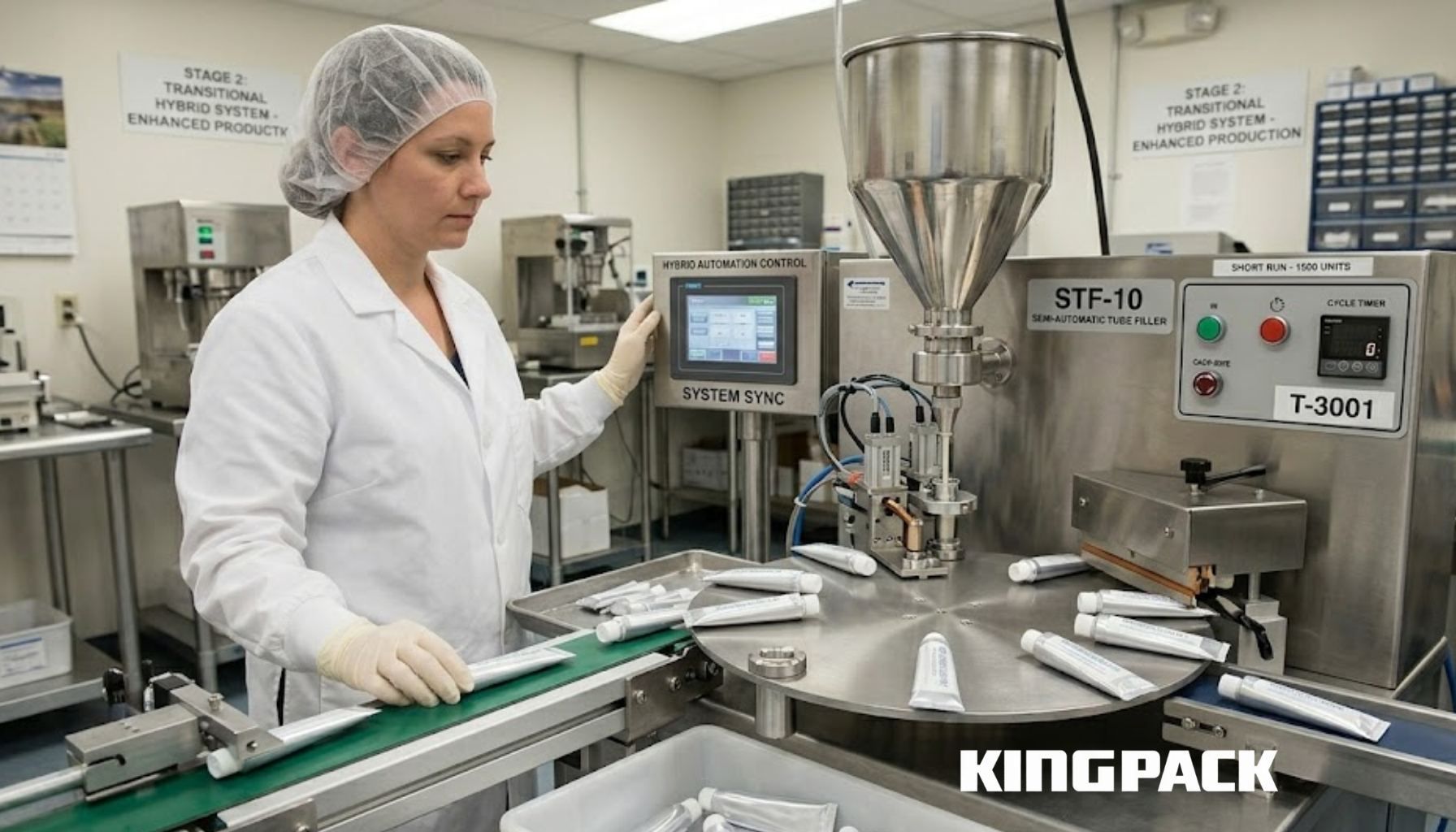
The transitional phase between semi-automatic and fully automatic systems introduced conveyor-based tube transport, indexing systems that timed tube movement precisely, and partial automation of the fill and seal steps.
Operators in these hybrid configurations typically managed tube loading at the feed end and conducted quality checks at the discharge end. The machine handled tube transport, filling, and sealing without manual intervention once a tube entered the system.
This stage reduced the physical labor per unit significantly. It also exposed a new category of failure points: inconsistency in tube feeding, synchronization errors between tube positioning and fill nozzle timing, and variability at higher production speeds that manual intervention could not easily correct.
The transitional generation was an important step. Manufacturers learned what automation required in terms of mechanical precision, control system capability, and operator skill. It built the foundation for fully automatic tube filling machines.
Stage 3: Fully Automatic Tube Filling Machines
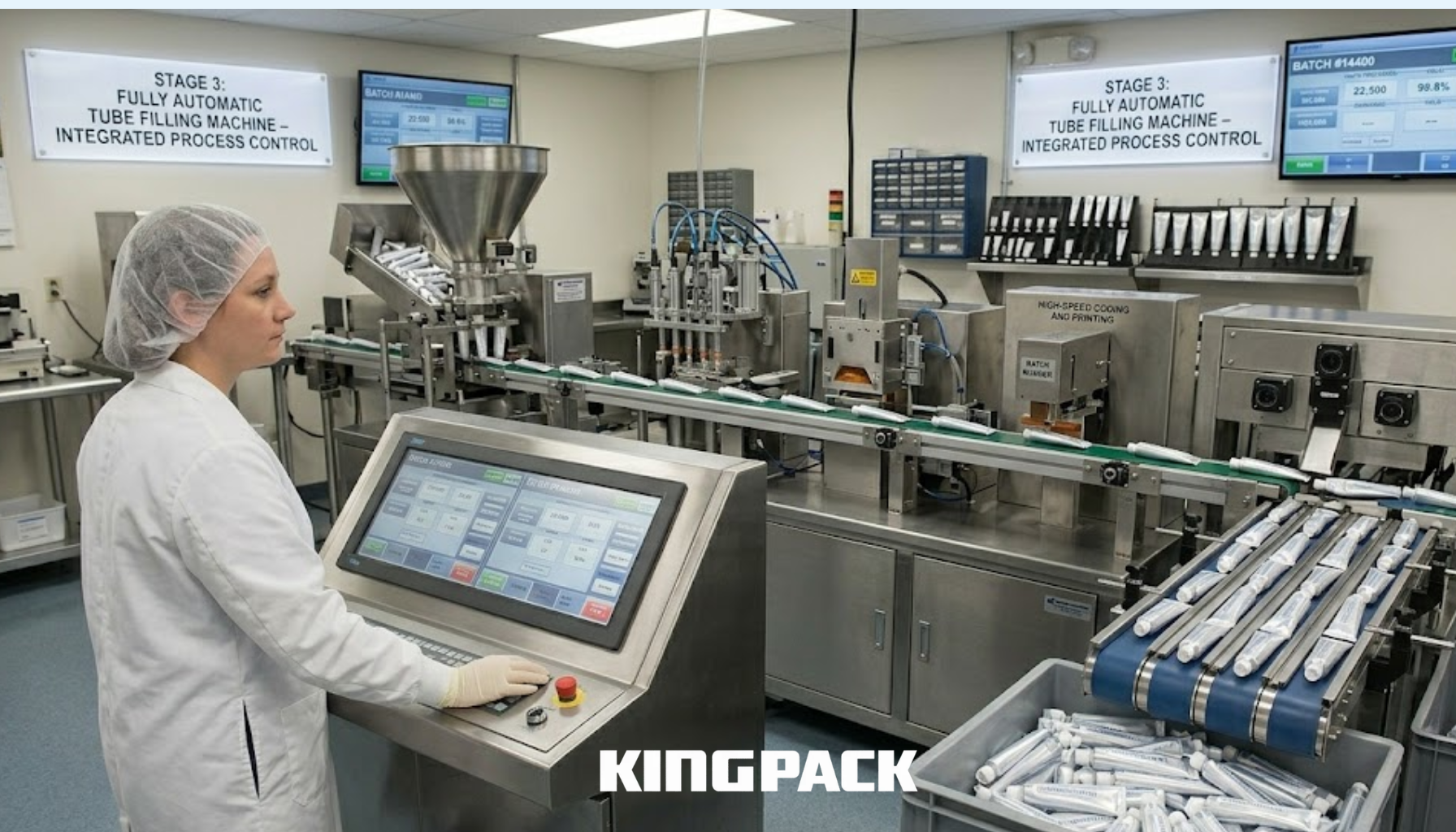
A fully automatic tube filling machine handles every step from empty tube input to sealed, coded tube output without operator involvement in the individual cycle. The operator’s role shifts to machine monitoring, batch setup, and exception handling.
Tube feeding systems orient and load tubes automatically from bulk hoppers or tube magazines. Indexing systems position tubes precisely at each station. Servo-driven fill systems deliver product at the correct volume. Sealing systems close the tail using hot air, ultrasonic, or mechanical folding methods depending on tube material. Coding systems apply batch numbers and expiry dates. Inspection systems check seal quality and tube orientation before discharge.
According to Intel Market Research, the global automatic tube filling and sealing machine market was valued at $1.082 billion in 2024 and is projected to reach $1.659 billion by 2032 at a CAGR of 6.4%, driven by pharmaceutical industry requirements for precision filling, GMP compliance, and batch traceability. This growth signals that manufacturers across industries are moving toward full tube filling automation at an accelerating pace.
Key Technologies Driving Tube Filling Automation
The shift to fully automatic systems comes from several technologies working together across modern tube filling lines handling aluminum tubes, bottles, and other open containers.
Servo-driven systems replace mechanical drives with precise electronic control. These systems are capable of handling both liquids and dense fluids with high accuracy. They maintain stable output across viscous product ranges and improve pumping control throughout the cycle. This reduces variation when processing aluminum tubes or other packaging formats.
PLC control with HMI interfaces gives full control over machine operation. Operators can monitor parameters, adjust settings, and track performance from one screen. These systems are essential for maintaining consistency when working with different types of products, including viscous liquids and sensitive formulations.
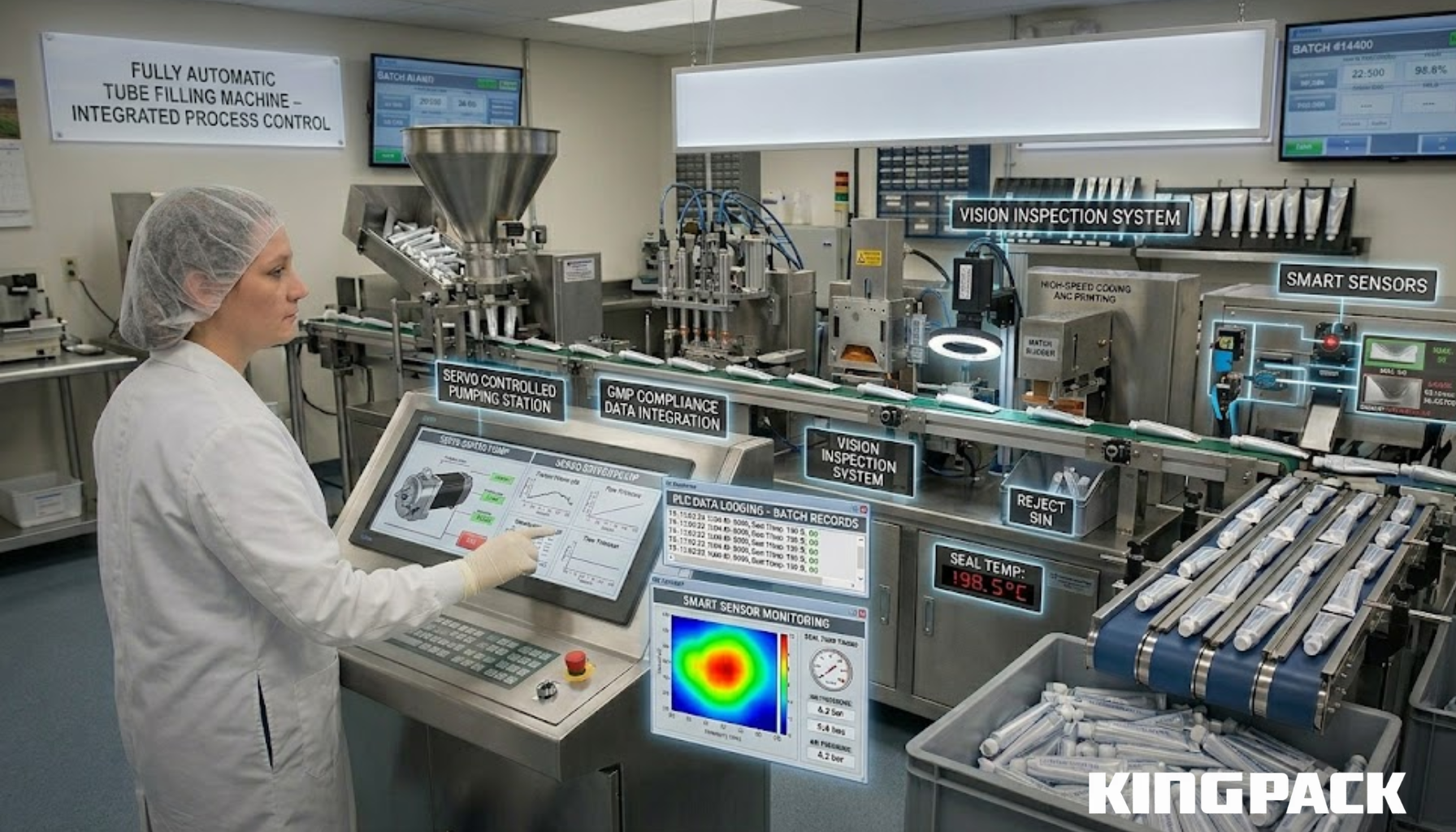
Vision systems and electric eye sensors monitor tube position, seal quality, and coding accuracy in real time. Faulty items are removed without stopping production. This keeps the process efficient and reduces waste, even at high speeds.
Modern sealing systems also support hot air sealing, ultrasonic sealing, and other heated processes. This makes them suitable for both aluminum tubes and laminate formats, including previously filled aluminum tubes that require careful handling.
Smart sensors track pressure, temperature, and pumping performance continuously. Any deviation triggers alerts before defects occur. Compact system design, stable heated zones, and efficient control all work together to improve reliability and output across demanding production environments.
Benefits of Full Tube Filling Automation
| Factor | Semi-Automatic | Fully Automatic |
| Typical speed | 10 to 30 tubes per minute | 80 to 180 tubes per minute |
| Fill accuracy | ±2 to 5% depending on operator | ±1% or better |
| Labor requirement | 2 to 4 operators per shift | 1 operator per line |
| Quality consistency | Variable by shift and operator | Consistent across extended runs |
| GMP documentation | Manual batch records | Automated PLC data logging |
| Changeover time | Short, simple | Longer, but parameter-based |
The speed advantage alone changes the production economics for any manufacturer running more than one shift per day. At 120 tubes per minute versus 20 tubes per minute, a single automatic tube filling machine replaces three to four semi-automatic setups with lower total labor cost.
According to Precision Business Insights, companies implementing packaging automation report a 30 to 50% reduction in labor requirements, particularly in repetitive tasks like filling, sealing, and labeling. Automation can also reduce packaging defects by up to 80% through precision robotics and real-time sensor monitoring.
Fill accuracy at ±1% translates directly into product yield. Every tube filled 3% over target in a high-speed pharmaceutical production run means measurable product loss multiplied across thousands of tubes per shift. Tight fill control under automatic tube filling machine operation pays back in reduced material cost over time.
ROI Impact: Why Automation Pays Off
The financial case for full tube filling automation is well established across the industry. According to PMMI and third-party analysis cited by Echo Packer, packaging machine investments typically achieve payback within 18 to 24 months through direct labor savings alone, with high-uptime configurations reducing unplanned downtime risk by up to 65%.
Lower cost per unit comes from three directions: fewer labor hours per tube, less product waste from fill accuracy improvement, and reduced rejection and rework rates from consistent seal quality.
Faster payback periods make the investment easier to justify at the procurement stage. For a mid-sized cosmetic tube filling machine operation running two shifts per day, shifting from semi-automatic to fully automatic typically pays back within two years based on labor savings alone, before accounting for quality improvements and reduced waste.
Waste reduction is a compounding benefit. A tube packaging automation system that catches fill weight deviations in real time prevents the downstream cost of finished goods inspection, rework, and disposal. Each percentage point of defect rate reduction at scale represents meaningful savings.
When Should You Upgrade to Full Automation
Most manufacturers reach a clear decision point when several conditions converge. The right time to upgrade from a semi automatic tube filling machine to a fully automatic system is when:
- Production volumes exceed what a semi-automatic machine can sustain with available labor
- Rising labor costs per shift are compressing margin on tube-packaged products
- Quality consistency has become a customer complaint or regulatory concern
- The business is entering or expanding in regulated markets that require GMP documentation and validated fill accuracy
- Capacity needs to scale faster than hiring can support
For manufacturers entering pharmaceutical tube filling equipment markets specifically, full automation is not optional. Regulatory requirements for batch traceability, fill accuracy documentation, and GMP-compliant equipment design cannot be met with manual or semi-automatic systems at commercial scale.
Challenges in Transitioning to Automation
Three challenges come up most consistently when manufacturers make the transition.
Initial investment is the most cited concern. Fully automatic tube filler machines carry a higher upfront cost than semi-automatic equipment. The correct comparison is total cost of ownership over three to five years, not purchase price. When labor, waste, and quality costs are included, automated systems typically cost less per unit within two years.
Integration with existing equipment requires planning. If a new automatic tube filling machine feeds into an existing cartoning line, speed matching, tube orientation at output, and physical footprint must all be specified before ordering. Working with a supplier who has experience in turnkey tube production line integration reduces the risk of post-installation problems.
Operator training is required for the transition. Operators moving from semi-automatic to fully automatic systems need to learn PLC interface navigation, parameter management, and fault diagnosis. According to PMMI’s 2024 industry report, companies that establish proper training programs see around 30% better productivity from their teams alongside fewer unexpected stoppages.
Future Trends in Tube Filling Technology
The tube filler machine of the next five years will look meaningfully different from what is standard today.
Industry 4.0 integration is already underway. Machines with OPC-UA data communication protocols connect to manufacturing execution systems and enterprise resource planning platforms, feeding production data into facility-wide quality management systems. According to The Business Research Company, notable upcoming trends in tube filling machine technology include Industry 4.0 integration, robotics and automation advances, and digital twin technology.
Data-driven production optimization uses the fill weight, speed, and fault history logged during production to predict maintenance needs before failures occur. Predictive maintenance reduces unplanned downtime, which is one of the highest-cost events on a high-speed tube packaging line.
Flexible and modular systems allow manufacturers to add or reconfigure stations without replacing the entire machine. A base machine that can expand from a 60 tube per minute single-head system to a 120 tube per minute double-head configuration protects the initial investment while leaving room to grow.
Why King Pack Tube Filling Automation Solutions
We supply tube filler machines across the full automation spectrum, from semi-automatic setups for small-batch operations to fully automatic high-speed systems for pharmaceutical and cosmetic manufacturers.
Our plastic hose tail sealing machines cover the semi-automatic through automatic range for laminate and plastic tube applications. For manufacturers scaling production, our high-speed automatic tube filling and sealing machines reach sustained production speeds of 120 to 180 tubes per minute with fill accuracy maintained at ±1%.
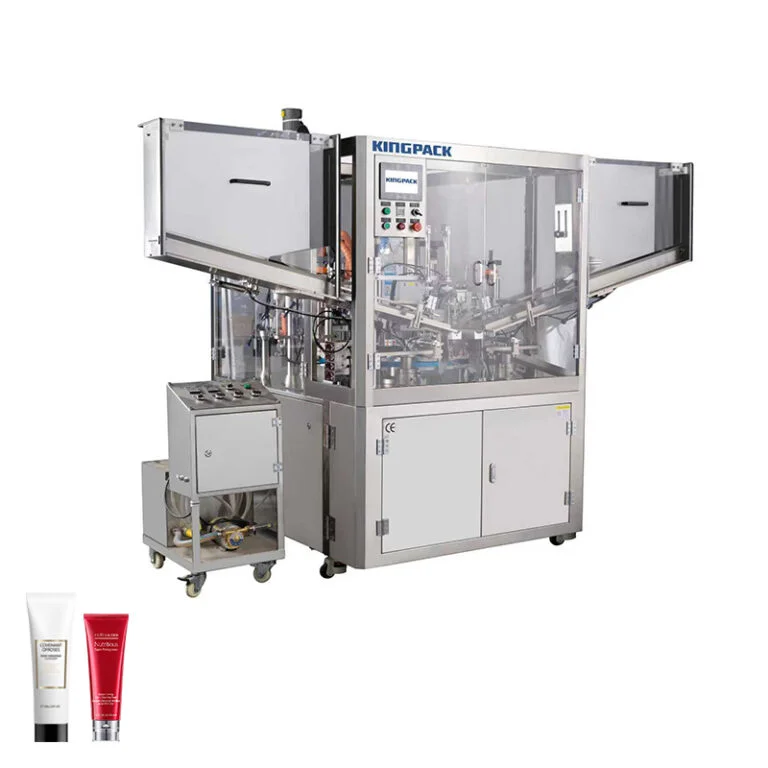
KP150B2-120 Dual-Station Ultrasonic Tube Sealing Machine – King Pack Machinery
Key features across our automatic range:
- Servo-driven filling for tight fill accuracy across high-viscosity pharmaceutical tube filling equipment applications
- PLC control with HMI interfaces that support batch data logging for GMP compliance
- Modular design that allows line expansion without full machine replacement
- Configuration for different tube materials, diameters, and sealing methods within a single platform
Our engineering team has over 20 years of experience building and commissioning tube production lines for pharmaceutical, cosmetic, and food manufacturers across global markets. We provide full commissioning support, operator training, and ongoing after-sales service to keep automated lines performing at specification.
For manufacturers considering the step from semi-automatic to fully automatic tube filling automation, we provide technical consultations that assess current production volumes, growth targets, and ROI timelines before any equipment selection is made.
Conclusion
The shift from semi-automatic to fully automatic tube filler machines is not a technology question. It is a production economics question. When volume, labor costs, quality requirements, and market expectations cross a certain threshold, tube filling automation pays back quickly and continues to pay back for the lifetime of the equipment.
Semi automatic tube filling machines have a real place for small-batch and startup production. Fully automatic tube filling machines are the correct answer when production scale, quality consistency, and regulatory compliance become the central requirements.
The technology to support that transition is mature, proven, and improving with every generation of Industry 4.0 integration.
Contact King Pack to explore a customized tube filling automation solution that fits your current production needs and future growth plans. Reach our team at kpfillingmachine.com/contact.
