 Skip to content
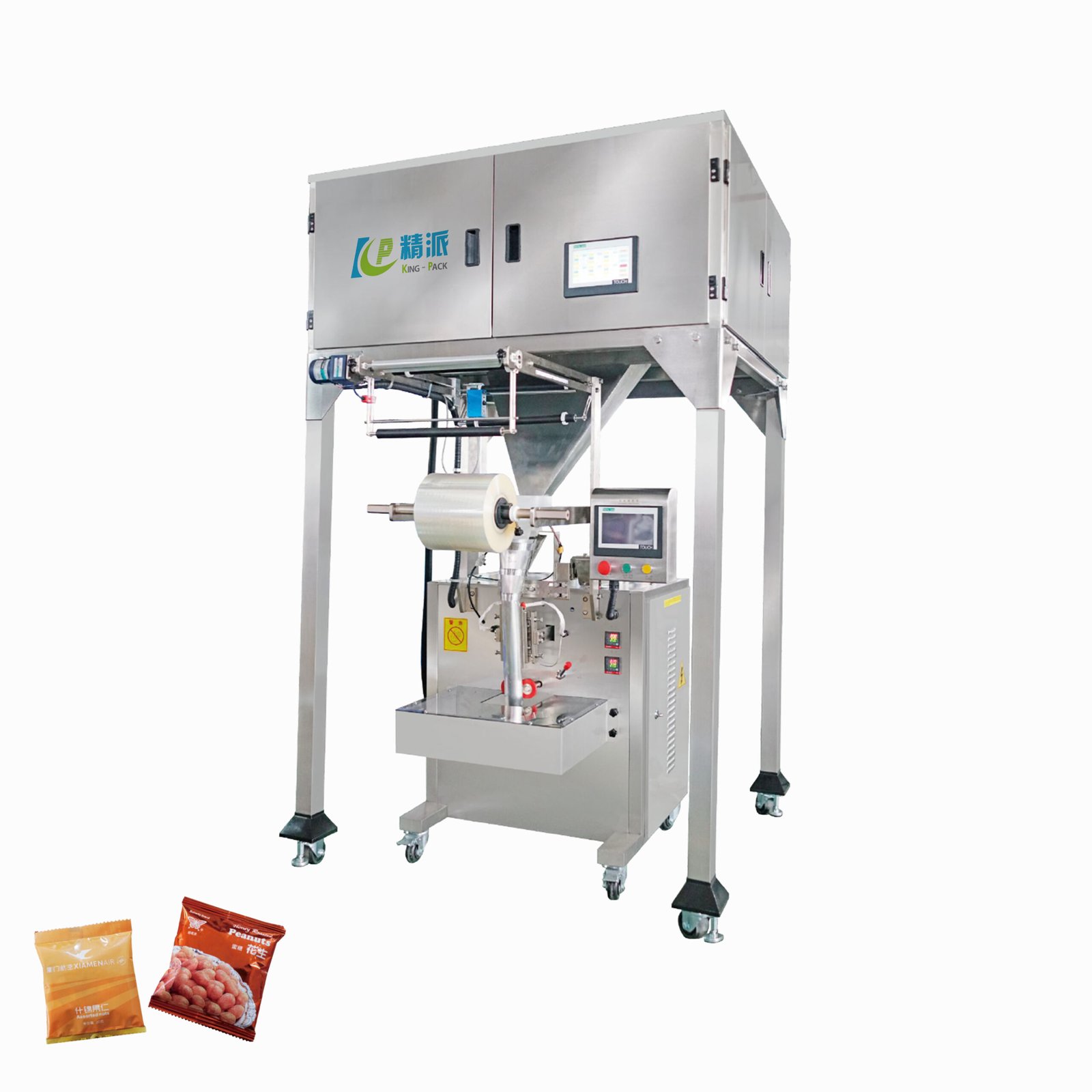
A tea bag packing machine portions loose tea or herbal blends, forms and closes the inner bag, and can add a string, tag and individual outer envelope. The right configuration depends on the tea, dose, bag geometry, filter material, seal method and the accepted output—not simply the advertised maximum speed.
Tea Bag Machine Selection at a Glance
| Requirement | Typical starting point | What to verify |
|---|---|---|
| Traditional flat filter-paper bag | Single- or double-chamber machine | Bag dimensions, thread and tag, closure style |
| Premium whole-leaf or herbal blend | Pyramid or rectangular mesh-bag machine | Particle size, gentle feeding, ultrasonic seal compatibility |
| Fine tea or powder-rich blend | Enclosed dosing and dust-control configuration | Fines leakage, dose variation, seal contamination |
| Individually wrapped tea bag | Inner-bag machine integrated with outer-envelope packing | Registration, envelope barrier, date coding and reject logic |
| Multiple recipes and bag formats | Quick-change system with stored recipes | Change parts, cleaning access and proven changeover time |
Planning a broader packaging project? Review KING PACK’s packaging solutions and industry applications, or send us your tea and packaging samples.
What Does a Tea Bag Packing Machine Do?
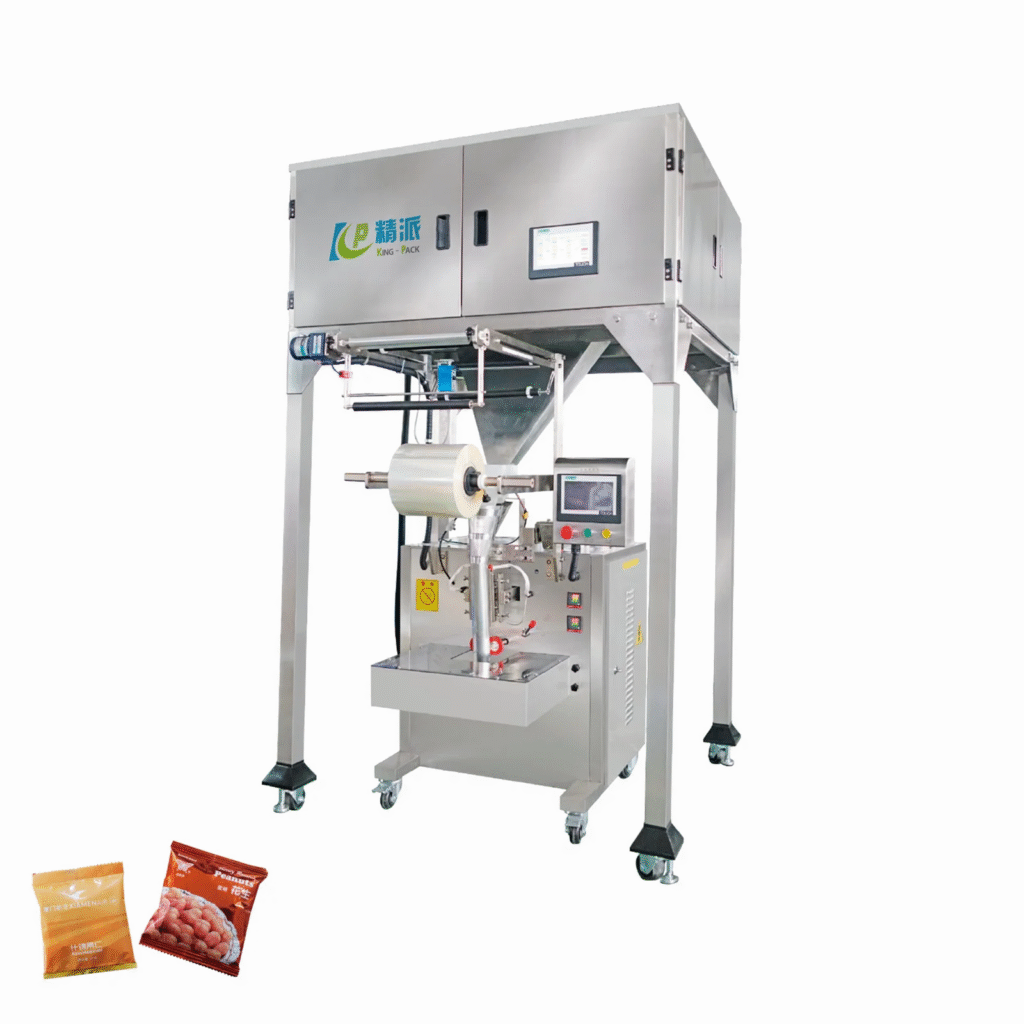
The machine converts a continuous roll or preformed packaging material into accurately dosed tea bags. Depending on the model, one line may feed the product, measure the dose, form the bag, seal or close it, cut it, attach thread and tag, wrap each bag in an envelope, code the pack and discharge accepted units.
Not every machine performs every step. “Tea bag filler,” “tea bag making machine” and “tea bag packing machine” are often used interchangeably, so an RFQ should state the required finished pack rather than relying on the equipment name.
How Tea Bag Filling and Sealing Works
1. Product feeding
Tea enters a hopper and is presented consistently to the dosing unit. Flow behavior can change with leaf cut, bulk density, fines, moisture, static and fragile inclusions. Bridging or segregation at this stage causes downstream weight variation.
2. Dosing
The machine measures each portion by volume, weight or a controlled auger/pump action where suitable. The best method depends on the real blend. A supplier should test all recipes, including the lightest, bulkiest and most difficult product—not only a free-flowing sample.
3. Bag forming
Filter paper, nonwoven material or mesh is guided, folded or shaped around a forming set. Registration control matters when the material is printed or when a tag must align with the pack.
4. Sealing or mechanical closure
The inner bag may use heat sealing, ultrasonic sealing or another closure method designed for its material and format. Seal strength depends on the complete material specification, contact time, pressure, energy and contamination at the seal—not on temperature alone.
5. String, tag and outer envelope
Optional modules attach thread and tag, then wrap the tea bag in a moisture- and aroma-protective envelope. Date coding, counting, cartoning or case packing can be integrated downstream.
Tea Bag Formats and Machine Types
Flat single-chamber bags
A compact rectangular bag is common for standard tea portions. Specify finished dimensions, dose range, filter material, thread and tag requirements, and whether an outer envelope is required.
Double-chamber tea bags
Double-chamber machines create two product compartments and typically add a string and tag. Their folding and closure sequence is more specialized, so confirm the exact pack construction and consumables before selecting a model.
Pyramid and rectangular mesh bags
These formats provide more internal space for larger leaves and visual blends. They often use ultrasonic sealing. Verify mesh composition, reel width, sealability, cut quality, filled-bag shape and compatibility with the intended end-of-life or environmental claim.
Inner bag with individual envelope
An outer sachet can improve aroma and moisture protection and provides printable area. The barrier requirement, seal integrity, coding position and opening behavior should be established through packaging and shelf-life validation.
Choosing the Dosing System
| Dosing method | Often considered for | Key limitations to test |
|---|---|---|
| Volumetric cup | Consistent, free-flowing cut tea | Bulk-density changes, fines and recipe variation |
| Linear or combination weighing | Irregular leaves, herbs and visible blends | Product damage, target weight, machine height and speed |
| Auger dosing | Fine or powder-rich products where compatible | Dust, compression, heat, cleaning and dose repeatability |
Quote accuracy at a defined product condition and sampling method. Weight data should be evaluated by recipe and dosing lane. A single average can hide underweight packs, head-to-head differences or drift during a long run.
Filter Material, Sealability and Food Contact
The machine and packaging material must be qualified together. Send the supplier actual reels and specifications for basis weight, thickness, width, heat- or ultrasonic-seal layer, print registration and allowable splices. Paper, nonwoven and mesh materials can behave differently at production speed.
Claims such as “plastic-free,” “biodegradable” or “compostable” should be supported by the material supplier’s documentation and the rules of the target market. For regulatory context, the European Commission explains food-contact-material requirements. U.S. manufacturers should also review the FDA’s official food CGMP information and requirements applicable to their facility and product. Equipment selection does not by itself establish compliance.
Rated Speed vs Accepted Output
Catalog speed is usually a mechanical maximum under defined conditions. For business planning, measure accepted bags per minute after rejects and planned stops. Bag style, dose, outer envelope, product flow, reel changes, cleaning and downstream equipment can all affect real output.
- State whether the target is inner bags or finished wrapped bags per minute.
- Define the recipe, dose, bag size and packaging material used for the speed test.
- Record rejects for weight, open seals, poor cuts, missing tags and print-registration errors.
- Confirm accumulation and recovery when the cartoner or downstream line stops.
Key Machine Components
- Hopper and feeder: maintain product flow while limiting segregation and damage.
- Dosing unit: meters the validated portion for each recipe.
- Film unwind and registration: control tension, tracking and printed-mark position.
- Forming and sealing station: create the specified bag and repeatable closure.
- Thread, tag and envelope modules: add presentation and secondary protection where required.
- Inspection and rejection: detect defined faults and separate nonconforming packs.
- Controls and recipes: manage parameters, alarms, access levels and changeovers.
Hygiene, Dust Control and Changeover
Tea fines can collect around feeders, sealing surfaces and sensors. Review tool-free access, removable product-contact parts, dust extraction connections, cable routing, ledges and clean-down procedures. Cleaning method and frequency should be based on the food-safety plan, allergens, flavor carryover and actual product behavior.
For multi-recipe plants, request a demonstrated changeover that includes emptying residual tea, cleaning, replacing format parts, loading materials, recalling parameters and producing the first accepted pack. “Quick changeover” is meaningful only when the scope and acceptance criteria are defined.
What to Include in a Tea Bag Machine RFQ
- Tea types, leaf-cut distribution, bulk density, fines, moisture and sensitive inclusions
- Target and allowable dose range for every recipe
- Finished bag drawings, string/tag details and outer-envelope requirements
- Packaging-material specifications and representative reels
- Required accepted output, shifts and annual volume
- Weight-control, seal, coding, inspection and rejection requirements
- Cleaning, allergen, dust-control and changeover expectations
- Utilities, room conditions, line layout and downstream interfaces
Factory Acceptance Test Checklist
Run representative tea, packaging reels, tags and envelopes for an agreed duration. Record accepted speed, individual and average weights, reject reasons, seal results, cut quality, tag position, print registration, residual product and stoppages. Challenge low-material alarms, splice handling, jam recovery, guarding and restart behavior. Also demonstrate the defined recipe and format changeover.
Tea Bag Packing Machine FAQ
Which machine is best for loose-leaf tea?
A pyramid or roomy rectangular mesh bag is often considered for larger leaves, but the dosing system and product path must be tested for the actual blend. Bag style alone does not ensure gentle handling or accurate weight.
Can one machine pack both filter paper and mesh?
Sometimes, but forming, sealing and reel specifications may require dedicated modules or a different machine platform. Confirm both materials in a factory trial before purchase.
How should tea bag machine capacity be compared?
Compare accepted finished packs per minute using the same tea, dose, bag, tag and envelope configuration. Include planned reel changes, cleaning and rejects in the production model.
What samples should be sent to the supplier?
Send representative batches of every important tea blend, packaging reels, tags, thread, envelopes, artwork and finished-pack drawings. Include storage conditions and the expected range of product variation.
Plan Your Tea Bag Packaging Line
KING PACK can evaluate tea properties, bag formats, dosing, sealing, outer wrapping and downstream packing as one project. Contact our project team with samples and output requirements for a technical proposal.
